Notes: The Gulf keeps on rollin’ – this was the 137th Gulf lease sale. Congrats to Bryan Domangue on being named Gulf of America Regional Director for the Marine Minerals Administration!The WWII Museum in New Orleans was a nice venue for the sale.
The table below compares the pre-sale stats for BBG3 with those for BBG1 and 2. The number of BBG3 bids, while well below BBG1, which was the first sale in 2 years, bounced nicely from BBG2 levels.
An average of approximately 39 wells were online throughout the month of June 2026, representing a 50% increase over approximately 26 wells online on average in April 2026.
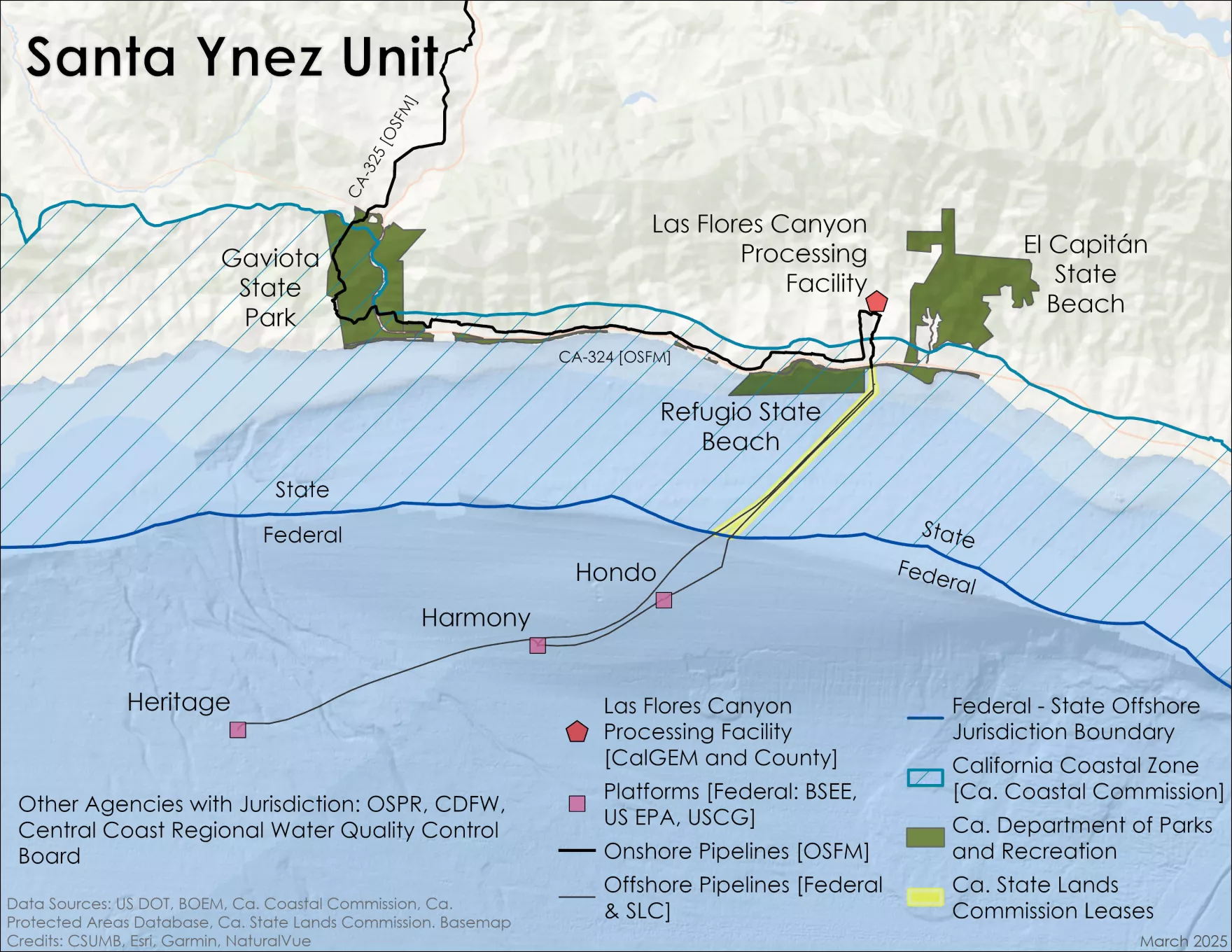
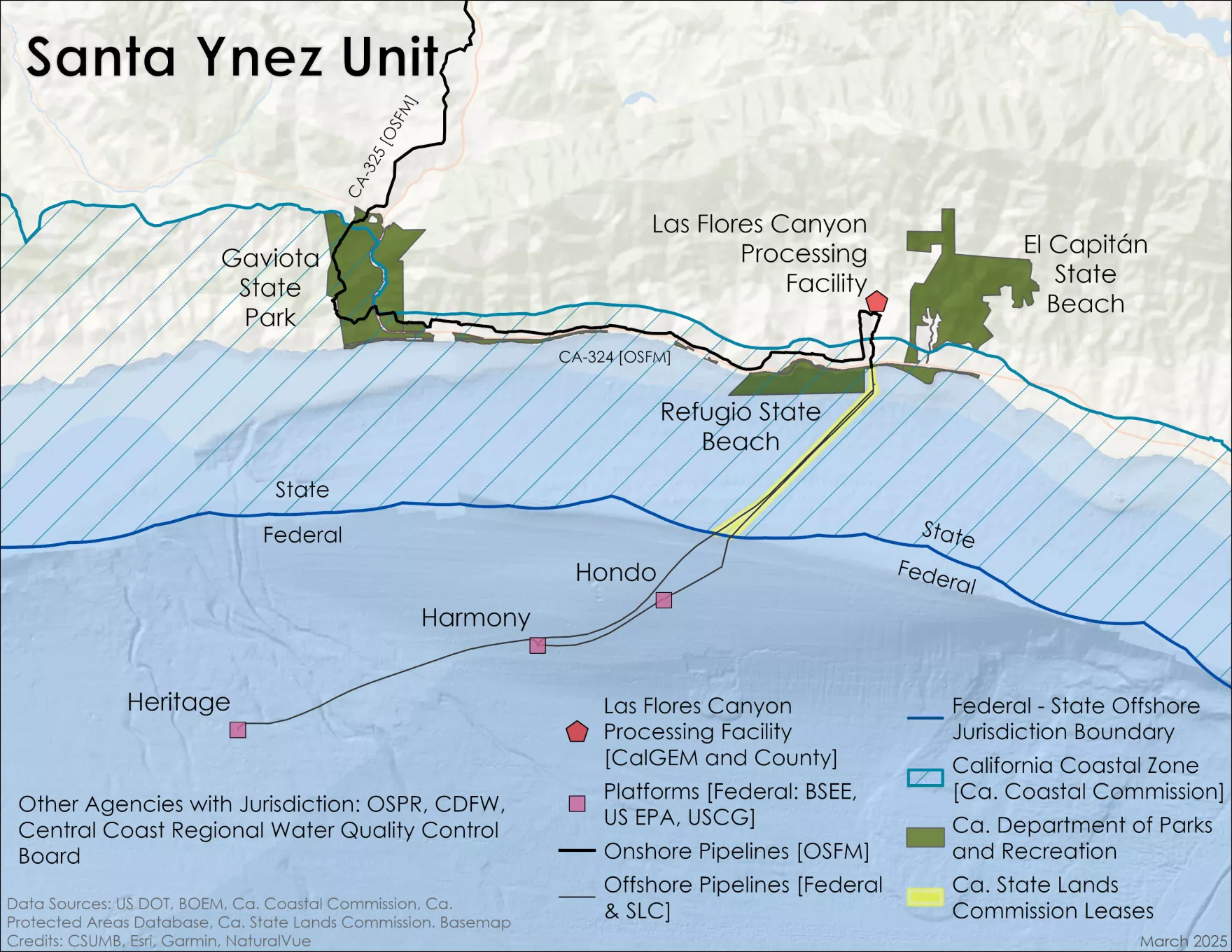
In July 2026, an average of approximately 47 wells at Platforms Harmony and Heritage were online, producing an average of approximately 721 gross barrels of oil per day per well. Sable expects to bring all 77 production wells on these two platforms online during the third quarter of 2026 and expects Platform Hondo to come online in September 2026.
Wireline campaign for Perforation Additions (“Perf Adds”) and producing well optimization at Platform Harmony commenced in August 2026.
Five completed Perf Adds forecasted to produce an incremental 600 estimated gross barrels of oil per day, each, are expected to come online at Platform Hondo along with the restart of the platform in September 2026.
An additional four Perf Adds at Platform Hondo forecasted to produce an incremental estimated 600 gross barrels of oil per day are planned for completion and to be brought online in early Q4 2026.
Sales
July 2026 preliminary oil sales estimate of approximately 38,000 gross barrels of oil per day. August 2026 oil sales average to date is approximately 42,000 gross barrels of oil per day through August 9th.
Due to the California regulatory environment, local refineries were not able to plan in advance for SYU first sales and ultimately were forced to displace various imported cargos in the second quarter. As a result, Sable incurred $18.5 million of non-recurring demurrage charges throughout the quarter, recognized in operational expenses.
The sudden supply influx of Pacific Outer Continental Shelf (“Pacific OCS”) crude has forced refiners to temporarily limit throughput of Pacific OCS crude and charge quality deducts for sulfur content and other items.
Starting in July 2026, Sable was temporarily constrained to a maximum of 40,000 average gross barrels of oil per day of oil sales throughput by downstream partners. We expect this short-term constraint to be alleviated starting in the back half of August.
California refineries are expected to adjust their crude oil supply slate starting in September 2026 to begin accepting more Pacific OCS barrels from the SYU and less imported barrels, alleviating the SYU throughput constraint altogether.
Sable is also in active negotiations to implement waterborne crude oil marketing solutions from existing marine terminals in the Los Angeles area in the near-term in order to improve marketing optionality.
Additionally, the pending acquisition of the Crimson Utilities (San Pablo Bay Pipeline) pipeline network by a third party could provide further relief and marketing optionality to California oil producers with access to the San Francisco refinery market once that pipeline potentially restarts operations.
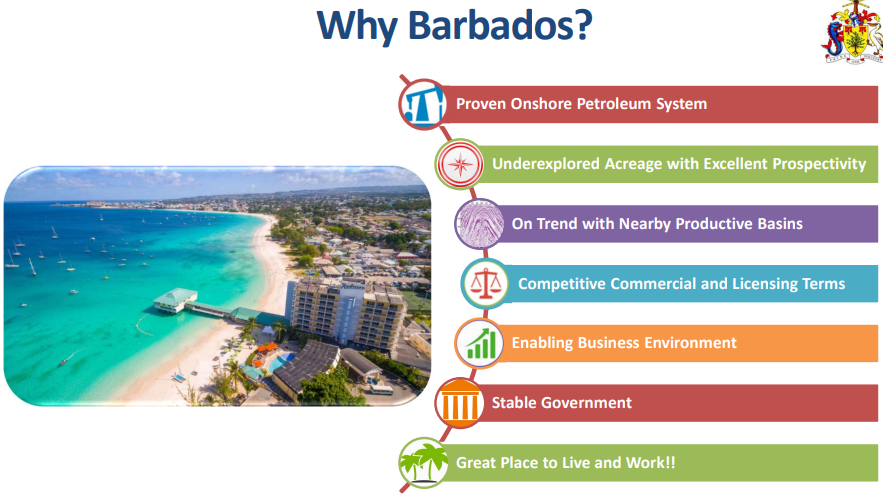
Barbados 2026 Offshore Petroleum Direct Negotiations process is underway. Nineteen blocks (yellow in map) are being offered. Direct negotiations for pre-qualified companies will continue through January 15, 2027, and awards will be announced by February 15.
In particular, removing the same-season-relief-well (SSRW) requirements in the current regulations is an essential regulatory action. The SSRW provision has the effect of precluding exploratory drilling while providing no added environmental protection and increasing operational risks. Given that there is at least a 50% chance that rig mobilization, relief well planning, drilling, repeated surveying, and plugging the flowing well would take more than the specified 45 days, a SSRW is not a legitimate well control option.
The preamble includes important questions for respondents. These questions are compiled beginning on p. 108 of the attachment. In particular, the comments on Subsea Isolation Devices (SSIDs) should be interesting. Given the required blowout preventer stack redundancy, it’s not clear to me that SSIDs would reduce blowout risk. They would however increase operational complexity.
For floating drilling operations in the Arctic and elsewhere, the focus needs to be on well design, integrity, and control. Fortunately, by carefully verifying casing and cement integrity, ensuring complete barrier redundancy, and having standby capping and containment capability, the probability of a sustained oil blowout can be reduced to 10–6 or lower.
Lastly for now, these regulations further demonstrate the importance of consolidating BOEM and BSEE in a single bureau.
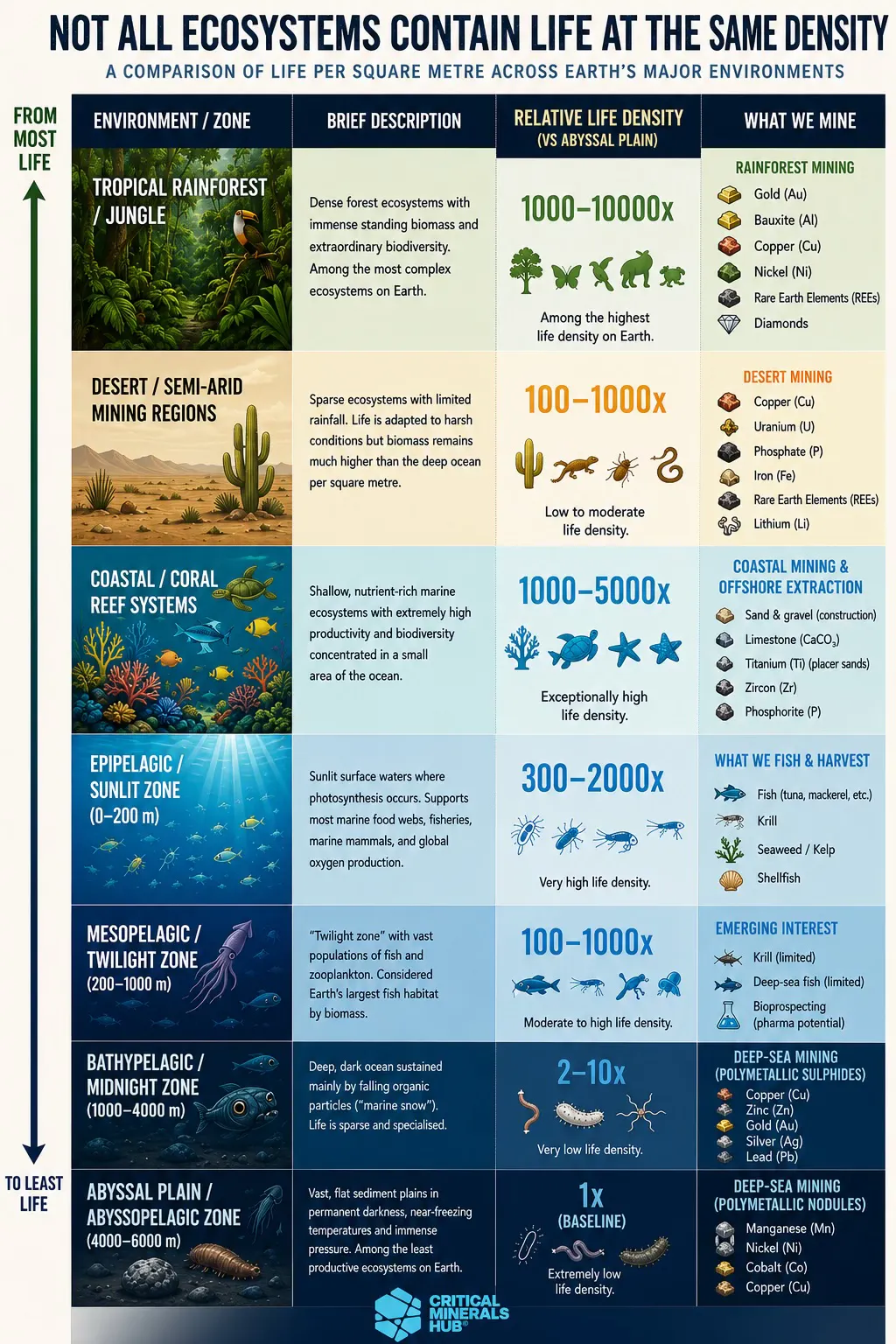
There are 67 NGOs with observer status at the International Seabed Authority (ISA) as of March 2026, which explains why nothing gets done. More than thirty years after its creation, there is still no final Mining Code for nodule exploitation.
“Deep‑sea mining disturbs low‑productivity abyssal ecosystems and may have long‑lasting local effects on small communities of widely distibuted organisms reliant upon the nodules themselves, but avoids the deforestation, human displacement and occupational hazards of many terrestrial mines. The ethical question is whether it is better to concentrate impacts on a relatively small portion of the most common habitat on Earth, or to continue expanding high‑impact mining frontiers on land like tropical rainforests.“
“The job of a regulator is not to deliver closure for activists. It is to regulate access to resources designated as the “common heritage of mankind” in a way that balances environmental protection, equitable benefit sharing and global development needs. That will always involve trade‑offs.“
Per EIA, Gulf of America oil production declined in May by over 200,000 bopd from April’s record production, which was corrected upward by 2000 bopd. Was the April number anomalous? We’ll need additional monthly data and the audited ONRR numbers to get a better read.
EIA posted corrected April and May totals of 30,000 bopd for the Pacific (California OCS), a 150% increase from February owing to the Sable Santa Ynez Unit restart. Although Pacific OCS production has been in the doldrums for years, the region has an impressive record of 202,000 bopd from Dec 1995.
Atlantis is located about 150 miles south of New Orleans and has been in production for nearly 20 years. The expansion project adds two new subsea water injection wells to help increase the pressure of targeted reservoirs, unlocking additional barrels and extending the producing life of one of bp’s flagship US offshore assets.
The project, which was delivered ahead of schedule and under budget, adds approximately 10,000 barrels of oil equivalent per day (boe/d) of gross peak annualized average production, with around 5,000 boe/d net to bp.
Some of you may remember the 2009 False Claims Act allegations by a former BP contractor claiming that BP did not properly maintain the engineer-approved “as built” drawings of systems and structures aboard the Atlantis facility. The contractor alleged that the absence of the documentation created increased safety risks for the facility and to its personnel.
Following the allegations, an industry source closely involved with the project (but not a BP employee) made the following comment to the BOE blog:
Atlantis was by far, in my opinion, the best of the bunch; proceeded as a normal construction project. The PMs were the best I’ve come across.
BOEMRE (the name of the offshore safety regulator at the time) conducted a comprehensive investigation of the matter. Director Michael Bromwich sumarized the findings:
“As the report makes clear, although we found significant problems with the way BP labeled and maintained its engineering drawings and related documents, we found the most serious allegations to be without merit, including the suggestion that a lack of adequate documentation created a serious safety risk on the Atlantic facility. We found no credible evidence to support that claim.”
A 7/28/2026 Dept. of Justice brief submitted to the Ninth Circuit Court of Appeals cites the 5/28/2026 Supreme Court decision in Flowers Foods Inc. v. Brock in asserting that Sable’s onshore pipeline segments are interstate and subject to Federal jurisdiction.
This filing is part of multi-faceted litigation involving Federal preemption, a 2020 Consent Decree, emergency special permits, and state environmental concerns. The Ninth Circuit is handling the expedited briefings and consolidation of petitions.
DoJ’s core argument is that Sable’s onshore segments do not interrupt the continuous “flow of commerce” from Outer Continental Shelf (OCS) offshore extraction → onshore processing → further transport to terminals (e.g., in Kern County). Thus, the system qualifies as interstate commerce subject to Federal (PHMSA) oversight rather than state regulation.
The Flowers Foods Inc. v. Brock case considered similar flow of commerce issues. The SCOTUS agreed with the Tenth Circuit that Brock delivery franchisees were engaged in interstate commerce even if they never cross State lines. The gist of the decision is as follows (emphasis added, full decision attached):
The Federal Arbitration Act (FAA) requires courts to enforce many private arbitration agreements, but it also provides that “nothing” in the law shall be used to compel arbitration in disputes involving the “contracts of employment” of any class of workers “engaged in . . . interstate commerce.” 9 U. S. C. §1. This case poses the question whether someone can qualify as a worker under the §1 exemption if he never crosses state lines and never interacts with vehicles that do. Flowers Foods, Inc., is a large producer of packaged baked goods with bakeries in 19 States. To get its products to market, the company depends in part on franchisees who buy the distribution rights to Flowers’s products in specific geographic territories. Angelo Brock is one such franchisee serving the Denver area; he picks up Flowers’s products from a warehouse in Colorado and delivers them to local stores, all without leaving the State. In 2022, Brock sued Flowers in federal district court alleging that the company had underpaid him and other distributors in violation of various federal and state laws. Flowers moved to compel arbitration, arguing that the FAA generally requires courts to stay or dismiss cases when the parties have agreed to resolve their disputes by arbitration and that Brock had signed a distribution agreement promising to arbitrate any disagreement. The district court denied Flowers’s motion, and the Tenth Circuit affirmed. Resting its decision on 9 U. S. C. §1, the Tenth Circuit reasoned that Brock belonged to a class of workers engaged in interstate commerce and thus the court lacked authority to compel arbitration.
We should soon find out what the Ninth Circuit thinks!
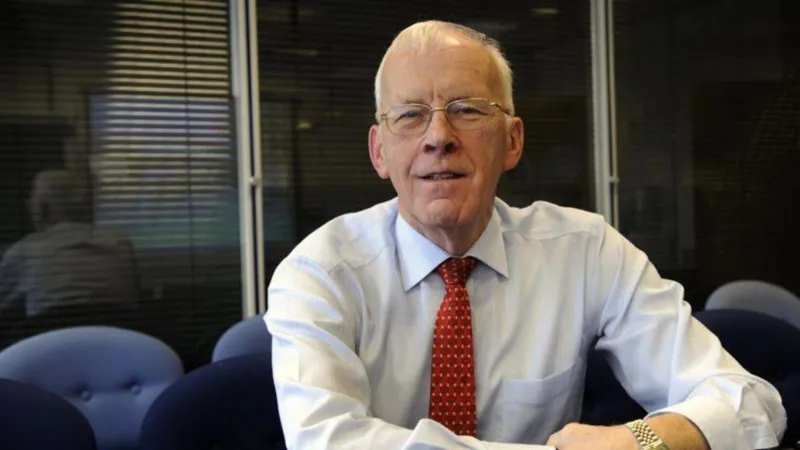
North Sea pioneer JL Daeschler comments on the passing of Sir Ian Wood: “A great North Seas leader who had an amazing career. He founded the Wood Group, an internationally important engineering firm. Mustang Engineering, well known to the US offshore industry, became part of the Wood Group in 2000.”
I knew Ian in the early North Sea development stage. He became Sir Ian Wood. We used to chat at various conferences in Houston, Stavanger, and Aberdeen. Ian was an energetic man, who had a friendly a approach to our North Sea challenges. He was a true Aberdonian entrepreneur who employed 1000’s in offshore related disciplines worldwide.
Sir Ian turned his father’s fishing business into the Wood Group oil giant, leading the way as Aberdeen blossomed into Europe’s energy capital. When Sir Ian announced his retirement in 2012, Wood Group employed 41,000 people in 50 countries.