Feeds:
Posts
Comments

Posts Tagged ‘John B Smith’

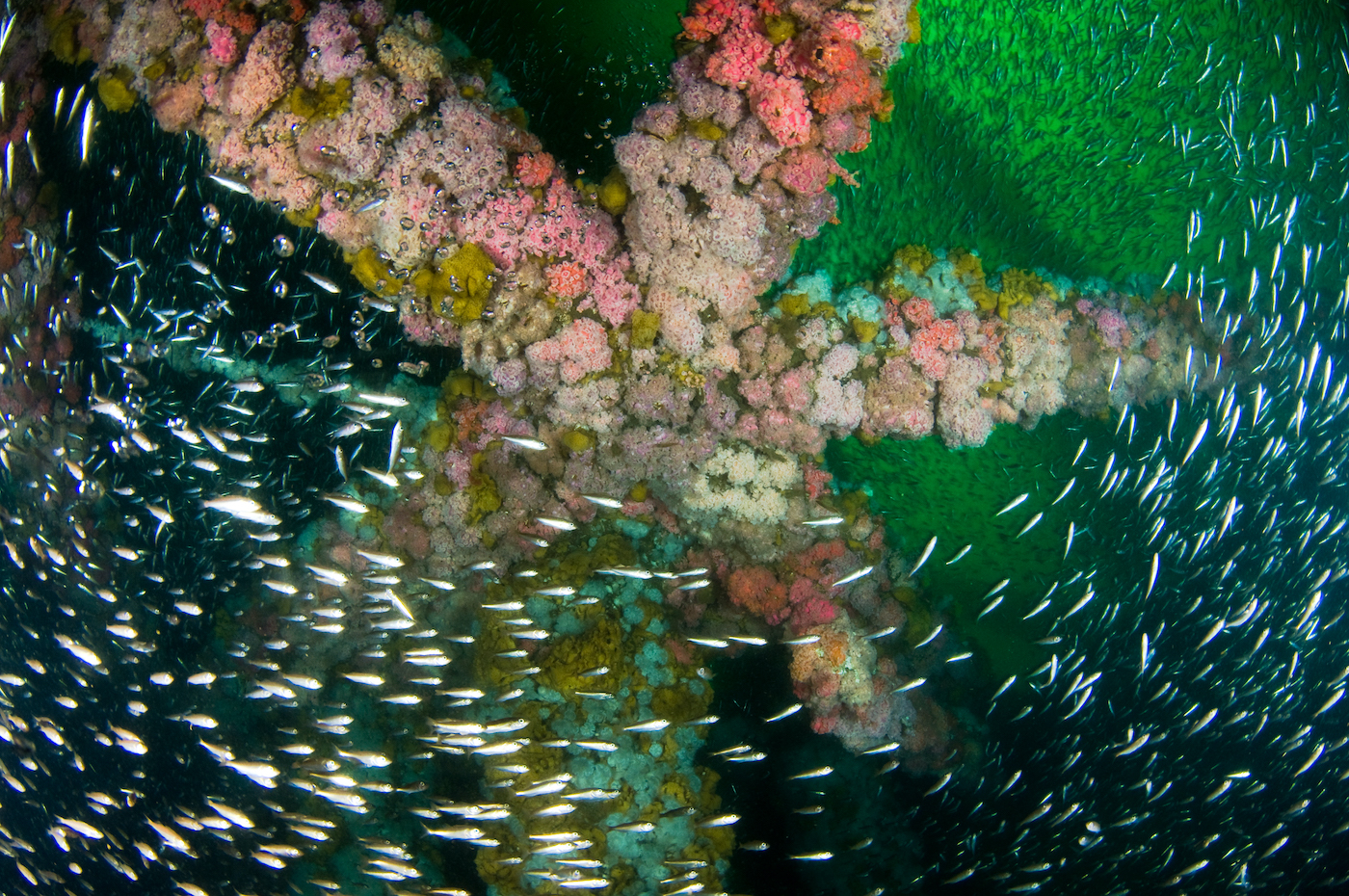
Looking up towards Platform Gilda from a depth of 100 feet, juvenile bocaccio rockfish swirl around the anemone-covered crossbeams (photo by Dr. Milton Love) 

Dr. Jeremy Claisse, Cal Poly Pomona: “The oil and gas platforms off the coast of California are the most productive marine habitats per unit area in the world.” 

Dr. Milt Love, UCSB: “Even the least productive platform was more productive than Chesapeake Bay or a coral reef in Moorea.

John Smith has made the case for reefing California platforms. He is now proposing a change in the regulations that could facilitate such partial removals of offshore structures. His full proposal is attached.

As background John notes:

In contrast to the Gulf of Mexico (GOM), where more than 600 decommissioned platforms have been converted to artificial reefs, the State of California does not have reefing legislation considered workable by industry, nor does it have an approved or State funded artificial reefing program which is a prerequisite under MMA (formerly BSEE and BOEM) OCS oil and gas regulations (30 CFR § 250.1730) for waiving platform removal requirements which allows conversion of the structure to an artificial reef.

He further informs that “operators of the platforms have not expressed any serious interest in reefing OCS platform jackets because they consider the California Marine Resources Legacy Act unworkable in its present form due primarily to its liability provisions, inequitable 80% cost-savings sharing requirement, and the requirement for the first reefing applicant to fund the setup costs for the artificial reefing program.

John’s proposal is intriguing because it allows qualified 3rd parties to accept title and liability for reefed structures. This would create interesting business opportunities. A company, consortium, nonprofit, or entrepreneur could, for a fee, acquire submerged structures and obtain insurance or other financial protection in accordance with their business plan. Reef preservation and enhancement studies, and other marine research could also be conducted at the sites. Marine ecosystems would be protected, and the cost and efficiency of decommissioning operations would be significantly improved.

So, you disconnect the jacket… you kill all the fish. There’s an awful lot of animals that die,” said Dr. Love. As our world has become dependent on fossil fuels, so too have these millions of animals become dependent on the structures that pump them from beneath the sea floor. “As a biologist, I just give people the facts, but I have my own view as a citizen, which is I think it’s criminal to kill huge numbers of animals,” said Dr. Love.

John’s proposal warrants serious consideration.

Read Full Post »

The Case for Reefing California Platforms by John Smith

Environmental groups like the Environmental Defense Center and Get Oil Out continue to oppose converting the jackets of California oil and gas platforms to artificial reefs despite scientific studies (Claisse et al. 2014) showing “oil and gas platforms off the coast of California have the highest secondary fish production per unit area of seafloor of any marine habitat that
has been studied.

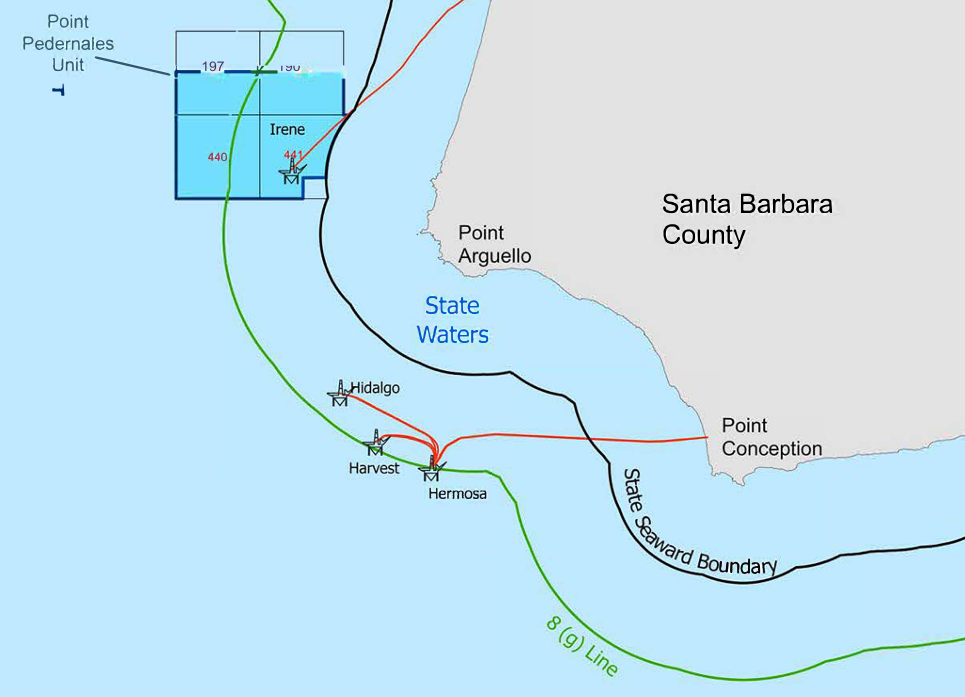
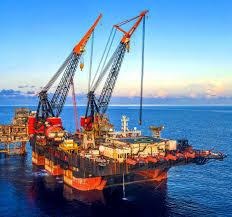
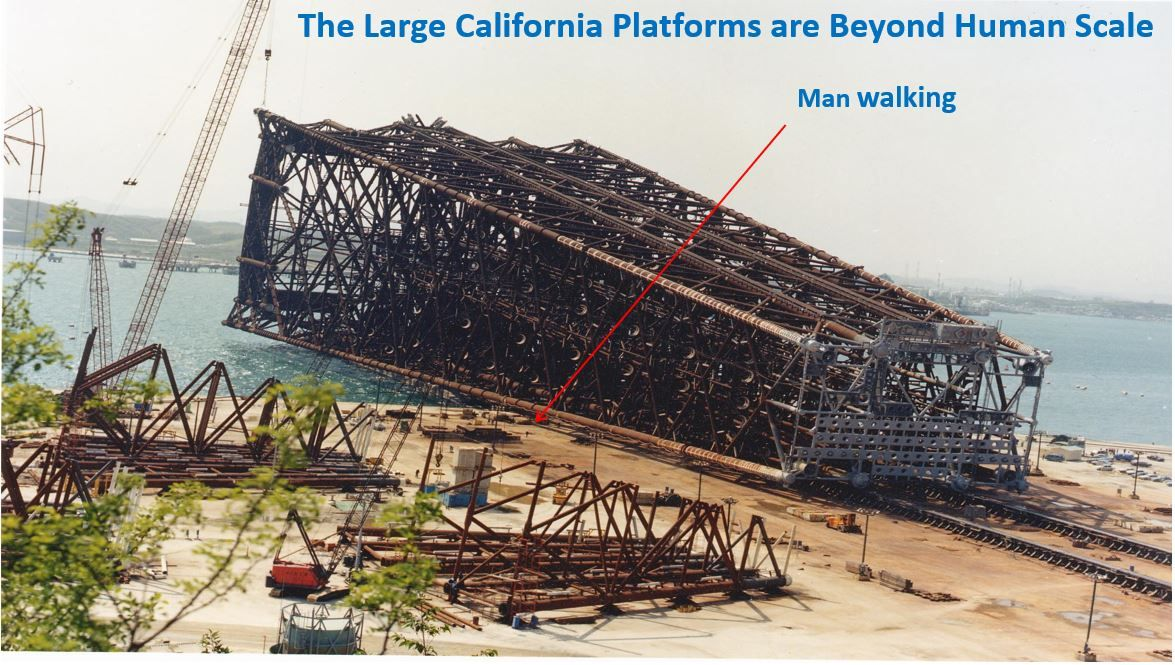
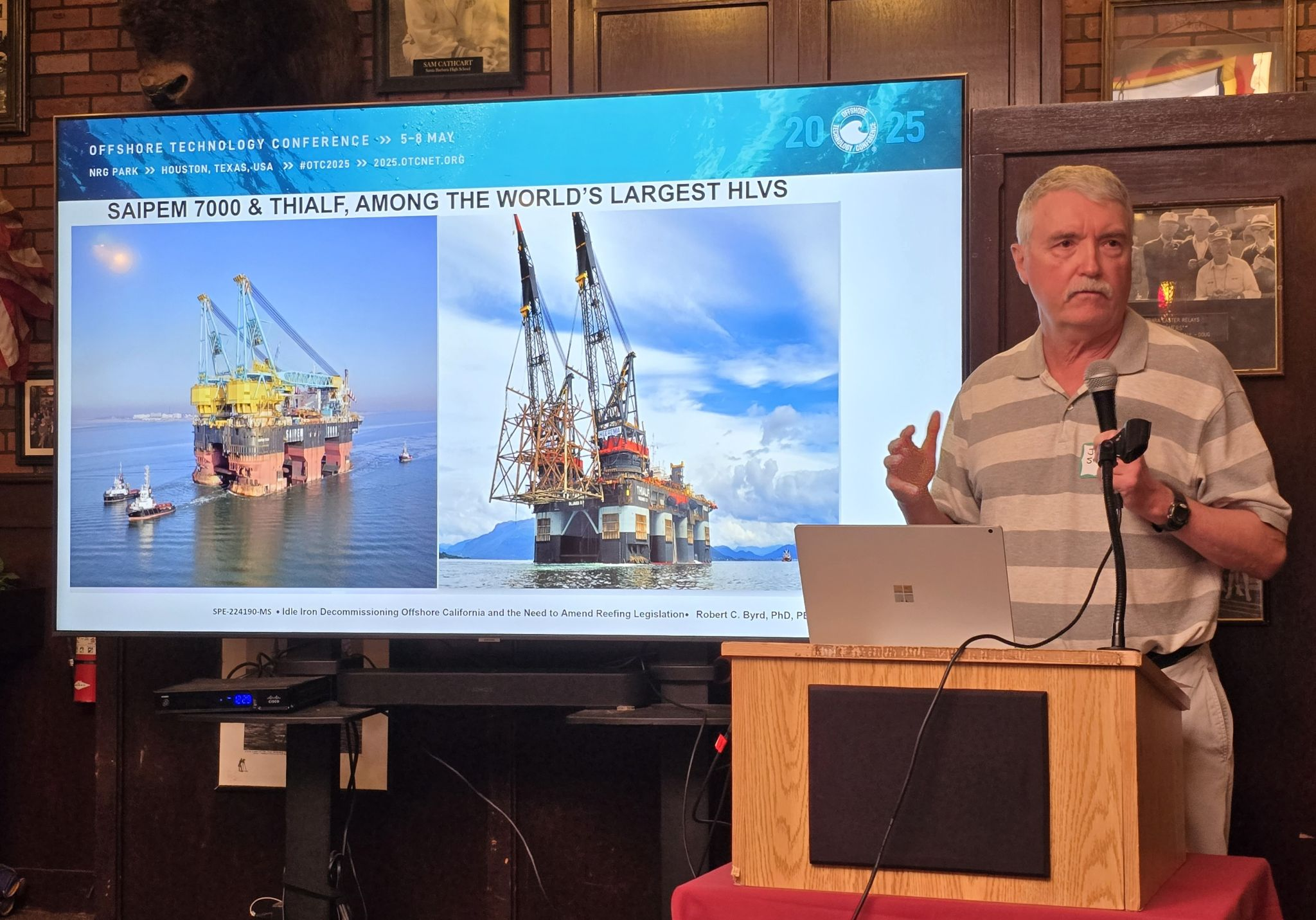
Another important factor environmental groups and the 2023 BOEM Programmatic EIS for Decommissioning failed to consider and acknowledge is the huge amount of air emissions that would be released by world-class heavy lift vessels like the Thialf or Balder Semi-submersible Crane Vessels (SSCVs) that would be required to safely and efficiently remove the large federal OCS platforms like Harvest, Hermosa, and Hidalgo (HHH). The HHH platforms are in waters depths ranging from 430-675 feet and have combined deck and jacket weights ranging from 20,000 – 25,000 tons. In comparison, the wrought iron structure of the Eiffel Tower weighs about 8,000 tons.

The SSCVs and accompanying Anchor Handling Tugs (AHTs) used to remove the HHH platforms will likely to be mobilized from distant locations like the North Sea or Gulf of America where they typically operate. Because SSCVs like the Thialf and Balder are too large to enter the Panama Canal, this would involve a 20,000 nautical mile roundtrip voyage around the tip of South America.

Three to four campaigns, and separate SSCV and AHT mobilizations and demobilizations, are projected to be required to fully remove the HHH platforms because the challenging oceanographic conditions offshore Point Arguello restrict heavy lift operations to a 150-day period between May and October.

Four campaigns by the SSCV and AHT would consume about 300,000 metric tons (mt) of marine diesel oil and release approximately 470,000 mt of CO2 and 11,000 mt of NOX emissions. To put these numbers into context, 470,000 mt of CO2 and 11,000 mt of NOX are:

  • the amount of CO2 emissions released by providing electrical power to 97,600 homes annually (the city of Santa Barbara has about 38,000 housing units).
  • the amount of CO2 emissions released by burning 1.1 million barrels of oil.
  • the amount of CO2 emissions released by 102,000 gasoline burning cars annually.
  • the amount of NOX emissions released by four large oil or coal-fired power plants annually.
  • the total annual NOX emissions in Santa Barbara County.

And this is only the emissions released during mobilization and demobilization of the SSCV and AHT. If full removal is required, an additional 50 days of operational time by the SSCV and AHT is estimated to be required to remove the topside and jacket of each HHH platform. This could be reduced to about 15 days per platform if the jackets are converted to artificial reefs. Only one SSCV and AHT campaign may be required if the HHH jackets are reefed, compared to the four campaigns required for the full removal scenario. This would result in a 75 percent reduction in CO2 and NOX emissions.

Read Full Post »

John Smith’s decommissioning presentation in Santa Barbara

John Smith‘s excellent comments on the BOE post about the proposed revisions to decommissioning financial assurance regulations warrant a separate post. John’s comments are pasted below.

It’s clear the proposed rules have been designed to reduce financial burdens on OCS oil and gas operators, especially small independents. The proposed rules do this by:

  1. Waiving the requirement of the operator/lessees to obtain supplemental financial assurance to cover decommissioning obligations if jointly and severally liable predecessors are determined to have the financial capability to cover the obligations.
  2. Lowering the credit rating threshold BOEM uses for evaluating the financial health lessees and grantees from BBB- to BB- from S&P Global Ratings (S&P) or Baa3 to Ba3 from Moody’s Investor Service Inc.
  3. Revising the level of BSEE probabilistic estimates of decommissioning cost used for determining the amount of supplemental financial assurance required from P70 to P50.

I don’t see any rationale for lowering the credit rating threshold, which would apply to both current and predecessor lessees.  A BB- and a Ba3 rating is considered “non-investment grade” or “junk,” meaning the company is more vulnerable to adverse economic conditions, such as a downturn in oil and gas prices.  Current market estimates place the 3-year probability of default for a BB- rating at approximately 12.5% to 13%. Lowering the credit rating significantly increases the risks of default by lessees and transfers the risk to the federal government and taxpayers.

Reducing the BSEE probabilistic criteria for determining the amount of supplemental financial insurance required from P70 to P50 means there is a 50% chance BSEE cost estimates for decommissioning are underestimated further increasing risks borne by the federal government and taxpayer.  

BOEM should reverse course and maintain the current credit rating threshold (BBB- and Baa3) and the P70 criteria.

Read Full Post »

Attached is John Smith’s updated Sable litigation table. John is a BOEM retiree who has been closely monitoring Sable’s legal and regulatory challenges. His summary:

“Sable Offshore Corp. is involved either directly or indirectly in no less than 12 lawsuits that have been filed by environmental groups, state and county regulatory agencies, and the Attorney General of California, all of whom are committed to stopping Sable from restarting Santa Ynez Unit (SYU) oil and gas production. All of the lawsuits are active and many are likely to result in prolonged judicial proceedings extending over several years. Will Sable have the will and financial resources to continue these legal battles indefinitely? – that’s a multi-million dollar question.”

Read Full Post »

Juvenile rockfish seen on an oil platform off the coast of Santa Barbara. For the scientists who study them, preserving these accidental marine ecosystems has become a moral issue. Photograph: Scott Gietler

John Smith, decommissioning specialist and BOE contributor, has shared his comments (attached) on the Marine Fisheries Habitat Protection Act. This legislation would expand the successful reefing programs on the OCS by facilitating the conversion of retired production platforms into artificial reefs.

Read Full Post »

Conceptually, this technologically advanced polymetallic nodules collection system looks great. The big challenge that John Smith sees is with the number of moving parts.  The numerous manipulators operating at such depths could be prone to breakdowns which reduce recovery rates and significantly increase operating costs.

Read Full Post »

Attached is John Smith’s comprehensive summary of lawsuits related to Sable Offshore’s attempts to restart Santa Ynez Unit production.

If you are keeping score, there are 10 separate cases including a class action lawsuit filed by investors. New legal battles are sure to follow given Sable’s OS&T strategy. Per John:

The combined legal challenges, injunctions, and restraining orders have significantly delayed Sable’s restart plans and prompted the company to pursue an Offshore Storage and Treatment Vessel (OS&T) strategy, which was utilized to process SYU production in federal waters from 1981 – 1994, and transport oil to markets using tankers.

Read Full Post »

John Smith’s excellent decommissioning presentation at the recent Western States Petroleum Assoc. luncheon in Santa Barbara is attached. John used an amended version of Bob Byrd’s OTC powerpoint, adding slides on the proposed California Marine Legacy Act amendments.

For those who have been following the Santa Ynez Unit story, Harmony, Heritage, and Hondo are the platforms in that unit. Platform Harmony, where production resumed on the date of John’s presentation (5/15), is in 1198′ of water and is one of the world’s largest offshore structures.

Read Full Post »

John Smith shared an outstanding paper (attached) that was presented by co-author Robert Byrd at the SPE Regional Meeting in Garden Grove, CA last week.  


John Smith: “My objective in writing the paper is to hopefully spur legislators to recognize the benefits of reefing and the legislative fixes required to facilitate reefing and the removal of aging infrastructure.  The California Department of Fish and Wildlife Habitat Lead was very complimentary of the paper and has distributed it to the Interagency Team which is developing a California Artificial Reefing Plan.”  

John adds: “They are in the process of creating a statewide artificial reef plan and you can sign up for updates and get more information. The California Artificial Reef Program (CARP) Plan won’t discuss the specifics of Rigs-to-Reefs but will be compliant with the National Fisheries Enhancement Act and National Artificial Reef Plan and meet the BSEE requirement of having an adopted state artificial reef plan. The intent is to add an addendum to the plan when resources become available to move Rigs-to-Reefs forward in California. You can check out the latest program update that further discusses the CARP Plan and Rigs-to-Reefs.”

Read Full Post »

In the attached supplement to his comments on BOEM’s financial assurance rule for offshore oil and gas facilities, decommissioning specialist John Smith raises concerns about reliance on cost data submitted by operators. John contrasts operator estimates for platforms in California state waters with estimates provided by independent consultants.

As summarized below and explained in the attachment, the more realistic independent estimates were 2-3 times higher than the operators’ “high end” estimates.

Read Full Post »

Older Posts »