Feeds:
Posts
Comments

Posts Tagged ‘BOEM’

1947 Oil and Gas is a great name choice given that the first offshore oil well beyond the sight of land was completed in 1947 (see photo). The numeric name choice is reminiscent of historically important team names like the San Francisco 49ers and the Philadelphia 76ers.

The name is especially fitting given that 1947’s first acquisition, Renaissance Offshore, operates entirely on the Gulf shelf (map below). Renaissance is a significant shelf producer ranking 19th among all Gulf operators in both oil (791,572 bbls) and gas (1,335,009 mcf) production in 2025. Renaissance ranked 6th in oil production and 7th in gas production among companies that focus on the shelf.

A challenge for 1947 will be improving Renaissance’s compliance and safety record:

  • In 2025, Renaissance was one of only four companies that operated more than 10 shelf platforms and had INC/facility inspection ratios >1.0.
  • Renaissance has averaged 0.93 violations (INCs) per inspection since 1/1/2020, trailing only Cox legacy Array in INC frequency.
  • In 2019, a worker fell to his death at the Renaissance Eugene Island 331 B platform. BSEE’s investigation found that Renaissance failed to maintain all of its walking and working surfaces in a safe condition, that supervisors failed to promptly correct or prevent employees from accessing the uncorrected and uncontrolled walking and working surface hazard area, and that Renaissance and its contractors failed to follow the agreed upon terms and conditions within their respective Safety and Environmental Management Systems (SEMS) bridging arrangements. (Renaissance incurred a seemingly modest $105,292 civil penalty for this incident. There is no public information on any settlement with the victim’s family.)

Between 2012 and 2014 Renaissance grew substantially with the acquisition of sixteen Gulf of Mexico producing fields, fifteen of which are operated and most are 100% owned.” 1947’s financial strength is unclear. Hopefully, BOEM will verify that satisfactory decommissioning financial assurance arrangements are in place before any lease assignments are approved.

Renaissance operations being acquired by 1947 Oil and Gas

Read Full Post »

Decommissioning financial assurance regulations are instrumental in ensuring both environmental and fiscal responsibility.“- .natural resource management students

The first public comments on BOEM’s proposed revisions to the decommissioning financial assurance requirements have been posted. A good comment letter (attached) was submitted by natural resource management students at the University of Arizona. The students oppose the proposed revisions. Among their concerns (additional thoughts added in parentheses):

  • Increased environmental risks. (Accidents, hurricanes, and other events may introduce decommissioning risks that require both immediate and longer term attention and financial resources. Such incidents typically increase decommissioning costs by orders of magnitude, and can even bankrupt financially sound companies. See “Sad End for Taylor Energy.”)
  • Firms with lower credit ratings would no longer have to hold as much capital in reserve and would have a lower bar of entry into projects. (See comments by John Smith.)
  • The possibility of cascading economic impacts in the event that bankruptcy does occur. (Which predecessors will be affected and how? What about contractors? How long will bankruptcy litigation delay resolution of claims? Will bankruptcy court asset sales increase public financial, safety, and environmental risks?)
  • Taxpayers would be facing a portion of the risk. (Predecessors are only accountable for the facilities they installed, so holding predecessors liable doesn’t free the taxpayers from all financial risks.)
  • The entire energy sector faces increased risks when operating companies fail. (Prominent failures damage the reputation of the industry and the OCS program, with implications for the economy and national security.)

Before relaxing financial assurance requirements, BOEM should consider the role that lax lease assignment and financial assurance policies had in the growth of Fieldwood, Cox, Signal Hill, Black Elk, and other failed companies.

Read Full Post »

The Case for Reefing California Platforms by John Smith

Environmental groups like the Environmental Defense Center and Get Oil Out continue to oppose converting the jackets of California oil and gas platforms to artificial reefs despite scientific studies (Claisse et al. 2014) showing “oil and gas platforms off the coast of California have the highest secondary fish production per unit area of seafloor of any marine habitat that
has been studied.

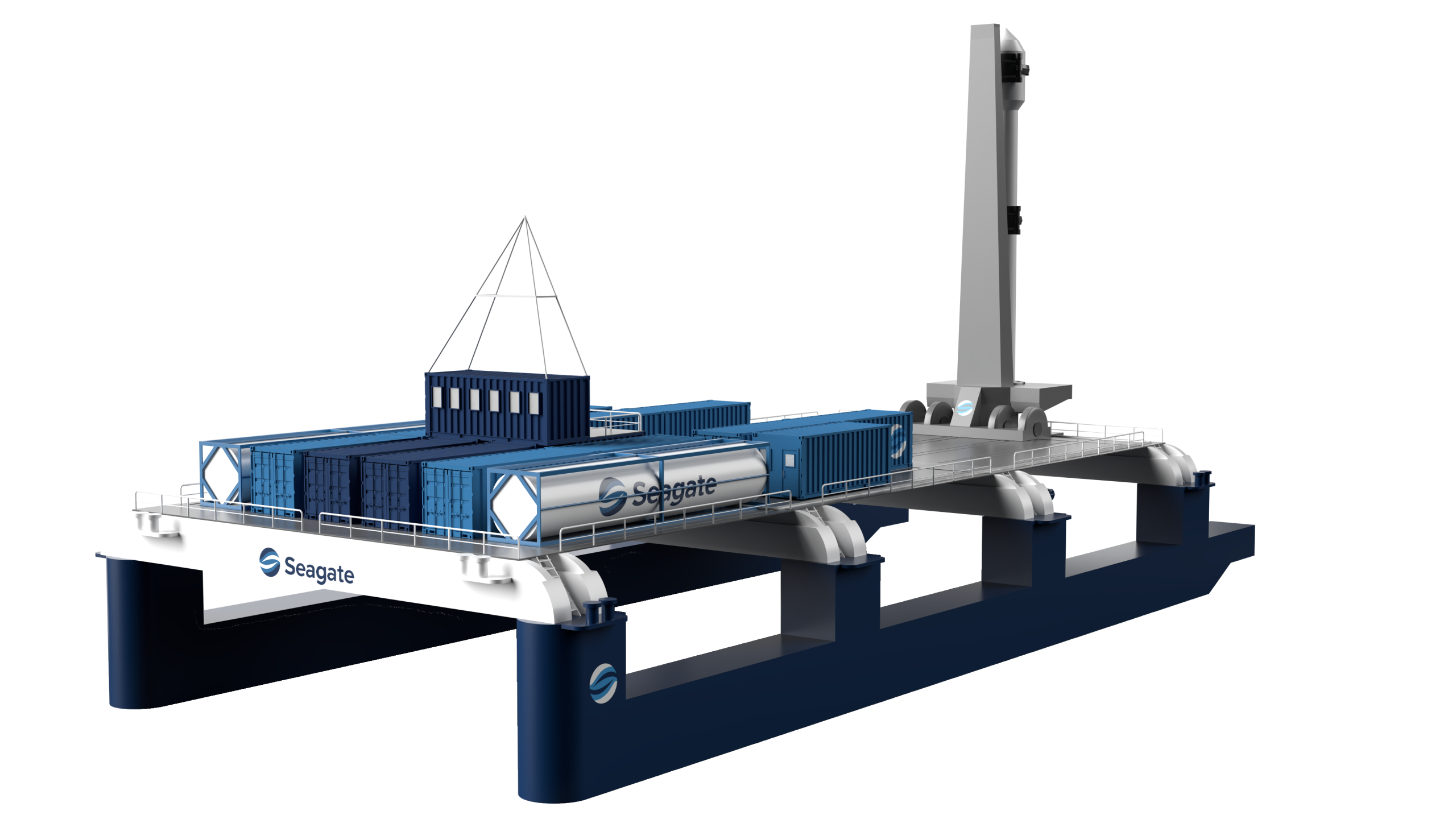
Another important factor environmental groups and the 2023 BOEM Programmatic EIS for Decommissioning failed to consider and acknowledge is the huge amount of air emissions that would be released by world-class heavy lift vessels like the Thialf or Balder Semi-submersible Crane Vessels (SSCVs) that would be required to safely and efficiently remove the large federal OCS platforms like Harvest, Hermosa, and Hidalgo (HHH). The HHH platforms are in waters depths ranging from 430-675 feet and have combined deck and jacket weights ranging from 20,000 – 25,000 tons. In comparison, the wrought iron structure of the Eiffel Tower weighs about 8,000 tons.

The SSCVs and accompanying Anchor Handling Tugs (AHTs) used to remove the HHH platforms will likely to be mobilized from distant locations like the North Sea or Gulf of America where they typically operate. Because SSCVs like the Thialf and Balder are too large to enter the Panama Canal, this would involve a 20,000 nautical mile roundtrip voyage around the tip of South America.

Three to four campaigns, and separate SSCV and AHT mobilizations and demobilizations, are projected to be required to fully remove the HHH platforms because the challenging oceanographic conditions offshore Point Arguello restrict heavy lift operations to a 150-day period between May and October.

Four campaigns by the SSCV and AHT would consume about 300,000 metric tons (mt) of marine diesel oil and release approximately 470,000 mt of CO2 and 11,000 mt of NOX emissions. To put these numbers into context, 470,000 mt of CO2 and 11,000 mt of NOX are:

  • the amount of CO2 emissions released by providing electrical power to 97,600 homes annually (the city of Santa Barbara has about 38,000 housing units).
  • the amount of CO2 emissions released by burning 1.1 million barrels of oil.
  • the amount of CO2 emissions released by 102,000 gasoline burning cars annually.
  • the amount of NOX emissions released by four large oil or coal-fired power plants annually.
  • the total annual NOX emissions in Santa Barbara County.

And this is only the emissions released during mobilization and demobilization of the SSCV and AHT. If full removal is required, an additional 50 days of operational time by the SSCV and AHT is estimated to be required to remove the topside and jacket of each HHH platform. This could be reduced to about 15 days per platform if the jackets are converted to artificial reefs. Only one SSCV and AHT campaign may be required if the HHH jackets are reefed, compared to the four campaigns required for the full removal scenario. This would result in a 75 percent reduction in CO2 and NOX emissions.

Read Full Post »

damaged Vineyard Wind turbine – Cape Cod Times photo

Excerpt from p.3 of Vineyard Wind’s suit against GE Renewables (attached):

“As was widely reported in national and local news, in July 2024, one of the GER offshore blades collapsed and fell into the waters off Nantucket, necessitating a massive environmental cleanup, and a six-month construction hiatus during which GER performed a “root cause” analysis. That analysis concluded that 68 of the 72 GER blades installed at the Project (nearly all manufactured by GER in Gaspé, Canada) were also defective because they were inadequately bonded together, and were so poorly made that they were beyond repair. GER’s remediation plan required it to remove all of the blades and to replace all Gaspé blades with others manufactured at a different facility in Cherbourg, France.

Regulatory issues of concern:

    Read Full Post »

    John Smith’s decommissioning presentation in Santa Barbara

    John Smith‘s excellent comments on the BOE post about the proposed revisions to decommissioning financial assurance regulations warrant a separate post. John’s comments are pasted below.

    It’s clear the proposed rules have been designed to reduce financial burdens on OCS oil and gas operators, especially small independents. The proposed rules do this by:

    1. Waiving the requirement of the operator/lessees to obtain supplemental financial assurance to cover decommissioning obligations if jointly and severally liable predecessors are determined to have the financial capability to cover the obligations.
    2. Lowering the credit rating threshold BOEM uses for evaluating the financial health lessees and grantees from BBB- to BB- from S&P Global Ratings (S&P) or Baa3 to Ba3 from Moody’s Investor Service Inc.
    3. Revising the level of BSEE probabilistic estimates of decommissioning cost used for determining the amount of supplemental financial assurance required from P70 to P50.

    I don’t see any rationale for lowering the credit rating threshold, which would apply to both current and predecessor lessees.  A BB- and a Ba3 rating is considered “non-investment grade” or “junk,” meaning the company is more vulnerable to adverse economic conditions, such as a downturn in oil and gas prices.  Current market estimates place the 3-year probability of default for a BB- rating at approximately 12.5% to 13%. Lowering the credit rating significantly increases the risks of default by lessees and transfers the risk to the federal government and taxpayers.

    Reducing the BSEE probabilistic criteria for determining the amount of supplemental financial insurance required from P70 to P50 means there is a 50% chance BSEE cost estimates for decommissioning are underestimated further increasing risks borne by the federal government and taxpayer.  

    BOEM should reverse course and maintain the current credit rating threshold (BBB- and Baa3) and the P70 criteria.

    Read Full Post »

    Three wind turbines, including one with a damaged blade, at the Vineyard Wind offshore site in November 2024. Credit: Eleonora Bianchi / The New Bedford Light.

    Yet another chapter in the Vineyard Wind saga:

    New Bedford Light: Vineyard Wind on Wednesday sued its turbine supplier, GE Renewables, in civil court in Boston, alleging GE is breaching its contract and planning to abandon the project by April 28 — during the critical final stage of coming fully online.

    According to the complaint, GE filed a termination notice with Vineyard Wind in late February for its contracts to supply wind turbines and service and maintain them, citing more than $300 million in claims unpaid by Vineyard Wind.

    If GE exits, Vineyard Wind says, the project “will likely fail, leaving the windfarm stranded.”

    The New Bedford Light provides more details on the litigation.

    Remember, BOEM waived the “pay as you build” decommissioning financial assurance requirement for Vineyard Wind and subsequently relaxed financial assurance requirements for all offshore wind projects.

    Read Full Post »

    The Department of the Interior today announced the start of a phased plan to establish the Marine Minerals Administration, bringing together the functions of the Bureau of Ocean Energy Management and the Bureau of Safety and Environmental Enforcement. This action is intended to improve coordination and increase efficiencies across offshore leasing, permitting, inspections and environmental oversight, while maintaining all existing regulatory protections and rigorous safety standards. 

    This streamlined approach reflects the evolution of offshore energy development and the need for a more integrated approach to managing conventional and emerging resources such as critical minerals. By aligning planning, leasing and oversight functions, the Department is positioning the agency to better meet current and future energy demands.

    This is an excellent step that many OCS program veterans have been advocating. In addition to the inefficiencies associated with overlapping and intertwined BOEM and BSEE responsibilities, the associated regulatory fragmentation is a significant safety risk factor.

    See the comments that I submitted to the Dept. of the Interior in response to their request for regulatory reform recommendations.

    Read Full Post »

    Companies seeking to acquire OCS leases are not only competing with each other, they are also competing with BOEM’s tract evaluations. In that regard, the bidders fared well at Sale BBG1. Only 3 of the 181 high bids were rejected by BOEM. and those rejections appear to be warranted.

    The rejected bids were significantly below both BOEM’s Mean of the Range-of-Value and Lower Bound Confidence Interval for these single bid tracts (table below).

    Block No.Companyno. of bidsbidMROVLBCI
    EW 921LLOG1$505,777$2,900,000$2,200,000
    MC 587KUSA1$700,000 $3,300,000$2,200,000
    MC 588LLOG1$613,008$6,100,000$4,600,000
    MROV=Mean of the Range-of-Value; LBCI=Lower Bound Confidence Interval; KUSA=Karoon (Australia) Energy USA; EW=Ewing Bank; MC=Mississippi Canyon

    LLOG submitted 9 other high bids (alone or with partners) that were accepted. KUSA did not submit any other bids. We’ll see if the rejected bids for these blocks are exceeded in future sales.

    Nine other high bids (table below) were less than the MROV, but all were greater than the LBCI. Those bidders “beat the house,” acquiring leases for <MROV. In that regard, Equinor led the pack with no rejections even though 3 of their 7 bids were below MROV. Similarly, 2 of Beacon’s 4 bids were <MROV, with no rejections.

    Block No.Companyno. of bidsbidMROVLBCI
    GC 345Beacon1$5,302,358$5,400,000$4,200,000
    GC 346Beacon1$1,102,358$1,500,000$900,000
    GC 547Equinor1$3,200,067$4,500,000$2,600,000
    GC 549Equinor1$899,967$1,500,000$576,000
    AT 64LLOG1$7,997,018$8,300,000$6,700.000
    KC 386Oxy2$3,000,505$3,500,000$2,800,000
    KC 429Oxy1$600,505$910,000$470,000
    KC 431Woodside1$904,547$1,200,000$840,000
    WR 56Equinor1$904,547$1,200,000$576,000
    MROV=Mean of the Range-of-Value; LBCI=Lower Bound Confidence Interval; AT=Atwater Valley, GC=Green Canyon, KC=Keathley Canyon, WR=Walker Ridge

    Perhaps most interesting were the blocks that were highly valued by industry, but not by BOEM. Each of these blocks (table below) received multiple bids and high bids >$10 million. Conversely, BOEM valued the blocks at only $576,000, which (per the terms of the sale) equates to the minimum acceptable bid of $100/acre.

    Block No.high bidderhigh bidother bidsMROV
    GC 845Beacon$11,802,358LLOG: $613,008$576,000
    KC 25Chevron$18,592,086BP: $11,507,770
    Shell: $753,029
    $576,000
    WR 443Woodside$15,204,547Chevron $1,596,189$576,000
    WR444Woodside$12,204,547BP: $4,593,770
    Chevron $1,482,378
    $576,000
    MROV=Mean of the Range-of-Value; LBCI=Lower Bound Confidence Interval; GC=Green Canyon, KC=Keathley Canyon, WR=Walker Ridge


    All of this demonstrates yet again that:

    • the govt is leasing exploration and development opportunities, not confirmed resources,
    • commercial discoveries are far from certain,
    • informed assessments differ (I.e. great minds, and their computers, don’t always think alike 😀),
    • corporate priorities differ, and
    • exploration strategies evolve.

    Superstition, tactic, AI, coded or subliminal message? 😉

    • All 58 BP bids end with 770. Examples: $1,707,770 and $807,770. (At Sale BBG2, all 5 BP bids ended with 990.)
    • All 18 Shell bids ended with 029. (At Sale BBG2, all 6 Shell bids ended with 240.)
    • 13 of 15 Anadarko bids ended with 505, the other 2 ended with 101.
    • All 9 Woodside bids ended with 547.
    • All 3 Eni bids ended with 001.
    • All 4 Arena bids ended with 912.
    • All 12 Talos bids ended with 986.
    • All 3 Beacon bids ended with 358.

    Read Full Post »

    For 40 years, challenges associated with bankruptcies (or the threat thereof), a divided offshore industry, political pressure, hurricane damage, and unresolved legal issues have hindered initiatives to better protect the public from decommissioning liabilities. Nonetheless, regulators and industry were able to prevent taxpayers from incurring any decommissioning costs. Unfortunately that is no longer the case.

    For the first time in history, the govt has funded decommissioning on the OCS (and bragged about it – photo below).

    Federally funded decommissioning operation in the Matagorda Area of the Gulf.

    BOEM’s proposed revisions to the decommissioning regulations (attached) would facilitate the transfer of aging structures to companies with limited assets, and in some cases, poor or undemonstrated safety records.

    The proposal would reduce or eliminate the supplemental financial assurance requirement if a predecessor lessee has a strong credit rating. For that strategy to work, related decommissioning issues must be addressed. and clarifications and boundaries provided to ensure taxpayers are protected from decommissioning liabilities.

    Predecessor liability, which is important because it helps prevent companies from assigning leases for the purpose of avoiding decommissioning obligations, was not established in the regulations until much of the OCS infrastructure was already installed. In a final rule that was effective on 8/20/1997, my office (thanks to the perseverance of Gerry Rhodes, John Mirabella, and Dennis Daugherty) codified the joint and several liability principle in 30 CFR 250.110 as follows:

    (b) Lessees must plug and abandon all well bores, remove all platforms or other facilities, and clear the ocean of all obstructions to other users. This obligation:
    (1) Accrues to the lessee when the well is drilled, the platform or other facility is installed, or the obstruction is created; and
    (2) Is the joint and several responsibility of all lessees and owners of operating rights under the lease at the time the obligation accrues, and of each future lessee or owner of operating rights, until
    the obligation is satisfied under the requirements of this part.

    Prior to the that rule, the official policy of the Dept. of the Interior, as expressed in a 1988 letter from the Director of the Minerals Management Service (see excerpt pasted below), was that lease assignors would NOT be held accountable should their successors fail to fulfill their decommissioning responsibilities.

    A major unanswered question regarding decommissioning obligations is thus the extent to which predecessor liability applies to leases assigned prior to the 1997 regulation. According to BOEM data, 771 remaining platforms were installed at least 10 years before the rule change, and 504 were installed at least 20 years prior. For assets transferred prior to the rule change, do the predecessors retain liability? BOEM should explain its position on this issue.

    Other predecessor liability questions that need to be answered:

    • Now that the reverse chronological guidance has been scrapped, what will be the process for determining which predecessors will be held responsible?
    • If the govt doesn’t ensure that the new lessees fulfill their performance obligations (e.g. funding escrow accounts, well plugging, insurance, etc.), are predecessors still liable?
    • What if the structures were poorly maintained by the new lessees, complicating decommissioning and increasing the costs
    • Should a predecessor several transfers removed from operating the facilities still be held responsible?

    Two examples of what can happen (and has happened):

    Example 1: Big AAA Oil assigns a lease to Proud Production, a reputable independent. After years of operations, Proud can no longer profitably produce from the lease. Proud assigns the lease to CCC Oil & Gas, a small and highly efficient operator. After the lease is no longer profitable, even for a company with a low cost structure, CCC assigns the lease to Elmer’s E&P, a sketchy, barely solvent operating company with a poor compliance record. Elmer rather predictably neglects maintenance and declares bankruptcy after a decline in oil prices. Should Big AAA Oil, which had no say in the last 2 transfers in the assignment chain, be financially responsible for decommissioning the facilities?

    Example 2: Big AAA Oil assigns a lease to DDD Development Company. Per the terms of the assignment, DDD establishes an Abandonment Escrow Account, as provided for in 30 CFR 556.904. BOEM allows DDD to withdraw funds from the account for purposes not authorized in the regulations. Should Big AAA Oil be liable for decommissioning costs after DDD is no longer solvent? (See “The troubling case of Platforms Hogan and Houchin.”)

    For predecessor liability to be fairly and effectively implemented, and survive legal challenges, BOEM should:

    • Before approving lease assignments, verify that the assignors and assignees have contractually specified, to BOEM’s satisfaction, how the decommissioning of assigned assets will be funded.
    • Not approve subsequent lease assignments until the predecessor that is being held financially responsible has approved a funding agreement with the new lessees.

    Another important concern is that BOEM’s proposal does not correct two prior changes that further expose the public to decommissioning liabilities:

    Read Full Post »

    Attached are proposed revisions to BOEM’s marine minerals regulations as published today in the Federal Register. As advertised, the revisions appear to be largely administrative in nature and do not substantively change the marine minerals program.

    The proposal does require BOEM to act on unsolicited lease sale requests within 28 days (currently 45 days), which may prove to be a challenge. See the excerpt pasted below.

    G. Revise 30 CFR 581.11(b) “Unsolicited request for a lease sale”

    The requirement for the BOEM Director to decide “within 45 days” of receipt of a lease request is not based on a statutory requirement. BOEM proposes to replace this 45-day timeframe with 28 days to ensure timely processing of such requests.

    Read Full Post »

    Older Posts »