There are 67 NGOs with observer status at the International Seabed Authority (ISA) as of March 2026, which explains why nothing gets done. More than thirty years after its creation, there is still no final Mining Code for nodule exploitation.
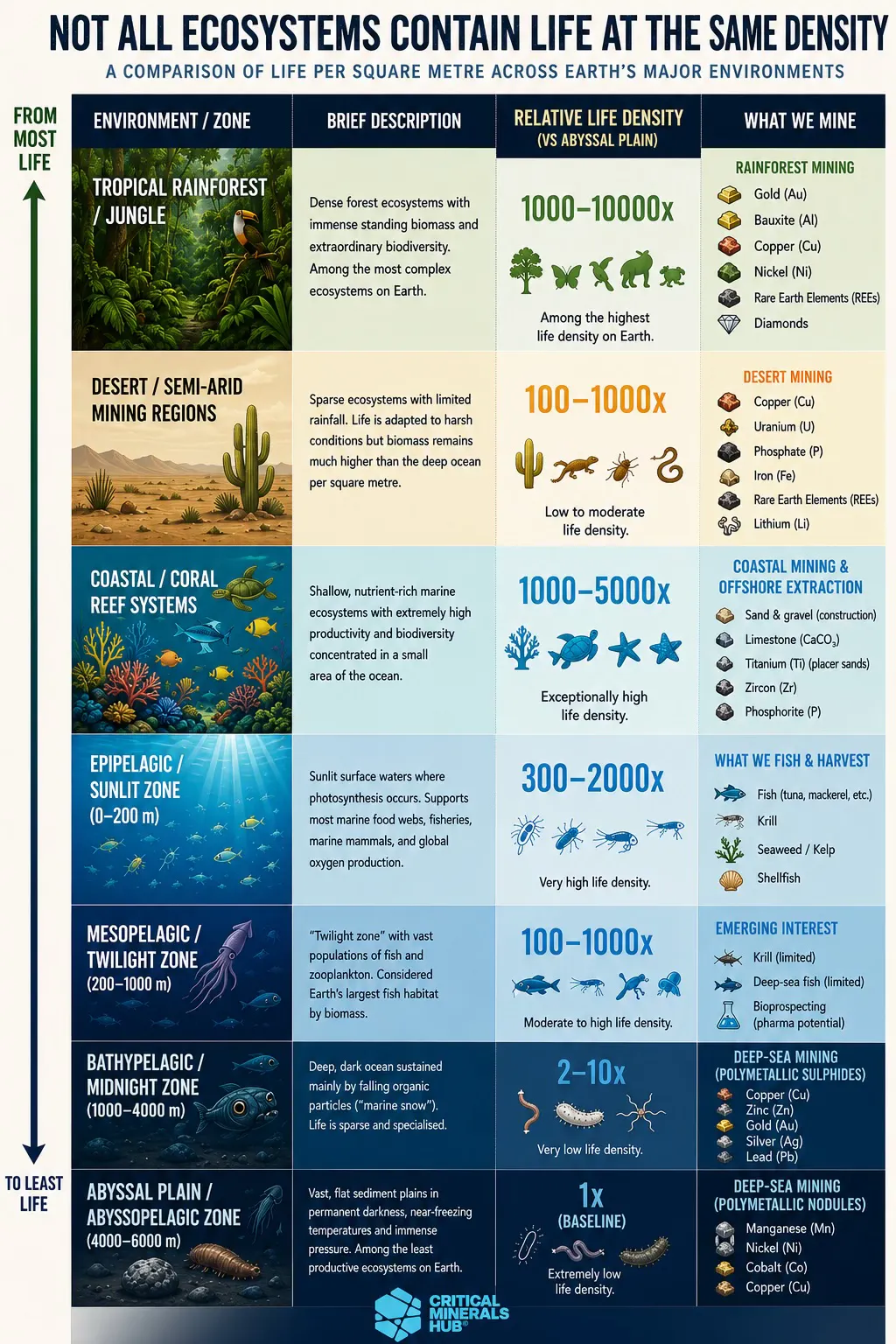
“Deep‑sea mining disturbs low‑productivity abyssal ecosystems and may have long‑lasting local effects on small communities of widely distibuted organisms reliant upon the nodules themselves, but avoids the deforestation, human displacement and occupational hazards of many terrestrial mines. The ethical question is whether it is better to concentrate impacts on a relatively small portion of the most common habitat on Earth, or to continue expanding high‑impact mining frontiers on land like tropical rainforests.“
“The job of a regulator is not to deliver closure for activists. It is to regulate access to resources designated as the “common heritage of mankind” in a way that balances environmental protection, equitable benefit sharing and global development needs. That will always involve trade‑offs.“
A New York Times article suggests that the consolidation of BOEM and BSEE into the Marine Minerals Administration will weaken environmental oversight. It will not. On the contrary, regulation is likely to be strengthened as resources shift from inter-bureau coordination and redundancy management to the primary safety and environmental protection missions.
Given the challenges associated with Federal reorganizations, agency heads often opt for the status quo. I’m pleased that the current DOI leadership team, with whom I disagree on some issues, chose to merge the bureaus.
Quotes from the NYT article followed by my comments:
NYT:The Trump administration is creating a new office that critics say could weaken the environmental oversight of oil drilling and seabed mining in territorial waters.
Comment: The functional overlap and associated uncertainty that permeates the offshore regulatory regime is a weakness, not a strength. Virtually every element of the regulatory program requires coordination between the two bureaus. This includes plan and permit approvals, decommissioning and financial assurance, spill response plans, lease stipulations, assignments, pipeline regulation, environmental reviews, enforcement actions, and geologic data collection and review. Note the list of MOUs that are intended to coordinate BOEM and BSEE redundancy. The documents often do more to confuse than clarify. For example, see the MOU entitled “Environmental and NEPA.”
Multi-bureau organizational complexity is not in the best interest of safety and environmental protection. Overlapping responsibilities, coordination challenges, and “turf” issues distract the technical staff from their important risk management duties, the work they are good at and enjoy doing. BSEE and BOEM should be overseeing the offshore industry, not each other.
NYT:The new agency, the Marine Minerals Administration, will be formed by reunifying two offices that had been split up after the 2010 Deepwater Horizon oil spill in an effort to increase environmental oversight of the energy industry and prevent future oil disasters. After the split, the Interior Department’s oil-leasing activities were separated from environmental regulation and financial management. (emphasis added)
Comment: The assertion that the leasing and environmental regulation were separated is false. The leasing bureau (BOEM) was assigned lead responsibility for the review and approval of the fundamental operational planning documents – Exploration Plans, Development and Production Plans, and Development Operations Coordination Documents. This includes the environmental reviews pursuant to NEPA.
NYT:The move is “worrisome because it has the potential of bringing things back where they were, where there was this inherent conflict of interest between promotion of offshore oil and gas, and oversight safety,” according to Donald Boesch, emeritus professor at the University of Maryland Center for Environmental Science.
“In recent years various bodies have concluded that certain MMS offices and programs have violated ethical rules or guidelines. In the wake of the Deepwater Horizon disaster, some questioned whether ethical lapses played any role in causing the blowout. The Chief Counsel‘s team found no evidence of any such lapses.“
NYT:The new bureau will also take on oversight of the Trump administration’s plans to lease waters in U.S. territories to deep-sea mining companies. The first of these sales, according to the spokeswoman for the Interior Department, are likely to happen next year.
Comment: DOI’s marine minerals program is decades old and is a priority for the current administration. Reorganization should not affect the MMA’s capability to oversee these activities.
Attached are proposed revisions to BOEM’s marine minerals regulations as published today in the Federal Register. As advertised, the revisions appear to be largely administrative in nature and do not substantively change the marine minerals program.
The proposal does require BOEM to act on unsolicited lease sale requests within 28 days (currently 45 days), which may prove to be a challenge. See the excerpt pasted below.
G. Revise 30 CFR 581.11(b) “Unsolicited request for a lease sale”
The requirement for the BOEM Director to decide “within 45 days” of receipt of a lease request is not based on a statutory requirement. BOEM proposes to replace this 45-day timeframe with 28 days to ensure timely processing of such requests.
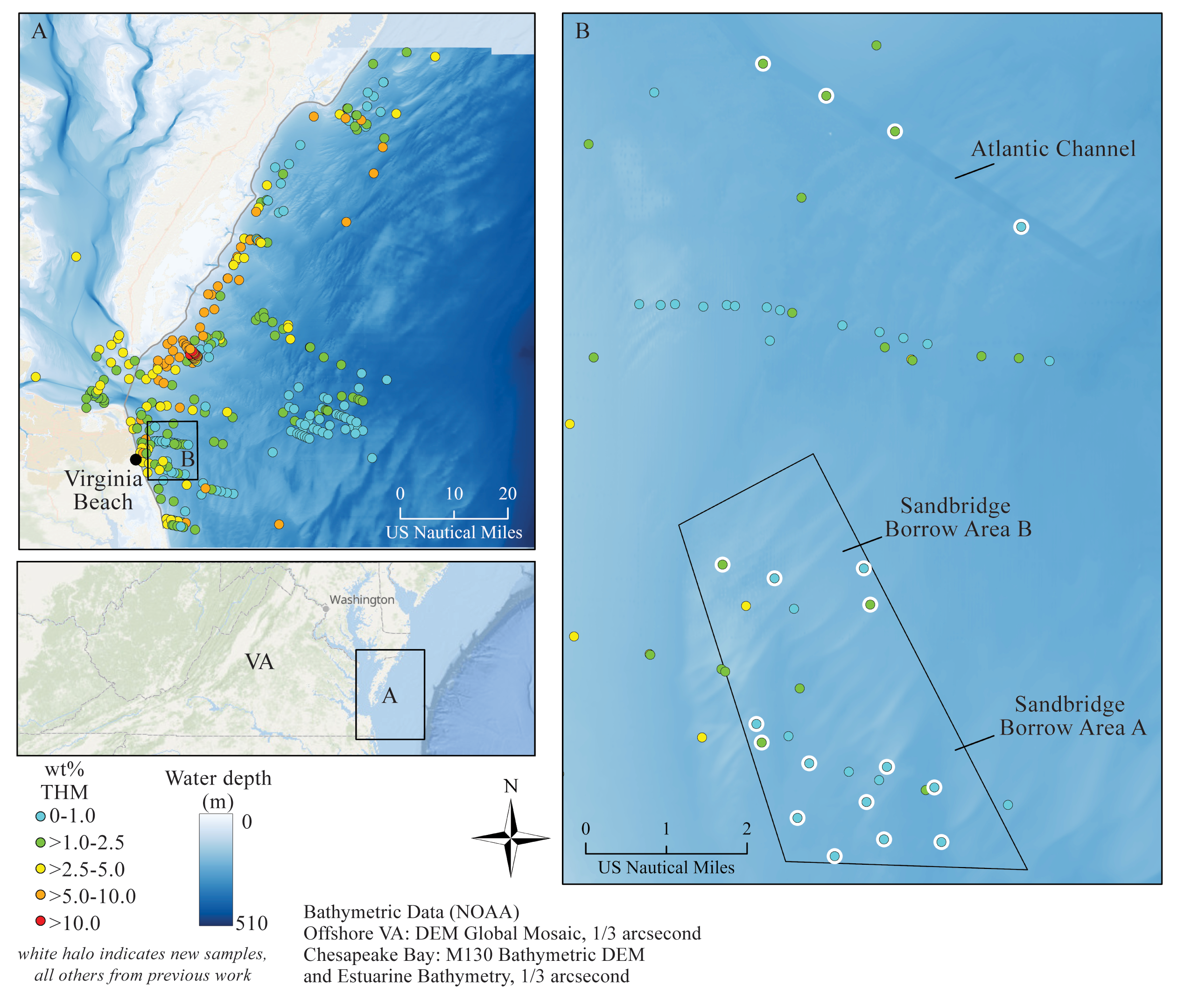
Heavy mineral geodatabase showing marine samples offshore of Virginia. A: 620 samples with heavy mineral data from previous projects, symbol colors determined by the percent of total heavy minerals (THM) obtained through gravity spiral separation methods. B: M21AC00010 samples (indicated with white halo) from Sandbridge Shoal and Atlantic Channel vibracores for THM and mineralogical analyses.
Odyssey’s primary targets are phosphate, which is now on the critical minerals list, and rare earth element’s titanium and zirconium. This would be a shelf dredging operation, in partnership with Great Lakes Dredge & Dock Company, rather than the deepwater module collection being proposed for the Pacific.
The fact that the sand recovered during the dredging process could be used for beach nourishment should appeal to adjacent coastal communities.
Odyssey Marine’s CEO discusses the proposed Virginia offshore program starting at the 4:00 minute mark in the video below.
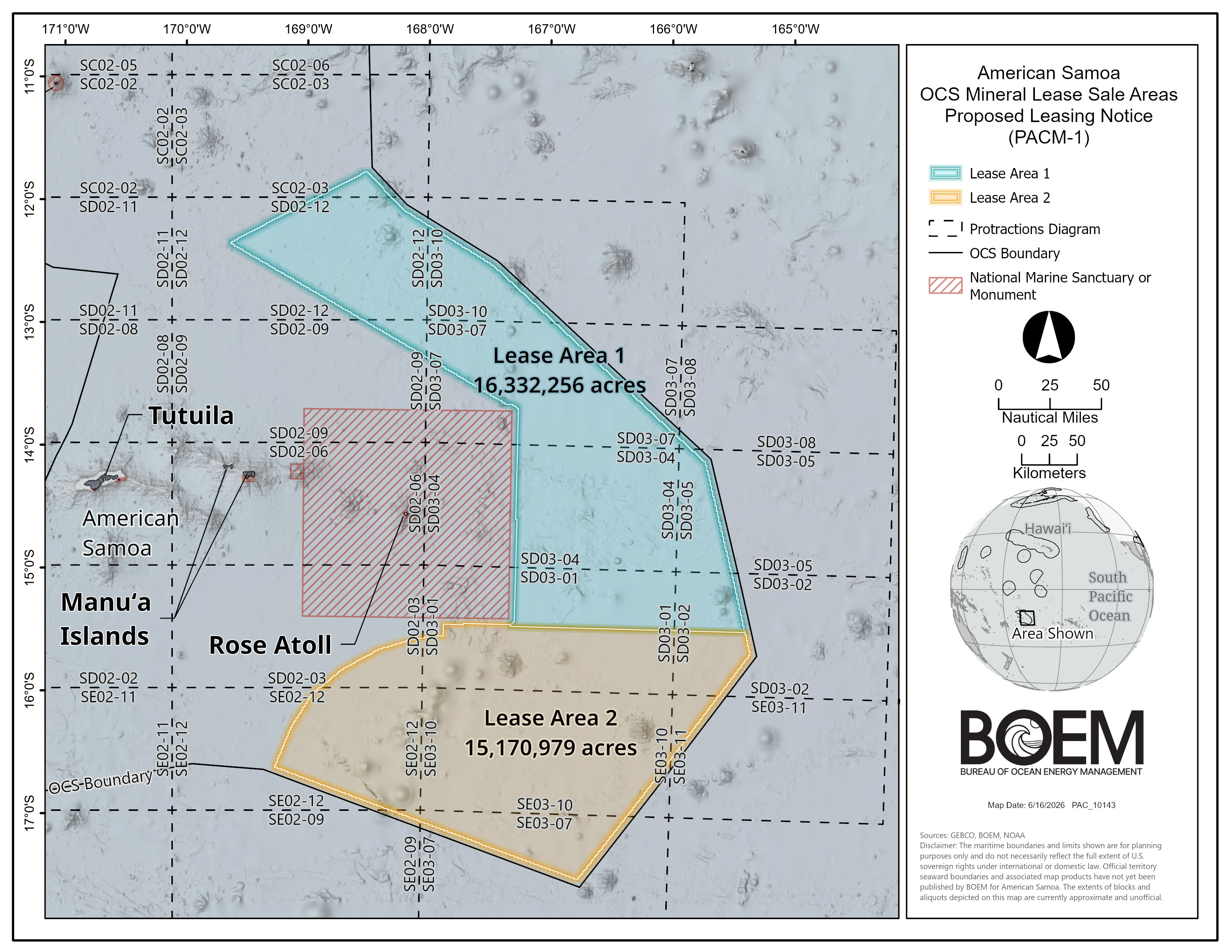
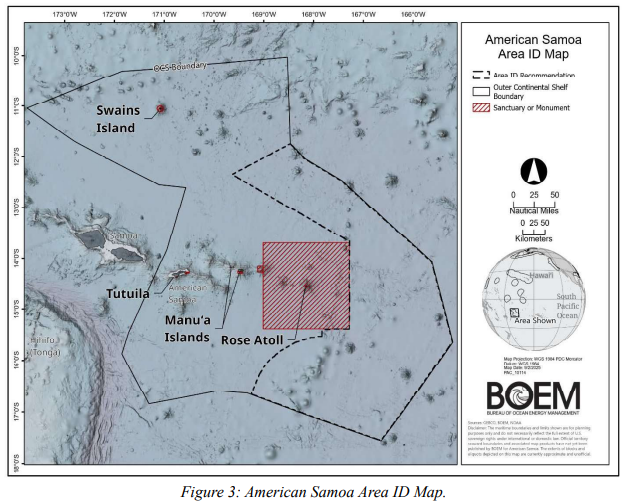
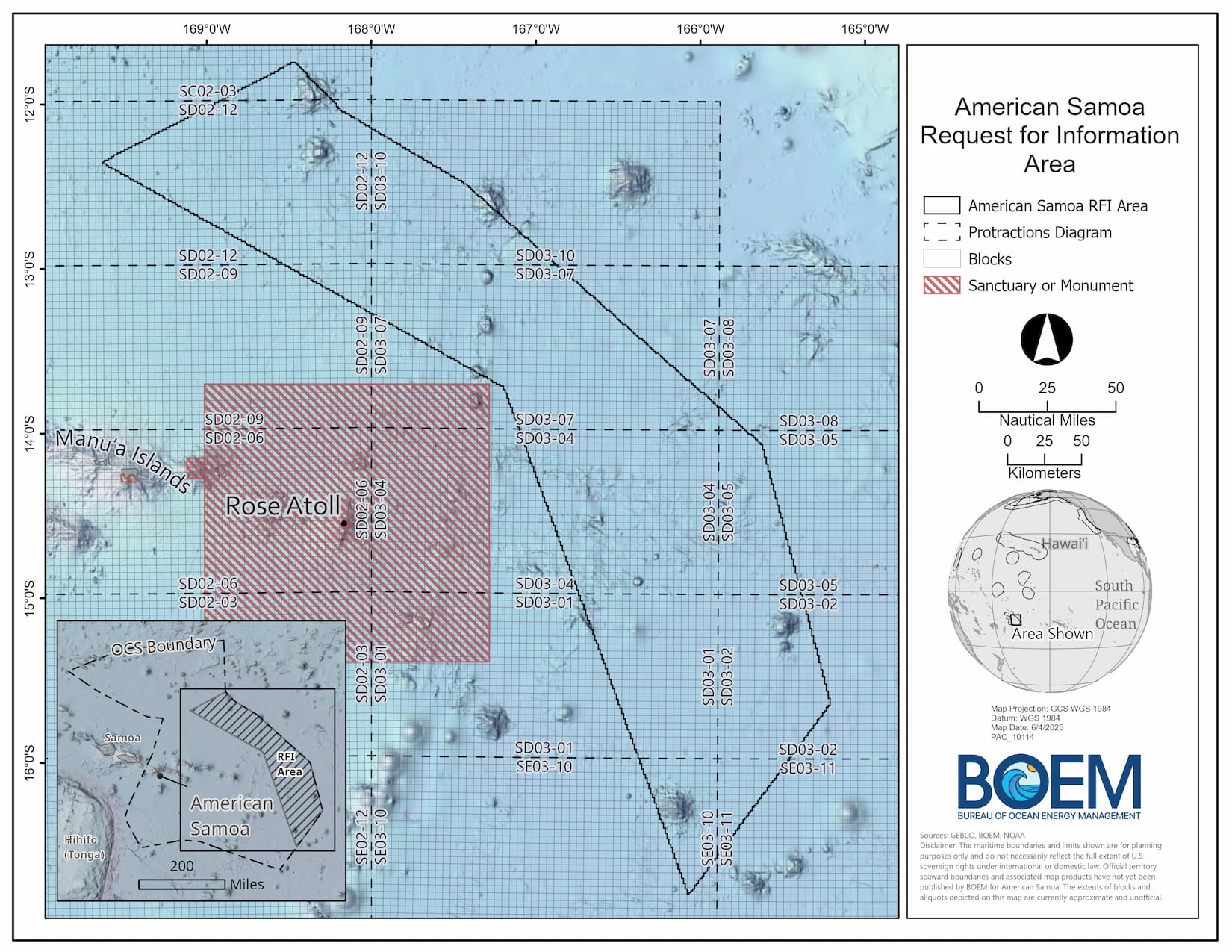
BOEM completed the area identification (outlined in diagram above) for marine minerals offshore American Samoa. The full decision memorandum is attached.
In response to BOEM’s Request for Information, Impossible Metals confirmed their interest in the identified area. Several other companies also expressed interest. The Governor and a number of other parties submitted interesting comments, which are summarized on p. 2 of the attachment.
The first two steps in a process that could ultimately lead to a mineral lease sale have thus been completed. Steps 3 to 6 remain. (See below)
Request for Information and Interest (RFI) published in the Federal Register. complete
Identification of Areas to be considered for leasing. complete
Environmental Analysis for the lease sale.
Proposed Leasing Notice Published in the Federal Register.
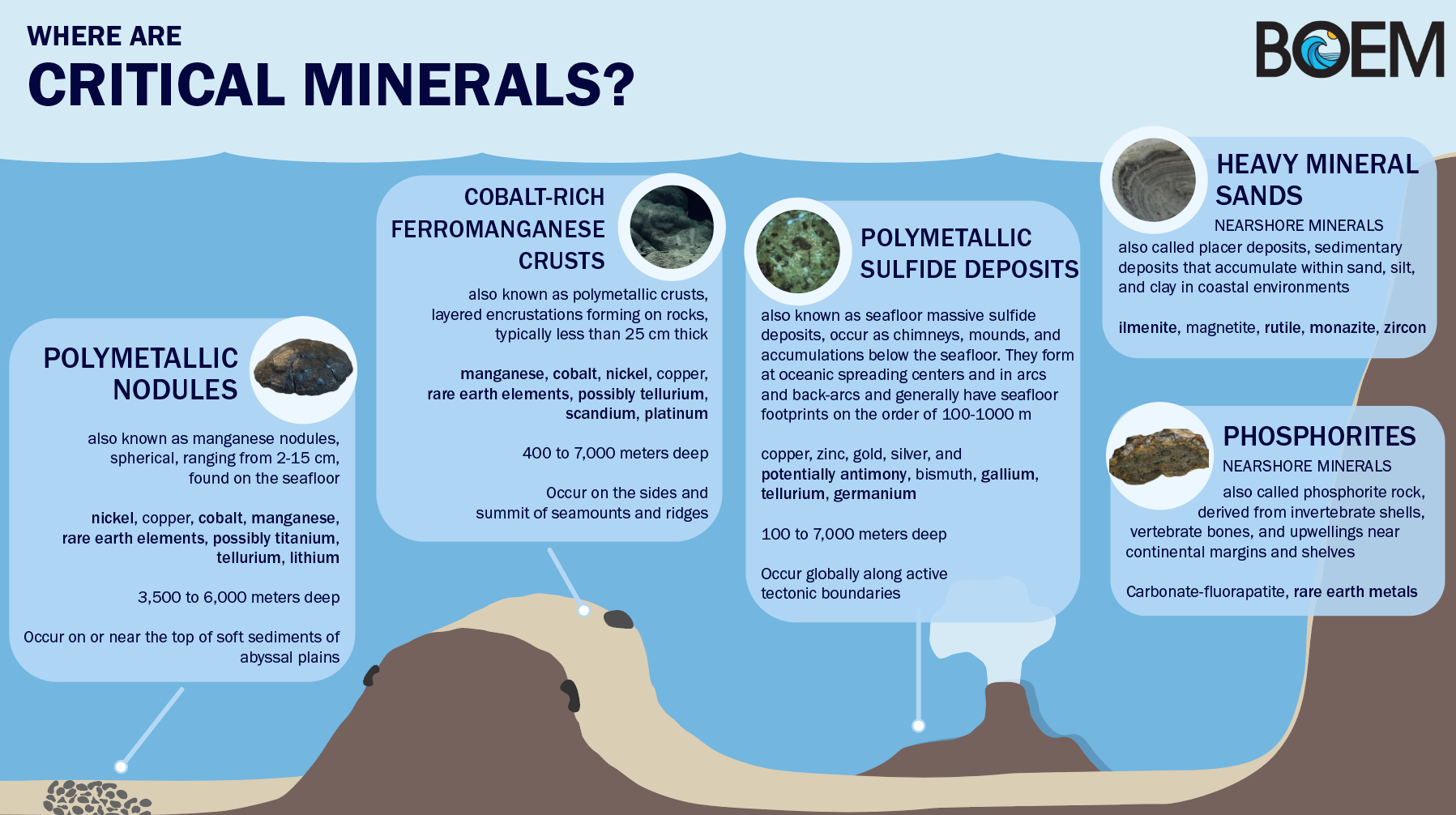
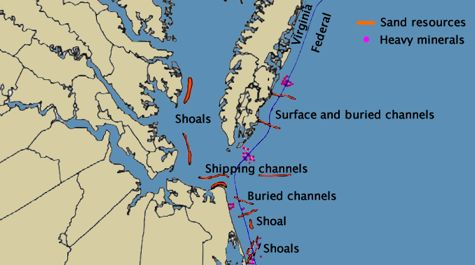
The proposed lease area, located within the U.S. outer continental shelf (OCS) off the Mid-Atlantic coast, is highly prospective for heavy mineral sands rich in titanium, zirconium, rare earth elements (REEs), and phosphate.
This would be a shelf dredging operation rather than the deepwater module collection being proposed for the Pacific.
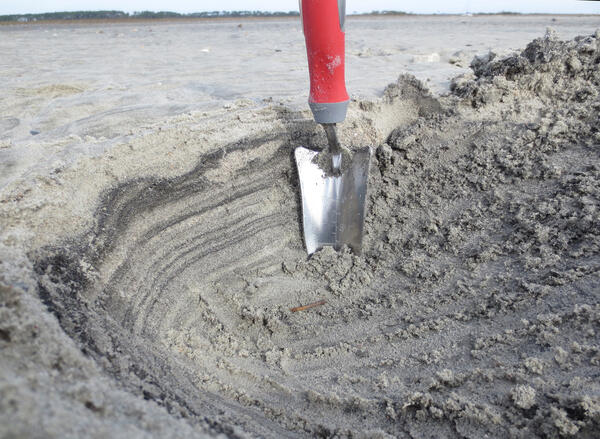
heavy minerals prospectsheavy minerals sand resources
For those who want to provide input on an American Samoa marine minerals sale, now is your chance. See the attached Request for Information and Interest.
According to a Financial Times report, the White House is drafting an executive order that will facilitate the stockpiling of critical metals found in the Pacific. The Administration is intent on countering China’s rare earth supply chains and battery mineral dominance.
I’m posting Sunday’s 60 Minutes segment that focused on deep sea mining and the failure of the US to ratify the UN Convention on the Law of the Sea (UNCLOS). Supplementary comments:
Most Federal employees involved with ocean energy policy, past and present, have supported US government ratification of UNCLOS.
The offshore industry has long supported UNCLOS. Industry trade associations, including API, IADC, and NOIA, are on the record as favoring ratification.
While concerns about UN management of deep sea mining access are understandable, some coordinated administrative structure is needed.
The Metals Company and other companies pursuing deep sea mining opportunities clearly disagree with the assertion that ocean floor mineral harvesting is not economically viable.