Terms appear to be the same as for the American Samoa Sale to be held on 11/19/2026.
Posted in deep sea mining, energy policy, Offshore Energy - General, tagged American Samoa, BOEM, Marine Minerals Administration, Northern Mariana Islands, OCS Minerals Lease Sale on August 17, 2026| Leave a Comment »
Terms appear to be the same as for the American Samoa Sale to be held on 11/19/2026.
Posted in deep sea mining, energy policy, Offshore Energy - General, Regulation, tagged Amanda Van Dyke, deep sea mining, International Seabed Authority, low impact, marine minerals, Regulation on August 4, 2026| Leave a Comment »
Interesting article by Amanda Van Dyke. Highly recommended.
There are 67 NGOs with observer status at the International Seabed Authority (ISA) as of March 2026, which explains why nothing gets done. More than thirty years after its creation, there is still no final Mining Code for nodule exploitation.
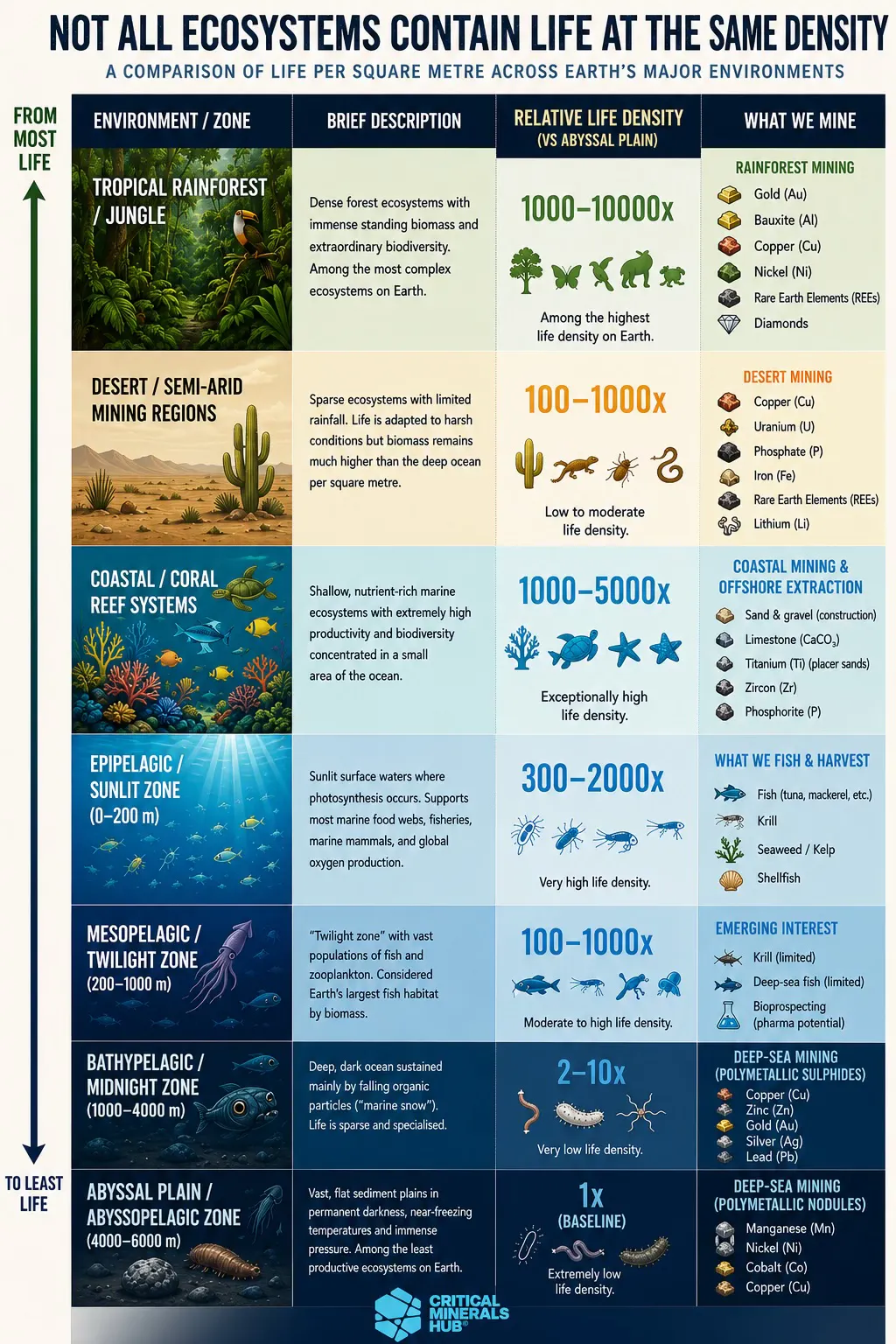
“Deep‑sea mining disturbs low‑productivity abyssal ecosystems and may have long‑lasting local effects on small communities of widely distibuted organisms reliant upon the nodules themselves, but avoids the deforestation, human displacement and occupational hazards of many terrestrial mines. The ethical question is whether it is better to concentrate impacts on a relatively small portion of the most common habitat on Earth, or to continue expanding high‑impact mining frontiers on land like tropical rainforests.“
“The job of a regulator is not to deliver closure for activists. It is to regulate access to resources designated as the “common heritage of mankind” in a way that balances environmental protection, equitable benefit sharing and global development needs. That will always involve trade‑offs.“
Posted in deep sea mining, energy policy, tagged American Samoa, Flowery Flounder, lease sale, marine minerals, MMA, royalty, sale terms on July 17, 2026| Leave a Comment »
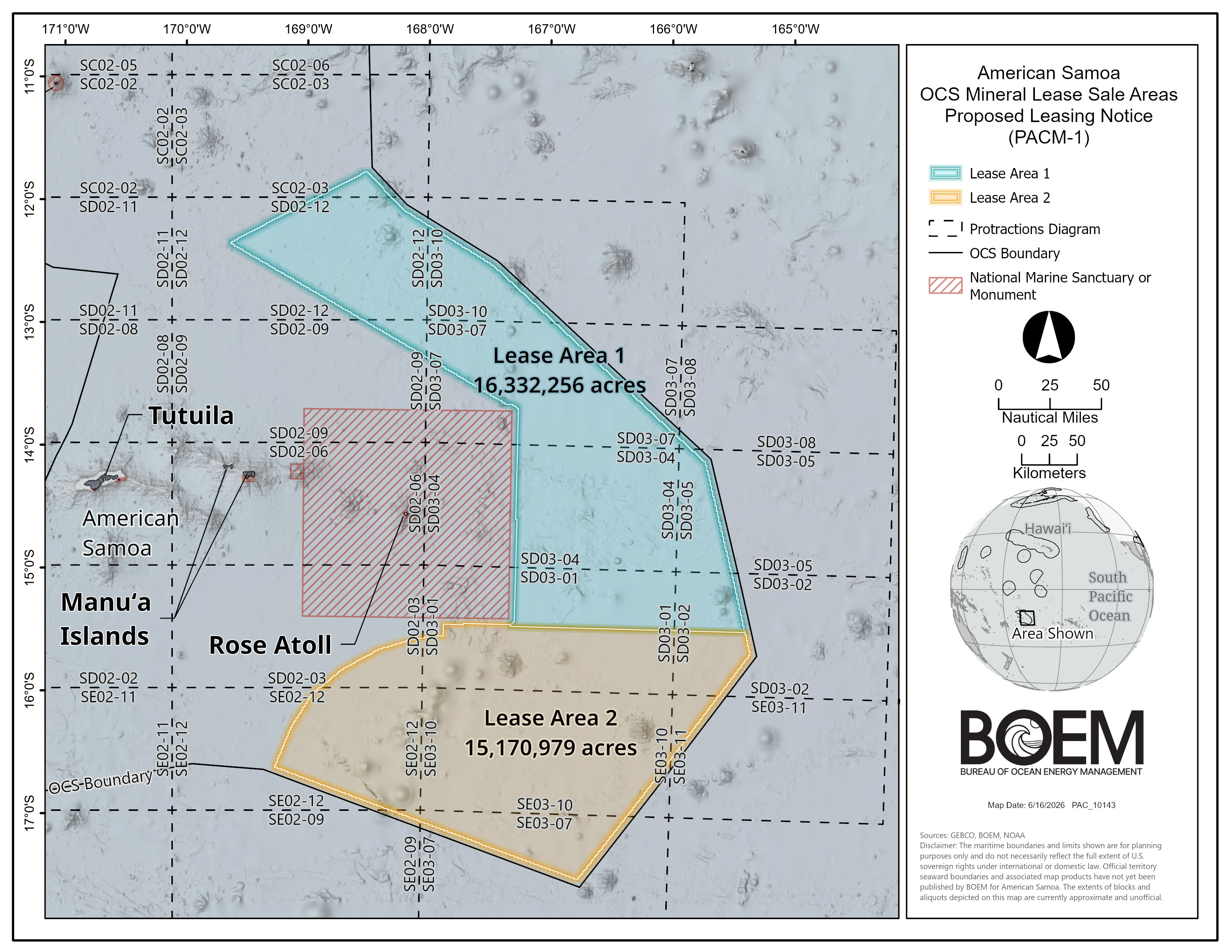
The Proposed Notice is attached:
Royalty rates
Rental and Minimum Royalty rates:


Note the names of the Protraction Diagrams on p. 3 of the Notice! Who could resist operating in Flowery Flounder or Dusky Frillgoby! 😉
Posted in deep sea mining, tagged BOEM, Federal Register, marine minerals, proposed regulations, unsolicited lease request on February 24, 2026| 2 Comments »
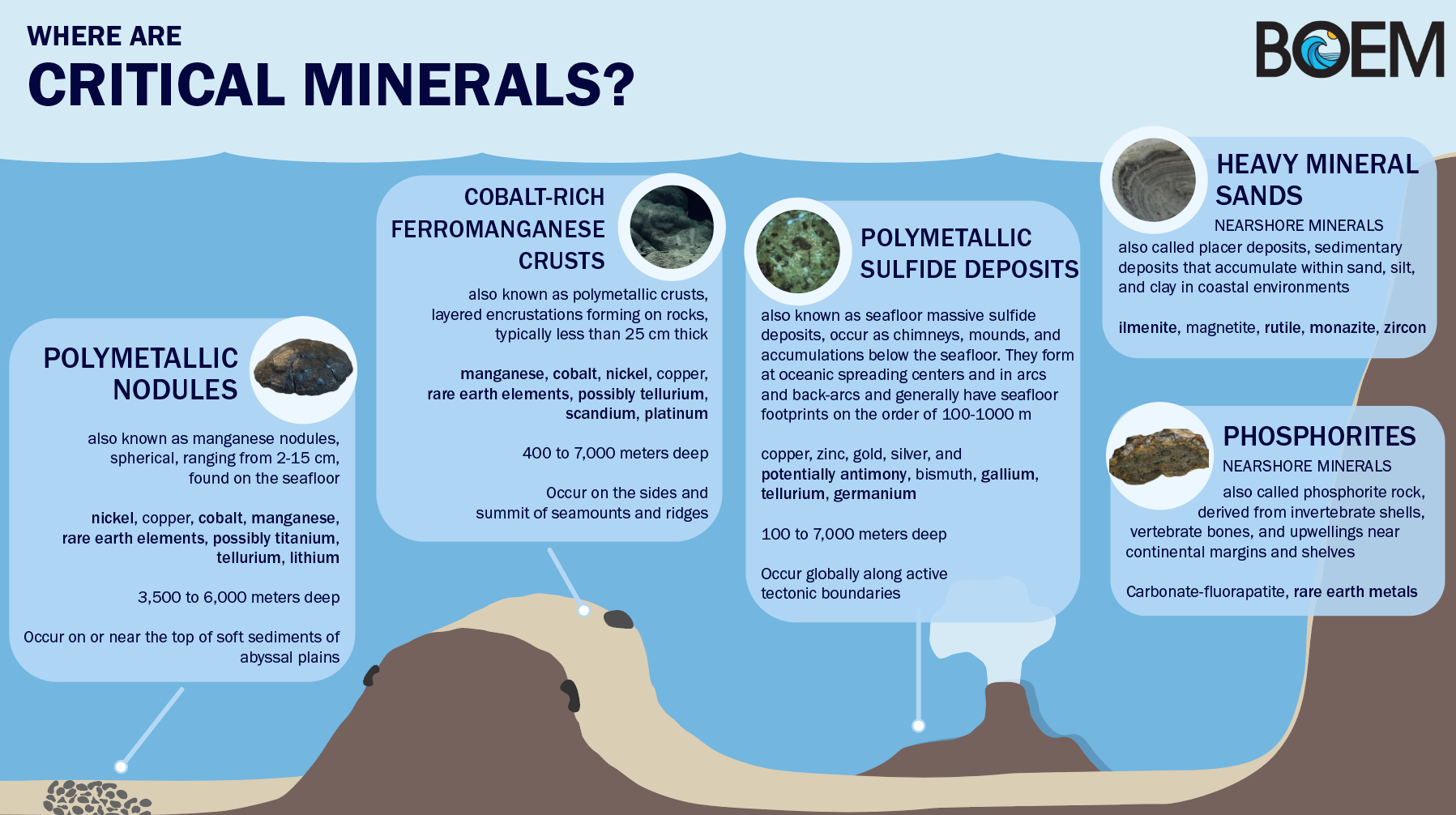
Attached are proposed revisions to BOEM’s marine minerals regulations as published today in the Federal Register. As advertised, the revisions appear to be largely administrative in nature and do not substantively change the marine minerals program.
The proposal does require BOEM to act on unsolicited lease sale requests within 28 days (currently 45 days), which may prove to be a challenge. See the excerpt pasted below.
G. Revise 30 CFR 581.11(b) “Unsolicited request for a lease sale”
The requirement for the BOEM Director to decide “within 45 days” of receipt of a lease request is not based on a statutory requirement. BOEM proposes to replace this 45-day timeframe with 28 days to ensure timely processing of such requests.
Posted in Alaska, deep sea mining, energy policy, tagged Alaska, BOEM, lease sale, offshore minerals, Outer Continental Shelf on January 31, 2026| Leave a Comment »

“The Bureau of Ocean Energy Management (BOEM) is initiating the first steps that could potentially lead to a lease sale for minerals on the Outer Continental Shelf (OCS) offshore Alaska by publishing this request for information and interest (RFI).”
The Federal Register Notice is attached.
Posted in deep sea mining, energy policy, Regulation, tagged deepsea minerals, DSHMRA, first application, NOAA, The Metals Company, TMC on January 23, 2026| Leave a Comment »
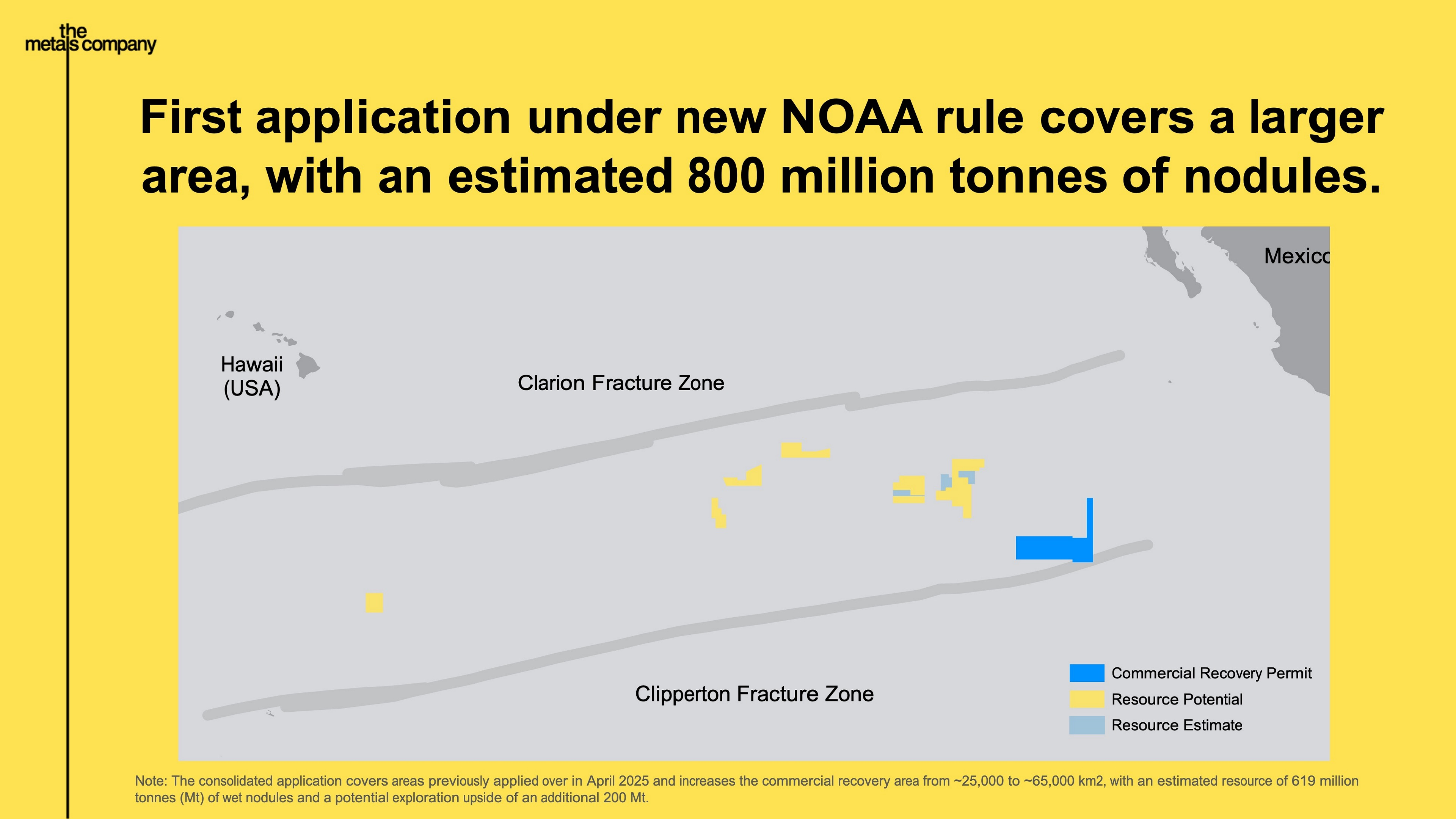
The Metals Company has filed the first consolidated application for an exploration license and commercial recovery permit under NOAA’s new regulations.
Posted in deep sea mining, energy policy, Regulation, tagged consolidated licensing, deepsea minerals, DSHMRA, environmental issues, final rule, jurisdictional issues, NOAA, step forward on January 23, 2026| Leave a Comment »
Links to final rule and post about the draft rule
“The objective of this rule is to provide the option for a consolidated application streamlining the process for qualified applicants.”
Reflecting on advances in environmental science, seafloor mapping, and offshore mineral-collection technologies, the revised rule allows qualified companies that gather the necessary site information to proceed to the collection phase. Deepsea mining is now more closely aligned with offshore oil and gas in that companies acquiring licenses are able to proceed to production after regulatory approvals.
The preamble nicely summarizes the opposition to the rule for environmental and jurisdictional reasons:
“General opposition to deep seabed mining was expressed for a variety of stated reasons, including, but not limited to the following assertions: effects on the environment; effects on seabed habitat and to marine species including undiscovered species especially in the Clarion-Clipperton Fracture Zone; harm to cultural resources and Pacific Islander livelihoods and beliefs; inadequate scientific research and information; inadequate resource protection measures and regulations; uncertainties regarding environmental impacts and a nascent industry; significant technical challenges to deep seabed mining; opposition to deep seabed mining from many U.S. states, countries, and global companies; that deep seabed mining is contrary to international agreements and efforts; the need for moratoria; that deep seabed minerals are not needed to meet U.S. demand for critical minerals and domestic sources and recycling of such minerals should be used instead; the U.S. needs to focus on building domestic refineries; using renewable and alternative resources rather than deep-sea minerals; and jeopardizing vital carbon sinks.”
“Commenters stated that acting unilaterally on deep seabed mining undermines the ISA (International Seabed Authority) process, international norms, global stability, and the rule of law, and that it could result in harm to protected areas, such as Areas of Particular Environmental Interest designated by the ISA.”
Posted in deep sea mining, energy policy, Offshore Energy - General, tagged beach nourishment, BOEM, Great Lakes Dredge Co., marine minerals, Odyssey Marine, phosphate, sand, titanium, Virginia, zirconium on December 15, 2025| Leave a Comment »
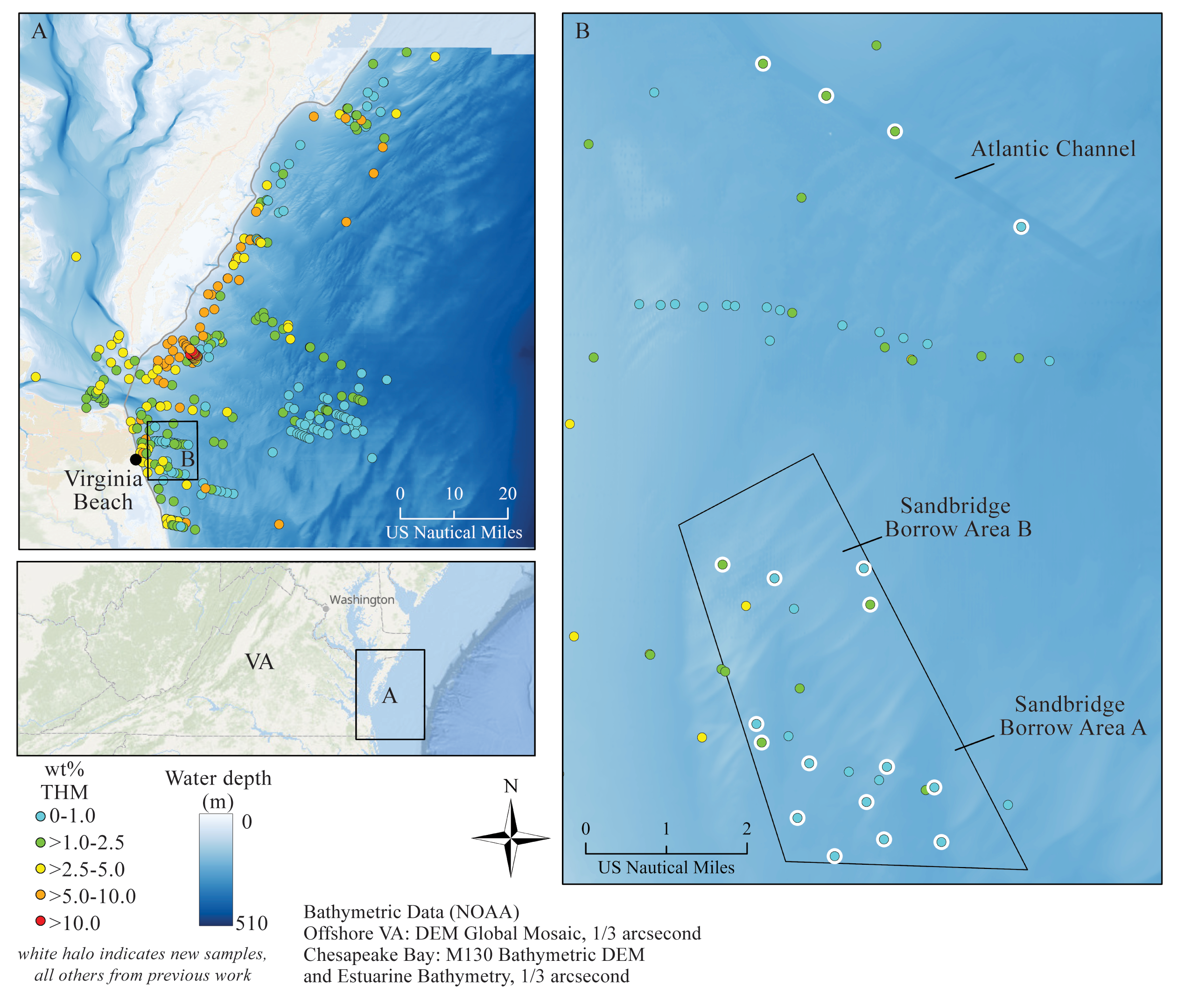
The Bureau of Ocean Energy Management (BOEM) has initiated the process for a potential mineral lease sale in Federal waters off Virginia. BOEM’s action is in response to a request by Odyssey Marine for a critical minerals sale.
Odyssey’s primary targets are phosphate, which is now on the critical minerals list, and rare earth element’s titanium and zirconium. This would be a shelf dredging operation, in partnership with Great Lakes Dredge & Dock Company, rather than the deepwater module collection being proposed for the Pacific.
The fact that the sand recovered during the dredging process could be used for beach nourishment should appeal to adjacent coastal communities.
Odyssey Marine’s CEO discusses the proposed Virginia offshore program starting at the 4:00 minute mark in the video below.
Posted in deep sea mining, energy policy, tagged deep sea mining, environmental impacts, Impossible Metals, land vs. deep sea, The Metals Company on October 7, 2025| Leave a Comment »
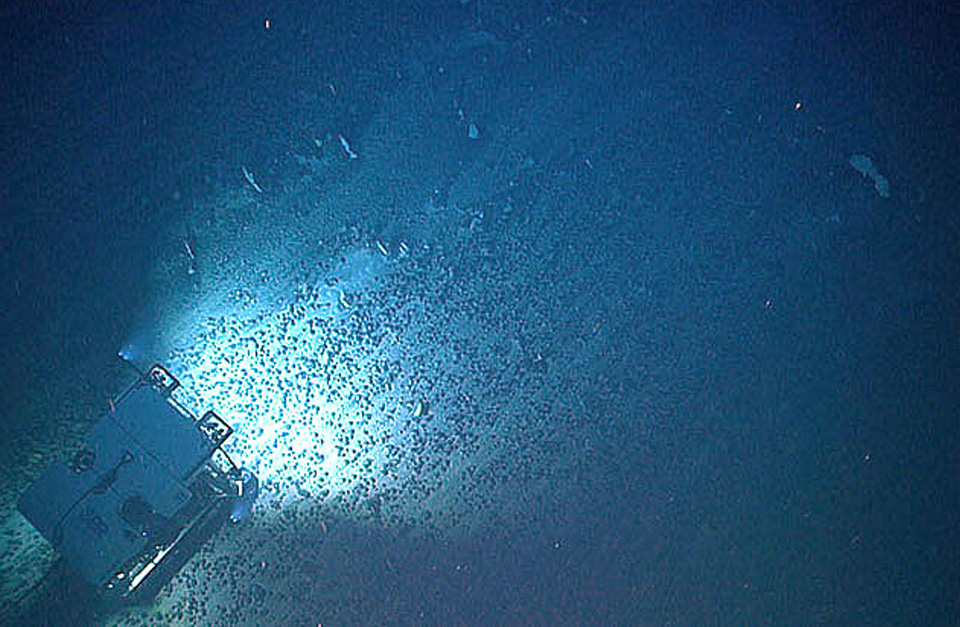
BOE contributor John Smith, who worked in the US marine minerals program, shared the pictures pasted below.



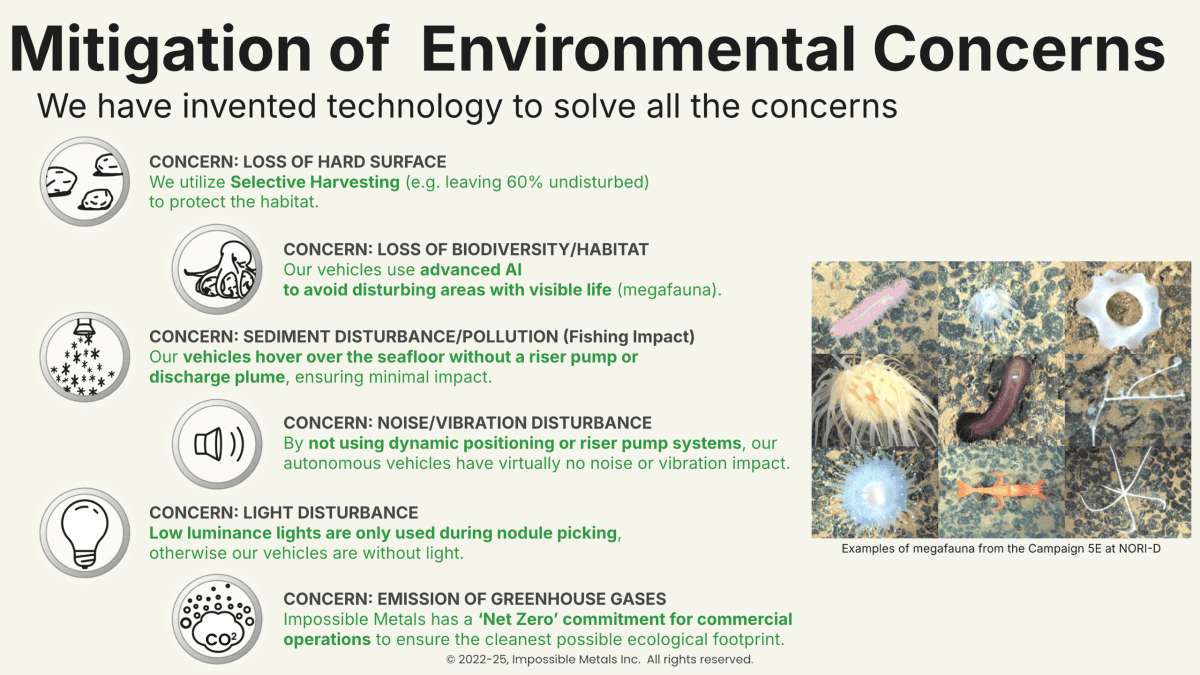
An Impossible Metals table (below) understandably favors their methods vs. those employed by deep-sea mining rival The Metals Company. However, both approaches are far preferable, environmentally and socially, to onshore metal mining.
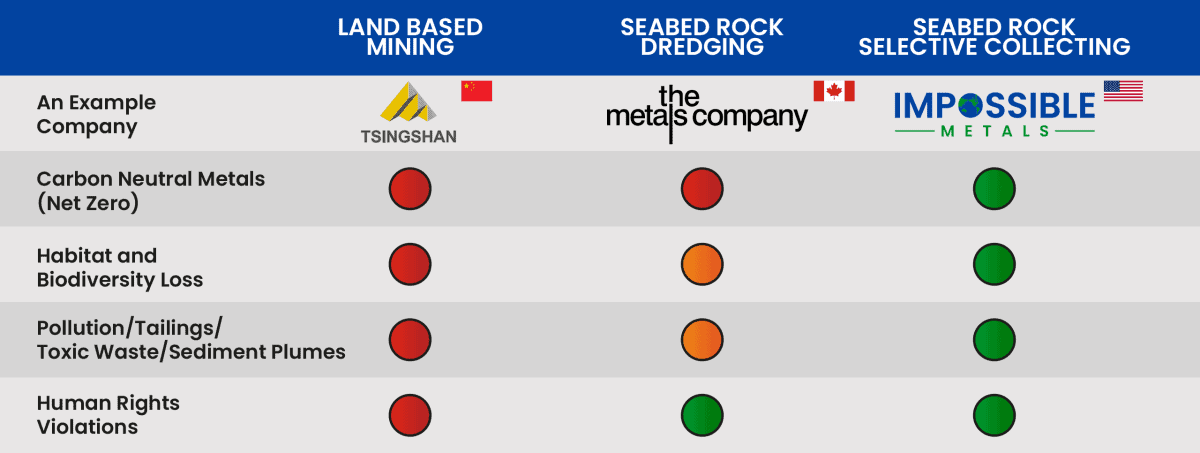
Impossible Metals graphic: