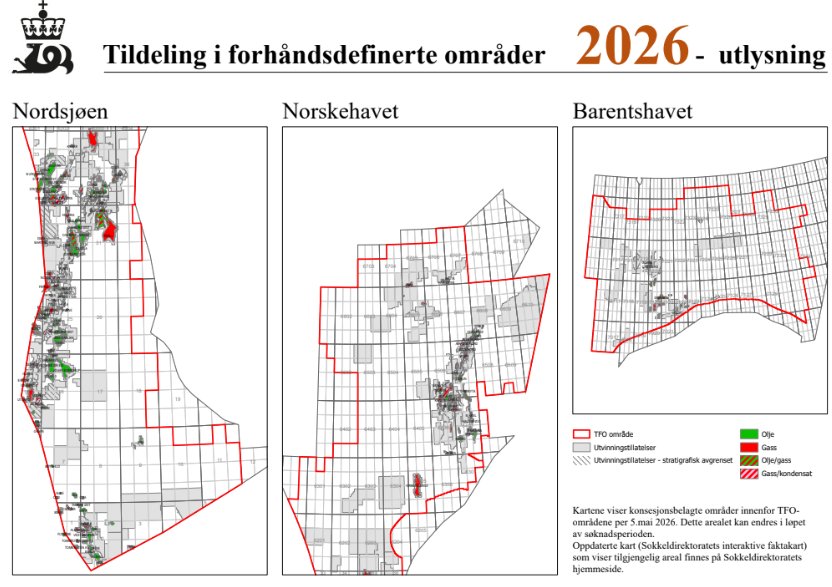
2026 licensing rounds – North Sea, Norwegian Sea, and Barents Sea
Norway is currently producing about 2 million bbls of oil per day (similar to Gulf of America oil production) and 12 billion cu ft of gas per day (6 times Gulf gas production).
Norway’s production is expected to remain high until the end of the 2020s, after which it will decline. To slow the decline, more exploration is needed, both in well-explored and under-explored areas. In addition, more investment is needed in fields, discoveries, infrastructure and technology development. Lack of investment will lead to a rapid decline in the petroleum industry (ala the UK). The Barents Sea is expected to contribute significantly to Norway’s future production.
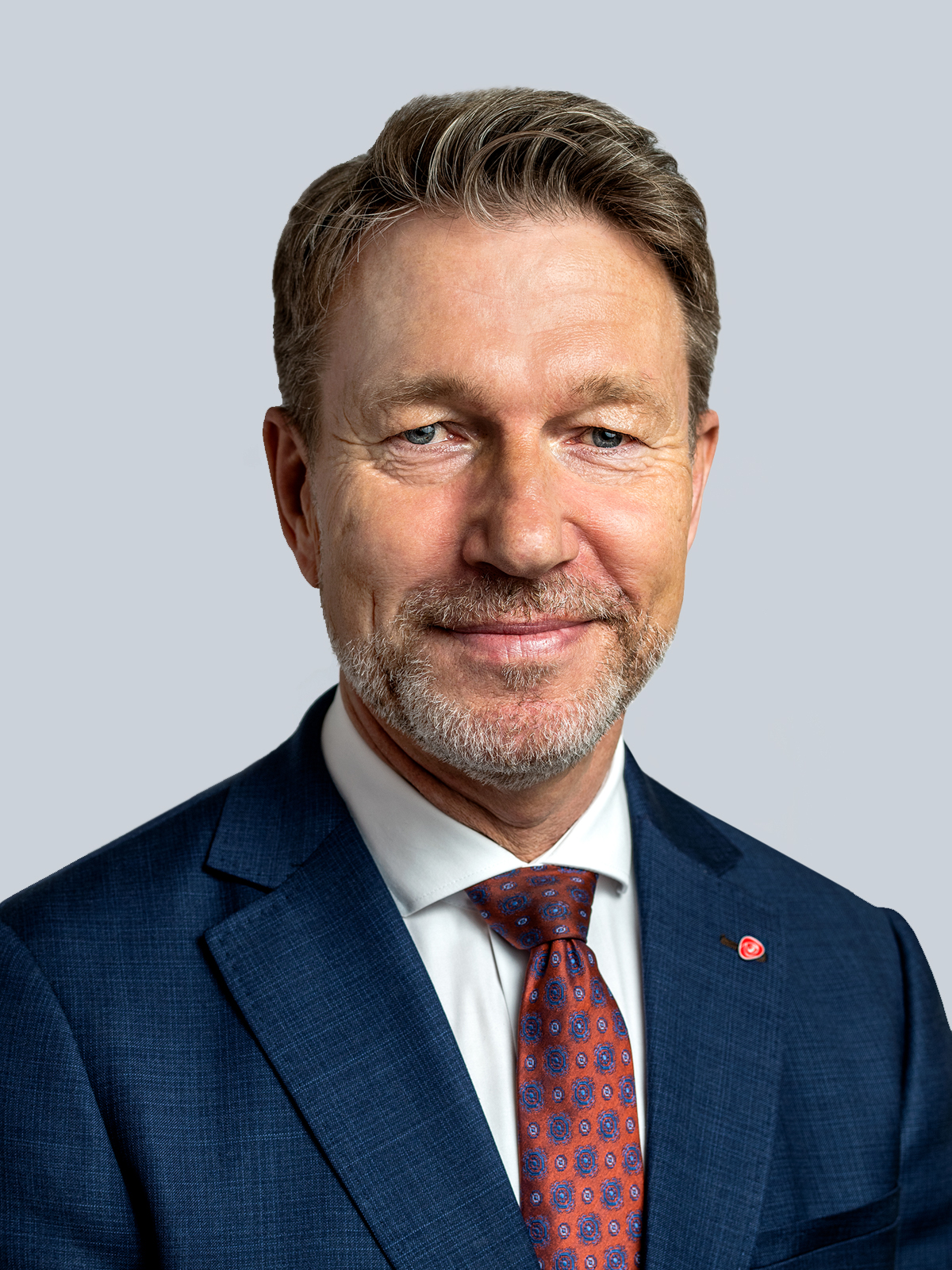
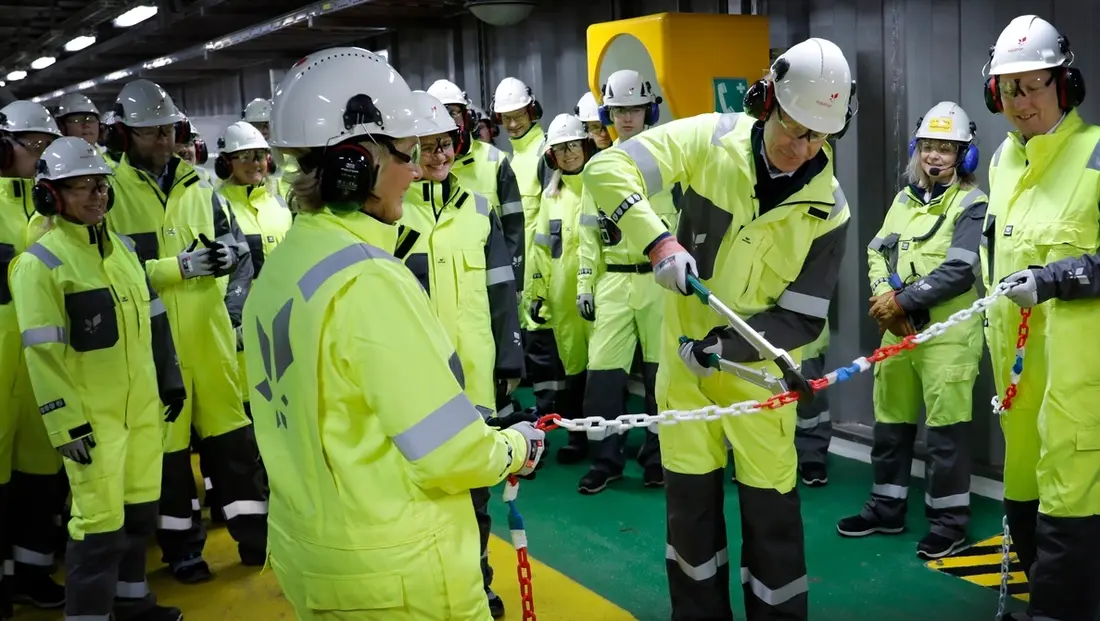
When asked about the EU’s support for a moratorium on Arctic drilling and production, Norway’s Energy Minister Terje Aasland (pictured) responded diplomatically: “In today’s geopolitical and security environment, and given the resource situation, I believe continued activity in the Barents Sea serves both Norwegian and European interests.”
Anders Opedal, CEO of Equinor, which is 2/3 Norwegian govt owned, was more blunt. He said oil and liquefied natural gas (LNG) from the Barents Sea can be shipped anywhere in the world if rejected by the EU.“The only thing that will suffer from this is actually European security. We have the flexibility.”
Oil and gas demand is not going away. Where is the EU going to find a more environmentally responsible producer? As noted last month, Norway is by far the world leader in minimizing flaring. That’s evidence of outstanding production management.
The country has taken other well-intended emissions reduction measures like electrifying distant platforms and injecting CO2 that have high costs and questionable benefits. Nonetheless, they are the type of initiatives that the EU supports. Good luck finding a more secure, eco-friendly producer!
Norway’s Improved Recovery Award recognizes companies that apply new methods and technology to increase oil and gas recovery on the Norwegian Continental Shelf. This year’s winner is Okea, an operator of mid- and late-life assets.Okea seeks to extend field life, explore for new resources, and unlock value from existing infrastructure.
“The end is also a good start”
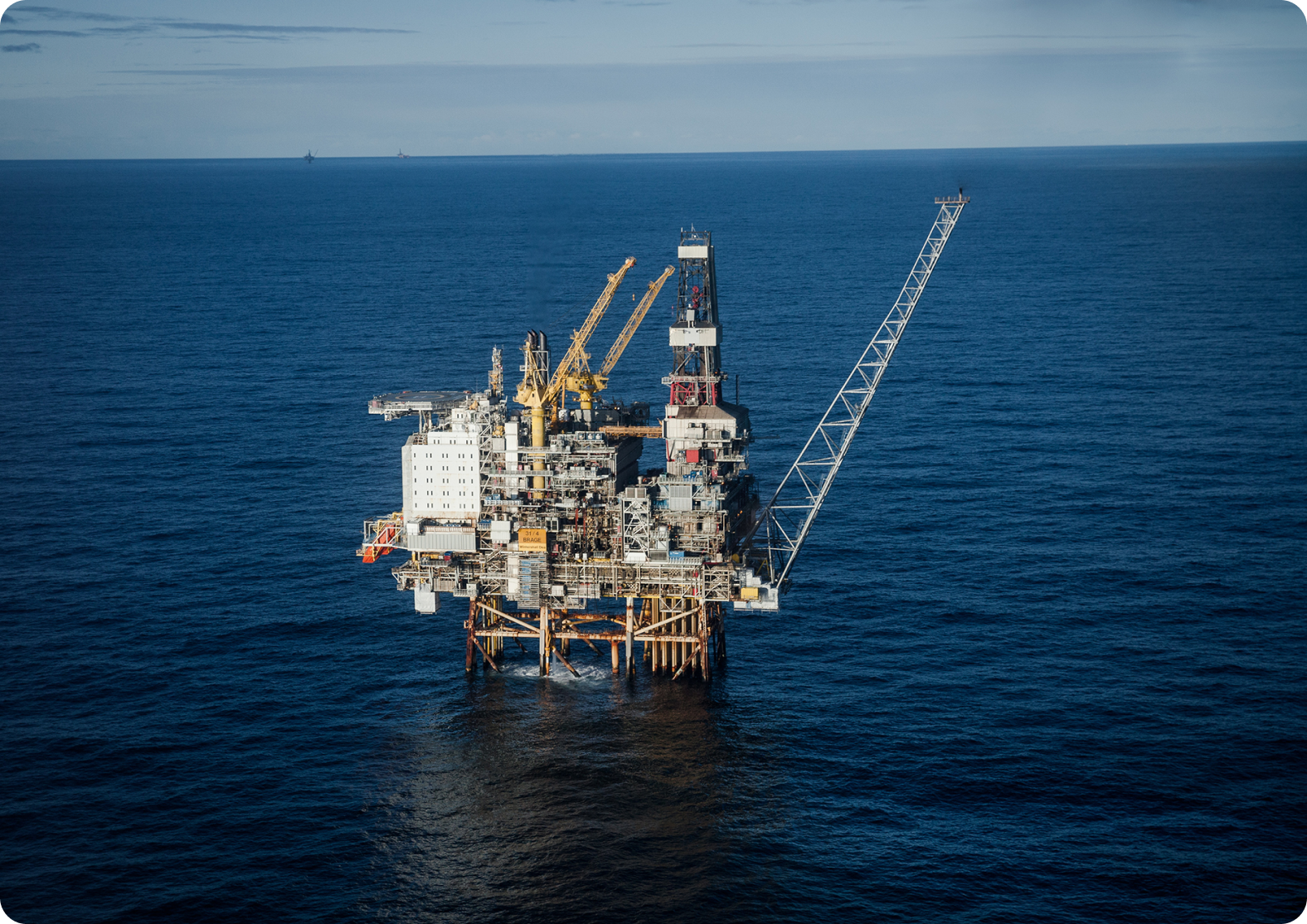
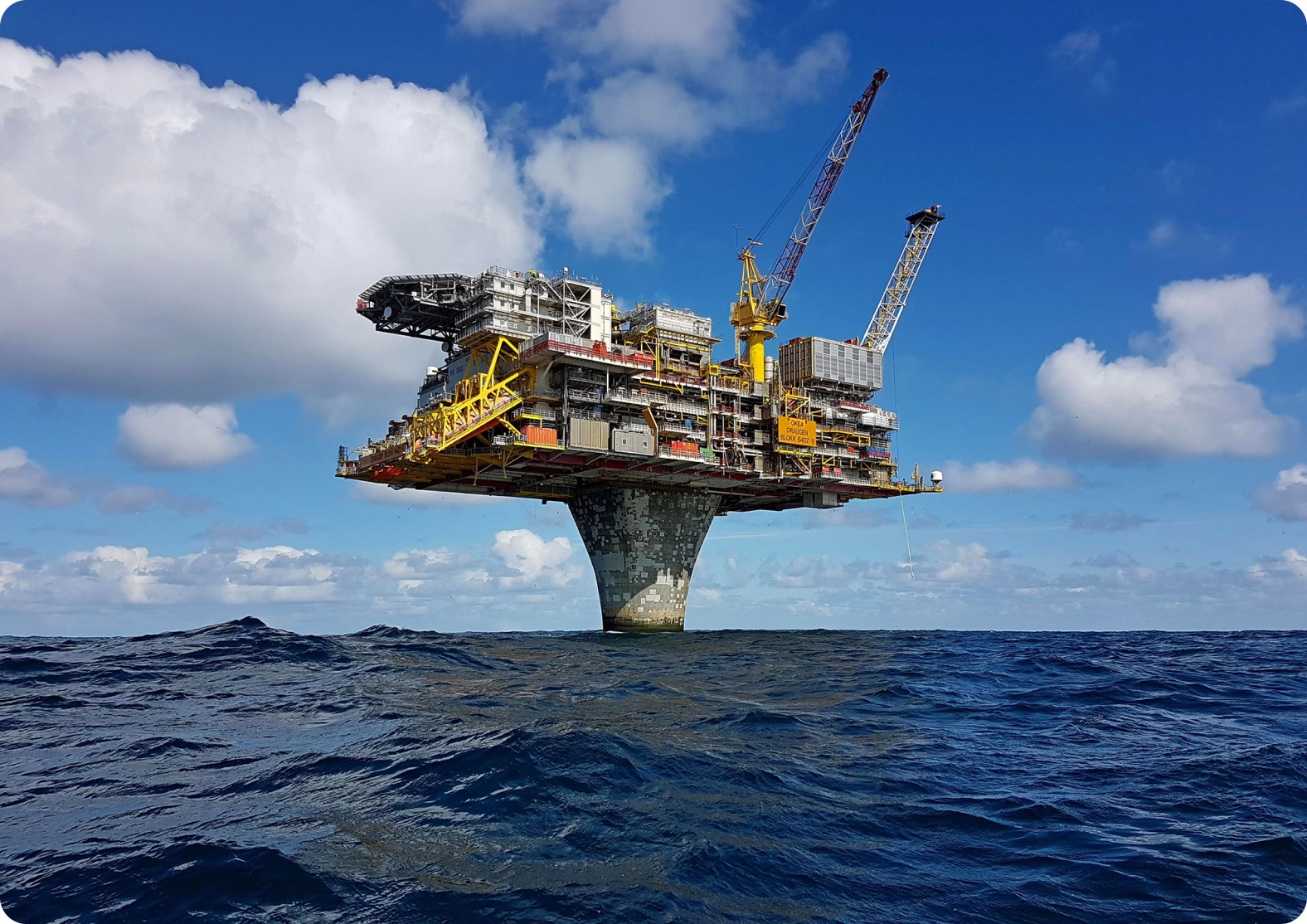
Okea is using geosteering technology and real-time data integration to drill and target record length horizontal wells. As a result, the production of marginal resources has become profitable. Their systematic exploration has also increased oil and gas reserves for both Brage and Draugen. The estimated life of these platforms has thus been extended to 2040.
BragaDraugen
The Brage field in the North Sea was discovered in 1980, and production began in 1993. The Draugen field in the Norwegian Sea was discovered in 1984, and started production in 1993. Impressively, the expected recovery rate has increased from 67.3 percent in 2019 to 72.6 percent in 2026.
This is an excellent awards concept that should be considered for US offshore operations, where companies in the Gulf, Pacific, and the Beaufort Sea/Cook Inlet are making special efforts to increase ultimate recovery from mature fields.
World Bank global flaring estimates are now derived from 3 satellites carrying NOAA VIIRS detectors. The increased number of observations improves the precision and accuracy of the flare locations and volume estimates.
The World Bank (WB) Global Gas Flaring Tracker is the only worldwide flaring data source. Offshore and onshore data are segmented, so offshore flaring can be considered separately for each country.
The WB estimates that 21600.03 million cu m (762.5 bcf) of gas were flared at offshore locations worldwide in 2025. This is an increase from 2024 when the total offshore flaring volume was 21159.91 million cu m.
The flaring totals for prominent offshore producers are entered in the table below. Also included are the largest offshore flares for each country.
Unsurprisingly, Norway led the pack in minimizing offshore flaring. Their total of 36.11 million cu m (1.3 bcf) is very impressive for such a large producer. The US offshore total of 160.95 cu m (5.7 bcf) is also quite respectable relative to production.
At the other end of the scale are Iran – 3329 million cu m (118 bcf), Nigeria – 2566 (91 bcf), Angola – 2300 (81 bcf), and Mexico 2068 (73 bcf). These 4 countries accounted for nearly half of all 2025 offshore flaring. They were also massive offshore flarers in 2024: Iran – 3753 million cu m, Nigeria – 2867, Angola – 2040, and Mexico – 2223.
If both onshore and offshore flaring are considered, Iran flared 29931 million cu m in 2025. That equates to 1.057 trillion cu ft!
2025 WB flaring total million cu meters
largest flare
largest flare volume
Angola
2300.26
Lombo East
862.02
Australia
268.36
Santos
61.89
Brazil
969.16
Albacora Leste
118.93
Canada
145.12
Terra Nova
95.83
China
535.56
Weizhou 12-1
68.26
Congo, Rep.
788.98
Kitina
384.12
Gabon
368.91
Tchatamba Marin
37.46
Ghana
351.81
Sankofa East
184.97
Guyana
227.38
Yellowtail
164.06
Indonesia
292.16
Belida
30.84
Iran
3329.19
Foroozan
1360.09
Libya
313.78
Bouri
74.07
Malaysia
1459.32
Kasawari
205.8
Mexico
2067.62
Akal
386.44
Nigeria
2565.88
Oso
308.37
Norway
36.11
Balder
6.38
Qatar
688.19
Ras Laffan LNG
54.65
Russia
227.27
Yuri Korchagin
82.07
Trinidad
87.66
Atlantic LNG
53.23
UK
234.08
Penguins
22.94
US
160.95
NA*
22.77
*The WB lists the field name for the largest US flare as NA. The lat/long for the Whale deepwater platform in the Western Gulf matches the identified flare location (26.22 lat., -94.67 long.)
The WB tracker identifies the Gulf of America facilities with the highest flaring volumes. The 2025 list is pasted below. Repeat top ten Gulf flarers from 2024 were Vito (14.55 million cu m in 2024), Pompano (11.68), and Lucius (5.72).
The WB lists the field name for the largest US flare as NA. The lat/long for the Whale deepwater platform in the Western Gulf matches the identified flare location (26.22 lat., -94.67 long.)
Per the WB tracker, the Terra Nova FPSO, offshore Newfoundland, was the top North American offshore flarer by a considerable margin (data for Canada below). Terra Nova was also the top flarer in 2024 (95.56 million cu m).
The location of the only flare identified offshore California corresponds with that of the Dos Cuadras field in the Santa Barbara Channel. The estimated 2025 flaring volume was 0.10 million cu m.
The WB flaring tracker is an excellent data source, but doesn’t capture vented gas and likely understates the total volume flared. The WB estimated that 160.95 million cu m (5.68 bcf) were flared at US offshore facilities in 2025. This compares with the 9.7 bcf (flaring and venting) and 8.0 bcf (flaring only) totals derived from ONRR data (chart below). The flaring difference is not surprising given that the WB numbers are dependent on satellite imagery and the ONRR data are from mandated/audited production reports. A previous comparison also showed that the WB flaring estimates are significantly lower than the ONRR numbers. From a regulatory oversight perspective, this is rather reassuring given that the reverse (WB>ONRR) would imply serious reporting issues.
Steve finds Equinor’s recent comment that the days of big offshore finds are over to be disingenuous. He correctly notes that this view has been echoed for decades. (Although the end of Gulf of America oil production has been predicted for 40 years, 2025 was a near record year.)
Offshore Norway, it was only in 2010 that the giant Johan Sverdrup field was ‘found’ by Equinor. Two super-majors – Exxon and Total – missed the reservoir and abandoned further exploration in the area. (How many times have we heard similar stories in the oil patch?) Equinor, then Statoil, made a relatively small find in the middle of the reservoir and was planning a limited subsea development. Geophysicists from partner Lundin created a better picture of what was in place – nearly 3 billion barrels with peak production of 750,000 b/d three years ago. Just this week, Equinor announced Phase 4 of production through further subsea development.
Who heard much about Guyana a decade ago?
How about the major new discoveries offshore Brazil? See the video below.
New production offshore Namibia, South Africa, and Mozambique looms. Finds off Indonesia and Timor Leste, and even the Falklands, await development.
“So guys, stop making out that life is tough. It might be challenging, but it has always been thus. Big risks and big rewards.”
On BP’s announcement that they were reorganizing into upstream and downstream divisions: “Wow – what a great idea! How come no one ever thought of this before? Imagine this scenario – oil companies making money on both sides of the price cycle – upstream when the price of oil is high and downstream when it is lower. Amazing – NOT!” 😉
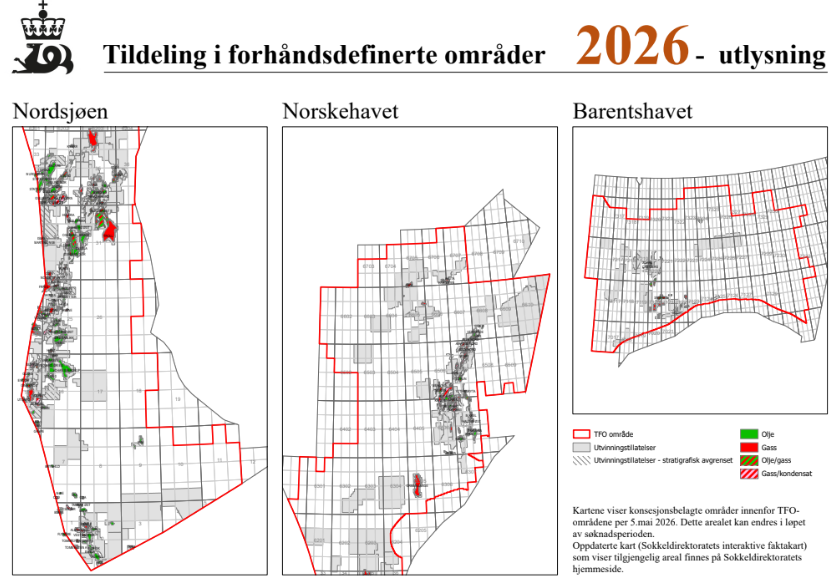
The oil and gas industry is crucial for Norway and for Europe. The government is today announcing new exploration areas in the APA (Allocations in Predefined Areas) to further develop the petroleum sector, so that it can continue to create great value for the community, lay the foundation for good jobs throughout the country, ensure our common welfare and contribute to Europe’s energy security and safety, says Prime Minister Jonas Gahr Støre.
Kudos to Norway for the strong, unequivocal announcement. Consistent acreage offerings are important in sustaining offshore production:
Allocations in Predefined Areas (APA) are an annual licensing round that covers the best-known exploration areas on the continental shelf. Through the APA scheme, oil companies gain predictability regarding access to exploration acreage, which is important for a long-term industry such as the petroleum industry. After more than 50 years of exploration activity, the APA scheme today covers the majority of the area that is opened and available on the Norwegian continental shelf.
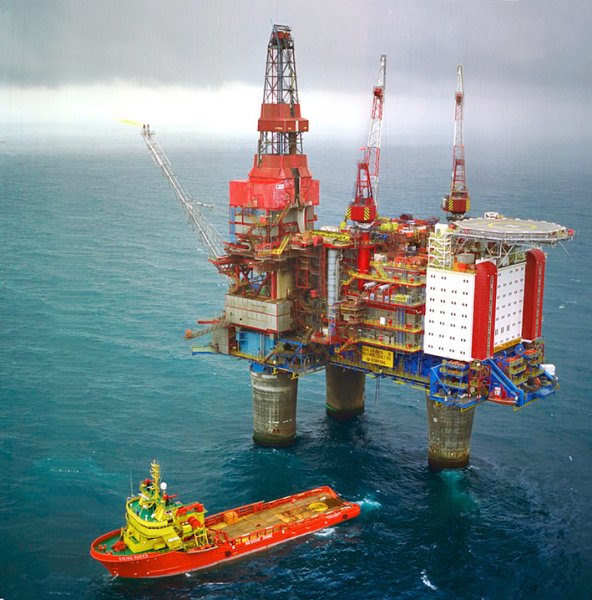
Norway has always been ahead of the pack when it comes to worker accommodations. Gulfaks B (pictured) is a concrete, gravity-based platform installed nearly 40 years ago, but the living quarters and amenities are updated and first class. A Gulfaks B worker provides a tour in the video embedded below.
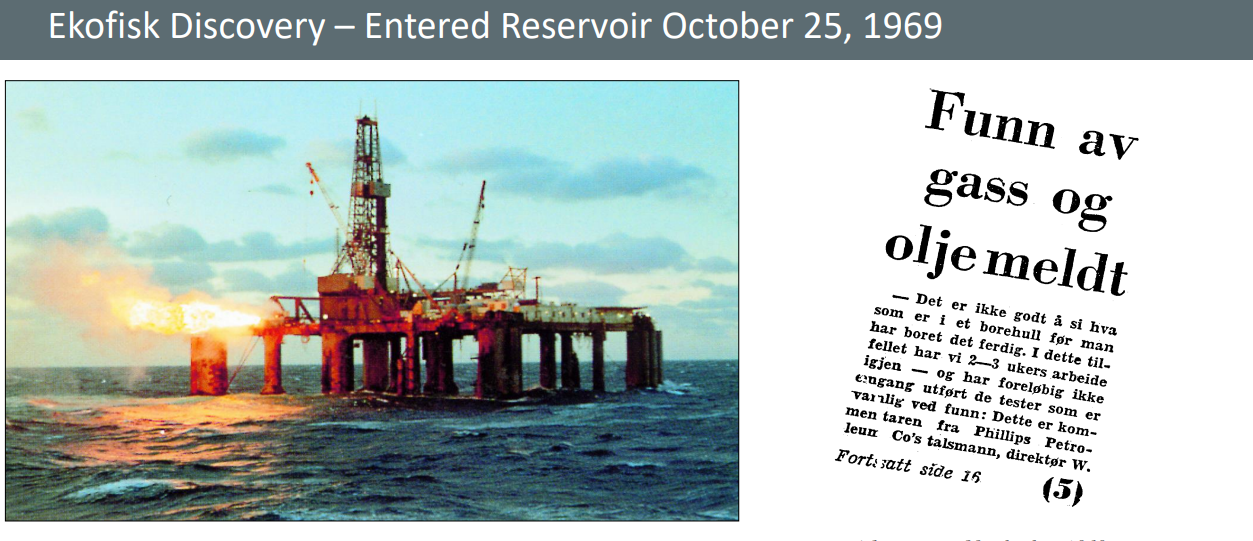
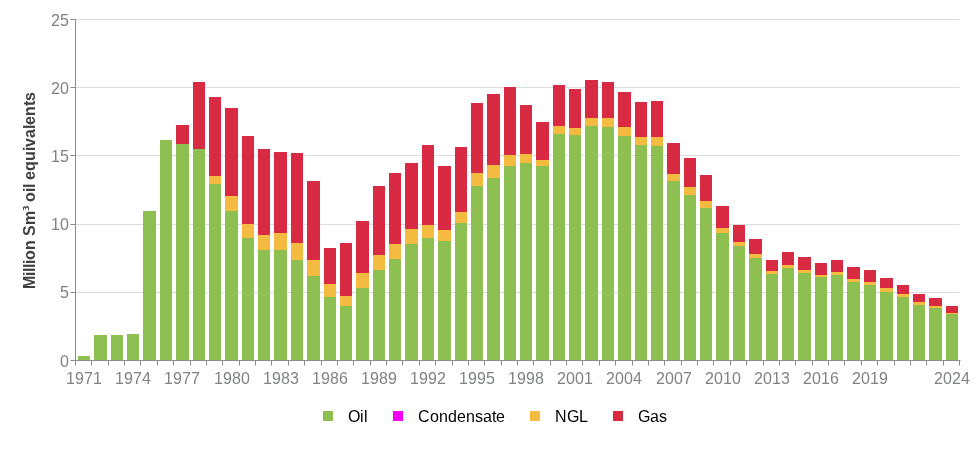
Ekofisk was Norway’s first commercial oil discovery in 1969, with first production in 1971. Another redevelopment phase could extend production to 2050 and beyond. This is a good example of how technology and reservoir management can extend field life indefinitely. Finite resources are not really finite.
Ekofisk production history; water injection began boosting production in 1987. The expected final recovery factor for Ekofisk is now estimated to be >50%.
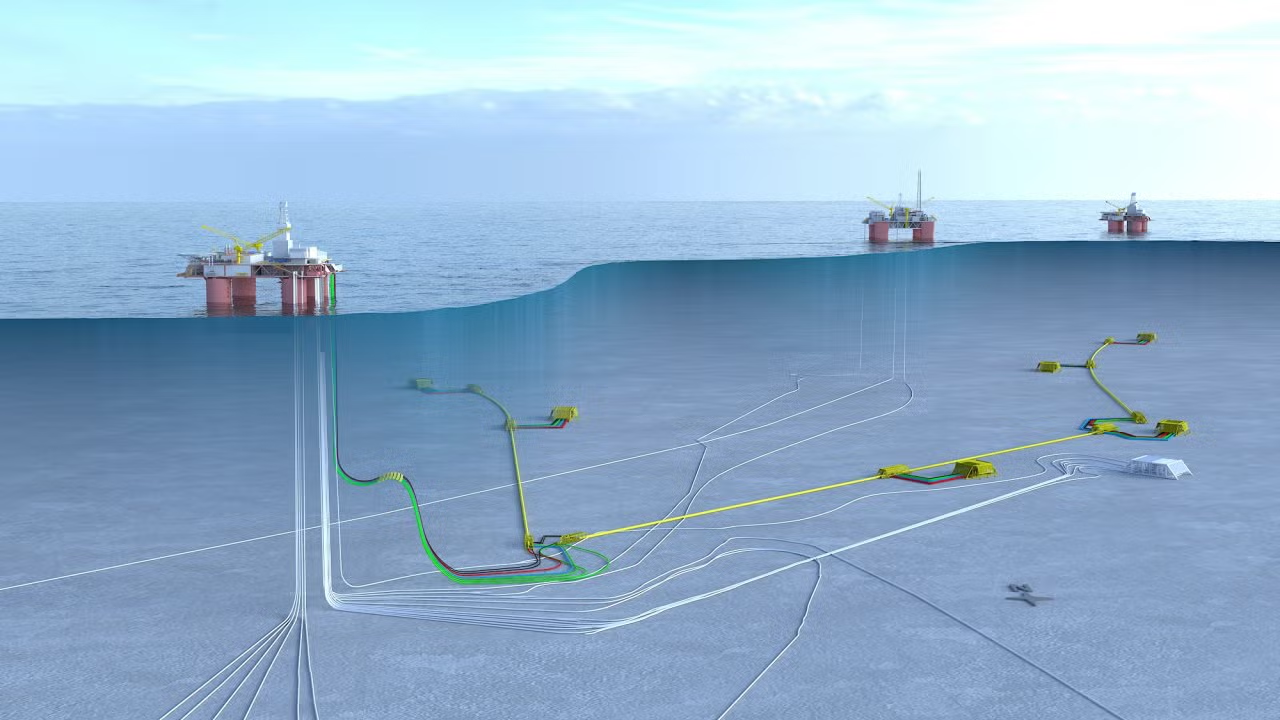
ConocoPhillips and partners have approved the redevelopment of three gas and condensate fields depicted below — Albuskjell, Vest Ekofisk, and Tommeliten Gamma. Better well placement and the use of horizontal well technology will increase resource recovery.
The $1.8 billion project consists of four new subsea templates and 11 production wells tied back to the Ekofisk complex. First production is planned towards the end of 2028. Recoverable gas and condensate reserve additions are estimated at between 90 million and 120 million barrels of oil equivalent.
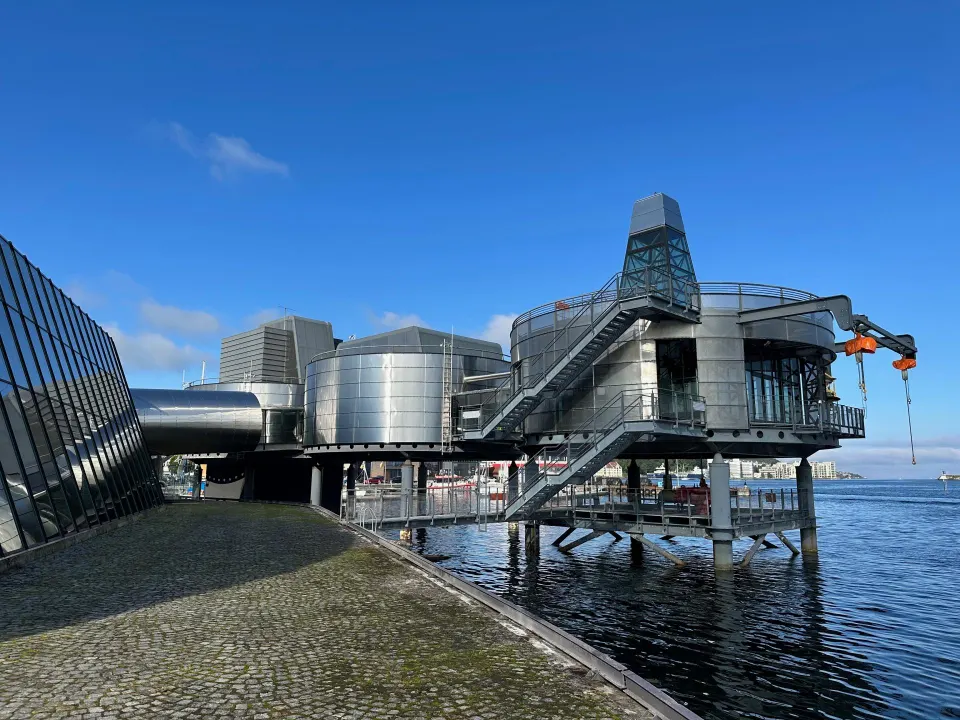
If you ever get to Stavanger, be sure to visit the Petroleum Museum! HIghly recommended!
The Snorre field is in 300-380m of water in the North Sea ~200 km west of Floro.
According to Reuters and others, Equinor will no longer pursue electrification of Snorre A and B, Heidrun, Aasgard B, and Kristin platforms, but still plans to proceed with projects at Grane and Balder fields.
A number of BOE posts since Jan. 2022 have questioned Norway’s electrification strategy for offshore platforms. Our reasons:
Most offshore platforms produce sufficient gas to support their power demands
Assuming gas that is not used to power a platform is marketed and consumed elsewhere, the net (global) reduction in CO2 emissions from electrifying offshore platforms is negligible. (Perhaps there is actually a small increase in net emissions given the power required to transport the gas to markets and the emissions associated with onshore power generation).
Offshore power demands are highly variable, especially when drilling operations are being conducted.
Gas turbines are reliable, and capable of responding to variable power demand. Excess generation capacity is typically provided.
Power from shore increases the cost of platform operations and could decrease ultimate recovery of oil and gas resources.
Per NPD, electrification of the shelf will increase electricity prices for onshore consumers and increase the need for onshore facility investment.
Gas turbines or diesel generators are still necessary to satisfy emergency power needs at the platforms.
Long power cables are vulnerable to damage (accidental or intentional), as are onshore power stations.
The reliability, cost, and cable vulnerability concerns have clearly been validated. The reality is that powering distant platforms from shore increases operating costs, safety risks, and onshore electricity prices with no net environmental benefit.
It also seems rather hypocritical for a major natural gas exporter to prevent offshore operators from powering their platforms with gas produced at their platforms.
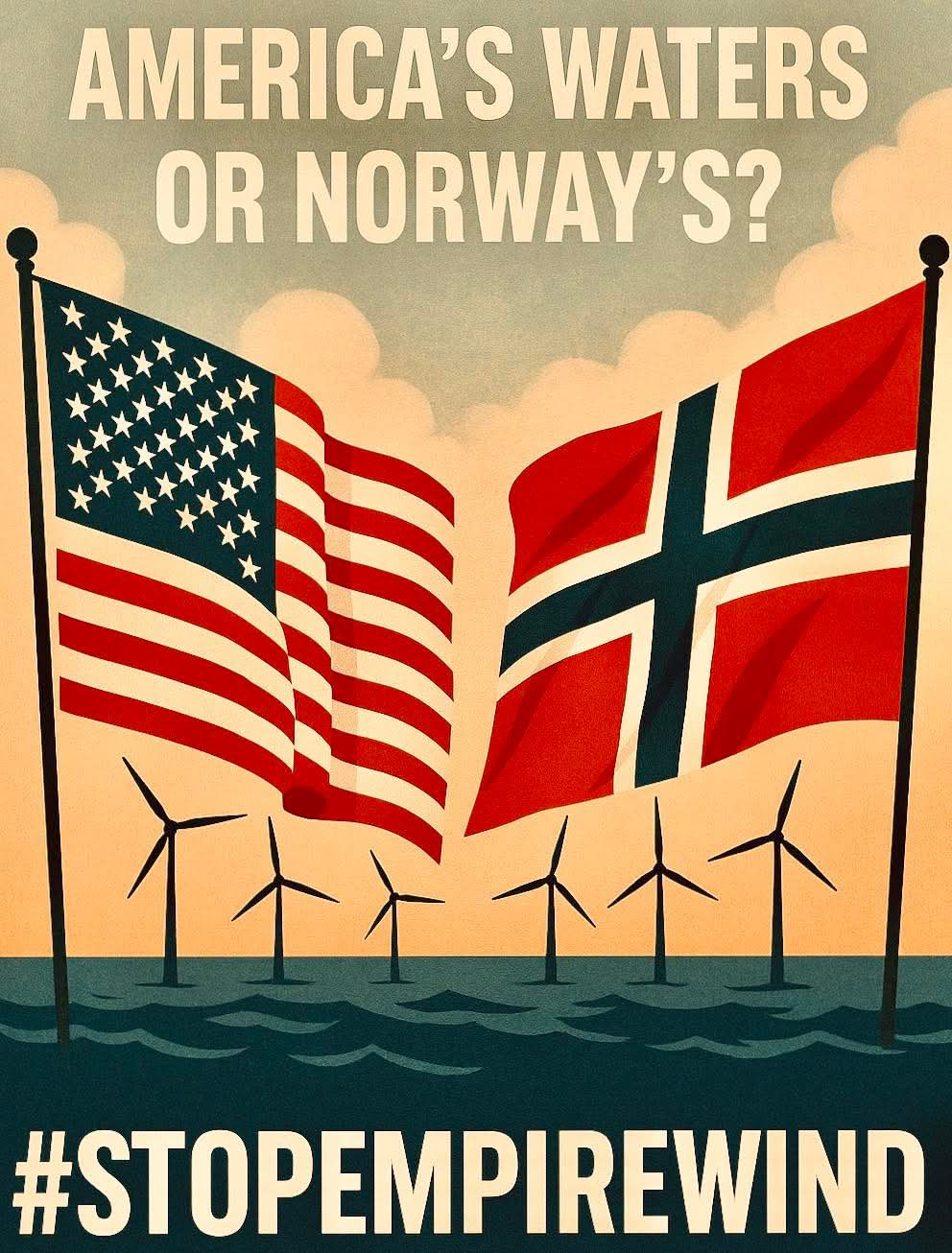
Along with other charges, the attached complaintasserts that awarding a wind lease to Norway’s Equinor, violates the Outer Continental Shelf Lands Act (OCSLA):
As an agency or instrumentality of Norway, Equinor cannot receive a lease on the Outer Continental Shelf for offshore wind turbine development or generation of electric power.
While other elements of the complaint appear to have merit, the charge against Norway does not. Here’s why:
US subsidiaries of foreign companies have long held leases under the OCS Lands Act.
Equinor US Wind is the US subsidiary holding the wind lease.
Equinor USA E&P holds interests in OCS oil and gas leases in the Gulf of America. BOEM credits 548,389 barrels of oil production to Equinor for 2023.
Chinese state-owned CNOOC has been an oil and gas lessee in the Gulf of America.
US subsidiaries of Shell and BP, both foreign corporations, are the top 2 producers in the Gulf. Although not government owned, there is nothing in OCSLA that distinguishes between US subsidiaries of private and govt owned companies. Woodside (Australia) and Eni (Italy) are also important Gulf producers.
The plaintiffs second count (excerpt below) seems to have more merit. The bulk of the filing pertains to this count.
BOEM never completed its “necessary review”, see Stop Work Order, April 16, 2025, and, instead, reinstated the Empire Wind work permit on May 19, 2025 without any explanation or finding, stating as follows: On April 16, 2025, the Bureau of Ocean Energy Management issued a Director’s Order to Empire Offshore Wind LLC to halt all ongoing activities related to the Empire Wind Project on the outer continental shelf. That Order is hereby amended to lift the halt on activities during the ongoing review.
The complaint goes on to discuss the reasons why the plaintiffs believe the review was indeed necessary and should have been conducted.
Legal/regulatory: Although lease cancellation is not a reasonable option at this time, a pause for further review of the environmental and procedural issues is justified. During the previous Administration, the regulators seemed to function primarily as cheerleaders, as evidenced by the departures (examples here and here), the BOEM/NOAA strategy document, and the promotional tweets. Also, where is the long awaited report on the turbine blade failure? How do you proceed with development before that has been released for public review?
Norwegian govt intervention: Some would argue that Empire Wind was a bad investment by Equinor (2/3 govt owned) and it would have been better to take the losses and move on.
Trade unions: Concerns about the job losses are warranted, but the long term viability of the subsidy dependent offshore wind industry is in doubt, and important industries (e.g. fishing and tourism) may be negatively impacted. Other job losses could occur if offshore wind drives up electric prices and decreases grid reliability.
Pipeline deal: The regionally important Constitution natural gas pipeline is still very much in doubt despite reports of a deal with Governor Hochul. With or without her support, climate-ultras are driving NY/New England energy policy and will, at a minimum, stall this project. Fisheries Nation was particularly blunt in criticizing fishermen being “used as a poker chip” to gain tepid support for the pipeline project.
Following the reversal of the Empire Wind decision, Green Oceans, ACK for Whales, Long Island Commercial Fishing Association, Protect Our Westport Waters, Save Greater Dowses Beach, Save Right Whales Coalition, and the Wampanoag Tribe of Gay Head/Aquinnah petitioned Secretary Burgum to halt all wind construction in New England coastal waters and begin a “complete reevaluation” of their permits under applicable federal laws. In addition to right whale and tribal cultural resources concerns, the letter cited: