Feeds:
Posts
Comments

Posts Tagged ‘carbon disposal’

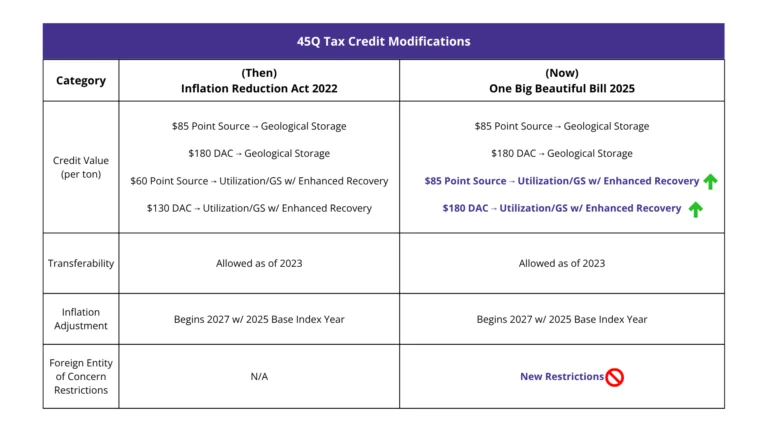
Kudos to EPA for their Notice (attached) informing that carbon capture and sequestration (CCS) doesn’t meet the Clean Air Act’s definition of “best system of emissions reduction” (BSER). This common sense determination is a setback for companies chasing the generous 45Q tax credits that their lobbyists succeeded in retaining and enhancing in the One Big Beautiful Bill (table below).

Per the Notice: “EPA is finalizing the determination that 90 percent CCS is not the BSER for existing long-term coal-fired steam generating units because 90 percent CCS has not been adequately demonstrated, the costs of 90 percent CCS are not reasonable, and the associated degree of emission limitation is not achievable.”

EPA further determined “that previous projects that failed to achieve 90 percent CCS were not a sufficient basis to conclude the technology has been adequately demonstrated. Additionally, the carbon dioxide (CO2) capture, pipeline, and sequestration infrastructure necessary to implement 90 percent CCS for the fleet of existing coal-fired steam generating units does not currently exist and would need to be broadly deployed.“

EPA sensibly concludes (p. 58969) that the 45Q tax credit should NOT be accounted for when evaluating the reasonableness of the costs of the BSER. The carbon disposal industry has discounted the risks and overstated the benefits of CCS in their pursuit of those tax benefits, on which that industry is dependent.
Meanwhile. the Texas Railroad Commission by a 2-1 vote just approved a major carbon disposal project despite strong local opposition. The Rose Project will dispose of 53 million metric tons of carbon dioxide ($4.5 billion in tax credits).

Extension of the carbon disposal industry to Federal offshore waters appears to have failed. Only 7 of the 163 OCS oil and gas leases wrongfully acquired by Exxon and Repsol for carbon disposal purposes remain in effect. Those 7 leases will probably be relinquished before they expire in 2027.
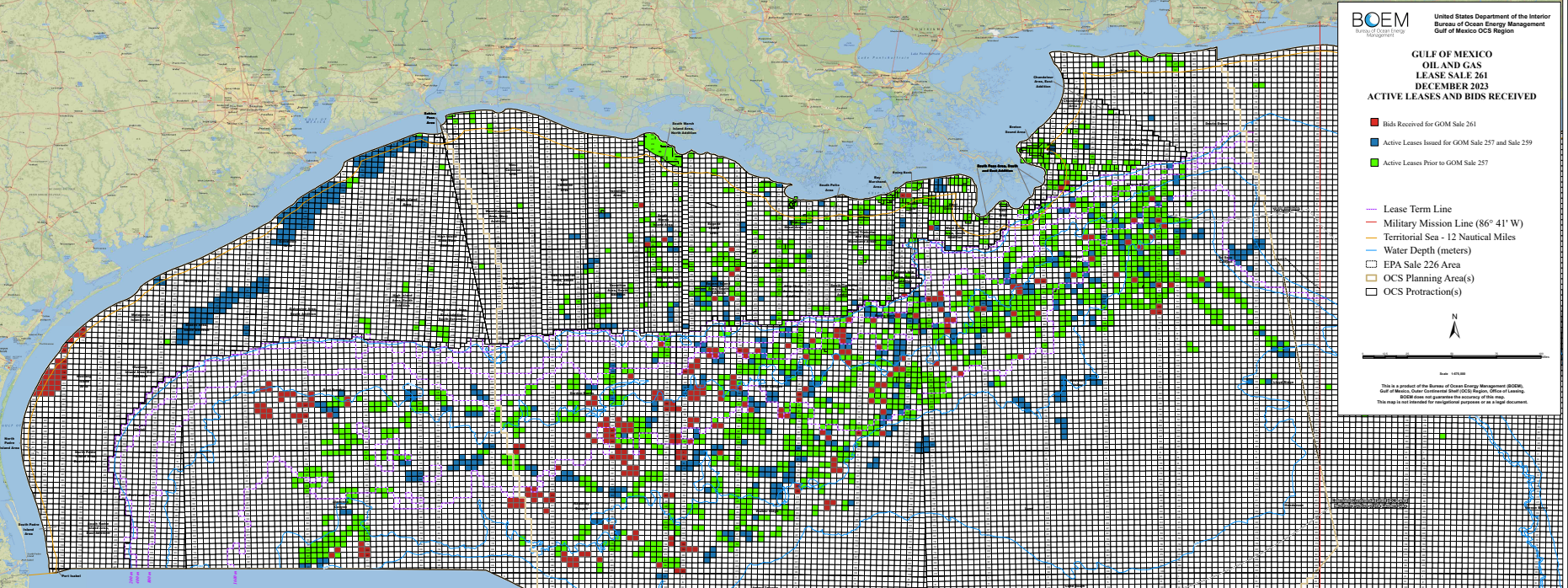
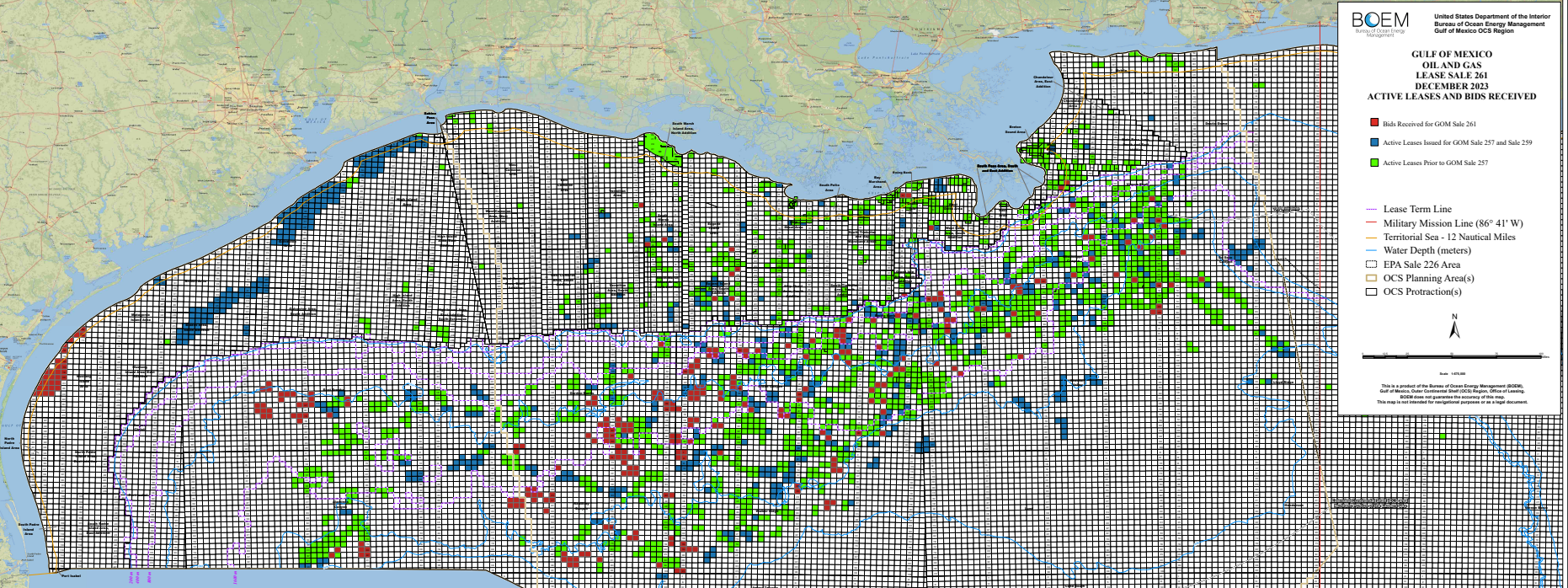
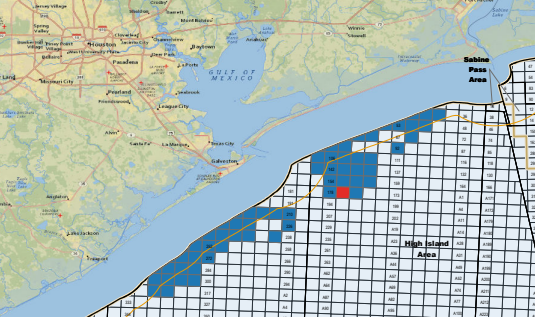
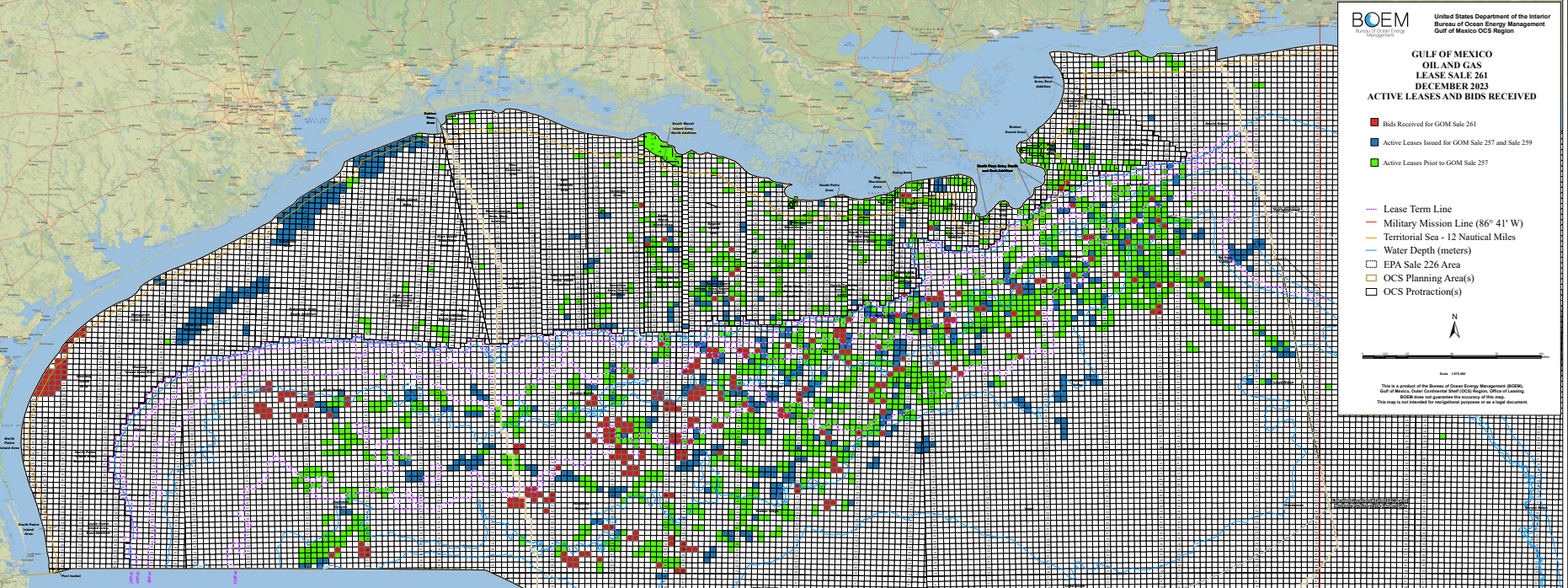
199 oil and gas leases were wrongfully acquired for carbon disposal purposes. at Sales, 257, 259, and 261. Those blocks (red and blue) are adjacent to Texas waters. Only 7 of those leases remain in effect.

Read Full Post »

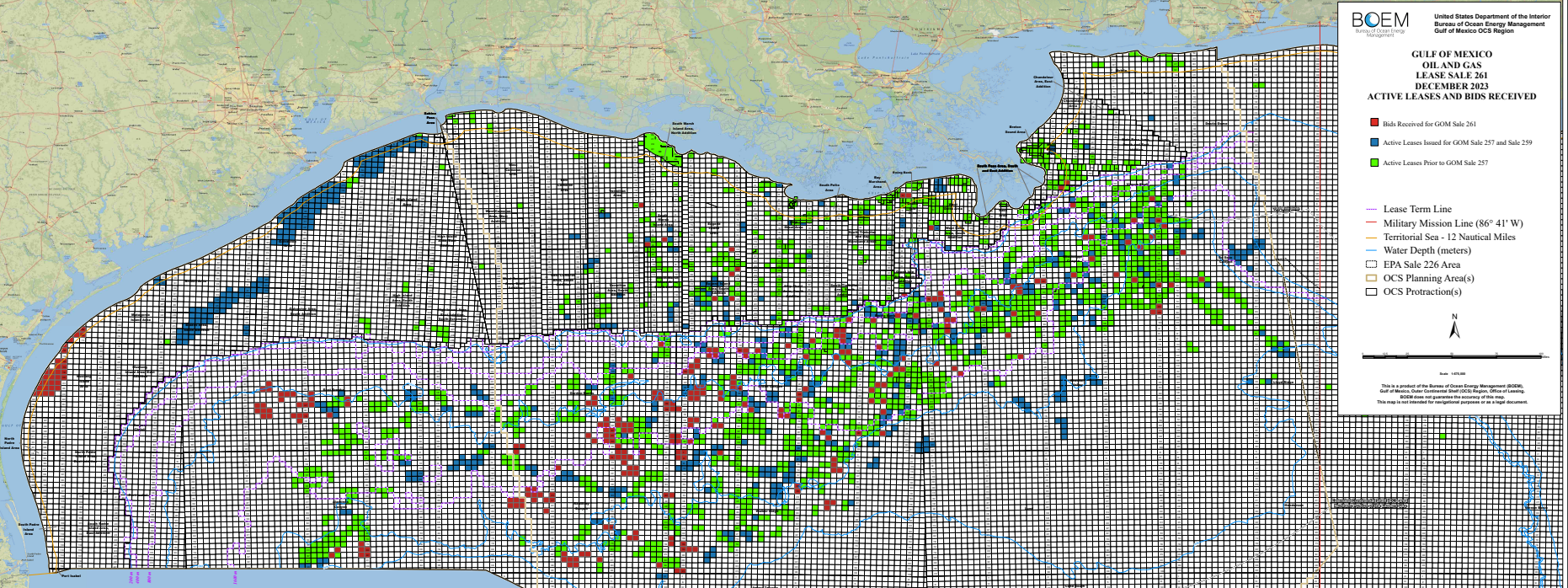
Gulf of America lease map: 199 oil and gas leases were wrongfully acquired for carbon disposal purposes. At Sale 261, Repsol acquired 36 nearshore Texas tracts in the Mustang Island and Matagorda Island areas (red blocks at the western end of the map above). Exxon had acquired 163 nearshore Texas tracts (blue in map above) at Sales 257 (94) and 259 (69).

In pursuit of a “$4 trillion industry” funded by tax credits and energy consumers, Exxon tarnished the corporation’s impressive Gulf of Mexico legacy by acquiring oil and gas leases solely for carbon disposal purposes (see caption above). That gambit and Repsol’s copycat strategy have apparently failed.

On June 29, 2026, Energy Intelligence reported that Exxon had begun relinquishing those leases. Kudos to those in the Administration who refused to buckle under pressure from lobbyists seeking to convert the leases to authorize carbon disposal.

That said, this sad chapter in OCS program history may not be over. 94 of the disposal leases have yet to be relinquished. Here is the current status of the improperly acquired leases:

  • All 36 of the Repsol’s Sale 261 leases were relinquished effective 2/19/2026.
  • All 69 of Exxon’s Sale 259 leases were relinquished effective 6/11/2026.
  • None of Exxon’s 94 Sale 257 leases have been relinquished to date. Perhaps these leases are being held as a hedge in case there is another legislative end run or a policy decision that would facilitate conversion of the leases, or for tax/accounting purposes? As things stand, the leases expire in Oct. 2027.

Exxon and Repsol attempted to gain an unfair advantage by acquiring their preferred disposal leases without competition and before leasing and regulatory processes had been established. One could argue that they were fortunate to have avoided criminal penalty consideration given that they knowingly and willfully violated the terms of the sale notices.

The companies will lose their bonus payments which amounted to approximately $25 million for Exxon and $4 million for Repsol. They have also been paying rental fees of $10/acre/year for the Sale 259 and 261 leases, and $7/acre/year for the Sale 257 leases.

Lastly, one company was directly affected by the improper bidding.  Focus Exploration was a second bidder for one of the blocks acquired by Exxon in Sale 259 (red in map below). Presumably, Focus was interested in acquiring the tract for oil and gas exploration purposes, but their bid was a bit lower than Exxon’s. Should Focus be compensated in some manner?

History of the Exxon and Repsol CCS lease acquisitions.

Read Full Post »

Gulf of America lease map: 199 oil and gas leases were wrongfully acquired for carbon disposal purposes. At Sale 261, Repsol acquired 36 nearshore Texas tracts in the Mustang Island and Matagorda Island areas (red blocks at the western end of the map above). Exxon had acquired 163 nearshore Texas tracts (blue in map above) at Sales 257 (94) and 259 (69).

As expected, the carbon disposal era in Federal offshore waters is ending before it began, and rightfully so.

Energy Intelligence is reporting that Exxon is relinquishing “more than 160 leases” in nearshore Federal waters off Texas. The actual number of oil and gas leases that the company improperly acquired for carbon disposal purposes is 163 (map above).

The reason being cited for the lease relinquishments is that the Dept. of the Interior has shelved regulations for carbon disposal on the OCS. Kudos to the DOI officials responsible for that decision. Carbon disposal has the support of no one except the companies that hope to profit from it. Further, there is no scenario under which Interior could have allowed these wrongfully acquired oil and gas leases to be converted to carbon disposal leases.

Now that these carbon disposal leases are being relinquished, it would be nice to see Exxon start acquiring OCS oil and gas leases for their intended purposes. Exxon and Mobil are historic Gulf operators who were once important contributors to the success of the OCS program.

History of the Exxon and Repsol CCS lease acquisitions.

Read Full Post »

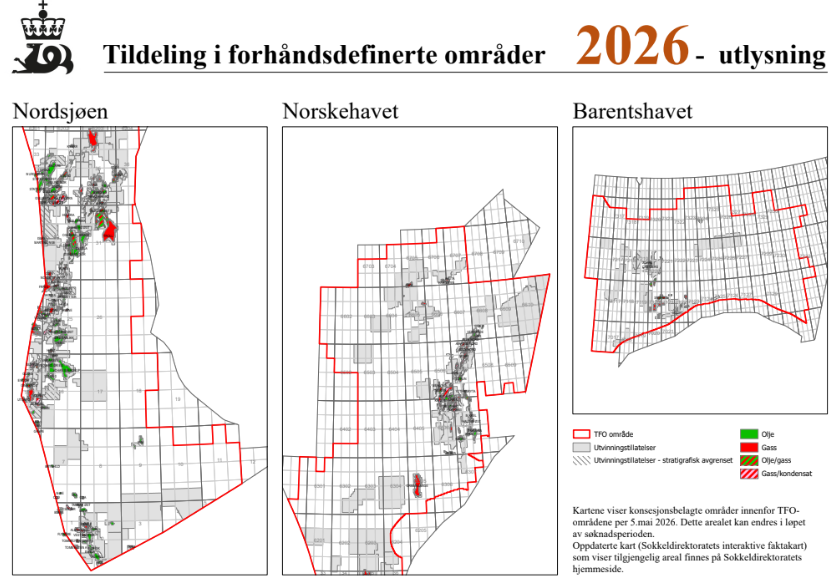
North Sea, Norwegian Sea and Barents Sea licensing area has been expanded by 70 blocks.

In announcing its annual licensing round, Norway expresses strong support for offshore exploration and production:

The oil and gas industry is crucial for Norway and for Europe. The government is today announcing new exploration areas in the APA (Allocations in Predefined Areas) to further develop the petroleum sector, so that it can continue to create great value for the community, lay the foundation for good jobs throughout the country, ensure our common welfare and contribute to Europe’s energy security and safety, says Prime Minister Jonas Gahr Støre.

Kudos to Norway for the strong, unequivocal announcement. Consistent acreage offerings are important in sustaining offshore production:

Allocations in Predefined Areas (APA) are an annual licensing round that covers the best-known exploration areas on the continental shelf. Through the APA scheme, oil companies gain predictability regarding access to exploration acreage, which is important for a long-term industry such as the petroleum industry. After more than 50 years of exploration activity, the APA scheme today covers the majority of the area that is opened and available on the Norwegian continental shelf.

This is what it takes to sustain oil production at about 2 million barrels/day and gas production at over 10 billion cu ft/day.

Norway also has an exemplary risk and performance-based regulatory regime administered by Havtil.

Perhaps less pragmatic, in the opinion of this observer, are these policies:

Read Full Post »

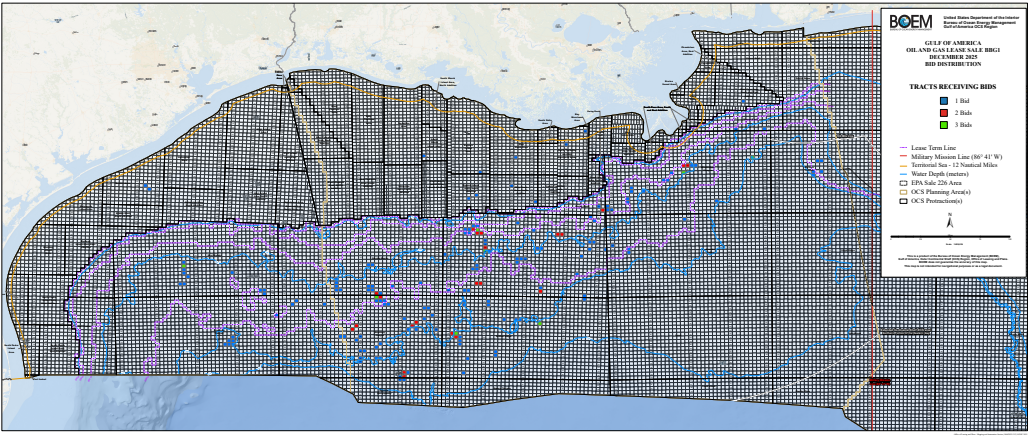
Tracts receiving bids in Sale BBG1

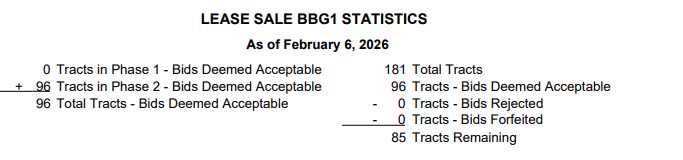
To date,BOEM has deemed 96 of the 181 BBG1 high bids to be acceptable. No high bids have been rejected. Although the sale was “beautiful but not big,” the bids were relatively strong on a per acre basis. The number of rejected bids may thus be quite low.

No bids were accepted during BBG1’s Phase 1 review. This means that none of the tracts receiving bids were determined to be nonviable as was the case for the 199 tracts that were improperly acquired for carbon disposal purposes in Sales 257, 259, and 261. (Unsurprisingly, neither of the acquiring companies has submitted an exploration plan for any of these CCS leases. The leases will likely expire without activity. Much to the dismay of the large and diverse group of opponents, the carbon disposal industry is focusing on onshore locations along the Gulf Coast.)

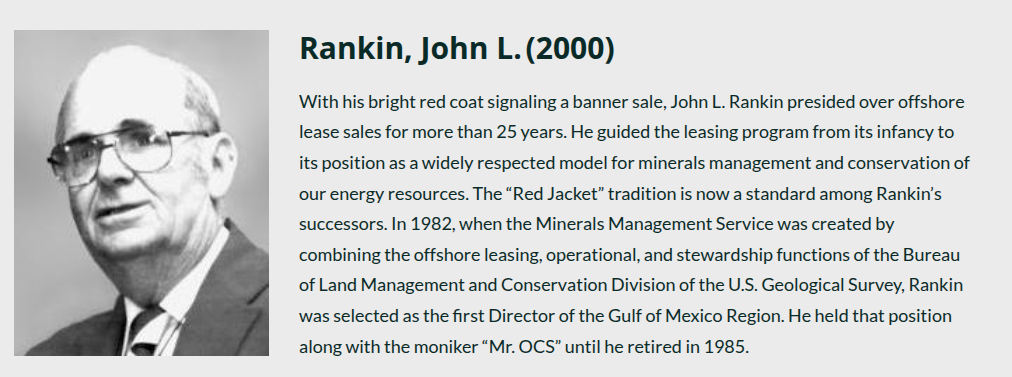
Meanwhile, a Cook Inlet lease sale is scheduled for March 4, and another Gulf of America sale will be held on March 11. Despite attractive terms, don’t expect either to be a banner “red jacket” lease sale. (See the John Rankin recognition below.)

More information on BOEM’s bid evaluation process.

Read Full Post »

Louisiana State Treasurer John Fleming

Senator Bill Cassidy hopes to retain his seat in the US Senate, but faces a stiff challenge from Louisiana State Treasurer John Fleming.

Fleming is opposed to carbon capture and sequestration: “If elected to the U.S. Senate, the first bill I will submit will be to fully defund and repeal the 45Q tax credits that pay for this. There’s no market for this. People don’t buy this technology.”

“This is purely crony capitalism, where you have the government paying wealthy companies that are going to make a lot of money out of this, and the average landowner is going to suffer from it. So I’ve committed that I will submit the bill that will defund it so that money will no longer be available, and it will stop all these projects.”

posts on carbon disposal

Read Full Post »

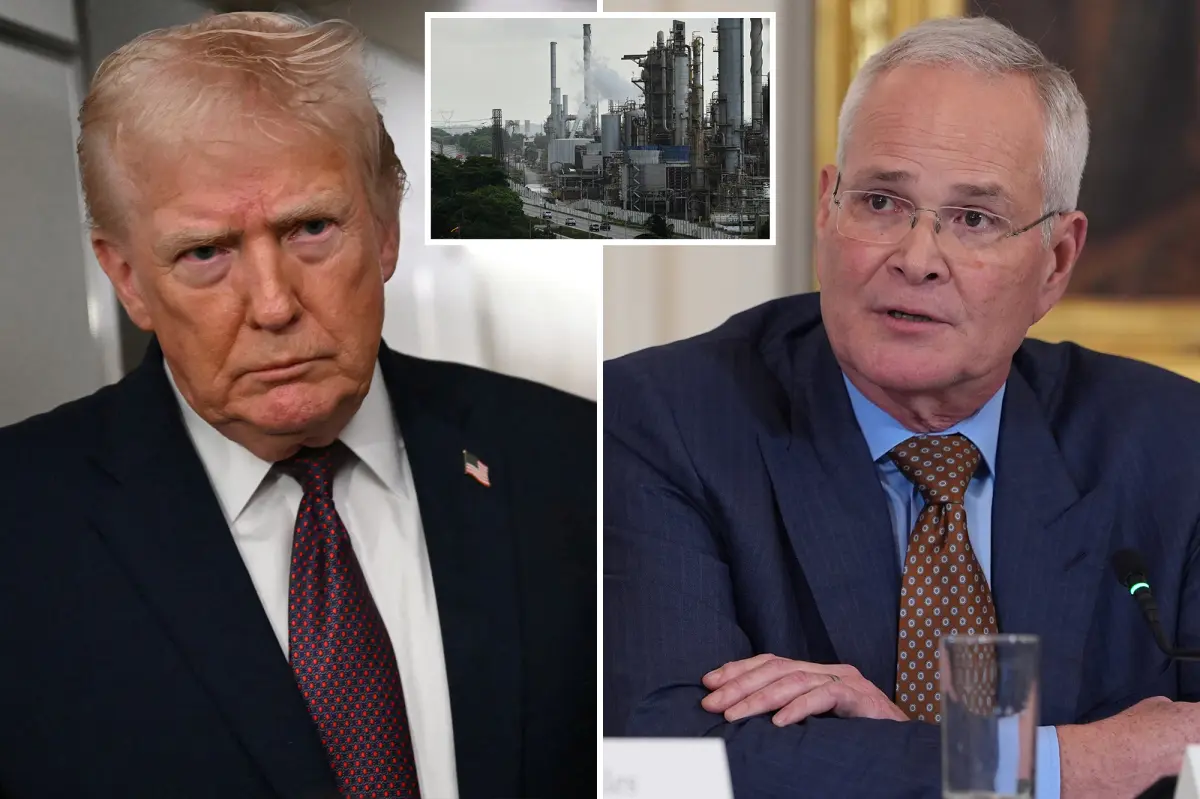
Unsurprisingly, President Trump was not particularly pleased with Darren Woods’ “uninvestable” quote, the main media takeaway from Friday’s meeting on redevelopment of Venezuela’s oil and gas resources.

Exxon CEO Darren Woods: “If we look at the legal and commercial constructs and frameworks in place today in Venezuela — today, it’s uninvestable.”

The response from President Trump: “I didn’t like Exxon’s response,” Trump said to reporters on Air Force One as he departed West Palm Beach, Florida. “They’re playing too cute.” He told reporters he was inclined to deny Exxon any role in rebuilding Venezuela’s oil industry.

If Exxon is now in the President’s doghouse, what does this mean for the Santa Ynez Unit, an Exxon orphan that was adopted by Sable Offshore? Given Sable’s financial challenges, the SYU may soon be returning to Exxon.

Regardless of ownership, an SYU production restart faces strong opposition in California and is fully dependent on an assertive and supportive Federal government. Meanwhile, an injunction on SYU production remains in place, and despite rumors to the contrary, Sable confirms they are complying with that order.

If not already dead, another Exxon initiative, Gulf of America carbon disposal, may now be a step closer to extinction. Does Exxon, which has not drilled an exploratory well in the Gulf since 2018 or a development well since 2019, think the Gulf is only investable for carbon disposal?

Lastly, it’s noteworthy that Hilcorp, the only Alaska OCS producer, is all-in on Venezuela!

Read Full Post »

Big Beautiful Gulf of America

Will the oil and gas lease sale boldly named Big Beautiful Gulf 1 (BBG1) live up to its grand name? Given the more favorable lease terms and the 2 year gap since the last sale, BBG1 should surpass the previous 3 sales (table below). Questions:

  • Which majors will be the most active bidders? Chevron? Shell? BP? Oxy/Anadarko?
  • Will former Gulf of Mexico stalwarts Exxon and Conoco Phillips participate for the first time in years? Probably not, but US super-majors should participate in the US offshore program.
  • How many companies will submit bids? Would like that to be a number >35.
  • How many tracts will receive bids? A number >300 would be very encouraging.
  • Will the total high bids exceed $400 million?
  • Will we see an increase in shelf interest?
  • Which independents will be the most active?
  • After the not-so-clever carbon disposal acquisitions in the last 3 sales, will the number of carbon disposal bids be zero? For the first time ever, the Federal government felt compelled to stipulate the obvious (see the proposed notice for OCS Sale 262) – that an Oil and Gas Lease Sale is only for oil and gas exploration and development.

See the summary data below for the last 3 Gulf lease sales. We’ll fill in the blanks next week.

Sale No.257259261BBG1
date11/17/20213/29/202312/20/202312/10/2025
companies
participating
333226
total bids223328423161
tracts receiving bids214324422751
sum of all bids
$millions
198.5309.8441.9
sum of high bids
($millions)
101.7263.8382.2
highest bid
company
block
$10,001,252.00
Anadarko
AC 259
$15,911,947
Chevron
KC 96
$25,500,085
Anadarko
MC 389
most high bids
company
sum ($millions)
46
bp
29.0
75
Chevron
108.0
65
Shell
69.0
sum of high bids ($millions)
company
47.1
Chevron
108
Chevron
88.3
Hess
most high bids by independent14-DG Expl.13-Beacon
13-Red Willow
22-Red Willow
1excludes 36 leases improperly acquired for carbon disposal purposes; 2excludes 69 leases improperly acquired for carbon disposal purposes; 3excludes 94 leases improperly acquired for carbon disposal purposes

Read Full Post »

from: The People of Louisiana Against CCS

The carbon disposal industry, which overplayed its hand on the OCS, has managed to alienate traditional oil and gas industry supporters, sparking grassroots opposition in conservative areas of Louisiana. Carbon Capture and Sequestration (CCS) is also opposed by climate activists and the environmental justice movement.

The Advocate has nicely summarized opponents concerns: “land rights; the impact on underground aquifers if CO2 leaks; skepticism of climate change; skepticism of its effectiveness in fully capturing CO2; and opposition to the use of federal money and tax credits to finance the effort.”

Gov. Landry issued an executive order on Oct. 15 in an apparent attempt to calm the opposition. Following 34 “whereas” clauses intended to justify carbon disposal in Louisiana, the EO directs a pause in the review of new Class VI CO2 disposal wells. As evidenced by the attached press release, Save My Louisiana and other opposition groups are far from satisfied.

Read Full Post »

Unsurprisingly, the carbon capture and sequestration (CCS) hype is fading fast. No other carbon strategy is so strongly opposed by both climate change activists and skeptics.

Support for CCS seems to be limited to those seeking to profit from subsidies, mandates, and disposal fees. In 2022, Exxon projected a $4 trillion CCS market by 2050. Pipe dream?

“Highlights” of the Gulf of America OCS carbon disposal era:

Gulf of America lease map: 199 oil and gas leases were wrongfully acquired for carbon disposal purposes. At Sale 261, Repsol acquired 36 nearshore Texas tracts in the Mustang Island and Matagorda Island areas (red blocks at the western end of the map above). Exxon had acquired 163 nearshore Texas tracts (blue in map above) at Sales 257 (94) and 259 (69).

Even those of us who are supporters of responsible offshore oil and gas production find it a bit unsavory that some companies are looking to cash in on (and virtue signal about) carbon collection and disposal at the public’s expense. Perhaps companies that believe oil and gas consumption is harmful to society should be seeking to reduce production rather than engaging in enterprises intended to sustain it.

Read Full Post »

Older Posts »