Feeds:
Posts
Comments

Posts Tagged ‘Exxon’

The oil patch is known for booms, busts, mergers, and acquisitions. Hess is now among the once important offshore operators that no longer exist as separate companies. Others include Amoco, Arco, Texaco, Getty, Gulf, Unocal, Sun, Anadarko, BHP, Mobil, Phillips, Noble Energy, Pennzoil, Kerr-McGee, Superior, Nexen, and Newfield.

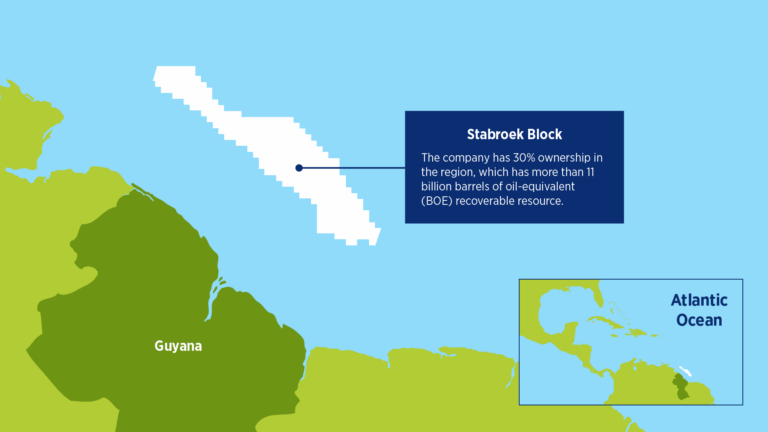
Hess would probably not have been a Chevron target had they not taken a chance in 2014 when they obtained a 30% position in Exxon’s Stabroek block offshore Guyana. The rest is history, and Stabroek is now the world’s most prized offshore block. Hess had other nice assets in the Gulf, Bakken Shale, and elsewhere, but Stabroek was Chevron’s primary target.

Paying the price for the Hess acquisition are up to 8,000 employees who will be axed by the end of 2026, starting with 575 cuts at the former Hess Tower in Houston on September 26 and matched reductions in Texas, California and North Dakota. The cuts also have to be disappointing to the Federal, Texas and North Dakota governments, given their strong support for oil and gas production. Mass layoffs don’t equate to energy dominance.

Why is the loss of Hess is significant:

  • Hess was a safety compliance leader in both 2023 and 2024.
  • Hess was an active participant in pre-merger lease sales.
  • The combined company is unlikely to be greater than the sum of the parts in terms of US lease acquisition, exploration, and development.
  • Combining companies limits the diversity of geological assessments and exploration strategies.
  • Consolidation limits participation on committees engaged in assessing technology and developing standards. Declining industry participation in these activities, which are critical to offshore safety, has been a historical concern of OCS program leadership.

When the merger was announced, Chevron’s CEO Mike Wirth was quoted as saying “We’ve got too many CEOs per BOE, so consolidation is natural.” That comment makes sense from the perspective of an acquiring CEO. Employees of the companies being acquired have a somewhat different view. They would prefer increasing exploration and production rather than reducing employees.

Read Full Post »

I had the pleasure of visiting the Hibernia gravity-based structure while it was still under construction in Bull Arm, Newfoundland (photo). This pioneering facility, where Newfoundland’s offshore production began in Nov. 1997, continues to impress.

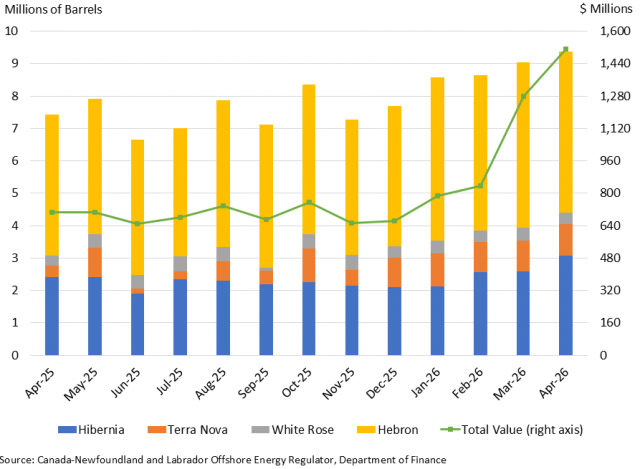
In April, Hibernia posted its highest monthly production since August 2021 – 3.1 million barrels or 103,000 bopd. Exxon attributes the production growth to a recent 6-well drilling program. The Hibernia field has produced more than double the original resource estimate of 520 million barrels.

Offshore Newfoundland’s total April production, increased to 9.4 million barrels, with a sharp increase in the value of production (see figure below). This is the highest monthly production level for the province since March 2020, and the second highest monthly production value on record, only behind July 2008.

Meanwhile, production at Hebron, another Exxon GBS structure, has reached record levels this year (chart below). The facility is producing more than 5 million bbls/month.

Finally, Suncor’s decision to refurbish the Terra Nova FPSO and resume production may be paying off given production levels of ~1 million bbls/month.

Read Full Post »

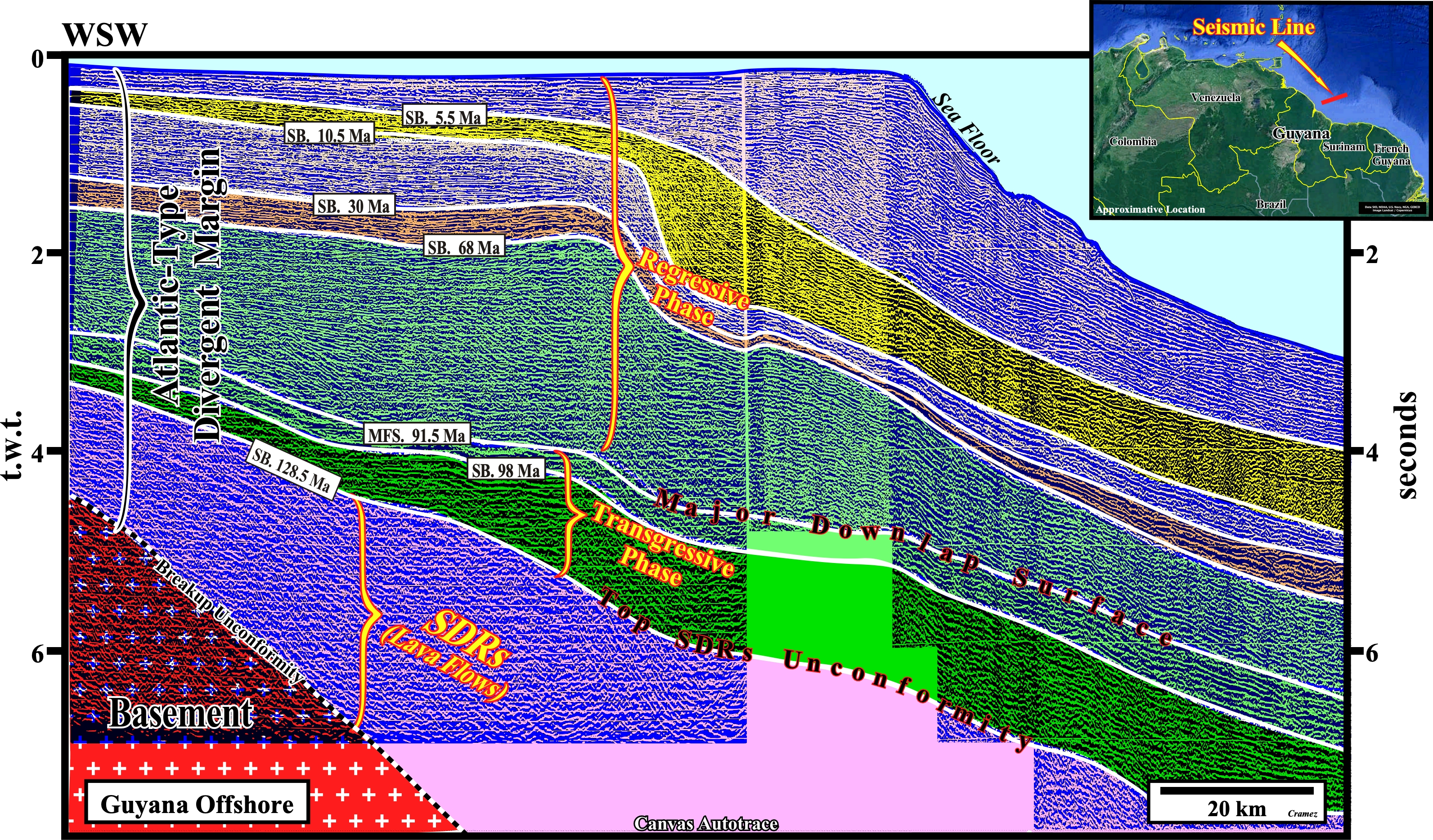
Offshore Guyana seismic line

Oil Now Guyana reports that an Exxon artificial intelligence model built using Guyana’s offshore seismic data was able to identify already-discovered crude oil accumulations with a 90% success rate.

Neil Chapman, Exxon: “…in Guyana, we have built an agent, a model…which if we give it the seismic data that we’ve run and we say, go find the crude oil, it can find all the crude oil that we’ve already found with a 90% success rate.”

(Note: Humans are also great at identifying discoveries after the fact 😉. How many false positives were there?)

Chapman said the company has also used artificial intelligence to review well data from across the industry.

“We have analyzed the well data from 50,000 wells that have been drilled in the industry all over the world, 50,000,” Chapman said. “It would have taken us 15 years to do that analysis. We’ve done it in a matter of weeks.” 

Despite the many advances in exploration technology over the years, one caveat remains unchanged: “We don’t know if they’re going to be successful or not until you drill a hole, you can never be sure,” Chapman said. 

AI should enhance not just geophysical interpretations, but all aspects of offshore exploration and production including site surveys, well planning and construction, drilling, well control, structure designs, production and pipeline monitoring, and safety management. Hopefully, the net result will be increased production at lower cost with improved safety and environmental performance, and that the workforce will not be reduced, but will become more efficient.

Stunning picture taken offshore Guyana

Read Full Post »

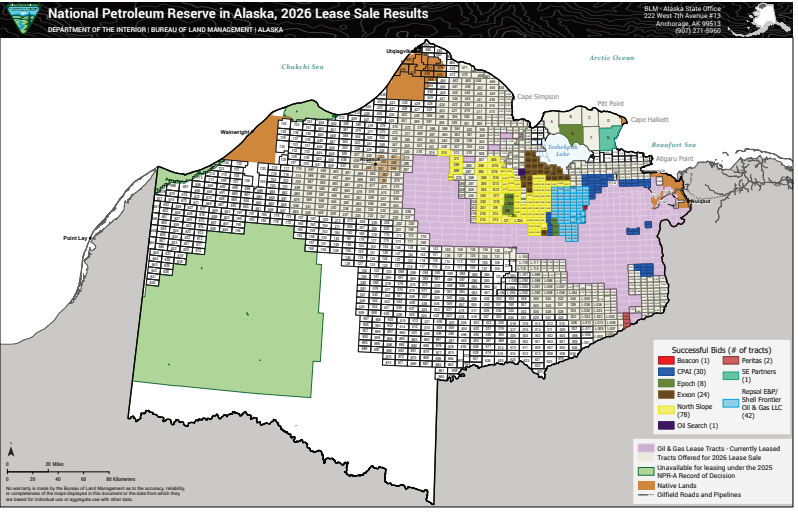
Not offshore, but close😉 Fond memories of my stay at NPRA many years ago.

Strong participation; nice mix of big dogs – Exxon, Shell, ConocoPhillips (CPAI), and Repsol – and independents.

Stats – 3/18/2026 NPRA lease sale:

  • Tracts offered: 625
  • Tracts receiving bids: 187
  • Sum of high bids: $ 163,696,722.2
  • Highest bid: $ 3,649,920.00 by Epoch Resources
  • Companies participating: 11
  • Total bids: 430
CompanyHigh Bids
North Slope Exploration78
Shell/Repsol (joint bids)42
CPAI30
Exxon24
Epoch8
Peritas2
Beacon1
Oil Search1
SE Partners1

Read Full Post »

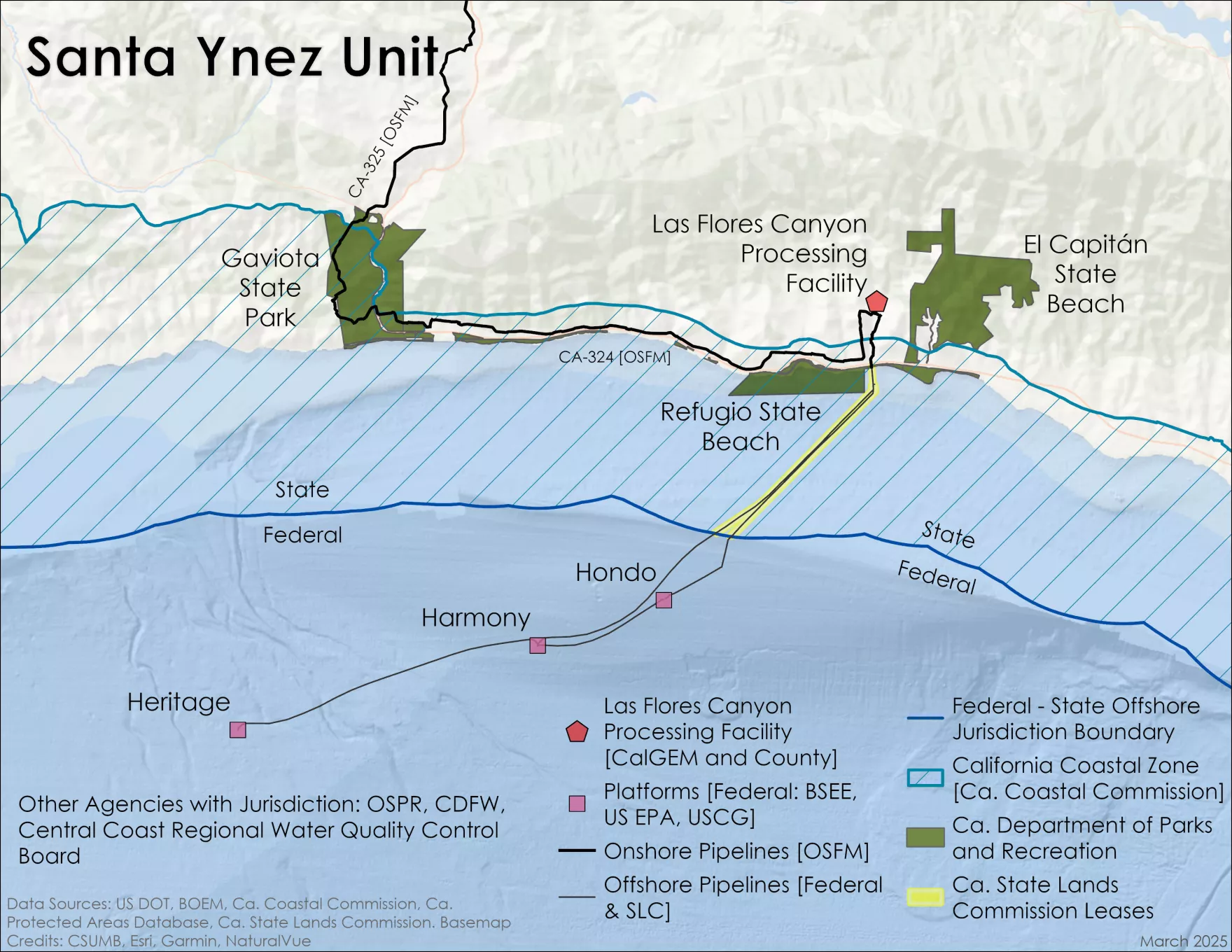
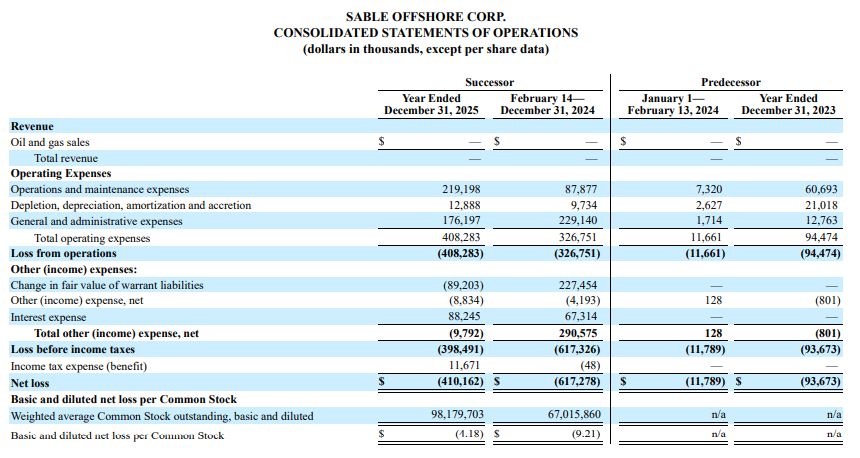
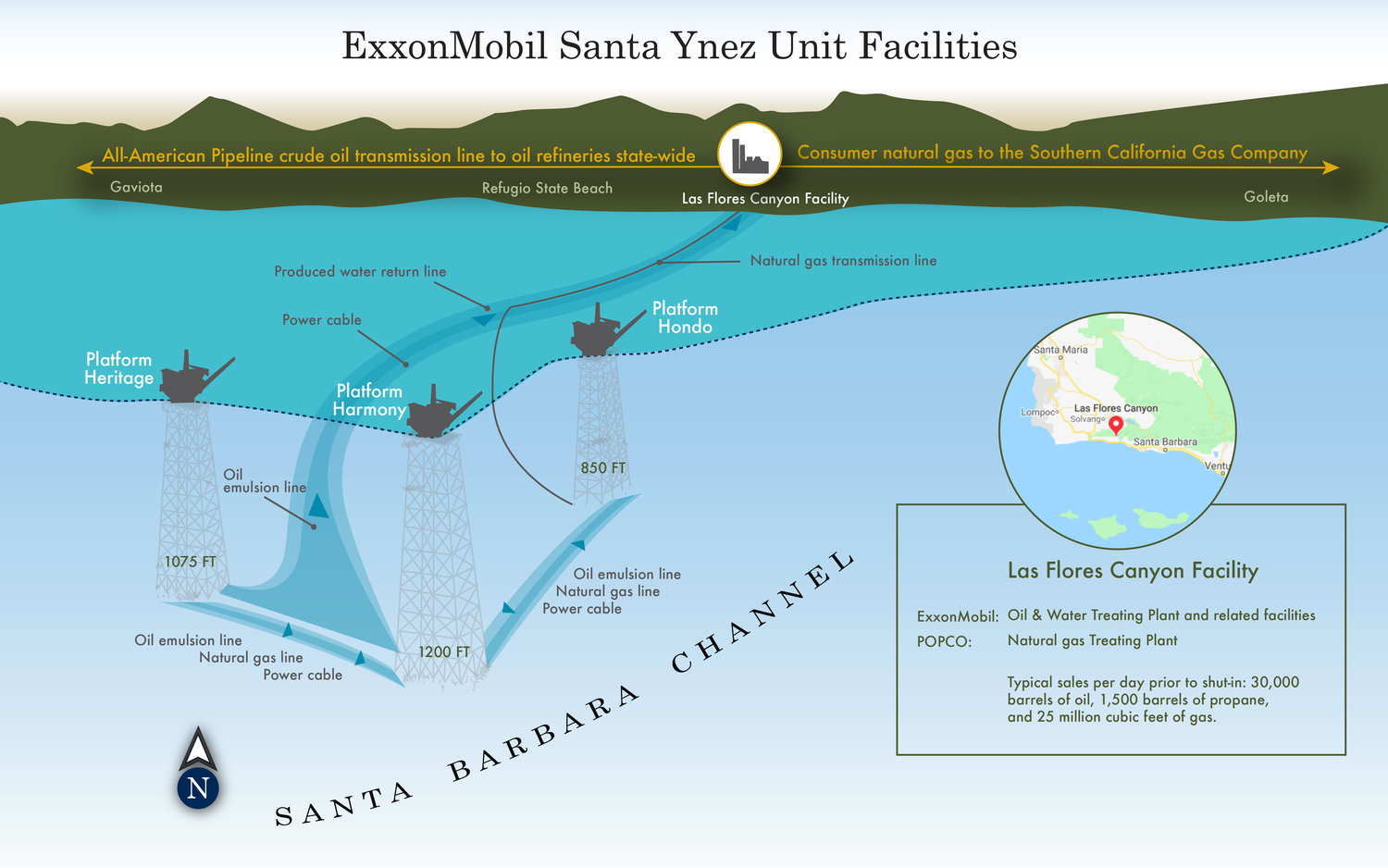
The potential rewards are great – 500+ million barrels of oil, 3 major production platforms, associated pipelines, onshore processing facilities – but can Sable survive the costly legal and administrative challenges? What is Exxon’s plan for the Santa Ynez Unit if Sable should fail?

Read Full Post »

Back to the future? Santa Ynez Unit OS&T – 1981-1994

Pasted below are excerpts from Sable’s Prospectus Supplement. Is Sable serious about pursuing a Santa Ynez Unit strategy that employs a production and treatment vessel 3.5 miles from shore ala the development option that was reluctantly approved by the Federal govt in 1974, two decades before the onshore infrastructure was in place?

The OS&T option is inferior to onshore treatment and pipeline transportation in every way – spill risks, air emissions, economics, ultimate oil recovery, transportation to market, natural gas utilization, and public benefit.

This blogger supports a resumption of Santa Ynez Unit production. However, the only responsible path forward is to do the right thing and continue to pursue the onshore pipeline approvals administratively and legally. It is far better to defend a good project than a contrived workaround. 

When will BOEM share Sable’s proposed “update”(actually a massive revision) to the SYU Development and Production Plan, as they are obligated to do?

Evaluation of the revised plan will require a detailed environmental review.

Operationally, BSEE and the Coast Guard will need to carefully consider vessel integrity, treatment capabilities, mooring and offloading plans, transportation schemes, gas utilization/injection, and many other technical details.

Meanwhile, does Exxon, the previous (and future?) owner, remain on the sidelines when the OS&T permitting circus begins in earnest?

Excerpts from Sable’s Prospectus Supplement (emphasis added):

On September 29, 2025, Sable announced that it is evaluating and pursuing an offshore storage and treating vessel (“OS&T”) strategy to provide access to domestic and global markets via shuttle tankers for federal crude oil produced from the SYU in the Pacific Outer Continental Shelf Area (the “OS&T Strategy”). Continued delays related to the Santa Ynez Pipeline System have prompted Sable to evaluate and pursue the OS&T Strategy. On October 9, 2025, Sable submitted a Development and Production Plan update for the SYU to the Bureau of Ocean Energy Management (“BOEM”). Prior to implementation of the OS&T Strategy, regulatory authorizations are required, including clearance from BOEM.

Preparations for the OS&T Strategy include the acquisition of a suitable OS&T vessel, certain refitting and upgrades to the vessel and the SYU equipment, transportation of the vessel to SYU, and related installation. In connection with implementation of the OS&T Strategy, the Company expects to opportunistically acquire an existing OS&T in the first quarter of 2026, with delivery of the vessel to SYU expected in the third quarter of 2026. Following the acquisition of the vessel, and vessel and platform upgrades and installation, Sable would expect to begin sales from all SYU platforms in the fourth quarter of 2026, with expected comprehensive oil production rates of over 50,000 barrels of oil per day, utilizing the OS&T within the SYU federal leases, provided the Company receives regulatory clearances. Sable estimates that the total capital required to execute the OS&T Strategy is approximately $475.0 million. The Company has already incurred a small portion of such capital expenditures, with the vast majority of such capital expenditures remaining, provided the Company receives regulatory clearances. See “Risk Factors—Risks Associated with Our Operations—In order to commence operations pursuant to an OS&T offtake strategy, we will require clearances and permitting, including from BOEM.”

Read Full Post »

Platform Holly in the Santa Barbara Channel

John Smith informs us that the California State Lands Commission (CSLC) is moving forward with the environmental review for decommissioning Platform Holly. This would be the first platform decommissioning project offshore California since the 1996 Chevron 4-H project which involved the removal of Platforms Hope, Heidi, Hilda and Hazel in state waters.

John comments that the project description, which calls for removing the jacket, seep tents and pipelines, and partially removing the upper 5 feet of the 23-foot-high shell mounds, does not make much sense given the abundant fish and invertebrates that reside on or around the platform jacket. Cutting the jacket off 85 feet below the water line and converting the remaining structure to an artificial reef would make more sense and should have been designated the proposed project. 

The plan is to send the materials to the Ports of Long Beach, Los Angeles or Hueneme or possibly Ensenada, Mexico. The project involves complex logistics and is going to be a very long (3 years), ambitious and expensive project that will likely set a precedent for future platform decommissioning projects.

It’s noteworthy that Platform Holly’s oil and gas production effectively reduced natural seepage and methane emissions from shallow formations beneath the Channel. Holly was thus a “net negative” hydrocarbon polluter.

According to their agreement with the CSLC, Exxon is responsible for the decommissioning costs.

Scientific American: The steel “jackets” that support California’s offshore oil platforms are covered in millions of organisms and provide habitat for thousands of fishes. Joe Platko

Read Full Post »

Unsurprisingly, President Trump was not particularly pleased with Darren Woods’ “uninvestable” quote, the main media takeaway from Friday’s meeting on redevelopment of Venezuela’s oil and gas resources.

Exxon CEO Darren Woods: “If we look at the legal and commercial constructs and frameworks in place today in Venezuela — today, it’s uninvestable.”

The response from President Trump: “I didn’t like Exxon’s response,” Trump said to reporters on Air Force One as he departed West Palm Beach, Florida. “They’re playing too cute.” He told reporters he was inclined to deny Exxon any role in rebuilding Venezuela’s oil industry.

If Exxon is now in the President’s doghouse, what does this mean for the Santa Ynez Unit, an Exxon orphan that was adopted by Sable Offshore? Given Sable’s financial challenges, the SYU may soon be returning to Exxon.

Regardless of ownership, an SYU production restart faces strong opposition in California and is fully dependent on an assertive and supportive Federal government. Meanwhile, an injunction on SYU production remains in place, and despite rumors to the contrary, Sable confirms they are complying with that order.

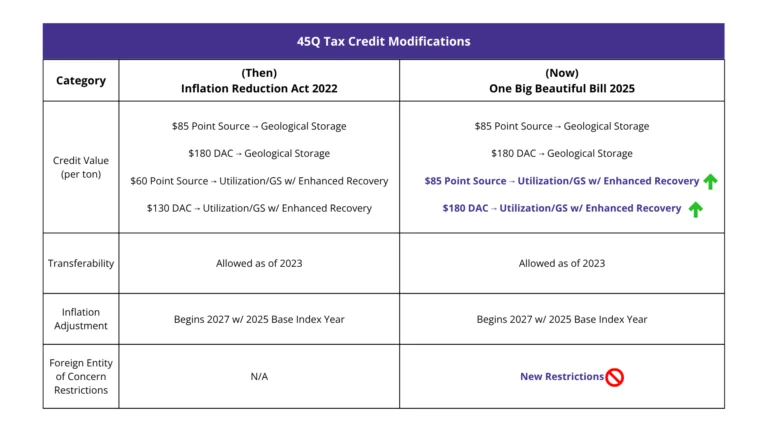
If not already dead, another Exxon initiative, Gulf of America carbon disposal, may now be a step closer to extinction. Does Exxon, which has not drilled an exploratory well in the Gulf since 2018 or a development well since 2019, think the Gulf is only investable for carbon disposal?

Lastly, it’s noteworthy that Hilcorp, the only Alaska OCS producer, is all-in on Venezuela!

Read Full Post »

The vote on the transfer of Santa Ynez Unit (SYU), Pacific Offshore Pipeline Company (POPCO) Gas Plant, and Las Flores Pipeline System permits from Exxon to Sable Offshore was the last item on the Board’s agenda, so those of us who were streaming the meeting for that topic had to be patient.

The Sable session began with a surprise announcement that opened the possibility that perhaps the outcome might not be as expected. Supervisor Hartmann, who owns property close to the pipeline, had once recused herself from voting on this matter. When it was thought that her property was ~900′ from the pipeline, the Fair Political Practice Commission (FPPC) cleared her participation. However, after a 12/3/2025 letter from Sable informed that her property was as close as 8′ from the pipeline, the FPPC reversed its position and Supervisor Hartmann again recused herself.

Supervisor Hartmann’s re-recusal added some drama to the session given that there were two sure votes against Sable and one sure vote in favor. The swing vote would be that of Supervisor Lavagnino, who was very much supportive of the oil industry, but not Sable.

After strong but predictable presentations by the Environmental Defense Center/Center for Biological Diversity team and Sable, the floor was open to public comments. Although there were more speakers opposed to the Sable position (13), this observer found the Sable supporters (7) to be more compelling. Most were California natives who worked on the project and demonstrated a sincere commitment to the safety and environmental values that we all support. One aptly noted that California unnecessarily imports 2/3 of its oil from foreign sources, some of which aren’t particularly friendly.

As an aside, a County staffer pointed out that 400,000 barrels of SYU oil were in storage as a result of the resumption of production in May prior to receiving the necessary approvals to transport oil through the onshore pipeline.

The vote opened with Supervisor Nelson supporting the transfer of permits to Sable. His commented that the County was “attacking Sable’s finances at the same time they were trying to bankrupt them.”

Sable opponents held serve with Supervisors Capps and Lee opposing the transfer. Ms. Capps deserves credit for the sincere respect she showed for the Sable workers who were present.

So Supervisor Lavagnino would cast the deciding vote. He once again voted against the transfer noting that he was a long time supporter of the oil industry, but that he had lost confidence in Sable.

Bottom line: The outcome was as expected, but the recusal drama and strong presentations made the stream worth watching.

Read Full Post »

Greece has licensed Block 2 to Energean Hellas LTD and HELLENiQ Energy:

  • Location: In the Ionian Sea 30 km west of Corfu Island (note: that’s 18.6 miles, not the 125 mile buffer that Florida views as sacred)
  • Water depth: 500 to 1,500 m
  • Block size: 2,422.1 sq Km, the largest unexplored offshore structure in the Mediterranean (note: Gulf of America leases are only 23.3 sq km or < 1% as large)
  • First drilling: late 2026 or early 2027. This will be the first exploratory offshore drilling in Greece since 1981!

ExxonMobil has signed a farm-in deal acquiring 60% of the concession.

  • Energean’s participation is set at 30%, down from 75%.
  • Helleniq participation is now 10%, down from 25%.
  • Energean will remain the operator during the exploration stage.
  • In the event of a commercial discovery, Exxon will assume the operatorship during the development phase.

Andreas Shiamishis, CEO of HELLENiQ ENERGY: “Greece is emerging as one of Europe’s newest and promising regions for hydrocarbon exploration and development. This transaction represents a positive step not only for the joint venture partners, but also for the Greek economy.”

Read Full Post »

Older Posts »