Feeds:
Posts
Comments

Posts Tagged ‘Platform Holly’

The cessation of production at Platform Holly 10 years ago has contributed to the periodic surges in natural seepage that soil Santa Barbara area beaches (see the Instagram post above).

The correlation between production at Platform Holly, which lies just offshore from the Univ. of California at Santa Barbara (UCSB), and seepage in the Coal Oil Point area (map below) was apparent to those who worked at Holly. That association was confirmed by UCSB studies:

Emeritus Professor James Boles collected and analyzed decades of data on methane seeping from the seafloor southeast of Platform Holly, just offshore from Isla Vista. He and colleagues Grant Garven at Tufts University and Chris Peltonen at Beacon West Energy Group determined that production of oil and natural gas from the platform reduced natural methane seepage into the waters of the Santa Barbara Channel, confirming earlier regional studies. The findings appear in the journal Marine and Petroleum Geology.

This blog called Platform Holly a “net negative hydrocarbon polluter, because production from Holly reduced natural seepage and methane pollution from shallow formations beneath the Channel. Steel subsea pyramids (“tents”) installed by Arco in 1982 collected seafloor methane seepage, an added environmental benefit from the platform operations. As described in a 2014 presentation posted by the California State Lands Commission,“production at Platform Holly has resulted in significant improvement in local air quality.”

Further per UCSB:

After combing through 20 years of data, the authors found that production at Platform Holly significantly reduced the amount of methane seeping into the tents. For example, production from a well drilled 1 kilometer beneath the tents immediately reduced the natural seepage. In contrast, the seepage increased when production ceased from that well. “This indicates a direct link between the oil reservoir and the natural seepage in the area,” Boles noted.

Production at Holly ceased 10 years ago; the tents have been removed and the platform is being decommissioned. However, methane bubbles in the Channel and periodic beach tar will continue to remind us of Holly’s positive environmental legacy.
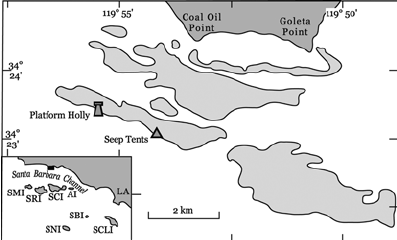
Map showing areas ( shaded ) of natural oil seeps offshore from Coal Oil Point near Santa Barbara, California. Inset map shows the Channel Islands ( I ) designated SM San Miguel, SR Santa Rosa, SC Santa Cruz, A Anacapa, SN San Nicholas, SB Santa Barbara, and SCL Santa Catalina. Seep fields were mapped between 1946 and 1973 (modified from Hornafius et al. 1999) 

Read Full Post »

Platform Holly in the Santa Barbara Channel

John Smith informs us that the California State Lands Commission (CSLC) is moving forward with the environmental review for decommissioning Platform Holly. This would be the first platform decommissioning project offshore California since the 1996 Chevron 4-H project which involved the removal of Platforms Hope, Heidi, Hilda and Hazel in state waters.

John comments that the project description, which calls for removing the jacket, seep tents and pipelines, and partially removing the upper 5 feet of the 23-foot-high shell mounds, does not make much sense given the abundant fish and invertebrates that reside on or around the platform jacket. Cutting the jacket off 85 feet below the water line and converting the remaining structure to an artificial reef would make more sense and should have been designated the proposed project. 

The plan is to send the materials to the Ports of Long Beach, Los Angeles or Hueneme or possibly Ensenada, Mexico. The project involves complex logistics and is going to be a very long (3 years), ambitious and expensive project that will likely set a precedent for future platform decommissioning projects.

It’s noteworthy that Platform Holly’s oil and gas production effectively reduced natural seepage and methane emissions from shallow formations beneath the Channel. Holly was thus a “net negative” hydrocarbon polluter.

According to their agreement with the CSLC, Exxon is responsible for the decommissioning costs.

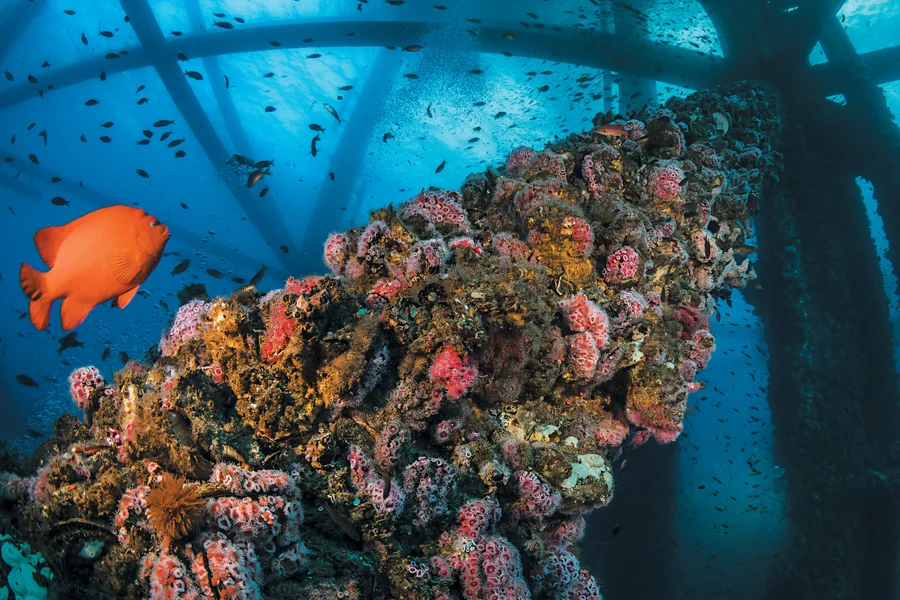
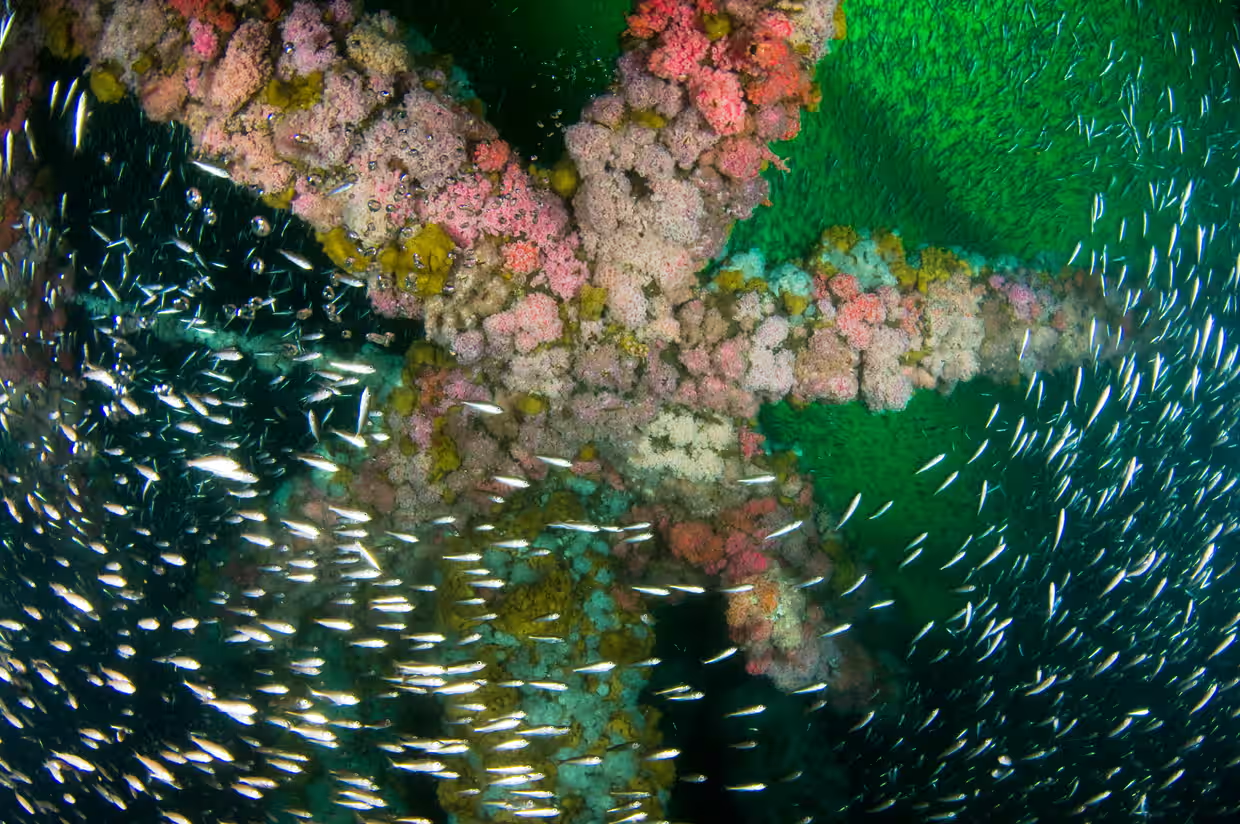
Scientific American: The steel “jackets” that support California’s offshore oil platforms are covered in millions of organisms and provide habitat for thousands of fishes. Joe Platko

Read Full Post »

Thumbs up to Santa Ynez Unit production from Phil Mickelson!

Phil also believes SYU production would reduce natural seepage:UCSB and State Lands Commission studies (Quigley, Luyendyk, Hornafius, Peltonen, and others) have shown that when oil production is active, reservoir pressure is reduced and natural seepage declines by up to 50%. That means: •Cleaner beaches (less tar and oil) •Cleaner ocean surface (fewer sheens) •Healthier marine life with reduced chronic stress

Note that those studies are specific to Platform Holly and the Coal Oil Point area. To the best of my knowledge, no studies have associated SYU production with a reduction in natural seepage.

From a related 2010 BOE post entitled “Slick Talk About Seeps” (note that production at Platform Holly has since been terminated):

While Platform Holly may be a negative spillage facility (i.e. Holly’s seep reduction may significantly exceed the platform’s production spillage), this type of seepage reduction has not been demonstrated at other platforms.  Decisions on offshore exploration and development should be driven by the economic, energy security, and environmental benefits.  To the extent that production reduces natural seepage, all the better.  However, seepage reduction is not a primary reason for producing offshore oil and gas.

Thoughts on Sable’s production options:

Option 1 (use of existing onshore infrastructure) is preferable from cost, air emissions, spill risk, State and local revenue, and regional energy supply standpoints. This is the only option that makes sense despite the enormous permitting challenges.

Option 2 (floating processing facility and tankers) would literally be an “in your face” act of defiance given the coastal visibility of the offshore facilities. Supporters of this option should be aware that there was no Coastal Zone Management Act when Exxon produced from Platform Hondo (the only SYU platform at the time) to the Offshore Storage and Treatment (OS&T) vessel in the 1980s. An EIS would not favor this option, and the California Coastal Commission would surely rule that this option was inconsistent with their CZM plan. The Secretary of Commerce could overrule the Commission’s decision, but legal objections to the override would seem to have a good chance of success.

The only reasonable path forward is to do the right thing and continue to pursue the State pipeline/onshore approvals. Although these approvals are substantively warranted, more litigation is probably inevitable. It will be far better to defend a good project (option 1) than a contrived workaround (option 2).

Read Full Post »

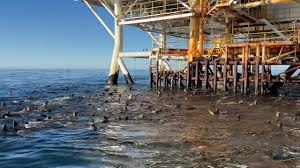
During a recent dive survey at Platform Holly off California’s coast, scientists from the University of California, Santa Barbara (UCSB) had to pause fieldwork because dozens of sea lions took shelter around the structure.

The reason? A pod of killer whales had been spotted hunting near another offshore platform in federal waters.

These real-time encounters reveal more than marine drama. They highlight the ecological role that offshore platforms can play as part of the seascape. UCSB’s work is part of our ongoing study, Understanding Biological Connectivity Among Offshore Structures and Natural Reefs, which explores how marine life moves among natural and manmade habitats.

See Rigs-to-Reefs+++

Read Full Post »

Attached is an excellent Scientific American article featuring BOE contributor and decommissioning specialist John Smith, former colleague and marine biologist Dr. Ann Bull, and Dr. Milton Love, the leading authority on California’s offshore platform ecosystems.

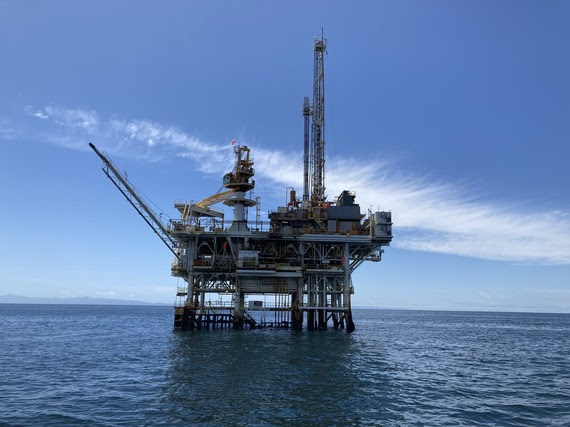
I had the pleasure of taking a highly informative boat tour around Platform Holly with Dr. Love and a group of international visitors. Holly, which is pictured at sunset in the BOE header, is among the platforms awaiting decommissioning.

Dr. Love on the total removal of California offshore platforms:

“As a biologist, I just give people facts,” he says. “But I have my own view as a citizen, which is: I just think it’s criminal to kill huge numbers of animals because they settled on a piece of steel instead of a rock.”

Read Full Post »

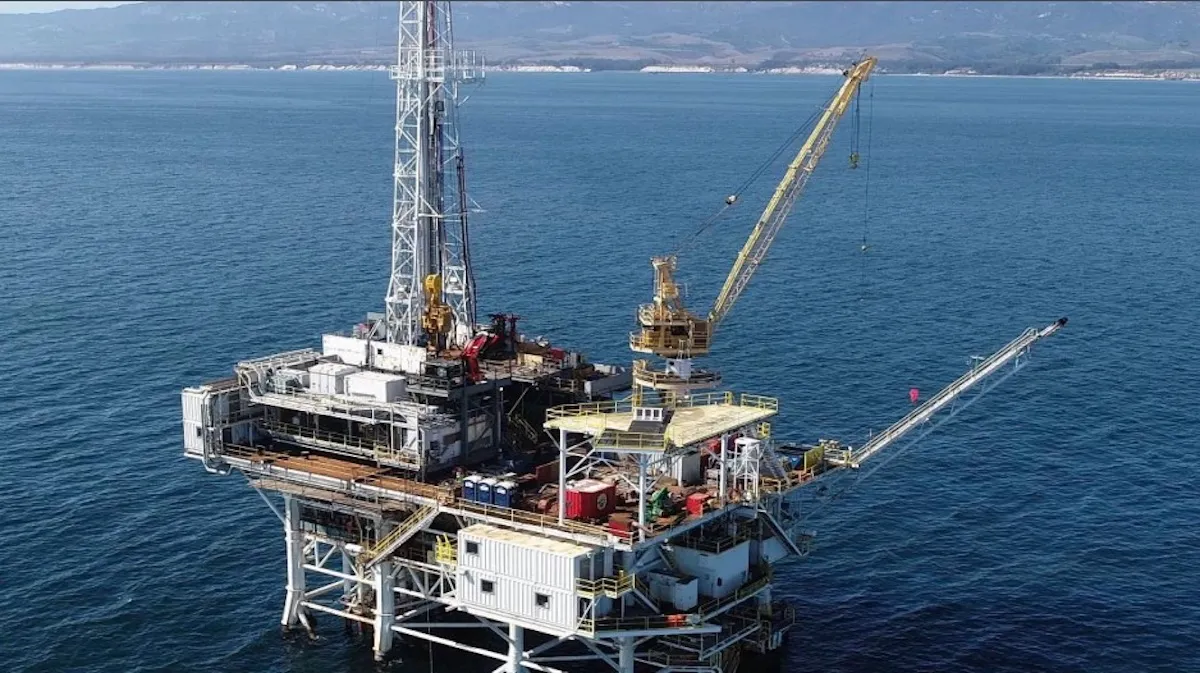
Platform Holly, California State waters in the Santa Barbara Channel, formerly operated by Venoco

Platform Holly sits immediately offshore from the Univ. of California at Santa Barbara, and UCSB scientists have studied the platform and surrounding ecology extensively. Multiple studies have shown that production from Holly reduced natural seepage and methane pollution from shallow formations beneath the Channel. Platform Holly was thus a “net negative” hydrocarbon polluter.

The natural seepage in the Santa Barbara Channel was important to the earliest inhabitants of the area. The Chumash used the tar for binding and sealing purposes, including caulking their canoes. Since Holly shut down in 2015 following the Refugio pipeline spill, offshore workers and supply boat crews have reported a considerable increase in gas seepage.

Earlier this month, it was reported that well plugging operations at Holly had now been completed, but decisions regarding the final decommissioning of the platform remain.

Venoco declared bankruptcy in 2015 and the State of California became the platform owner. According to the State Lands Commission, Exxon will pay the costs for decommissioning the platform. This is because Exxon acquisition Mobil operated the platform from 1993-1997 before Venoco became owner.

The most recent Holly development is that Venoco has settled its law suit with Plains, the company responsible for the 2015 Refugio pipeline spill that halted production from Holly. Terms of the settlement have not been disclosed.

Note: As an aside, I’m curious as to whether Mobil provided a decommissioning guarantee as part of the sale to Venoco or whether the State is simply holding ExxonMobil accountable as a legacy owner. If it’s the latter, why isn’t bp (bp acquisition Arco was Holly’s operator from 1966-1993) also liable? Is it a matter of Mobil being the more recent predecessor owner?

Read Full Post »

Guardian: Juvenile rockfish seen on an oil platform off the coast of Santa Barbara. For the scientists who study them, preserving these accidental marine ecosystems has become a moral issue. Photograph: Scott Gietler

Excellent Guardian article featuring my former colleague Dr. Ann Bull and Dr. Milton Love from the University of California at Santa Barbara.

According to a 2014 study they (Bull and Love) co-authored, the rigs were some of the most “productive” ocean habitats in the world, a term that refers to biomass – or number of fish and how much space they take up – per unit area. The research showed the rigs to be about 27 times more productive than the natural rocky reefs in California.

Guardian

More on decommissioning platforms offshore California.

Read Full Post »