Feeds:
Posts
Comments

Posts Tagged ‘rigs to reefs’

Section 6 of EO 14430, RESTORING AMERICAN SALTWATER ANGLING AND RECREATION, establishes a program to facilitate the reefing of decommissioned platforms (i.e. “Rigs-to-Reefs”).

Presumably, existing Gulf State reefing programs and private initiatives for repurposing offshore platforms will be integrated into the new Federal program. Where State reefing legislation is unworkable (California), liability issues will have to be resolved. John Smith has made a proposal in that regard.

Full text of Section 6:

Sec. 6.  Fast-Tracking Artificial Reefs and Habitat Creation.  (a)  Within 60 days of the date of this order, the Secretary of the Interior, acting through the Marine Minerals Administration, shall establish a Federal Outer Continental Shelf Reef-in-Place Program (Program) to facilitate the conversion of decommissioned offshore oil and gas and other-use structures, with the exception of infrastructure associated with offshore wind energy facilities, into permanent artificial reefs through reef-in-place, topple-in-place, or other approved reefing methods, where consistent with applicable law.

(b) The Program shall be available to qualifying offshore structures and leaseholders that satisfy all applicable statutory, regulatory, environmental, navigational, and safety requirements. The Secretary of the Interior shall establish criteria and standards for the program that ensure protection of navigation and national security interests.

(c) In establishing the Program, the Secretary of the Interior shall coordinate with the Secretary of Commerce, the Secretary of War, the Commandant of the United States Coast Guard, and the heads of other appropriate agencies to streamline interagency review and permitting to the maximum extent permitted by law, reduce unnecessary administrative delays, and promote timely decisions for qualifying reef projects.

(d) Within 120 days of the date of this order, the Secretary, acting through the NOAA Administrator, in coordination with the Secretary of the Interior, shall review and, as appropriate and consistent with applicable law, revise policies and procedures governing SUPs and other applicable authorizations for the placement and management of artificial reefs within National Marine Sanctuaries and Marine National Monuments. Such revisions shall seek to establish transparent and efficient permitting pathways, identify areas suitable for artificial reef development and other national interest uses, and enhance fisheries, recreational fishing, diving, and other compatible public uses.


Read Full Post »

Linked-in: solving what matters most

The Rigs-to-Resistors category in our World Famous Rigs-to-Reefs +++ list has been expanded to include offshore data centers, a concept that is attracting investor interest (see attached brochure).

Advantages of offshore data centers include power availability (natural gas, hydro-kinetic, wind, solar), cooling water, sovereignty, and growth potential.

Alternative uses of OCS facilities were authorized by an OCS Lands Act amendment drafted by the Minerals Management Service and attached to the Energy Policy Act of 2005 by Congresswoman Barbara Cubin. The amendment authorized:

“use, for energy-related purposes or for other authorized mariner elated purposes, facilities currently or previously used for activities
authorized under this Act,”

The attachment summarizes plans to install modular data centers on existing offshore platforms. The advocates see “using fixed platforms ready for decommissioning as a low-cost solution with simpler execution.” Are they a bit too optimistic? 😉

Japan has some interesting offshore data center ideas, including the concept pictured below.

Read Full Post »

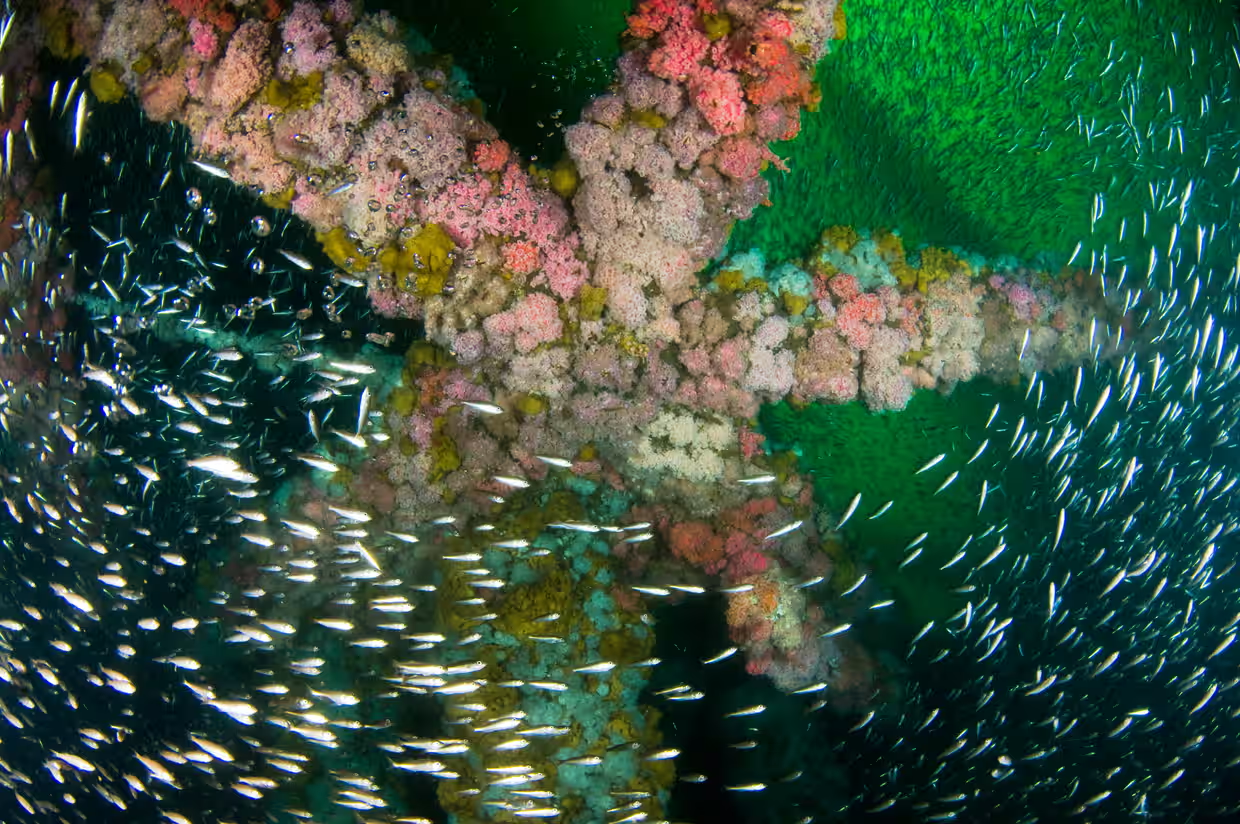
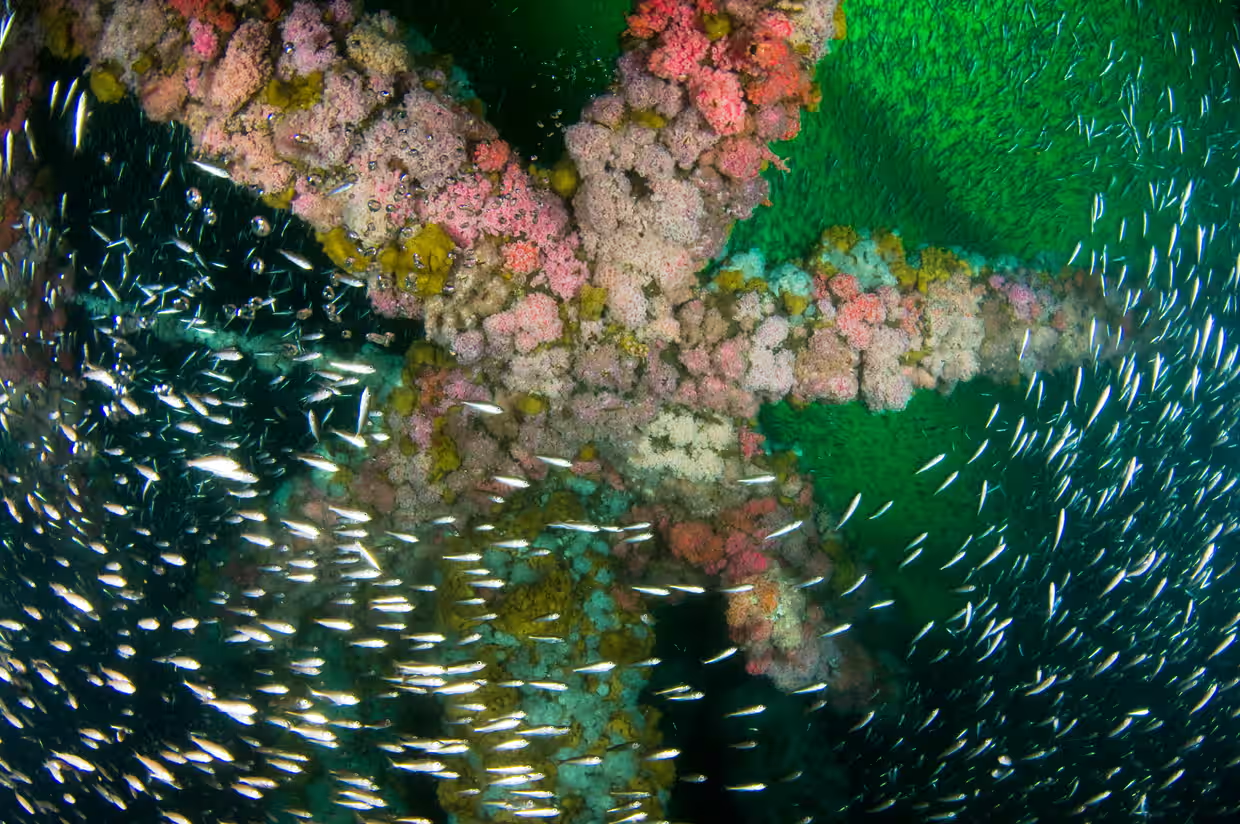
Juvenile rockfish seen on an oil platform off the coast of Santa Barbara. For the scientists who study them, preserving these accidental marine ecosystems has become a moral issue. Photograph: Scott Gietler

John Smith, decommissioning specialist and BOE contributor, has shared his comments (attached) on the Marine Fisheries Habitat Protection Act. This legislation would expand the successful reefing programs on the OCS by facilitating the conversion of retired production platforms into artificial reefs.

Read Full Post »

A sugar made by ocean bacteria has been found to trigger a powerful form of cell death that destroys cancer cells.

We have a new addition to the World Famous Rigs-to-Reefs +++ list – Rigs-to-Remission.

Scientists have discovered a sugar compound from deep-sea bacteria that can destroy cancer cells in a dramatic way. This natural substance, produced by microbes living in the ocean, causes cancer cells to undergo a fiery form of cell death, essentially making them self-destruct. In lab tests and in mice with liver cancer, the compound not only stopped tumors from growing, but also activated the immune system to fight back. This finding could pave the way for entirely new cancer treatments based on sugars from marine organisms.

Deepwater production platforms would be excellent bases for further studying and recovering these microbes.

Read Full Post »

Linked below is a new Rigs to Reefs film (“Steel to Sanctuary”). Note the commentary on permitting complexity and regulatory fragmentation.

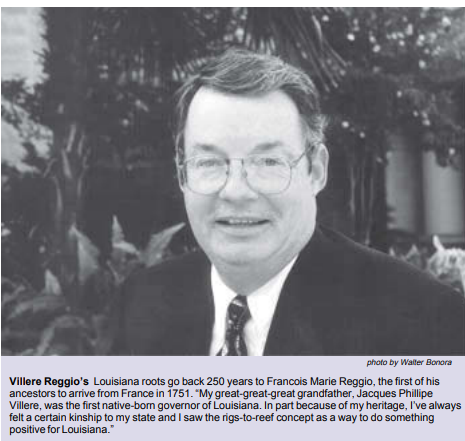
Not mentioned in the film are the extraordinary efforts of the Mineral Management Service’s Villere Reggio in establishing the Rigs to Reefs program. Villere (pictured below), has a most interesting family history as summarized in the caption. See p. 3 of this issue of MMS Today for the complete article.

Read Full Post »

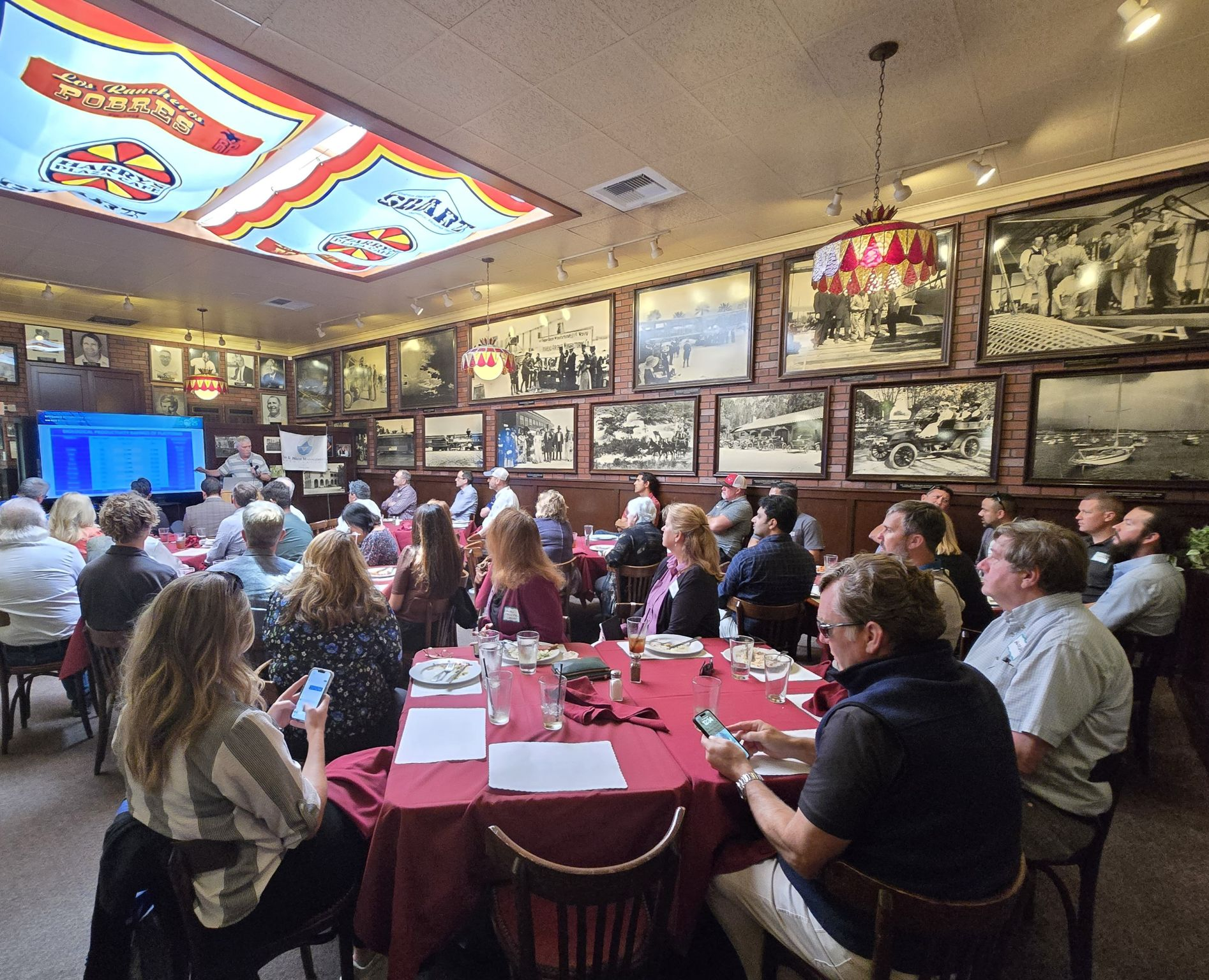
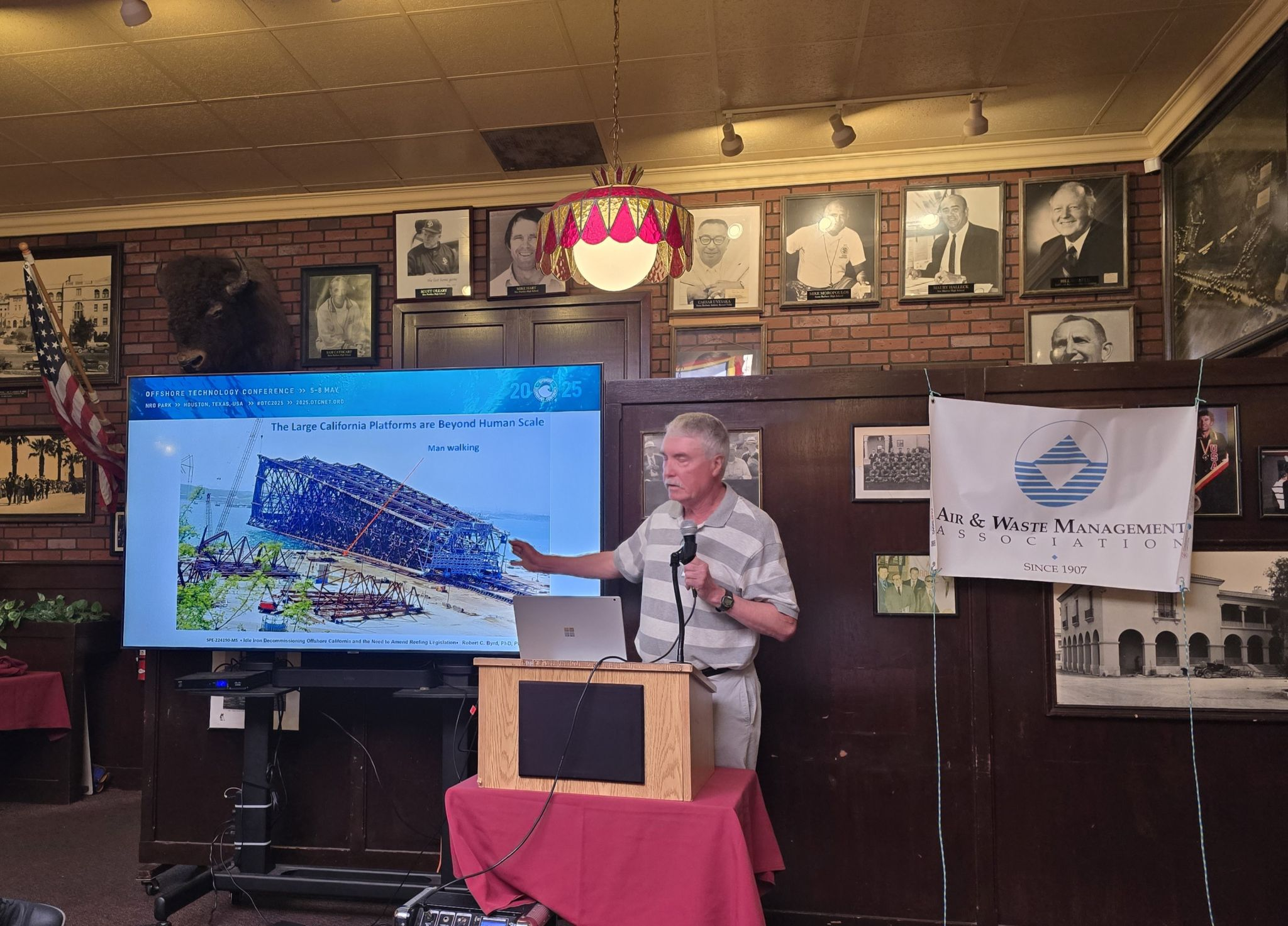
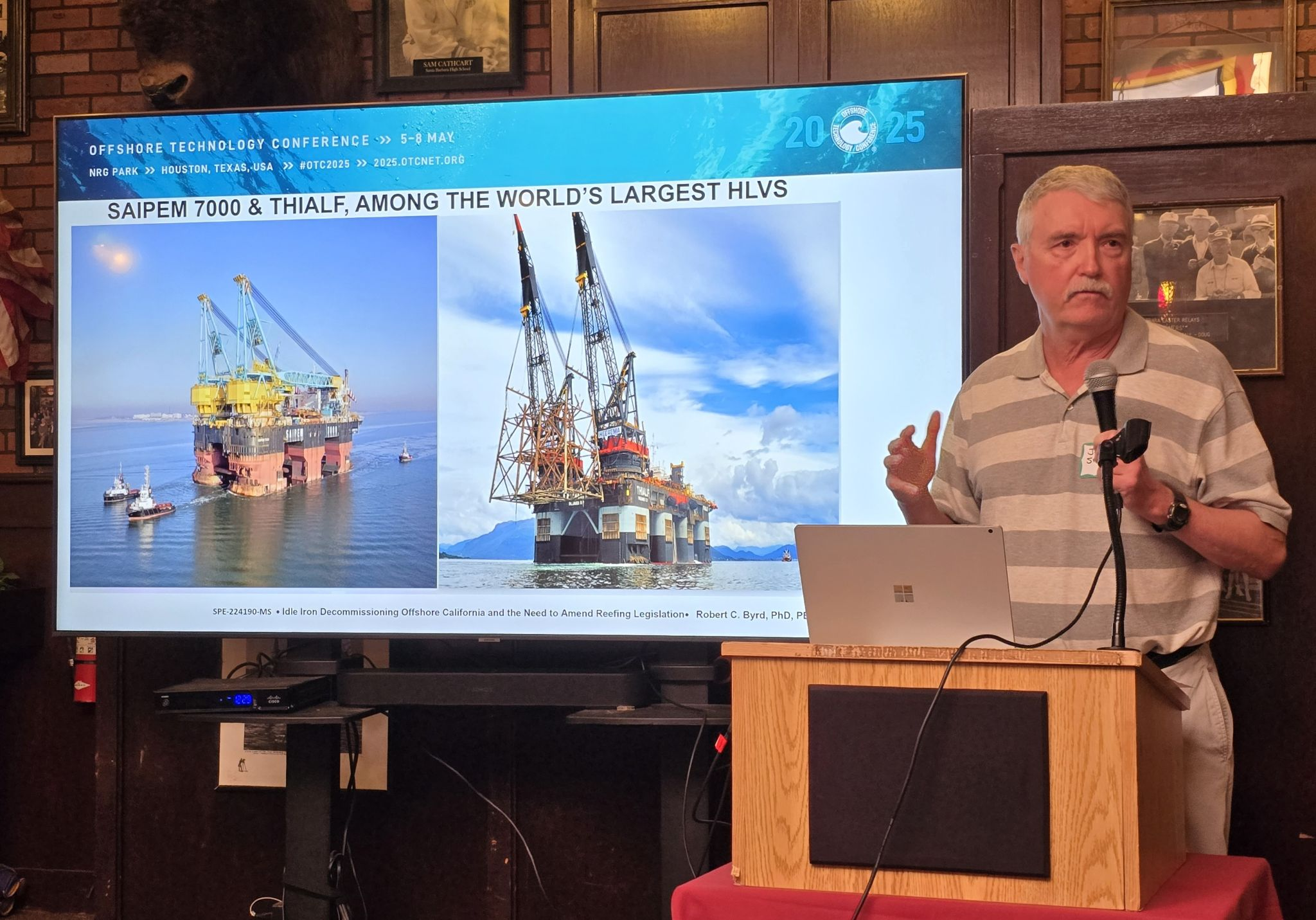
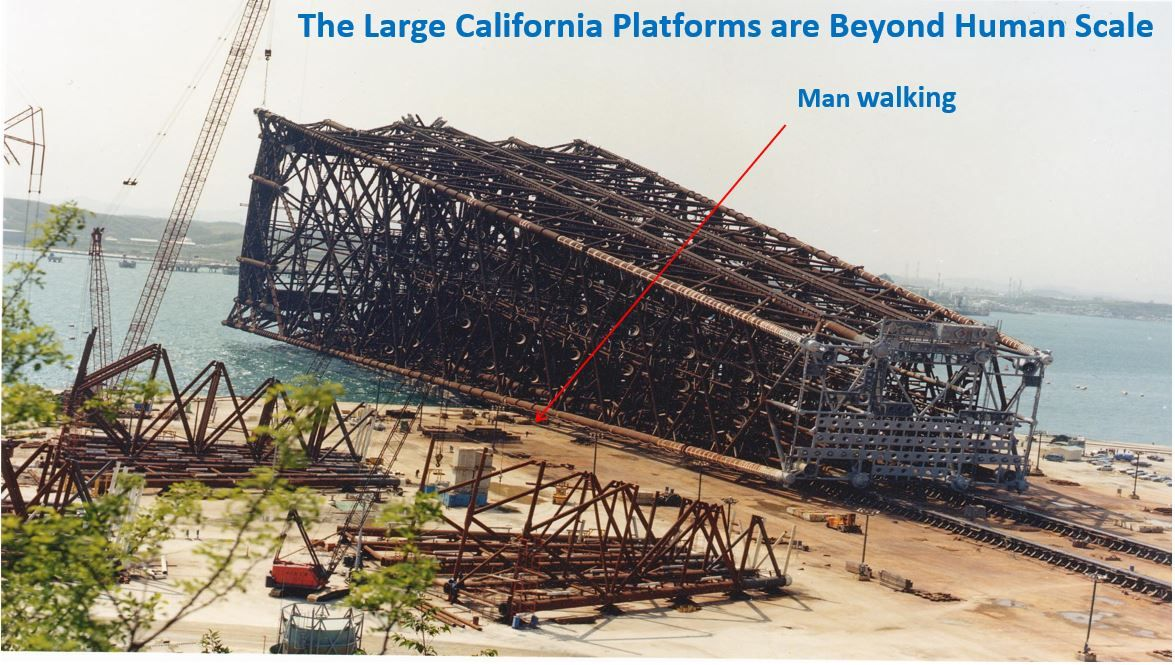
Sharing pictures from John Smith’s excellent decommissioning presentation at the Western States Petroleum Assoc. luncheon in Santa Barbara in May. You can view or download the presentation here.

Read Full Post »

John Smith shared an outstanding paper (attached) that was presented by co-author Robert Byrd at the SPE Regional Meeting in Garden Grove, CA last week.  


John Smith: “My objective in writing the paper is to hopefully spur legislators to recognize the benefits of reefing and the legislative fixes required to facilitate reefing and the removal of aging infrastructure.  The California Department of Fish and Wildlife Habitat Lead was very complimentary of the paper and has distributed it to the Interagency Team which is developing a California Artificial Reefing Plan.”  

John adds: “They are in the process of creating a statewide artificial reef plan and you can sign up for updates and get more information. The California Artificial Reef Program (CARP) Plan won’t discuss the specifics of Rigs-to-Reefs but will be compliant with the National Fisheries Enhancement Act and National Artificial Reef Plan and meet the BSEE requirement of having an adopted state artificial reef plan. The intent is to add an addendum to the plan when resources become available to move Rigs-to-Reefs forward in California. You can check out the latest program update that further discusses the CARP Plan and Rigs-to-Reefs.”

Read Full Post »

Attached is an excellent Scientific American article featuring BOE contributor and decommissioning specialist John Smith, former colleague and marine biologist Dr. Ann Bull, and Dr. Milton Love, the leading authority on California’s offshore platform ecosystems.

I had the pleasure of taking a highly informative boat tour around Platform Holly with Dr. Love and a group of international visitors. Holly, which is pictured at sunset in the BOE header, is among the platforms awaiting decommissioning.

Dr. Love on the total removal of California offshore platforms:

“As a biologist, I just give people facts,” he says. “But I have my own view as a citizen, which is: I just think it’s criminal to kill huge numbers of animals because they settled on a piece of steel instead of a rock.”

Read Full Post »

BSEE’s Facility Infrastructure Dashboard is a useful tool for tracking decommissioning activity in the Gulf of Mexico. A few numbers from the dashboard:

  • Current structure count:1438 (Per BSEE’s platform structures online query, the number of non-removed structures is 1554. The reason for the discrepancy is unclear; perhaps the dashboard number is more current.)
  • Structures with decom application submittal: 291
  • Total structures on terminated leases: 318
  • Structures on terminated leases with decom application submittal: 196

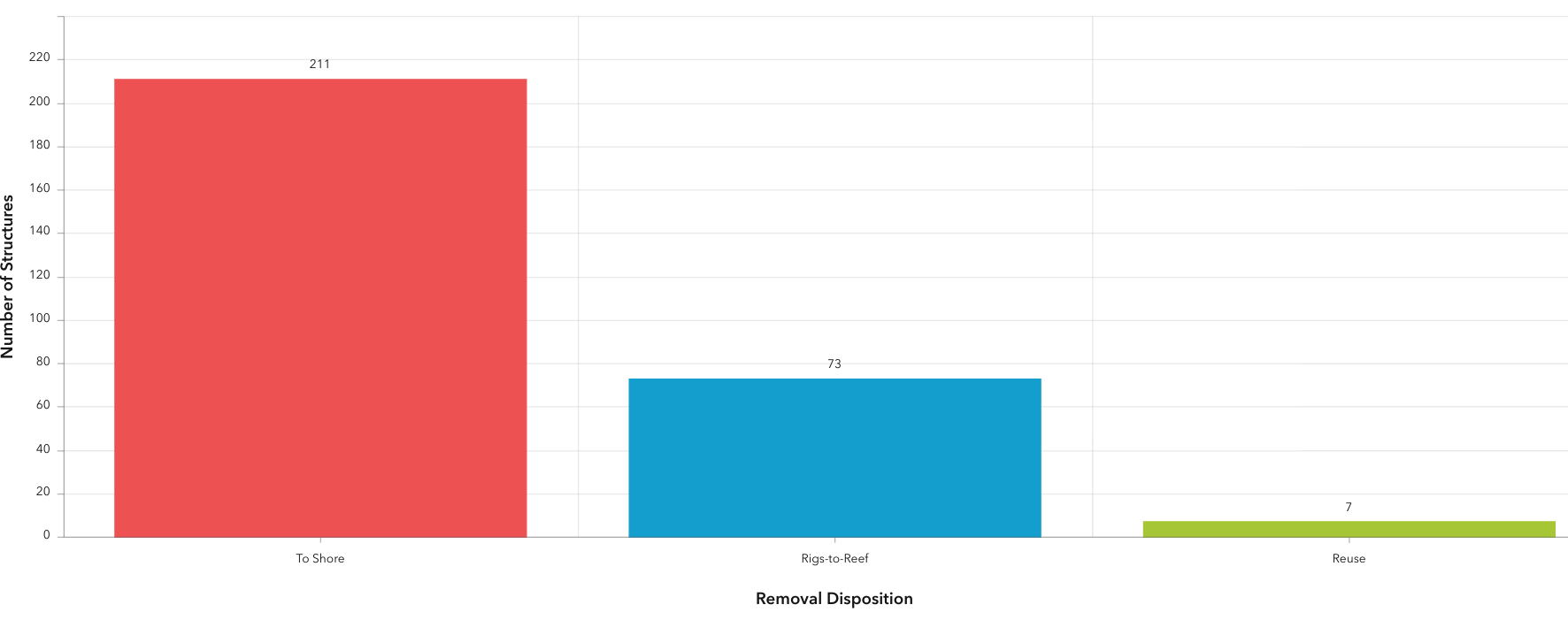
Planned disposition of the 291 pending removals (25% of the structures to be reefed):

Read Full Post »

Guardian: Juvenile rockfish seen on an oil platform off the coast of Santa Barbara. For the scientists who study them, preserving these accidental marine ecosystems has become a moral issue. Photograph: Scott Gietler

Excellent Guardian article featuring my former colleague Dr. Ann Bull and Dr. Milton Love from the University of California at Santa Barbara.

According to a 2014 study they (Bull and Love) co-authored, the rigs were some of the most “productive” ocean habitats in the world, a term that refers to biomass – or number of fish and how much space they take up – per unit area. The research showed the rigs to be about 27 times more productive than the natural rocky reefs in California.

Guardian

More on decommissioning platforms offshore California.

Read Full Post »

Older Posts »