The transition reflects more than a decade of operational experience managing offshore resources. By consolidating the planning, permitting, inspection, and enforcement responsibilities currently divided between BOEM and BSEE, the Department aims to:
Improve coordination and consistency
Reduce duplication of efforts
Strengthen oversight and environmental safeguards
Modernize organizational structure
All current regulatory responsibilities and protections will remain in place throughout the transition. There will be no disruption to permitting, environmental reviews, or enforcement activities.
What to Expect
Phased Transition: Internal alignment activities begin soon.
No Regulatory Rollbacks: Existing requirements remain in full effect.
New Website and Branding: The Marine Minerals Administration’s full digital presence will launch in the coming months.
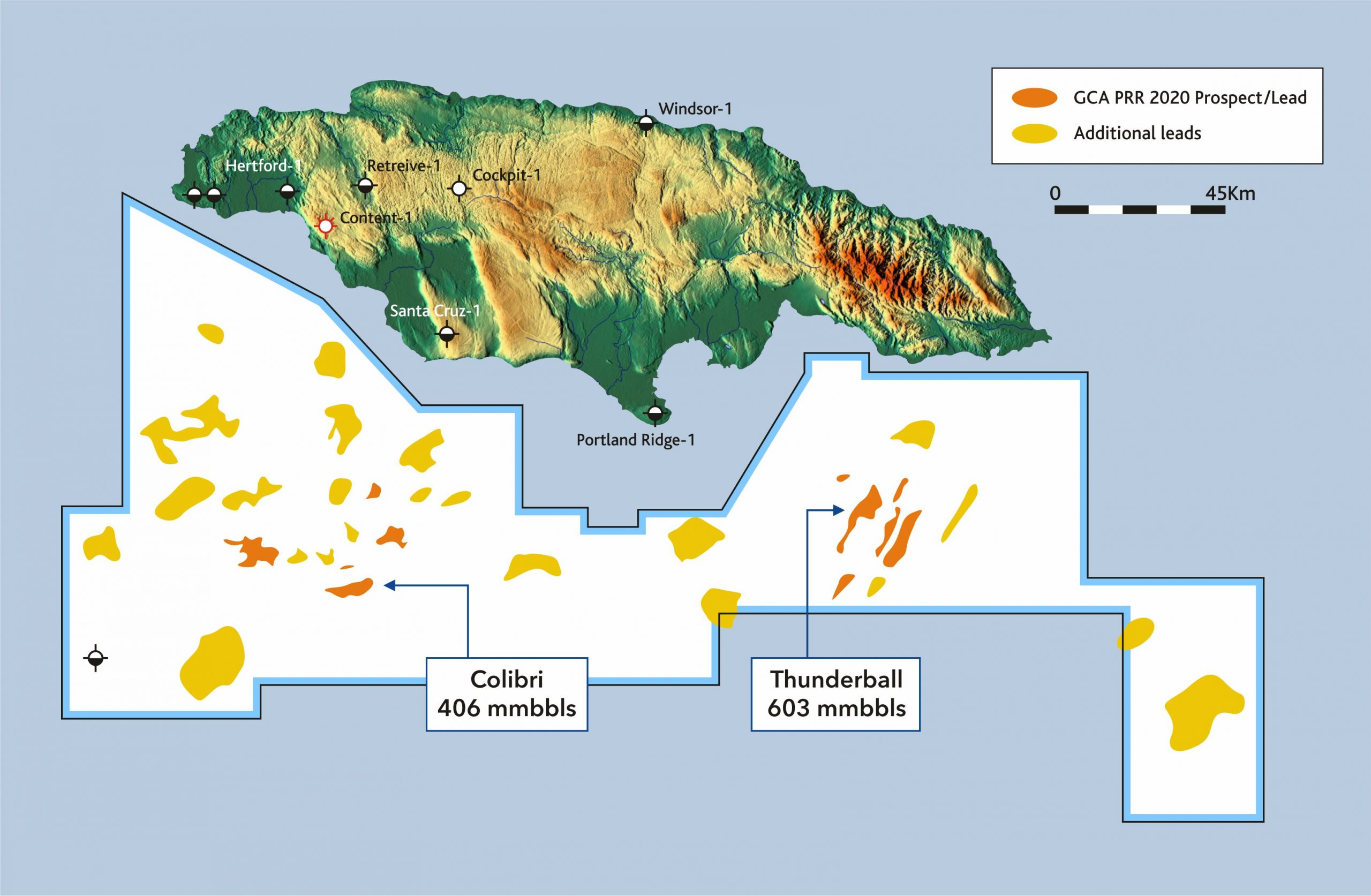
United’s 22,400 sq km offshore Walton-Morant exploration license offshore Jamaica. Typical US offshore leases are only 23.3 sq km. The Jamaican license is thus nearly 1000 times larger than a US offshore lease!
“United has undertaken a geochemical analysis on the 42 piston cores acquired across the Walton-Morant Licence. The analysis has identified C4 and C5 hydrocarbons, including butanes and pentanes, in select piston cores within the headspace gas dataset. United note that these higher order hydrocarbons are not typically associated with biogenic gas systems and are therefore consistent with a potential thermogenic contribution. (This is true.)
There is an established body of evidence for an active petroleum system in Jamaica in general, and on the licence in particular, including repeat satellite slick anomalies, thermogenic hydrocarbon geochemistry from existing onshore and offshore wells, onshore and offshore oil seeps, and onshore surface outcrops. Furthermore, petroleum systems modelling suggests the presence of oil-mature source rocks. The 2026 SGE survey is the first on the licence to be optimally positioned using 3D seismic, multibeam echosounder (MBES) seabed mapping, and satellite-derived slick anomaly data. Taken together, the data are interpreted as consistent with an active petroleum system offshore Jamaica.“
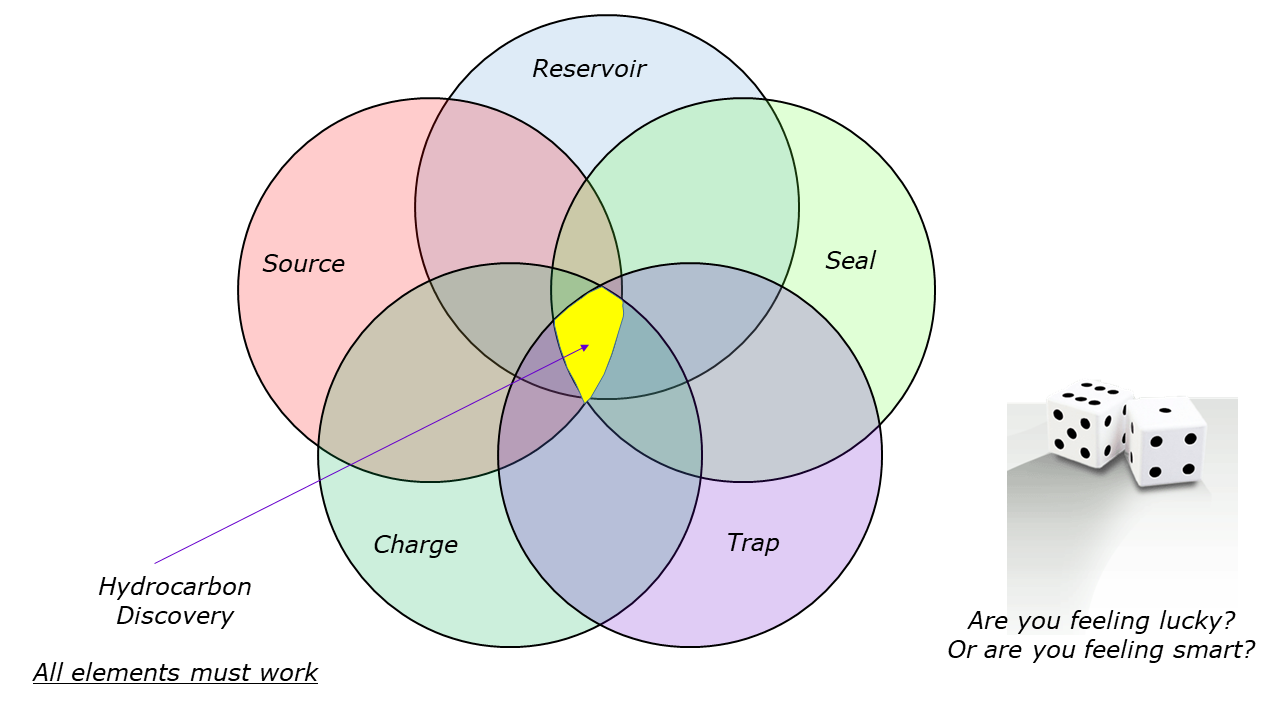
United estimates that the piston coring results boost the Geological Chance of Success (i.e. the source rock, reservoir, trap, and seal—are present and working) for the flagship Colibri prospect from 19% to 32%, which is quite good for frontier exploration.
Will these new data help entice majors to fund exploratory drilling? In the video below (ignore the click-bait title cover 😉), Energy Minister Daryl Vaz does a good job of adding perspective.
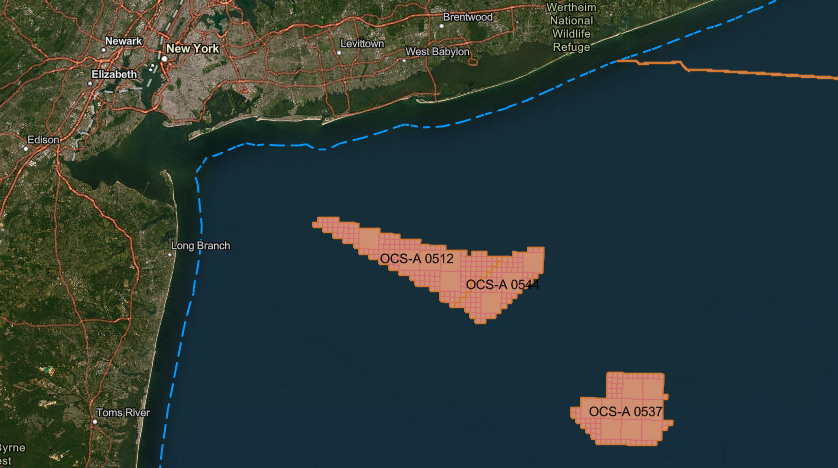
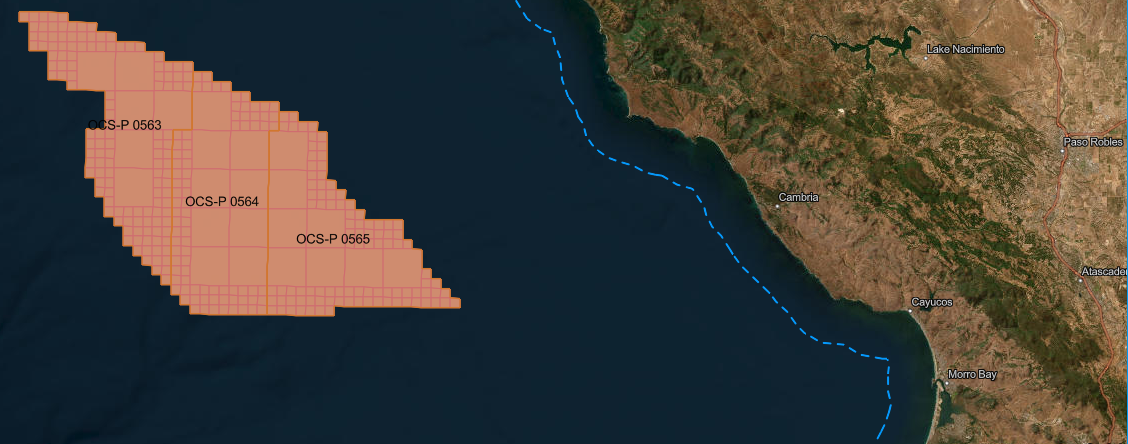
Bluepoint Wind Lease 0537 owned by Global Infrastructure Partners, a part of BlackRock, and Ocean Wind (Engie, France and EDP Renewables, Portugal)Golden State Wind Lease 0564 owned by Ocean Wind (Engie, France and EDP Renewables, Portugal) and the Canada Pension Plan Investment Board
These are mutually beneficial “Win-Win” agreements. Bluepoint and Golden State benefit by escaping bad business decisions:
Bluepoint massively overpaid ($765 million) for Atlantic lease 0537 during the brief irrational exuberance era of the offshore wind program. The intense bidding was driven by the lure of subsidies, guaranteed power sales, unprecedented Federal and State promotion, peak climate activism, inattention to mounting public opposition, and irrational expectations regarding the role of offshore wind in powering the economy.
The value of Atlantic wind leases declined by 99.4% between 2022 and 2024, and this was before the Presidential election!
Golden State bid $150 million for a wind lease that will require floating turbines. The 50 MW Kincardine Offshore Windfarm, which is billed as the “world’s largest floating wind farm,” experienced a £30 million loss in 2023 following a £18 million loss in 2022. Another floating wind project, Hywind Scotland, had to be taken offline for 4 months for maintenance after less than 6 years of operation. BOEM was forced to “postpone” the Oregon wind sale given the absence of bidders.
Significant work had not yet begun on either the Bluepoint or Golden State projects.
Many in Morro Bay and elsewhere along the Central Coast of California are not pleased with the attempt to “industrialize the coast.” Opposition to offshore wind projects is now well established along the Atlantic Coast.
The companies get to invest their inflated wind dollars in profitable energy projects without penalty. What prudent executive wouldn’t jump at the deal?
Waiting for the next Administration is not likely to improve the fundamental economics of offshore wind development, and increased subsidies are not popular.
A pro-wind govt would facilitate permitting, but is unlikely to buyback existing leases.
The Administration also benefits:
Two more wind leases are off the books.
Removing one of three leases could significantly affect the economics of Central Coast (CA) wind development.
Agreements were necessary because it’s difficult to cancel leases, and compensation would be required. If settled in court, the compensation could easily exceed the lease purchase price.
The companies agreed not to pursue any new offshore wind projects in the United States.
The rebates will be invested in projects favored by the Administration.
Question: Are the partners and parent companies also precluded from investing in offshore wind projects or just the Bluepoint Wind and Golden State Wind entities? If BlackRock, EDP, and Engie can no longer make such investments, that is a big deal. This is especially true given the agreement with Total, Vineyard Wind’s problems, Orsted’s financial challenges, BP and Shell’s apparent exit from the US offshore wind market, and Equinor’s reduced renewable energy ambitions.
Finally, a December 7, 2022 release by the Canada Pension Plan Investment Board heralding the 50% partnership in Golden State Wind might be of interest to our Canadian readers. That bad investment can now be removed from the books.
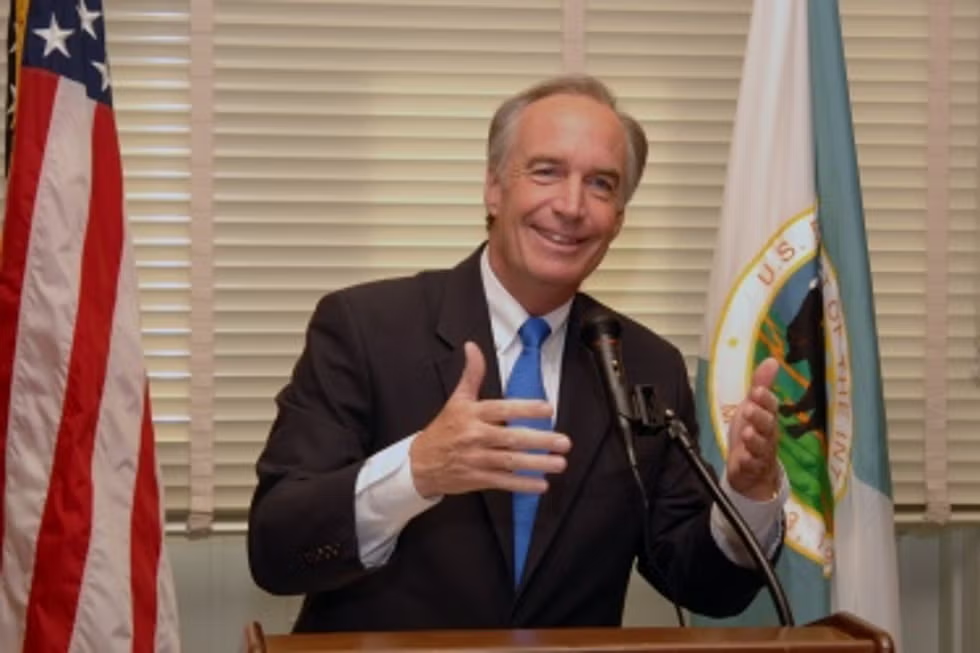
Dirk Kempthorne participating in Lease Sale 206 which garnered a record $3.7 billion in high bids!
I was saddened to learn about the passing of Dirk Kempthorne, Secretary of the Interior from 2006-2009. He was a supporter of responsible offshore oil and gas development, and oversaw six lease sales and the continued growth of the deepwater sector.
One of those lease sales generated a record $3.7 billion in high bids (photo above). Lars Herbst was the Minerals Management Service’s Regional Director at the time.
I had the pleasure of briefing the Secretary on a couple of occasions and found him to be very personable, attentive, and intelligent. My colleagues were similarly impressed.
The Secretary was also known to ride his motorcycle to the Interior building on occasion. He is pictured on his Harley below, but this photo was taken in Idaho, not Washington. 😀
The organizers of the 2007 IRF Offshore Safety Conference were most pleased when Secretary Kempthorne agreed to participate as a keynote speaker. Our many international guests were impressed by his remarks and his interaction with the conference delegates. His conference bio and those of the other speakers are attached.
RIP Mr. Secretary! You served the country well. Enjoy cruising on that big motorcycle in the sky!
A New York Times article suggests that the consolidation of BOEM and BSEE into the Marine Minerals Administration will weaken environmental oversight. It will not. On the contrary, regulation is likely to be strengthened as resources shift from inter-bureau coordination and redundancy management to the primary safety and environmental protection missions.
Given the challenges associated with Federal reorganizations, agency heads often opt for the status quo. I’m pleased that the current DOI leadership team, with whom I disagree on some issues, chose to merge the bureaus.
Quotes from the NYT article followed by my comments:
NYT:The Trump administration is creating a new office that critics say could weaken the environmental oversight of oil drilling and seabed mining in territorial waters.
Comment: The functional overlap and associated uncertainty that permeates the offshore regulatory regime is a weakness, not a strength. Virtually every element of the regulatory program requires coordination between the two bureaus. This includes plan and permit approvals, decommissioning and financial assurance, spill response plans, lease stipulations, assignments, pipeline regulation, environmental reviews, enforcement actions, and geologic data collection and review. Note the list of MOUs that are intended to coordinate BOEM and BSEE redundancy. The documents often do more to confuse than clarify. For example, see the MOU entitled “Environmental and NEPA.”
Multi-bureau organizational complexity is not in the best interest of safety and environmental protection. Overlapping responsibilities, coordination challenges, and “turf” issues distract the technical staff from their important risk management duties, the work they are good at and enjoy doing. BSEE and BOEM should be overseeing the offshore industry, not each other.
NYT:The new agency, the Marine Minerals Administration, will be formed by reunifying two offices that had been split up after the 2010 Deepwater Horizon oil spill in an effort to increase environmental oversight of the energy industry and prevent future oil disasters. After the split, the Interior Department’s oil-leasing activities were separated from environmental regulation and financial management. (emphasis added)
Comment: The assertion that the leasing and environmental regulation were separated is false. The leasing bureau (BOEM) was assigned lead responsibility for the review and approval of the fundamental operational planning documents – Exploration Plans, Development and Production Plans, and Development Operations Coordination Documents. This includes the environmental reviews pursuant to NEPA.
NYT:The move is “worrisome because it has the potential of bringing things back where they were, where there was this inherent conflict of interest between promotion of offshore oil and gas, and oversight safety,” according to Donald Boesch, emeritus professor at the University of Maryland Center for Environmental Science.
“In recent years various bodies have concluded that certain MMS offices and programs have violated ethical rules or guidelines. In the wake of the Deepwater Horizon disaster, some questioned whether ethical lapses played any role in causing the blowout. The Chief Counsel‘s team found no evidence of any such lapses.“
NYT:The new bureau will also take on oversight of the Trump administration’s plans to lease waters in U.S. territories to deep-sea mining companies. The first of these sales, according to the spokeswoman for the Interior Department, are likely to happen next year.
Comment: DOI’s marine minerals program is decades old and is a priority for the current administration. Reorganization should not affect the MMA’s capability to oversee these activities.
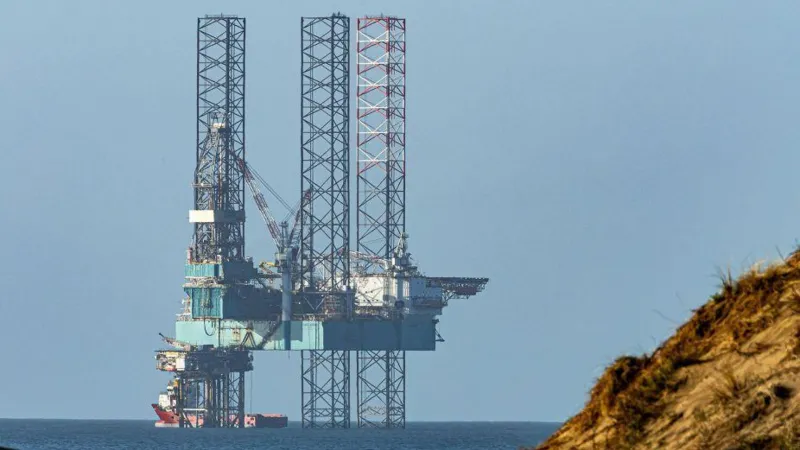
From the BBC:Three stowaway baby rabbits have been rescued after being discovered on a drilling rig in the North Sea.
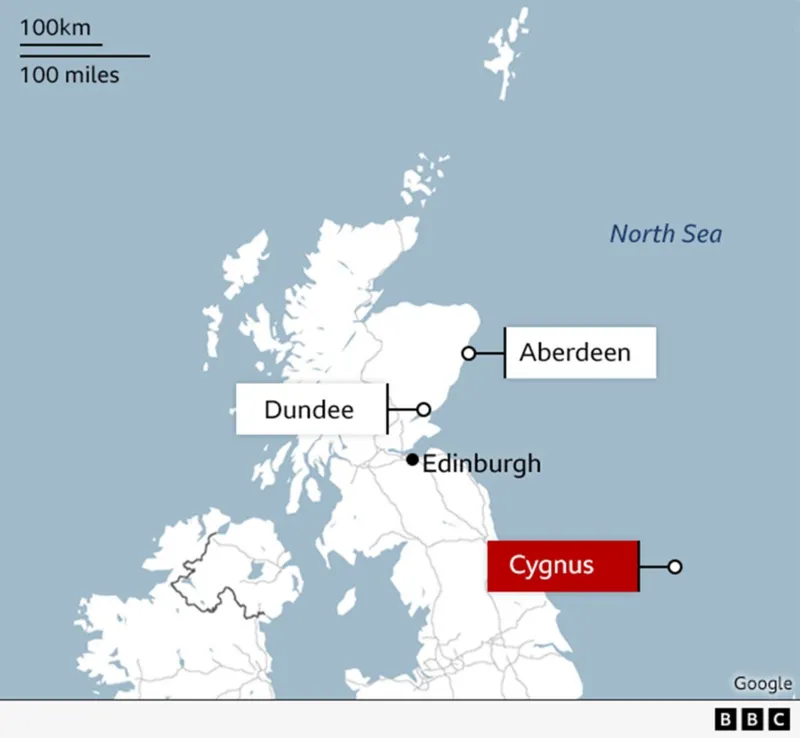
The unexpected visitors were shipped from Aberdeen to the Valaris Norway, about 93 miles (150km) off the coast of Lincolnshire.It is believed they hopped into a container in Dundee, which was taken by road to Aberdeen, before travelling on the offshore ship Aquarius to Ithaca Energy’s Cygnus field.
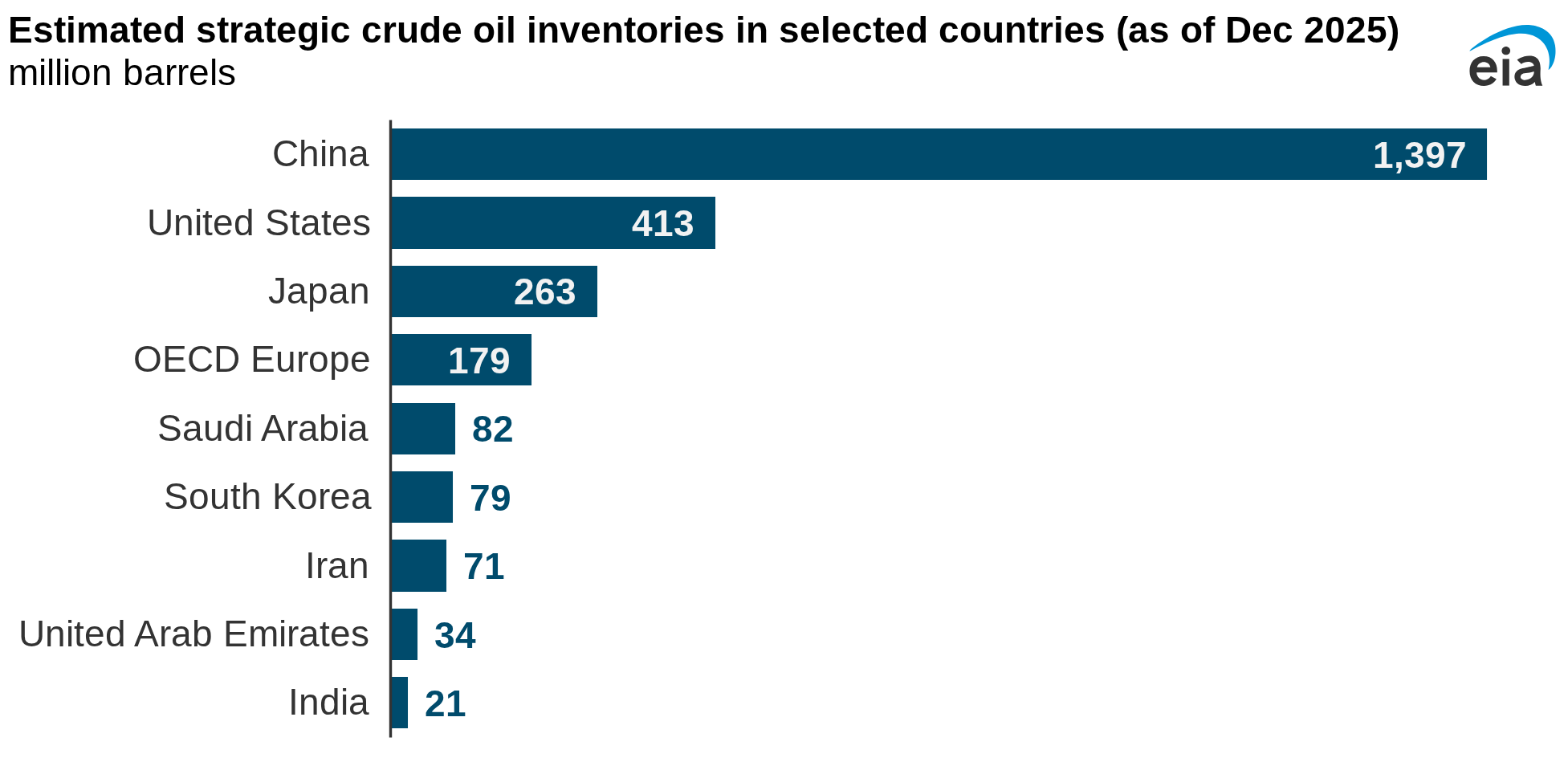
EIA estimates that China added an average of 1.1 million barrels per day of crude to their strategic inventories in 2025. Wow! If accurate, that’s a massive SPR operation – equivalent to storing ~60% of the total daily oil production in the Gulf of America or offshore Norway! See the video at the bottom of this post.
How much of that oil was imported from Iran?
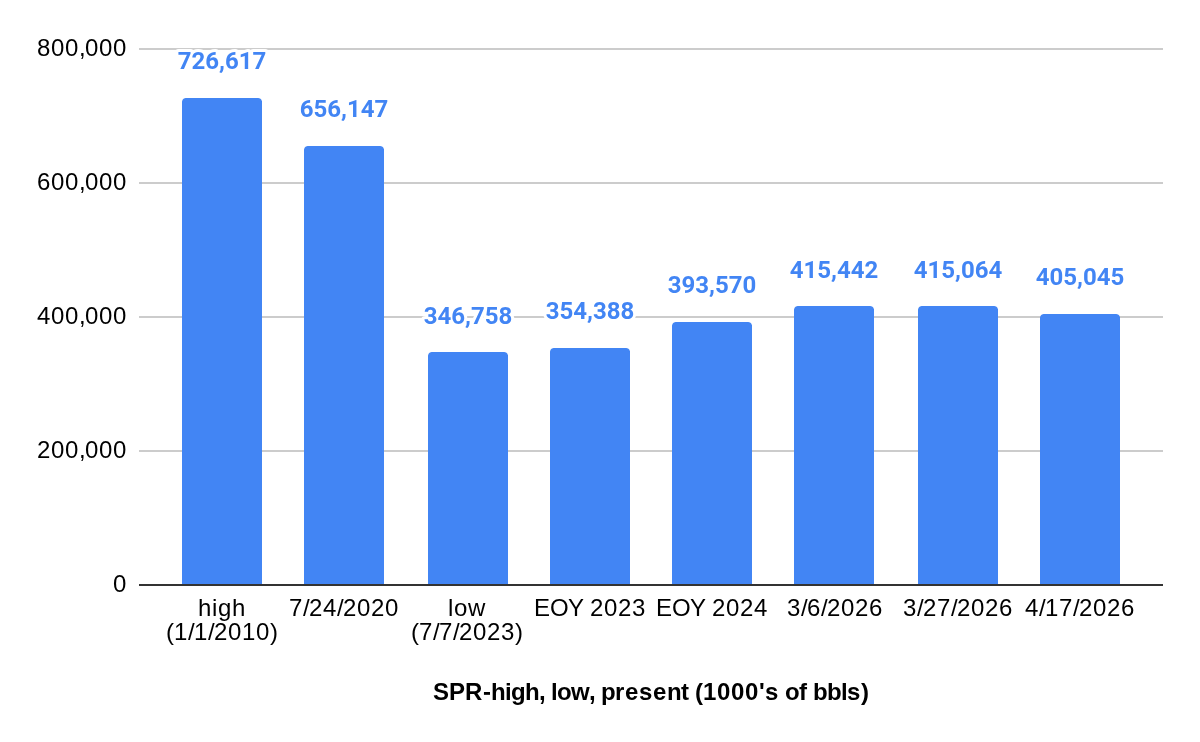
Meanwhile, US weekly SPR withdrawals have exceeded 4 million barrels over the past two weeks. Presumably that pace will continue consistent with the DOE announcement.
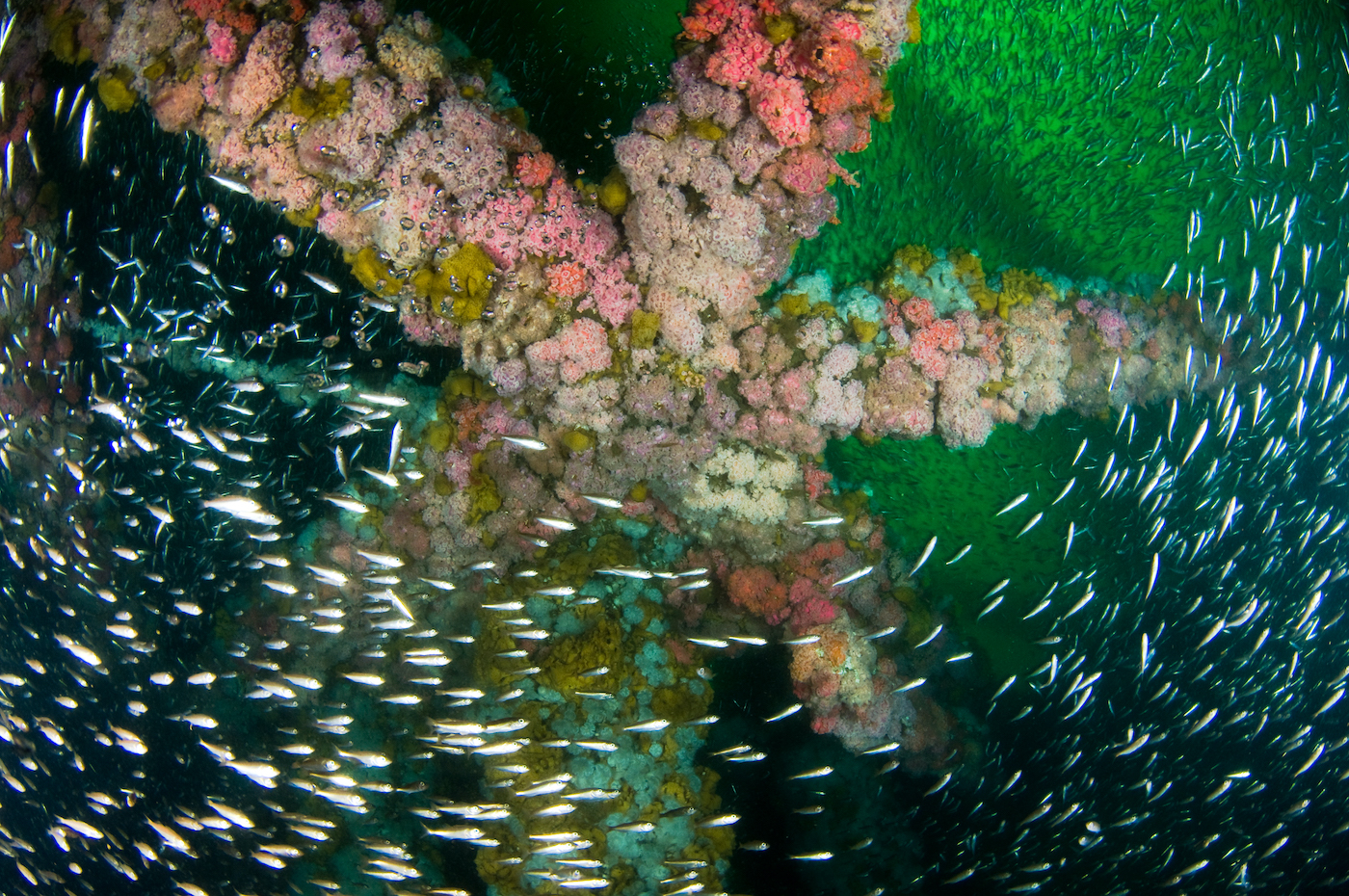
Looking up towards Platform Gilda from a depth of 100 feet, juvenile bocaccio rockfish swirl around the anemone-covered crossbeams (photo by Dr. Milton Love)
Dr. Jeremy Claisse, Cal Poly Pomona: “The oil and gas platforms off the coast of California are the most productive marine habitats per unit area in the world.”
Dr. Milt Love, UCSB: “Even the least productive platform was more productive than Chesapeake Bay or a coral reef in Moorea.”
John Smith has made the case for reefing California platforms. He is now proposing a change in the regulations that could facilitate such partial removals of offshore structures. His full proposal is attached.
As background John notes:
“In contrast to the Gulf of Mexico (GOM), where more than 600 decommissioned platforms have been converted to artificial reefs, the State of California does not have reefing legislation considered workable by industry, nor does it have an approved or State funded artificial reefing program which is a prerequisite under MMA (formerly BSEE and BOEM) OCS oil and gas regulations (30 CFR § 250.1730) for waiving platform removal requirements which allows conversion of the structure to an artificial reef.“
He further informs that “operators of the platforms have not expressed any serious interest in reefing OCS platform jackets because they consider the California Marine Resources Legacy Act unworkable in its present form due primarily to its liability provisions, inequitable 80% cost-savings sharing requirement, and the requirement for the first reefing applicant to fund the setup costs for the artificial reefing program.“
John’s proposal is intriguing because it allows qualified 3rd parties to accept title and liability for reefed structures. This would create interesting business opportunities. A company, consortium, nonprofit, or entrepreneur could, for a fee, acquire submerged structures and obtain insurance or other financial protection in accordance with their business plan. Reef preservation and enhancement studies, and other marine research could also be conducted at the sites. Marine ecosystems would be protected, and the cost and efficiency of decommissioning operations would be significantly improved.
“So, you disconnect the jacket… you kill all the fish. There’s an awful lot of animals that die,” said Dr. Love. As our world has become dependent on fossil fuels, so too have these millions of animals become dependent on the structures that pump them from beneath the sea floor. “As a biologist, I just give people the facts, but I have my own view as a citizen, which is I think it’s criminal to kill huge numbers of animals,” said Dr. Love.
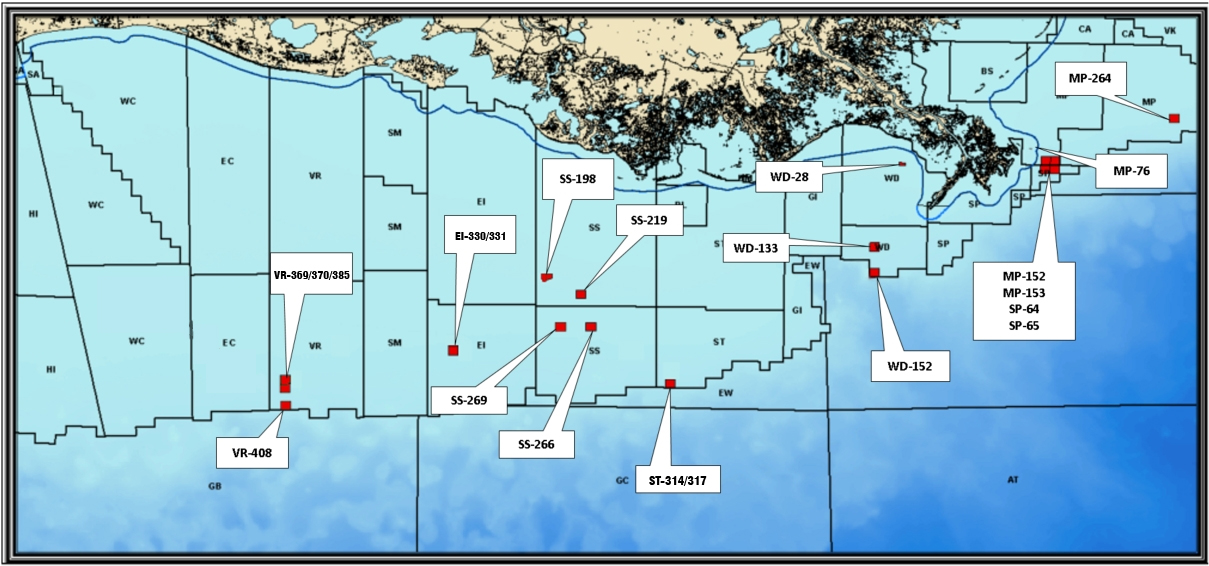
The name is especially fitting given that 1947’s first acquisition, Renaissance Offshore, operates entirely on the Gulf shelf (map below). Renaissance is a significant shelf producer ranking 19th among all Gulf operators in both oil (791,572 bbls) and gas (1,335,009 mcf) production in 2025. Renaissance ranked 6th in oil production and 7th in gas production among companies that focus on the shelf.
A challenge for 1947 will be improving Renaissance’s compliance and safety record:
Renaissance has averaged 0.93 violations (INCs) per inspection since 1/1/2020, trailing only Cox legacy Array in INC frequency.
In 2019, a worker fell to his death at the Renaissance Eugene Island 331 B platform. BSEE’s investigation found that Renaissance failed to maintain all of its walking and working surfaces in a safe condition, that supervisors failed to promptly correct or prevent employees from accessing the uncorrected and uncontrolled walking and working surface hazard area, and that Renaissance and its contractors failed to follow the agreed upon terms and conditions within their respective Safety and Environmental Management Systems (SEMS) bridging arrangements. (Renaissance incurred a seemingly modest $105,292 civil penalty for this incident. There is no public information on any settlement with the victim’s family.)
“Between 2012 and 2014 Renaissance grew substantially with the acquisition of sixteen Gulf of Mexico producing fields, fifteen of which are operated and most are 100% owned.” 1947’s financial strength is unclear. Hopefully, BOEM will verify that satisfactory decommissioning financial assurance arrangements are in place before any lease assignments are approved.
(1) For the reasons set forth herein, the motion of real parties in interest Sable Offshore Corp. and Pacific Pipeline Company to dissolve or modify the preliminary injunction issued in this case is denied.
(2) The application of petitioners for issuance of an order to show cause why real parties should not be found in contempt and to enter additional orders is continued to May 22, 2026.
The Judge concluded:
The court is mindful that there are many moving judicial and administrative parts relating to the restart of the Las Flores Pipelines. (understatement of the year candidate? 😉)
Sable has not persuaded the court that the DPA (Defense Production Act) Order renders compliance with Federal Consent Decree unnecessary.
The Federal Consent Decree requires approvals from the OSFM (Office of the State Fire Marshal), which in turn must comply with state procedures in granting such approvals.
Sable has not met its burden to show that the preliminary injunction should be dissolved or modified. Sable’s motion will therefore be denied.
On May 22, Judge Geck will consider whether Sable should be held in contempt for not complying with the preliminary injunction.
If you haven’t been keeping up 😉:
Subsequent to Judge Geck’s preliminary injunction, the Pipeline and Hazardous Materials Safety Administration (PHMSA – a simpler agency name is long overdue!) asserted that the Las Flores Pipelines constitute an interstate pipeline subject to PHMSA’s exclusive jurisdiction.
PHMSA issued their own approvals and an emergency special permit.
The PHMSA approvals are the subject of proceedings in the Ninth Circuit Court of Appeals, which has not issued a final ruling.
The 40 wells currently online at Platform Harmony and Platform Heritage are producing an average of 750 gross barrels of oil per day per well. Once all 74 production wells on these two platforms are online, Sable expects the average production per well to be approximately 700 gross barrels of oil per day.
Sable expects Platform Hondo to come online in June 2026 with an estimated fully ramped production rate of approximately 10,000 gross barrels of oil per day.
Hence, Sable production is estimated to reach ~60,000 bopd in June, which is about 6 times total California OCS production prior to the Sable restart!