Feeds:
Posts
Comments

Posts Tagged ‘wind leases’

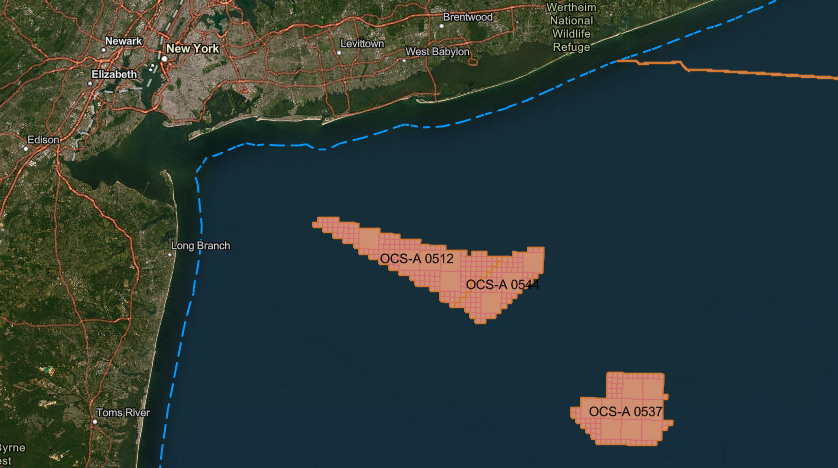
Bluepoint Wind Lease 0537 owned by Global Infrastructure Partners, a part of BlackRock, and Ocean Wind (Engie, France and EDP Renewables, Portugal)
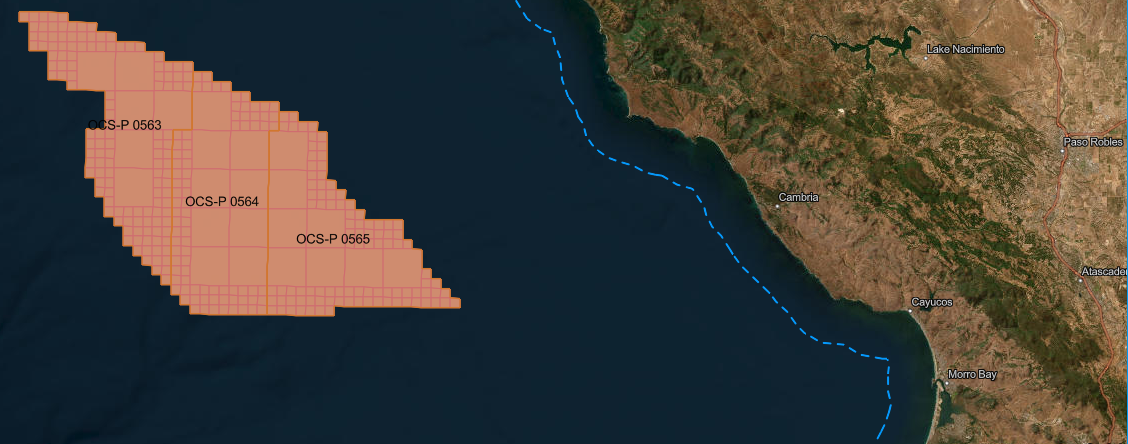
Golden State Wind Lease 0564 owned by Ocean Wind (Engie, France and EDP Renewables, Portugal) and the Canada Pension Plan Investment Board

The Dept. of the Interior (DOI) has announced wind lease buyback agreements with Bluepoint Wind and Golden State Wind.

These are mutually beneficial “Win-Win” agreements. Bluepoint and Golden State benefit by escaping bad business decisions:

  • Bluepoint massively overpaid ($765 million) for Atlantic lease 0537 during the brief irrational exuberance era of the offshore wind program. The intense bidding was driven by the lure of subsidies, guaranteed power sales, unprecedented Federal and State promotion, peak climate activism, inattention to mounting public opposition, and irrational expectations regarding the role of offshore wind in powering the economy.
  • The value of Atlantic wind leases declined by 99.4% between 2022 and 2024, and this was before the Presidential election!
  • The New Jersey Board of Public Utilities has moved to terminate a $1 billion agreement to develop infrastructure to bring power from offshore wind farms to the grid.
  • Golden State bid $150 million for a wind lease that will require floating turbines. The 50 MW Kincardine Offshore Windfarm, which is billed as the “world’s largest floating wind farm,” experienced a £30 million loss in 2023 following a £18 million loss in 2022. Another floating wind project, Hywind Scotland, had to be taken offline for 4 months for maintenance after less than 6 years of operation. BOEM was forced to “postpone” the Oregon wind sale given the absence of bidders.
  • Significant work had not yet begun on either the Bluepoint or Golden State projects.
  • Many in Morro Bay and elsewhere along the Central Coast of California are not pleased with the attempt to “industrialize the coast.” Opposition to offshore wind projects is now well established along the Atlantic Coast.
  • Even in Europe, the value of offshore wind leases has diminished. A Dec. 2024 Danish offering received no bids. See this explanation.
  • The companies get to invest their inflated wind dollars in profitable energy projects without penalty. What prudent executive wouldn’t jump at the deal?
  • Waiting for the next Administration is not likely to improve the fundamental economics of offshore wind development, and increased subsidies are not popular.
  • A pro-wind govt would facilitate permitting, but is unlikely to buyback existing leases.

The Administration also benefits:

  • Two more wind leases are off the books.
  • Removing one of three leases could significantly affect the economics of Central Coast (CA) wind development.
  • Agreements were necessary because it’s difficult to cancel leases, and compensation would be required. If settled in court, the compensation could easily exceed the lease purchase price.
  • The companies agreed not to pursue any new offshore wind projects in the United States.
  • The rebates will be invested in projects favored by the Administration.

Question: Are the partners and parent companies also precluded from investing in offshore wind projects or just the Bluepoint Wind and Golden State Wind entities? If BlackRock, EDP, and Engie can no longer make such investments, that is a big deal. This is especially true given the agreement with Total, Vineyard Wind’s problems, Orsted’s financial challenges, BP and Shell’s apparent exit from the US offshore wind market, and Equinor’s reduced renewable energy ambitions.

Finally, a December 7, 2022 release by the Canada Pension Plan Investment Board heralding the 50% partnership in Golden State Wind might be of interest to our Canadian readers. That bad investment can now be removed from the books.

Read Full Post »

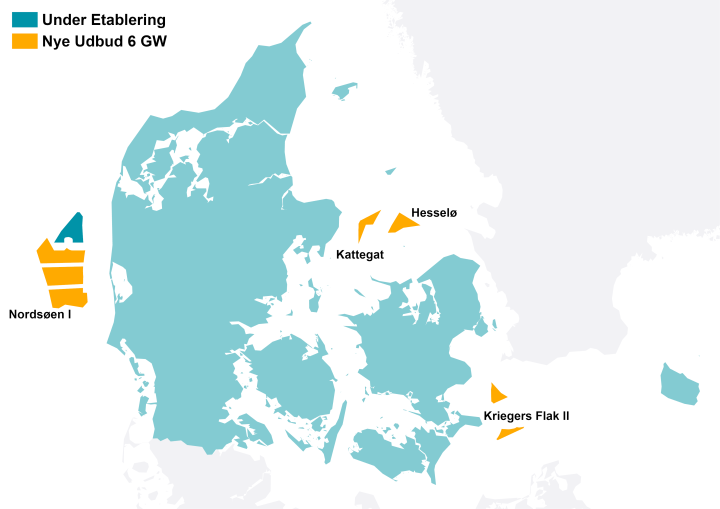
No bids for the 3 large North Sea tracts (yellow) west of Denmark.

Danish Energy Agency: “The deadline for bidding on the first 3 GW of Denmark’s 6 GW offshore wind tendering procedure expired on Thursday. The Danish Energy Agency has not received bids for any of the three offshore wind farms in the North Sea put out to tender. The Minister for Climate, Energy, and Utilities has asked The Danish Energy Agency to engage in dialogue with the market to identify why no bids have been submitted.

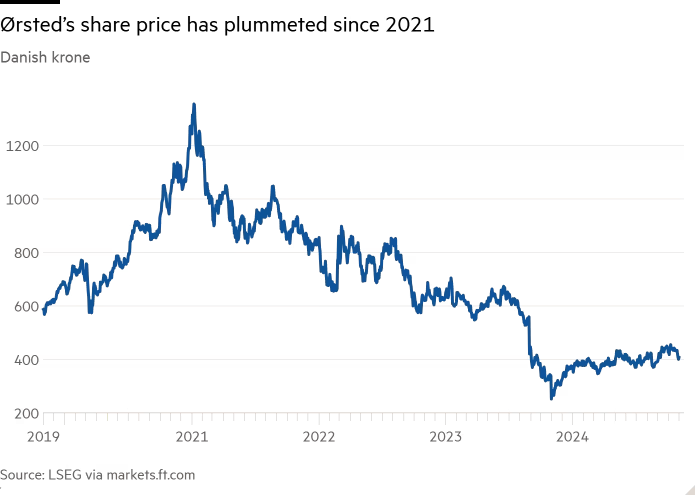
Even Orsted, which is 50.1% Danish govt owned, failed to submit a bid. Perhaps the economic realities of offshore wind, as reflected in Orsted’s share price (below) are sinking in.

Read Full Post »

Yesterday was not a good day for US offshore wind. Not only was the Gulf of Mexico wind lease sale disappointing, but Orsted announced US impairments of $2.3 billion causing their share price to fall to the lowest level in more than 4 years.

Unsurprisingly, Orsted management assumes no responsibility for the company’s poor performance, blaming supply chain problems, high interest rates and “a lack of new tax credits.” Outsiders might suggest that there were other factors such as irrational exuberance in the acquisition of wind leases at inflated prices, and unrealistic expectations regarding a complementary power source that is dependent on government mandates and subsidies.

“The situation in U.S. offshore wind is severe,” Chief Executive Mads Nipper told reporters on a conference call.

Reuters

Read Full Post »

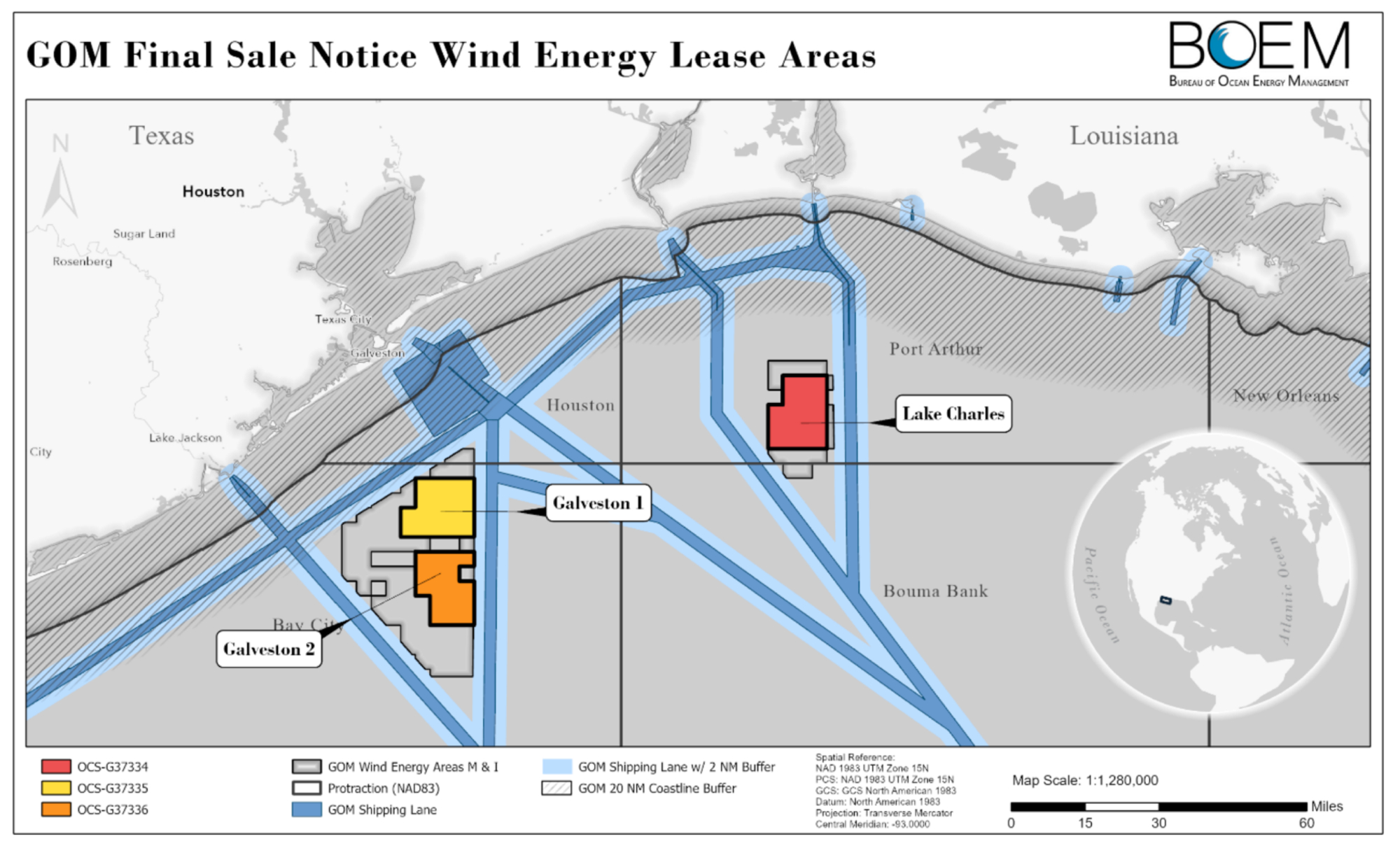
BOEM’s Final Sale Notice for the upcoming Gulf of Mexico wind auction identifies 3 lease areas (see map below). Wind operations in these areas should not significantly conflict with other GoM activities, including oil and gas operations.

Those who followed Exxon’s recent lease acquisitions may be amused by the map below from BOEM’s siting analysis document. The 94 Exxon leases acquired at Oil and Gas Lease Sale 257 (yellow blocks) are misidentified as “Carbon Capture Lease Blocks.” As has been discussed at length on this blog (most recently here), Sales 257 and 259 were oil and gas lease sales. Although Exxon’s intentions are now well known, they may not conduct carbon sequestration operations on these leases unless they are competitively reissued or converted. (Is BOEM’s siting document implying that conversion of the Exxon leases is a fait accompli?) The regulations for such conversions, and for CCS operational activities, have yet to be promulgated. A draft of these regulations is expected later this year, and the comments should be spirited and diverse.

Read Full Post »