Feeds:
Posts
Comments

Posts Tagged ‘Santa Ynez Unit’

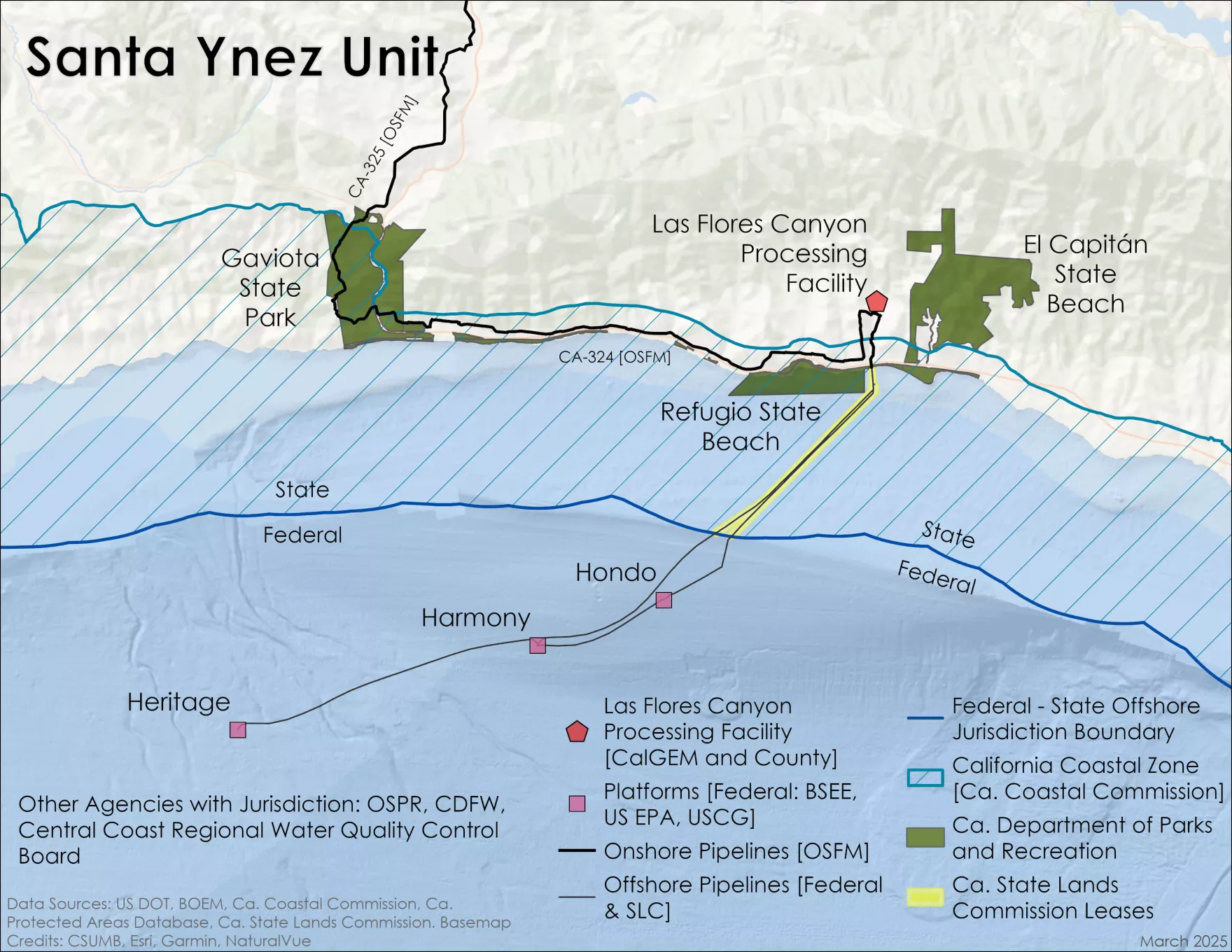
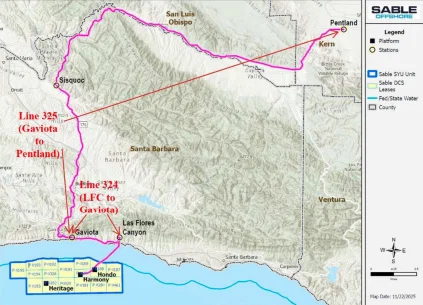
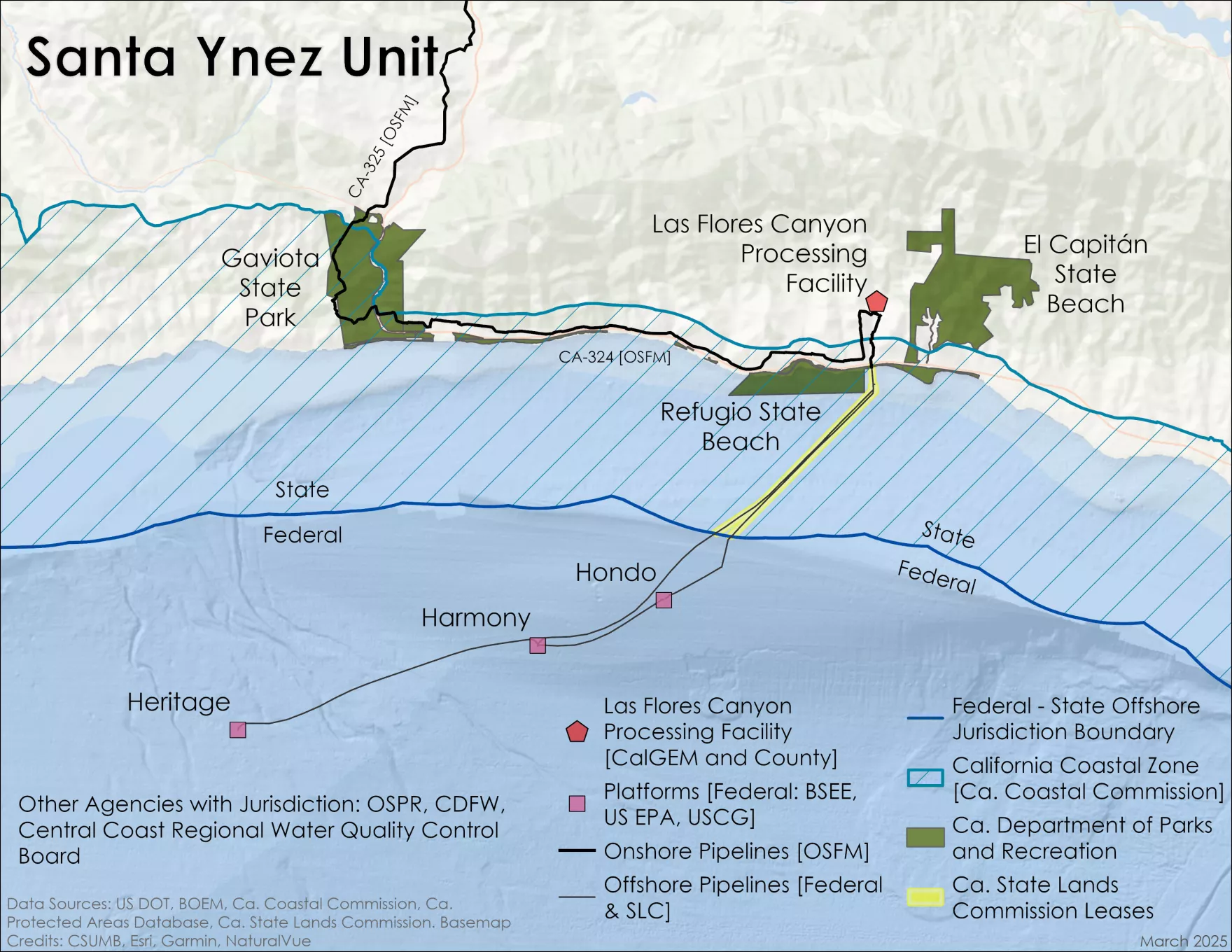
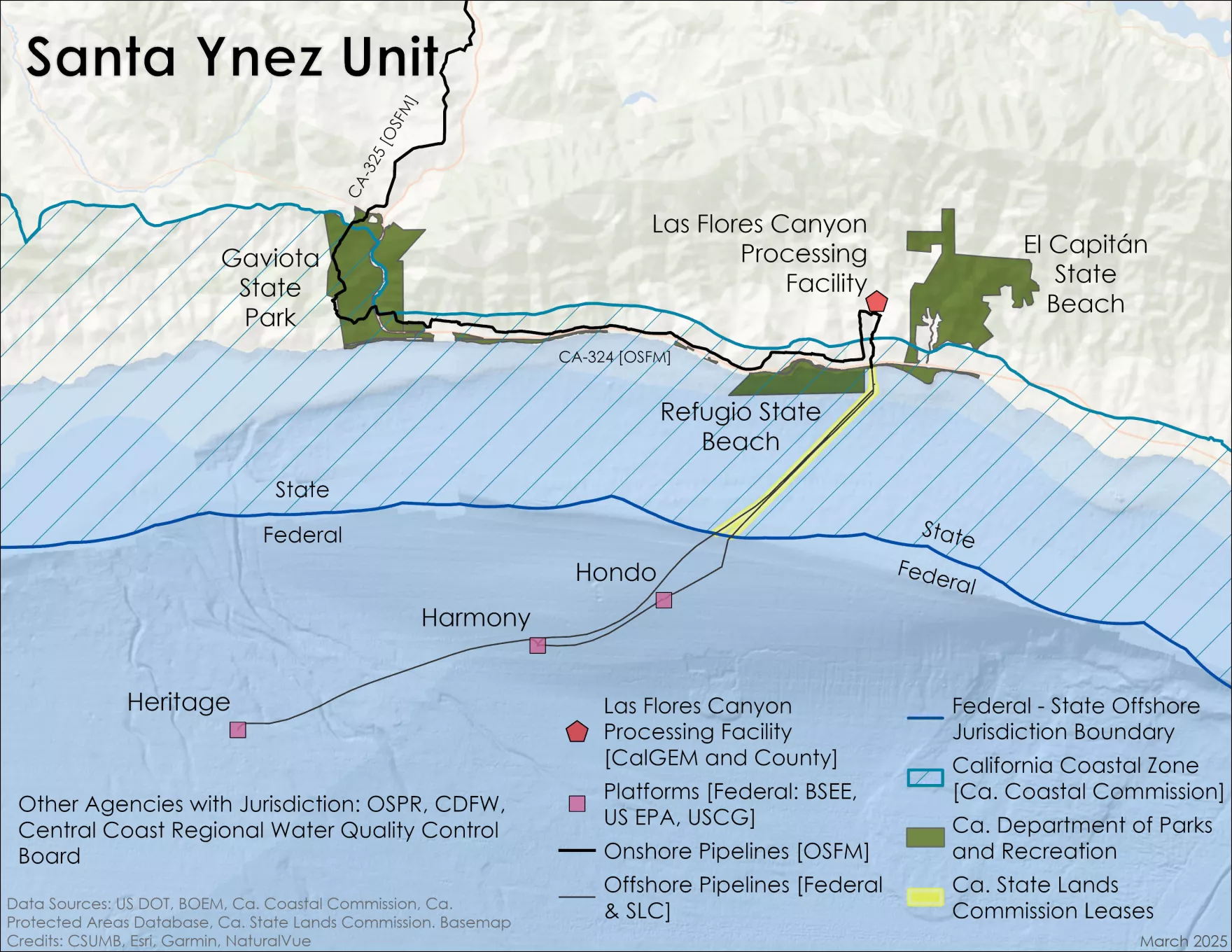
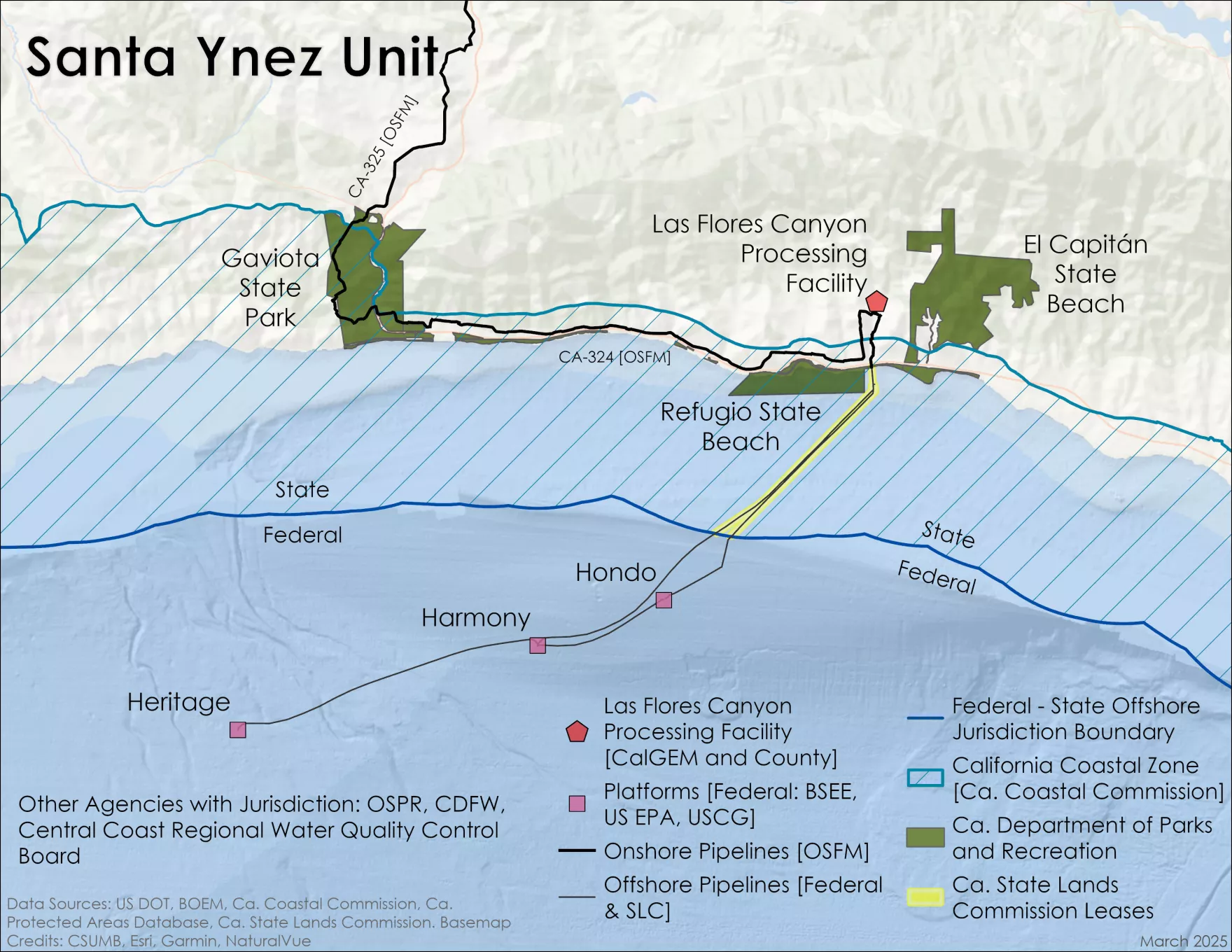
Sable Offshore Corp. may use an emergency restart order from Energy Secretary Chris Wright as legal authority to continue transporting Santa Ynez Unit production through the onshore pipeline system.

Judge Stephen V. Wilson said the Defense Production Act (DPA) is a “significant statutory grant of authority to the executive, giving the President substantial discretionary power to compel private industry, allocate resources, and incentivize domestic production for national defense.”

The opinion also granted the Trump administration’s request to modify a federal consent decree entered in 2020 which governs the restart of the Las Flores pipeline system.

The order removes the California Office of the State Fire Marshal as the primary agency responsible for Sable’s compliance with the oil spill consent decree, and substitutes the Pipeline and Hazardous Materials Safety Administration.

Here is the 45 page decision.

Read Full Post »

Excerpts from Sable’s quarterly report:

Production

  • An average of approximately 39 wells were online throughout the month of June 2026, representing a 50% increase over approximately 26 wells online on average in April 2026.
  • In July 2026, an average of approximately 47 wells at Platforms Harmony and Heritage were online, producing an average of approximately 721 gross barrels of oil per day per well. Sable expects to bring all 77 production wells on these two platforms online during the third quarter of 2026 and expects Platform Hondo to come online in September 2026.
  • Wireline campaign for Perforation Additions (“Perf Adds”) and producing well optimization at Platform Harmony commenced in August 2026.
  • Five completed Perf Adds forecasted to produce an incremental 600 estimated gross barrels of oil per day, each, are expected to come online at Platform Hondo along with the restart of the platform in September 2026.
  • An additional four Perf Adds at Platform Hondo forecasted to produce an incremental estimated 600 gross barrels of oil per day are planned for completion and to be brought online in early Q4 2026.

Sales

  • July 2026 preliminary oil sales estimate of approximately 38,000 gross barrels of oil per day. August 2026 oil sales average to date is approximately 42,000 gross barrels of oil per day through August 9th.
  • Due to the California regulatory environment, local refineries were not able to plan in advance for SYU first sales and ultimately were forced to displace various imported cargos in the second quarter. As a result, Sable incurred $18.5 million of non-recurring demurrage charges throughout the quarter, recognized in operational expenses.
  • The sudden supply influx of Pacific Outer Continental Shelf (“Pacific OCS”) crude has forced refiners to temporarily limit throughput of Pacific OCS crude and charge quality deducts for sulfur content and other items.
  • Starting in July 2026, Sable was temporarily constrained to a maximum of 40,000 average gross barrels of oil per day of oil sales throughput by downstream partners. We expect this short-term constraint to be alleviated starting in the back half of August.
  • California refineries are expected to adjust their crude oil supply slate starting in September 2026 to begin accepting more Pacific OCS barrels from the SYU and less imported barrels, alleviating the SYU throughput constraint altogether.
  • Sable is also in active negotiations to implement waterborne crude oil marketing solutions from existing marine terminals in the Los Angeles area in the near-term in order to improve marketing optionality.
  • Additionally, the pending acquisition of the Crimson Utilities (San Pablo Bay Pipeline) pipeline network by a third party could provide further relief and marketing optionality to California oil producers with access to the San Francisco refinery market once that pipeline potentially restarts operations.

A detailed regulatory and legal update can be found beginning on p. 13 of the Quarterly Report.

Read Full Post »

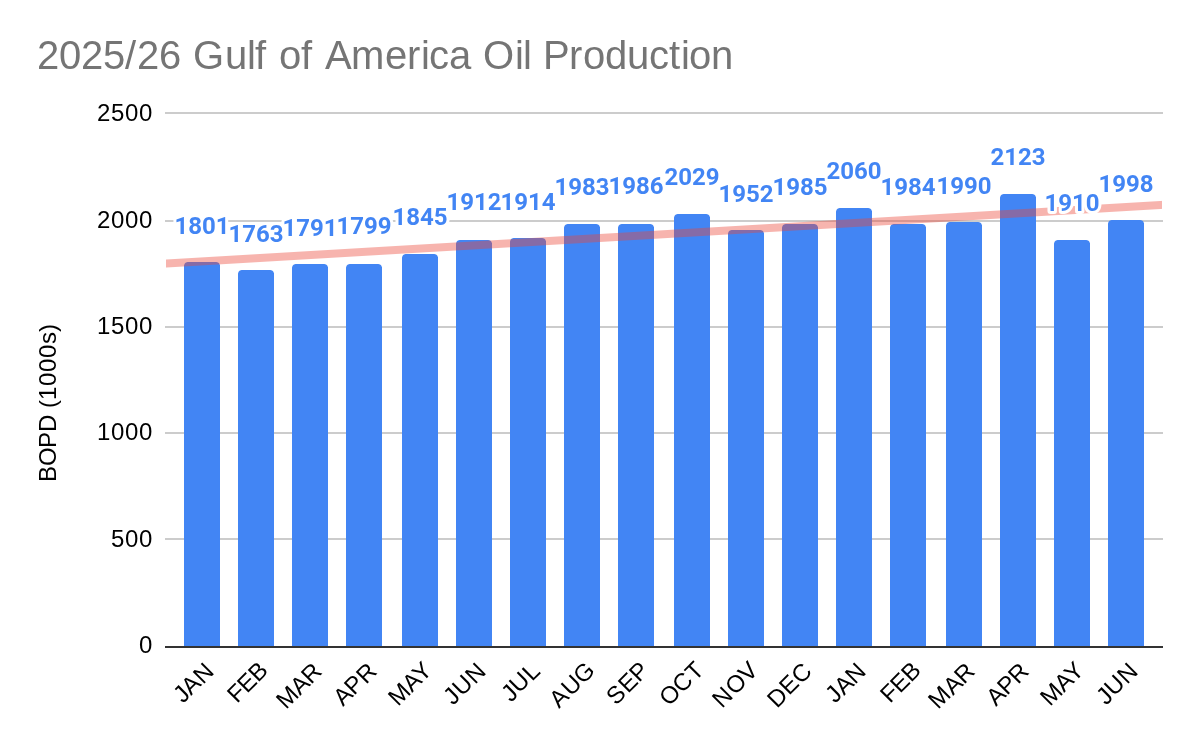
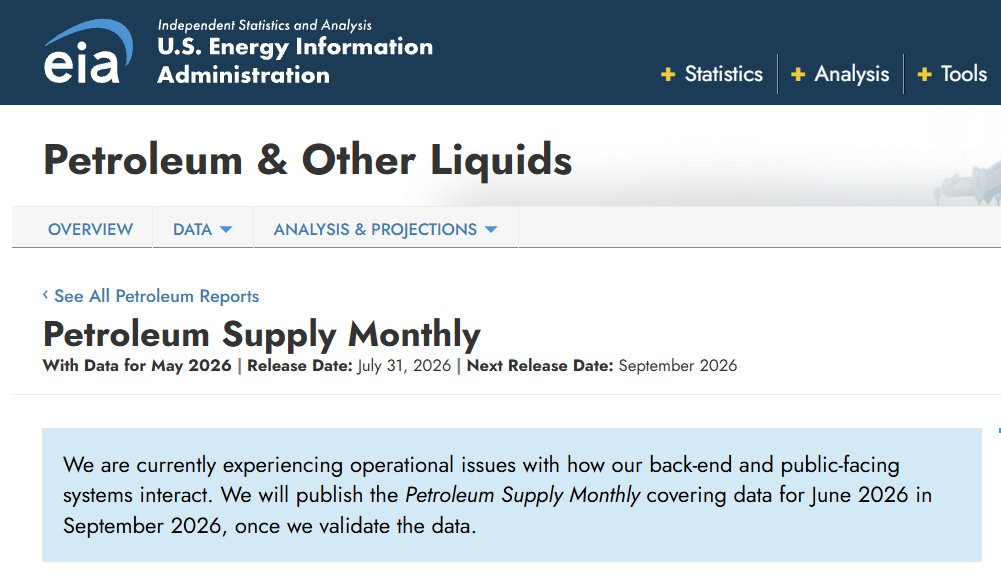
Per EIA, Gulf of America oil production declined in May by over 200,000 bopd from April’s record production, which was corrected upward by 2000 bopd. Was the April number anomalous? We’ll need additional monthly data and the audited ONRR numbers to get a better read.

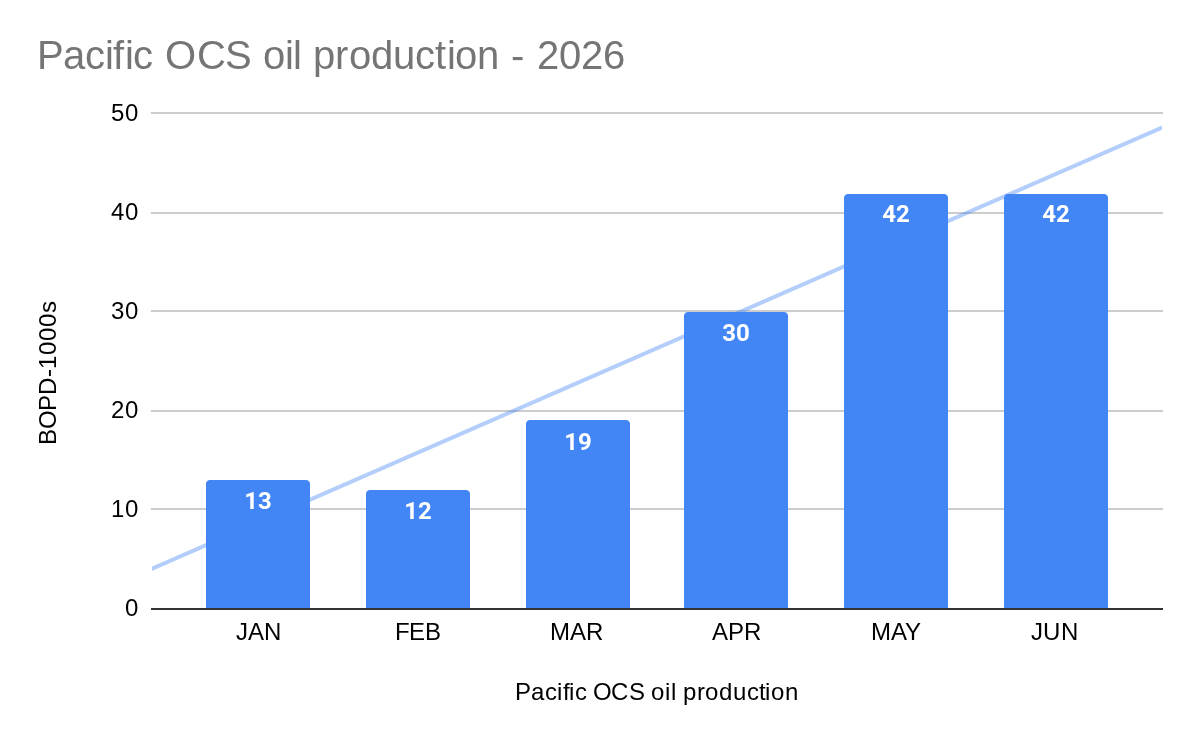
EIA posted corrected April and May totals of 30,000 bopd for the Pacific (California OCS), a 150% increase from February owing to the Sable Santa Ynez Unit restart. Although Pacific OCS production has been in the doldrums for years, the region has an impressive record of 202,000 bopd from Dec 1995.

Meanwhile EIA has still not corrected their 2025 OCS production totals to correspond with the audited ONRR data.

2025 OCS total – ONRR2025 OCS total – EIA2025 Gulf only – ONRR2025 Gulf only – EIA
713,673,419697,020,000708,803,859692,634,000

Read Full Post »

A 7/28/2026 Dept. of Justice brief submitted to the Ninth Circuit Court of Appeals cites the 5/28/2026 Supreme Court decision in Flowers Foods Inc. v. Brock in asserting that Sable’s onshore pipeline segments are interstate and subject to Federal jurisdiction.

This filing is part of multi-faceted litigation involving Federal preemption, a 2020 Consent Decree, emergency special permits, and state environmental concerns. The Ninth Circuit is handling the expedited briefings and consolidation of petitions.

DoJ’s core argument is that Sable’s onshore segments do not interrupt the continuous “flow of commerce” from Outer Continental Shelf (OCS) offshore extraction → onshore processing → further transport to terminals (e.g., in Kern County). Thus, the system qualifies as interstate commerce subject to Federal (PHMSA) oversight rather than state regulation.

The Flowers Foods Inc. v. Brock case considered similar flow of commerce issues. The SCOTUS agreed with the Tenth Circuit that Brock delivery franchisees were engaged in interstate commerce even if they never cross State lines. The gist of the decision is as follows (emphasis added, full decision attached):

The Federal Arbitration Act (FAA) requires courts to enforce many private arbitration agreements, but it also provides that “nothing” in the law shall be used to compel arbitration in disputes involving the “contracts of employment” of any class of workers “engaged in . . . interstate commerce.” 9 U. S. C. §1. This case poses the question whether someone can qualify as a worker under the §1 exemption if he never crosses state lines and never interacts with vehicles that do. Flowers Foods, Inc., is a large producer of packaged baked goods with bakeries in 19 States. To get its products to market, the company depends in part on franchisees who buy the distribution rights to Flowers’s products in specific geographic territories. Angelo Brock is one such franchisee serving the Denver area; he picks up Flowers’s products from a warehouse in Colorado and delivers them to local stores, all without leaving the State. In 2022, Brock sued Flowers in federal district court alleging that the company had underpaid him and other distributors in violation of various federal and state laws. Flowers moved to compel arbitration, arguing that the FAA generally requires courts to stay or dismiss cases when the parties have agreed to resolve their disputes by arbitration and that Brock had signed a distribution agreement promising to arbitrate any disagreement. The district court denied Flowers’s motion, and the Tenth Circuit affirmed. Resting its decision on 9 U. S. C. §1, the Tenth Circuit reasoned that Brock belonged to a class of workers engaged in interstate commerce and thus the court lacked authority to compel arbitration.

We should soon find out what the Ninth Circuit thinks!

Read Full Post »

The National Defense Authorization Act (NDAA), as passed by the House this week, includes an amendment (attached) authorizing the Federal govt to acquire all lands along the Santa Ynez Pipeline System route. Wesley Hunt (TX), who introduced the amendment, comments in the short video below. The Senate has yet to approve the bill.

Assuming Sable’s attorneys are able to continue navigating through the legal minefield, the success of the project will depend on the performance of Sable’s well operations and production teams, and the extent to which they have the authority and confidence to curtail operations when deemed necessary to protect workers and the environment. In that regard, MMA engineers and inspectors have an important role in identifying risks and assuring that they are mitigated.

Excerpt from the amendment:

SEC. 28ll. ACQUISITION OF EASEMENTS FOR DEFENSE FUEL SUPPLY INFRASTRUCTURE.
(a) AUTHORITY TO ACQUIRE.—The Secretary of Defense is authorized to acquire, by purchase, donation, exchange, or condemnation, on behalf of the United States, such permanent easements over all lands along the route of the Santa Ynez Pipeline System, including all lands owned or otherwise held by the State of California or any agency, department, or instrumentality thereof, as the Secretary of Defense determines necessary to ensure continuous pipeline transportation of crude oil from the Santa Ynez Unit to domestic refineries supplying Department of Defense installations in the State of California

Read Full Post »

Image of Who Is Dolly Gee? A Look at the Judge Deciding the Fate of Trump’s Executive Order - The New York Times
Federal Judge Dolly Gee, Central District of California

Sable Offshore and Exxon had alleged that Santa Barbara County’s refusal to transfer title and permits for Santa Ynez Unit facilities from Exxon to Sable amounted to an unconstitutional taking of their property rights. Judge Gee disagreed.

As colorfully put by Nick Welsh at the Santa Barbara Independent, Judge Gee told Sable and Exxon to “go pound sand” (not literally, but the judicial equivalent). The judge refused to even allow Sable to amend their filing. The judge will however allow Exxon to file an amended complaint, given that the company still has vested rights to the facilities and is still on the hook for the decommissioning costs.

As always with these Santa Ynez Unit matters, there is much more to come!

Read Full Post »

Sable Offshore began ramping up production at Platform Harmony last May delivering oil and gas to their Los Flores Canyon Processing Facility. In March, they resumed transportation to the Pentland pipeline segments and achieved first sales.

Below are BOEM production data for Harmony through March 2026. Harmony production was expected to increase to 22,000 bopd in May. Similarly, Sable forecasted Heritage production of 30,000 bopd for that month. The actual production numbers should be available in a month or two.

Nothing in the March production data for Harmony is particularly surprising. The gas-oil ratio (GOR) of ~1000 cu ft/bbl is rather typical for oil production in the region, as is the water cut, although less water production would be preferred. Produced water is not discharged from the platform, but is injected subsurface through disposal wells.

Read Full Post »

In the ongoing Santa Ynez Unit production restart saga, John Smith informs that a California Appellate Court ruled against Sable Offshore by a vote of 2-1, with a strong dissent from one of the three judges.

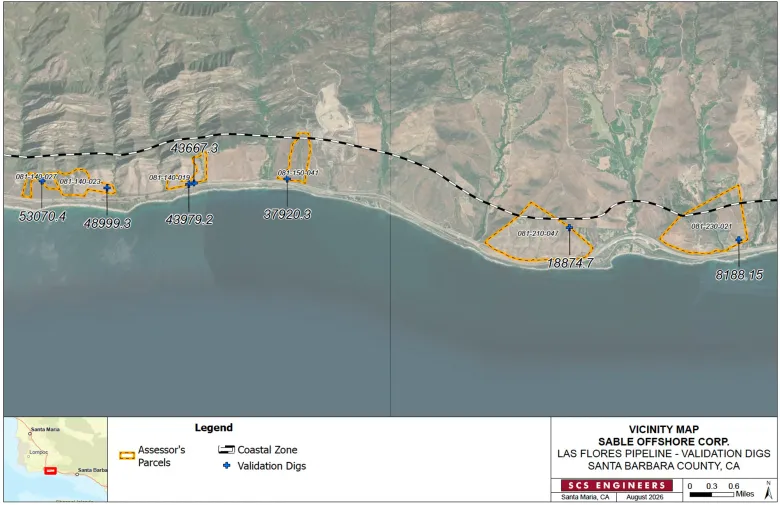
The decision (attached) affirms the California Coastal Commission’s regulatory authority over Sable’s Los Flores Canyon pipeline repairs, meaning that Sable could be ordered to cease operating the pipeline. However, this is just one element of a complex legal maze. An important case regarding PHMSA’s emergency special permit for the pipeline will be heard by the Federal 9th Circuit Court of Appeals in July.

The dissenting judge’s opinion beginning on p.15 of the attachment sets the stage for the upcoming arguments in the 9th Circuit. Excerpt:

“But first, a dose of reality. The repair work has been done. It is a “fait accompli.” And, pursuant to federal intervention, oil is now flowing in the pipeline without incident. The supremacy clause of the United States Constitution takes precedence. The federal Government trumped the state’s Commission “cease and desist” order and it trumps the preliminary injunction order. Based upon these events, the trial court should vacate the preliminary injunction, dismiss the matter as moot, and nullify the civil penalties.”

Read Full Post »

Sable posts

Read Full Post »

SYU near-term workover plan; estimated reserve additions exceed production.

Those who have been following the Santa Ynez Unit saga should take a look at Sable’s informative PowerPoint update (attached). The presentation includes reserve data, well operation plans, production forecasts, financial and legal updates, and regional energy supply information.

Also, Sable CEO Jim Flores has announced that Energy Secretary Wright and Interior Secretary Burgum will be visiting the project this week. Transportation Secretary Duffy was also expected, but he will not be attending.

Read Full Post »

Older Posts »