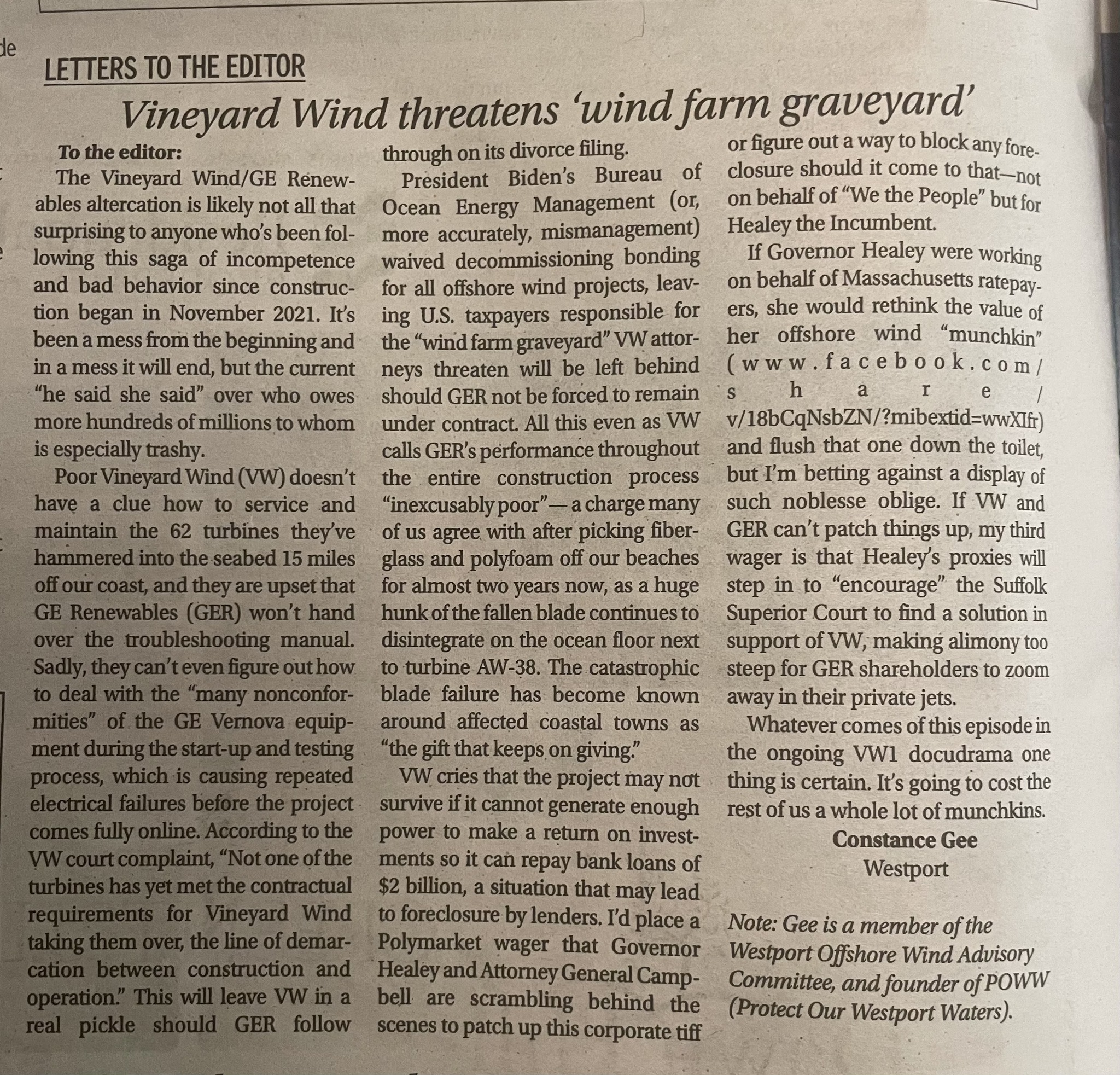
The Constance Gee letter (pasted below) is entertaining no matter where you stand on the Vineyard Wind debacle. A couple of quotes 😉:
It’s been a mess from the beginning and in a mess it will end, but the current “he said she said” over who owes more millions to whom is especially trashy.
Poor Vineyard Wind doesn’t have a clue how to service and maintain the 62 turbines they’ve hammered into the seabed 15 miles off our coast, and they are upset that GE Renewables won’t hand over the troubleshooting manual.
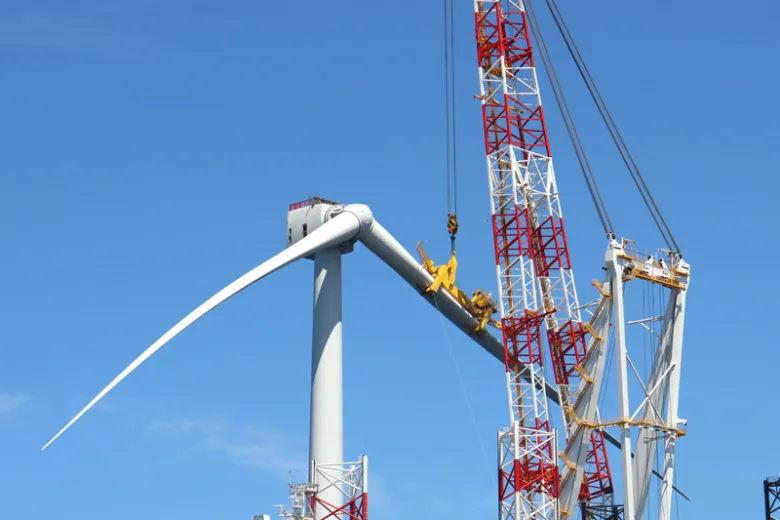
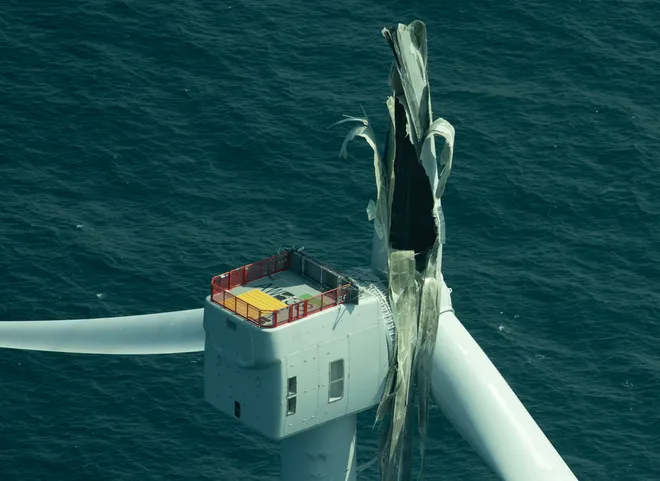
damaged Vineyard Wind turbine – Cape Cod Times photo
Excerpt from p.3 of Vineyard Wind’s suit against GE Renewables (attached):
“As was widely reported in national and local news, in July 2024, one of the GER offshore blades collapsed and fell into the waters off Nantucket, necessitating a massive environmental cleanup, and a six-month construction hiatus during which GER performed a “root cause” analysis. That analysis concluded that 68 of the 72 GER blades installed at the Project (nearly all manufactured by GER in Gaspé, Canada) were also defective because they were inadequately bonded together, and were so poorly made that they were beyond repair. GER’s remediation plan required it to remove all of the blades and to replace all Gaspé blades with others manufactured at a different facility in Cherbourg, France.
Regulatory issues of concern:
Nearly 2 years after the blade failure, all Vineyard Wind (VW) turbine blades have been installed, yet BSEE has still not issued their investigation report. The primary purpose of independent Federal investigations is to prevent recurrences at this or other projects in the US and worldwide. The investigation should assess the extraordinary VW blade defect rate.
DNV was the Certified Verification Agent (CVA) for the VW project, and was thus required to verify the design, fabrication, and installation procedures. When will we hear from them?
BOEM waived the requirement that the Facility Design Report (FDR) and Fabrication and Installation Report (FIR) be “received and offered no objections to” before beginning the fabrication of facilities. They did so to “allow Vineyard Wind to adhere to its construction schedule, maintain its qualification for the Federal Investment Tax Credit, and meet its contractual obligations under the Power Purchase Agreements with Massachusetts distribution companies.” Did BOEM’s commitment to promoting offshore wind and accelerating development influence their regulatory decisions?
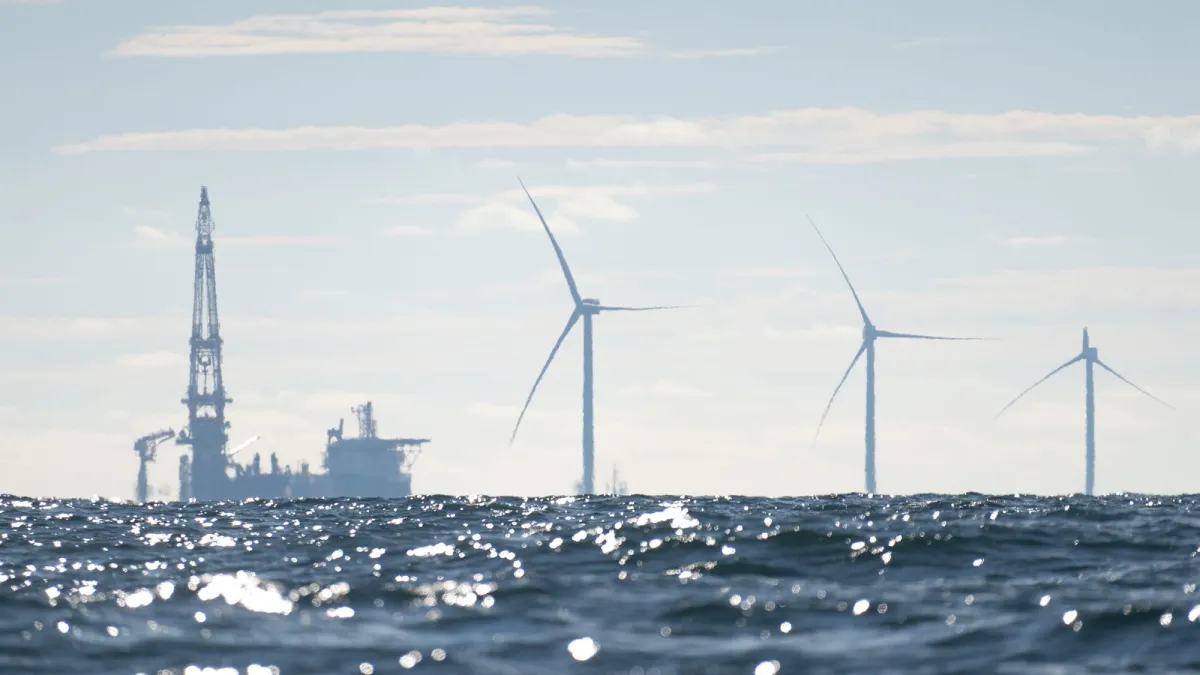
Three wind turbines, including one with a damaged blade, at the Vineyard Wind offshore site in November 2024. Credit: Eleonora Bianchi / The New Bedford Light.
New Bedford Light:Vineyard Wind on Wednesday sued its turbine supplier, GE Renewables, in civil court in Boston, alleging GE is breaching its contract and planning to abandon the project by April 28 — during the critical final stage of coming fully online.
According to the complaint, GE filed a termination notice with Vineyard Wind in late February for its contracts to supply wind turbines and service and maintain them, citing more than $300 million in claims unpaid by Vineyard Wind.
If GE exits, Vineyard Wind says, the project “will likely fail, leaving the windfarm stranded.”
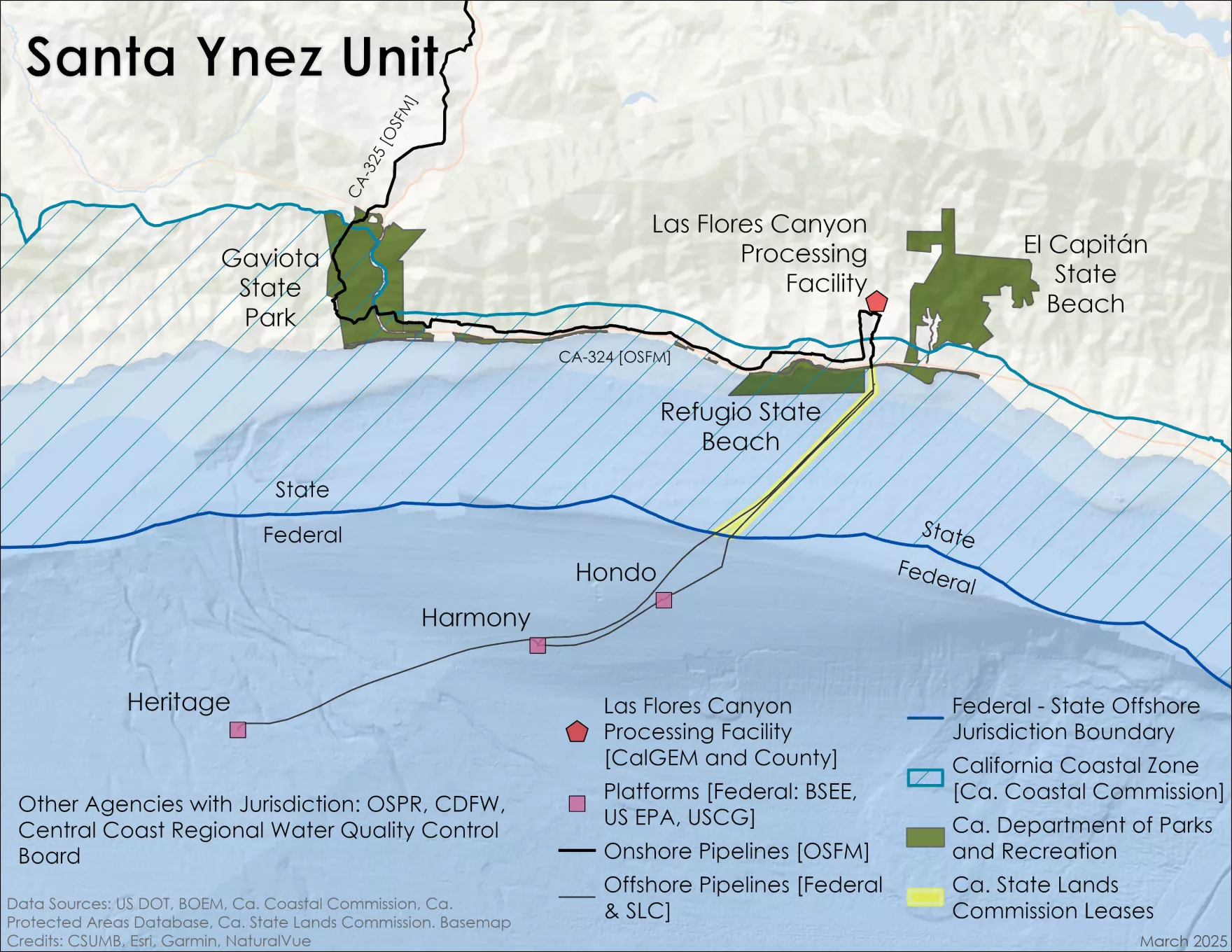
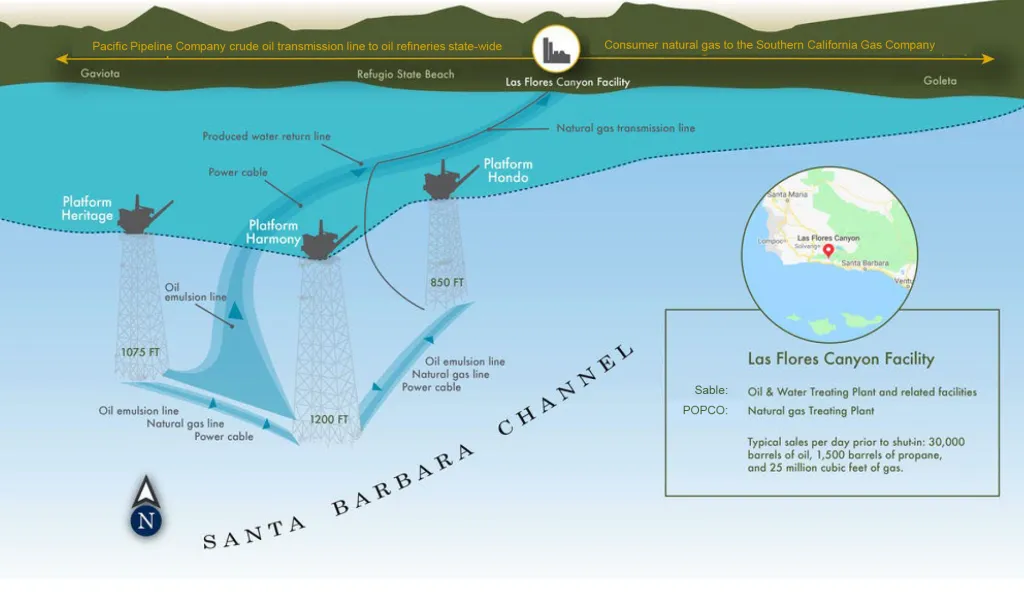
Attached is John Smith’s comprehensive summary of lawsuits related to Sable Offshore’s attempts to restart Santa Ynez Unit production.
If you are keeping score, there are 10 separate cases including a class action lawsuit filed by investors. New legal battles are sure to follow given Sable’s OS&T strategy. Per John:
“The combined legal challenges, injunctions, and restraining orders have significantly delayed Sable’s restart plans and prompted the company to pursue an Offshore Storage and Treatment Vessel (OS&T) strategy, which was utilized to process SYU production in federal waters from 1981 – 1994, and transport oil to markets using tankers.“
In addition to the Johnson filing, at least 7 other law firms (links below) have announced class action litigation alleging that Sable Offshore made false or misleading statements regarding the restart of Santa Ynez Unit production.
“This is a significant achievement for the Interior Department and aligns with the Administration’s Energy Dominance initiative, as it successfully resumed production in just five months.“
Will the Dept. of Justice intervene on behalf of Sable?
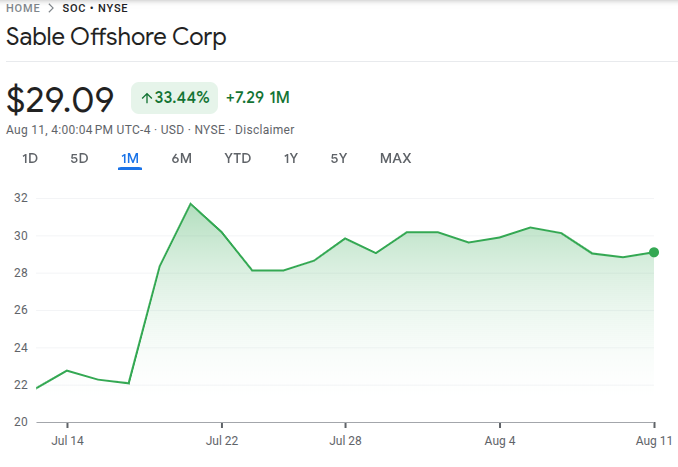
Meanwhile, Sable’s share price rebounded in mid-July and is holding up surprisingly well (see below). Perhaps investors don’t see the class action suits as a significant incremental threat given the risks associated with decisions by 8 California agencies, Santa Barbara County, and various judges, and the persistent challenges by well-organized opponents of offshore production.
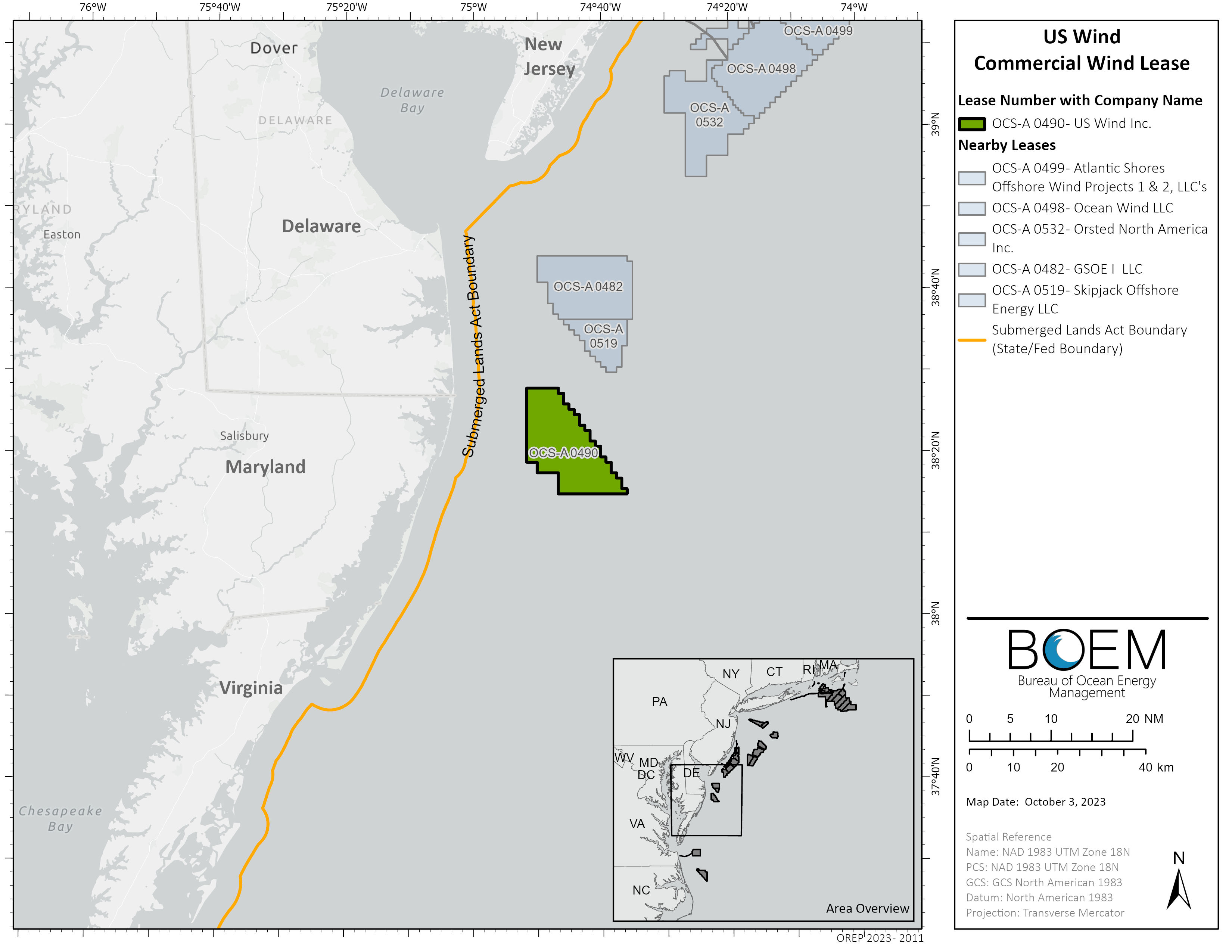
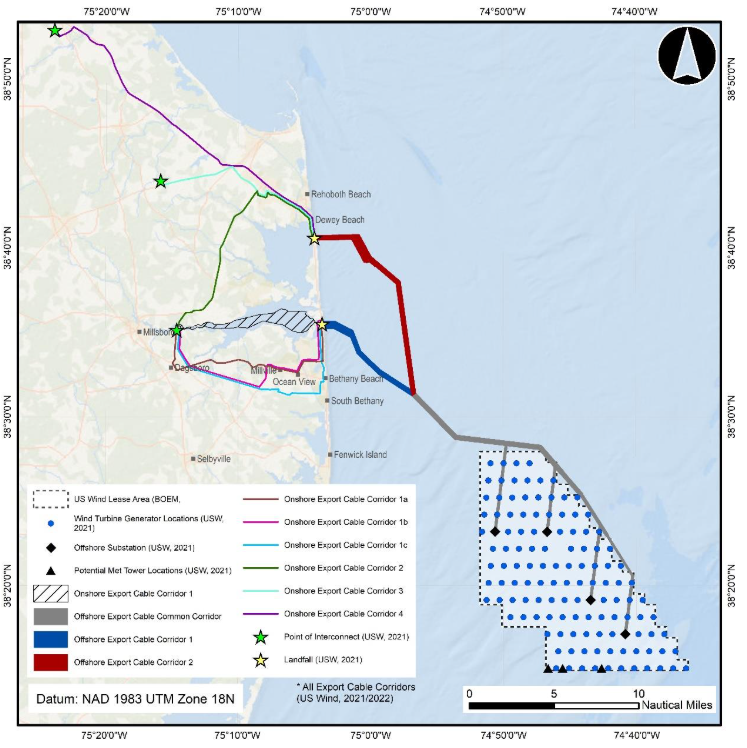
A new court filing (attached) informs that the Dept. of the Interior is reconsidering the Construction & Operations Plan (COP) approval for US Wind’s Maryland Offshore Wind (“MarWin”) Project (maps above). That approval is the subject of litigation filed by Ocean City MD and others.
The key section of the Federal government’s filing is pasted below.
An extension in this case is necessary as Interior intends to reconsider its COP approval and move in the District of Maryland—the first-filed case—for voluntary remand of that agency action. See, e.g., Util. Solid Waste Activities Grp. v. EPA, 901 F.3d 414, 436 (D.C.Cir. 2018) (recognizing that administrative agencies have the authority to reconsider their decisions). The outcome of Interior’s reconsideration has the potential to affect the Plaintiff’s claims in this case.
In the Independent, Nick Welsh aptly described the latest court decision in the long and winding road that Sable Offshore hopes will lead to Santa Ynez Unit production:
“When Judge Donna Geck got through ruling on the latest showdown between Sable Offshore Oil and Santa Barbara’s environmental establishment last Friday morning, it wasn’t clear if the no-nonsense judge cut the proverbial baby in half or kicked the can down the proverbial road.”
Bottom line: The judge will “continue to bar the Fire Marshal from taking any steps to process Sable’s restart application until 10 days after Sable had received all the necessary permits and approvals from the myriad of state, federal, and local agencies that enjoy some degree of regulatory oversight over the proposed project.” Does that mean any agency, even one with a minor or questionable role, can block the project?
As the author notes:
“As of this writing, it’s not entirely clear which of those agencies have yet to issue Sable the permits it needs to start the restart process and when they’re likely to do so, if at all. Even less clear is whether there’s any agreement among the dueling parties as to which agencies have standing to even weigh in.”
Radar interference is one of the key issues in the law suit against the Empire Wind project. Congressman Smith’s press release (attached) focuses on that issue.
Part VIII, Offshore OIl and Gas Leasing, is a good read for those interested in OCS leasing policy. This cleverly crafted part of the bill specifies leasing schedules, streamlines the leasing process, and minimizes litigation risks. Highlights:
Minimum royalty rates return to 12.5% from 16.67% post-IRA. (This is good for small, shelf producers.) The maximum rate remains 18.75%.
Requires a Gulf of America lease sale by 8/15/2025, a sale by 3/15 and 8/15 in each of the following 14 years (2026-2039), and a sale by 3/15/2040. 80+ million acres must be offered at each sale unless that amount of acreage is no longer available for leasing.
The lease form, lease terms, economic conditions, and stipulations 4 through 10 must be the same as for Lease Sale 254 (3/18/2020). Stipulations 1-3 may be updated.
Requires seven 1+ million acre (if available) Cook Inlet lease sales from 2026 – 2032. Beginning in 2035, 90% of the revenues go to the State of Alaska.
The required lease sales may be in addition to the lease sales held under the 2024-2029 National Outer Continental Shelf Oil and Gas Leasing Program.
Adherence with the Biological Opinion shall satisfy the Secretary’s obligations under the Endangered Species Act of 1973 and the Marine Mammal Protection Act of 1972
Previous EIS’s for the Gulf of Mexico shall satisfy the Secretary’s NEPA obligation.
Consistency determinations prepared by BOEM for Lease Sale 261 for the States of Texas, Louisiana, Mississippi, Alabama, and Florida will satisfy the Secretary’s CZMA obligations.
The Secretary may waive any requirement under the Outer Continental Shelf Lands Act that the Secretary determines would delay issuance of a lease.
A lease must be issued to the highest responsible qualified bidder not later than 90 days after the sale date.
The Secretary shall establish a process through which a Governor may nominate for leasing under a lease sale held under this section an area of the OCS that is adjacent to the waters of the State; and is unleased and available for leasing. If the Governor of a State nominates an area, the Secretary shall include the area in the next scheduled sale. (It appears that this provision applies only to the Gulf of America. Objective?)
G&G surveys must be approved within 30 days after a complete application is received.
A lease awarded under Lease Sale 259 or Lease Sale 261 shall not be set aside, vacated, enjoined, suspended, or cancelled except in accordance with section 5 the Outer Continental Shelf Lands Act (43 U.S.C. 1334). Also, new terms or conditions may not be added to these leases. (This protects lessees from pending litigation related to these leases).
Any action to approve, require modification of, or disapprove any exploration plan, development and production plan, bidding procedure, lease sale, lease issuance, or permit or authorization related to oil and gas exploration, development, or production, or any inaction resulting in the failure to hold a lease sale shall be subject to judicial review only in a United States court of appeals for a circuit in which an affected State is located.
“In baseball, ties famously go to the baserunner, but in county government it’s forced a legal fight in the courts.”
“The oil company Sable Offshore is insisting that when the County Board of Supervisors voted 2-2 on whether or not to allow another oil company, Exxon, to transfer its permits to Sable, the tie goes to Sable.”
“Accordingly, Sable — much in the limelight recently — just filed a lawsuit against the Santa Barbara County Board of Supervisors in federal court to make that point. Joining Sable in this dispute is ExxonMobil, the oil giant that sold Sable its three offshore platforms, its 120-mile pipeline, and its onshore oil storage and processing facilities known as the Santa Ynez Unit two years ago.”
Because the Planning Commission had voted 3-1 to allow the transfer, Sable argues that the 2-2 Supervisors vote upholds the Planning Commission decision.
Never a dull moment in the Santa Ynez Unit restart doneybrook. More on the tie vote here and here.