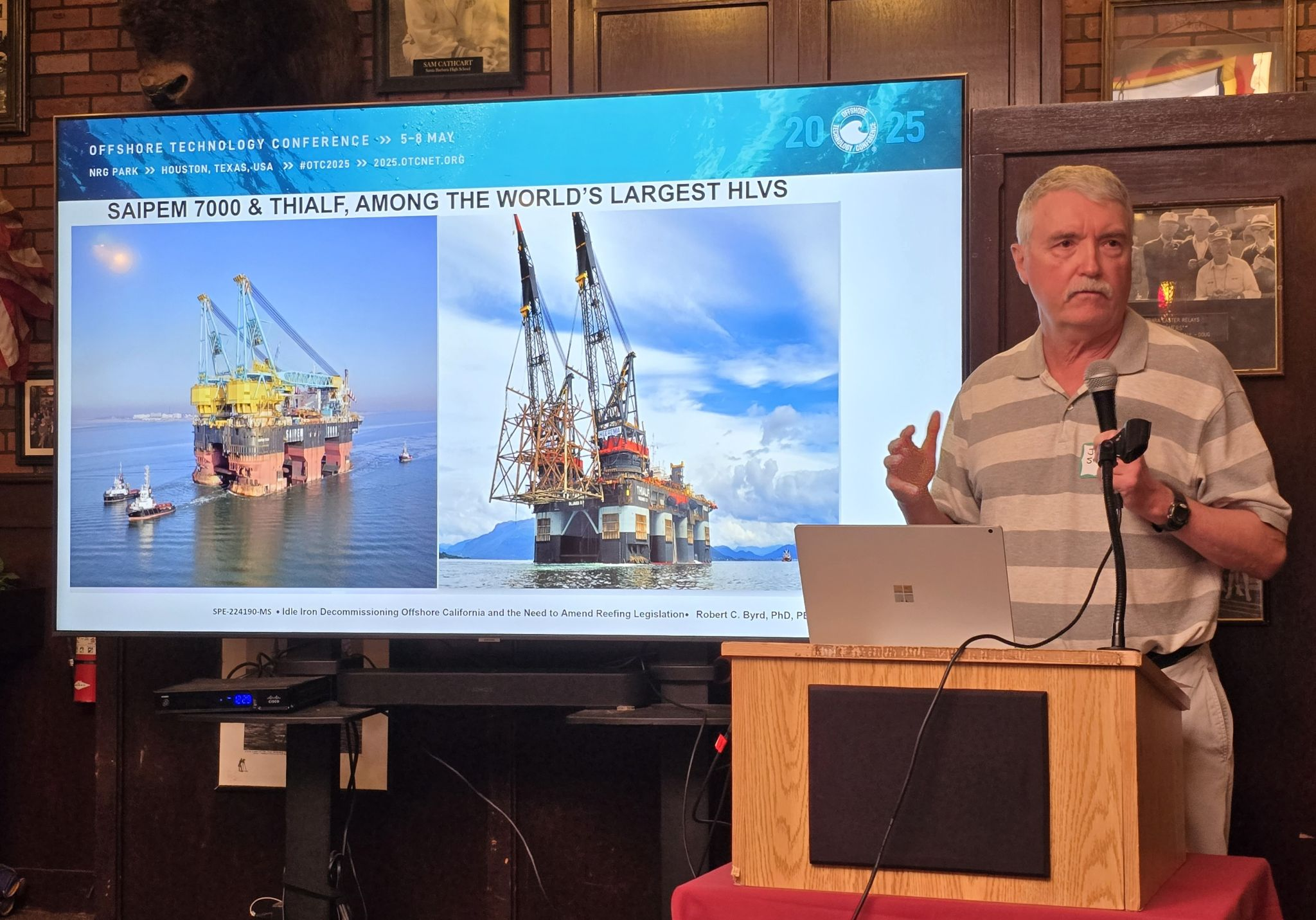
The subject Regulatory Agenda is attached. The proposed update to decommissioning requirements (abstract below) should attract attention! I would assume that, in addition to meeting Coast Guard requirements, a toppled structure would have to be accepted into a State reefing program. Otherwise the liability risks would be unacceptably high.
REVISIONS TO DECOMMISSIONING REQUIREMENTS ON THE OCS Legal Authority: Outer Continental Shelf Lands Act, 43 U.S.C. 1331 to 1356a Relevant Executive Orders: 14154 Abstract: This rule proposes to set ‘‘topple in place’’ as the default decommissioning standard, on the condition that such circumstances meet U.S. Coast Guard navigational requirements. This proposed rule would also address issues that may include to (1) idle iron by adding a definition of this term to clarify that it applies to idle wells and structures on active leases; (2) abandonment in place of subsea infrastructure by adding regulations addressing when BSEE may approve decommissioning-in-place instead of removal of certain subsea equipment; (3) BSEE approval for platform or facility toppling in place; and (4) other operational considerations. Timetable: Action Date FR Cite NPRM ……………… 07/00/27 NPRM Comment Period End. 10/00/27
This article provides information on the history of OCS Lease P-0166 and updates the decommissioning status of California OCS Platforms Hogan and Houchin which are in federal waters offshore Santa Barbara County, California. Listed below are key events in the history of the OCS Lease P-0166. More details are provided in the attachment which was prepared by John Smith who before retiring from BOEM in 2017 was actively involved in the long-running supplemental bond dispute between MMS/BOEM and Signal Hill Services, Inc., which began shortly after MMS approved the assignment of OCS Lease (P-0166) held by Phillps Petroleum Corporation (now ConocoPhillips Corp.) and two other companies to Signal Hill Services Inc. (Signal) in 1991.
Year/Month
Lease Activity
1967
U.S. Bureau of Land Management grants OCS Lease P-0166 to Phillips Petroleum Corp., Continental Oil Company, and Cities Service Company.
1967 – 1968
Hogan and Houchin platforms are installed.
1967 – 2010
75 wells were drilled from the platforms, the majority in 1967-1968 and 1970s.
February 1991
MMS approves assignment of the lease to Signal.
September 2019
Production is terminated at platforms.
October 2020
Signal relinquishes the lease to BOEM.
November 2020
BSEE orders ConocoPhillips Corp. (COP) and other predecessor lessees to decommission the Hogan and Houchin platforms.
January 2021
COP and other predecessor lessees file an appeal with IBLA contesting BSEE/BOEM determination they held decommissioning obligations.
February 2021
IBLA grants approval of Partial Stay Agreement between BSEE/BOEM and appellants to maintain and monitor the platforms.
November 2024
Signal files for bankruptcy under Chapter 7 of the U.S. Bankruptcy Code.
2021 – 2026
Monitoring, maintenance and major refurbishment of the platforms are ongoing to support safety of offshore personnel involved in well plugging and abandonment operations.
Since OCS lease P-0166 was relinquished in 2020, removal of Hogan/Houchin platforms has been stalled by a prolonged dispute over decommissioning obligations between BSEE/BOEM and predecessor OCS lessees (ConocoPhillips Corp., OXY USA Inc., Devon Energy Resources Inc.). The IBLA case has now been ongoing for more than 5 years and has the potential to set a precedent based on the arguments of the appellants who assert:
They had no accrued decommissioning obligations at the time of the 1991 assignment of the lease because pursuant to their 1961 OCS lease agreement decommissioning obligations did not accrue until the lease was relinquished, which occurred in 2020 when Signal quitclaimed the lease to BOEM.
The OCS rules changes promulgated in 1997, which stated a lessee’s decommissioning obligation “accrues to the lessee when a well is drilled, the platform or other facility is installed, or the obstruction is created.” (30 CFR 250.110), cannot be applied retroactively.
The 1961 OCS lease did not include a term by which the lessee agrees to be bound by “future” OCS regulations, which later became a standard provision in OCS lease agreements.
The IBLA case is very concerning because there is currently no financial security available to cover the costs of decommissioning the Hogan and Houchin platforms which were very conservatively estimated by BSEE to total $85 million in 2020. If the IBLA or judicial courts eventually rule COP and former lease owners did not accrue decommissioning obligations, either in whole or in part, the federal government and American taxpayers will be responsible for covering the unfunded decommissioning obligations.
Thankfully, from the standpoint of those of us whose primary concerns are the integrity of the OCS program and protecting taxpayers from decommissioning liabilities, the API comments (attached), along with those submitted by Shell and Chevron, have exposed the folly of eliminating financial assurance whenever there is a financially strong company somewhere in the lease chain of custody.
Mindful of ongoing and anticipated decommissioning liability battles, API effectivelychallenges the BOEM proposal on legal grounds. API also demonstrates why revisions intended to improve regulatory efficiency and increase production would do exactly the opposite. Excerpts from the API comments (emphasis added):
Further, foisting financial assurance obligations on predecessors will not achieve BOEM’s stated aims of financial “savings” and increased OCS oil and gas production; it more likely will do the opposite. The Proposed Rule would just shift financial assurance burdens to financially stronger predecessors, many of which remain engaged in the majority of leasing and production across the OCS and are far more likely to be future investors in increased OCS development and production. By contrast, nothing ensures that entities standing to benefit from the Proposed Rule will reinvest saved financial assurance premium dollars into OCS production; in fact, such entities largely do not explore or increase reserves, but merely buy pre-discovered reserves and produce them to a lower economic limit.
Nor would the Proposed Rule promote or save costs for future OCS transactions since, in the absence of any option for BOEM-demanded financial assurance from current interest holders, assignors will demand financial assurance at sufficiently conservative levels to address the risk of residual liability if assignees default on their obligations.
Even more problematically, the Proposed Rule would retroactively impose this new regulatory burden on entities that divested their OCS property interests years (or decades) earlier—in reliance on BOEM’s regulations that required their assignees to provide any supplemental financial assurance. Such entities are no longer in privity with BOEM, and have no control over current operations on those OCS properties. The Proposed Rule would reach back even to impose these obligations on predecessors that divested their interests before the 1997 regulatory imposition of joint and several liability for assignors (a time period on which the Proposed Rule is silent).
This novel and misguided approach allows, and even encourages, current interest holders to eschew their lease and grant obligations, and instead freely operate on the backs of predecessors and taxpayers. Meanwhile, current interest holders could choose to allocate little or no funding for end-of-life obligations like decommissioning whenever they desire to conclude production, file for bankruptcy, and leave BOEM to eventually issue decommissioning orders to predecessors that have not operated the grants and leases for years or even decades. This would create higher administrative and financial burdens for the government and system as a whole, including where no viable predecessor had accrued liability for decommissioning all facilities present on the lease or grant, and potential operational impacts that a predecessor has no obligation to cure.
This new proposed obligation on predecessors is arbitrary and capricious and unlawful on multiple grounds. It violates the rule against retroactivity by creating new federal liability stemming from already-completed transactions. It violates the agency change in position doctrine, particularly given that BOEM on multiple occasions has rejected precisely the same approach as in the Proposed Rule. It is unsupported, as it overstates the burdens under the discretionary Existing Rule, disregards repeated U.S. Government Accountability Office (“GAO”) and BOEM findings calling for more robust financial assurance by current interest holders, cites only anecdotal prior comments while ignoring the bulk of countervailing comments detailing reality on the OCS, and identifies no means by which BOEM can compel collect, and assess adequate financial information for all predecessor entities. And it is self contradictory, including by tying up more capital among entities producing the vast majority of oil and natural gas on the OCS.
Chevron points to their potential liability balance of ~ $2 billion for satisfying the decommissioning obligations of default owners:
John Smith and I do not agree with the industry support for the use of reserves as financial assurance. The margin of error in reserve, oil price, and decommissioning cost estimates, not to mention the potential for facility damage, the ever-changing political environment, and the administration challenges, present an unacceptably high risk for taxpayers. If companies want to guarantee decommissioning based on reserves, let them do so. Shell makes a good point about why it is especially important to prohibit the use of reserve estimates on a company-wide basis:
BSEE (2020) estimates the cost of decommissioning these facilities to be $85 million (too low), and there is no collateral or third party guarantee.
The responsibility for decommissioning these platforms has yet to be settled. ConocoPhillips, Oxy, and Devon have appealed decommissioning orders from BSEE. The Interior Board of Land Appeals (IBLA) has yet to rule on those appeals. The appellants are funding some plugging operations and facility upgrades pending the IBLA decision.
Per BSEE’s borehole file, this is the current status of the Hogan and Houchin wells:
33 completed and not yet plugged; these wells were drilled between 1968 and 2010
43 temporarily abandoned (TA) wells plugged in accordance with 30 CFR § 250.1721
10 wells have been updated to TA status in the past 6 months (latest 3/22/2026), so some progress is being made
If you are interested in the Hogan/Houchin mess or decommissioning liability in general, I highly recommend that you look at Devon’s informative and rather compelling appeal to IBLA. Similar appeals were submitted by Oxy and ConocoPhillips.
Lease history (excerpted from the Devon appeal):
Lease OCS-P 0166 was issued effective January 1, 1967.
Phillips Petroleum Company (“Phillips”) (predecessor to ConocoPhillips), Cities Service Oil Company (predecessor to Oxy), and Continental Oil Company (predecessor to ConocoPhillips) were the initial lessees
Phillips was designated operator on January 25, 1967
February 28, 1983: Petro-Lewis Funds, Inc., obtained the 37.5% interest of the Continental Oil Company (which in 1979 had changed its name to Conoco Inc., now Conoco Phillips Company (“ConocoPhilips”)).
November 1983: Cities Service Oil Company assigned its 37.5% interest to Cities Service Oil and Gas Corporation (now OXY U.S.A. Inc).
July 2, 1987: the Minerals Management Service (“MMS”) approved two more assignments of the Lease. One, from PetroLewis Funds, Inc. to American Royalty Producing Company (“American Royalty”), was approved retroactively to December 31, 1984. The other, from American Royalty to Santa Fe Energy Company(“Santa Fe”), was approved retroactively to April 30, 1987.
April 1, 1988: Santa Fe transferred a 3.75% interest to Maersk Energy Incorporated, reducing Santa Fe’s share to 33.75%.
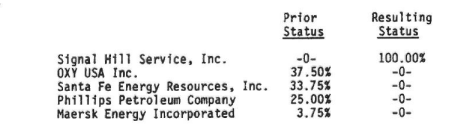
1991 Assignment to Signal Hill: MMS approved assignment of the lease to Signal Hill effective February 5, 1991. The assignment was approved without any provision under which the assignors agreed to be liable for decommissioning operations on the lease. MMS’s approval actually had the opposite effect, leaving such obligations to the assignee. The assignment was approved despite concerns within the MMS about the financial strength of Signal Hill and the technical competence of Pacific Operators Offshore Inc (POOI), the affiliate that would operate the facilities.
Comments:
The assignment to Signal Hill should have never been approved. The outcome was predictable.
The Devon, Oxy, and ConocoPhillips appeals are very strong and would seem to have a good chance of success. Perhaps that is why the IBLA decision is taking so long (nearly 5 years to date).
Given the uncertainty regarding this appeal, the absence of transparency about other potential decommissioning liabilities, and the uncertainties regarding the administration of predecessor liability, this is not the time to be relaxing financial assurance requirements and further exposing taxpayers to decommissioning risks.
This is the final day to comment on BOEM’s proposal:
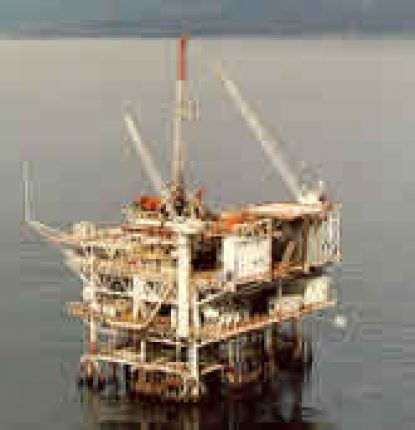
At a minimum, the fire will further delay and increase the cost of well plugging operations on Platform Habitat. Per BSEE’s borehole file, 17 wells remain to be permanently abandoned, 3 of which have yet to be temporarily abandoned. These wells are 23-44 years old, and have been inactive for 11 years.
If there is significant platform damage, the remediation delays and costs would be substantial, comparable to those associated with major Gulf platforms damaged by hurricanes. Structural damage could increase the urgency of removing the platform. Given California’s decommissioning quagmire, this would be a major challenge.
Who pays, and what does the financial assurance picture look like? Per the attached BOEM spreadsheet (excerpt pasted below):
The 2020 cost estimate for decommissioning Habitat was $44.3 million. That number is optimistic even if platform damage is minimal.
$13.6 million in supplemental assurance has been provided.
A third party guarantee has been secured.
The guarantee was provided by Freeport-McMoRan Oil & Gas (FMOG)
Per BOEM, FMOG is the guarantor for all DCOR leases. Unless BOEM has allowed otherwise, the guarantor pays all costs not covered by the lessees. Given the number of old platforms and California decommissioning challenges, the risks for FMOG are indeed large.
Although DCOR LLC is the current Habitat operator, the company owns only a 4.18% share of the project. CHANNEL ISLANDS CAPITAL, L.L.C., a private company about which little is known, holds a 95.82% share.
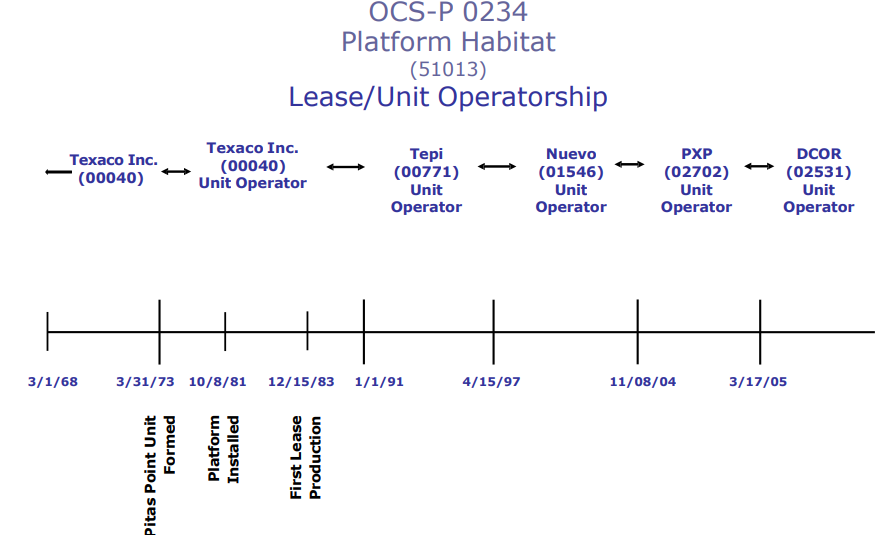
Should the 2 owners default, BOEM/MMA will look to the guarantor and predecessor lessees (see the chart below). Unfortunately for FMOG, they are both the guarantor and the predecessor lessee. FMOG acquired Plains Exploration & Production (PXP), the operator prior to DCOR. Nuevo Energy was acquired by PXP and thus also tracks back to FMOC. (This may explain FMOC’s decision to be a guarantor!).
Should FMOC fail to fulfill their obligation. Chevron would likely be the next target. The original Harvest partners were Texaco (operator) and Union Oil, both of which were acquired by Chevron.
TEPI=Texaco Expl. & Production. Nuevo Energy was acquired by Plains Expl.&Production (PXP), which was acquired by Freeport McMoRan Oil & Gas (FMOG)
Requesting a 60 day extension (double the comment period specified by BOEM)
Need more time to:
review the detailed proposed changes
conduct studies to inform agency
analyze the studies and data
consider alternatives
organize, complete, and review the findings of subject matter workgroups
In API’s favor:
Agencies have discretion on extending comment periods.
60 days is typically considered the minimum comment period; 90 days would have been more appropriate for this proposal.
API members are clearly affected parties.
The BOEM proposal relaxes financial assurance requirements for smaller companies while increasing predecessor lessee risk exposure. Those predecessors would typically be API members.
There are divisions within the industry which complicate trade association commenting.
On the other hand:
API’s letter is dated May 1, just one week prior to the end of the comment period.
The letter was not posted at Regulations.gov until May 6, 2 days before the end of the comment period. Only those tracking the comment letters would have been aware of the request even at this late date.
As of early this morning (May 7th), the docket still specifies a May 8 due date for comments.
An extension could be viewed as inequitable to other concerned parties who made special efforts to honor the deadline.
Comments:
This is why it’s best to specify a reasonable comment period at the time the regulation is proposed, and make it clear that there will be no extension. That way, everyone is treated the same.
For this proposal, 90 days would have been reasonable.
Given the number of significant issues that need to be addressed, the best outcome for this rule would be a re-proposal. See the comments submitted by John Smith and me.
Attached are my comments on BOEM’s proposed revisions to the decommissioning financial assurance regulations. These comments were submitted to Regulations.gov yesterday (3 days early 😀). Bud
Concluding Remarks
MMA’s highest priority must be assuring that facilities are safely decommissioned without public funding. Supplemental financial assurance determinations and lease assignment approvals must be consistent with that priority.
Predecessor liability is an important financial assurance principle, but legal boundaries and administrative procedures must be clearly established.
Safety and compliance are inextricably related to financial performance, and must be considered in determining supplemental assurance requirements.
Using reserve estimates to reduce supplemental assurance exposes taxpayers to geologic and accounting risks.
Unacceptable public risks have resulted from financial assurance decisions intended to advance offshore wind development.
Decommissioning financial assurance regulations are “instrumental in ensuring both environmental and fiscal responsibility.“- .natural resource management students
Increased environmental risks. (Accidents, hurricanes, and other events may introduce decommissioning risks that require both immediate and longer term attention and financial resources. Such incidents typically increase decommissioning costs by orders of magnitude, and can even bankrupt financially sound companies. See “Sad End for Taylor Energy.”)
Firms with lower credit ratings would no longer have to hold as much capital in reserve and would have a lower bar of entry into projects. (See comments by John Smith.)
The possibility of cascading economic impacts in the event that bankruptcy does occur. (Which predecessors will be affected and how? What about contractors? How long will bankruptcy litigation delay resolution of claims? Will bankruptcy court asset sales increase public financial, safety, and environmental risks?)
Taxpayers would be facing a portion of the risk. (Predecessors are only accountable for the facilities they installed, so holding predecessors liable doesn’t free the taxpayers from all financial risks.)
The entire energy sector faces increased risks when operating companies fail. (Prominent failures damage the reputation of the industry and the OCS program, with implications for the economy and national security.)
Before relaxing financial assurance requirements, BOEM should consider the role that lax lease assignment and financial assurance policies had in the growth of Fieldwood, Cox, Signal Hill, Black Elk, and other failed companies.
It’s clear the proposed rules have been designed to reduce financial burdens on OCS oil and gas operators, especially small independents. The proposed rules do this by:
Waiving the requirement of the operator/lessees to obtain supplemental financial assurance to cover decommissioning obligations if jointly and severally liable predecessors are determined to have the financial capability to cover the obligations.
Lowering the credit rating threshold BOEM uses for evaluating the financial health lessees and grantees from BBB- to BB- from S&P Global Ratings (S&P) or Baa3 to Ba3 from Moody’s Investor Service Inc.
Revising the level of BSEE probabilistic estimates of decommissioning cost used for determining the amount of supplemental financial assurance required from P70 to P50.
I don’t see any rationale for lowering the credit rating threshold, which would apply to both current and predecessor lessees. A BB- and a Ba3 rating is considered “non-investment grade” or “junk,” meaning the company is more vulnerable to adverse economic conditions, such as a downturn in oil and gas prices. Current market estimates place the 3-year probability of default for a BB- rating at approximately 12.5% to 13%. Lowering the credit rating significantly increases the risks of default by lessees and transfers the risk to the federal government and taxpayers.
Reducing the BSEE probabilistic criteria for determining the amount of supplemental financial insurance required from P70 to P50 means there is a 50% chance BSEE cost estimates for decommissioning are underestimated further increasing risks borne by the federal government and taxpayer.
BOEM should reverse course and maintain the current credit rating threshold (BBB- and Baa3) and the P70 criteria.





Restart seems likely for decommissioning financial assurance rule
Posted in Regulation, decommissioning, energy policy, tagged API, BOEM, Chevron, comments, decommissioning, financial assurance, NEFSA, proposed regulation, Shell on May 18, 2026| Leave a Comment »
Thankfully, from the standpoint of those of us whose primary concerns are the integrity of the OCS program and protecting taxpayers from decommissioning liabilities, the API comments (attached), along with those submitted by Shell and Chevron, have exposed the folly of eliminating financial assurance whenever there is a financially strong company somewhere in the lease chain of custody.
Mindful of ongoing and anticipated decommissioning liability battles, API effectively challenges the BOEM proposal on legal grounds. API also demonstrates why revisions intended to improve regulatory efficiency and increase production would do exactly the opposite. Excerpts from the API comments (emphasis added):
Further, foisting financial assurance obligations on predecessors will not achieve BOEM’s stated aims of financial “savings” and increased OCS oil and gas production; it more likely will do the opposite. The Proposed Rule would just shift financial assurance burdens to financially stronger predecessors, many of which remain engaged in the majority of leasing and production across the OCS and are far more likely to be future investors in increased OCS development and production. By contrast, nothing ensures that entities standing to benefit from the Proposed Rule will reinvest saved financial assurance premium dollars into OCS production; in fact, such entities largely do not explore or increase reserves, but merely buy pre-discovered reserves and produce them to a lower economic limit.
Nor would the Proposed Rule promote or save costs for future OCS transactions since, in the absence of any option for BOEM-demanded financial assurance from current interest holders, assignors will demand financial assurance at sufficiently conservative levels to address the risk of residual liability if assignees default on their obligations.
Even more problematically, the Proposed Rule would retroactively impose this new regulatory burden on entities that divested their OCS property interests years (or decades) earlier—in reliance on BOEM’s regulations that required their assignees to provide any supplemental financial assurance. Such entities are no longer in privity with BOEM, and have no control over current operations on those OCS properties. The Proposed Rule would reach back even to impose these obligations on predecessors that divested their interests before the 1997 regulatory imposition of joint and several liability for assignors (a time period on which the Proposed Rule is silent).
This novel and misguided approach allows, and even encourages, current interest holders to eschew their lease and grant obligations, and instead freely operate on the backs of predecessors and taxpayers. Meanwhile, current interest holders could choose to allocate little or no funding for end-of-life obligations like decommissioning whenever they desire to conclude production, file for bankruptcy, and leave BOEM to eventually issue decommissioning orders to predecessors that have not operated the grants and leases for years or even decades. This would create higher administrative and financial burdens for the government and system as a whole, including where no viable predecessor had accrued liability for decommissioning all facilities present on the lease or grant, and potential operational impacts that a predecessor has no obligation to cure.
This new proposed obligation on predecessors is arbitrary and capricious and unlawful on multiple grounds. It violates the rule against retroactivity by creating new federal liability stemming from already-completed transactions. It violates the agency change in position doctrine, particularly given that BOEM on multiple occasions has rejected precisely the same approach as in the Proposed Rule. It is unsupported, as it overstates the burdens under the discretionary Existing Rule, disregards repeated U.S. Government Accountability Office (“GAO”) and BOEM findings calling for more robust financial assurance by current interest holders, cites only anecdotal prior comments while ignoring the bulk of countervailing comments detailing reality on the OCS, and identifies no means by which BOEM can compel collect, and assess adequate financial information for all predecessor entities. And it is self contradictory, including by tying up more capital among entities producing the vast majority of oil and natural gas on the OCS.
Chevron points to their potential liability balance of ~ $2 billion for satisfying the decommissioning obligations of default owners:
John Smith and I do not agree with the industry support for the use of reserves as financial assurance. The margin of error in reserve, oil price, and decommissioning cost estimates, not to mention the potential for facility damage, the ever-changing political environment, and the administration challenges, present an unacceptably high risk for taxpayers. If companies want to guarantee decommissioning based on reserves, let them do so. Shell makes a good point about why it is especially important to prohibit the use of reserve estimates on a company-wide basis:
Lastly, kudos to the New England Fisherman’s Stewardship Association for raising the concern about financial assurance for decommissioning offshore wind facilities
Read Full Post »