Feeds:
Posts
Comments

Posts Tagged ‘well plugging and abandonment’

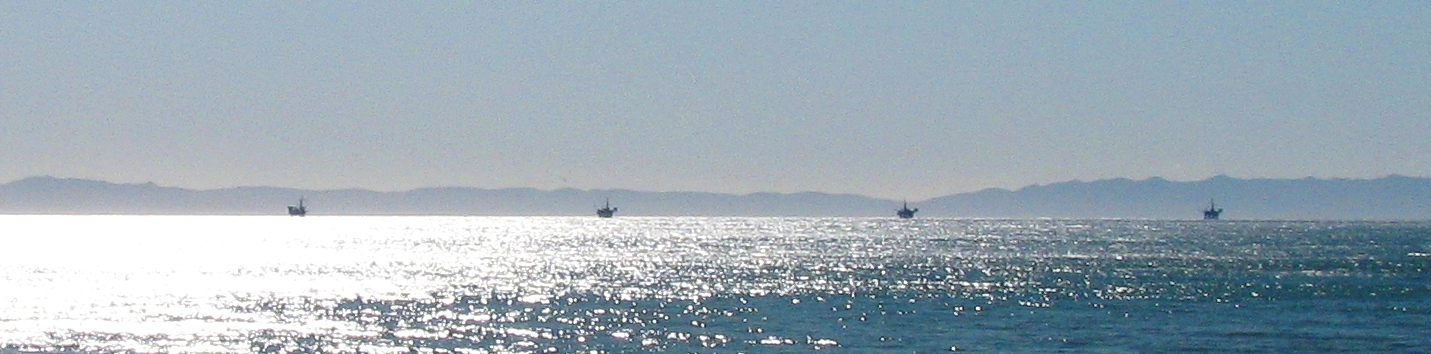
Santa Barbara Channel, Dos Cuadras Field platforms (L to R): Hillhouse, A, B, and C; Antandrus Wiki photo

As part of the recent focus on decommissioning and financial assurance requirements, I looked at borehole data for platforms A, B, and C on Lease OCS-P 0241 in the Santa Barbara Channel. Platform “A” is where a well blew out in 1969, permanently scarring the US offshore program. Observations:

  • There are 140 completed and unplugged wells on the 3 platforms. None of the wells on these platforms have been permanently plugged and only one is temporarily abandoned.
  • The latest available production information (2024 data) indicates ave. daily oil production of 3791 bopd for the lease, including 1901 bopd from Platform A, the highest production for any platform in the region in 2024.
  • 41 of the lease’s completed (unplugged) wells are on Platform A.
    • The number of these wells that are currently producing is not publicly available.
    • 30 of the completed Platform A wells were drilled prior to 1985.
    • The blowout well was the 5th well drilled from platform A. All 4 of the wells drilled prior to the 1/28/1969 blowout are still unplugged:
      • well A-20: spudded on 11/19/1968, reached total depth on 12/2/1968
      • well A-41: spudded on 11/27/1968, TD on 12/19/1968
      • well A-25: spudded on 12/18/1968, TD on 12/28/1969
      • well A-38: spudded on 1/12/1969, TD on 1/24/1969
      • Note how quickly the wells were drilled. The wells were shallow (2299-4051′ true vertical depth), and the operator (Union Oil) saved time by omitting a casing string. (This decision was a root cause of the blowout and thus changed history 😡)

Lease documents and regulations at 30 CFR § 250.1710 require that all wells be permanently plugged within one year of lease termination. For leases like 0241 that are still active, 30 CFR § 250.1711 stipulates that BSEE will order a well to be permanently plugged if the well poses a hazard to safety or the environment, or is not useful for lease operations and is not capable of oil, gas, or sulphur production in paying quantities. In the Gulf of America Region, the policy is to require wells that have not been used in the past 5 years to be permanently plugged. Allowing old wells to remain unplugged is neither prudent nor consistent with the regulations.
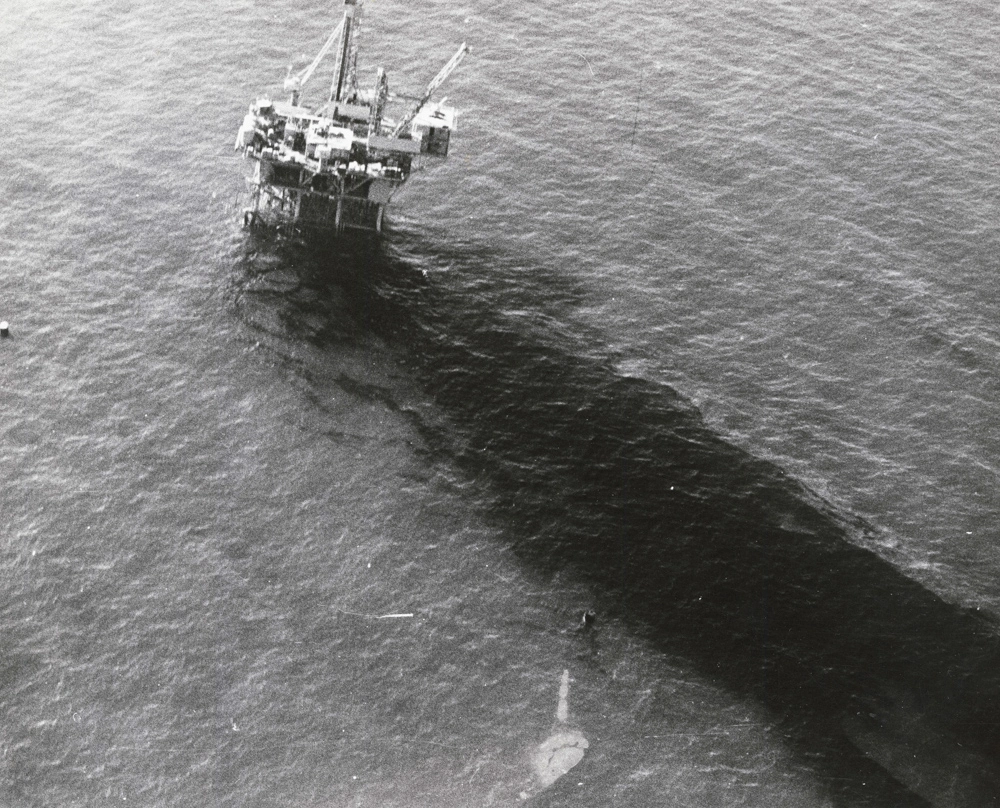

Platform A during 1969 blowout

Read Full Post »

At a minimum, the fire will further delay and increase the cost of well plugging operations on Platform Habitat. Per BSEE’s borehole file, 17 wells remain to be permanently abandoned, 3 of which have yet to be temporarily abandoned. These wells are 23-44 years old, and have been inactive for 11 years.

If there is significant platform damage, the remediation delays and costs would be substantial, comparable to those associated with major Gulf platforms damaged by hurricanes. Structural damage could increase the urgency of removing the platform. Given California’s decommissioning quagmire, this would be a major challenge.

Who pays, and what does the financial assurance picture look like? Per the attached BOEM spreadsheet (excerpt pasted below):

  • The 2020 cost estimate for decommissioning Habitat was $44.3 million. That number is optimistic even if platform damage is minimal.
  • $13.6 million in supplemental assurance has been provided.
  • A third party guarantee has been secured.
  • The guarantee was provided by Freeport-McMoRan Oil & Gas (FMOG)
  • Per BOEM, FMOG is the guarantor for all DCOR leases. Unless BOEM has allowed otherwise, the guarantor pays all costs not covered by the lessees. Given the number of old platforms and California decommissioning challenges, the risks for FMOG are indeed large.

Although DCOR LLC is the current Habitat operator, the company owns only a 4.18% share of the project. CHANNEL ISLANDS CAPITAL, L.L.C., a private company about which little is known, holds a 95.82% share.

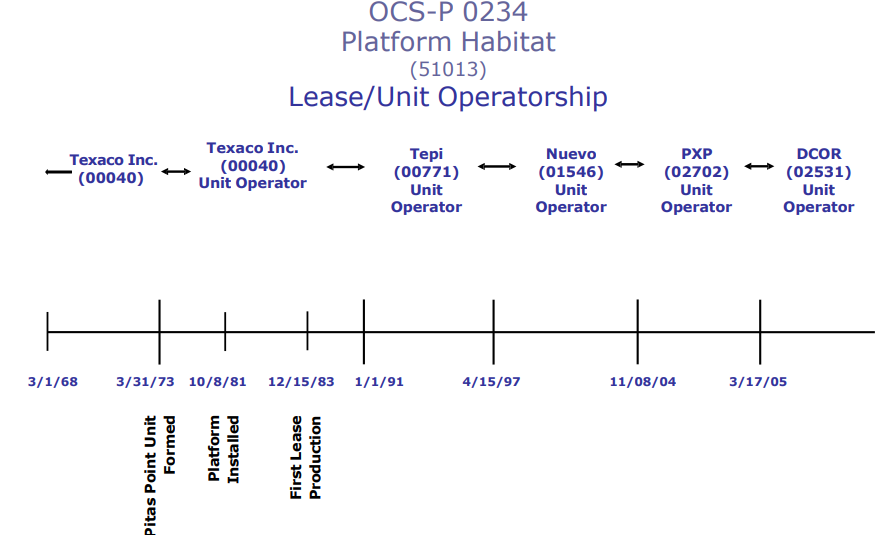
Should the 2 owners default, BOEM/MMA will look to the guarantor and predecessor lessees (see the chart below). Unfortunately for FMOG, they are both the guarantor and the predecessor lessee. FMOG acquired Plains Exploration & Production (PXP), the operator prior to DCOR. Nuevo Energy was acquired by PXP and thus also tracks back to FMOC. (This may explain FMOC’s decision to be a guarantor!).

Should FMOC fail to fulfill their obligation. Chevron would likely be the next target. The original Harvest partners were Texaco (operator) and Union Oil, both of which were acquired by Chevron.

TEPI=Texaco Expl. & Production. Nuevo Energy was acquired by Plains Expl.&Production (PXP), which was acquired by Freeport McMoRan Oil & Gas (FMOG)


Read Full Post »

The subject Nature Energy paper is helpful in that it contributes to the important dialogue on the financial aspects of offshore decommissioning. There have been numerous posts on that topic on this blog. The use of Federal funds to cover well abandonment expenses for OCS wells, although rather limited to date, is a major disappointment for those of us who have worked hard to prevent such an outcome.

The data in the paper appear to be reasonably accurate. However, there is one glaring error regarding Pacific operations, and the reference to the Macondo blowout in the environmental discussion is rather provocative and misleading.

Per the authors:

California wells are drilled in relatively shallow water—mostly less than 100 feet—while GoM wells can be in up to 10,000 feet of water.

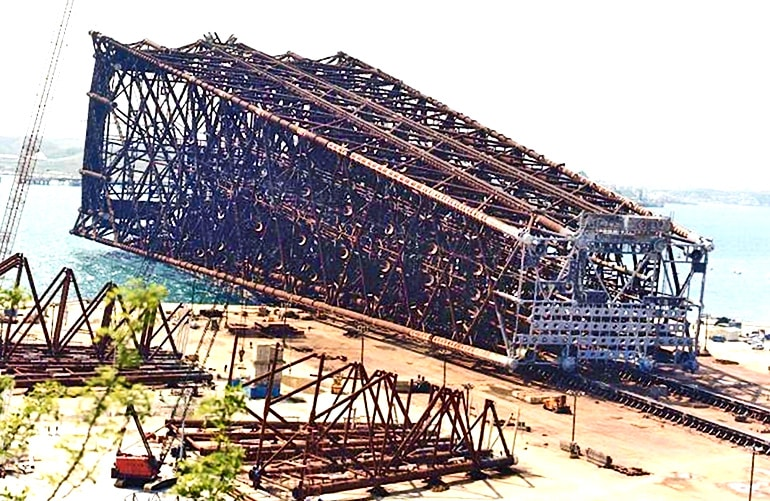
California’s fault block shelf drops off very quickly, and deepwater drilling activity has been common for decades. Of the 23 platforms in Federal waters, only Platform Gina is in <100′ of water (95′). The other platforms are in water depths of 154 to 1178′. Six of the platforms are in >600′ of water and 2 are in >1000′. Platform Harmony (jacket pictured below) is one of the world’s largest and heaviest steel tower platforms. Relative to the numbers of facilities, the decommissioning challenges offshore California are more daunting and complex than those in the Gulf. This includes the financial liability aspects.

Jacket for Platform Harmony

With regard to the environmental risks, the Nature Energy paper’s reference to the Macondo blowout, while muted, is what some media outlets embraced. Per the authors:

Releases from improperly abandoned wells will probably be chronic and small compared with Macondo, but the underlying biochemical and ecological processes that influence the ecological impacts have many similarities.

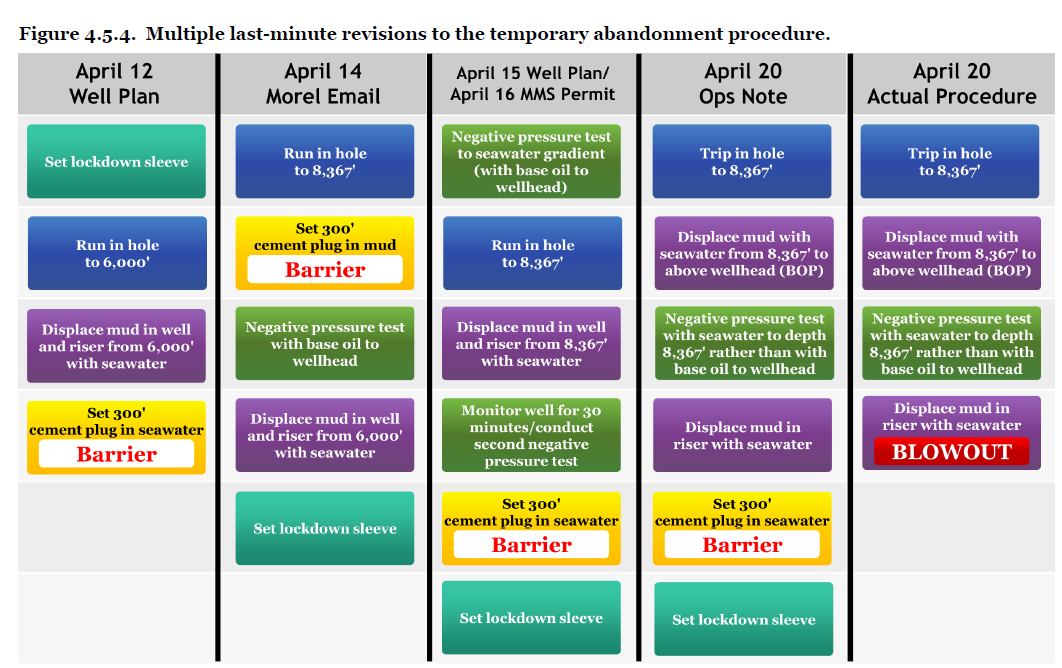
The Macondo well blew out while it was being suspended in preparation for subsequent completion operations. Ill advised changes to the well suspension plan were among the primary contributing factors to the blowout (see diagram below). The Macondo well was entirely different from the depleted end-of-life wells that are the subject of the paper.

Some media outlets ran with the Macondo angle, weak as it was. This ABC news piece featured numerous Macondo pictures. Other outlets noted that Macondo was a temporarily abandoned well, which it was not. The Macondo well never got to that point.

National Commission, Chief Counsel’s Report, p. 132

Read Full Post »