Feeds:
Posts
Comments

Posts Tagged ‘DCOR’

John Smith’s update on California OCS Decommissioning Obligations is attached. His comments:

Chevron and FMC hold joint and several liability responsibilities for many platforms and all of those operated by DCOR. This reflects Chevron’s long history in developing CA onshore and offshore oil and gas resources. A 2020 report issued by BSEE estimated the nine platforms operated by DCOR had a combined decommissioning cost of $397 million. The actual cost could be 2-3-fold higher based on estimates for decommissioning California state water platforms prepared by experienced decommissioning consultants.

Chevron may be checking out of California by moving its corporate offices to Houston, but as someone once said about decommissioning – referring to the popular Eagles Hotel California song “You can check out but you can never leave.”

Official decommissioning anthem 😉: Hotel California

Excerpt from the lyrics – Hotel California, Eagles, 1976

Last thing I remember
I was running for the door
I had to find the passage back
To the place I was before
“Relax, ” said the night man
“We are programmed to receive
You can check out any time you like
But you can never leave”

Read Full Post »

At a minimum, the fire will further delay and increase the cost of well plugging operations on Platform Habitat. Per BSEE’s borehole file, 17 wells remain to be permanently abandoned, 3 of which have yet to be temporarily abandoned. These wells are 23-44 years old, and have been inactive for 11 years.

If there is significant platform damage, the remediation delays and costs would be substantial, comparable to those associated with major Gulf platforms damaged by hurricanes. Structural damage could increase the urgency of removing the platform. Given California’s decommissioning quagmire, this would be a major challenge.

Who pays, and what does the financial assurance picture look like? Per the attached BOEM spreadsheet (excerpt pasted below):

  • The 2020 cost estimate for decommissioning Habitat was $44.3 million. That number is optimistic even if platform damage is minimal.
  • $13.6 million in supplemental assurance has been provided.
  • A third party guarantee has been secured.
  • The guarantee was provided by Freeport-McMoRan Oil & Gas (FMOG)
  • Per BOEM, FMOG is the guarantor for all DCOR leases. Unless BOEM has allowed otherwise, the guarantor pays all costs not covered by the lessees. Given the number of old platforms and California decommissioning challenges, the risks for FMOG are indeed large.

Although DCOR LLC is the current Habitat operator, the company owns only a 4.18% share of the project. CHANNEL ISLANDS CAPITAL, L.L.C., a private company about which little is known, holds a 95.82% share.

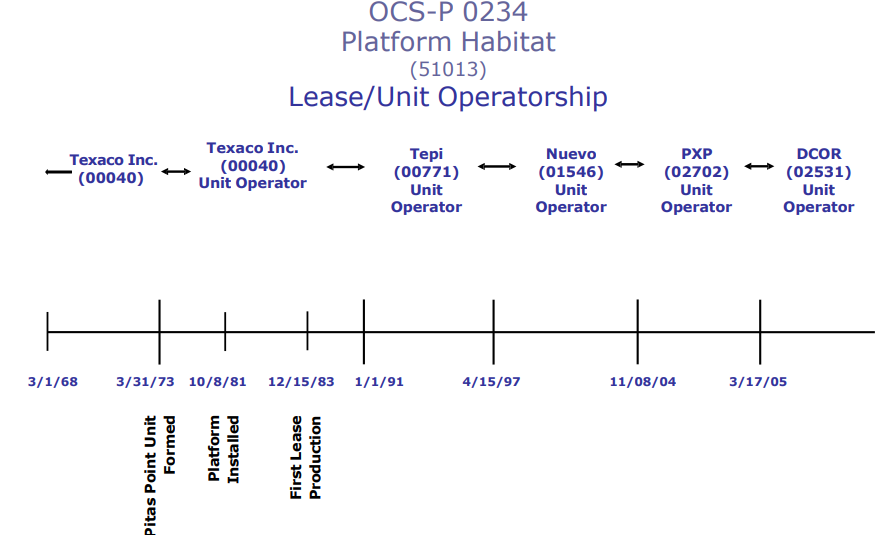
Should the 2 owners default, BOEM/MMA will look to the guarantor and predecessor lessees (see the chart below). Unfortunately for FMOG, they are both the guarantor and the predecessor lessee. FMOG acquired Plains Exploration & Production (PXP), the operator prior to DCOR. Nuevo Energy was acquired by PXP and thus also tracks back to FMOC. (This may explain FMOC’s decision to be a guarantor!).

Should FMOC fail to fulfill their obligation. Chevron would likely be the next target. The original Harvest partners were Texaco (operator) and Union Oil, both of which were acquired by Chevron.

TEPI=Texaco Expl. & Production. Nuevo Energy was acquired by Plains Expl.&Production (PXP), which was acquired by Freeport McMoRan Oil & Gas (FMOG)


Read Full Post »

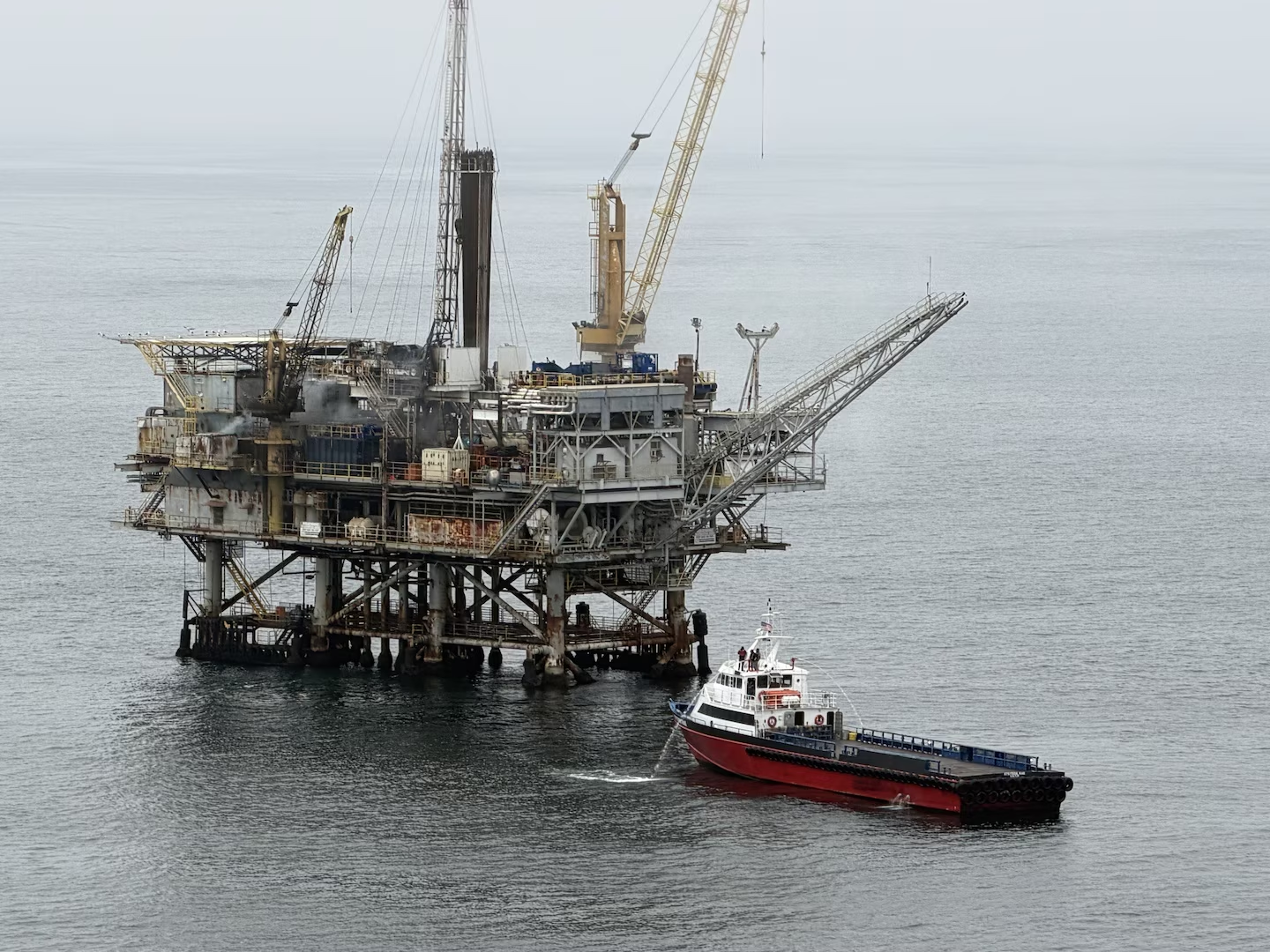
The Platform Habitat fire was extinguished at 11:40 a.m. on 5/11/2026 after burning for 5 hours.

All 26 workers were safely evacuated from DCOR’s Platform Habitat. The big question now is the fitness of the structure for continuing well plugging/abandonment and platform decommissioning.

As indicated in the attached letter, BSEE had informed DCOR that their Pitas Point Unit leases (where Platform Habitat is located) expired on 3/15/2016 owing to the cessation of well operations 6 months prior. Following the Interior Board of Land Appeals (IBLA) May 7, 2021 affirmation of BSEE’s directive, DCOR was notified that they must permanently plug all wells within one year of the lease termination (i.e. one year after the 2021 IBLA decision). I’ll include the informative IBLA decision in a future post.

Although details have not been shared, it appears that well plugging operations were still ongoing on 5/11/2026 when the fire occurred. According to BSEE’s borehole file, most of the Habitat wells have been temporarily abandoned, but few have been permanently abandoned, and several are still completed (i.e. neither temporarily nor permanently abandoned).

The risks and costs associated with delaying well plugging and abandonment have once again been demonstrated at Habitat. Fortunately, there were no casualties or pollution.

With regard to overall safety compliance, DCOR is the violations leader in the Pacific Region. In 2025 and 2026 (YTD) they were cited for 70 violations, 66 of which required component or facility shut-ins. The age of the 9 DCOR platforms (installed by others between 1968 and 1984) has likely contributed to the compliance challenges.

BSEE spreadsheets for 2020-2024 show 6 incidents at Platform Habitat. BSEE’s incident summaries are pasted in the second attachment.

Neither DCOR nor BSEE has issued a statement on the Habitat fire.

This serious incident further demonstrates the concerns expressed by John Smith and me about the relaxed decommissioning financial assurance regulations proposed by BOEM.

Read Full Post »

  • Crew safely evacuated
  • Prompt response by the USCG and local fire agencies
  • Gas leak during decommissioning operations
  • Fire began at 0700 PT; controlled by 1100 PT
  • 45 year old platform; no longer producing
  • Operated by DCOR LLC
  • No environmental threat
  • Habitat was the only California OCS platform that produced dry natural gas (minimal oil or condensate)
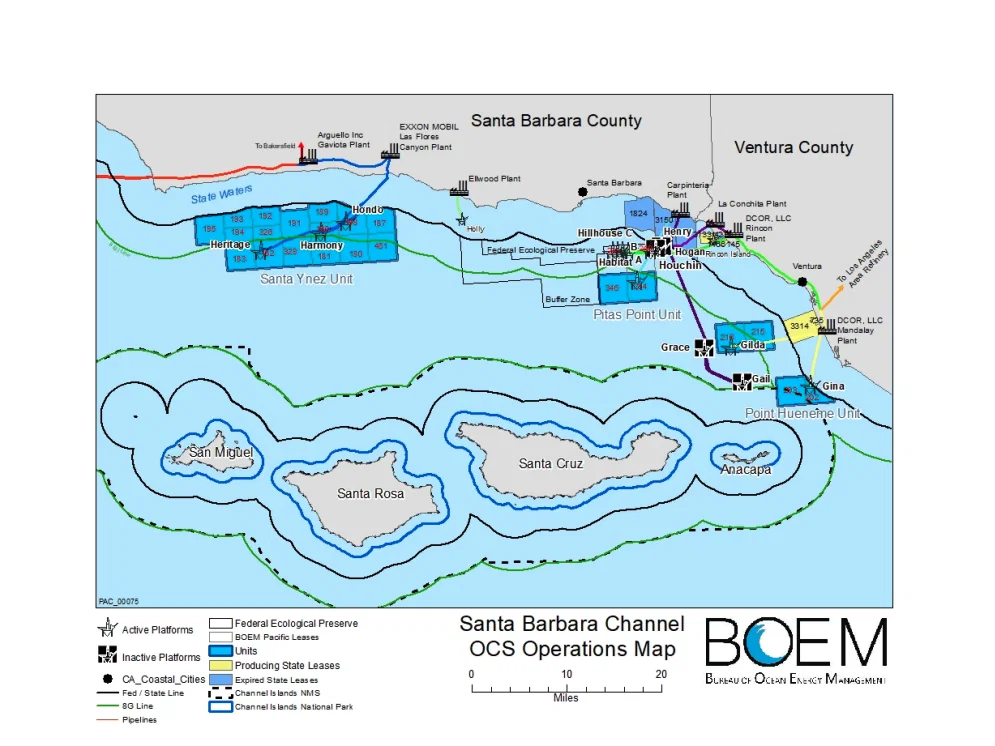
Habitat is SSE of Santa Barbara

Read Full Post »

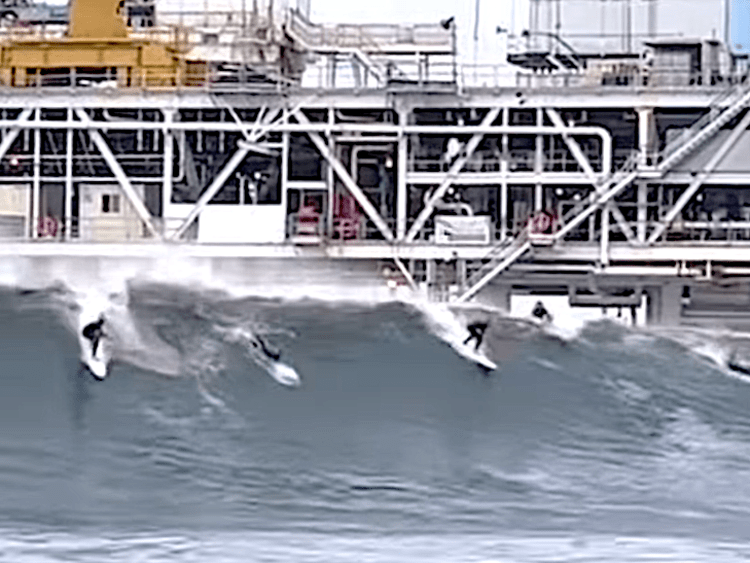
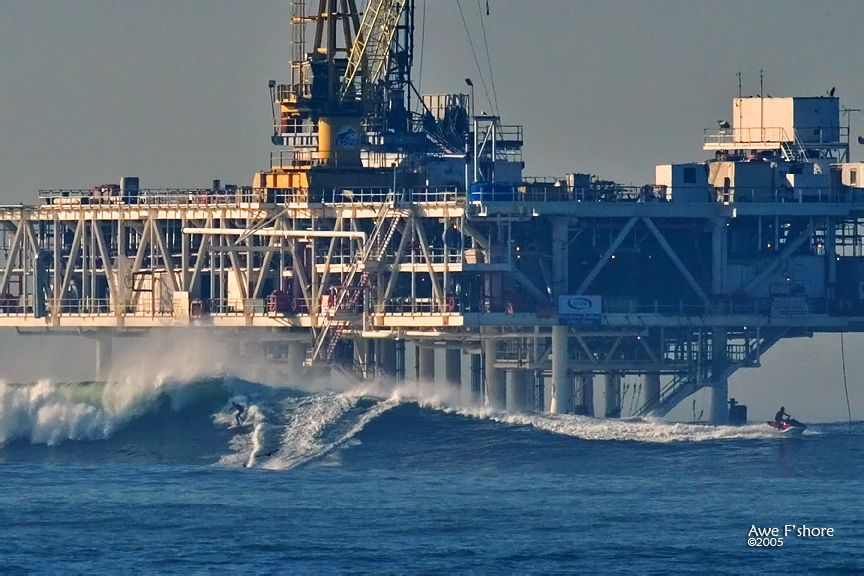
Massive swell at Platform Esther, 12/24/2024 – Christmas gift for surfers

Eloquent eulogy by DCOR (platform operator) CEO Alan Templeton: Last Sunday, August 10, I joined a small group of DCOR personnel on Platform Esther to witness her final moments of operation. At exactly 3:00 p.m., we pressed the ESD on the production deck, and one by one, the sounds of compressors and pumps faded until the platform fell silent — a profound and bittersweet moment in California’s energy history.

For over half a century, Esther stood off the coast of Orange County, first installed in the early 1960s as one of California’s iconic man-made oil islands. She blended into the horizon while quietly producing oil and gas, surviving storms, and later being rebuilt in 1985 into the platform we know today. More than just steel and pilings, Esther was a proving ground for innovation, a dependable asset, and a source of pride for the men and women who worked safely on her decks.

While she has now been permanently shut in, her legacy remains — a testament to the ingenuity, resilience, and dedication that have defined California’s offshore industry for generations.

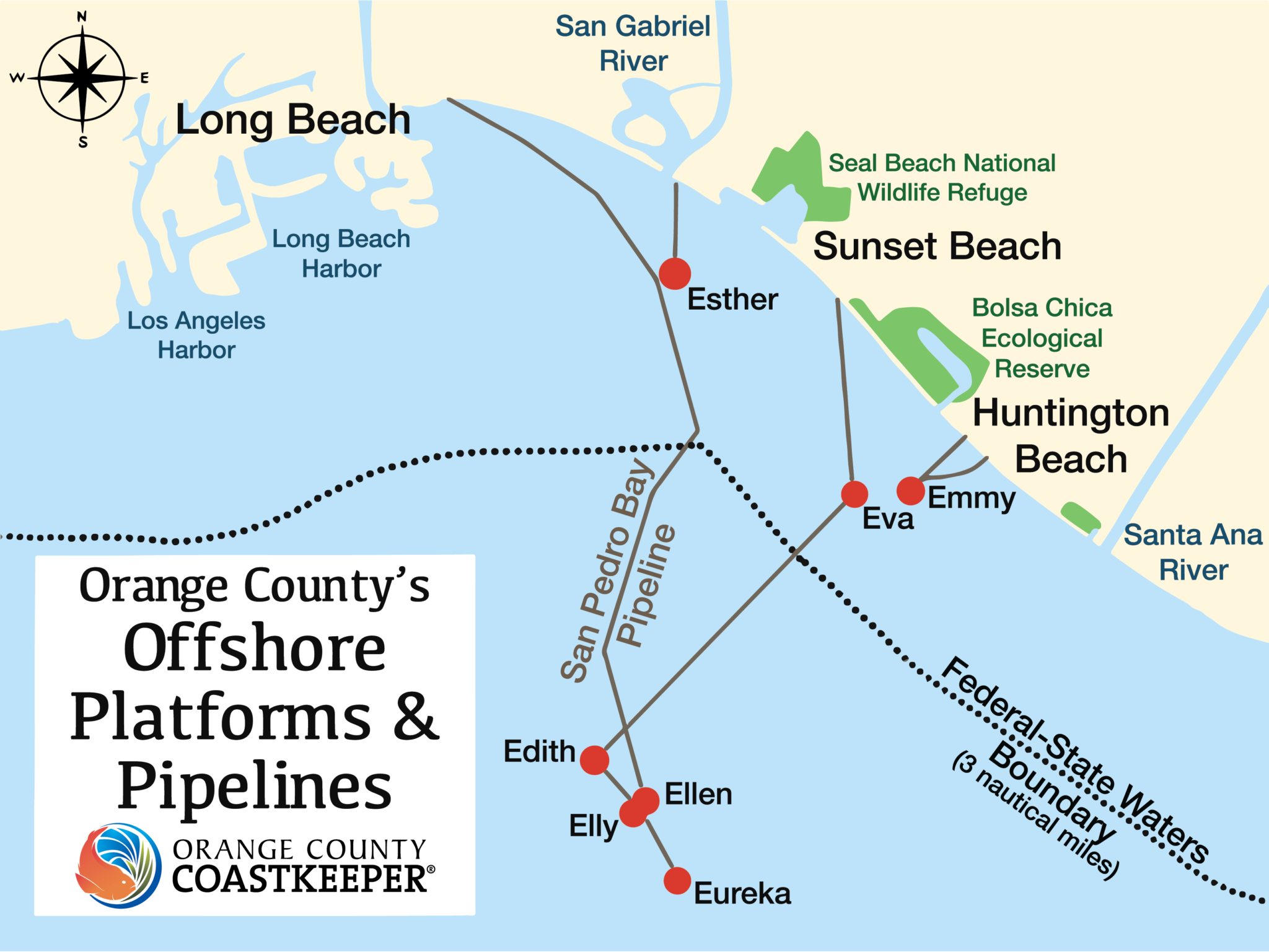
Litigation prematurely ended production at Esther, which would have had an estimated 15 more years of operative life. The attached settlement agreement, shared by John Smith, ends a dispute between the State Lands Commission and DCOR over repurposing a pipeline to transport oil from state Platform Eva to Federal Platform Edith (diagram above).

In exchange for relinquishing its mineral rights and decommissioning Platform Esther, the settlement grants DCOR a $10 million royalty credit on future oil produced from Platform Eva. This credit is significantly less than the value of remaining production from Esther.

Platform Esther, is one of three remaining oil production platforms in California state waters.

Read Full Post »

Last month (12/2021), BSEE finally posted the 2020 incident statistics. Unfortunately, no details or incident summaries are provided for the 6 fatalities. The fatalities are simply classified as “occupational” (4) or “non-occupational” (2). As a result, we still know very little about these fatal incidents 13 – 24 months after they occurred.

The BSEE spreadsheet advises that 3 of the 4 “non-occupational” fatalities are being investigated, but the reports are still “pending.” Why the long delay? The National Commission, BOEMRE-CG, and NAE investigations of the Macondo tragedy were completed (and reports published) in less time.

No explanation is provided as to why the 4th occupational fatality is not being investigated.

Also, investigations of the preparedness and response aspects of the 2 non-occupational fatalities would have been beneficial. What was the cause of death? What medical screening procedures were in place? What treatment capabilities were available at the facility? How much time was required to transport the workers to hospitals? These are important considerations for the offshore community.

Below is a summary of the publicly available information for the 6 fatalities:

  • 1/14/2020: A worker died on a Diamond drillship on a lease (Mississippi Canyon 822) operated by BP. According to BSEE this was a non-occupational fatality. Per the listing of investigations, no investigation was conducted.
  • 5/16/2020: A worker died on a Fieldwood platform (Ewing Bank 826 A). Per BSEE, this was an occupational fatality and the investigation is still pending. There were no media reports or company announcements.
  • 6/2/2020: A worker died on the Valaris DS-18 drillship working for EnVen Energy at Green Canyon 767. Per BSEE, this was a non-occupational fatality and no investigation was conducted.
  • 6/20/2020: A worker died on at the Green Canyon 18 A platform operated by Talos. Per BSEE, this was an occupational fatality but no investigation is indicated for this incident. No media reports or company announcements could be found.
  • 8/23/2020: A worker died on the Pacific Khamsin drillship working for Total at Garden Banks 1003. A month later, at an Investors’ Day presentation, Total announced that the incident occurred while the crew was preparing to move the rig to avoid Tropical Storm Laura. Total’s statement included this defensive statement: “This is a routine operation that was executed with no time pressure as the rig disconnection had been decided well in advance.” Per Total, the findings of their investigation were shared with the regulators in Sept. 2020, but BSEE advises that their investigation is still pending.
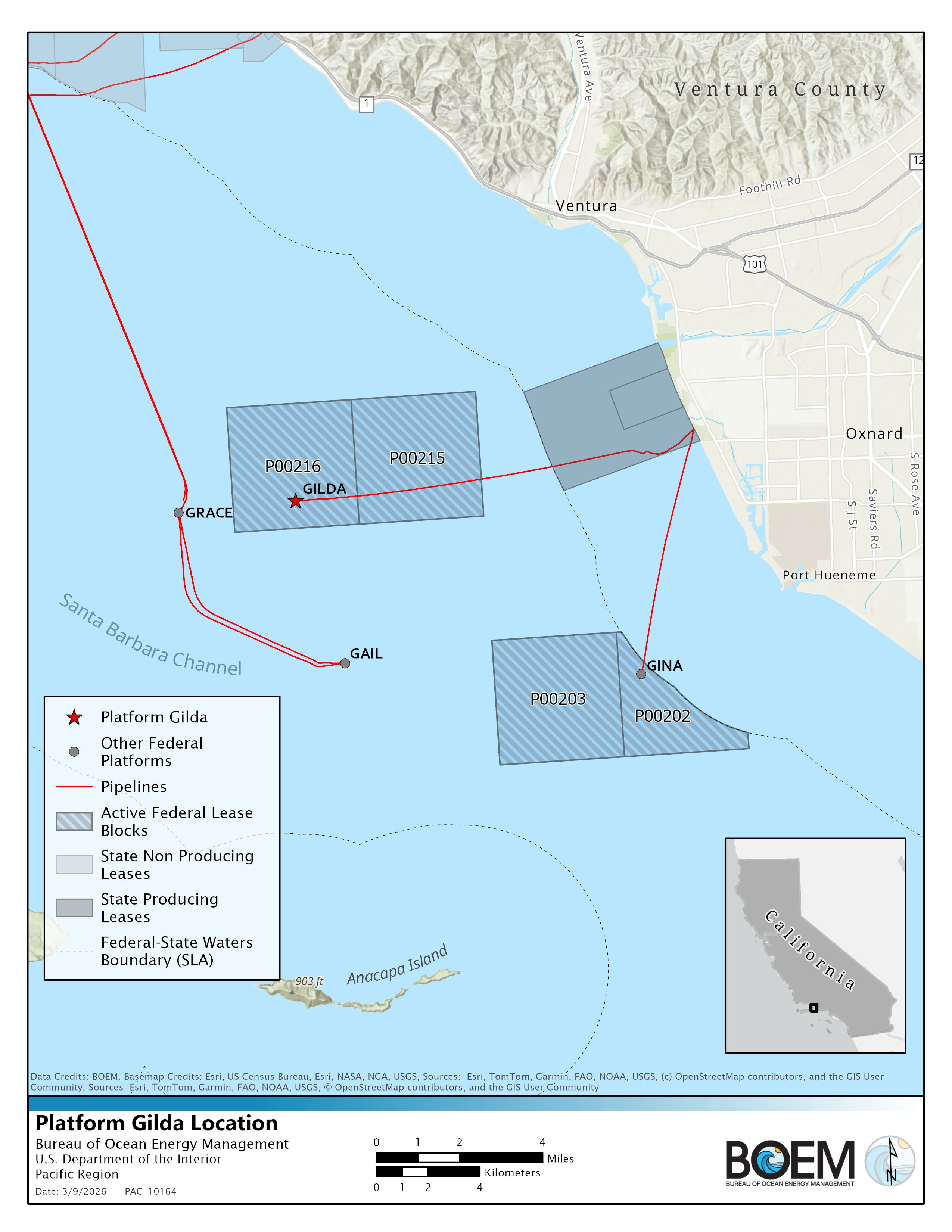
  • 12/2/2020: A worker died on DCOR’s Platform Gilda in the Santa Barbara Channel offshore California. The BSEE investigations update provides no information on the status of the investigation. Per local media, 3 men fell from the platform and others jumped into the water to assist. No information is provided on the reason why the 3 men fell.

The number of US OCS fatalities remains unacceptably high, and timely data sharing and investigations are needed to better assess causes and trends. In that regard, this recommendation from the 2016 National Academies report entitled “Strengthening the Safety Culture of the Offshore Oil and Gas Industry” merits further industry/government attention and action:

Recommendation 4.2.2: Because accident, incident, and inspection data all are needed to identify and understand safety risks and corrective actions, the committee recommends full transparency such that regulators make all these data readily available to the public in a timely way, taking into consideration applicable confidentiality requirements.

Read Full Post »