Feeds:
Posts
Comments

Posts Tagged ‘platform habitat’

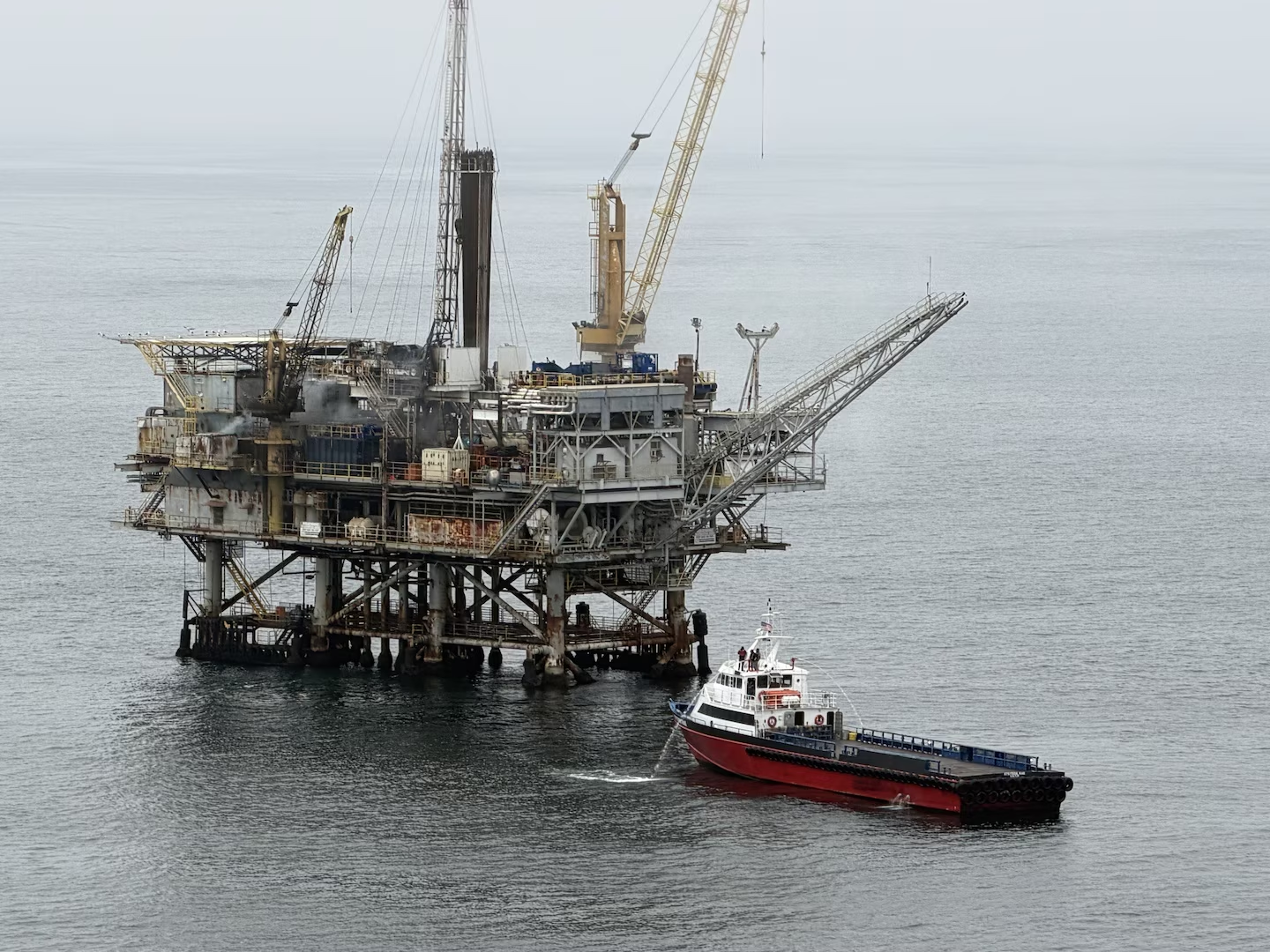
The Platform Habitat fire was extinguished at 11:40 a.m. on 5/11/2026 after burning for 5 hours.

All 26 workers were safely evacuated from DCOR’s Platform Habitat. The big question now is the fitness of the structure for continuing well plugging/abandonment and platform decommissioning.

As indicated in the attached letter, BSEE had informed DCOR that their Pitas Point Unit leases (where Platform Habitat is located) expired on 3/15/2016 owing to the cessation of well operations 6 months prior. Following the Interior Board of Land Appeals (IBLA) May 7, 2021 affirmation of BSEE’s directive, DCOR was notified that they must permanently plug all wells within one year of the lease termination (i.e. one year after the 2021 IBLA decision). I’ll include the informative IBLA decision in a future post.

Although details have not been shared, it appears that well plugging operations were still ongoing on 5/11/2026 when the fire occurred. According to BSEE’s borehole file, most of the Habitat wells have been temporarily abandoned, but few have been permanently abandoned, and several are still completed (i.e. neither temporarily nor permanently abandoned).

The risks and costs associated with delaying well plugging and abandonment have once again been demonstrated at Habitat. Fortunately, there were no casualties or pollution.

With regard to overall safety compliance, DCOR is the violations leader in the Pacific Region. In 2025 and 2026 (YTD) they were cited for 70 violations, 66 of which required component or facility shut-ins. The age of the 9 DCOR platforms (installed by others between 1968 and 1984) has likely contributed to the compliance challenges.

BSEE spreadsheets for 2020-2024 show 6 incidents at Platform Habitat. BSEE’s incident summaries are pasted in the second attachment.

Neither DCOR nor BSEE has issued a statement on the Habitat fire.

This serious incident further demonstrates the concerns expressed by John Smith and me about the relaxed decommissioning financial assurance regulations proposed by BOEM.
Read Full Post »

  • Crew safely evacuated
  • Prompt response by the USCG and local fire agencies
  • Gas leak during decommissioning operations
  • Fire began at 0700 PT; controlled by 1100 PT
  • 45 year old platform; no longer producing
  • Operated by DCOR LLC
  • No environmental threat
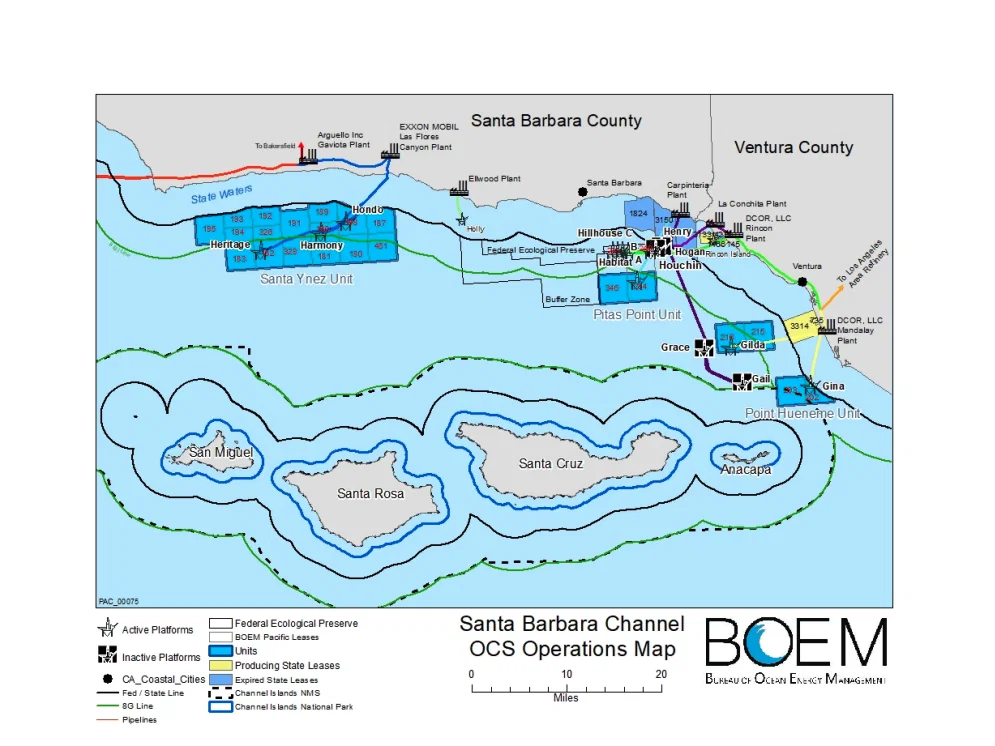
  • Habitat was the only California OCS platform that produced dry natural gas (minimal oil or condensate)
Habitat is SSE of Santa Barbara

Read Full Post »

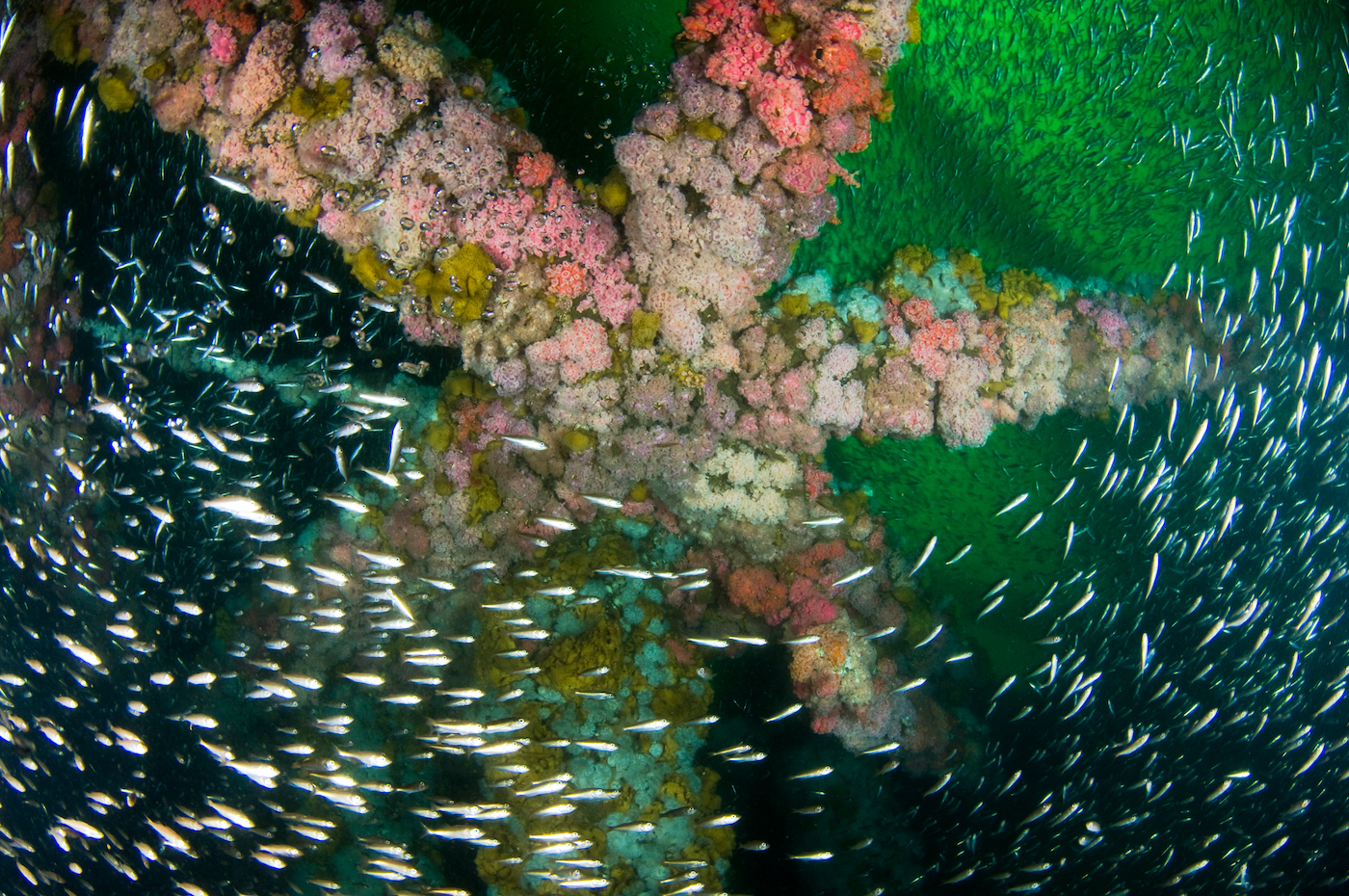
PNAS: “among the most productive marine fish habitats globally”
beneath Platform Gilda, Santa Barbara Channel

These platforms are habitat for millions of animals. My opinion is that it’s immoral to kill huge numbers of animals in any kind of habitat.

Dr. Milton Love, UCSB marine biologist

Inexplicably, BSEE’s Record of Decision (ROD) for the Programmatic Environmental Impact Statement on Pacific OCS Decommissioning (EIS cost: $1,604,056) endorses such habitat destruction by designating the most environmentally harmful, unsafe, punitive, and costly alternative as the “preferred alternative.”

Alternative 1 (the preferred alternative) calls for “the complete removal of platforms, topside, conductors, the platform jackets to at least 4.6 m (15 ft) below the mud line, and the complete removal of pipelines, power cables, and other subsea infrastructure (i.e., wells, obstructions, and facilities).”

Ironically, the ROD correctly acknowledges that alternative 2 (partial removal) is environmentally preferable. So what drove the decision to select the alternative that destroys “the most productive marine habitats per unit area in the world?” Was there pressure to choose the alternative that is most punitive to an industry that is despised by California activists? If so, their schadenfreude is certain to be delayed by administrative and legal challenges that draw further attention to the social costs and environmental damage associated with “complete removal.”

In 2020, BOEM estimated the total cost of decommissioning the 23 Federal offshore platforms at $1.7 billion, and today’s real costs are likely to be much higher. Also, keep in mind that some thorny decommissioning liability issues remain to be resolved, particularly with regard to Platforms Hogan and Houchin.

The decommissioning costs for Hogan and Houchin are estimated by BOEM at $85.6 million, even though the cost of completing removing Platform Holly (single platform in similar water depth in CA State waters) may reach $475 million. Per the BOEM data, there is no collateral, supplemental financial assurance, or third party guarantee that could defray the Hogan and Houchin costs. The extent to which prior lessees could be held accountable is questionable given that the lease was assigned to (now bankrupt) Signal Hill in 1991, well before the predecessor liability language was added to the MMS bonding rule. Irregularities in the management of Signal Hill’s Abandonment Escrow Account for Hogan and Houchin further complicate the liability issues.

The path for timely facility decommissioning with the least environmental damage and safety risk has two essential elements:

Absent those steps, the noise will continue, the platforms will remain in place, and the best outcome for all parties will not be achieved.

Read Full Post »