Thankfully, from the standpoint of those of us whose primary concerns are the integrity of the OCS program and protecting taxpayers from decommissioning liabilities, the API comments (attached), along with those submitted by Shell and Chevron, have exposed the folly of eliminating financial assurance whenever there is a financially strong company somewhere in the lease chain of custody.
Mindful of ongoing and anticipated decommissioning liability battles, API effectivelychallenges the BOEM proposal on legal grounds. API also demonstrates why revisions intended to improve regulatory efficiency and increase production would do exactly the opposite. Excerpts from the API comments (emphasis added):
Further, foisting financial assurance obligations on predecessors will not achieve BOEM’s stated aims of financial “savings” and increased OCS oil and gas production; it more likely will do the opposite. The Proposed Rule would just shift financial assurance burdens to financially stronger predecessors, many of which remain engaged in the majority of leasing and production across the OCS and are far more likely to be future investors in increased OCS development and production. By contrast, nothing ensures that entities standing to benefit from the Proposed Rule will reinvest saved financial assurance premium dollars into OCS production; in fact, such entities largely do not explore or increase reserves, but merely buy pre-discovered reserves and produce them to a lower economic limit.
Nor would the Proposed Rule promote or save costs for future OCS transactions since, in the absence of any option for BOEM-demanded financial assurance from current interest holders, assignors will demand financial assurance at sufficiently conservative levels to address the risk of residual liability if assignees default on their obligations.
Even more problematically, the Proposed Rule would retroactively impose this new regulatory burden on entities that divested their OCS property interests years (or decades) earlier—in reliance on BOEM’s regulations that required their assignees to provide any supplemental financial assurance. Such entities are no longer in privity with BOEM, and have no control over current operations on those OCS properties. The Proposed Rule would reach back even to impose these obligations on predecessors that divested their interests before the 1997 regulatory imposition of joint and several liability for assignors (a time period on which the Proposed Rule is silent).
This novel and misguided approach allows, and even encourages, current interest holders to eschew their lease and grant obligations, and instead freely operate on the backs of predecessors and taxpayers. Meanwhile, current interest holders could choose to allocate little or no funding for end-of-life obligations like decommissioning whenever they desire to conclude production, file for bankruptcy, and leave BOEM to eventually issue decommissioning orders to predecessors that have not operated the grants and leases for years or even decades. This would create higher administrative and financial burdens for the government and system as a whole, including where no viable predecessor had accrued liability for decommissioning all facilities present on the lease or grant, and potential operational impacts that a predecessor has no obligation to cure.
This new proposed obligation on predecessors is arbitrary and capricious and unlawful on multiple grounds. It violates the rule against retroactivity by creating new federal liability stemming from already-completed transactions. It violates the agency change in position doctrine, particularly given that BOEM on multiple occasions has rejected precisely the same approach as in the Proposed Rule. It is unsupported, as it overstates the burdens under the discretionary Existing Rule, disregards repeated U.S. Government Accountability Office (“GAO”) and BOEM findings calling for more robust financial assurance by current interest holders, cites only anecdotal prior comments while ignoring the bulk of countervailing comments detailing reality on the OCS, and identifies no means by which BOEM can compel collect, and assess adequate financial information for all predecessor entities. And it is self contradictory, including by tying up more capital among entities producing the vast majority of oil and natural gas on the OCS.
Chevron points to their potential liability balance of ~ $2 billion for satisfying the decommissioning obligations of default owners:
John Smith and I do not agree with the industry support for the use of reserves as financial assurance. The margin of error in reserve, oil price, and decommissioning cost estimates, not to mention the potential for facility damage, the ever-changing political environment, and the administration challenges, present an unacceptably high risk for taxpayers. If companies want to guarantee decommissioning based on reserves, let them do so. Shell makes a good point about why it is especially important to prohibit the use of reserve estimates on a company-wide basis:
Requesting a 60 day extension (double the comment period specified by BOEM)
Need more time to:
review the detailed proposed changes
conduct studies to inform agency
analyze the studies and data
consider alternatives
organize, complete, and review the findings of subject matter workgroups
In API’s favor:
Agencies have discretion on extending comment periods.
60 days is typically considered the minimum comment period; 90 days would have been more appropriate for this proposal.
API members are clearly affected parties.
The BOEM proposal relaxes financial assurance requirements for smaller companies while increasing predecessor lessee risk exposure. Those predecessors would typically be API members.
There are divisions within the industry which complicate trade association commenting.
On the other hand:
API’s letter is dated May 1, just one week prior to the end of the comment period.
The letter was not posted at Regulations.gov until May 6, 2 days before the end of the comment period. Only those tracking the comment letters would have been aware of the request even at this late date.
As of early this morning (May 7th), the docket still specifies a May 8 due date for comments.
An extension could be viewed as inequitable to other concerned parties who made special efforts to honor the deadline.
Comments:
This is why it’s best to specify a reasonable comment period at the time the regulation is proposed, and make it clear that there will be no extension. That way, everyone is treated the same.
For this proposal, 90 days would have been reasonable.
Given the number of significant issues that need to be addressed, the best outcome for this rule would be a re-proposal. See the comments submitted by John Smith and me.
The table below captures the shorter public comments and provides links to the longer ones. They are listed in the order they were posted on Regulations.gov.
commenter
summary/link
anonymous
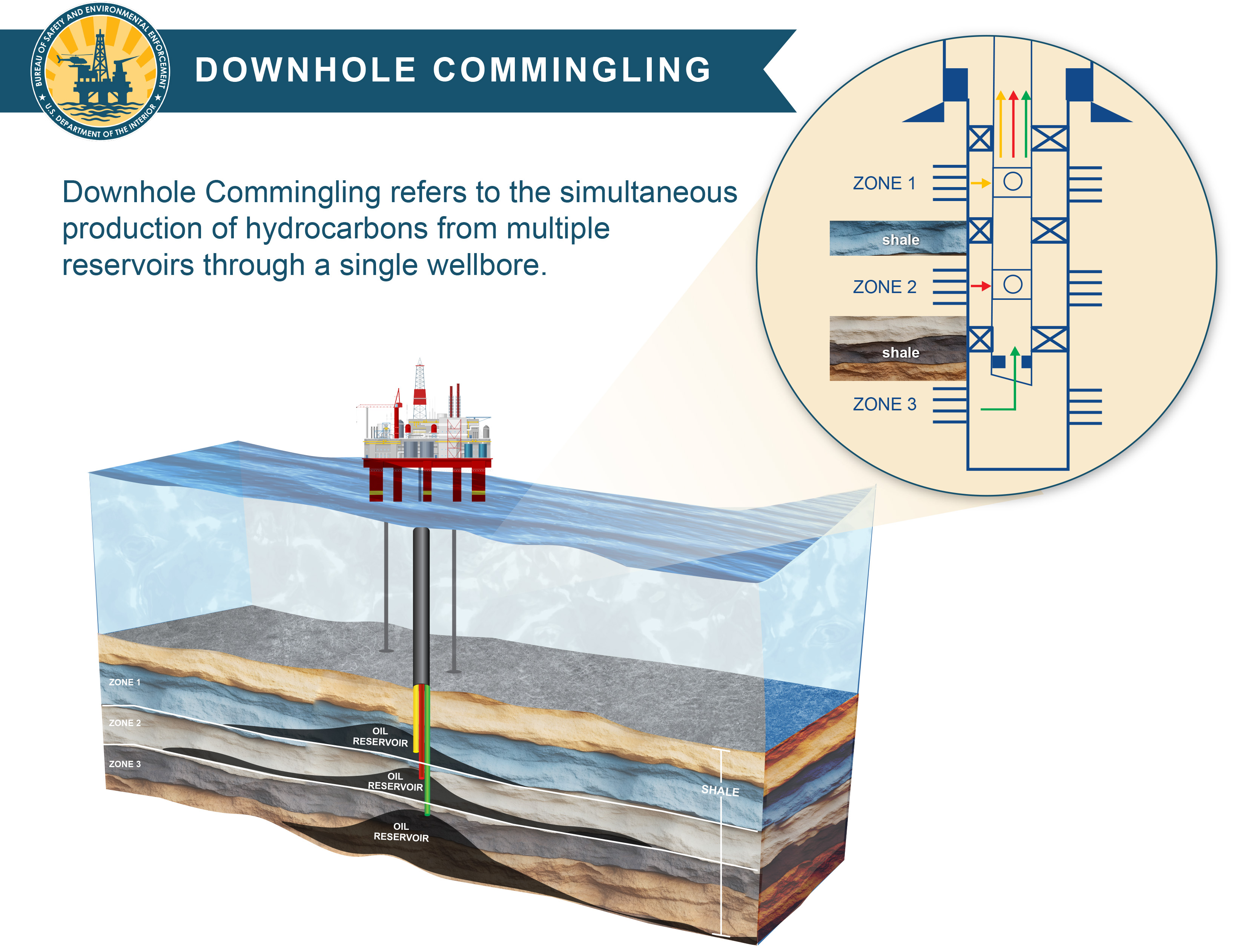
I recommend under no circumstance that we allow the onsite worker to approve the commingling of bore holes because there is extreme significant safety and environmental hazards that exist. The best alternative is to have an environmental engineer and environmental scientist approve any commingling
…your regulatory proposal is inconsistent with the federal law, the best available science on protecting the health and lives of children, and the legal mandate that agency decision-making does not deprive children of their fundamental constitutional rights…
I support updating the regulations to align with the One Big Beautiful Bill Act, but I encourage BSEE to ensure that safety standards and environmental protections remain the highest priority in all commingling approvals. Clear guidance for industry compliance and transparent public reporting would also strengthen confidence in this rule.
Ananda Foster
Regulations need to catch up with technology and we have not had a chance to do that yet. If you allow them on throttle access, they will destroy it. We all rely on the ocean, how can you do this to your own constituents?
Legislatively dictating well construction, completion, or operational approvals is a redline for me, and I continue to strongly believe the downhole commingling rule should be published as a draft for public review and comment.
The only industry comments are from API and bp America. Both support the direct final rule, and I respect their position. My main quarrel is with the legislative action that put us in this position.
I have had many disagreements with API members over the years, but the dialogue has always been professional. Technical and policy disagreements are healthy for the OCS program, and I will continue to raise potential issues and concerns on this blog.
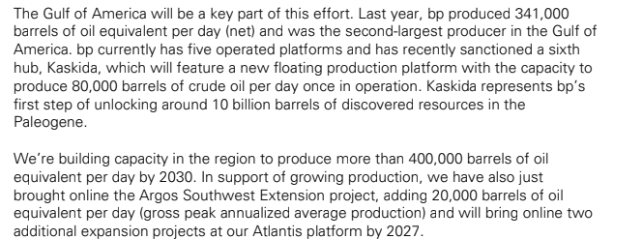
With regard to bp, I have been impressed by their commitment to the Gulf of America, as summarized in this excerpt from their comments:
Their filing is attached. I found the following points to be particularly compelling:
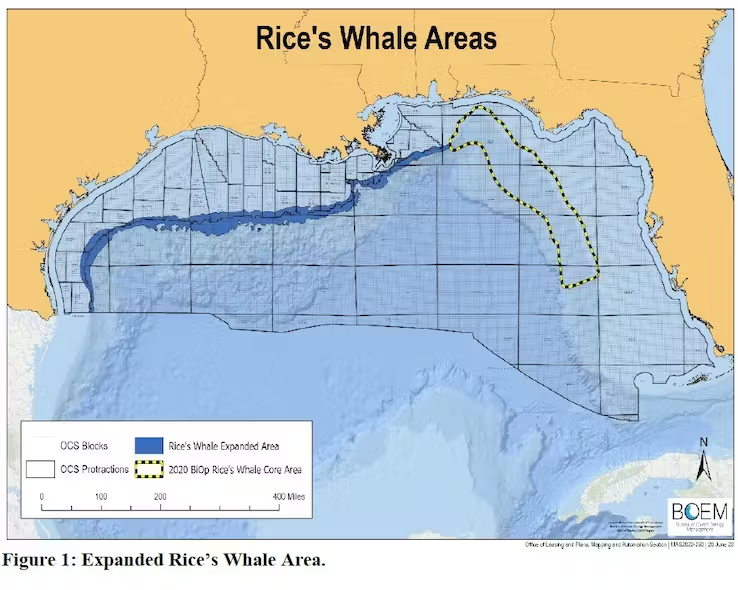
p.3: “Despite no evidence that an Oil and Gas Program vessel has ever struck a Rice’s whale, the 2025 BiOp projects that Oil and Gas Program vessels will lethally strike numerous Rice’s whales over the term of the 2025 BiOp. On that basis alone, the Service found that the Oil and Gas Program will jeopardize the continued existence of the Rice’s whale, and developed a multi-step reasonable and prudent alternative which it asserts will reduce projected vessel strikes to zero.“
p. 4: “The Rice’s whale is a rarely found animal that the Service first identified as a new species (separate from the non-endangered Bryde’s whale) in 2021. 86 Fed. Reg. 47,022 (Aug. 23, 2021). There is no evidence that an Oil and Gas Program vessel has ever struck a Rice’s whale (or a Bryde’s whale) despite continued operation in the Gulf over many decades.”
p. 5: “The 2025 BiOp disregards the Bureaus’ logical, fact-based conclusion. Instead, the Service’s 2025 BiOp engages in speculation and guess-work to surmise that Oil and Gas Program vessels could be striking and killing Rice’s whales on a regular basis. The Service ignores the best available data (i.e., showing no recorded observations of an oil and gas vessel striking a Rice’s whale) and instead presumes that forceable and lethal collisions between oil and gas service vessels and 60,000-pound whales are regularly occurring but somehow going unnoticed by the vessels and their crews and that the carcasses silently disappear into the water, never to be seen again.“
API is challenging the Dept. of the Interior’s 5 year oil and gas leasing plan, which includes the fewest lease sales in program history. That challenge was filed on 12 February, 60 days after Secretary Haaland approved the 5 plan and the first day appeals could be filed pursuant to 43 U.S. Code § 1349.
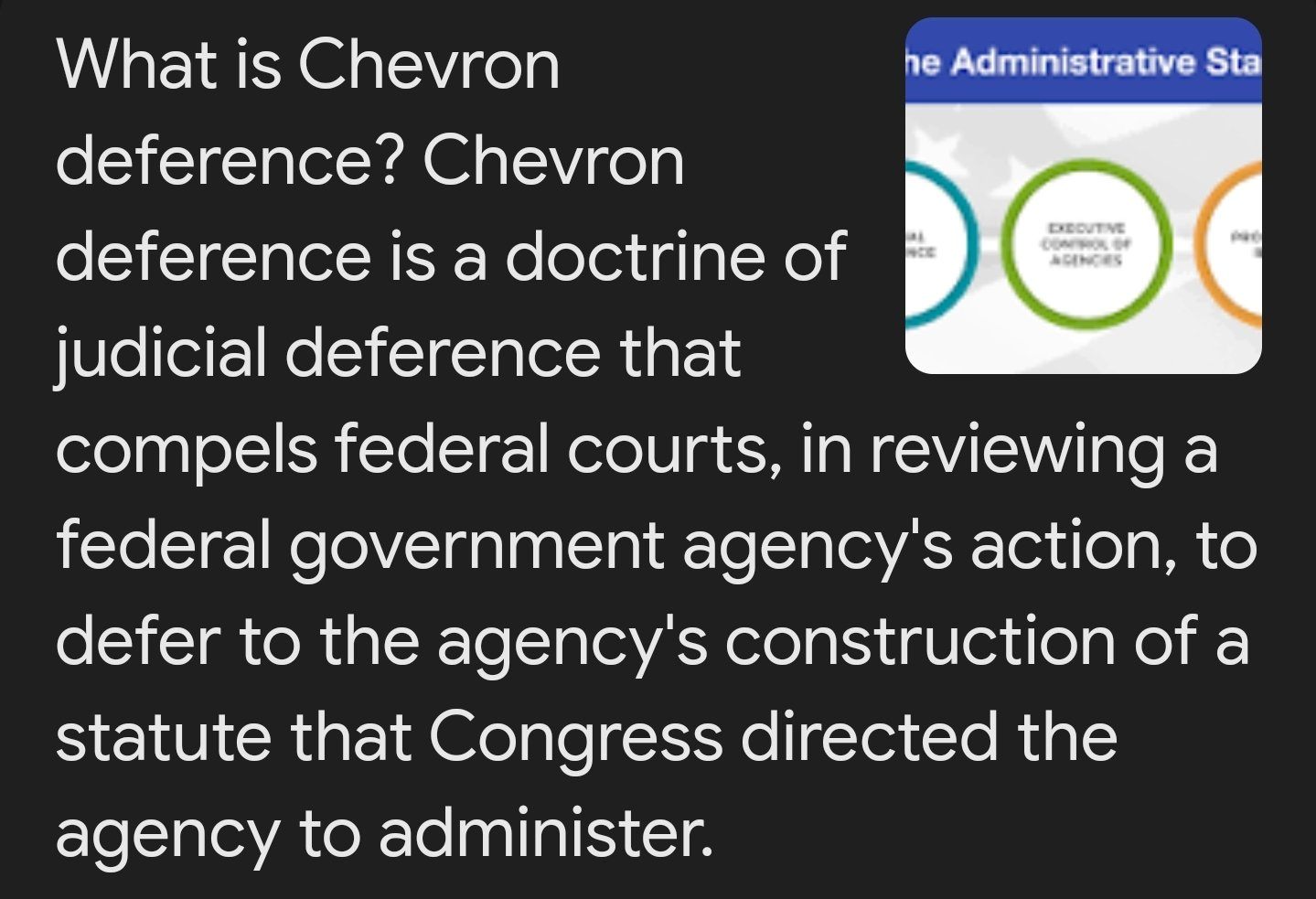
18 weeks after the API suit was filed, the Supreme Court overturned the Chevron Doctrine. That doctrine (described above) instructed judges to defer to agency interpretations when the language in a law was unclear.
Extending the Secretary’s general safety and environmental authority for OCS operations to include global climate considerations is a stretch and the type of interpretive administrative decision that the Supreme Court struck down.
I’m posting Sunday’s 60 Minutes segment that focused on deep sea mining and the failure of the US to ratify the UN Convention on the Law of the Sea (UNCLOS). Supplementary comments:
Most Federal employees involved with ocean energy policy, past and present, have supported US government ratification of UNCLOS.
The offshore industry has long supported UNCLOS. Industry trade associations, including API, IADC, and NOIA, are on the record as favoring ratification.
While concerns about UN management of deep sea mining access are understandable, some coordinated administrative structure is needed.
The Metals Company and other companies pursuing deep sea mining opportunities clearly disagree with the assertion that ocean floor mineral harvesting is not economically viable.
Expected appeals by API (first attachment) and Earth Justice et al (second attachment) were filed on 12 Feb, 60 days after Secretary Haaland approved the 5 year plan and thus the first day appeals could be filed pursuant to 43 U.S. Code § 1349.
The statute (language below) requires that leasing program appeals be filed in the DC Court of Appeals. API would have undoubtedly rather filed in Louisiana while Earth Justice is likely content with the DC venue.
43 U.S. Code § 1349 (c)(1)Any action of the Secretary to approve a leasing program pursuant to section 1344 of this title shall be subject to judicial review only in the United States Court of Appeal for the District of Columbia.
The filings don’t include any arguments except for API’s general assertion that “the Record of Decision and Approval is arbitrary, capricious, and not in accordance with law.”
Earth Justice presumably filed for defensive reasons given that the 5 year plan has the fewest lease sales in history and would seem to be favorable to their point of view.
API will likely contend that the plan is not balanced as require by the statue:
43 U.S. Code § 1344 (a)(3)The Secretary shall select the timing and location of leasing, to the maximum extent practicable, so as to obtain a proper balance between the potential for environmental damage, the potential for the discovery of oil and gas, and the potential for adverse impact on the coastal zone.
Dr. Maurice (Mo) Stewart, an outstanding petroleum engineer, author, and teacher, passed away over the holidays after a long battle with ALS. Mo worked in the Office of Field Operations in the Gulf of Mexico Region of the US Geological Survey (which became part of the Minerals Management Service in 1982) while earning a PhD in Petroleum Engineering from Tulane University.
Mo specialized in production operations and the associated safety systems. He was the lead author of the production safety sections of the MMS operating regulations when they were completely revised in the 1980s. He authored or co-authored (with Ken Arnold) several textbooks and numerous technical papers on oil and gas processing. He was active on API technical committees and was a lecturer for the Society of Petroleum Engineers in the US and internationally.
Mo conducted training sessions for MMS staff at all levels of the organization. He was an outstanding speaker who spiced his presentations with anecdotes and slides from his many travels. His presentations were not just informative, they were highly entertaining!
After leaving MMS, Mo was an instructor and consultant in Indonesia, where he lived for some time, and throughout the world. His incredible life was brought to a sad end by an incurable disease. I’m grateful to have had the opportunity to work with such an outstanding engineer, dedicated safety professional, and all-around good guy. Bud
IT IS ORDERED and ADJUDGED that the Intervenors’ appeal is DISMISSED. As for BOEM’s limited appeal as to the timing of the sale, we hereby AMEND the district court’s preliminary injunction only to the extent that the deadline for conducting Lease Sale 261 shall now be thirtyseven days from the date of the issuance of the mandate in this appeal. IT IS FURTHER ORDERED that each party bear its own costs on appeal.
“The proposed critical habitat has been deemed, by NMFS, to have the essential physical and biological features needed for the Rice’s whale to feed, breed, and reproduce. However, direct evidence for what oceanographic features within the 100-400 m isobath band identified by NMFS are required to sustain the Rice’s whale is lacking, and the extent of those truly important features elsewhere in the GOMx is uncertain and may not reach into the central or northwestern GOMx as predicted by the habitat based density model (Garrison et al. 2023). Even though there is evidence to support the possible occurrence of Rice’s whale near the FGBNMS in the northwestern GOMx, there are no data that show this area is being used to support important life history functions such as breeding, feeding, or migrating. Additionally, the sightings and acoustic detections that have been recorded there are much less frequent than those recorded for Rice’s whale in the core habitat in the northeastern GOMx. Based on the limited data available on the use and occurrence of Rice’s whale in the central and northwestern GOMx (one acoustic study (Soldevilla et al. 2022b), one confirmed sighting (NMFS 2018a) and a few unconfirmed sightings (Rosel et al. 2021)), there is insufficient scientific evidence to determine that essential features for Rice’s whale conservation are indeed present in the central and northwestern GOMx. In fact, data on the life-history requirements of Rice’s whale even in the core habitat are still lacking and need further investigation.“
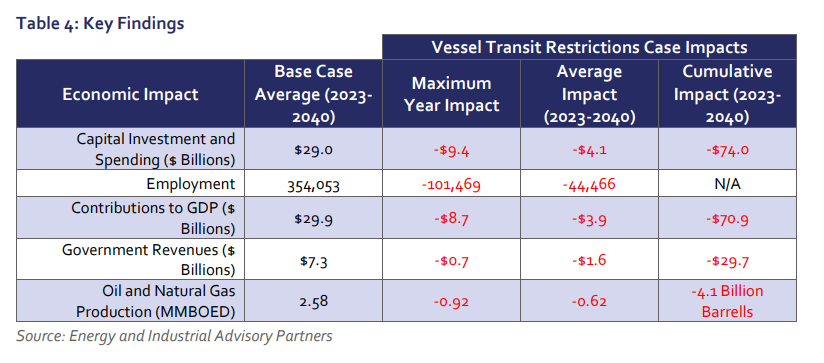
EIAP’s key findings on the estimated economic impacts from these restrictions are summarized in the table below. Those are very significant costs given the uncertainty of the whale habitat in the central and western GoM.
Separate comments submitted by the Offshore Operators Committee are also quite strong. Their letter is attached.







Restart seems likely for decommissioning financial assurance rule
Posted in decommissioning, energy policy, Regulation, tagged API, BOEM, Chevron, comments, decommissioning, financial assurance, NEFSA, proposed regulation, Shell on May 18, 2026| Leave a Comment »
Thankfully, from the standpoint of those of us whose primary concerns are the integrity of the OCS program and protecting taxpayers from decommissioning liabilities, the API comments (attached), along with those submitted by Shell and Chevron, have exposed the folly of eliminating financial assurance whenever there is a financially strong company somewhere in the lease chain of custody.
Mindful of ongoing and anticipated decommissioning liability battles, API effectively challenges the BOEM proposal on legal grounds. API also demonstrates why revisions intended to improve regulatory efficiency and increase production would do exactly the opposite. Excerpts from the API comments (emphasis added):
Further, foisting financial assurance obligations on predecessors will not achieve BOEM’s stated aims of financial “savings” and increased OCS oil and gas production; it more likely will do the opposite. The Proposed Rule would just shift financial assurance burdens to financially stronger predecessors, many of which remain engaged in the majority of leasing and production across the OCS and are far more likely to be future investors in increased OCS development and production. By contrast, nothing ensures that entities standing to benefit from the Proposed Rule will reinvest saved financial assurance premium dollars into OCS production; in fact, such entities largely do not explore or increase reserves, but merely buy pre-discovered reserves and produce them to a lower economic limit.
Nor would the Proposed Rule promote or save costs for future OCS transactions since, in the absence of any option for BOEM-demanded financial assurance from current interest holders, assignors will demand financial assurance at sufficiently conservative levels to address the risk of residual liability if assignees default on their obligations.
Even more problematically, the Proposed Rule would retroactively impose this new regulatory burden on entities that divested their OCS property interests years (or decades) earlier—in reliance on BOEM’s regulations that required their assignees to provide any supplemental financial assurance. Such entities are no longer in privity with BOEM, and have no control over current operations on those OCS properties. The Proposed Rule would reach back even to impose these obligations on predecessors that divested their interests before the 1997 regulatory imposition of joint and several liability for assignors (a time period on which the Proposed Rule is silent).
This novel and misguided approach allows, and even encourages, current interest holders to eschew their lease and grant obligations, and instead freely operate on the backs of predecessors and taxpayers. Meanwhile, current interest holders could choose to allocate little or no funding for end-of-life obligations like decommissioning whenever they desire to conclude production, file for bankruptcy, and leave BOEM to eventually issue decommissioning orders to predecessors that have not operated the grants and leases for years or even decades. This would create higher administrative and financial burdens for the government and system as a whole, including where no viable predecessor had accrued liability for decommissioning all facilities present on the lease or grant, and potential operational impacts that a predecessor has no obligation to cure.
This new proposed obligation on predecessors is arbitrary and capricious and unlawful on multiple grounds. It violates the rule against retroactivity by creating new federal liability stemming from already-completed transactions. It violates the agency change in position doctrine, particularly given that BOEM on multiple occasions has rejected precisely the same approach as in the Proposed Rule. It is unsupported, as it overstates the burdens under the discretionary Existing Rule, disregards repeated U.S. Government Accountability Office (“GAO”) and BOEM findings calling for more robust financial assurance by current interest holders, cites only anecdotal prior comments while ignoring the bulk of countervailing comments detailing reality on the OCS, and identifies no means by which BOEM can compel collect, and assess adequate financial information for all predecessor entities. And it is self contradictory, including by tying up more capital among entities producing the vast majority of oil and natural gas on the OCS.
Chevron points to their potential liability balance of ~ $2 billion for satisfying the decommissioning obligations of default owners:
John Smith and I do not agree with the industry support for the use of reserves as financial assurance. The margin of error in reserve, oil price, and decommissioning cost estimates, not to mention the potential for facility damage, the ever-changing political environment, and the administration challenges, present an unacceptably high risk for taxpayers. If companies want to guarantee decommissioning based on reserves, let them do so. Shell makes a good point about why it is especially important to prohibit the use of reserve estimates on a company-wide basis:
Lastly, kudos to the New England Fisherman’s Stewardship Association for raising the concern about financial assurance for decommissioning offshore wind facilities
Read Full Post »