Feeds:
Posts
Comments

Posts Tagged ‘litigation’

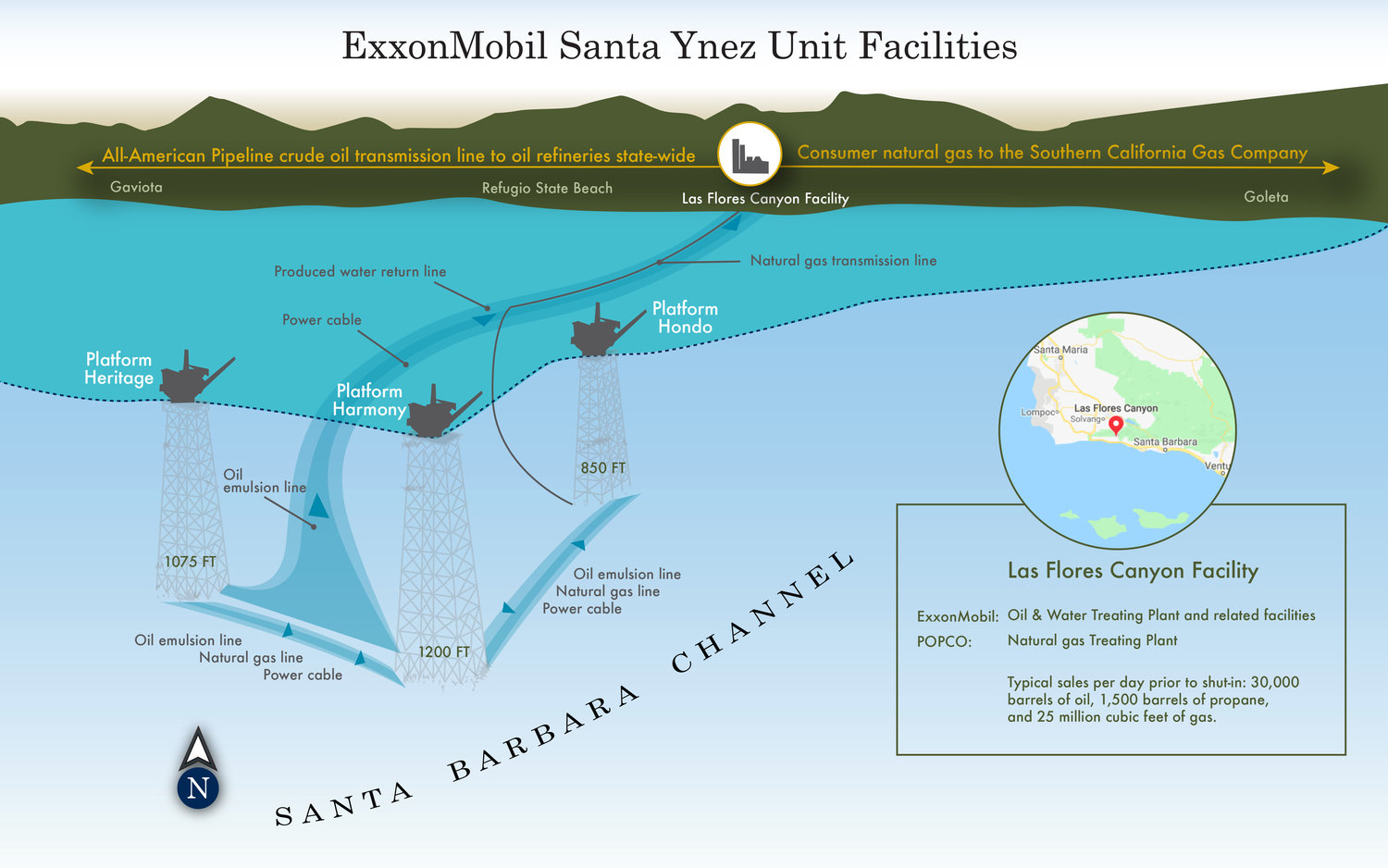
See the attached letter from Sable’s attorneys; highlights below:

  • The Commission staff appears to be asserting Commission jurisdiction over already permitted activities in order to attempt to exert influence over Sable’s planned restart of the Santa Ynez Unit oil production operations. Jurisdiction over restart activities is entirely outside of the Commission’s jurisdiction and is separately regulated by other agencies.
  • Sable’s repair and maintenance activities (anomaly repairs, safety valve installation, and span remediation) are in compliance with applicable provisions of Santa Barbara County’s Coastal Zoning Ordinance (CZO), certified Local Coastal Program (LCP), and the Coastal Act. As such, no cease and desist order is warranted – whether issued by the Executive Director or the full Coastal Commission.
  • The onshore and offshore repair and maintenance work is fully authorized by coastal development permits previously approved by Santa Barbara County and the Commission. Therefore, those activities do not require new or amended coastal development permits and are not otherwise subject to the Commission’s jurisdiction or enforcement authority.
  • Onshore anomalies: Santa Barbara County reviewed the detailed information Sable submitted with Zoning Clearance applications in 2024 and confirmed in a letter dated February 12, 2025, that the anomaly repair work is authorized by the pipelines’ existing coastal development permits and, consistent with past practice, no new or separate Coastal Act authorization is required for Sable to perform the work. Commission staff has repeatedly ignored that the County — as the applicable agency with delegated LCP authority under the Coastal Act — expressly has confirmed that the anomaly repair work was authorized by the onshore pipelines’ existing Coastal Development Permit, Final Development Plan, and Conditions of Approval.
  • Onshore safety valves: Sable was required to undertake safety valve repair and maintenance activities pursuant to state law that the Coastal Commission supported. The safety valve repair work involves the exact same type of work as pipeline anomaly repairs, and Sable completed the safety valve work only after the County confirmed in writing that no further authorization from the County was required for the safety valves.
  • Offshore span remediation: Sable’s span remediation maintenance activities were fully contemplated and authorized within the original coastal development permit approved by the Coastal Commission for the Offshore Pipelines in 1988 and the Development and Production Plan approved by the Department of the Interior. The span remediation maintenance activities involve the placement of sand-cement bags beneath certain segments of the offshore pipelines to provide additional pipeline support. The exact same support enhancement (span remediation) activities have been performed in the past on these same offshore pipelines without requiring any new Coastal Act authorizations.
  • Sable has filed a lawsuit against the Commission in Superior Court in Santa Barbara County where it has asked the Court for damages and declaratory and injunctive relief to protect its vested rights to repair, maintain and operate the Santa Ynez Unit and Las Flores Pipeline Systems.

Read Full Post »

Jeffrey Brodsky, a journalist who traveled to all four Nord Stream blast sites, shared Nord Stream AG’s response (attached) to the 30 Sept. court filing by the insurers.

Particularly noteworthy is Nord Stream’s response to the insurers’ claim (par. 22.2 (a) of their filing) that the pipeline damage was the result of “the conflict between Russia and Ukraine.” In par. 13.1 of their response (attached), Nord Stream called the insurers’ assertion “embarrassing for want of particularity.” (clever wording that may prove useful in the future 😉)

Brodsky’s observations on the Nord Stream filing:

  • Nord Stream AG calls the insurers (Lloyd’s and Arch) failure to provide evidence for the country that blew up the pipelines “embarrassing.” (See above comment.)
  • Nord Stream argues that the insurers still must pay even if the sabotage was an act of war. This aligns with what legal scholar Said Mahmoudi told Brodsky.
  • Mahmoudi: “The defendants’ argument is prima facie irrelevant if one cannot prove that the damage is caused by a named government that has been directly involved in a war in the area. The burden of proof in this case is…on the defendant.”
  • Mahmoudi: “Even if the sabotage is an act of terrorism, the author of the act can be a state or a private entity.”
  • Mahmoudi: “If a private entity, the insurance company, is the only source for the compensation; if a state is responsible for the terrorist act, it is the insurance company & that state that have a legal obligation to compensate for the damage.”

Related comment by Erik Andersson: Nord Stream AG has consistently claimed they should receive compensation regardless of whether or not a government was responsible for the sabotage. Nord Stream AG does not seem interested in providing an alternative to Lloyds’ claim that Ukraine did this as an act of war. (That horse might be too big to ride 😉)

Read Full Post »

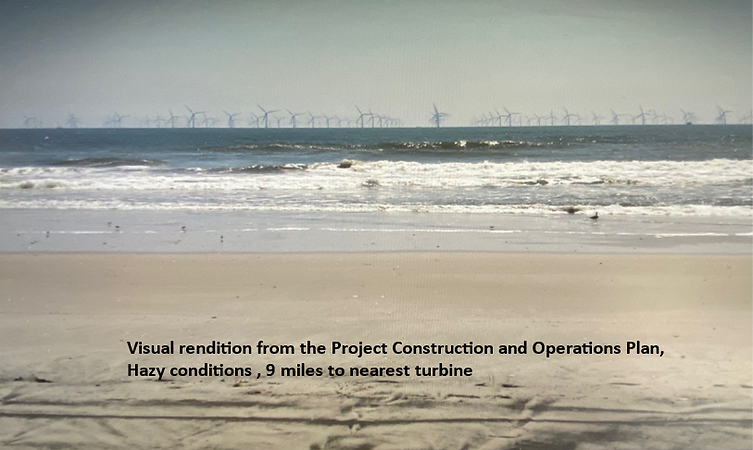
As a boy, my grandfather owned a home “down the shore” on Long Beach Island (LBI). From the beach, all we saw were swimmers, surf fishers, porpoises, and an occasional vessel on the horizon. The offshore wind industrialization will change the island dramatically.

Attached is the release announcing Save LBI’s intent to sue. Their issues are summarized below:

  • Constructing and operating hundreds of wind turbines directly in a prime migration path for the critically endangered North Atlantic right whale.
  • Operational noise from the larger and noisier turbines Atlantic Shores plans to build.
  • Cumulative impact of the East Coast wind-turbine projects on the right whale’s migration.
  • Interference with other uses of the ocean including fishing and national security.
  • No plan or capability, technically or monetarily, to remove turbines and other facilities at the end of their useful life, upon their failure during normal operation, or in the aftermath of a hurricane or other extreme storm event.
  • Failure to account for structural failures such as the Vineyard Wind turbine blade incident, the damage from such failures to the ocean and beaches, and how that damage will be remediated.
  • Excessive electric bill increases under the State’s Offshore Wind Energy Development Act.

The Endangered Species Act issues are similar to those that the Nantucket group ACK for Whales is trying to elevate to the Supreme Court.

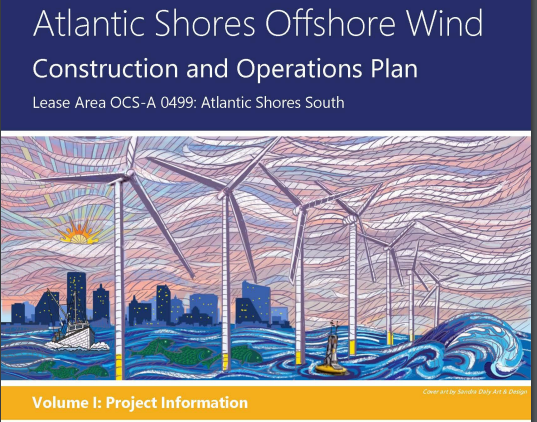
Perhaps not the best choice of graphic if you want to sell the project as being environmentally benign and compatible with other uses.

Read Full Post »

I am disappointed that BOEM’s accelerated process over the last year has further divided stakeholder communities, and put the Confederated Tribes of the Coos, Lower Umpqua and Siuslaw Indians in the position of challenging BOEM in federal district court. Oregon’s legislative Coastal Caucus is likewise now in full opposition to BOEM’s proposed lease.

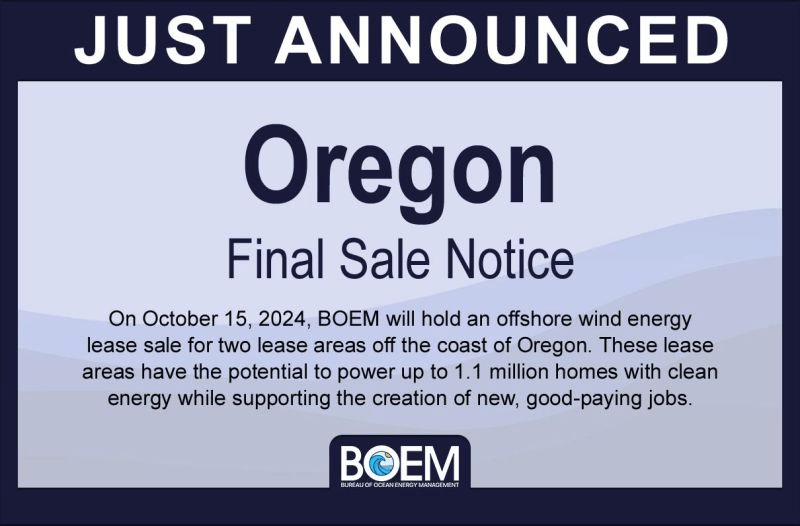
Despite the usual hype about the number of homes that could be powered and “good-paying jobs,” the upcoming Oregon wind lease appears to be very much in doubt. If legal action by Oregon tribes doesn’t halt or delay the sale, the absence of bidders may.

OregonLive reports that only one company, NewSun Energy, continues to be interested in participating in the sale. NewSun is primarily a solar energy developer with no apparent offshore wind experience.

Wind development offshore Oregon would be complex and very expensive given the need for floating turbines and new high-voltage transmission lines over the Coast Range. At least two counties, Coos and Curry, are set to vote on whether to publicly oppose offshore wind development off their coast.

If the sale is delayed such that BOEM is not able to issue leases before 12/20/2024, the leases cannot be issued until a qualifying oil and gas lease sale is held.

Read Full Post »

API is challenging the Dept. of the Interior’s 5 year oil and gas leasing plan, which includes the fewest lease sales in program history. That challenge was filed on 12 February, 60 days after Secretary Haaland approved the 5 plan and the first day appeals could be filed pursuant to 43 U.S. Code § 1349.

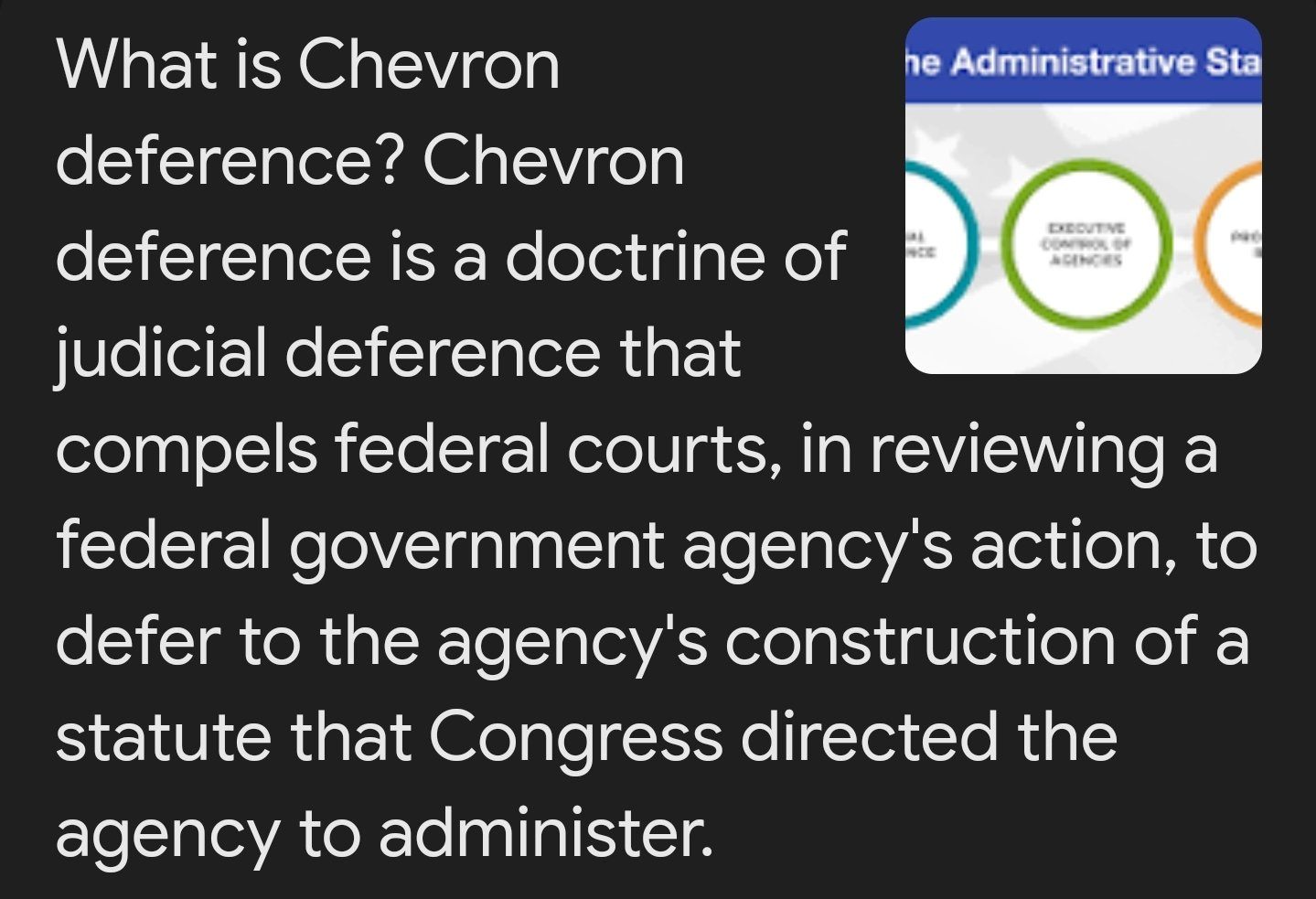
18 weeks after the API suit was filed, the Supreme Court overturned the Chevron Doctrine. That doctrine (described above) instructed judges to defer to agency interpretations when the language in a law was unclear.

Interior’s 5 year OCS oil and gas leasing plan provides for the fewest (3) lease sales in history and may not have included a single sale were it not for legislation prohibiting the issuance of offshore wind leases unless an offshore oil and gas lease sale was held during the prior year.

This unprecedented oil and leasing decision was based on “the need to confront the climate crisis through reducing greenhouse gas emissions” and on achieving “net zero pathways.” Neither of those objectives is articulated in the OCS Lands Act or other governing legislation.

Extending the Secretary’s general safety and environmental authority for OCS operations to include global climate considerations is a stretch and the type of interpretive administrative decision that the Supreme Court struck down.

Read Full Post »

The plaintiffs assert “insufficient and arbitrary environmental analyses, in violation of the National Environmental Policy Act (NEPA) and the Administrative Procedure Act (APA).” The court filing is attached.

For those who missed it, supporters of the lease sale have challenged some of the provisions.

All of this will have to be resolved in the next 3 weeks, as the congressionally mandated sale, scheduled for 27 September, (presumably) cannot be postponed.

Read Full Post »

That would appear to be the case now that the US Court of Appeals for DC dismissed litigation challenging the sale.

Meanwhile, challenges to Cook Inlet Sale 258 (humble as it was with only one bid) and GoM Sale 259 continue. It’s a great country (if you like endless litigation)!

In addition to Lease Sale 257, the IRA also required Interior to offer three other lease sales in Alaska and the Gulf that it previously declined to hold. Lease Sale 258, in Alaska’s Cook Inlet, was held in December but received only one bid. Earthjustice is challenging that sale. Earthjustice is also challenging Lease Sale 259, in the Gulf of Mexico, which was held in March. Lease Sale 261, also in the Gulf, will be held by September of this year. 

EarthJustice

Read Full Post »

➡ Zero 2022 YTD well starts on the California OCS (per BSEE data the only well activity has been for plugging and abandonment purposes)

Many law suits including these cases:

Read Full Post »

On October 19, 2021, RODA issued the government agencies a 60-day Notice of its Intent to Sue if they did not comply with the Clean Water Act, Endangered Species Act, Outer Continental Shelf Lands Act, and other federal environmental statutes. “The Alliance received no reply, and the environmental violations were not remedied,” Hawkins stated. “The decisions on this project didn’t balance ocean resource conservation and management, and must not set a precedent for the enormous “pipeline of projects” the government plans to facilitate in the near term. So we had no alternative to filing suit.”

Responsible Offshore Development Alliance

Vineyard Wind 1 is a 62-turbine offshore wind project to be built 15 miles south of Martha’s Vineyard, and is the first commercial-scale wind project approved for US offshore waters.

download here

Of particular interest to the offshore industry, RODA’s court filing raises concerns about the structural integrity of the 13 MW Haliade-X turbines during Atlantic hurricanes, ice shedding in the winter, radar interference, pile driving noise, Jones Act violations, and failure to consider decommissioning issues.

Read Full Post »

« Newer Posts