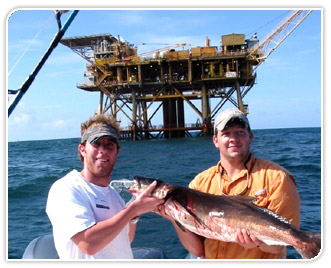
Section 6 of EO 14430, RESTORING AMERICAN SALTWATER ANGLING AND RECREATION, establishes a program to facilitate the reefing of decommissioned platforms (i.e. “Rigs-to-Reefs”).
Presumably, existing Gulf State reefing programs and private initiatives for repurposing offshore platforms will be integrated into the new Federal program. Where State reefing legislation is unworkable (California), liability issues will have to be resolved. John Smith has made a proposal in that regard.
Full text of Section 6:
Sec. 6. Fast-Tracking Artificial Reefs and Habitat Creation. (a) Within 60 days of the date of this order, the Secretary of the Interior, acting through the Marine Minerals Administration, shall establish a Federal Outer Continental Shelf Reef-in-Place Program (Program) to facilitate the conversion of decommissioned offshore oil and gas and other-use structures, with the exception of infrastructure associated with offshore wind energy facilities, into permanent artificial reefs through reef-in-place, topple-in-place, or other approved reefing methods, where consistent with applicable law.
(b) The Program shall be available to qualifying offshore structures and leaseholders that satisfy all applicable statutory, regulatory, environmental, navigational, and safety requirements. The Secretary of the Interior shall establish criteria and standards for the program that ensure protection of navigation and national security interests.
(c) In establishing the Program, the Secretary of the Interior shall coordinate with the Secretary of Commerce, the Secretary of War, the Commandant of the United States Coast Guard, and the heads of other appropriate agencies to streamline interagency review and permitting to the maximum extent permitted by law, reduce unnecessary administrative delays, and promote timely decisions for qualifying reef projects.
(d) Within 120 days of the date of this order, the Secretary, acting through the NOAA Administrator, in coordination with the Secretary of the Interior, shall review and, as appropriate and consistent with applicable law, revise policies and procedures governing SUPs and other applicable authorizations for the placement and management of artificial reefs within National Marine Sanctuaries and Marine National Monuments. Such revisions shall seek to establish transparent and efficient permitting pathways, identify areas suitable for artificial reef development and other national interest uses, and enhance fisheries, recreational fishing, diving, and other compatible public uses.