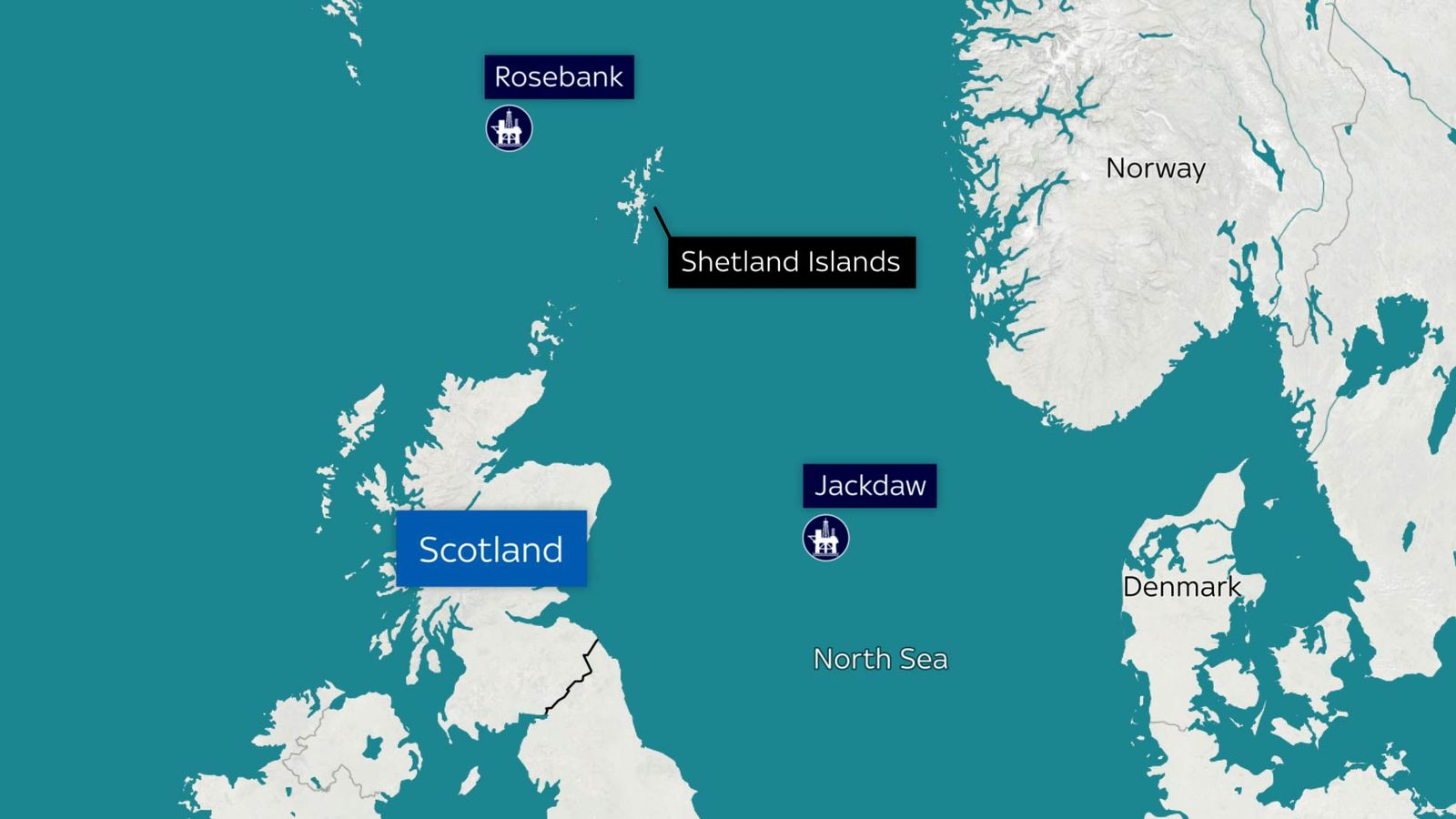
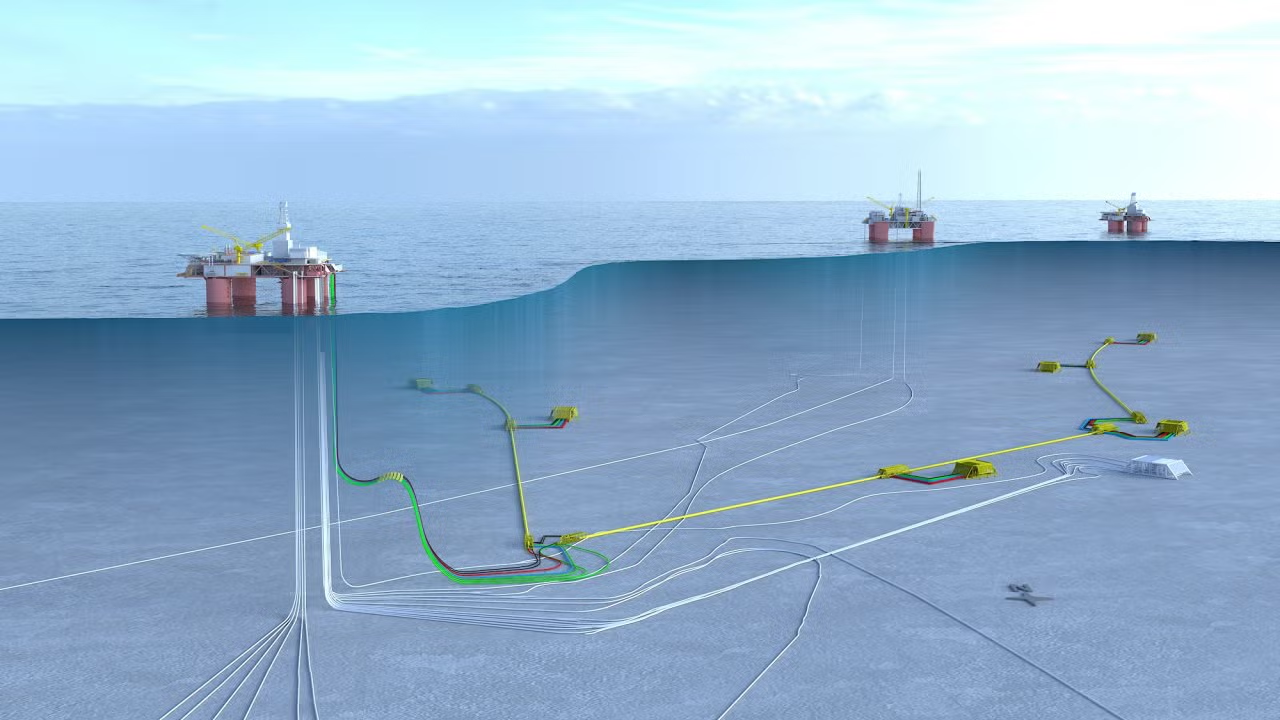
Rosebank and Jackdaw are operated by Adura, an Equinor-Shell joint venture. Much of the infrastructure for Jackaw is already in place, and gas production could begin this winter when it may be badly needed. Production at Rosebank, which is primarily an oil field, could begin in the first half of 2027.
“The question will be: is the UK investable in the future? I hope it will not come to that.”
“It’s a political choice.The North Sea oil and gas industry started on the UK side. We learned from the UK and it’s actually the same geology on both sides of the border – several fields actually cross it.”
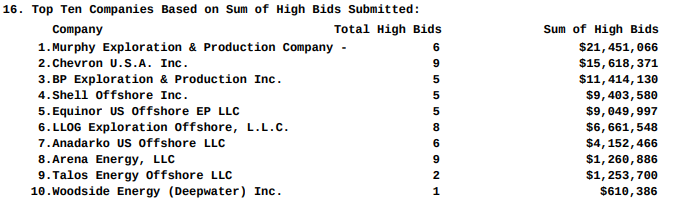
Gulfwide, Chevron was high bidder for 9 of the 10 blocks they sought vs. 6 of 9 for Oxy, 5 of 8 for Shell, 5 of 6 for BP, and 5 of 5 for Equinor.
US supermajors and historically important Gulf producers, Exxon Mobil and ConocoPhillips, were no-shows once again.
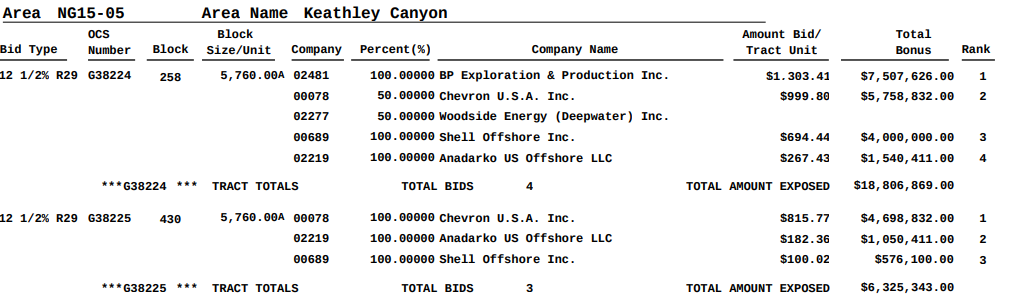
Bidding was spirited among the “big dogs” for KC Block 258, with BP taking the prize (assuming their $7.5 million bid is accepted). Chevron rebounded by taking KC 430, outbidding Oxy and Shell. (See below)
Among the large independents, LLOG batted 8 for 8, Murphy 6 for 8 (including the sale’s highest bid of $7.7 million), Talos 2 for 2, and Woodside 1 for 2. Our favorite tribal corporation, Red Willow Offshore (Southern Ute Tribe), partnered with LLOG, Navitas, Houston Energy, and CL&F Offshore on the high bid for Atwater Valley Block 63.
Murphy was the top $$$ bidder among all participating companies (see below). In 2025, Murphy was the Gulf’s 5th leading oil producer, trailing only Shell, BP, Chevron, and Oxy.
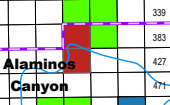
The sale’s highest bid ($7.7 million) was for Alaminos Canyon Block 380. The block was previously leased to LLOG, and exploratory drilling was conducted in 2019. LLOG’s lease expired on 12/20/2025, and complete well data were released on 4/24/2026. Murphy must have liked what they saw.
The absence of other bidders for AC 380 reminds us that interpretations and strategies differ. Murphy has had a pretty good track record in the Gulf. We’ll see what happens.
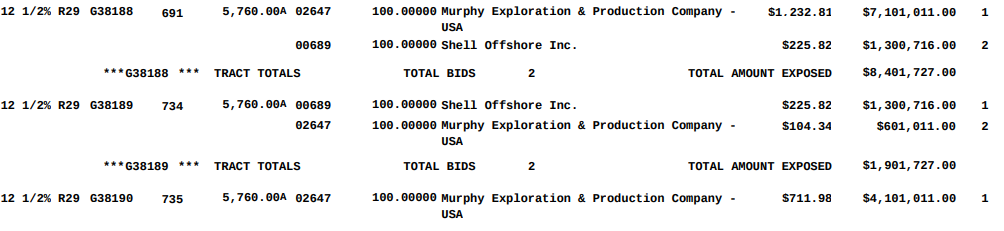
Murphy and Shell valued and competed for 2 other Alaminos Canyon blocks as the summary below indicates, and Murphy was the lone bidder ($4.1 million) for another.
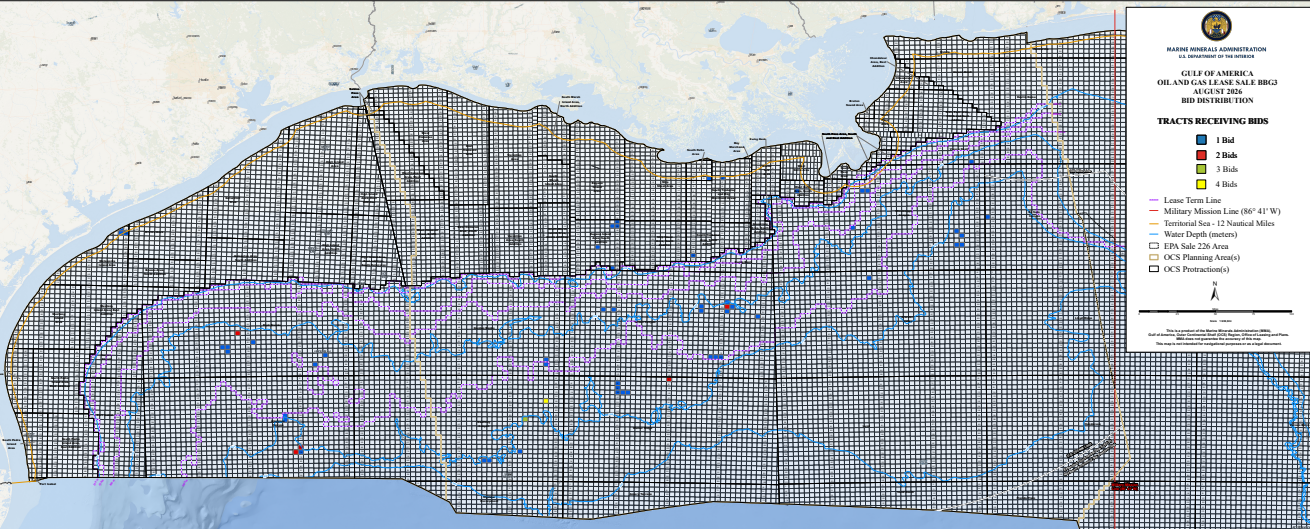
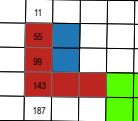
“L” for the “W”? All 5 of Equinor’s high bids (red) formed an “L” in the Walker Ridge area. Equinor was the lone bidder for each (see below). Existing blocks WR 56 and 100 (blue) are Equinor leases. Prior lessee Anadarko drilled on block 143 in 2014
We’ll see how this all worked out in about 10-20 years! 😀
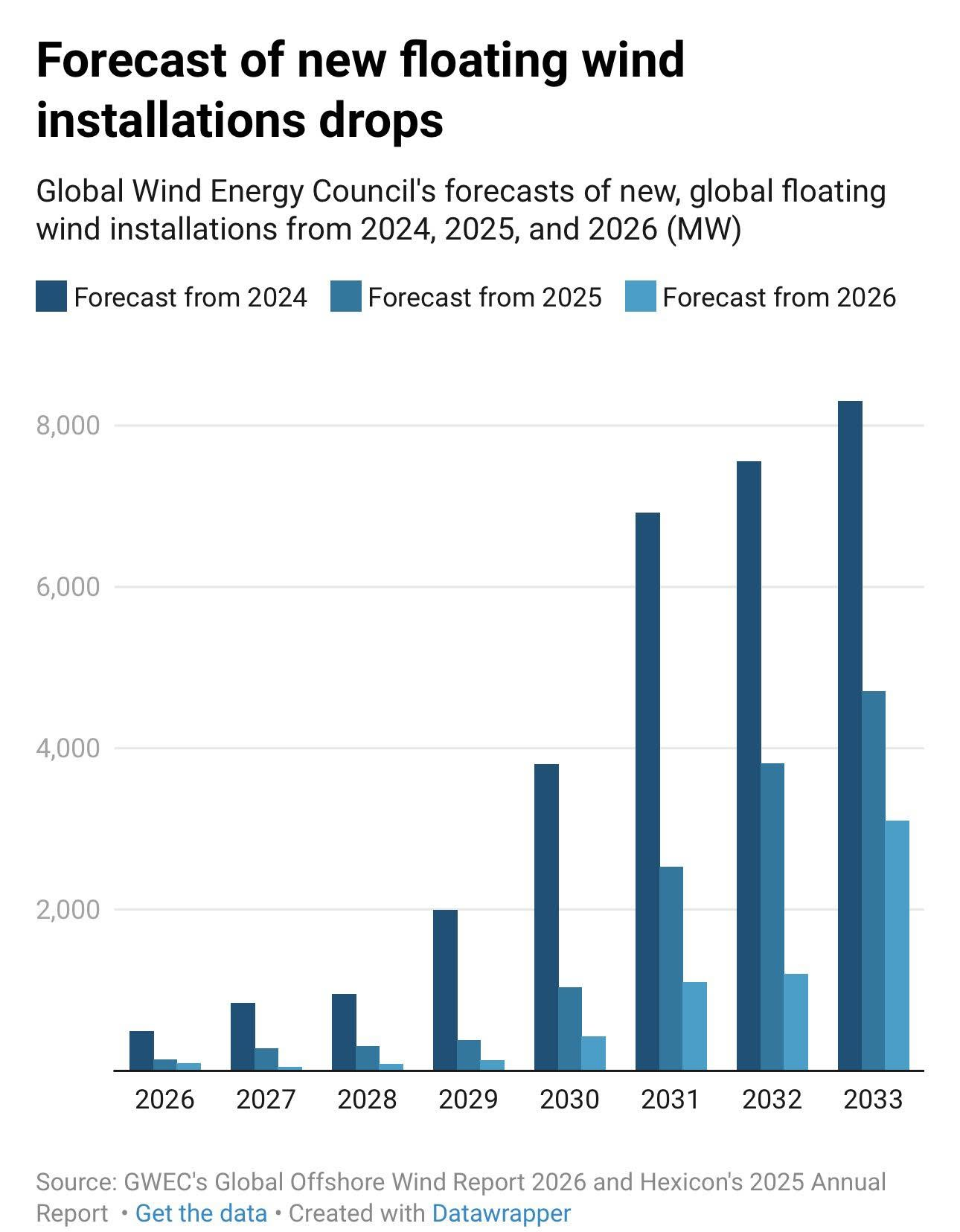
GWEC, the voice of the wind industry, continues to scale down estimates for floating turbines. In 2024, the GWEC expected 835MW of floating wind to be installed in 2027. Last year, this was lowered to 278MW, and expectations dropped further in the 2026 report to just 42MW. A similar trend applies to GWEC’s forecasts for the following years.
Despite strong support from the State, California’s offshore wind sector faces major challenges:
Deepwater technology: California offshore wind development is totally dependent on expensive and still unproven floating turbine technology. Norway, once a world leader in floating wind, has lost enthusiasm and is now requiring floating projects to be ‘quality-assured.’
Infrastructure: Major port upgrades, new transmission lines to bring power ashore, and specialized vessels are required. The supply chain is immature.
Costs: High capital costs plus storage costs (e.g. batteries) for reliability.
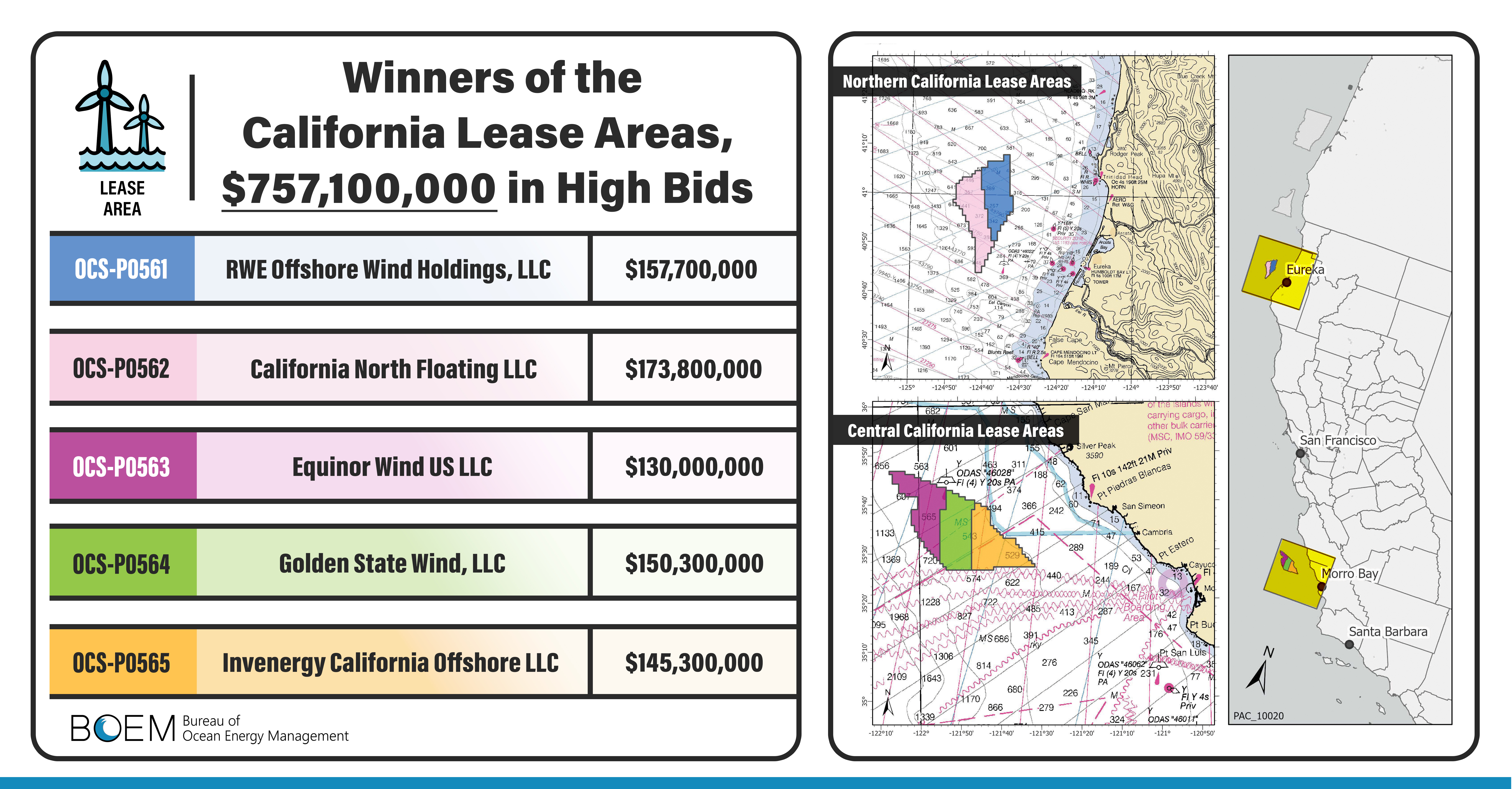
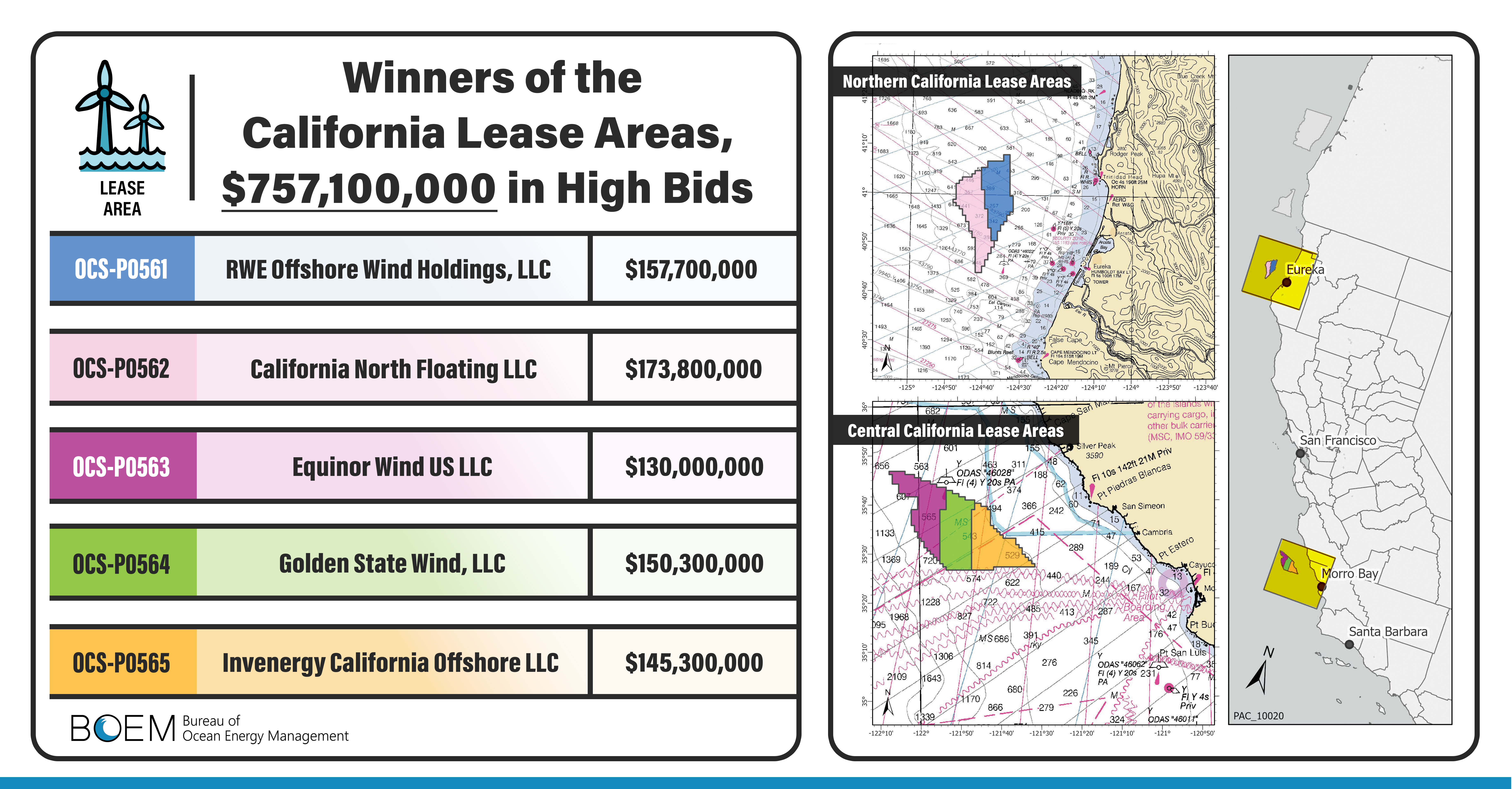
Two of the three Central Coast wind lessees (diagram below) have agreed to lease buyback deals. A lease cancellation letter is attached. The State is challenging the buyback agreements, and is thus in the difficult position of opposing deals that the wind developers voluntarily agreed to and believe are in their best interest. Does the State lose regardless of the outcome of their challenge?
The third Central Coast lessee, Equinor, is curtailing wind investments and has no plans to pursue new offshore wind projects in the US. A buyback deal with Equinor would be complicated by the company’s Empire Wind commitments, and is probably unnecessary given that Equinor has taken itself out of the game.
The two Northern California leases are still active, but the focus has been on regional planning. Funding for necessary infrastructure projects is uncertain and any wind lease development is far in the future.
Steve finds Equinor’s recent comment that the days of big offshore finds are over to be disingenuous. He correctly notes that this view has been echoed for decades. (Although the end of Gulf of America oil production has been predicted for 40 years, 2025 was a near record year.)
Offshore Norway, it was only in 2010 that the giant Johan Sverdrup field was ‘found’ by Equinor. Two super-majors – Exxon and Total – missed the reservoir and abandoned further exploration in the area. (How many times have we heard similar stories in the oil patch?) Equinor, then Statoil, made a relatively small find in the middle of the reservoir and was planning a limited subsea development. Geophysicists from partner Lundin created a better picture of what was in place – nearly 3 billion barrels with peak production of 750,000 b/d three years ago. Just this week, Equinor announced Phase 4 of production through further subsea development.
Who heard much about Guyana a decade ago?
How about the major new discoveries offshore Brazil? See the video below.
New production offshore Namibia, South Africa, and Mozambique looms. Finds off Indonesia and Timor Leste, and even the Falklands, await development.
“So guys, stop making out that life is tough. It might be challenging, but it has always been thus. Big risks and big rewards.”
On BP’s announcement that they were reorganizing into upstream and downstream divisions: “Wow – what a great idea! How come no one ever thought of this before? Imagine this scenario – oil companies making money on both sides of the price cycle – upstream when the price of oil is high and downstream when it is lower. Amazing – NOT!” 😉
North Sea pioneer JL Daeschler is among those lamenting the sad state of UK exploration and development, commenting that he is “green” with envy of Norway’s long term management of their oil and gas resources.
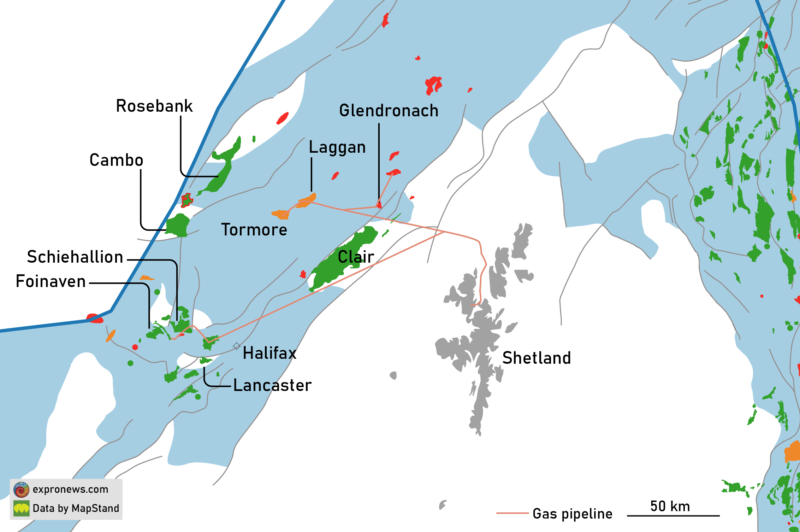
Researchers at the University of Aberdeen may be showing the way for exploitation of the West of Shetland area’s estimated 4.7 billion bbls of oil equivalent (boe). They are advocating a tailored management regime for this challenging area. Per the researchers:
“West of Shetland is not a depleted frontier – it is a technically demanding but strategically important energy province,” said Nick Schofield, Professor of Igneous & Petroleum Geology at the University of Aberdeen. “Our study highlights the remaining oil and gas potential in the area, which could extend the life of the UK’s oil and gas sector.”
John Underhill, Aberdeen University’s Director for Energy Transition said: “Failing to develop these domestic resources risks increasing the UK’s dependence on imports, with implications for emissions, costs, jobs, tax revenues and energy security.”
The researchers argue that a “one-size-fits-all” approach to UKCS taxation fails to reflect the unique risks and costs associated with West of Shetland exploration, appraisal and development. As a result, they say projects that are technically viable may remain economically marginal under current conditions.
Recognize higher exploration and development costs
Account for increased geological and operational risk
Encourage investment in challenging projects
Enable tie-backs to existing infrastructure that would provide energy security, tax revenues, retain jobs and be better for the global climate than importing liquified natural gas (LNG), which carries a higher carbon footprint.
Support the development of already identified prospects within licensed areas
Rosebank update:
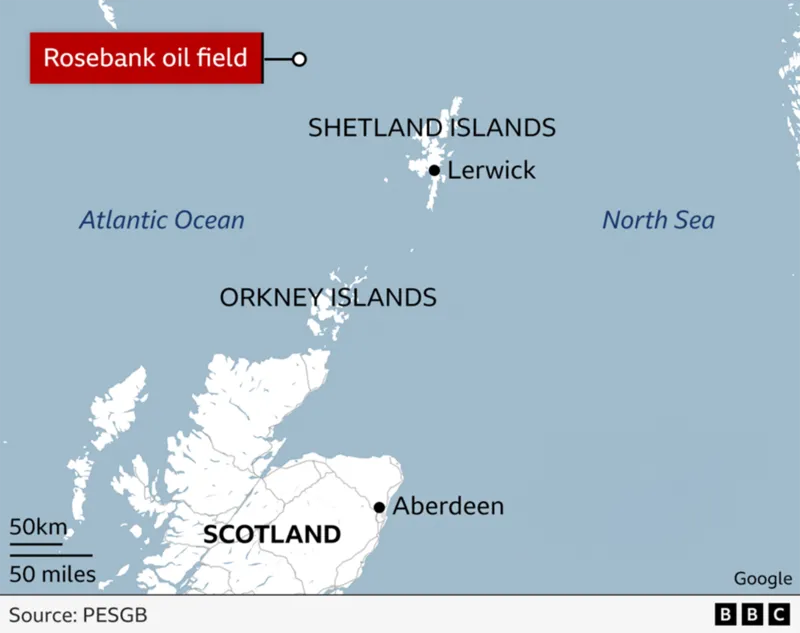
The West of Shetland area includes the controversial Rosebank project (map above), which has yet to receive environmental consent from the UK govt. Following a court ruling, Equinor (operator) was given permission to proceed with the project, including preparatory engineering and construction work, but no production is allowed pending final govt approval.
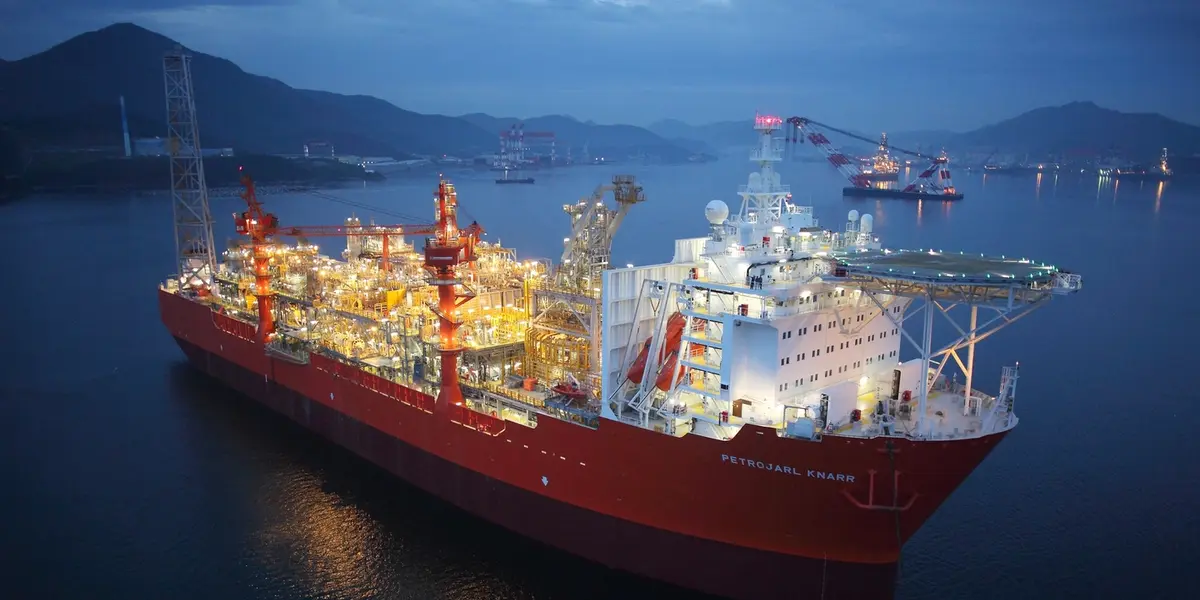
The PetoJarl Rosebank Floating Production Storage and Offloading (PFSO) vessel recently left its dry dock in Norway and has arrived in the West of Shetland basin. The vessel will undergo commissioning to be ready for production by the end of the year.
Equinor has cut planned investments in renewable energy by roughly EUR 3.5bn for 2026–2027, while the company maintains and expects growth in oil and gas production.
Perhaps the premium for climate virtue signaling has shrunk, and Equinor, like other energy giants, is making a prudent business decision for its shareholders, which include the Norwegian govt.
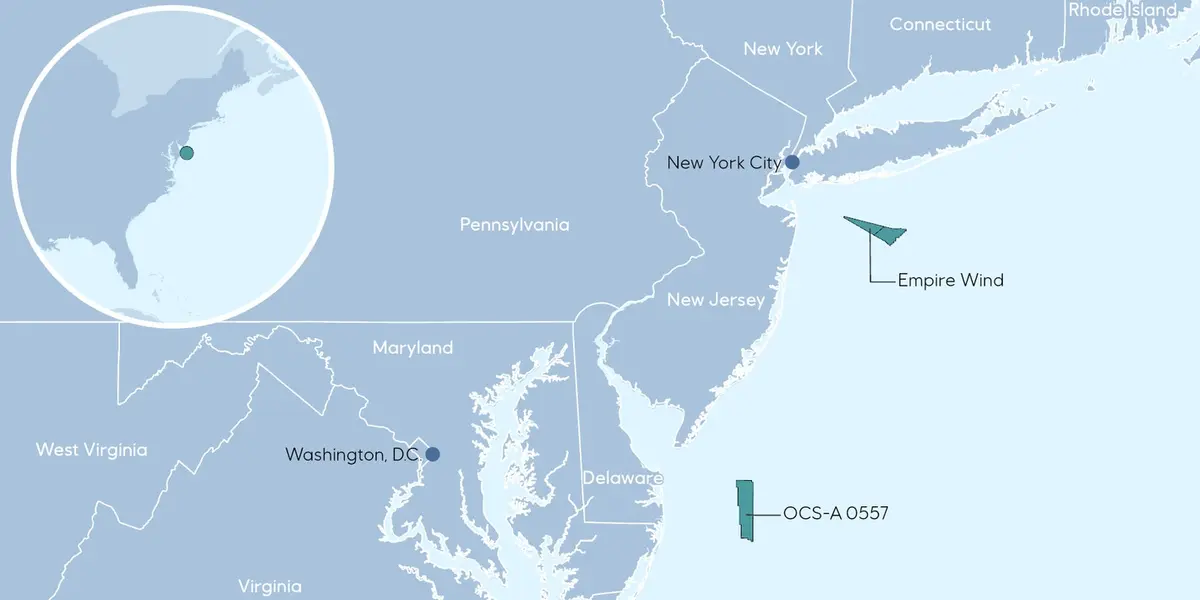
Meanwhile, what are the implications for Equinor’s offshore wind investments in the US? Equinor’s embattled Empire Wind project is probably too far along to reverse course. Their Central Atlantic (Lease 0557) and California (Lease 0563, Atlas Wind) may be a different story. However, buyback negotiations would be complicated by the Empire Wind situation, and perhaps by the Norwegian government’s 2/3 ownership. On the other hand, Equinor is a significant oil and gas leaseholder in the Gulf of America, so they would have ample options for investing wind lease rebates.
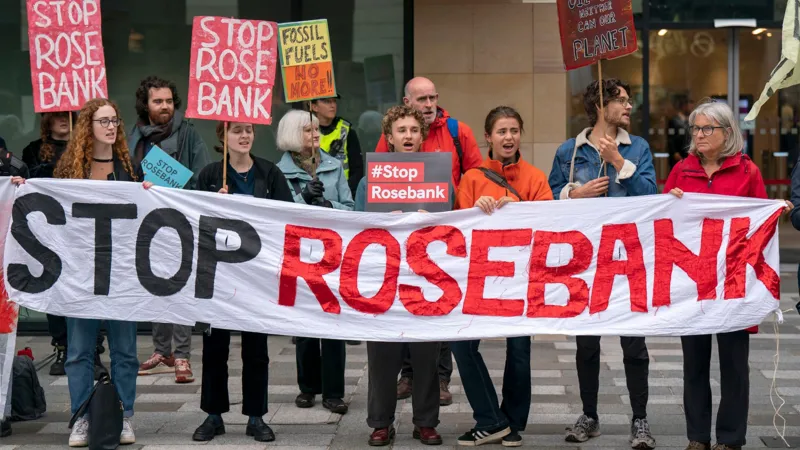
Campaigners against Rosebank, Britain’s largest untapped oil field, have told the UK government that approving the project would risk breaching international law.
They say profits would flow in part to the Israeli oil and gas company Delek Group, which the UN human rights commissioner accuses of “supporting the maintenance and existence” of illegal settlements in the West Bank.
Note that Delek is not a Rosebank partner, but is the majority shareholder in a 20% Rosebank partner, Ithaca Energy. The 80% owner and project operator is Equinor, which is 2/3 owned by the Norwegian govt. Apparently, neither Equinor nor Norway are troubled by Ithaca Energy’s 20% Rosebank share. (There is no indication that the BBC contacted Equinor prior to publishing the article.)
The most sensible quote in the article is from the govt of Israel which dismissed the accusations as “absurd and distorted.”
Which do left-wing activists hate more – oil or Israel?
The Snorre field is in 300-380m of water in the North Sea ~200 km west of Floro.
According to Reuters and others, Equinor will no longer pursue electrification of Snorre A and B, Heidrun, Aasgard B, and Kristin platforms, but still plans to proceed with projects at Grane and Balder fields.
A number of BOE posts since Jan. 2022 have questioned Norway’s electrification strategy for offshore platforms. Our reasons:
Most offshore platforms produce sufficient gas to support their power demands
Assuming gas that is not used to power a platform is marketed and consumed elsewhere, the net (global) reduction in CO2 emissions from electrifying offshore platforms is negligible. (Perhaps there is actually a small increase in net emissions given the power required to transport the gas to markets and the emissions associated with onshore power generation).
Offshore power demands are highly variable, especially when drilling operations are being conducted.
Gas turbines are reliable, and capable of responding to variable power demand. Excess generation capacity is typically provided.
Power from shore increases the cost of platform operations and could decrease ultimate recovery of oil and gas resources.
Per NPD, electrification of the shelf will increase electricity prices for onshore consumers and increase the need for onshore facility investment.
Gas turbines or diesel generators are still necessary to satisfy emergency power needs at the platforms.
Long power cables are vulnerable to damage (accidental or intentional), as are onshore power stations.
The reliability, cost, and cable vulnerability concerns have clearly been validated. The reality is that powering distant platforms from shore increases operating costs, safety risks, and onshore electricity prices with no net environmental benefit.
It also seems rather hypocritical for a major natural gas exporter to prevent offshore operators from powering their platforms with gas produced at their platforms.
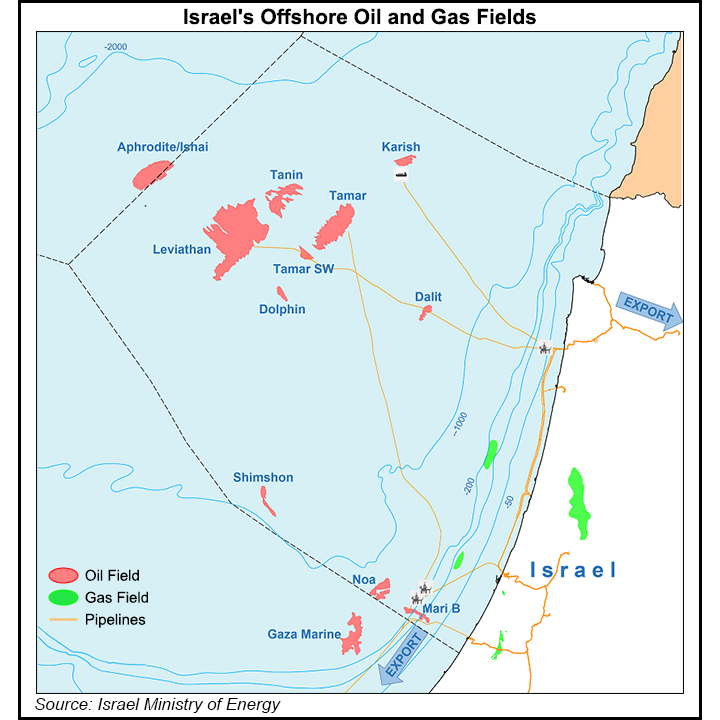
In light of the fantastic Middle East news, planning for the redevelopment of Gaza is underway. The Gaza Marine Gas Field should be a high priority given the power generation and revenue potential.
The field, which was discovered in 1999 by British Gas (now part of Shell), is located approximately 30-36 km off the coast of Gaza in the eastern Mediterranean and has estimated natural gas reserves of ~ 1 Tcf.
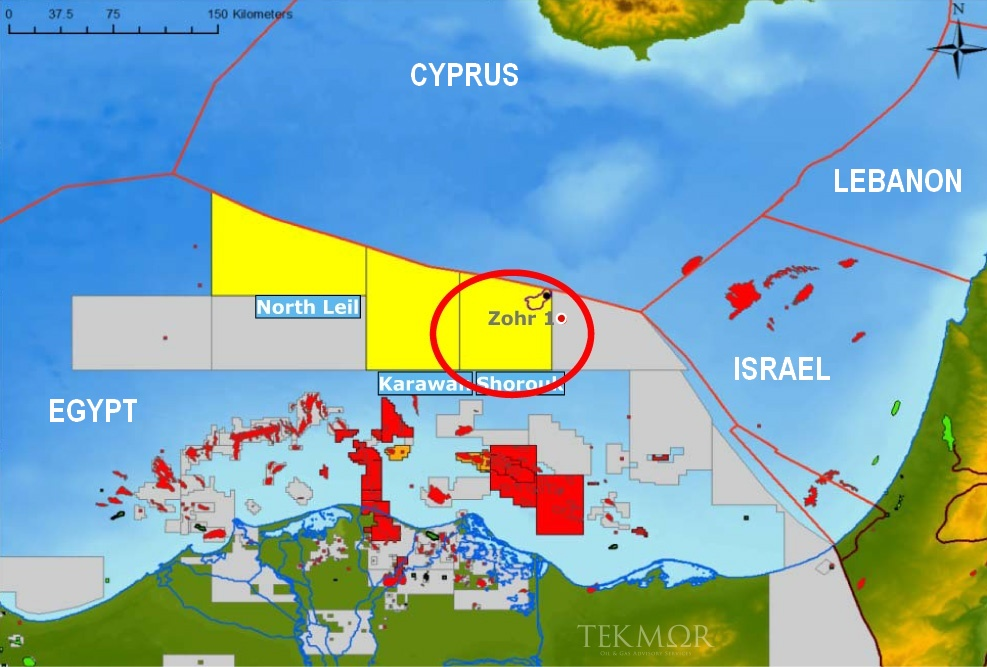
Who should be licensed to develop the field? In June 2023, there was a proposed agreement between the Palestinian Authority and an Egyptian consortium led by state-owned Egyptian Natural Gas Holding Company (EGAS). A resurrection of this arrangement may align with Palestinian interests. EGAS has experience in Mediterranean gas projects including the giant Zohr field (see map below).
Other candidates for developing the Gaza Marine field (pure speculation):
Chevron would be a logical choice given their extensive eastern Mediterranean experience as a result of their acquisition of Noble Energy. However, there might be concerns about undue US and Israeli control of this important resource.
Regional giants like Saudi Aramco, Qatar Energy, and Abu Dhabi National Oil Company (ADNOC) would be good candidates.
Another interesting possibility might be Equinor, which is 2/3 owned by the Norwegian govt. Equinor seems to sometimes make socially desirable investments that are less profitable.
Some combination of the above companies might also be a possibility. In any event, it’s critical to manage this resource in a manner that best benefits the recovery effort.
Equinor (2/3 Norwegian govt owned) is increasing its position in Ørsted (50.1% Danish govt owned). Given the ownership structure, public money is at risk for both countries.
The comments below are from a DN Norway article. They were made by CEO Torgrim Reitan after Equinor announced that the company will contribute NOK 10 billion (USD 1 billion) in Ørsted’s special share offering.
“We want a closer partnership with Ørsted. We are two leading companies in offshore wind, and we believe a closer collaboration could create significant value for both Ørsted’s and our own shareholders.”
“This industry is now going through its first real crisis. That makes it quite clear what’s needed. We know a lot about this from oil and gas. What often happens in such times is consolidation.”
“We want a closer partnership with Ørsted. We are two leading companies in offshore wind, and we believe a closer collaboration could create significant value for both Ørsted’s and our own shareholders.”
“In recent weeks, we’ve had conversations with Ørsted management, and we’ve also had conversations with the Danish state. But the discussions have primarily been with Ørsted.”
“Ørsted is in a difficult situation right now. For us, as an industrial and long-term owner, it’s important to be supportive and helpful in such a situation. That’s why we’re putting in nearly a billion dollars.”
“This is a difficult decision, because clearly a lot of equity capital needs to be raised, but we have a fundamental belief in the industry, and also in the company. Ørsted’s underlying portfolio is a strong one.”
“Going forward, this will increase our debt ratio somewhat—maybe by about two percentage points. But we’re starting from a very low debt ratio. So we can manage this within our financial framework. As for capital distribution in 2026 and beyond, we will remain competitive.”
Meanwhile, Equinor is the only major oil company that remains invested in US offshore wind energy. Equinor’s Empire Wind project continues to be highly divisive.