Feeds:
Posts
Comments

Posts Tagged ‘infrastructure’

Per UOG, the rig study:

  • Supports the farm-out process by providing potential farm-in partners clarity on the execution pathway for a future exploration campaign
  • Identifies a double-digit pool of suitable available rigs all assessed against capability, timing and regional positioning
  • Affirms that the key Colibri target well (406 MMbo) and the deeper-water Thunderball follow-on (603 MMbo) could be targeted in a single exploration campaign
  • Identifies a Jamaica-based logistics model that combines local port infrastructure and services with specialist regional offshore services
  • Outlines long-lead requirements identifying critical equipment, sourcing options and procurement timelines

UOG has also posted a video describing the existing Jamaican infrastructure:

This is all good, but UOG is barely solvent and has yet to secure a partner after years of trying. Are their terms unreasonable or are other companies less optimistic about the production potential? Decisions by the Govt of Jamaica to grant UOG multiple license extensions, the latest through 1/31/2028, are puzzling.

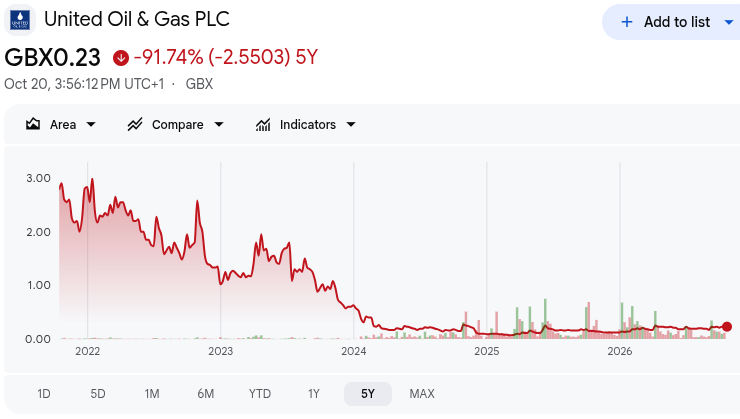
UOG’s stock trades well below £1 per share (currently 0.23 GBX/share) on the London Exchange.
Read Full Post »

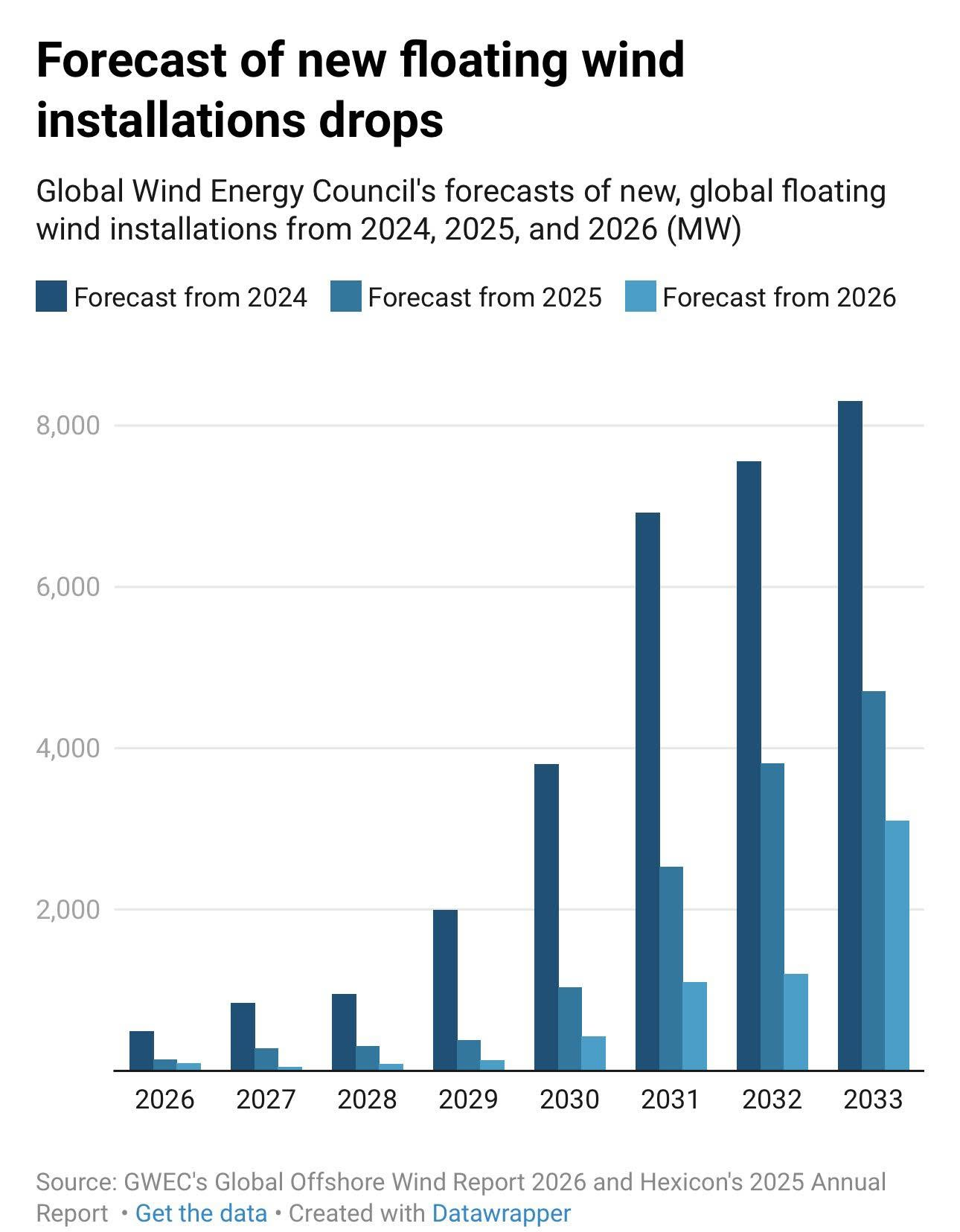
GWEC, the voice of the wind industry, continues to scale down estimates for floating turbines. In 2024, the GWEC expected 835MW of floating wind to be installed in 2027. Last year, this was lowered to 278MW, and expectations dropped further in the 2026 report to just 42MW. A similar trend applies to GWEC’s forecasts for the following years.

Despite strong support from the State, California’s offshore wind sector faces major challenges:

  • Deepwater technology: California offshore wind development is totally dependent on expensive and still unproven floating turbine technology. Norway, once a world leader in floating wind, has lost enthusiasm and is now requiring floating projects to be ‘quality-assured.’
  • Infrastructure: Major port upgrades, new transmission lines to bring power ashore, and specialized vessels are required. The supply chain is immature.
  • Costs: High capital costs plus storage costs (e.g. batteries) for reliability.
  • Environmental and stakeholder issues: Opposition to industrializing the coast.
  • Worldwide struggles for the wind industry.

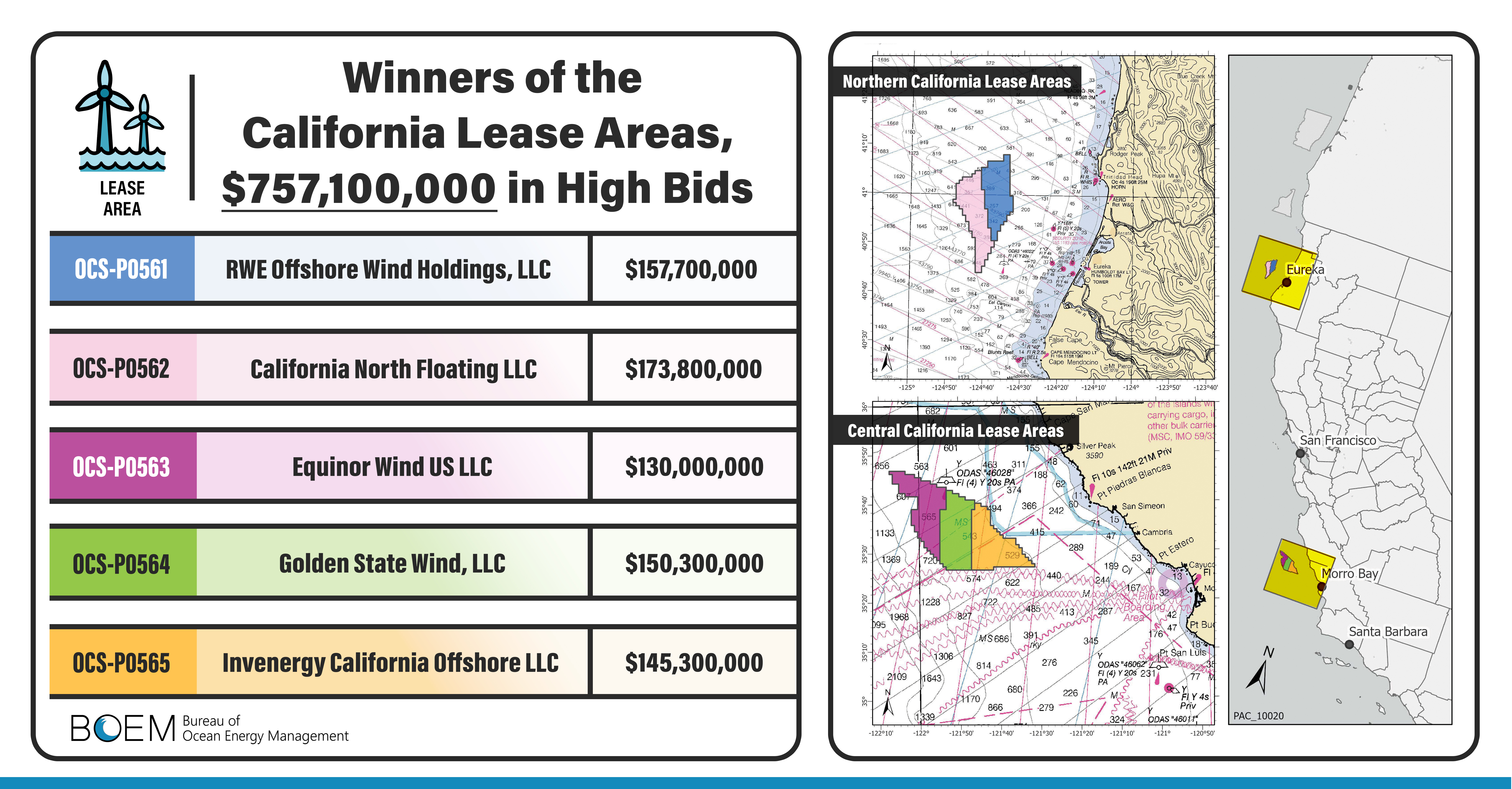
Two of the three Central Coast wind lessees (diagram below) have agreed to lease buyback deals. A lease cancellation letter is attached. The State is challenging the buyback agreements, and is thus in the difficult position of opposing deals that the wind developers voluntarily agreed to and believe are in their best interest. Does the State lose regardless of the outcome of their challenge?

The third Central Coast lessee, Equinor, is curtailing wind investments and has no plans to pursue new offshore wind projects in the US. A buyback deal with Equinor would be complicated by the company’s Empire Wind commitments, and is probably unnecessary given that Equinor has taken itself out of the game.

The two Northern California leases are still active, but the focus has been on regional planning. Funding for necessary infrastructure projects is uncertain and any wind lease development is far in the future.

Read Full Post »