Feeds:
Posts
Comments

Posts Tagged ‘lease buybacks’

RWE has agreed to relinquish their Atlantic, Pacific, and Gulf of America wind leases.

“After careful consideration, it was determined there is no path forward to permit these projects in the U.S. for the foreseeable future.”

Comment: The poor prospects for these leases had more to do with bad investment decisions than permitting challenges. The company is fortunate to be able to rollover their lease bonuses into LNG infrastructure and gas turbine purchases.

The relinquished leases:

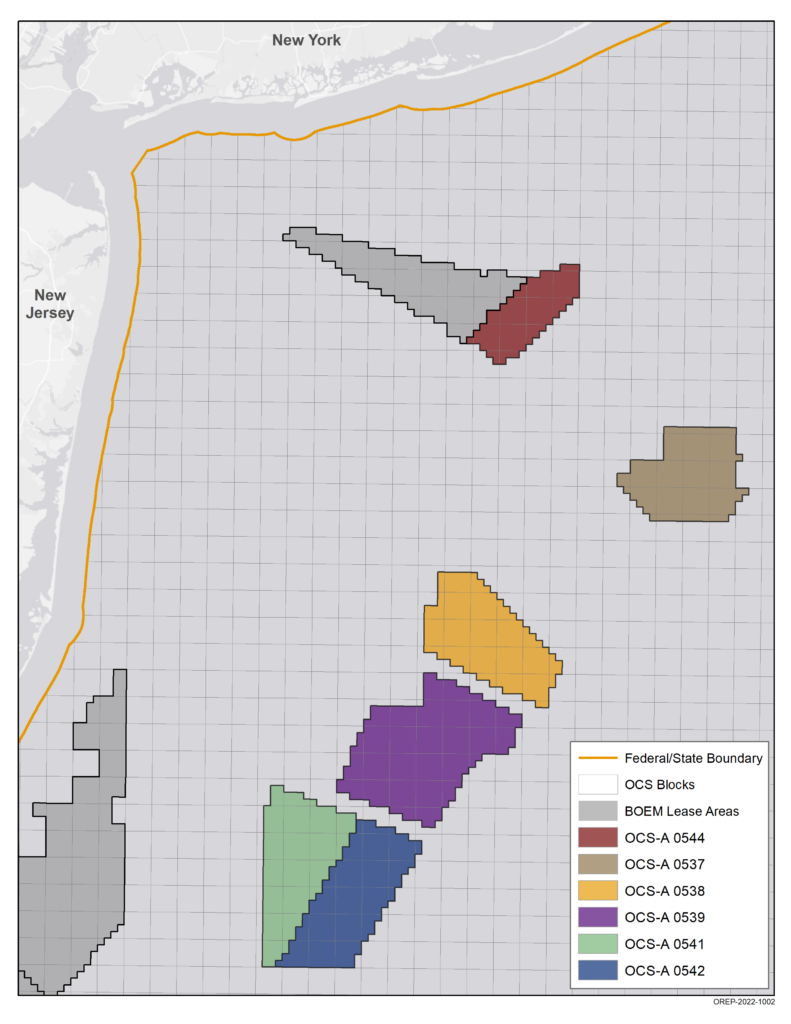
OCS-A 0539: RWE paid the highest bonus ever, $1.1 billion, for this lease at the irrational exuberance Atlantic wind sale in Feb. 2022. The amount was $305 million higher than the next highest bonus for any offshore lease.

OCS-G 37334: RWE was the only bidder at the 2023 Gulf wind lease sale. A second Gulf wind sale received no bids.

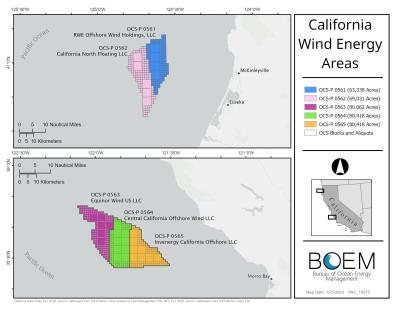
OCS-P 0561: RWE underestimated the technical and economic challenges associated with deepwater floating wind development offshore California and elsewhere. Only one wind lease remains in the Northern California wind lease area. Two of the three wind leases in the Central California area have also been relinquished.

The wind adverse U.S. Administration offered RWE a lifeline that allows them to reinvest in more prospective projects:

  • LNG infrastructure: a financial investment of $900 million to acquire an indirect 16% stake in the Louisiana LNG Project. RWE proceeds will be used to fund the construction of the terminal.
  • Natural gas turbine reservations: To support the expansion of its growing flexible power generation work in the U.S., RWE Americas has signed a $300 million turbine reservation agreement securing future generating capacity to meet growing U.S. electricity demand. The company is developing a pipeline of 15 natural gas peaking projects across target markets in the U.S.

Apparently, the attached letter from 50 U.S. environmental groups asking RWE not to keep their wind leases was not persuasive (and perhaps RWE didn’t appreciate the implied threat of litigation against a deal that was in the company’s best interest).
Read Full Post »

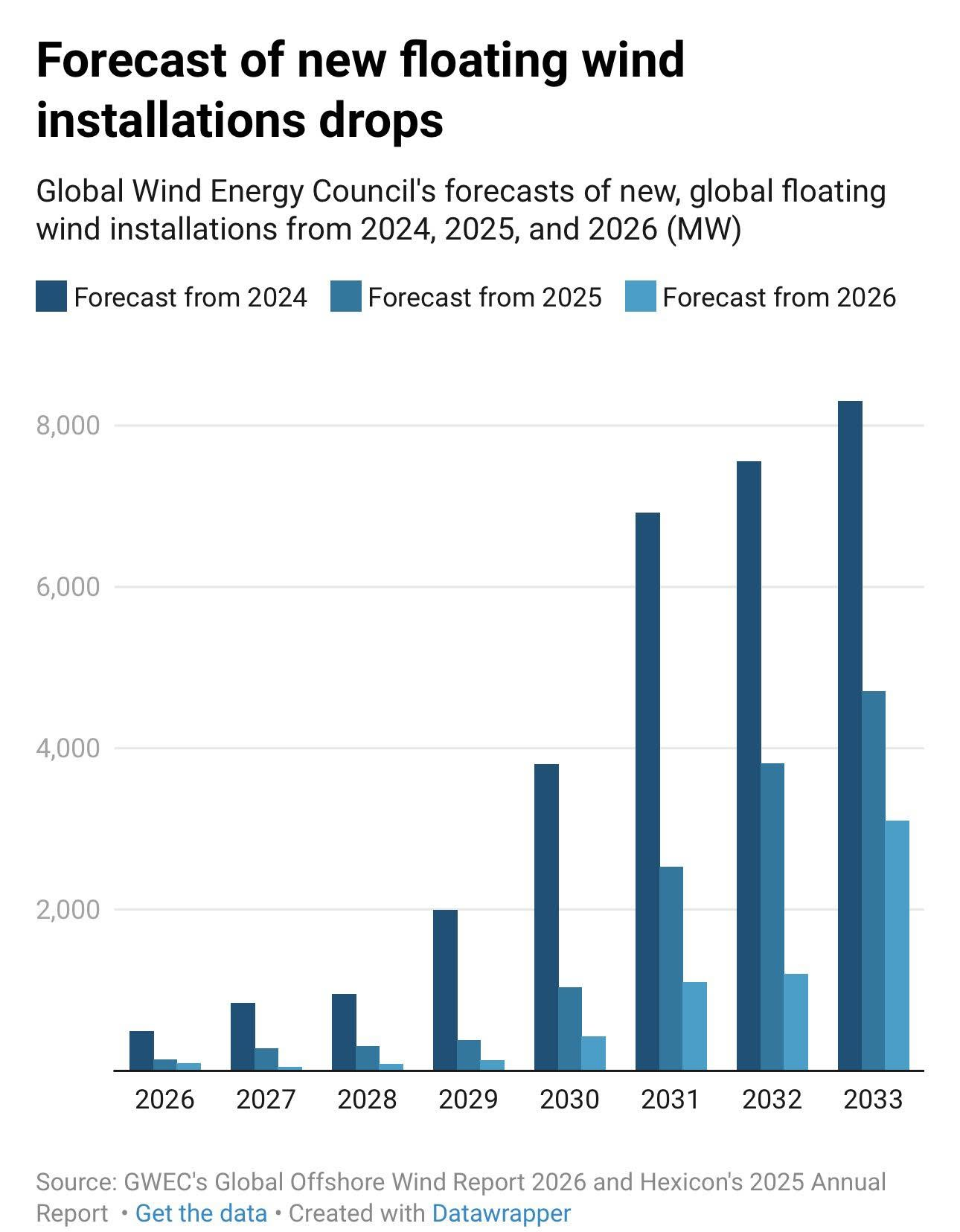
GWEC, the voice of the wind industry, continues to scale down estimates for floating turbines. In 2024, the GWEC expected 835MW of floating wind to be installed in 2027. Last year, this was lowered to 278MW, and expectations dropped further in the 2026 report to just 42MW. A similar trend applies to GWEC’s forecasts for the following years.

Despite strong support from the State, California’s offshore wind sector faces major challenges:

  • Deepwater technology: California offshore wind development is totally dependent on expensive and still unproven floating turbine technology. Norway, once a world leader in floating wind, has lost enthusiasm and is now requiring floating projects to be ‘quality-assured.’
  • Infrastructure: Major port upgrades, new transmission lines to bring power ashore, and specialized vessels are required. The supply chain is immature.
  • Costs: High capital costs plus storage costs (e.g. batteries) for reliability.
  • Environmental and stakeholder issues: Opposition to industrializing the coast.
  • Worldwide struggles for the wind industry.

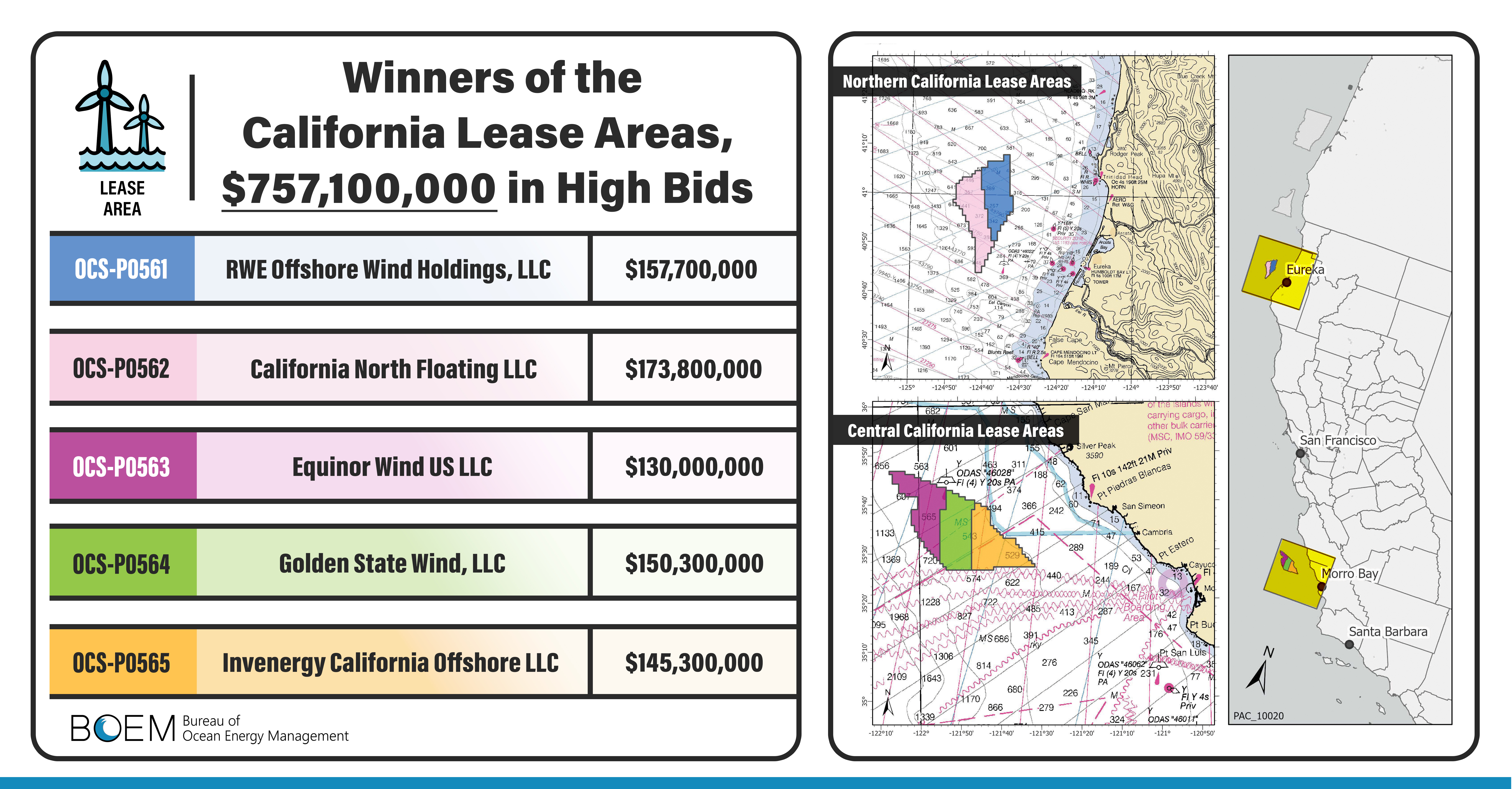
Two of the three Central Coast wind lessees (diagram below) have agreed to lease buyback deals. A lease cancellation letter is attached. The State is challenging the buyback agreements, and is thus in the difficult position of opposing deals that the wind developers voluntarily agreed to and believe are in their best interest. Does the State lose regardless of the outcome of their challenge?

The third Central Coast lessee, Equinor, is curtailing wind investments and has no plans to pursue new offshore wind projects in the US. A buyback deal with Equinor would be complicated by the company’s Empire Wind commitments, and is probably unnecessary given that Equinor has taken itself out of the game.

The two Northern California leases are still active, but the focus has been on regional planning. Funding for necessary infrastructure projects is uncertain and any wind lease development is far in the future.

Read Full Post »