Feeds:
Posts
Comments

Posts Tagged ‘Equinor’

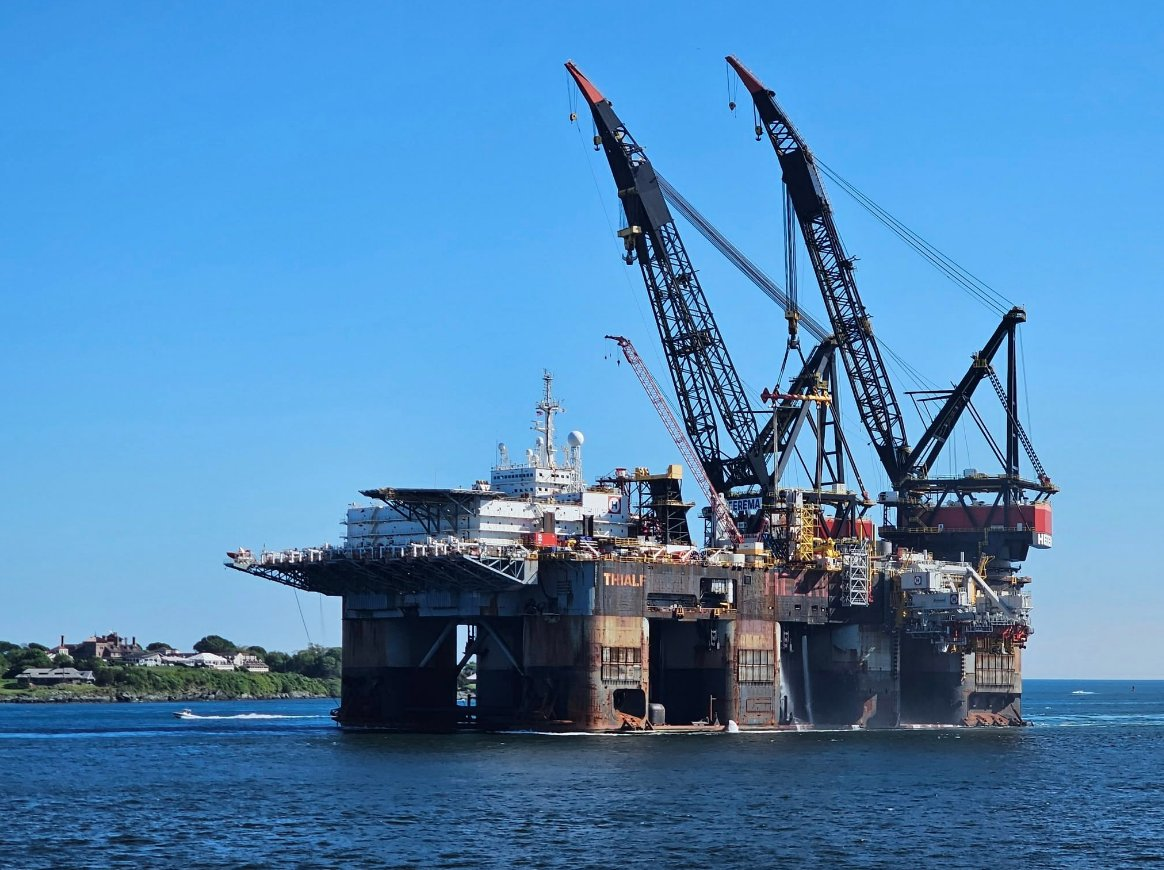
Thialf: a character in Norse mythology who was Thor’s servant.

The Heerema Thialf, a semi-submersible crane vessel (SSCV), is a rather massive presence in coastal waters. The vessel is 661 feet long and 470 feet high, with a lifting capacity of up to 14,200 metric tons, and is the second-largest of its kind.

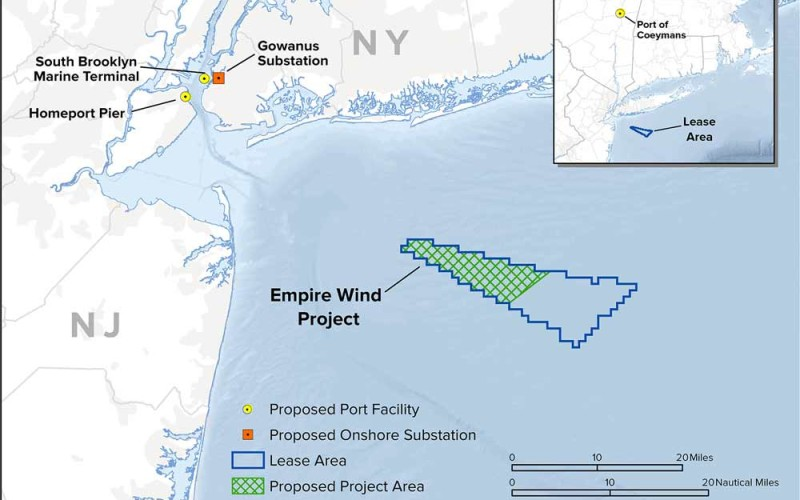
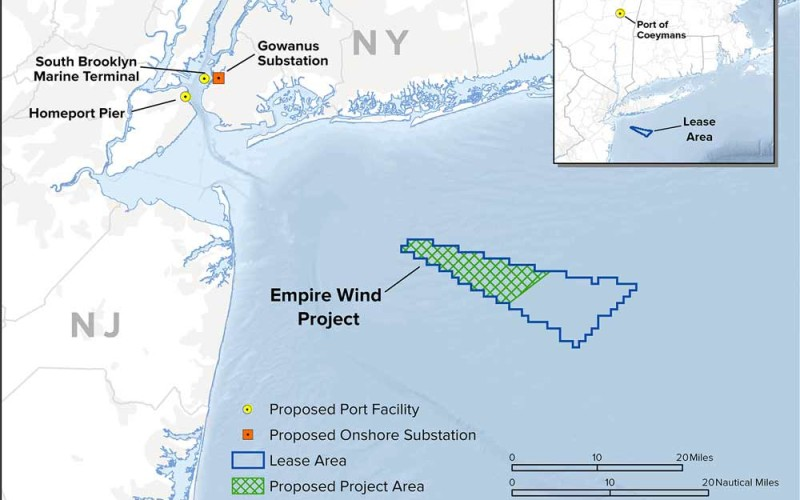
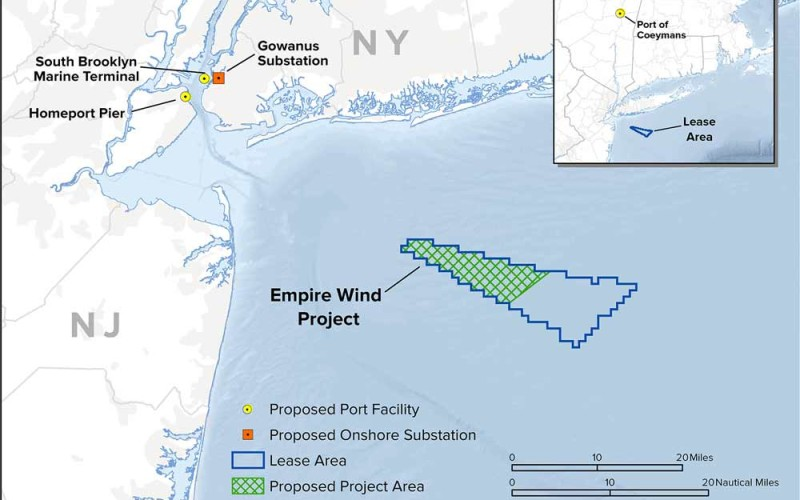
The Thialf, which set a world record in 2000 by lifting the 11,883-metric-ton Shearwater topside structure in the North Sea, will be driving piles for 54 Vestas 15 MW wind turbines and a substation structure that are part of Equinor’s controversial Empire Wind project.

John Smith tells me that the Thialf is one of the heavy lift vessels being considered for removing California offshore oil and gas platforms. The vessel is too large for the Panama Canal and would have to make the trip around South America or across the Pacific, depending on where it was last working.

The Thialf’s day rate has not been disclosed, but is likely greater than $500k. Equinor claimed to be losing $50 million/week when the project was paused. Thialf costs were presumably a significant chunk of those losses.

Read Full Post »

With victory in sight, the President pulled the ball away from his most ardent East Coast supporters.

Further thoughts on the reasons for the Empire Wind reversal:

  • Legal/regulatory: Although lease cancellation is not a reasonable option at this time, a pause for further review of the environmental and procedural issues is justified. During the previous Administration, the regulators seemed to function primarily as cheerleaders, as evidenced by the departures (examples here and here), the BOEM/NOAA strategy document, and the promotional tweets. Also, where is the long awaited report on the turbine blade failure? How do you proceed with development before that has been released for public review?
  • Norwegian govt intervention: Some would argue that Empire Wind was a bad investment by Equinor (2/3 govt owned) and it would have been better to take the losses and move on.
  • Trade unions: Concerns about the job losses are warranted, but the long term viability of the subsidy dependent offshore wind industry is in doubt, and important industries (e.g. fishing and tourism) may be negatively impacted. Other job losses could occur if offshore wind drives up electric prices and decreases grid reliability.
  • Pipeline deal: The regionally important Constitution natural gas pipeline is still very much in doubt despite reports of a deal with Governor Hochul. With or without her support, climate-ultras are driving NY/New England energy policy and will, at a minimum, stall this project. Fisheries Nation was particularly blunt in criticizing fishermen being “used as a poker chip” to gain tepid support for the pipeline project.

Following the reversal of the Empire Wind decision, Green Oceans, ACK for Whales, Long Island Commercial Fishing Association, Protect Our Westport Waters, Save Greater Dowses Beach, Save Right Whales Coalition, and the Wampanoag Tribe of Gay Head/Aquinnah petitioned Secretary Burgum to halt all wind construction in New England coastal waters and begin a “complete reevaluation” of their permits under applicable federal laws. In addition to right whale and tribal cultural resources concerns, the letter cited:

  • Critical habitat destruction impacting cod spawning grounds.
  • Inadequate response to turbine blade failures and environmental cleanup.
  • Severe adverse impacts on regional fisheries and economic displacement.
  • Compromised national defense radar and marine safety capabilities.
  • Misleading economic analyses that omit substantial regional job losses and increased electricity prices.

Read Full Post »

The Administration has not yet explained the decision to allow the Empire Wind project to go forward. I suspect the following points apply:

  1. Attorneys advised, probably correctly, that the Administration would likely lose this case in the courts. Although the Secretary of the Interior has broad authority under OCSLA to suspend operations, he would need strong justification to do so indefinitely. Equinor has invested $billions in the project and their contractual rights would be difficult to abrogate.
  2. Equinor is 2/3 owned by the Norwegian govt, which engaged in diplomacy on Equinor’s behalf. Jens Stoltenberg, former PM of Norway and NATO chief, commented on X: “I commend the Trump Administration for our great cooperation in reaching an energy deal that allows Equinor to resume construction of Empire Wind. This will benefit both our countries & deliver energy to thousands of US households.”
  3. The project has strong support from trade unions.
  4. NY Gov. Hochul appears to have relaxed her position on gas pipelines: “I also reaffirmed that New York will work with the Administration and private entities on new energy projects that meet the legal requirements under New York law.” 

A post on X by Protect Our Coast NJ summarizes the position of project opponents: “There are no words. There was a shocking announcement last night that the federal government reversed course on the Empire Wind Project. We were stunned to see this news. We believe that offshore wind anywhere is a terrible idea. And this project off New York and New Jersey lies in an especially important area—from a national security, environmental and economic perspective. We supported the President’s policy against offshore wind development. And we celebrated Secretary Bergum’s decision to stop the Empire Wind project a few weeks ago. At the time, he said Equinor ‘rushed through by the prior administration without sufficient analysis or consultation among the relevant agencies as relates to the potential effects from the project.’ What changed in the past six weeks? Offshore wind is an extremely expensive, inefficient and unreliable source of power. It harms wildlife, including some of the most endangered mammals on planet Earth. We will fight to protect our coastal and marine ecosystems from the devastation brought by offshore wind construction and operations. We won’t stop until every scrap of steel is removed from the ocean. And we will work to ensure that government officials fully understand the ramifications to public safety, commerce and national defense Empire Wind represents.

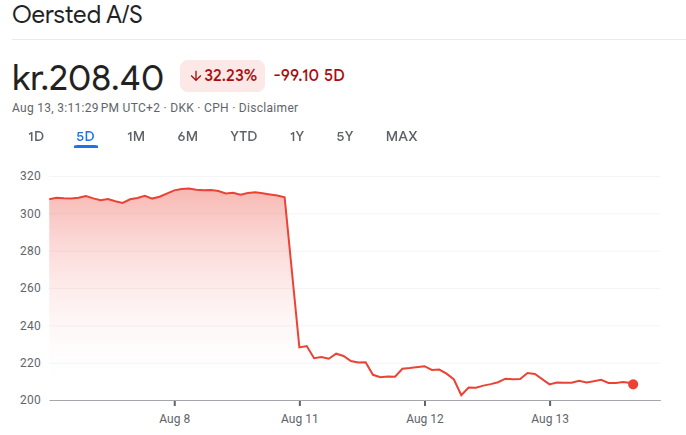
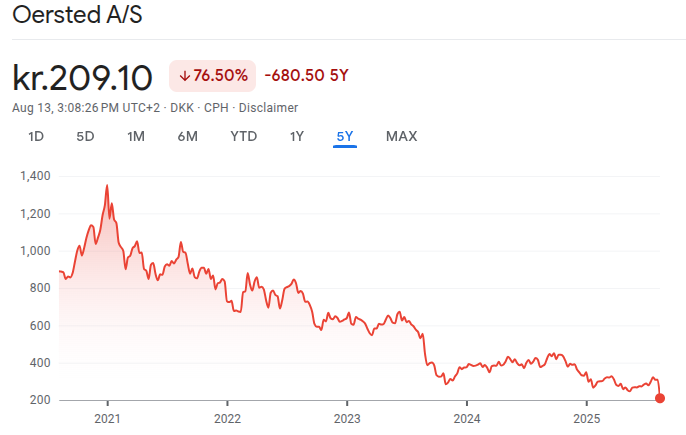
There are also concerns among Norwegian investors about this project:

Read Full Post »

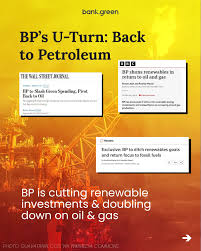
BP dropped the regrettable Beyond Petroleum campaign and has now cut their renewable energy investments to focus on oil and gas production. They are doing quite well in the Gulf of America where they are the no. 2 oil and gas producer.

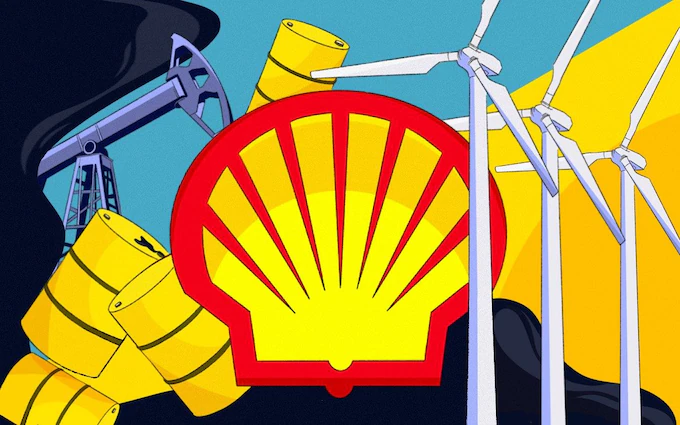
The leading Gulf of America oil and gas producer, Shell, has also slowed its renewable investments and is no longer participating in any US offshore wind projects.

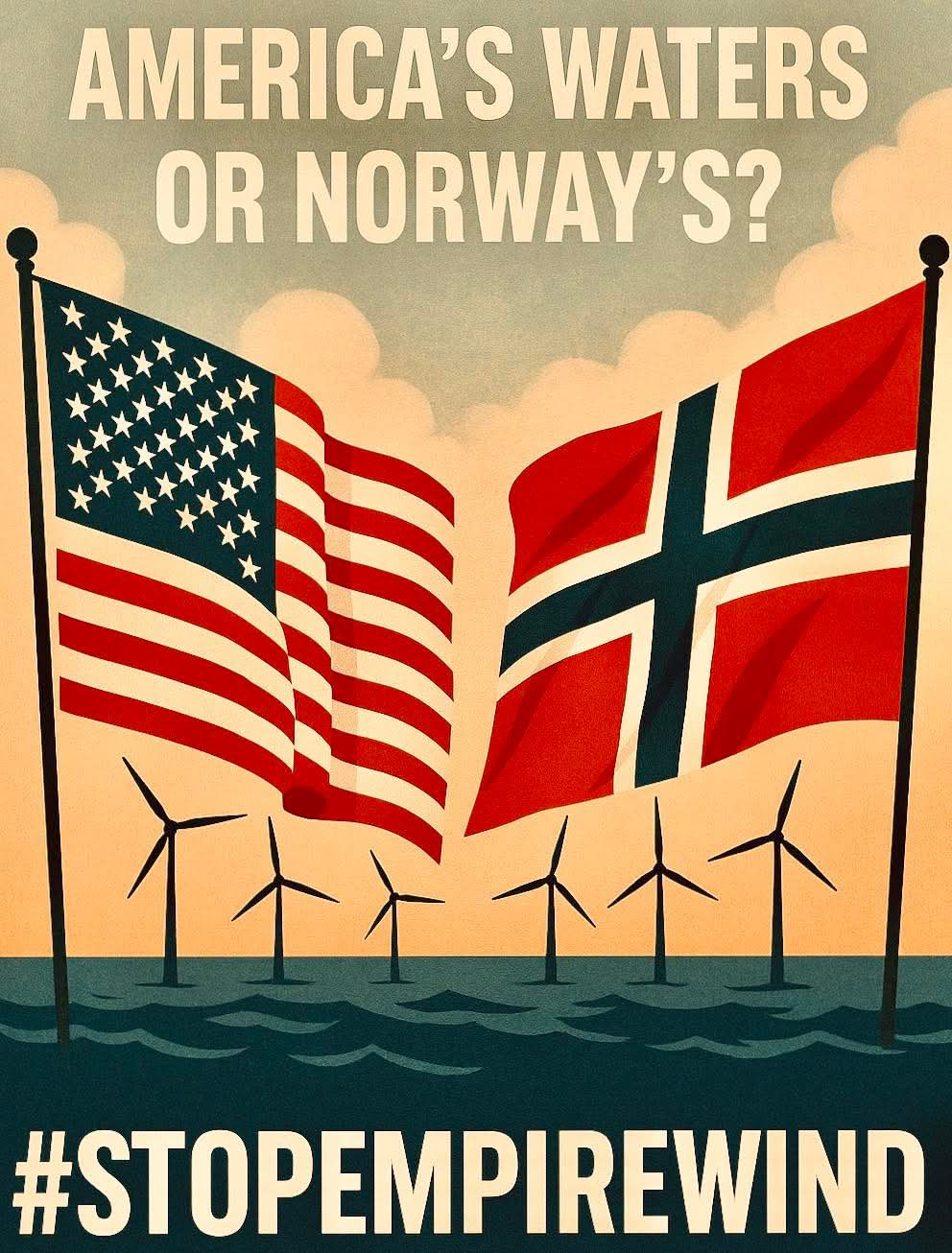
Only Equinor (formerly Statoil), which is 2/3 Norwegian government owned, remains committed to renewable projects, much to the chagrin of some private investors. Equinor’s Empire Wind misadventure may be matched in the Pacific where their floating wind project offshore California is a long way from reality.

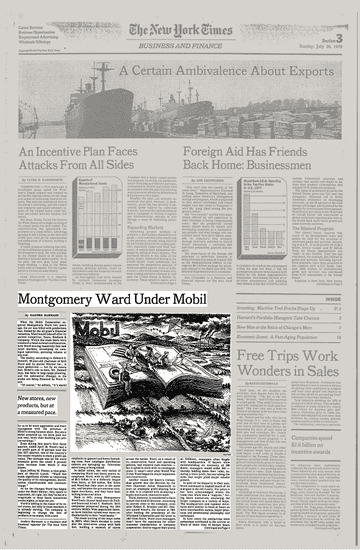
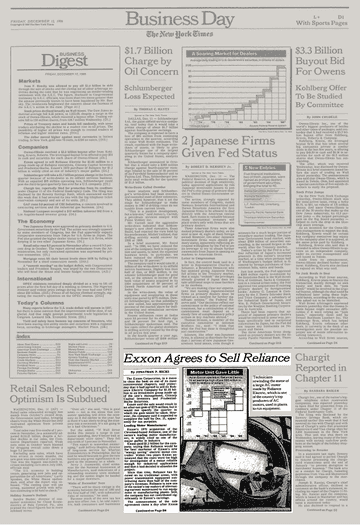
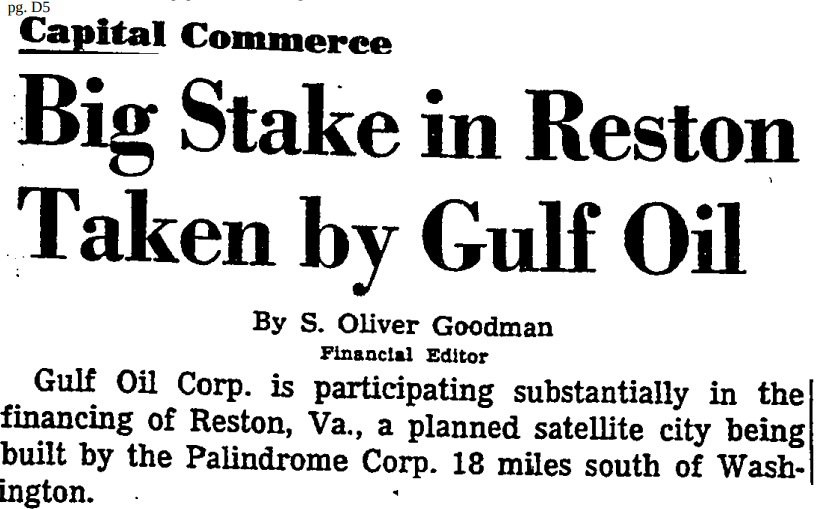
Farther in the past, there were noteworthy failures (below) like Mobil’s acquisition of Montgomery Ward, Exxon’s investment in Reliance Electric, and Gulf’s real estate ventures.

Finally, don’t expect the carbon sequestration boom that some are forecasting. As wind investors have discovered, industries dependent on mandates and subsidies are risky.

Not much unites climate activists and skeptics, but they are largely aligned in their opposition to carbon sequestration (euphemism for disposal), as are fiscal conservatives. The word chutzpah comes to mind when companies seek public funds to dispose of emissions associated with the combustion of their products.

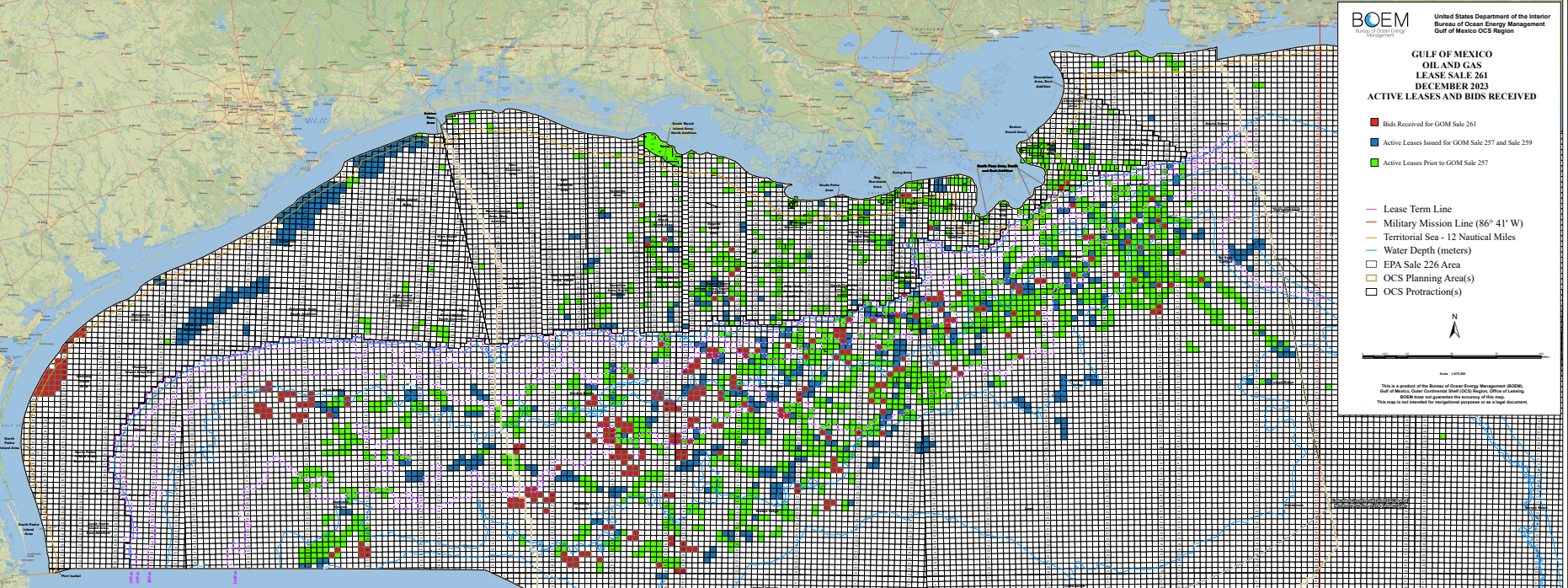
And how are those 199 wrongfully acquired carbon sequestration leases in the Gulf working out (graphic below)? Barring some legislative sleight of hand, those leases are worthless.

199 oil and gas leases were wrongfully acquired at Sales 257, 259, and 261 with the intent of developing these leases for carbon disposal purposes. Repsol was the sole bidder at Sale 261 for 36 nearshore Texas tracts in the Mustang Island and Matagorda Island areas (red blocks at the western end of the map above). Exxon acquired 163 nearshore Texas tracts (blue in map above) at Sales 257 (94) and 259 (69).

Read Full Post »

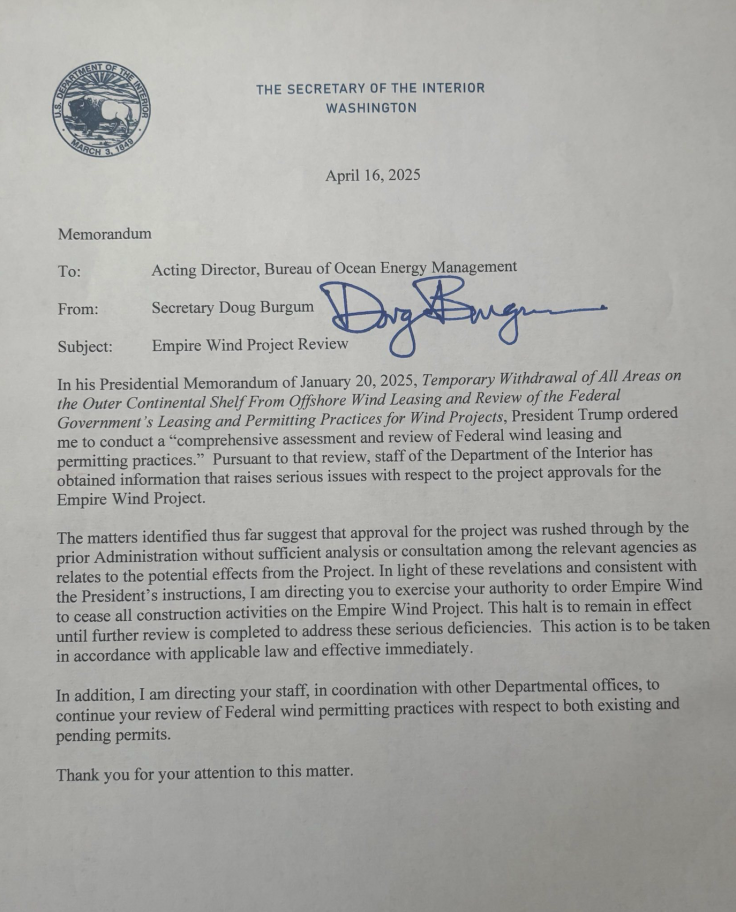
The letter is attached. Excerpt:

The Bureau of Ocean Energy Management (BOEM) is issuing this Director’s Order to Empire Offshore Wind LLC to halt all ongoing activities related to the Empire Wind Project on the outer continental shelf to allow time for it to address feedback it has received, including from the National Oceanic and Atmospheric Administration (NOAA), about the environmental analyses
for that project. BOEM received this and other feedback regarding Empire Wind as an outgrowth of the review that the Department is engaged in related to offshore wind projects. See the President’s Memorandum of January 20, 2025. 90 Fed. Reg. 8363 (January 29, 2025).

Read Full Post »

Equinor’s Empire Wind project had been challenged by New Jersey congressmen and questioned by Norwegian investors. I suspect that Equinor saw the writing on the wall.

Read Full Post »

A letter from Congressman Chris Smith (NJ) to Sec. Burgum is attached. Excerpt:

I am writing to advise you that Equinor, a Norwegian Energy multinational is planning to move forward with construction of its Empire Wind 1 project off the coast of New Jersey and New York as early as this April.
This is an alarming development and should not be allowed before the comprehensive review of offshore wind ordered by President Trump’s January 20th executive order is completed. The executive order states that the assessment is needed to review the many shortcomings of the Federal wind leasing process including, “potential inadequacies in various environmental reviews required by the National Environmental Policy Act.”

Meanwhile, Norwegian investors have expressed dissatisfaction with Equinor’s renewable energy ventures. This Norwegian article raises concerns about Empire Wind 1, saying the project “could become a new industrial scandal.”

Based on the respective financial performance of oil producers, I think it’s fair to say that investors aren’t attracted to those companies because of their wind projects.

Read Full Post »

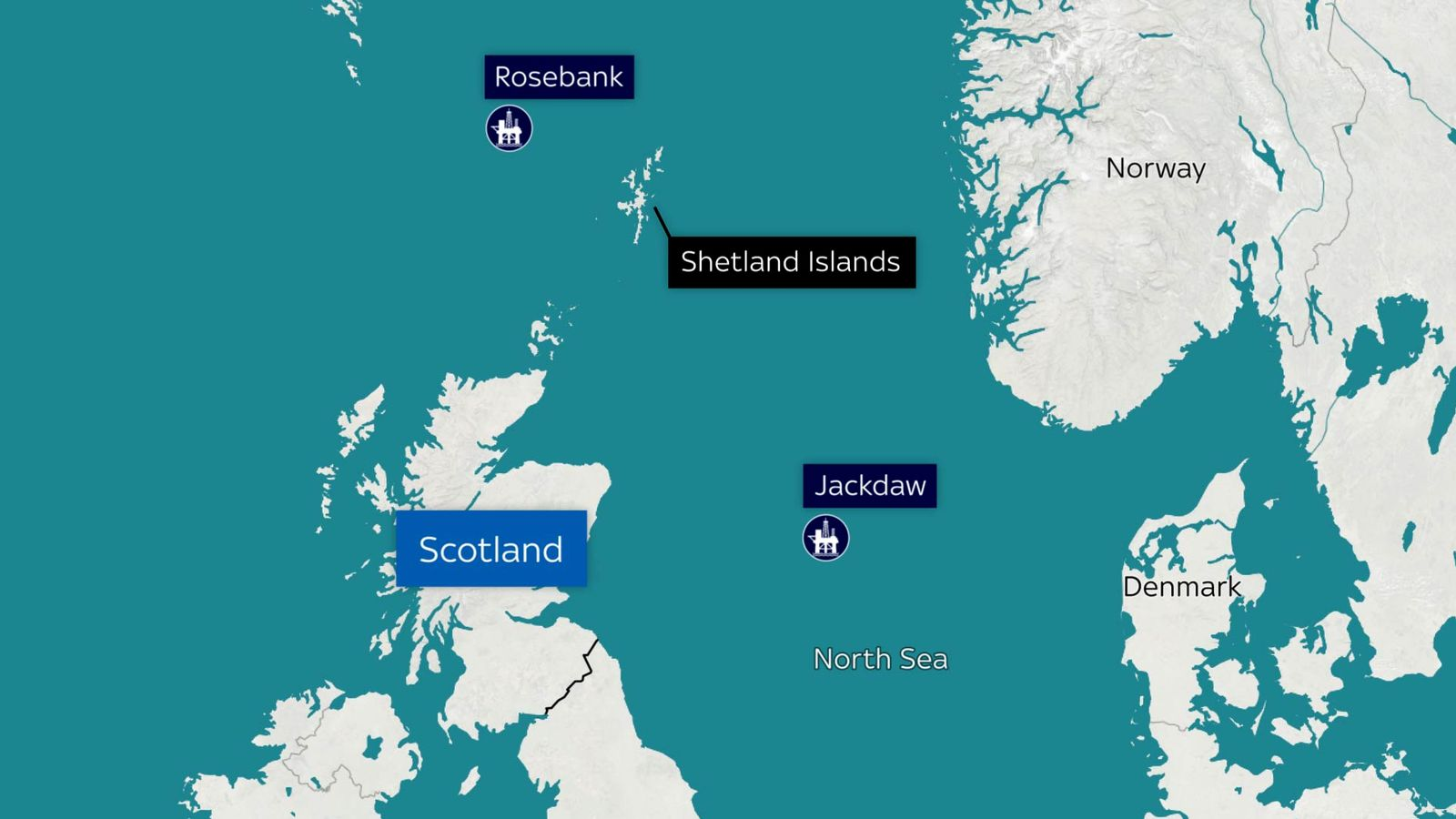
The recent Rosebank and Jackdaw decision in the UK is similar to the OCS Sale 257 fiasco in the US. In both cases, the court ruled that downstream GHG emissions weren’t adequately considered in the environmental reviews.

In the case of the Rosebank and Jackdaw fields, Lord Ericht ruled that the environmental assessment must take into account the climate effect of downstream emissions resulting from the consumption of oil and gas produced at those fields.

The Sale 257 decision was even more extreme in that Judge Contreras ruled that BOEM failed to consider the “positive” effect that higher prices (which might result from lower US offshore production) would have in reducing worldwide demand and the associated GHG emissions.

Regardless of one’s opinion on the extent to which GHGs affect the climate, halting UK and US projects will have virtually no effect on international oil and gas demand. That demand will be satisfied by other suppliers who will reap the economic benefits.

The Sale 257 decision was overturned by legislative action.

Presumably, revised environmental assessments, will allow the previously approved UK projects, for which some facilities have already been constructed and installed, to go forward. The UK government has been considering how to calculate downstream emissions. The model will no doubt yield outcomes that are highly uncertain.

In the meantime, the UK sector of the North Sea, unlike its Norwegian counterpart, continues to flounder.

Wisdom from the Scotsman regarding UK offshore production:

We need more of it because even the most ardent supporters of renewable energy, the most vocal proponents of net zero, quietly admit oil and, especially, gas will be needed for a couple of decades at least. That obvious truth, that inarguable necessity, is not, apparently, enough for ministers to encourage UK production, however, or temper their rhetoric around renewables.

Allowing our rigs and refineries to power down and relying on other countries to keep the lights on still seems a little, well, counter-intuitive. We will import oil and gas but not produce it while happily exporting contracts, skills and jobs overseas? The practical impact of Labour’s refusal to grant new exploration licences in the North Sea might remain unclear but the message it sent was absolutely crystal.

Read Full Post »

Johan Sverdrup field, 155 km from shore

On Tuesday, Equinor halted all production from the Johan Sverdrup field, western Europe’s biggest producer. An outage in the offshore power system has been cited as the cause.

A Jan. 26, 2022 BOE post questioned Norway’s electrification policy for offshore platforms. Another post discussed a loss of power to the Sverdrup field only 10 weeks ago.

In addition to the production losses, these incidents increase safety risks and onshore electricity prices with no net environmental benefit.

Hopefully, the investigation reports will be posted so that the lessons learned can be shared.

Electric cables from shore power the Johan Sverdrup field

Read Full Post »

The irrational exuberance that peaked at the Feb. 2022 New York Bight Wind Sale already seems like a distant memory.

In their quarterly earnings report released on Jan. 30, Shell disclosed a $996 million impairment associated with their withdraw from the controversial Atlantic Shores wind project offshore New Jersey.

Shell is no longer a participant in any US offshore wind projects. This leaves Equinor (2/3 Norwegian govt ownership) as the only major oil company pursuing US offshore wind development.

Those Atlantic states that have linked their economic future to offshore wind better be reassessing their energy strategy.

Read Full Post »

« Newer Posts - Older Posts »