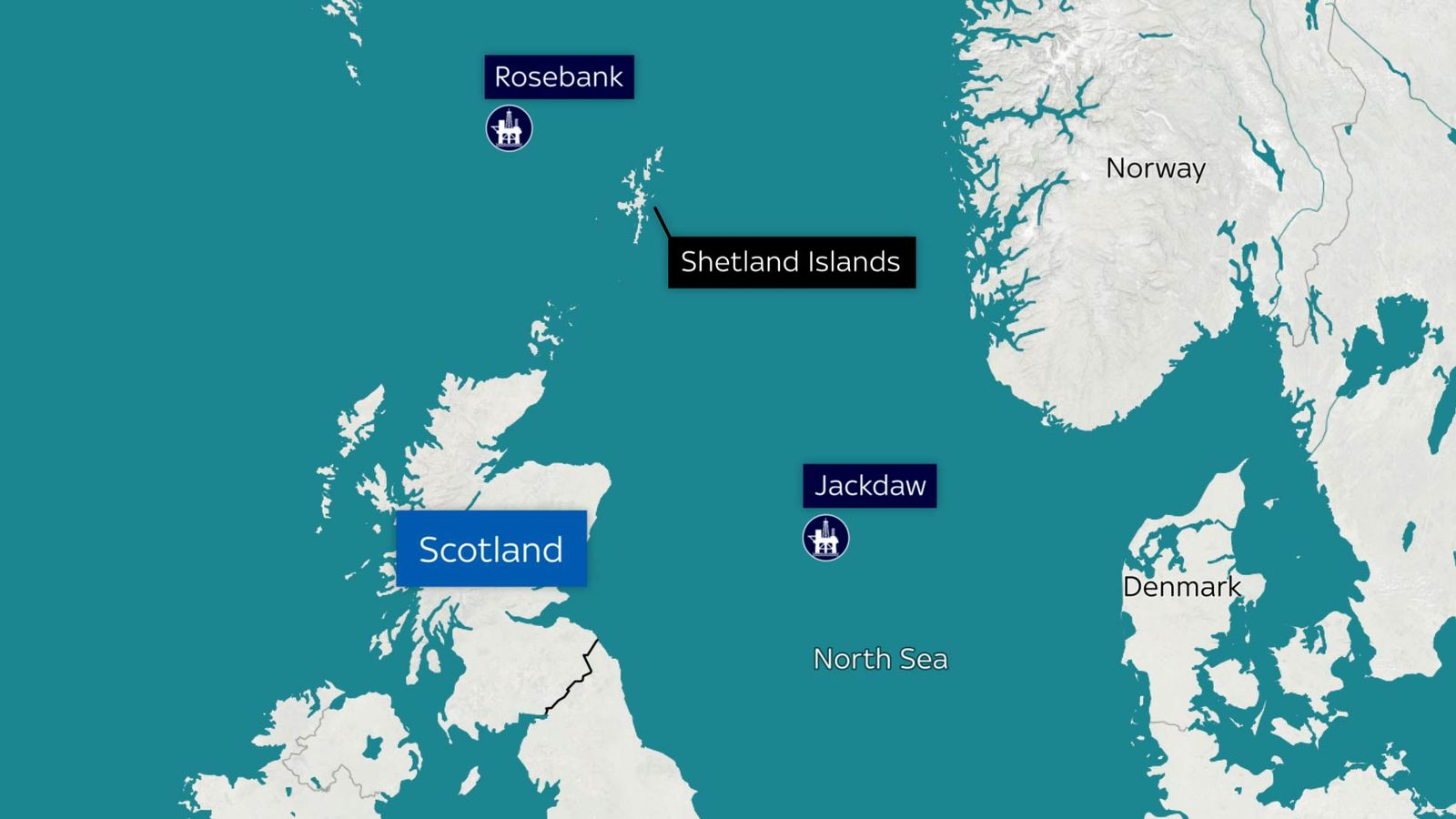
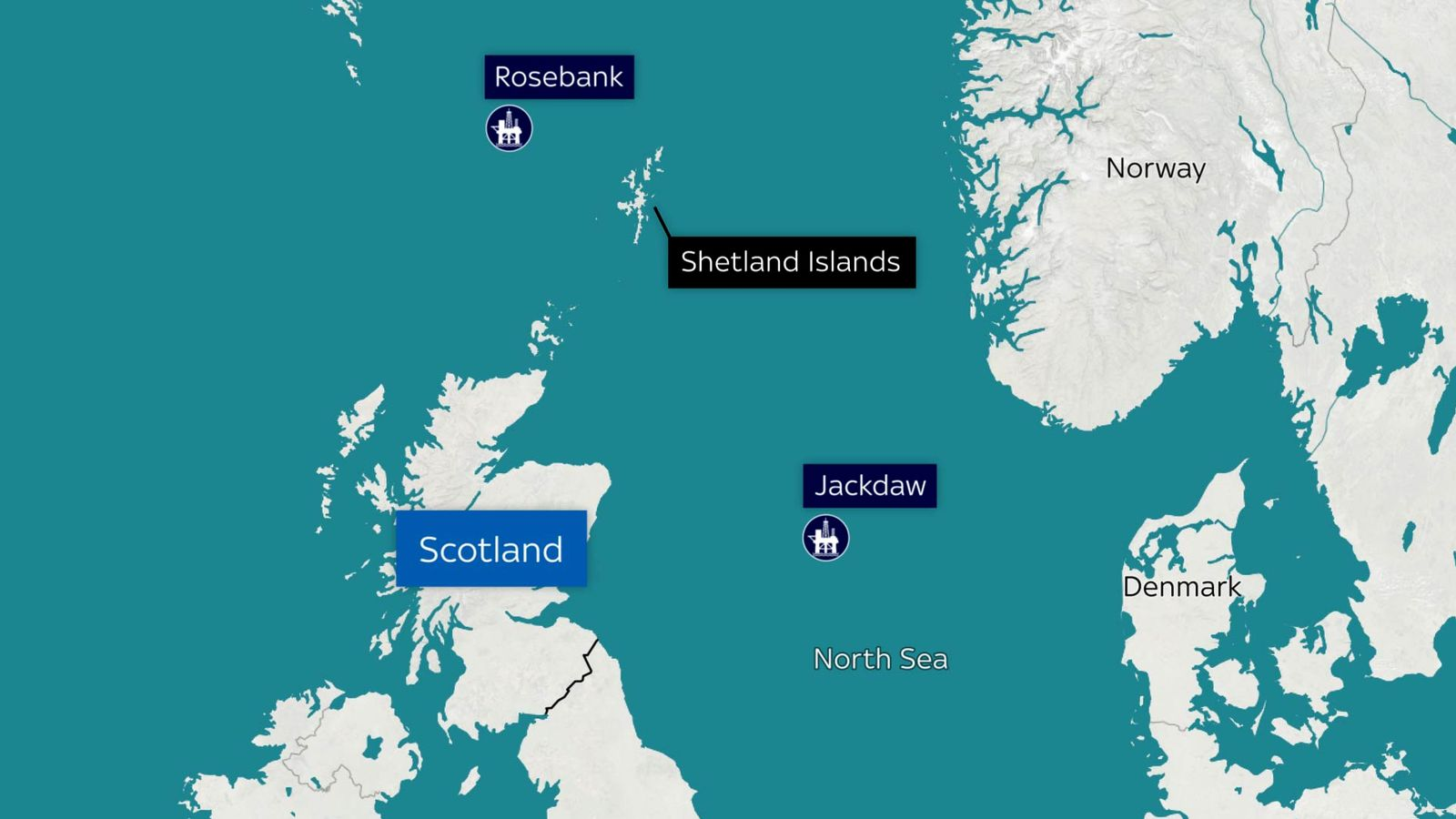
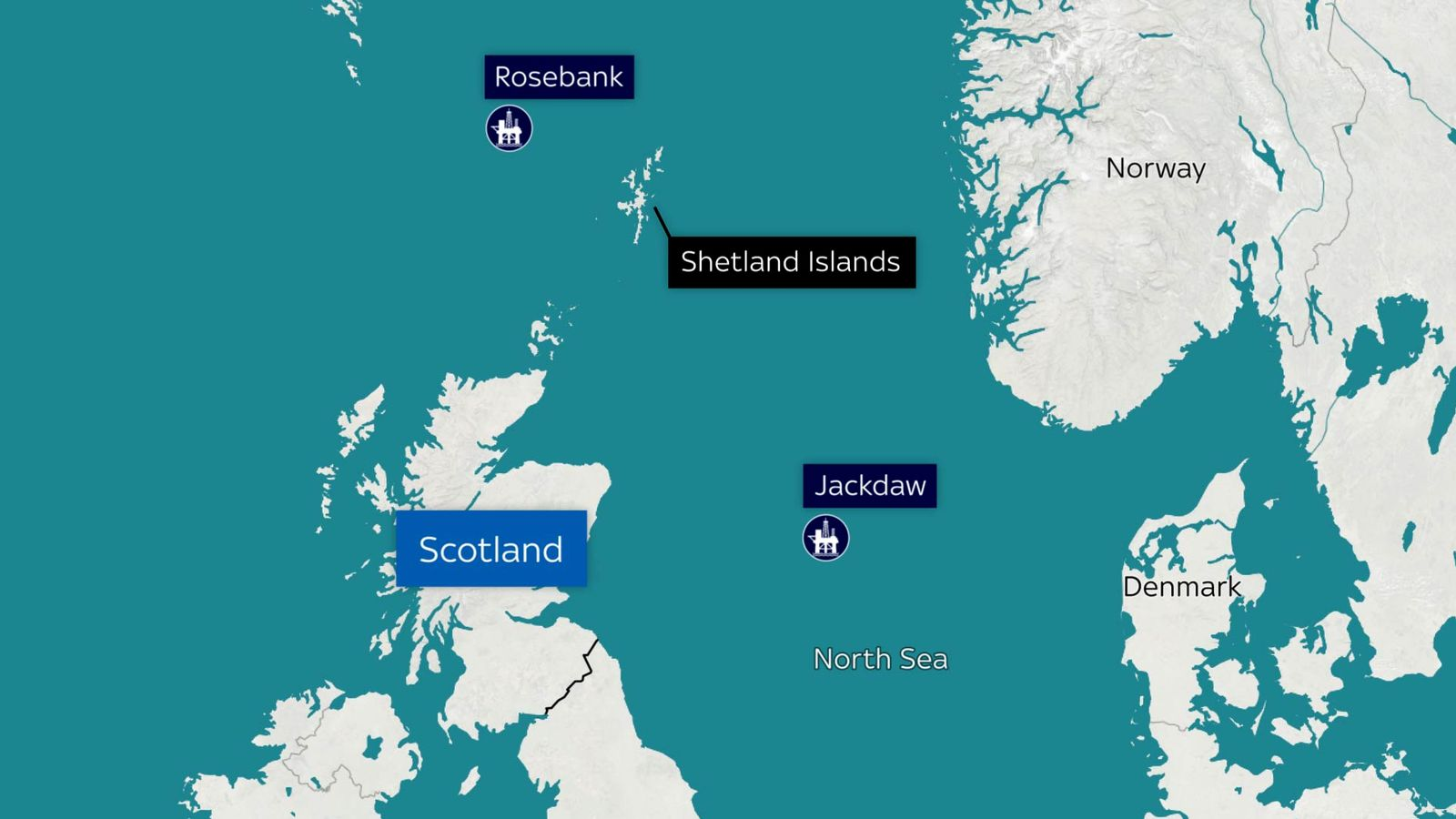
Rosebank and Jackdaw are operated by Adura, an Equinor-Shell joint venture. Much of the infrastructure for Jackaw is already in place, and gas production could begin this winter when it may be badly needed. Production at Rosebank, which is primarily an oil field, could begin in the first half of 2027.
“The question will be: is the UK investable in the future? I hope it will not come to that.”
“It’s a political choice.The North Sea oil and gas industry started on the UK side. We learned from the UK and it’s actually the same geology on both sides of the border – several fields actually cross it.”
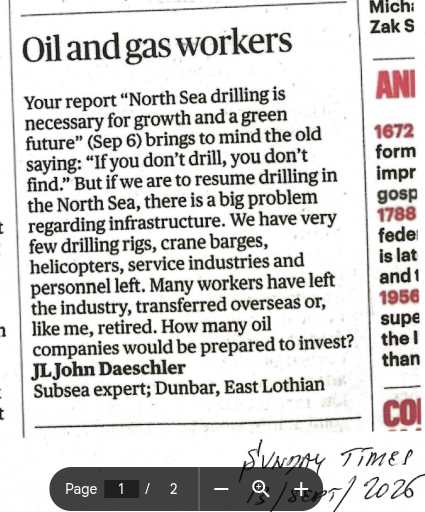
Our guy in Scotland, JL Daeschler, reminds Sunday Times readers that the UK can’t simply summon the return of the long neglected North Sea oil industry.
The editors deleted this sentence from JL’s letter: “Thank you Norway and USA for supplying us energy.” 😉
The West of Shetland area has high oil and gas resource potential. Researchers at the University of Aberdeen are advocating a tailored management system to facilitate development.
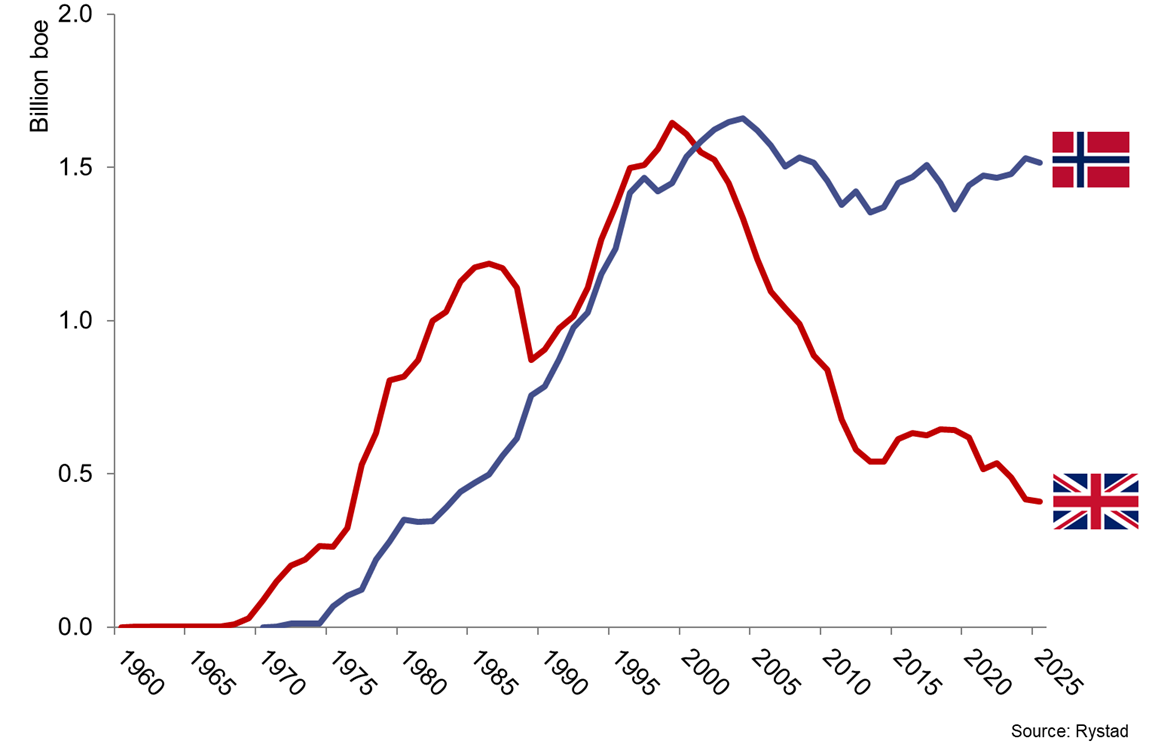
Some of us remember when the UK and Norway were friendly North Sea oil and gas rivals – competing to be tops in production, technology, safety, and even promotion at conferences like OTC. Take a look at the production chart below and note the UK’s production leadership followed by the extraordinary decline.
So what happened? Norway may have better oil and gas resource potential, but that is only part of the story. While Norway was managing their offshore sector to succeed, the UK was seemingly managing theirs to fail.
Norway’s North Sea remains far more active because the government promotes exploration through predictable licensing, cost-recovery incentives, and a focus on adding resources to existing infrastructure.
The UK, by contrast, has shifted toward limited development and decommissioning. In recent years, the UK’s windfall tax on oil and gas profits was raised to 78 percent, and licences for exploratory drilling in new areas were banned.
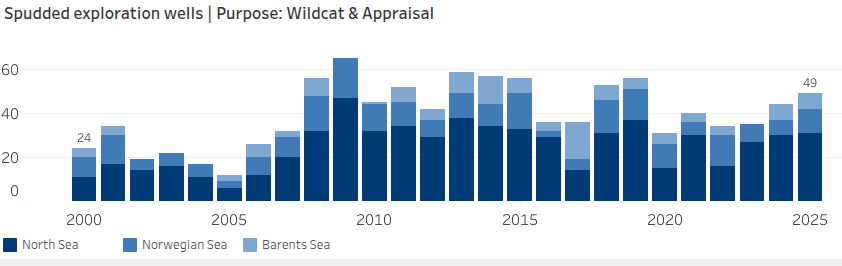
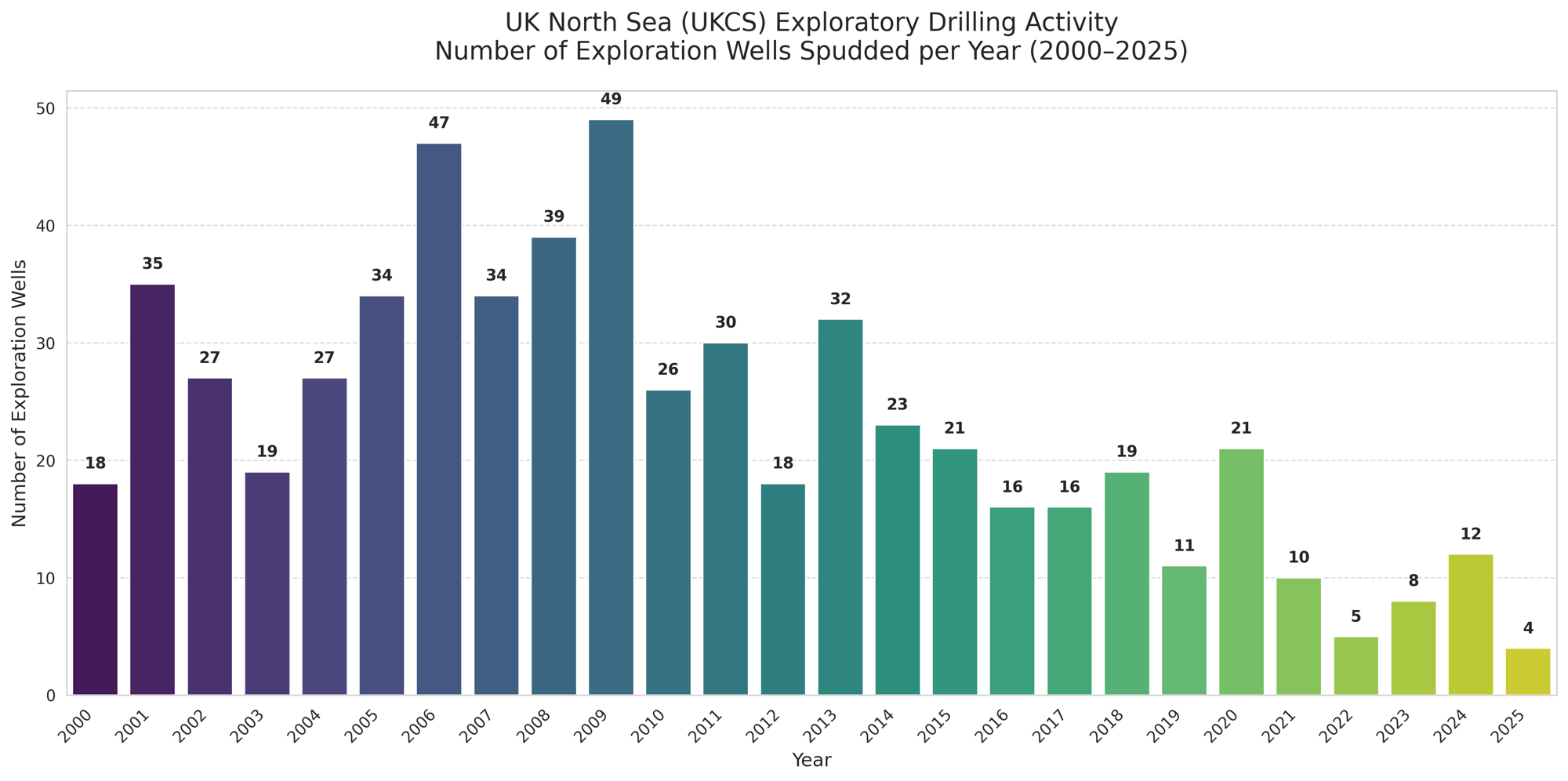
The stark policy differences are evident in the exploration drilling numbers – sustained drilling vs. sustained decline (charts below).
Norwegian Continental Shelf Directorate dataUK NSTA data:exploration wells spudded with original wellbore intent classified as “exploration” (offshore UK includes geological sidetracks).
“Claim: Hundreds of North Sea licences have delivered only “36 days of gas”, proving new drilling does not improve energy security.
“This actually proves the opposite. In a mature basin like the North Sea, you need a constant churn of investment and new licences just to stand still. Without ongoing activity, decline accelerates and import dependence rises faster. That is why countries like Norway continue to license and develop new projects. Their approach allows them to replace what they produce and manage decline more effectively. In industry terms, this is measured through the reserves replacement ratio – how much new resource is added compared with what is produced. Norway consistently produces a higher reserves replacement ratio than the UK. Over the 5 year period 2019-2024, through exploration, Norway replaced on average 46% of the reserves that were produced, the UK however, replaced just 14%.“
“Today, the North Sea still provides over half of the UK’s oil and gas needs. With the right conditions, we can sustain production for longer, reduce exposure to imports, and manage the transition more securely. Without licensing and investment, the UK simply becomes reliant on overseas supplies sooner – regardless of demand falling.“
Claim: 93% of UK North Sea oil and gas has already been extracted, so new drilling makes little difference.
“Official projections show several billion barrels of oil and gas still expected to be produced between now and 2050. Independent analysis commissioned by OEUK shows that, with the right conditions, significantly more could be delivered from known projects and discoveries.“
“And even beyond that, the UK’s own regulator identifies large volumes of oil and gas in:
approved projects
existing discoveries
areas that haven’t yet been developed“
Pressure is mounting on the UK govt to approve the Rosebank and Jackdaw projects and ease exploration restrictions. Will it work?
In the case of the Rosebank and Jackdaw fields, Lord Ericht ruled that the environmental assessment must take into account the climate effect of downstream emissions resulting from the consumption of oil and gas produced at those fields.
The Sale 257 decision was even more extreme in that Judge Contreras ruled that BOEM failed to consider the “positive” effect that higher prices (which might result from lower US offshore production) would have in reducing worldwide demand and the associated GHG emissions.
Regardless of one’s opinion on the extent to which GHGs affect the climate, halting UK and US projects will have virtually no effect on international oil and gas demand. That demand will be satisfied by other suppliers who will reap the economic benefits.
Presumably, revised environmental assessments, will allow the previously approved UK projects, for which some facilities have already been constructed and installed, to go forward. The UK government has been considering how to calculate downstream emissions. The model will no doubt yield outcomes that are highly uncertain.
In the meantime, the UK sector of the North Sea, unlike its Norwegian counterpart, continues to flounder.
“We need more of it because even the most ardent supporters of renewable energy, the most vocal proponents of net zero, quietly admit oil and, especially, gas will be needed for a couple of decades at least. That obvious truth, that inarguable necessity, is not, apparently, enough for ministers to encourage UK production, however, or temper their rhetoric around renewables.“
“Allowing our rigs and refineries to power down and relying on other countries to keep the lights on still seems a little, well, counter-intuitive. We will import oil and gas but not produce it while happily exporting contracts, skills and jobs overseas? The practical impact of Labour’s refusal to grant new exploration licences in the North Sea might remain unclear but the message it sent was absolutely crystal.“