The Case for Reefing California Platforms by John Smith
Environmental groups like the Environmental Defense Center and Get Oil Out continue to oppose converting the jackets of California oil and gas platforms to artificial reefs despite scientific studies (Claisse et al. 2014) showing “oil and gas platforms off the coast of California have the highest secondary fish production per unit area of seafloor of any marine habitat that
has been studied.”
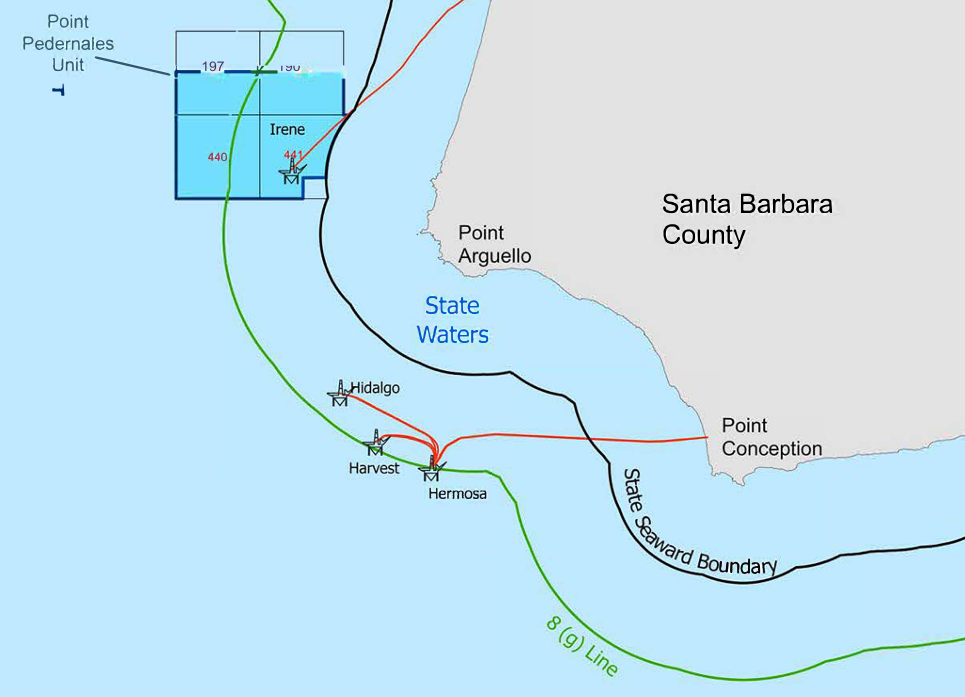
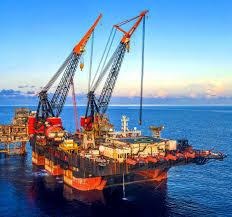
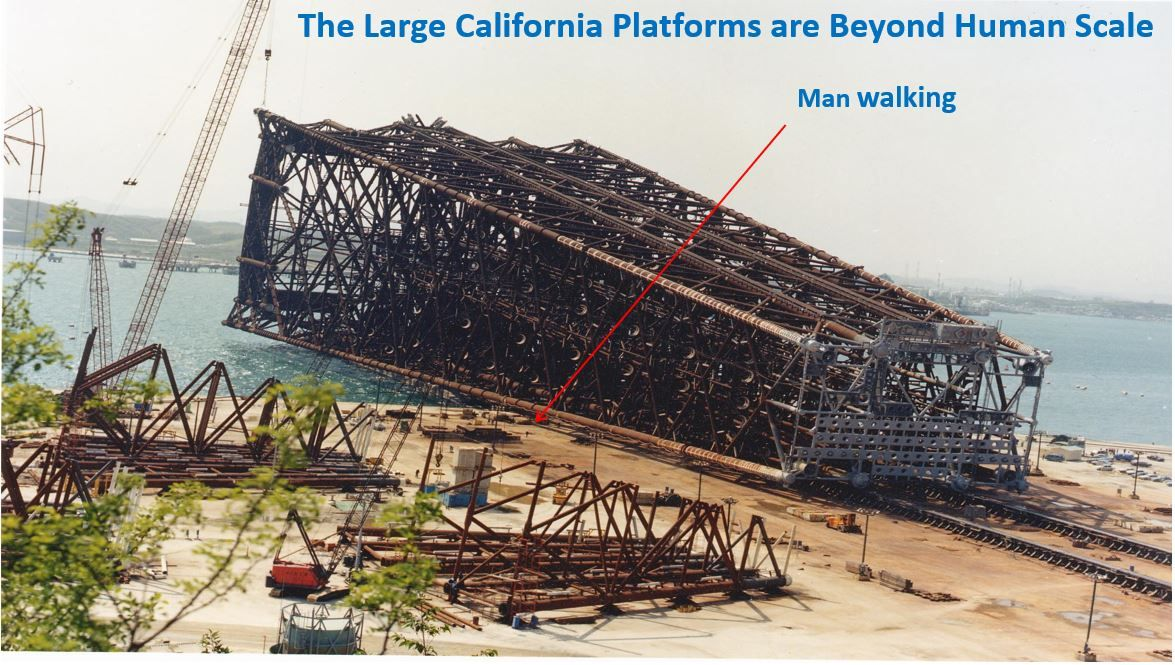
Another important factor environmental groups and the 2023 BOEM Programmatic EIS for Decommissioning failed to consider and acknowledge is the huge amount of air emissions that would be released by world-class heavy lift vessels like the Thialf or Balder Semi-submersible Crane Vessels (SSCVs) that would be required to safely and efficiently remove the large federal OCS platforms like Harvest, Hermosa, and Hidalgo (HHH). The HHH platforms are in waters depths ranging from 430-675 feet and have combined deck and jacket weights ranging from 20,000 – 25,000 tons. In comparison, the wrought iron structure of the Eiffel Tower weighs about 8,000 tons.
The SSCVs and accompanying Anchor Handling Tugs (AHTs) used to remove the HHH platforms will likely to be mobilized from distant locations like the North Sea or Gulf of America where they typically operate. Because SSCVs like the Thialf and Balder are too large to enter the Panama Canal, this would involve a 20,000 nautical mile roundtrip voyage around the tip of South America.
Three to four campaigns, and separate SSCV and AHT mobilizations and demobilizations, are projected to be required to fully remove the HHH platforms because the challenging oceanographic conditions offshore Point Arguello restrict heavy lift operations to a 150-day period between May and October.
Four campaigns by the SSCV and AHT would consume about 300,000 metric tons (mt) of marine diesel oil and release approximately 470,000 mt of CO2 and 11,000 mt of NOX emissions. To put these numbers into context, 470,000 mt of CO2 and 11,000 mt of NOX are:
- the amount of CO2 emissions released by providing electrical power to 97,600 homes annually (the city of Santa Barbara has about 38,000 housing units).
- the amount of CO2 emissions released by burning 1.1 million barrels of oil.
- the amount of CO2 emissions released by 102,000 gasoline burning cars annually.
- the amount of NOX emissions released by four large oil or coal-fired power plants annually.
- the total annual NOX emissions in Santa Barbara County.
And this is only the emissions released during mobilization and demobilization of the SSCV and AHT. If full removal is required, an additional 50 days of operational time by the SSCV and AHT is estimated to be required to remove the topside and jacket of each HHH platform. This could be reduced to about 15 days per platform if the jackets are converted to artificial reefs. Only one SSCV and AHT campaign may be required if the HHH jackets are reefed, compared to the four campaigns required for the full removal scenario. This would result in a 75 percent reduction in CO2 and NOX emissions.

