Feeds:
Posts
Comments

Posts Tagged ‘Arctic drilling’

The subject Regulatory Agenda is attached. The proposed update to decommissioning requirements (abstract below) should attract attention! I would assume that, in addition to meeting Coast Guard requirements, a toppled structure would have to be accepted into a State reefing program. Otherwise the liability risks would be unacceptably high.

REVISIONS TO DECOMMISSIONING REQUIREMENTS ON THE OCS
Legal Authority: Outer Continental Shelf Lands Act, 43 U.S.C. 1331 to 1356a
Relevant Executive Orders: 14154
Abstract: This rule proposes to set ‘‘topple in place’’ as the default decommissioning standard, on the condition that such circumstances meet U.S. Coast Guard navigational requirements. This proposed rule would also address issues that may include to (1) idle iron by adding a definition of this term to clarify that it applies to idle wells and structures on active leases; (2) abandonment in place of subsea infrastructure by adding regulations addressing when BSEE may approve decommissioning-in-place instead of removal of certain subsea equipment; (3) BSEE approval for platform or facility toppling in place; and (4) other operational considerations.
Timetable:
Action Date FR Cite
NPRM ……………… 07/00/27
NPRM Comment Period End. 10/00/27

No date for a final Arctic drilling or decommissioning financial assurance rule is projected. With regard to the latter, many important issues were raised by commenters, and a new proposal is likely and desirable.

A rule writer’s work is never done! Entire careers have been spent updating a single regulation! 😉

Read Full Post »

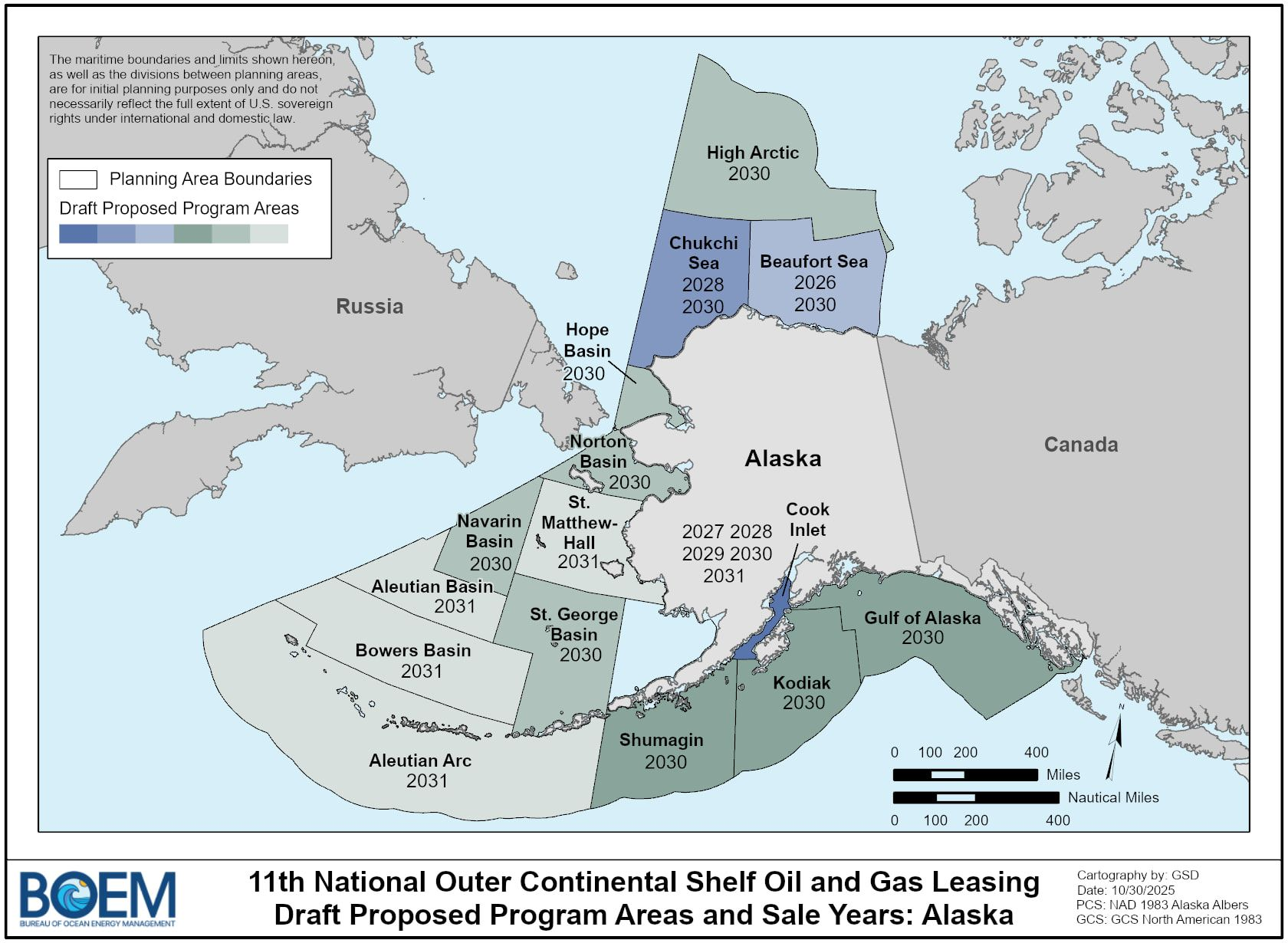
The proposed revisions to the Arctic drilling regulations are a positive initiative that will improve the prospects for renewal of Beaufort and Chukchi Sea exploration.

In particular, removing the same-season-relief-well (SSRW) requirements in the current regulations is an essential regulatory action. The SSRW provision has the effect of precluding exploratory drilling while providing no added environmental protection and increasing operational risks. Given that there is at least a 50% chance that rig mobilization, relief well planning, drilling, repeated surveying, and plugging the flowing well would take more than the specified 45 days, a SSRW is not a legitimate well control option.

The preamble includes important questions for respondents. These questions are compiled beginning on p. 108 of the attachment. In particular, the comments on Subsea Isolation Devices (SSIDs) should be interesting. Given the required blowout preventer stack redundancy, it’s not clear to me that SSIDs would reduce blowout risk. They would however increase operational complexity.

For floating drilling operations in the Arctic and elsewhere, the focus needs to be on well design, integrity, and control.  Fortunately, by carefully verifying casing and cement integrity, ensuring complete barrier redundancy, and having standby capping and containment capability, the probability of a sustained oil blowout can be reduced to 106  or lower. 

Lastly for now, these regulations further demonstrate the importance of consolidating BOEM and BSEE in a single bureau.

Read Full Post »

The proposed revisions to the Arctic drilling regulations have just been posted and are attached for your convenience.

From a risk management standpoint, the current Arctic drilling rule, particularly the same season relief well (SSRW) provisions, is arguably the worst in the history of the OCS program. Regardless of the prospects for Arctic exploration, offshore drilling is not feasible under the current regulations. Hopefully, this proposal represents a significant improvement. More to follow after the text has been reviewed.

Read Full Post »