Feeds:
Posts
Comments

Posts Tagged ‘arctic’

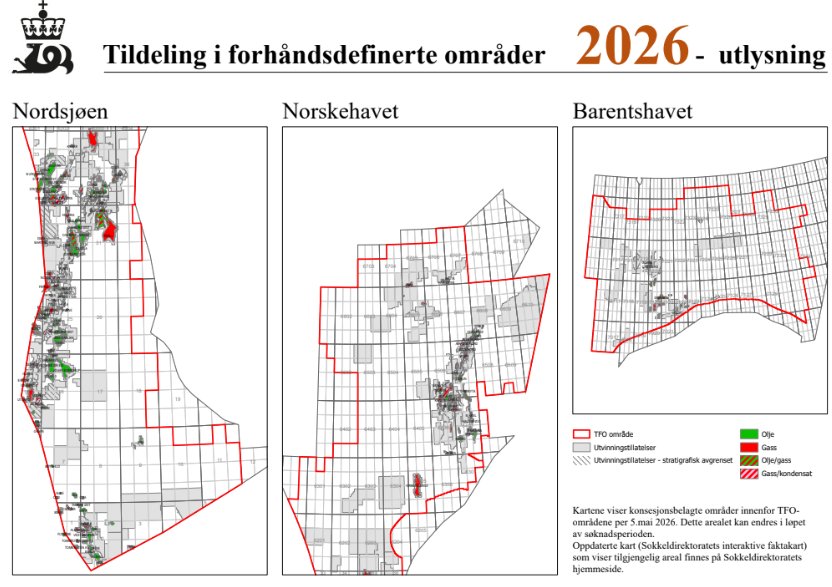
2026 licensing rounds – North Sea, Norwegian Sea, and Barents Sea

Norway is currently producing about 2 million bbls of oil per day (similar to Gulf of America oil production) and 12 billion cu ft of gas per day (6 times Gulf gas production).

Norway’s production is expected to remain high until the end of the 2020s, after which it will decline. To slow the decline, more exploration is needed, both in well-explored and under-explored areas. In addition, more investment is needed in fields, discoveries, infrastructure and technology development. Lack of investment will lead to a rapid decline in the petroleum industry (ala the UK). The Barents Sea is expected to contribute significantly to Norway’s future production.

When asked about the EU’s support for a moratorium on Arctic drilling and production, Norway’s Energy Minister Terje Aasland (pictured) responded diplomatically: “In today’s geopolitical and security environment, and given the resource situation, I believe continued activity in the Barents Sea serves both Norwegian and European interests.”

Anders Opedal, CEO of Equinor, which is 2/3 Norwegian govt owned, was more blunt. He said oil and liquefied natural gas (LNG) from the Barents Sea can be shipped anywhere in the world if rejected by the EU.“The only thing that will suffer from this is actually European security. We have the flexibility.”

Oil and gas demand is not going away. Where is the EU going to find a more environmentally responsible producer? As noted last month, Norway is by far the world leader in minimizing flaring. That’s evidence of outstanding production management.

The country has taken other well-intended emissions reduction measures like electrifying distant platforms and injecting CO2 that have high costs and questionable benefits. Nonetheless, they are the type of initiatives that the EU supports. Good luck finding a more secure, eco-friendly producer!

Read Full Post »

No deepwater horizons in Russian arctic:

Developed by SevMash, the first Barents Sea oil rig will be a steel table the size of a football pitch and capable of withstanding temperatures of down to minus 50 Celsius. The whole point of it is that standing on the seabed, it will allow drilling and pumping the way they are done of firm land. This is a very far cry from the Deepwater Horizon. That platform was semi-submersed, positioned dynamically and designed to pump oil from beneath a mile of sea. When the oil gushed, the spill proved almost unstoppable. The Barents Sea platform will employ a very different production technology, which involves the use of powerful pumps. Chief Technology Officer of the Gazpromneft Shelf company Dr Alexander Kisser

Comment:

  1. Don’t demonize deepwater production to promote the arctic (or vice versa). The world needs responsible production from both.
  2. “Can’t happen here (or to me)” talk impresses no one. Explain how a disasters can happen to you and what you are doing to prevent them.
  3. Identify the special risks at your site and how they will be mitigated. Don’t tell us why the arctic isn’t the Gulf of Mexico.
  4. Perhaps we should present Can’t Happen Here awards as part of the Not My Job awards program.

Read Full Post »

Anchorage Daily News:

The federal Environmental Appeals Board, which is part of the EPA, reviewed the permits. It found last week that the analysis of the impact of nitrogen dioxide emissions from the ships on Alaska Native communities was too limited, and remanded the permits so that problems cited by the board could be fixed by the agency.

The closest proposed drill site is 60 miles off shore and about 80 miles from Wainwright, an Inupiat Eskimo village 710 miles northwest of Anchorage.

Read Full Post »