Feeds:
Posts
Comments

Archive for the ‘Regulation’ Category

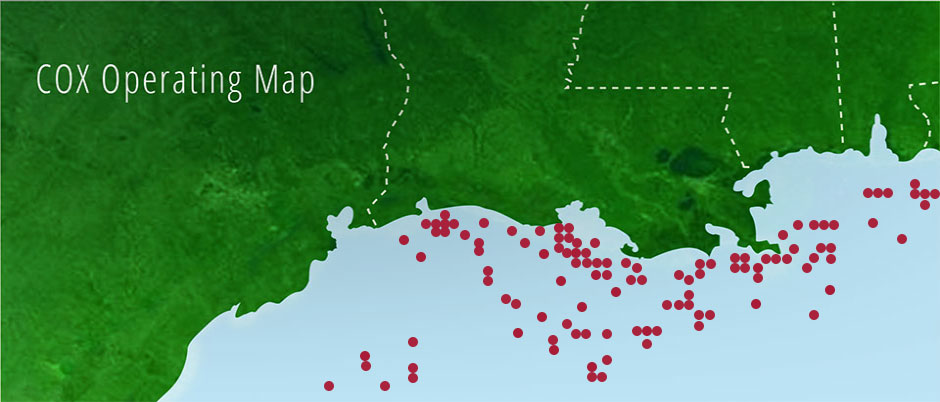
On February 12, 2024, the bankruptcy court approved the sale of certain Cox Operating assets to Natural Resources Worldwide LLC (NRW), a company that had no prior offshore experience. NRW contracted with Array Petroleum to operate 154 Cox legacy platforms (per MMA data). NRW is listed as the operator of just one platform.

The bankruptcy court had previously approved the sale of Cox assets in 6 Gulf of America fields to W&T Offshore.

As noted in previous posts, the Cox legacy of non-compliance has continued under new ownership. In 2026 YTD, Array Petroleum accounted for 52% of Gulf of America Incidents of Non-Compliance (INCs) while operating only 12% of the platforms, and producing only 0.06% of the oil and 0.17% of the gas (2025 production data). Their 2026 YTD INCs/inspection ratio is 7.55 times the Gulf average and 14.6 times the Gulf average if Array inspections are excluded.

The only platform operated directly by NRW was cited for 3 INCs on 2 inspections.

Per MMA data, W&T operates 117 platforms in the Gulf. The number of platforms that were included in the acquisition of the 6 Cox fields is unknown. W&T’s INC/inspection ratio in 2023, the year before the Cox acquisition, was 0.72 (80/111), which was better than their 2026 performance (0.94), but worse than the Gulf-wide 2023 average of 0.57. So W&T’s compliance relative to other Gulf operators was about the same before and after the acquisition.

According to the borehole file, neither Array, NRW, nor W&T conducted any drilling operations in 2026 YTD.

Kudos to the MMA inspectors for their diligence in identifying INCs and issuing citations. The 2026 YTD data table is below.

WCSIFSItotal
INCs
facility
insp
INCs/isp
Array4031154522885.93
NRW120321.50
W&T3846488940.94
GoA total65329656100512800.785
Notes: Numbers are from published BSEE data (7/21/2026 inquiry); INC=incident of non-compliance; W=warning INC; CSI=component shut-in INC; FSI=facility shut-in INC; INCs/insp= INCs issued per facility inspection; each facility-inspection may include multiple types of inspections (e.g. production, pipeline, pollution, Coast Guard, site security, etc)

Read Full Post »

See attached. This is a well written directive. Kudos to the authors.

Retaining the revenue management functions in ONRR is prudent.

There has been no specific announcement regarding the MMA Director, but a quote in the American Samoa lease sale announcement cites Matt Giacona, Acting MMA Director. Congrats to him.

Read Full Post »

World Bank global flaring estimates are now derived from 3 satellites carrying NOAA VIIRS detectors. The increased number of observations improves the precision and accuracy of the flare locations and volume estimates.

The World Bank (WB) Global Gas Flaring Tracker is the only worldwide flaring data source. Offshore and onshore data are segmented, so offshore flaring can be considered separately for each country.

The WB estimates that 21600.03 million cu m (762.5 bcf) of gas were flared at offshore locations worldwide in 2025. This is an increase from 2024 when the total offshore flaring volume was 21159.91 million cu m.

The flaring totals for prominent offshore producers are entered in the table below. Also included are the largest offshore flares for each country.

Unsurprisingly, Norway led the pack in minimizing offshore flaring. Their total of 36.11 million cu m (1.3 bcf) is very impressive for such a large producer. The US offshore total of 160.95 cu m (5.7 bcf) is also quite respectable relative to production.

At the other end of the scale are Iran – 3329 million cu m (118 bcf), Nigeria – 2566 (91 bcf), Angola – 2300 (81 bcf), and Mexico 2068 (73 bcf). These 4 countries accounted for nearly half of all 2025 offshore flaring. They were also massive offshore flarers in 2024: Iran – 3753 million cu m, Nigeria – 2867, Angola – 2040, and Mexico – 2223.

If both onshore and offshore flaring are considered, Iran flared 29931 million cu m in 2025. That equates to 1.057 trillion cu ft!

2025 WB flaring total
million cu meters
largest flarelargest flare volume
Angola2300.26Lombo East862.02
Australia268.36Santos61.89
Brazil969.16Albacora Leste118.93
Canada145.12Terra Nova95.83
China535.56Weizhou 12-168.26
Congo, Rep.788.98Kitina384.12
Gabon368.91Tchatamba Marin37.46
Ghana351.81Sankofa East184.97
Guyana227.38Yellowtail164.06
Indonesia292.16Belida30.84
Iran3329.19Foroozan1360.09
Libya313.78Bouri74.07
Malaysia1459.32Kasawari205.8
Mexico2067.62Akal386.44
Nigeria2565.88Oso308.37
Norway36.11Balder6.38
Qatar688.19Ras Laffan LNG54.65
Russia227.27Yuri Korchagin82.07
Trinidad87.66Atlantic LNG53.23
UK234.08Penguins22.94
US160.95NA*22.77
*The WB lists the field name for the largest US flare as NA. The lat/long for the Whale deepwater platform in the Western Gulf matches the identified flare location (26.22 lat., -94.67 long.)

The WB tracker identifies the Gulf of America facilities with the highest flaring volumes. The 2025 list is pasted below. Repeat top ten Gulf flarers from 2024 were Vito (14.55 million cu m in 2024), Pompano (11.68), and Lucius (5.72).

The WB lists the field name for the largest US flare as NA. The lat/long for the Whale deepwater platform in the Western Gulf matches the identified flare location (26.22 lat., -94.67 long.)

Per the WB tracker, the Terra Nova FPSO, offshore Newfoundland, was the top North American offshore flarer by a considerable margin (data for Canada below). Terra Nova was also the top flarer in 2024 (95.56 million cu m).

The location of the only flare identified offshore California corresponds with that of the Dos Cuadras field in the Santa Barbara Channel. The estimated 2025 flaring volume was 0.10 million cu m.

The WB flaring tracker is an excellent data source, but doesn’t capture vented gas and likely understates the total volume flared. The WB estimated that 160.95 million cu m (5.68 bcf) were flared at US offshore facilities in 2025. This compares with the 9.7 bcf (flaring and venting) and 8.0 bcf (flaring only) totals derived from ONRR data (chart below). The flaring difference is not surprising given that the WB numbers are dependent on satellite imagery and the ONRR data are from mandated/audited production reports. A previous comparison also showed that the WB flaring estimates are significantly lower than the ONRR numbers. From a regulatory oversight perspective, this is rather reassuring given that the reverse (WB>ONRR) would imply serious reporting issues.

Read Full Post »

The attached letter to the General Accountability Office (GAO) asserts that there were “deeply entrenched ethical issues and conflicts of interest within the former Minerals Management Service (MMS),” and implies that these issues were among the factors contributing to the tragic Macondo well blowout.

I retired from MMS shortly before the Macondo well blew out on April 20, 2020, and testified before the Senate Energy and Natural Resources Committee on May 11, 2010. My comments on MMS employee ethics still stand and are reiterated below:

I also want to express my disappointment in certain media comments directed at my former MMS colleagues. These comments have not only been ill-informed and unsubstantiated, but malicious. Without hesitation, I can tell you that MMS regulatory personnel–inspectors, engineers, scientists, and others–are 100% committed to their safety and pollution prevention mission. MMS inspectors are themselves exposed to risks every day when they fly offshore and inspect facilities. MMS personnel have repeatedly made personal sacrifices to support the regulatory mission. After Ivan, Katrina, Rita, Gustav, and Ike, MMS employees worked to restore oil and gas production essential to our economy, even when their personal lives had been disrupted by the onshore impacts of these hurricanes. These personnel work under strict ethics standards, and despite a few isolated and highly publicized incidents that occurred more than four years ago, conduct themselves with the highest degree of professionalism. While a critical review of the entire offshore regulatory regime is necessary and appropriate, unsubstantiated accusations and personal attacks are not.


The comprehensive Chief Counsel’s Report, National Commission on the BP Deepwater Horizon Oil Spill and Offshore Drilling, was the only inquiry to consider whether ethical lapses were a contributing factor to the blowout. In the “Regulatory Observations” chapter, the Chief Counsel addressed ethics concerns directly (p. 261):

“In recent years various bodies have concluded that certain MMS offices and programs have violated ethical rules or guidelines. In the wake of the Deepwater Horizon disaster, some questioned whether ethical lapses played any role in causing the blowout. The Chief Counsel‘s team found no evidence of any such lapses.

This blog closely followed the Macondo blowout. I have read all of the investigation reports and many of the court documents. I also served on the defense team for Bob Kaluza, the BP Well Site Leader who was fully acquitted after being shamefully prosecuted in the wake of the blowout. My thoughts on the Macondo tragedy are summarized in a six part series.

Because of the false ethics narrative and scapegoating of MMS, experts who should have been directing the well control efforts, were pushed to the back of the bus shortly after the blowout began. Had that not been the case, I believe the top kill operation would not have been aborted in late May and the well would have been killed 48 days sooner, reducing the oil spill volume by at least 2.4 million bbls. (See the analysis by Dr. Mayank Tyagi and his colleagues at LSU.) Also, keep in mind that the USCG Incident Commander almost required BP to resume flow from the well after the capping stack successfully shut-in the well on 7/15/2010, and would have likely done so were it not for forceful input from an engineer from the former MMS.

The consolidation of BOEM and BSEE into a single bureau makes sense. As I previously commented:

This is an excellent step that many OCS program veterans have been advocating. In addition to the inefficiencies associated with overlapping and intertwined BOEM and BSEE responsibilities, the associated regulatory fragmentation is a significant safety risk factor.

The primary OCS functions including leasing, resource evaluation, economic analysis, permitting, inspection and enforcement, investigations, environmental assessment, spill response preparedness, promulgation of regulations, technology assessment, research,and decommissioning, are inextricably linked, cannot be effectively segmented, and should not be stovepiped.

Finally, with regard to the reorganization planning questions posed at the end of the attached letter, perhaps GAO should first consider the abrupt, unplanned termination of MMS. At a 2011 Ministerial Forum in Washington, an international offshore safety expert criticized that rash decision noting – “It took 87 days to stop the blowout, but only 30 days to get rid of the regulator.”

Read Full Post »

The Piper Alpha fire (July 6, 1988) was the worst disaster in the history of offshore oil and gas operations and sent shock waves around the world. Eight months later another interactive pipeline-platform fire killed 7 workers at the South Pass 60 “B” facility in the Gulf of Mexico. A US Minerals Management Service task group reviewed the investigation reports for both fires and recommended regulatory changes with regard to:

  1. the identification and notification procedures for out-of-service safety devices and systems,
  2. location and protection of pipeline risers,
  3. diesel and helicopter fuel storage areas and tanks,
  4. approval of pipeline repairs, and
  5. location of ESD valves on pipelines.

Paul Schneider and I wrote a paper on the task group’s findings and that paper was published in Offshore Operations Post Piper Alpha (Institute of Marine Engineers,1991). The proposed regulations that followed summarized these findings and can be be found at this Federal Register link.

Lord Cullen’s comprehensive inquiry into the Piper Alpha tragedy challenged traditional thinking about regulation and how safety objectives could best be achieved, and was perhaps the most important report in the history of offshore oil and gas operations. Per Cullen:

Many current safety regulations are unduly restrictive because they impose solutions rather than objectives. They also are out of date in relation to technological advances. Guidance notes lend themselves to interpretations that discourage alternatives. There is a danger that compliance takes precedence over wider safety considerations and that sound innovations are discouraged.

Cullen advocated management systems that describe the safety objectives, the system by which those objectives were to be achieved, the performance standards to be met, and the means by which adherence to those standards was to be monitored. He called for safety cases that describe major hazards on an installation and provide appropriate safety measures. Per Cullen, each operator should be required in the safety case to demonstrate that the safety management systems of the company and the installation are adequate to assure that design and operation of the platform and its equipment are safe.

Full Piper Alpha Inquiry – 2 parts.

Read Full Post »

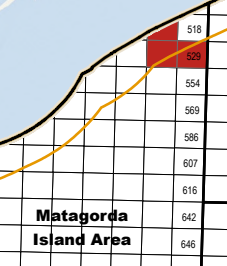
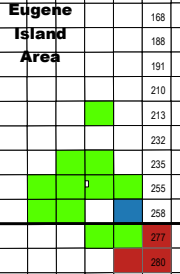
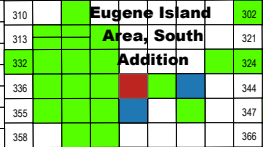
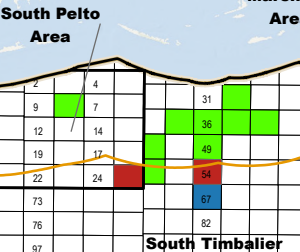
Gulf of America lease map: 199 oil and gas leases were wrongfully acquired for carbon disposal purposes. At Sale 261, Repsol acquired 36 nearshore Texas tracts in the Mustang Island and Matagorda Island areas (red blocks at the western end of the map above). Exxon had acquired 163 nearshore Texas tracts (blue in map above) at Sales 257 (94) and 259 (69).

As expected, the carbon disposal era in Federal offshore waters is ending before it began, and rightfully so.

Energy Intelligence is reporting that Exxon is relinquishing “more than 160 leases” in nearshore Federal waters off Texas. The actual number of oil and gas leases that the company improperly acquired for carbon disposal purposes is 163 (map above).

The reason being cited for the lease relinquishments is that the Dept. of the Interior has shelved regulations for carbon disposal on the OCS. Kudos to the DOI officials responsible for that decision. Carbon disposal has the support of no one except the companies that hope to profit from it. Further, there is no scenario under which Interior could have allowed these wrongfully acquired oil and gas leases to be converted to carbon disposal leases.

Now that these carbon disposal leases are being relinquished, it would be nice to see Exxon start acquiring OCS oil and gas leases for their intended purposes. Exxon and Mobil are historic Gulf operators who were once important contributors to the success of the OCS program.

History of the Exxon and Repsol CCS lease acquisitions.

Read Full Post »

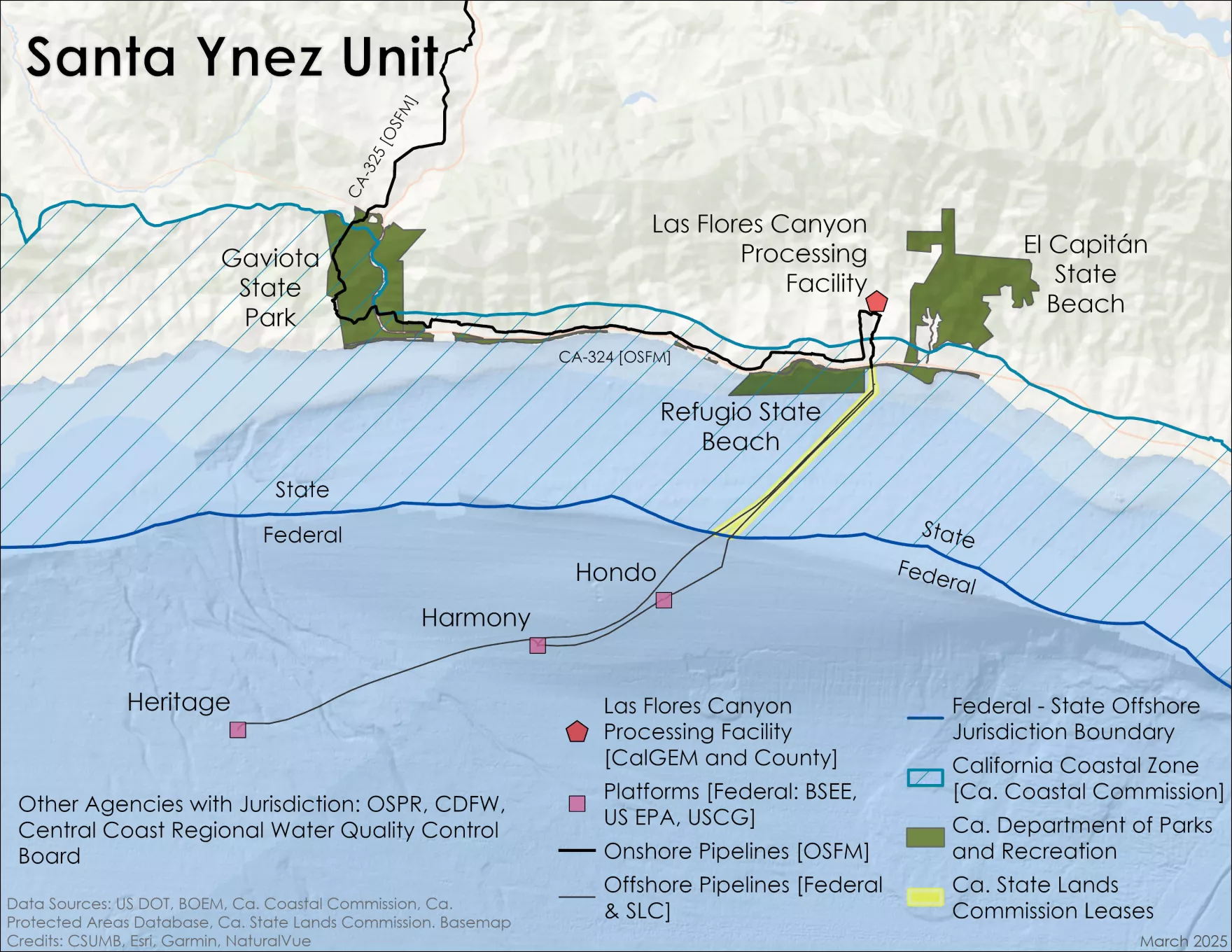
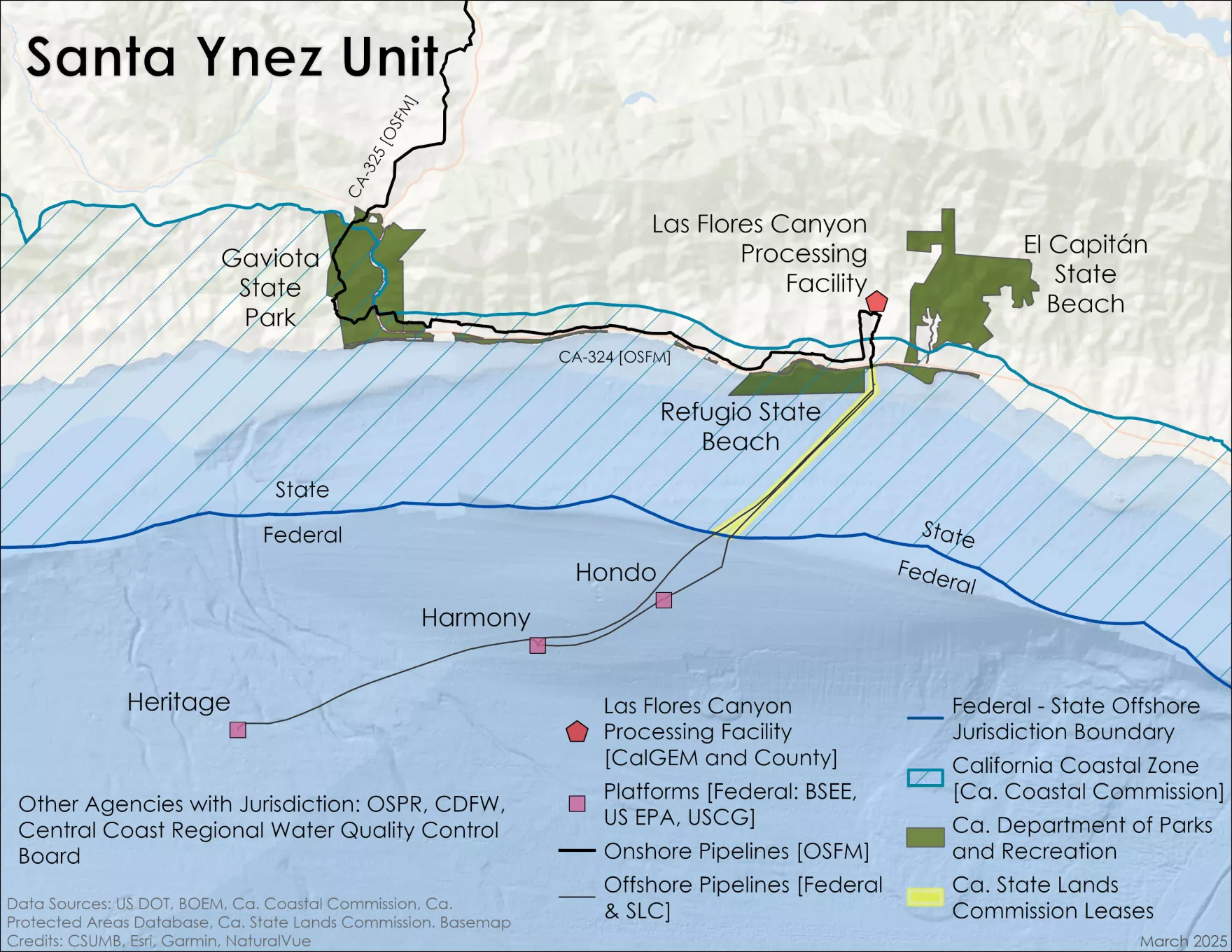
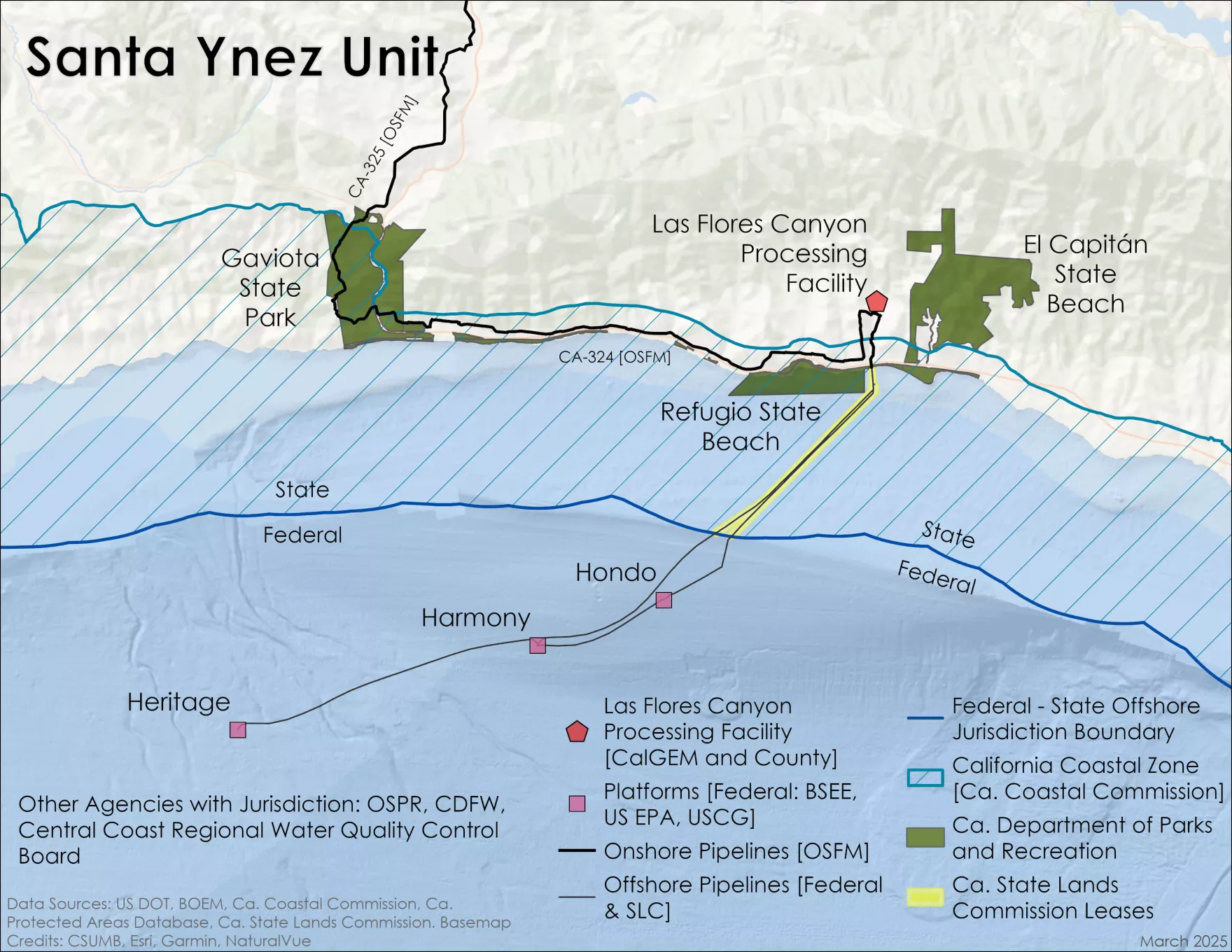
Sable Offshore began ramping up production at Platform Harmony last May delivering oil and gas to their Los Flores Canyon Processing Facility. In March, they resumed transportation to the Pentland pipeline segments and achieved first sales.

Below are BOEM production data for Harmony through March 2026. Harmony production was expected to increase to 22,000 bopd in May. Similarly, Sable forecasted Heritage production of 30,000 bopd for that month. The actual production numbers should be available in a month or two.

Nothing in the March production data for Harmony is particularly surprising. The gas-oil ratio (GOR) of ~1000 cu ft/bbl is rather typical for oil production in the region, as is the water cut, although less water production would be preferred. Produced water is not discharged from the platform, but is injected subsurface through disposal wells.

Read Full Post »

After 41 years of offshore safety leadership, Mike Saucier, an outstanding engineer and manager, is retiring from the Bureau of Safety and Environmental Enforcement (BSEE).

Like many of the offshore program’s stalwarts, Mike earned a petroleum engineering degree from the Louisiana State University (LSU). In 1984, he began his Federal career in the Houma District Office of BSEE’s predecessor, the Minerals Management Service (MMS), where he was mentored by the great John Borne.

Mike has held many important engineering and supervisory positions including Drilling Engineer and District Manager in the highly regarded Houma District Office, Regional Supervisor for Field Operations, Regional Supervisor for District Field Operations, Acting Deputy Regional Director for District Operations, and Senior Technical Advisor for the Office of the Director. When the New Orleans District Manager retired during a hiring moratorium, Mike stepped up and assumed those duties as well.

Mike impressed his colleagues with his commitment to safety achievement, the essential core element of the offshore program. His diligence, and his firm, fair, and consistent enforcement of the safety and pollution prevention regulations, earned him respect throughout the offshore industry.

Mike is an avid outdoorsman who enjoys hunting and fishing, and has 4 grandsons to mentor in those skills. Note the impressive achievements cited in the Order of the Alligator certificate (below) 😉. The Order of the Alligator recognition is most fitting given Mike’s alligator hunting expertise, which greatly impressed those of us who were unfamiliar with such exploits!

In recognition of Mike’s outstanding career, the Board of Directors of the former Minerals Management Service (fMMS) has unanimously voted to induct Mike into the fMMS Hall of Fame! Mike receives (is sentenced to? 😉) lifetime membership in the fMMS and a registered copy of the offshore world’s prized masterpiece, the painting Rig at Sunset 😉. (image and short explanation below).

Congratulations to Mike! You made a difference!

“Rig at Sunset” was painted 50 years ago by a US Geological Survey (USGS) employee who chose to remain anonymous. Initially, the masterpiece was presented to USGS (later MMS) engineers and scientists who had made important contributions to the offshore oil and gas program. Understandably, the intended recipients were so humbled by the magnificence of the painting that they could not accept it. As the painting grew in value and international prominence, framed copies were presented to outstanding retirees and the original painting was kept at a secure, undisclosed location.

Read Full Post »

In the ongoing Santa Ynez Unit production restart saga, John Smith informs that a California Appellate Court ruled against Sable Offshore by a vote of 2-1, with a strong dissent from one of the three judges.

The decision (attached) affirms the California Coastal Commission’s regulatory authority over Sable’s Los Flores Canyon pipeline repairs, meaning that Sable could be ordered to cease operating the pipeline. However, this is just one element of a complex legal maze. An important case regarding PHMSA’s emergency special permit for the pipeline will be heard by the Federal 9th Circuit Court of Appeals in July.

The dissenting judge’s opinion beginning on p.15 of the attachment sets the stage for the upcoming arguments in the 9th Circuit. Excerpt:

“But first, a dose of reality. The repair work has been done. It is a “fait accompli.” And, pursuant to federal intervention, oil is now flowing in the pipeline without incident. The supremacy clause of the United States Constitution takes precedence. The federal Government trumped the state’s Commission “cease and desist” order and it trumps the preliminary injunction order. Based upon these events, the trial court should vacate the preliminary injunction, dismiss the matter as moot, and nullify the civil penalties.”

Read Full Post »

Meanwhile, the California Coastal Commission notified Sable Offshore that it intends to issue a cease and desist order aimed at shutting down crude oil extraction in the Santa Barbara Channel.

Sable responds: “Sable Offshore Corp. (“Sable”) through its subsidiary, Pacific Pipeline Company (“PPC”), continues to lawfully operate through its existing coastal development permits which were issued in 1986.”

California cage fight! Who ya’ got?

Read Full Post »

« Newer Posts - Older Posts »