Feeds:
Posts
Comments

Archive for the ‘Regulation’ Category

I’m attaching the complete comment letters from Sable Offshore and their main antagonist, California Attorney General Bonta, in response to PHMSA’s public notice and request for comments on Sable’s special permit application.

Summary of the California AG’s assertions:

“First, PHMSA is without authority to grant such a special permit because Lines CA-324/325 are intrastate pipelines and California regulators have sole regulatory oversight over any attempt to restart these Lines and issue state waivers. Second, California has vested interests in ensuring Lines CA-324/325 operate safely and PHMSA’s proposed special permit would dilute the higher state safety standards that were imposed on Sable and therefore it is inconsistent with pipeline safety. 49 C.F.R. § 190.341(d). Third, given the fact Line CA-324 already failed and caused a catastrophic oil spill in 2015 in Santa Barbara County, even if PHMSA had authority to issue a special permit (which it does not), a more robust environmental analysis needs to be performed. Fourth, PHMSA unlawfully invokes the Endangered Species Acts’s emergency consultation procedures and has given no indication that it will consult with the National Marine Fisheries Service, in violation of the Act. Finally, Secretary Wright’s March 13, 2026, order (“DPA
Order”) does not change anything about the propriety of the Application, because the DPA Order itself is unlawful.”

Summary of Sable’s position (screenshot):

You can sample the other public comments, some of which are quite good, by visiting the Regulations.gov docket.

Read Full Post »

The Department of the Interior today announced the start of a phased plan to establish the Marine Minerals Administration, bringing together the functions of the Bureau of Ocean Energy Management and the Bureau of Safety and Environmental Enforcement. This action is intended to improve coordination and increase efficiencies across offshore leasing, permitting, inspections and environmental oversight, while maintaining all existing regulatory protections and rigorous safety standards. 

This streamlined approach reflects the evolution of offshore energy development and the need for a more integrated approach to managing conventional and emerging resources such as critical minerals. By aligning planning, leasing and oversight functions, the Department is positioning the agency to better meet current and future energy demands.

This is an excellent step that many OCS program veterans have been advocating. In addition to the inefficiencies associated with overlapping and intertwined BOEM and BSEE responsibilities, the associated regulatory fragmentation is a significant safety risk factor.

See the comments that I submitted to the Dept. of the Interior in response to their request for regulatory reform recommendations.

Read Full Post »

For those who haven’t suffered enough following the BOE blog😉, you can listen to me on the G’Day Mate podcast hosted by offshore industry veterans Evan Zimmerman and Tom Pado. You may also want to check out other episodes on their excellent podcast.

Read Full Post »

The ESA, which was enacted with good intentions, has perhaps been most effective in blocking, delaying, or complicating energy development. In the Gulf of America, the primary species in recent ESA battles has been the Rice’s whale.

While this blog was focused on the Santa Ynez Unit drama, a major ESA policy maneuver for the Gulf of America was in the works.

A provision of the ESA authorizes an Endangered Species Committee, known to critics as the “God Squad,” to grant exemptions to ESA requirements. The Committee is comprised of the Secretary of the Interior (chair), the Secretary of Agriculture, the Secretary of the Army, the Chairman of the Council of Economic Advisors, the Administrator of the Environmental Protection Agency, and the Administrator of the National Oceanic and Atmospheric Administration.

Yesterday, the Committee met (notice attached) and agreed to exempt Gulf oil and gas operations from the Endangered Species Act.

Knowing the swings in the political pendulum, provisions for reversing this decision warrant attention. The applicable language from the statute is pasted below:

16 U.S. Code § 1536 (h)(2)

(B) An exemption shall be permanent under subparagraph (A) unless

(i) the Secretary finds, based on the best scientific and commercial data available, that such exemption would result in the extinction of a species that was not the subject of consultation under subsection (a)(2) or was not identified in any biological assessment conducted under subsection (c), and

(ii) the Committee determines within 60 days after the date of the Secretary’s finding that the exemption should not be permanent.

So, barring legislation, the exemption would seem to be difficult to overturn.

Earthjustice is vowing to “go to court to stop this illegal order.”

Read Full Post »

Tyler Priest, the leading historian on US offshore oil and gas operations, has informed me that his much anticipated book, “Offshore Oildom,”is now available for order from LSU Press. Tyler’s book is a fascinating account of the history of the technologically innovative and economically important, yet controversial, OCS Oil and Gas program. See the attached flyer.

Consider this recommendation by Daniel Yergin:

“Tyler Priest, a preeminent historian of energy and the environment, explores how a single well drilled off a pier near Santa Barbara in 1898 gave rise to a major American industry—offshore oil and gas. In spirited prose, Priest demonstrates how this U.S. industry was created not only by innovation, creative engineering, and complex execution; it was also the result of fierce political battles.” ~Daniel Yergin, Pulitzer Prize–winning author of The Prize: The Epic Quest for Oil, Money, and Power and The New Map: Energy, Climate, and the Clash of Nations.

You can order the book from LSU Press.

Read Full Post »

Robert August Nelson 47921313

Robert “Bobby” Nelson, a beloved father and husband, and a highly respected engineer, died suddenly last Saturday.

Jason Mathews, a Supervisory Petroleum Engineer with the Bureau of Safety and Environmental Enforcement, had this to say about his admired colleague:

A legacy is not just what you leave for others; it’s the impact of your presence, the influence of your actions, and the memories you create.

Bobby was an exceptional engineer, father, husband and friend who had a lasting impact on many of us. In fact, I would argue Bobby was one of the most impactful engineers in my tenure on developing and transforming younger engineers on how to think critically on complex offshore systems and processes.

Bobby’s legacy in my industry will push on for many years, and we are forever grateful for the time we had with him.”

More from his colleagues:

Bobby dedicated much of his professional life to BSEE, where he served as a Technical Advisor since January 2020, and for the previous seven years as Well Operations Section Chief and Drilling Engineer in the Houma District.

His expertise in well control, drilling engineering, and offshore regulatory compliance was invaluable. He contributed significantly as a subject matter expert and assistant content writer for the BSEE Well Control Rule Revision Team, helping shape post-Deepwater Horizon reforms, and provided technical insights on critical projects ranging from tropical cyclone risk assessments for floating rigs to hydrate pressure coring expeditions and incident investigations.  

Bobby’s commitment to safety and environmental stewardship on the Gulf of America’s Outer Continental Shelf left a lasting impact on his colleagues and the industry.

He is survived by his loving wife, Amber, whom he met at BSEE, and their young daughter. In this time of grief, please keep Bobby’s family in your thoughts and prayers.

Obituary

Read Full Post »

For 40 years, challenges associated with bankruptcies (or the threat thereof), a divided offshore industry, political pressure, hurricane damage, and unresolved legal issues have hindered initiatives to better protect the public from decommissioning liabilities. Nonetheless, regulators and industry were able to prevent taxpayers from incurring any decommissioning costs. Unfortunately that is no longer the case.

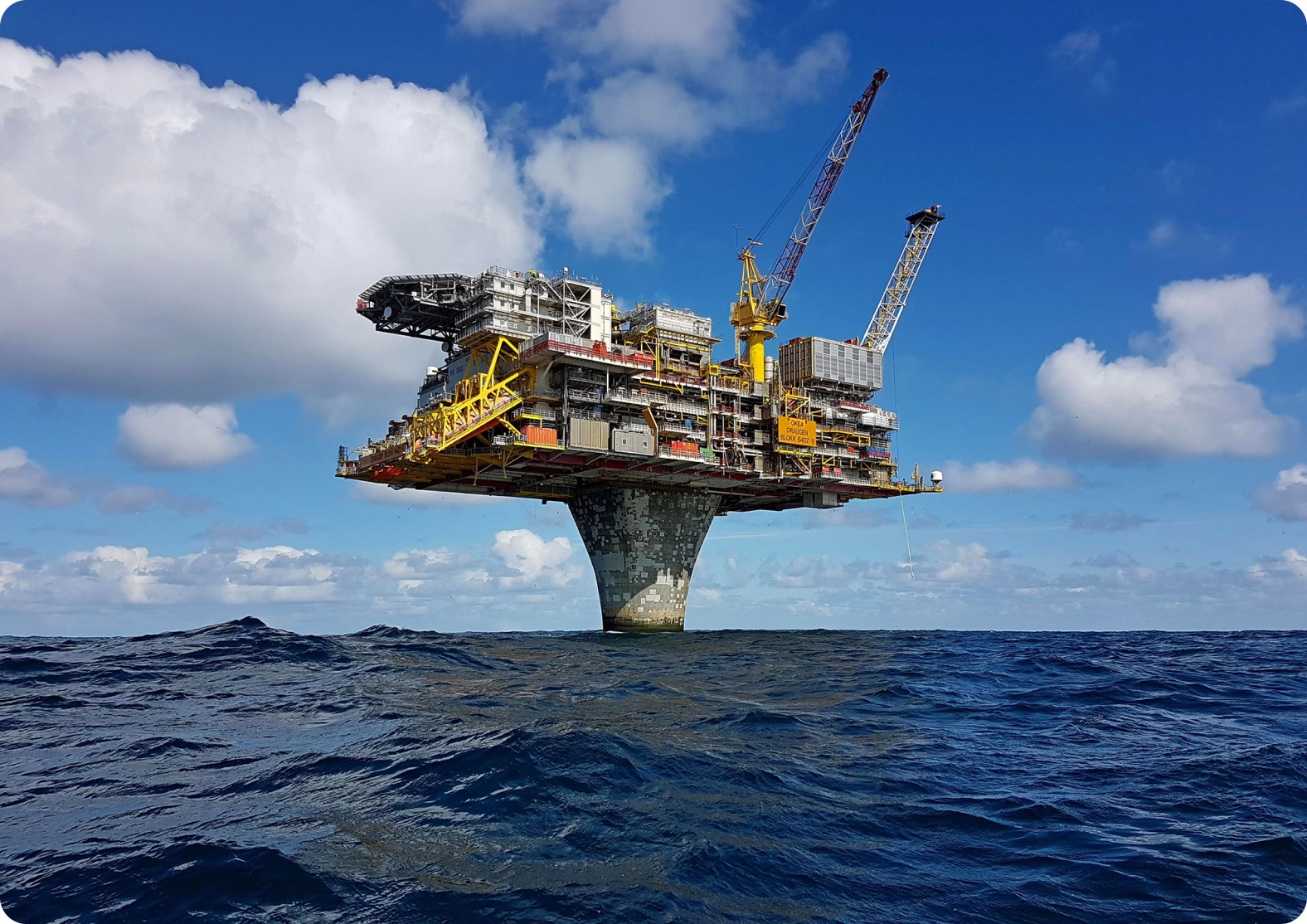
For the first time in history, the govt has funded decommissioning on the OCS (and bragged about it – photo below).

Federally funded decommissioning operation in the Matagorda Area of the Gulf.

BOEM’s proposed revisions to the decommissioning regulations (attached) would facilitate the transfer of aging structures to companies with limited assets, and in some cases, poor or undemonstrated safety records.

The proposal would reduce or eliminate the supplemental financial assurance requirement if a predecessor lessee has a strong credit rating. For that strategy to work, related decommissioning issues must be addressed. and clarifications and boundaries provided to ensure taxpayers are protected from decommissioning liabilities.

Predecessor liability, which is important because it helps prevent companies from assigning leases for the purpose of avoiding decommissioning obligations, was not established in the regulations until much of the OCS infrastructure was already installed. In a final rule that was effective on 8/20/1997, my office (thanks to the perseverance of Gerry Rhodes, John Mirabella, and Dennis Daugherty) codified the joint and several liability principle in 30 CFR 250.110 as follows:

(b) Lessees must plug and abandon all well bores, remove all platforms or other facilities, and clear the ocean of all obstructions to other users. This obligation:
(1) Accrues to the lessee when the well is drilled, the platform or other facility is installed, or the obstruction is created; and
(2) Is the joint and several responsibility of all lessees and owners of operating rights under the lease at the time the obligation accrues, and of each future lessee or owner of operating rights, until
the obligation is satisfied under the requirements of this part.

Prior to the that rule, the official policy of the Dept. of the Interior, as expressed in a 1988 letter from the Director of the Minerals Management Service (see excerpt pasted below), was that lease assignors would NOT be held accountable should their successors fail to fulfill their decommissioning responsibilities.

A major unanswered question regarding decommissioning obligations is thus the extent to which predecessor liability applies to leases assigned prior to the 1997 regulation. According to BOEM data, 771 remaining platforms were installed at least 10 years before the rule change, and 504 were installed at least 20 years prior. For assets transferred prior to the rule change, do the predecessors retain liability? BOEM should explain its position on this issue.

Other predecessor liability questions that need to be answered:

  • Now that the reverse chronological guidance has been scrapped, what will be the process for determining which predecessors will be held responsible?
  • If the govt doesn’t ensure that the new lessees fulfill their performance obligations (e.g. funding escrow accounts, well plugging, insurance, etc.), are predecessors still liable?
  • What if the structures were poorly maintained by the new lessees, complicating decommissioning and increasing the costs
  • Should a predecessor several transfers removed from operating the facilities still be held responsible?

Two examples of what can happen (and has happened):

Example 1: Big AAA Oil assigns a lease to Proud Production, a reputable independent. After years of operations, Proud can no longer profitably produce from the lease. Proud assigns the lease to CCC Oil & Gas, a small and highly efficient operator. After the lease is no longer profitable, even for a company with a low cost structure, CCC assigns the lease to Elmer’s E&P, a sketchy, barely solvent operating company with a poor compliance record. Elmer rather predictably neglects maintenance and declares bankruptcy after a decline in oil prices. Should Big AAA Oil, which had no say in the last 2 transfers in the assignment chain, be financially responsible for decommissioning the facilities?

Example 2: Big AAA Oil assigns a lease to DDD Development Company. Per the terms of the assignment, DDD establishes an Abandonment Escrow Account, as provided for in 30 CFR 556.904. BOEM allows DDD to withdraw funds from the account for purposes not authorized in the regulations. Should Big AAA Oil be liable for decommissioning costs after DDD is no longer solvent? (See “The troubling case of Platforms Hogan and Houchin.”)

For predecessor liability to be fairly and effectively implemented, and survive legal challenges, BOEM should:

  • Before approving lease assignments, verify that the assignors and assignees have contractually specified, to BOEM’s satisfaction, how the decommissioning of assigned assets will be funded.
  • Not approve subsequent lease assignments until the predecessor that is being held financially responsible has approved a funding agreement with the new lessees.

Another important concern is that BOEM’s proposal does not correct two prior changes that further expose the public to decommissioning liabilities:

Read Full Post »

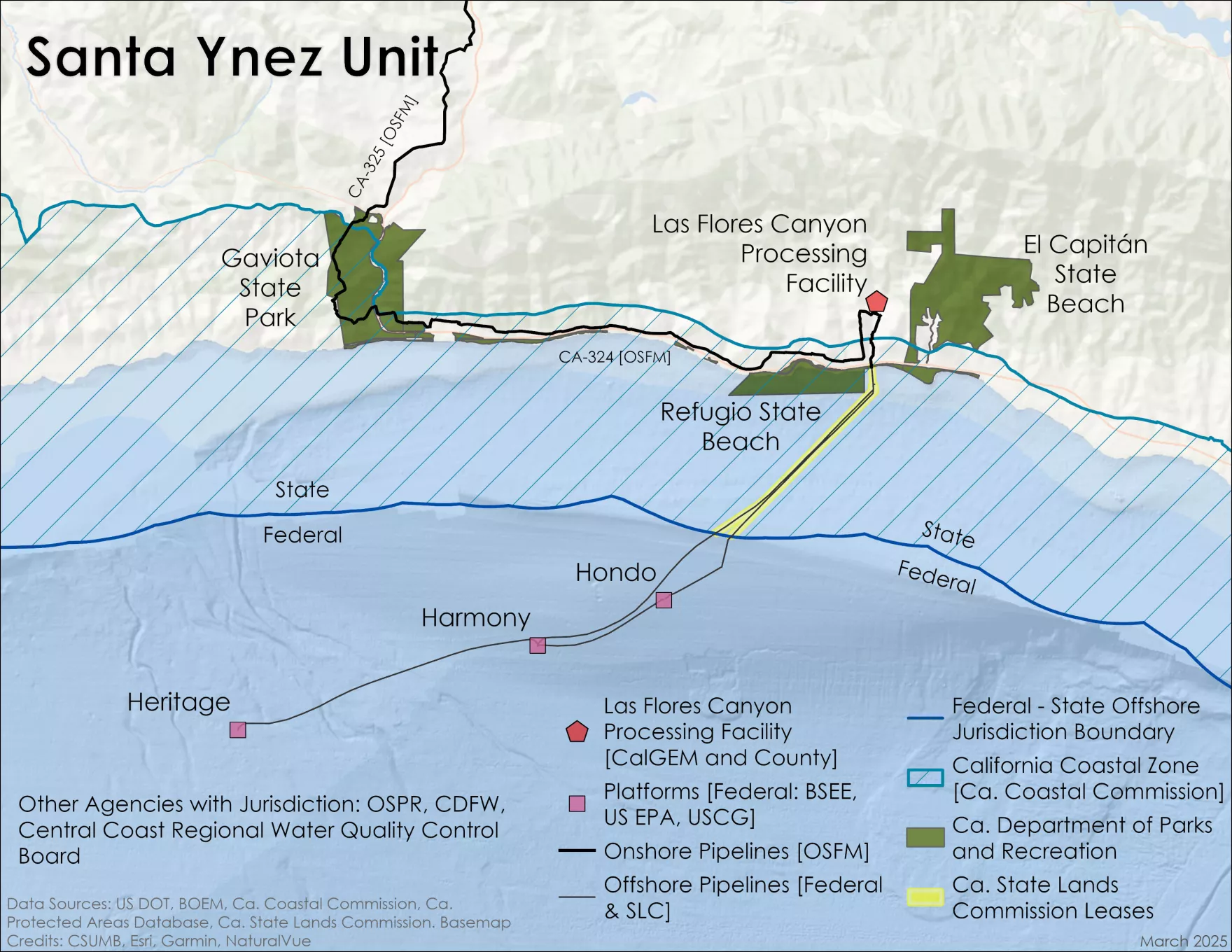
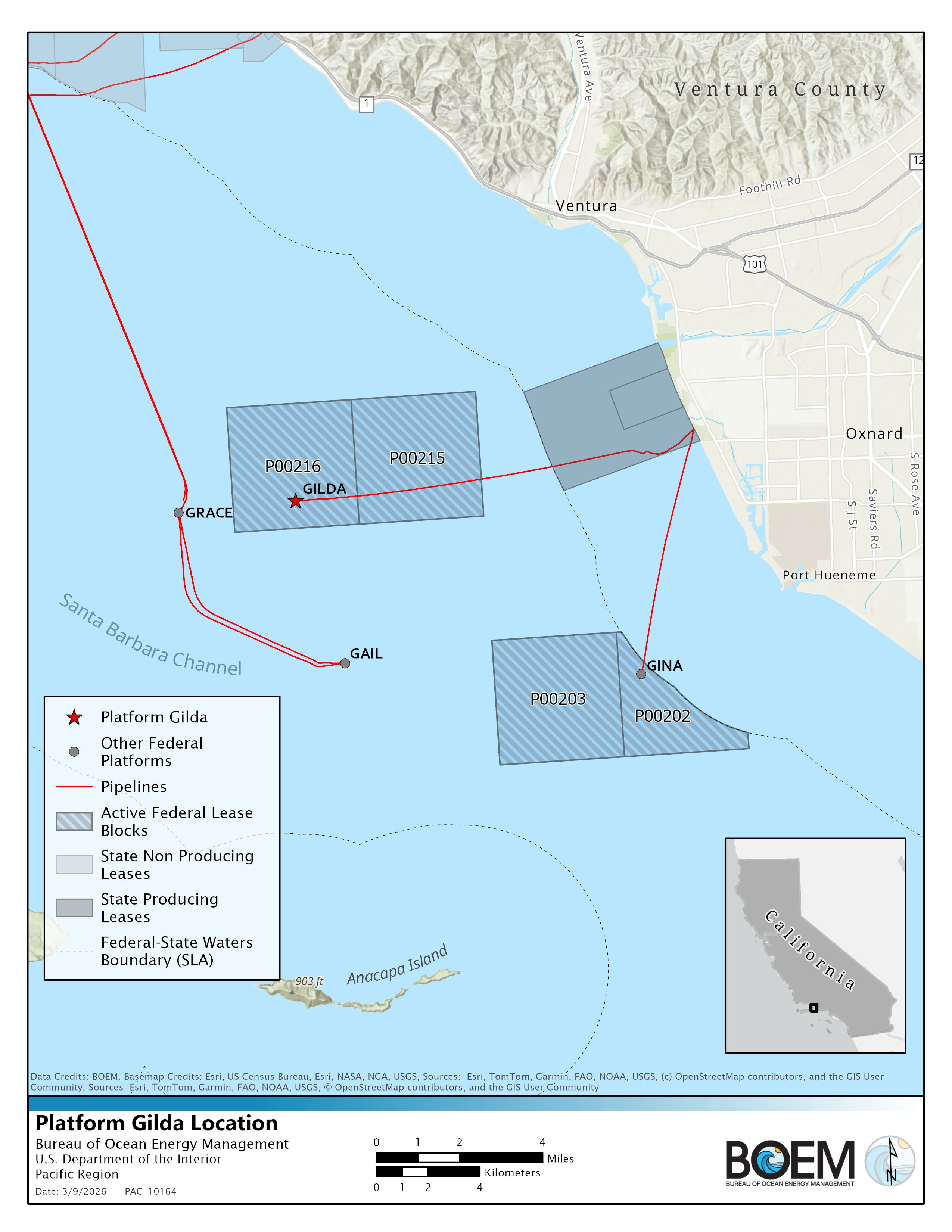
Add the unprecedented events of the last two weeks to the long and troubled history of the Santa Ynez Unit dating back to the Offshore Storage & Treatment facility days. There are no parallels in the history of the US OCS program.

To date in March:

3/3/2026: The Dept. of Justice issues an opinion asserting that, under the Defense Production Act of 1950 (DPA), an order issued by the President or his delegee would preempt California laws currently impeding Sable from resuming production and operating the associated pipeline infrastructure.

3/13/2026: Secretary of Energy Chris Wright issues an order to Sable invoking the DPA to immediately prioritize and allocate pipeline transportation services for hydrocarbons from the SYU through the Santa Ynez Pipeline System (SYPS).

3/14/2026: A letter from California Parks and Recreation demands that Sable remove all four miles of its pipeline from Gaviota State Park.

3/14/2026: Sable resumes the transportation of Santa Ynez Unit oil through the SYPS from Las Flores Canyon (LFC) to Pentland Station. Prior to resuming hydrocarbon transportation from LFC to Sable’s sales point at Pentland Station, Sable had approximately 540,000 barrels of processed crude oil in storage at LFC, representing more than the line fill volume for the SYPS between LFC and Pentland Station.

3/16/2026: Sable resumes oil production at anticipated rate of 50,000 bopd and expects first sales by April 1, 2026. Production ramp-up is anticipated to proceed with full production resumption at Platforms Harmony and Heritage this month and Platform Hondo in June 2026

Read Full Post »

This follows the directive from Energy Secretary Chris Wright on Friday.

However, quoting Nick Welsh of the Santa Barbara Independent: “With Sable Offshore, one thing’s for certain; there’s always more to come.”

Read Full Post »

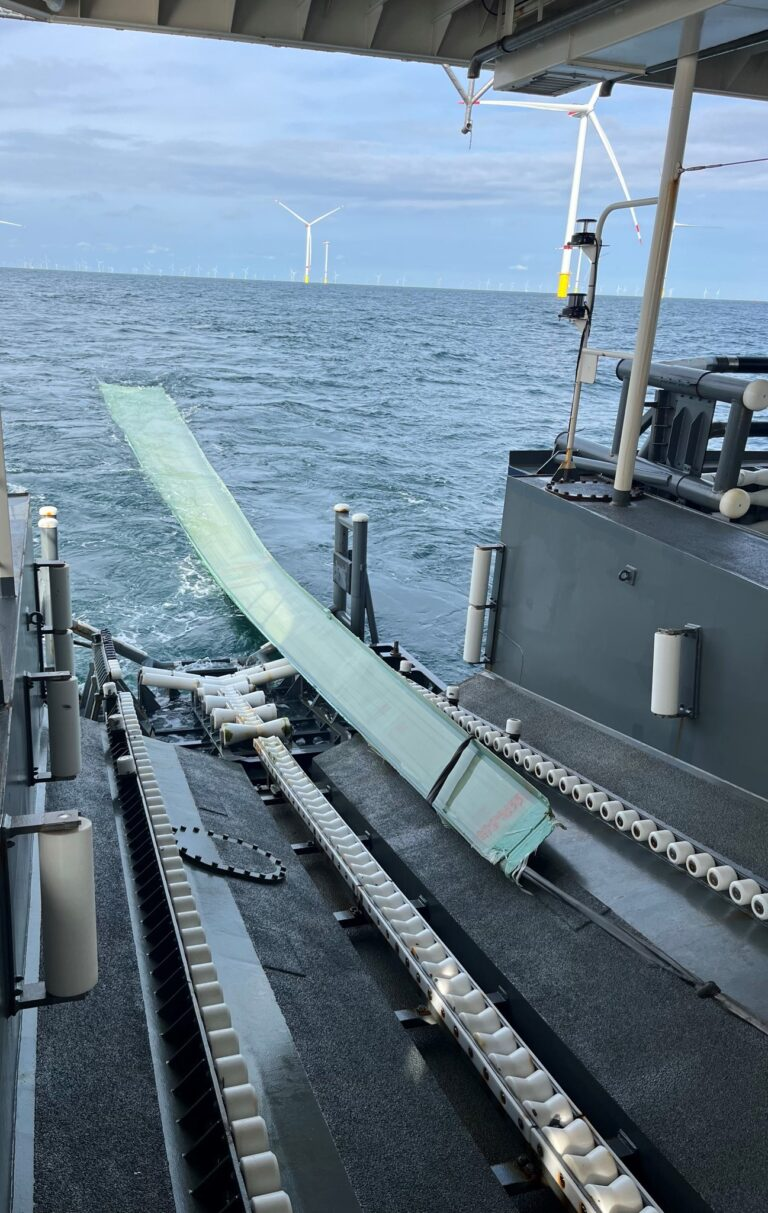
Vineyard Wind has finished installing turbine blades at their 62 turbine (186 blades) project. Yet the Federal investigation report on the July 2024 blade failure has still not been published. How is this acceptable?

The primary purpose of the independent investigation is to prevent recurrences at this or other projects in the US and worldwide. Available data suggest that blade failures are far too common.

Nearly two years have now elapsed since the Vineyard Wind blade failure. Important questions remain about the failure mechanisms, the manufacturing, testing, and quality control, a fabrication report waiver, the role of the CVA, debris recovery, and environmental impacts. Where is the investigation report?

Cape Cod Times photo

Read Full Post »

« Newer Posts - Older Posts »