Feeds:
Posts
Comments

Archive for the ‘Offshore Energy – General’ Category

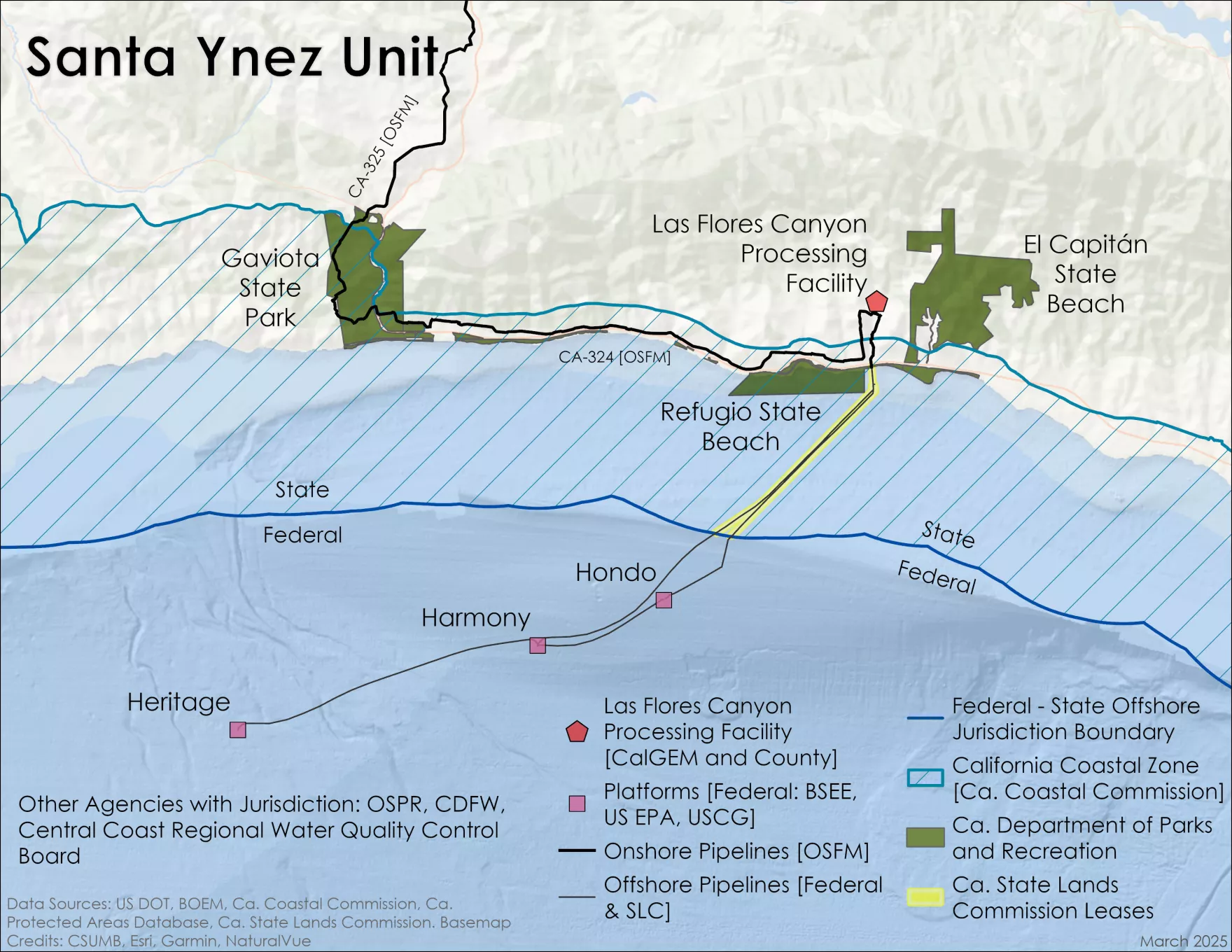
The potential rewards are great – 500+ million barrels of oil, 3 major production platforms, associated pipelines, onshore processing facilities – but can Sable survive the costly legal and administrative challenges? What is Exxon’s plan for the Santa Ynez Unit if Sable should fail?

Read Full Post »

The results of today’s Cook inlet oil and gas lease sale are disappointing, but not surprising.

BOEM: At this time, no bids have been received. In accordance with OBBBA, we will continue to hold leasing opportunities for Cook Inlet so that industry has a regular, predictable federal leasing schedule that ensures we achieve President Trump’s American Energy Dominance Agenda.

Read Full Post »

Expectations are low for tomorrow’s Cook Inlet oil and gas lease sale. The last Cook Inlet sale (2022) attracted only one bid (Hilcorp – $63,983).

The final sale notice is attached. The terms are favorable, most notably the 1/8 royalty and 10 year primary lease term.

Hopefully, we’ll be pleasantly surprised by the results.

Read Full Post »

On Friday, California Superior Court Judge Donna Geck upheld the restraining order that blocks Sable Offshore from restarting Santa Ynez Unit production. She scheduled a followup court hearing for June 27. Meanwhile, the Ninth Circuit Court of Appeal’s hearing on PHMSA’s assertion of Federal jurisdiction over the onshore pipeline segments is scheduled for July.

Can Sable survive financially until those hearings are concluded?

Contradictorily, we learn that FourWorld Capital Management just purchased 8 million shares of Sable. Is that the financial equivalent of Pickett’s Charge or does FourWorld have good reasons for their optimism?

Prior Sable Santa Ynez Unit posts.

Read Full Post »

Argus reports that Israel’s energy ministry has instructed Chevron and Energean to suspend production at their offshore Leviathan and Karish gas fields.

Although, the Israeli facility shut-ins will result in the curtailment of exports, Egypt has implemented a backup plan to ensure adequate supply.

There is no indication that Chevron’s Tamar field has been shut-in.

Summary table:

field
(operator)
2024 production
(billion cubic meters)
(% of Israel’s total)
June 2025 conflict2026 conflict
Leviathan
(Chevron)
11.33
45%
shut-inshut-in
Tamar
(Chevron)
10.09
37%
producingproducing?
Karish
(Evergean)
5.96
18%
shut-inshut-in

Read Full Post »

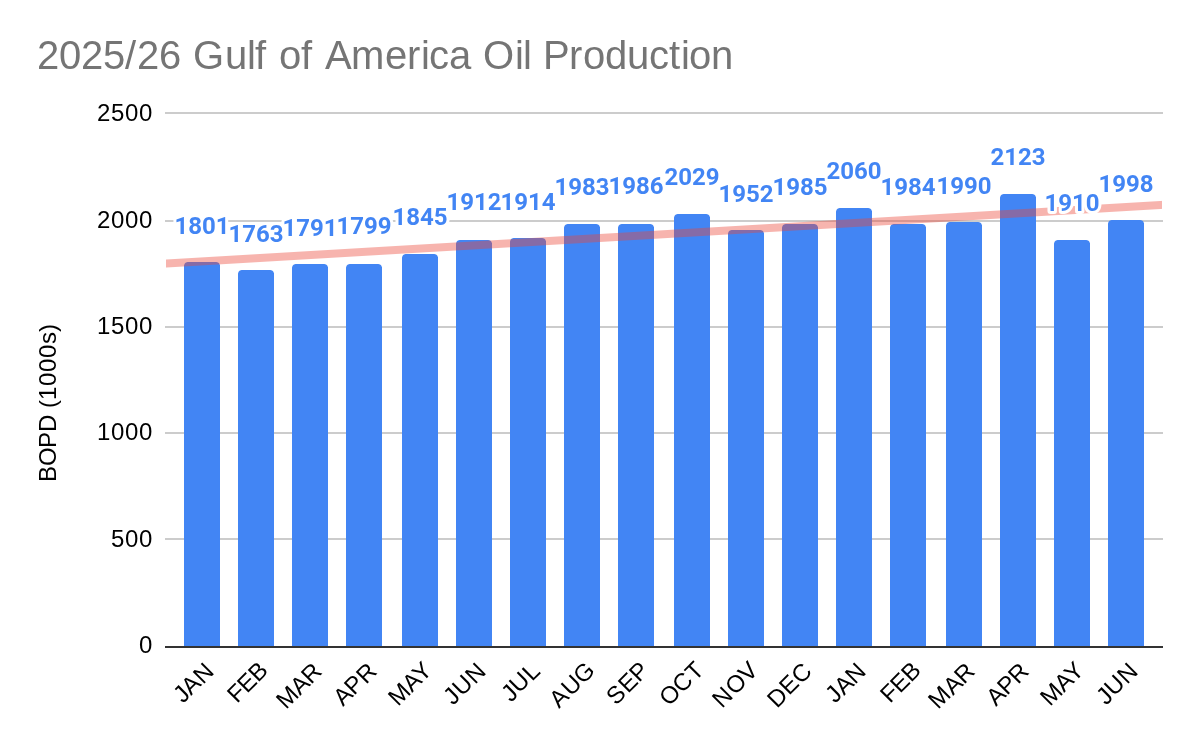
December 2025 Gulf oil production had to average 1.993 million bopd for 2025 to match the 2019 record. It exceeded that mark by 0.003 million bopd. However, October and November production were revised slightly downward resulting in a near dead heat annual average.

A closer look at the numbers (table below) shows that 2025 edged 2019 by a mere 250 bopd. Amazing!

Major caveat: The Nov and Dec 2025 figures will likely be revised slightly when EIA releases the next update at the end of January. Fingers crossed!😀

Top 3 Yearsave. daily production (1000’s of barrels)
20251897.67
20191897.42
20231864

Read Full Post »

John Smith has shared the Environmental Assessment (attached) associated with PHMSA’s Special Permit for segments 324 and 325 of Sable’s Santa Ynez Unit (SYU) pipeline system. The document is an interesting read for those following Sable’s attempt to restart production from the SYU.

Read Full Post »

PHMSA’s public notice (attached) is required because Sable’s Emergency Special Permit expired on 21 FEB. Comments are due by 26 MAR. More background.

PHMSA is publishing this notice to solicit public comments on a request for a special permit submitted by Sable Offshore Corp. (Sable). Sable is seeking relief from compliance with certain requirements in the Federal pipeline safety regulations. PHMSA has proposed conditions to ensure that the special permit is not inconsistent with pipeline safety. At the conclusion of the 30-day comment period, PHMSA will review the comments received from this notice as part of its evaluation to grant or deny the special permit request.

Read Full Post »

Tyra gas hub, North Sea, Danish sector

Excerpts from Argus article:

The Danish government will “initiate a process” to look at possibly extending one or more production licences in the Danish North Sea until 2050, to contribute to European energy security and independence, it said.

The government has asked the Danish underground consortium (DUC) — which operates the Tyra hub — to “explore an extension” beyond the current 2042 expiry.

Europe is in dire need of energy independence, and while renewables expansion can help the bloc achieve that goal, natural gas will still play a significant part of the energy mix in the coming year, the Danish government said. “Europe must stand on its own two feet,” Danish industry and trade minister Mortern Bodskov said

Read Full Post »

Deepwater Titan

Per Baker Hughes, the latest (2/20/2026) Gulf of America rig count (2/20/2026) slipped to 9. The count was 10 the previous week and 12 a year ago. In 2023 and 2024, the BH rig count was a more healthy 15-20.

8 of the 9 rigs currently drilling are at high potential deepwater locations: 3 in the Mississippi Canyon Area, 3 in Green Canyon, 1 in Walker Ridge, and 1 in Alaminos Canyon. One rig was drilling on the shelf in the Eugene Island Area.

Per MMS data, the active Gulf rig count in 2001 was 148. The 2001 count was not a one year blip; the number of rigs active in the Gulf exceeded 100 for the ten year period from 1994-2003.

Although drilling and production have become more efficient with improved exploration technology, modern well completion practices, high pressure/temperature equipment, and enhanced recovery programs, drilling activity must still be sufficient to replace reserves and sustain production over the longer term.

2025 may have been a record production year for the Gulf; we’ll find out at the end of this week. However, that level of production is not sustainable without increased drilling activity.

The EIA (chart below) is forecasting another banner year for Gulf oil production in 2026. However, they are pointing to a decline in 2027, when new production is not anticipated to be sufficient to offset natural declines. The decline in production is likely to continue beyond 2027 absent increased drilling.

BH rig count criteria: To be counted as active a rig must be on location and be drilling or ‘turning to the right’ for 4 out of 7 days during a week. A rig is considered active from the moment the well is ‘spudded’ until it reaches target depth or “TD”. Rigs that are in transit, rigging up, or being used in non-drilling activities such as workovers, completions, or production testing, are NOT counted as active.

Read Full Post »

« Newer Posts - Older Posts »