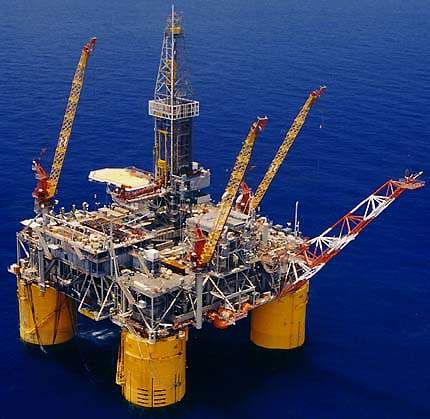
Both discoveries are near the company’s Ram Powell platform, where future production will flow via subsea tiebacks.
The Lime Rock prospect was acquired in Lease Sale 256 in November of 2020.
The new discoveries will help sustain production at Ram Powell, an early tension leg platform that has produced more than 250 million boe.
Ram Powell was the deepest production facility in the world (water depth of 3216′) when it was installed by Shell in 1997.
Access to nearby resources through regular lease sales facilitates continued production from existing platforms, reducing costs and environmental impacts.
The 3 offshore workers were employees of Island Operating Co., a production contractor. The pilot worked for Rotorcraft Leasing Company, the owner of the Bell 406 helicopter that crashed. The platform is owned by Walter Oil and Gas, the operating company.
A preliminary FAA report confirms that the helicopter crashed onto the helideck during takeoff, breaking apart and falling into the Gulf.
4 passengers had been dropped off at the platform before the fatal takeoff. Presumably there were witnesses to the incident.
According to the FAA report, the platform was located at West Delta Block 106. Per the BOEM platform data base, the platform was installed in 1994, is in 252′ of water, and is continuously manned.
Per the BSEE INC data base, the platform had not been cited for any violations since 2016.
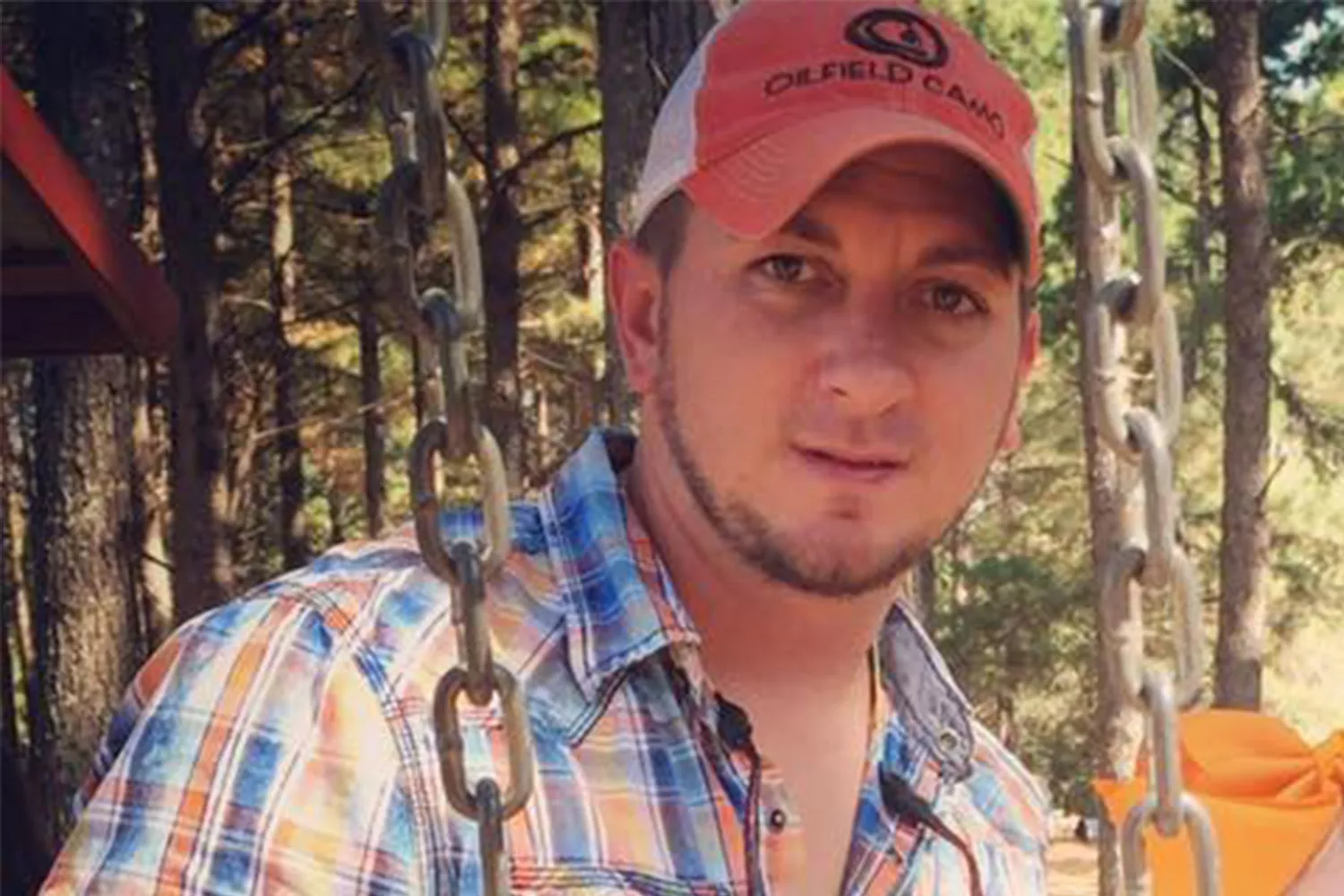
Lacy Scarborough, wife of victim David Scarborough, is pregnant. Tragically, the couple lost their first child in an accidental drowning in March. David was heading home for the holidays after completing his 2 week shift on the platform. He had worked offshore for 8 years. Per Lacy, David’s last message was that he was taking off and would be home soon.
The only other victim who has been identified is Tim Graham of Quitman, Mississippi.
I trust that the NTSB will conduct a timely and thorough investigation, and hope they consider offshore helideck oversight, both in terms of industry programs and government regulation. The most recent Coast Guard – BSEE MOA for fixed platforms added to helideck regulatory uncertainty by assigning decks and fuel handling to BSEE and railings and perimeter netting to the Coast Guard. This is the antithesis of holistic, systems-based regulation.
Deepwater Titan is also the second 8th-generation drillship constructed by Sembcorp Marine based on its Jurong Espadon 3T design. The dual-derrick drillship is the first-ever unit delivered with two 20,000-psi blowout preventers (BOPs), well-control, riser, and piping systems for high-pressure and high-temperature drilling and completion operations. Like its sister rig, the Deepwater Atlas — delivered in June 2022 — Deepwater Titan is also equipped with three-million-pound hook-load hoisting capacity and capabilities to drill up to 40,000 feet and operate in water depths of up to 12,000 feet.
Lars Herbst notes that the Atlas, which has been drilling for Beacon in the Shenandoah field with 15k BOPs, will switch to the 20k equipment before any well completion operations. The Titan, equipped with the 20k NOV BOPE, will begin drilling in the Gulf of Mexico for Chevron later this year.
BOE is reviewing BSEE compliance data and available incident reports for 2022. The Honor Roll companies will be announced later this month. Our preliminary finding is that 9 of the more than 120 operating companies met the high standard that we have established for this recognition. Our criteria:
Must average <0.3 incidents of noncompliance (INCs) per facility-inspection. Note that each facility-inspection may include multiple types of inspections (e.g. production, pipeline, pollution, Coast Guard, site security, etc). On average, each facility-inspection included 3.25 types of inspections in 2022. (Here is a list of the types of inspections that may be performed.)
Must operate at least 3 production platforms and have drilled at least one well (i.e. you need operational activity to demonstrate compliance and safety achievement).
May not have a disqualifying event (e.g. fatal or life-threatening incident, significant fire, major oil spill). Due to the extreme lag in updates to BSEE’s incident tables, investigation and news reports are used to make this determination.
Pacific and Alaska operations are considered separately.
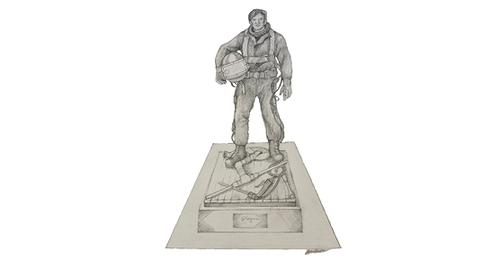
Nice Sea Technology article by former colleague Rusty Wright. The monument will be unveiled on April 29, 2023, in Morgan City, Louisiana.
In the mid-1940s, oilfield diving developed into a profession. Those divers and the companies they started made incredible discoveries, breakthroughs and steady improvement in their career space, including safety processes and procedures. These efforts have been incorporated into many other industries, from robotics to the medical field and space exploration, just to name a few. The Space Shuttle astronauts working on the Hubble telescope even mentioned divers–where are they when you need them?–as they struggled with installing new mirrors.
The Oilfield Divers Monument will be a bronze, life-size diver dressed in an early DESCO helmet, showcasing the old-style heavy gear, which has since morphed into light gear with advances in technology and design. The diver will carry a burning torch, jet nozzle and a hammer wrench with umbilical hoses on the deck.
There is a trend of doing more with less, for example decreases in the numbers of helicopters across the board, yet increases year-over-year in passengers carried, hours flown, and number of flights conducted.
This was the second crash for the operator (Rotorcraft) in two weeks, its second fatal for the year, and the third in the Gulf of Mexico since October.
On December 15, a Rotorcraft Leasing Bell 206L-4 with three aboard crashed while taking off from a platform 35 miles south of Terrebonne Bay, Louisiana. In that accident, one of the helicopter’s skids caught under the helipad’s perimeter railing, and the aircraft fell into the water below. (We have concerns that yesterday’s incident may have had a similar cause.)
On October 26, a Westwind Helicopters Bell 407 with three aboard crashed into the Gulf 25 miles south of Morgan City, Louisiana after the pilot apparently experienced an in-flight medical emergency and told his front seat passenger he “was not going to make it” and then slumped over the controls. The front-seat passenger then attempted to gain control of the helicopter prior to the water impact. After several hours, both passengers were rescued with serious injuries, but the pilot died. (This is why I never liked single pilot aircraft.)
Another of the company’s Bell 407s crashed on January 14 near Houma, Louisiana, killing both occupants. A witness to the accident said the helicopter appeared to dive nose-down into terrain. To date, investigators in that accident have not discovered any mechanical or structural failure that would account for that crash.
Get to work HSAC, NTSB, BSEE, USCG, FAA, and all others who are involved with offshore helicopter safety.
Not a word about this tragedy on the Rotorcraft, Walter Oil & Gas, or BSEE websites, and no public statements can be found. At a minimum, one would have expected condolences to the families and a commitment to find out what happened and prevent recurrences.
#BreakingNews@USCG searching for 4 people aboard a downed helicopter in the Gulf of Mexico approximately 10 miles offshore Southwest Pass, LA. The helicopter reportedly was in the process of departing an oil platform when it crashed.



 Bud's Offshore Energy (BOE)