Feeds:
Posts
Comments

Archive for the ‘energy policy’ Category

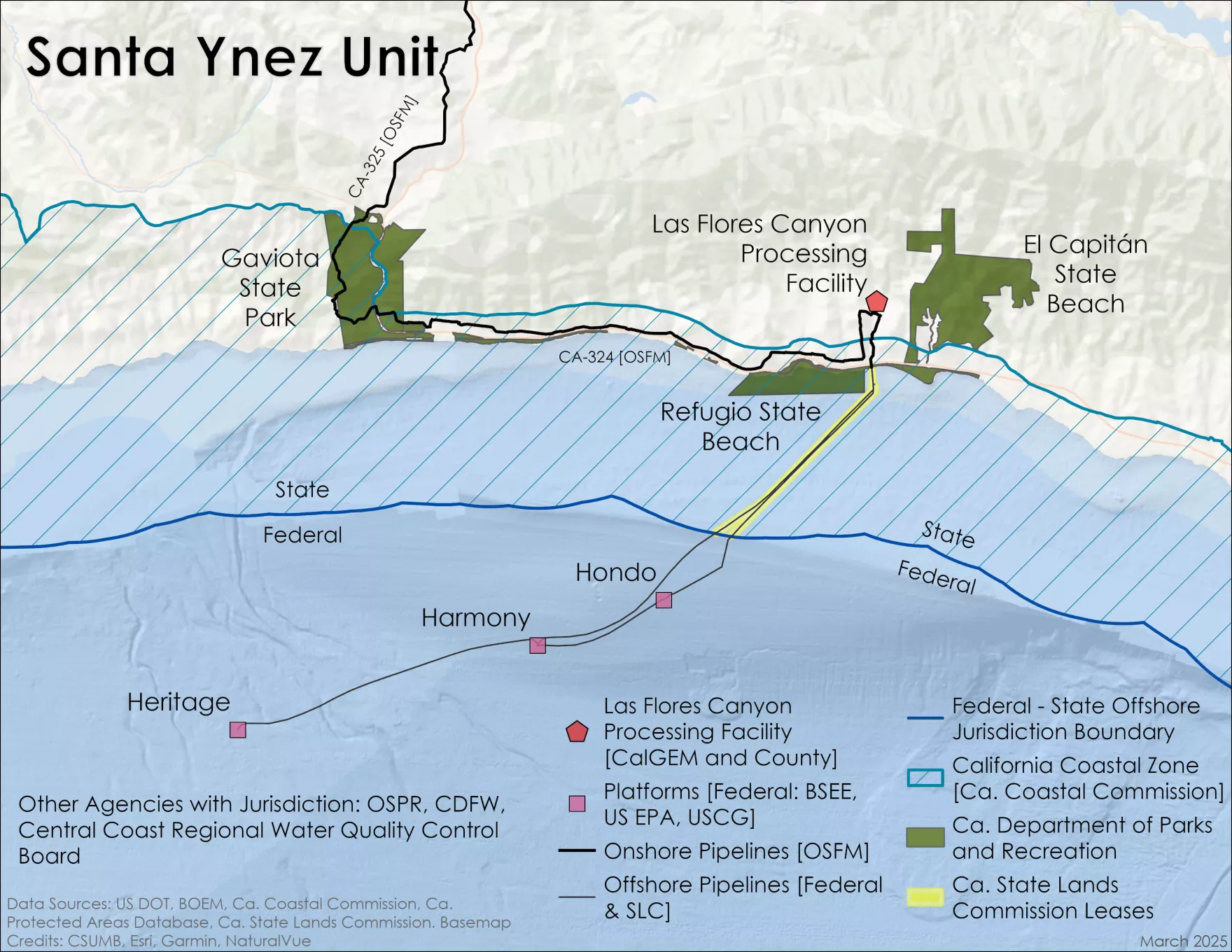
Meanwhile, the California Coastal Commission notified Sable Offshore that it intends to issue a cease and desist order aimed at shutting down crude oil extraction in the Santa Barbara Channel.

Sable responds: “Sable Offshore Corp. (“Sable”) through its subsidiary, Pacific Pipeline Company (“PPC”), continues to lawfully operate through its existing coastal development permits which were issued in 1986.”

California cage fight! Who ya’ got?

Read Full Post »

DOT and others shouldn’t make statements they can’t back up (see the X post below).

As a supporter of responsible offshore oil and gas operations, I find statements like this to be irresponsible and embarrassing. Sable Offshore is not using newer or safer drilling technology than is used in many other areas.

Read Full Post »

North Sea pioneer JL Daeschler is among those lamenting the sad state of UK exploration and development, commenting that he is “green” with envy of Norway’s long term management of their oil and gas resources.

Researchers at the University of Aberdeen may be showing the way for exploitation of the West of Shetland area’s estimated 4.7 billion bbls of oil equivalent (boe). They are advocating a tailored management regime for this challenging area. Per the researchers:

“West of Shetland is not a depleted frontier – it is a technically demanding but strategically important energy province,” said Nick Schofield, Professor of Igneous & Petroleum Geology at the University of Aberdeen. “Our study highlights the remaining oil and gas potential in the area, which could extend the life of the UK’s oil and gas sector.”

John Underhill, Aberdeen University’s Director for Energy Transition said: “Failing to develop these domestic resources risks increasing the UK’s dependence on imports, with implications for emissions, costs, jobs, tax revenues and energy security.” 

The researchers argue that a “one-size-fits-all” approach to UKCS taxation fails to reflect the unique risks and costs associated with West of Shetland exploration, appraisal and development. As a result, they say projects that are technically viable may remain economically marginal under current conditions.

The University of Aberdeen paper (linked) advocates a tailored regime that would:

  • Recognize higher exploration and development costs
  • Account for increased geological and operational risk
  • Encourage investment in challenging projects
  • Enable tie-backs to existing infrastructure that would provide energy security, tax revenues, retain jobs and be better for the global climate than importing liquified natural gas (LNG), which carries a higher carbon footprint.
  • Support the development of already identified prospects within licensed areas

Rosebank update:

The West of Shetland area includes the controversial Rosebank project (map above), which has yet to receive environmental consent from the UK govt. Following a court ruling, Equinor (operator) was given permission to proceed with the project, including preparatory engineering and construction work, but no production is allowed pending final govt approval.

The PetoJarl Rosebank Floating Production Storage and Offloading (PFSO) vessel recently left its dry dock in Norway and has arrived in the West of Shetland basin. The vessel will undergo commissioning to be ready for production by the end of the year.

PetroJari Rosebank FPSO

Read Full Post »

The Canning River, seen here in 2018, flows from the Brooks Range into the Beaufort Sea along the western edge of the Arctic National Wildlife Refuge. The river marks the boundary between the refuge, which is managed by the U.S. Bureau of Land Management, and state land on the North Slope. Results of an oil lease sale that offered 58 tracts in the refuge’s coastal plan drew bids on five tracts. The highest-dollar bid was for a tract right at the Canning River edge of the refuge’s border with state land. (Photo by Lisa Hupp/U.S. Fish and Wildlife Service)

Yesterday’s mandated One Big Beautiful Bill sale in the Arctic National Wildlife Refuge turned out to be a one-on-one competition between an Alaskan independent and a State agency! Only 5 of the 58 tracts received bids, and the high bid was $1.7 million.

The competitors:

  • HEX Energy, an Alaskan independent: 4 bids, 2 high bids
  • Alaska Industrial Development and Export Authority (AIDEA), the state government’s economic development agency: 5 bids, 1 high bid

Full sale results

The implications for Arctic offshore sales are not good, but oil companies can be fickle, and opinions and investment strategies are subject to change, especially in the Arctic.

Read Full Post »

Sable posts

Read Full Post »

Nothing tilts public opinion more than high gasoline prices, or worse yet shortages! Hence the 1975 legislation establishing the SPR, the massive SPR drawdown in 2022, and this year’s withdrawals.

Looking back to the halcyon days of the US offshore program, it was the gas lines in the 1970s that drove the remarkable and rather unlikely growth in the program during the Carter Administration (1977-1981). A few highlights from those four years:

  • 15 lease sales including 3 offshore Alaska, 3 in the Atlantic, and 1 offshore California
  • Drilling activity in all 4 regions: GoM, Pacific, Alaska, and Atlantic
  • Natural gas discovery in the Mid Atlantic (Hudson Canyon Unit)
  • North, Mid, and South Atlantic District offices for permitting and inspections
  • 5300 well starts including 97 in water depths > 1000′
  • 314 new platforms including Cognac, the world’s first platform in > 1000′ of water

Perhaps unthinkable today, the Governor of Massachusetts from 1979-1983, Ed King, was a strong supporter of offshore drilling. Absent that support, the exploratory drilling on Georges Bank would probably have never occurred. /s/ Nostalgic Old Man 😉

Read Full Post »

SYU near-term workover plan; estimated reserve additions exceed production.

Those who have been following the Santa Ynez Unit saga should take a look at Sable’s informative PowerPoint update (attached). The presentation includes reserve data, well operation plans, production forecasts, financial and legal updates, and regional energy supply information.

Also, Sable CEO Jim Flores has announced that Energy Secretary Wright and Interior Secretary Burgum will be visiting the project this week. Transportation Secretary Duffy was also expected, but he will not be attending.

Read Full Post »

The subject IEc report for the US Coast Guard may be of interest to BOE followers. The Coast Guard is requesting comments by July 28, 2026. You can download the full report (129 pages) here.

The report is intended to update the Coast Guard’s methodology for estimating the cost savings resulting from spill prevention regulations. The paragraph pasted below is a good summary of the objective.

The offshore industry could benefit from this report, because the estimated cost of spills >100 gallons is reduced, dramatically so when the DWH/Macondo blowout is excluded (see the second table below). That reduction would support regulatory reform initiatives, and could thus generate some controversy.

My main concern is that there is only a single distance-from-shore category for offshore spills (see text below). The natural resources damage from a spill 3 miles from shore will almost always be much greater than from an equivalent volume spill 100 miles from shore.

The single-offshore-category issue is illustrated in the 2 tables pasted below. The first table presents a summary of expert opinions on the smallest spill size that is likely to result in measurable natural resource damages. The mean response to Question 3 (offshore) is 7782 gallons. A spill of that size occurring 3 miles from shore is much more likely to result in resource damage than a spill originating 50 or 100 miles from shore.

In the second table, note the new methodology results in the same cost estimates for large nearshore/coastal spills as for offshore spills. Again, this is presumably because there is only a single offshore category.

The public comments on this report should be interesting.

Read Full Post »

John Smith’s update on California OCS Decommissioning Obligations is attached. His comments:

Chevron and FMC hold joint and several liability responsibilities for many platforms and all of those operated by DCOR. This reflects Chevron’s long history in developing CA onshore and offshore oil and gas resources. A 2020 report issued by BSEE estimated the nine platforms operated by DCOR had a combined decommissioning cost of $397 million. The actual cost could be 2-3-fold higher based on estimates for decommissioning California state water platforms prepared by experienced decommissioning consultants.

Chevron may be checking out of California by moving its corporate offices to Houston, but as someone once said about decommissioning – referring to the popular Eagles Hotel California song “You can check out but you can never leave.”

Official decommissioning anthem 😉: Hotel California

Excerpt from the lyrics – Hotel California, Eagles, 1976

Last thing I remember
I was running for the door
I had to find the passage back
To the place I was before
“Relax, ” said the night man
“We are programmed to receive
You can check out any time you like
But you can never leave”

Read Full Post »

Per yesterday’s discussion comparing recent onshore and offshore lease sales, the investments are really quite different. When you acquire Permian and Delaware Basin shale tracts you are essentially buying oil in place that should be producible with current technology.

At offshore sales, you are typically acquiring the opportunity to learn more, either through site surveys or drilling. Your lease exploration and development strategy will also be influenced by drilling outcomes for similar targets on other leases. A return on your investment is far from certain.

I looked back at the top ten leases (by high bid) issued at Central Gulf Sale 235. That sale was chosen because it was 11 years ago, giving time to explore and initiate development, and the bidding was strong. The top ten leases received bids ranging from $12.8 million to $52.2 million. See the screenshot below.

Surprisingly, only four of the leases were ever drilled and nine of the ten leases have expired. The only lease remaining is the highest bid block (OCS-G 35724, Walker Ridge Block 107, $52.2 million) now owned by Talos (27% and operator), Red Willow (22.5%), Shell (22.5%), CSL (9%), and two investment partnerships. This lease is being held by operations given that a well was drilled within the past year. However, Talos has announced a discovery, and the well has been temporarily abandoned to preserve future utility:

The discovery well was drilled to a total vertical depth of 33,228 feet utilizing the West Vela deepwater drillship and encountered oil pay in multiple high-quality, sub-salt Miocene sands. A comprehensive wireline program was conducted, acquiring core, fluid, and log data to evaluate the reservoir.

So the bottom line is $308.3 million in bonuses for 10 leases, 9 of which have now expired, and one discovery which could prove to be commercial down the road.

Read Full Post »

« Newer Posts - Older Posts »