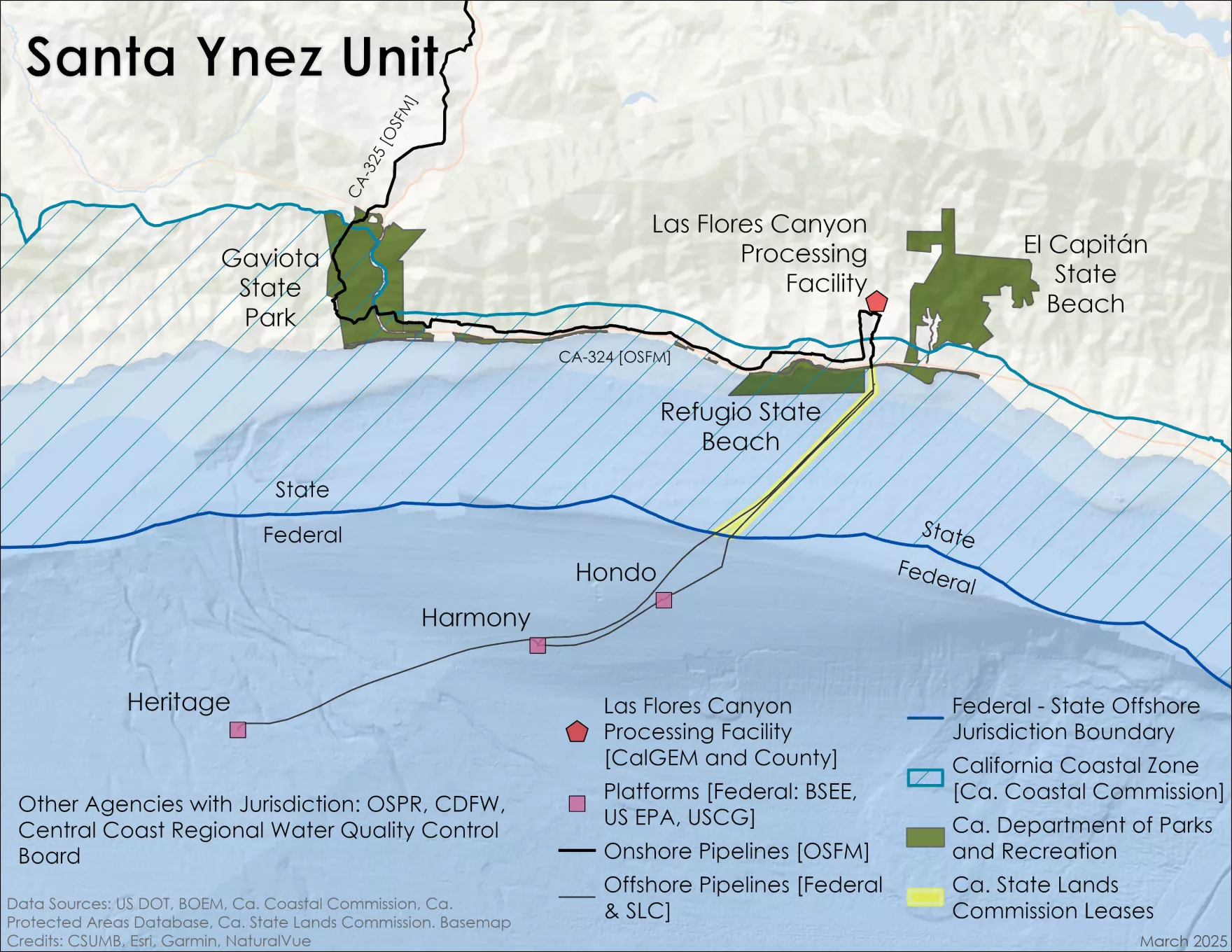
In the ongoing Santa Ynez Unit production restart saga, John Smith informs that a California Appellate Court ruled against Sable Offshore by a vote of 2-1, with a strong dissent from one of the three judges.
The decision (attached) affirms the California Coastal Commission’s regulatory authority over Sable’s Los Flores Canyon pipeline repairs, meaning that Sable could be ordered to cease operating the pipeline. However, this is just one element of a complex legal maze. An important case regarding PHMSA’s emergency special permit for the pipeline will be heard by the Federal 9th Circuit Court of Appeals in July.
The dissenting judge’s opinion beginning on p.15 of the attachment sets the stage for the upcoming arguments in the 9th Circuit. Excerpt:
“But first, a dose of reality. The repair work has been done. It is a “fait accompli.” And, pursuant to federal intervention, oil is now flowing in the pipeline without incident. The supremacy clause of the United States Constitution takes precedence. The federal Government trumped the state’s Commission “cease and desist” order and it trumps the preliminary injunction order. Based upon these events, the trial court should vacate the preliminary injunction, dismiss the matter as moot, and nullify the civil penalties.”
John Hancock Tower (pictured) is now named for its address, 200 Clarendon St
In the attached complaint, BP Hancock LLC alleges Vineyard Offshore, a Vineyard Wind parent company, is delinquent in paying rent for its space in the famous John Hancock Tower (now known as 200 Clarendon Street) in Boston.
Vineyard Wind had leased 28,370 square feet of space, constituting the entire eighteenth floor of the tower.
Per the complaint:
As of the date of this Complaint, Tenant owes Landlord $824,338.99 in Rent, Additional Rent, and late fees.
Furthermore, Tenant remains obligated to replenish the Security Deposit in the full amount of $386,810.00 as provided under Section 16.26 of the Lease.
As many of you know, Vineyard Wind is engaged in an ugly dispute with its primary contractor, GE Vernova, which was ordered to continue work on the project even though Vineyard Wind stopped making payments.
WASHINGTON –Today, the Department of the Interior announced a settlement agreement with affiliates of Invenergy, North America’s largest privately held developer, owner, and operator of independent power infrastructure, aimed at strengthening American security and lowering costs, advancing goals central to President Donald Trump’s Energy Dominance Agenda.
As part of the settlement agreement, Invenergy will voluntarily terminate its affiliates’ four offshore wind leases located in the New York Bight, Central Coast of California and the Gulf of Maine totaling $765 million, and redirect that amount towards other domestic energy sources with the demonstrated capability to deliver reliable, affordable power, including the development of natural gas-fired power plants in Indiana, Wisconsin, Iowa, Kansas, and Missouri and geothermal power generation projects in the Western U.S.
Minimizing flaring and venting is important from both environmental and resource conservation standpoints.Flaring and venting volumes are also good indicators of how well production systems are designed, managed, and maintained.
Updated flaring and venting volumes for the Gulf of America have been compiled using monthly data submitted to the Office of Natural Resources Revenue (ONRR). This is the best data source because reporting is mandatory and strictly enforced, and flaring and venting are accounted for separately.
Below are a few summary charts. Completed tables, similar to those posted for 2024, will be attached for sharing at a later date.
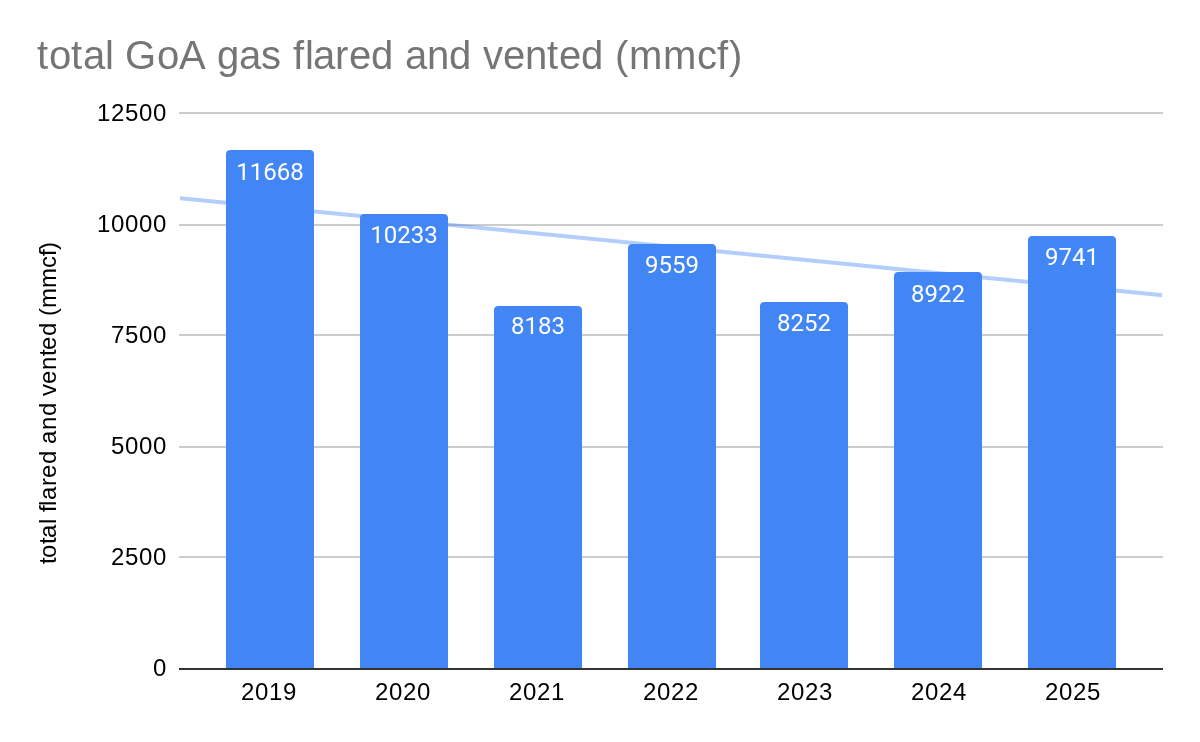
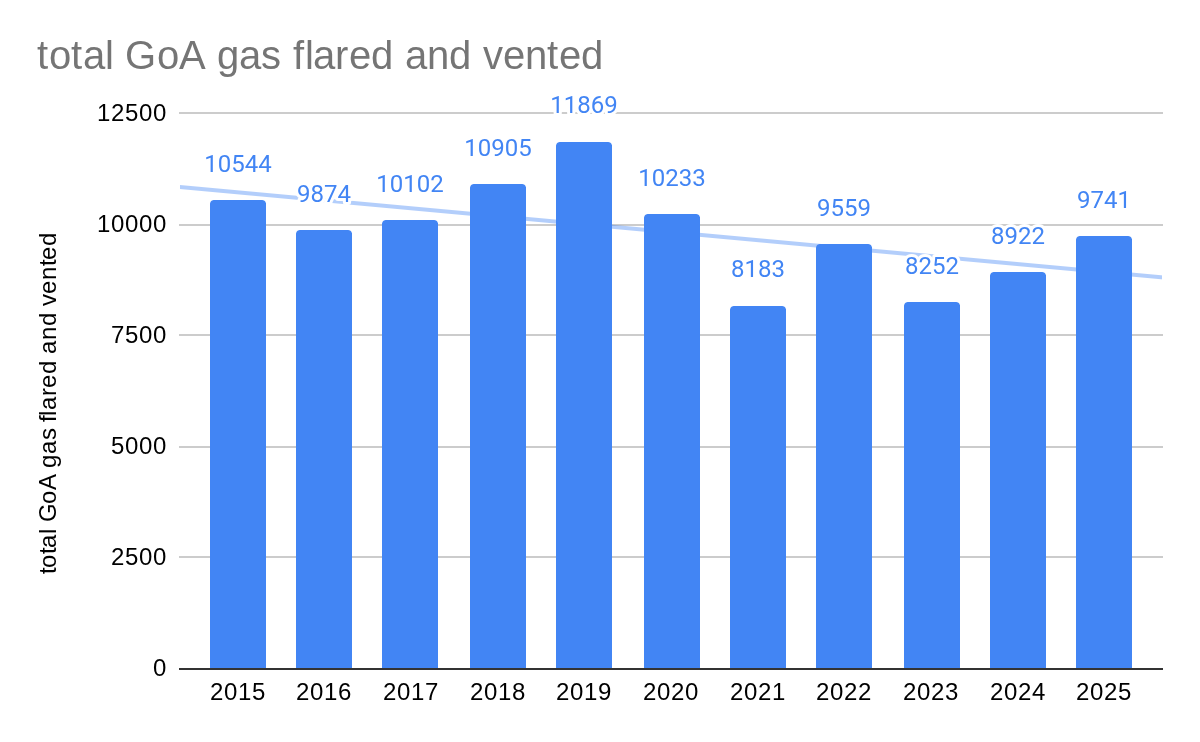
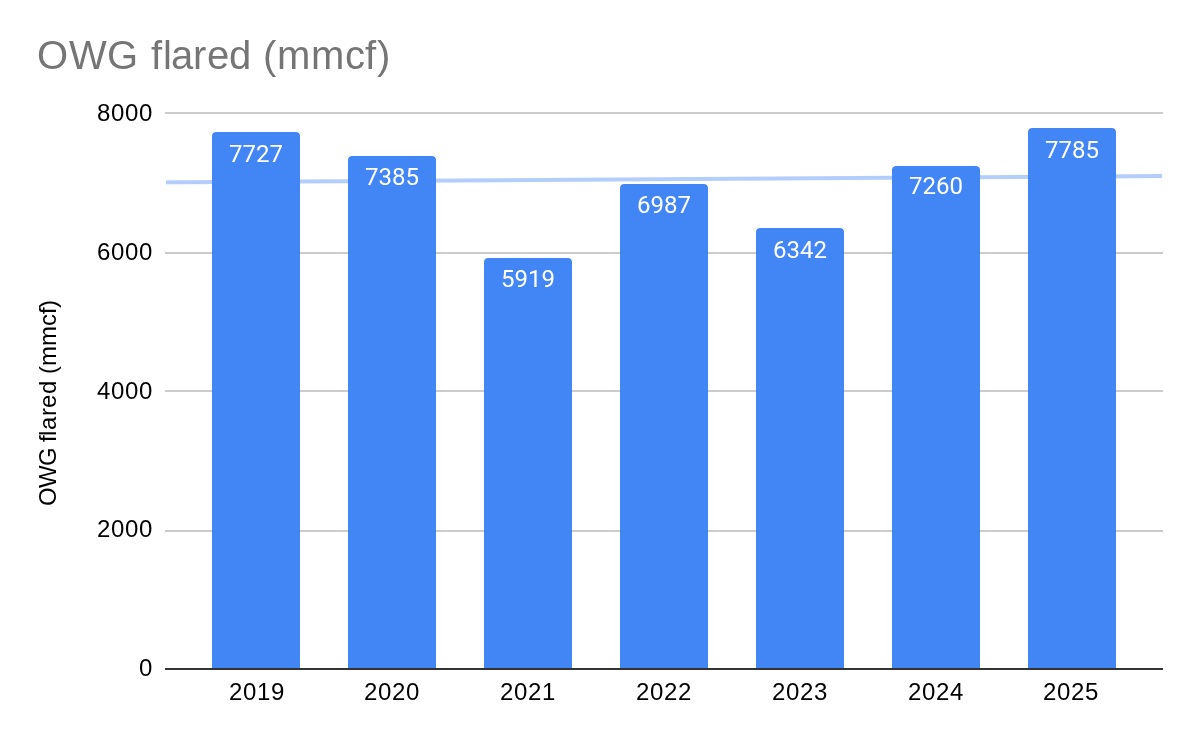
Total venting and flaring (fig. 1) in 2025 increased by 819 million cubic feet (mmcf) vs. 2024. However, the 7-year trend line is still favorable. Thinking that 2019, a record flaring year, may have biased the trend line, I extended the chart back to 2015, the first year for which I have ONRR data. As you can see in the second chart, the trend is still favorable.
80% (7785 mmcf) of the total gas flared and vented in 2025 (9741 mmcf) was flared from oil wells (chart below). That’s unsurprising given that most of the Gulf’s gas production is from deepwater oil wells, and flaring rates are higher for oil wells than for gas wells.
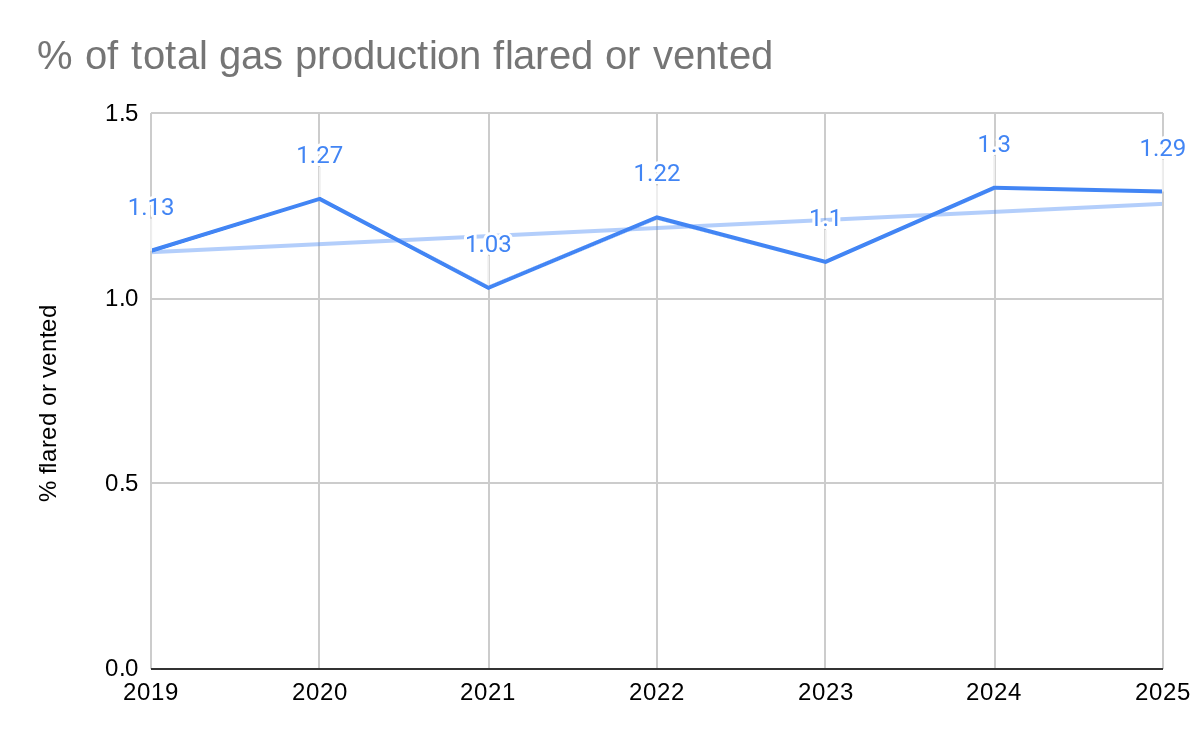
The best performance indicators are the normalized data (i.e. percentages of produced gas that are flared and vented both for oil wells and gas wells). Overall (chart below), flaring and venting volumes remain stubbornly above 1.0% of total gas production, the historical target last achieved in 2015. I’ll separate venting and flaring for both oil and gas wells in a future post.
The oil patch is known for booms, busts, mergers, and acquisitions. Hess is now among the once important offshore operators that no longer exist as separate companies. Others include Amoco, Arco, Texaco, Getty, Gulf, Unocal, Sun, Anadarko, BHP, Mobil, Phillips, Noble Energy, Pennzoil, Kerr-McGee, Superior, Nexen, and Newfield.
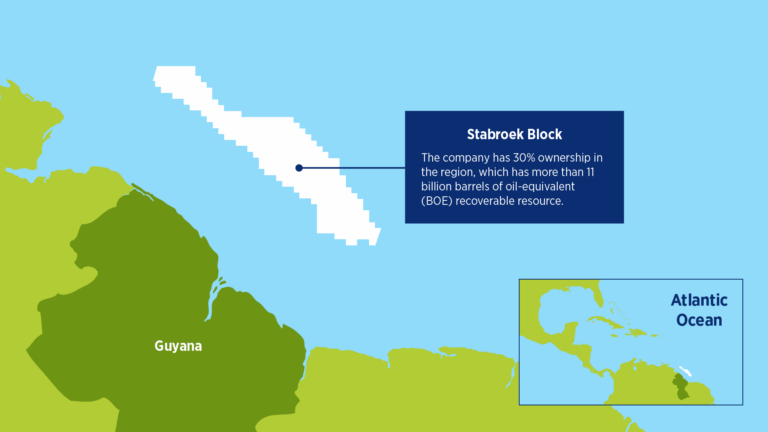
Hess would probably not have been a Chevron target had they not taken a chance in 2014 when they obtained a 30% position in Exxon’s Stabroek block offshore Guyana. The rest is history, and Stabroek is now the world’s most prized offshore block. Hess had other nice assets in the Gulf, Bakken Shale, and elsewhere, but Stabroek was Chevron’s primary target.
Hess was a safety compliance leader in both 2023 and 2024.
Hess was an active participant in pre-merger lease sales.
The combined company is unlikely to be greater than the sum of the parts in terms of US lease acquisition, exploration, and development.
Combining companies limits the diversity of geological assessments and exploration strategies.
Consolidation limits participation on committees engaged in assessing technology and developing standards. Declining industry participation in these activities, which are critical to offshore safety, has been a historical concern of OCS program leadership.
When the merger was announced, Chevron’s CEO Mike Wirth was quoted as saying “We’ve got too many CEOs per BOE, so consolidation is natural.” That comment makes sense from the perspective of an acquiring CEO. Employees of the companies being acquired have a somewhat different view. They would prefer increasing exploration and production rather than reducing employees.
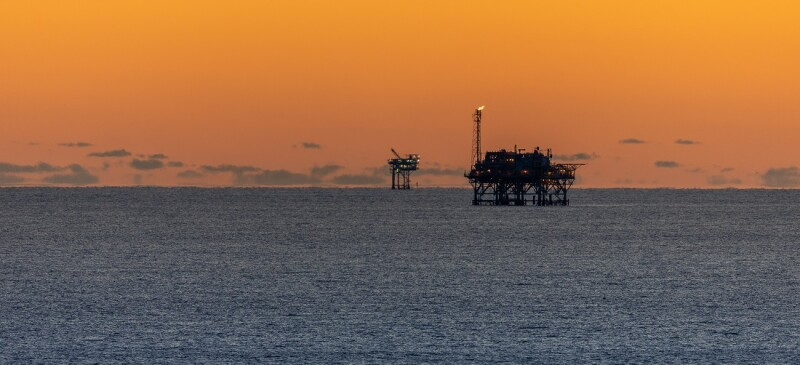
Meanwhile, the California Coastal Commission notified Sable Offshore that it intends to issue a cease and desist order aimed at shutting down crude oil extraction in the Santa Barbara Channel.
Sable responds:“Sable Offshore Corp. (“Sable”) through its subsidiary, Pacific Pipeline Company (“PPC”), continues to lawfully operate through its existing coastal development permits which were issued in 1986.”
DOT and others shouldn’t make statements they can’t back up (see the X post below).
As a supporter of responsible offshore oil and gas operations, I find statements like this to be irresponsible and embarrassing. Sable Offshore is not using newer or safer drilling technology than is used in many other areas.
The Sable Offshore Project is using new technology to drill oil that is more safe and environmentally friendly than anywhere in the WORLD@PHMSA_DOT is proud to be a part of this and making America ENERGY DOMINANT 💪 https://t.co/q3ztD1G0R4
— U.S. Department of Transportation (@USDOT) June 10, 2026
North Sea pioneer JL Daeschler is among those lamenting the sad state of UK exploration and development, commenting that he is “green” with envy of Norway’s long term management of their oil and gas resources.
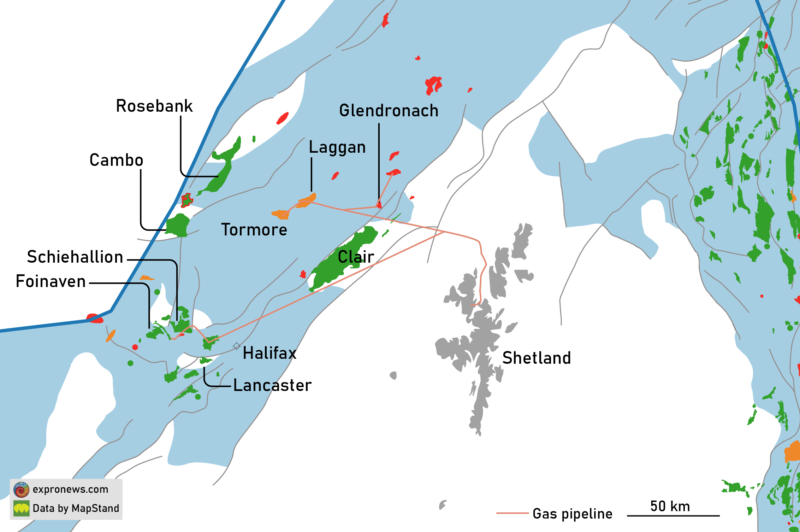
Researchers at the University of Aberdeen may be showing the way for exploitation of the West of Shetland area’s estimated 4.7 billion bbls of oil equivalent (boe). They are advocating a tailored management regime for this challenging area. Per the researchers:
“West of Shetland is not a depleted frontier – it is a technically demanding but strategically important energy province,” said Nick Schofield, Professor of Igneous & Petroleum Geology at the University of Aberdeen. “Our study highlights the remaining oil and gas potential in the area, which could extend the life of the UK’s oil and gas sector.”
John Underhill, Aberdeen University’s Director for Energy Transition said: “Failing to develop these domestic resources risks increasing the UK’s dependence on imports, with implications for emissions, costs, jobs, tax revenues and energy security.”
The researchers argue that a “one-size-fits-all” approach to UKCS taxation fails to reflect the unique risks and costs associated with West of Shetland exploration, appraisal and development. As a result, they say projects that are technically viable may remain economically marginal under current conditions.
Recognize higher exploration and development costs
Account for increased geological and operational risk
Encourage investment in challenging projects
Enable tie-backs to existing infrastructure that would provide energy security, tax revenues, retain jobs and be better for the global climate than importing liquified natural gas (LNG), which carries a higher carbon footprint.
Support the development of already identified prospects within licensed areas
Rosebank update:
The West of Shetland area includes the controversial Rosebank project (map above), which has yet to receive environmental consent from the UK govt. Following a court ruling, Equinor (operator) was given permission to proceed with the project, including preparatory engineering and construction work, but no production is allowed pending final govt approval.
The PetoJarl Rosebank Floating Production Storage and Offloading (PFSO) vessel recently left its dry dock in Norway and has arrived in the West of Shetland basin. The vessel will undergo commissioning to be ready for production by the end of the year.
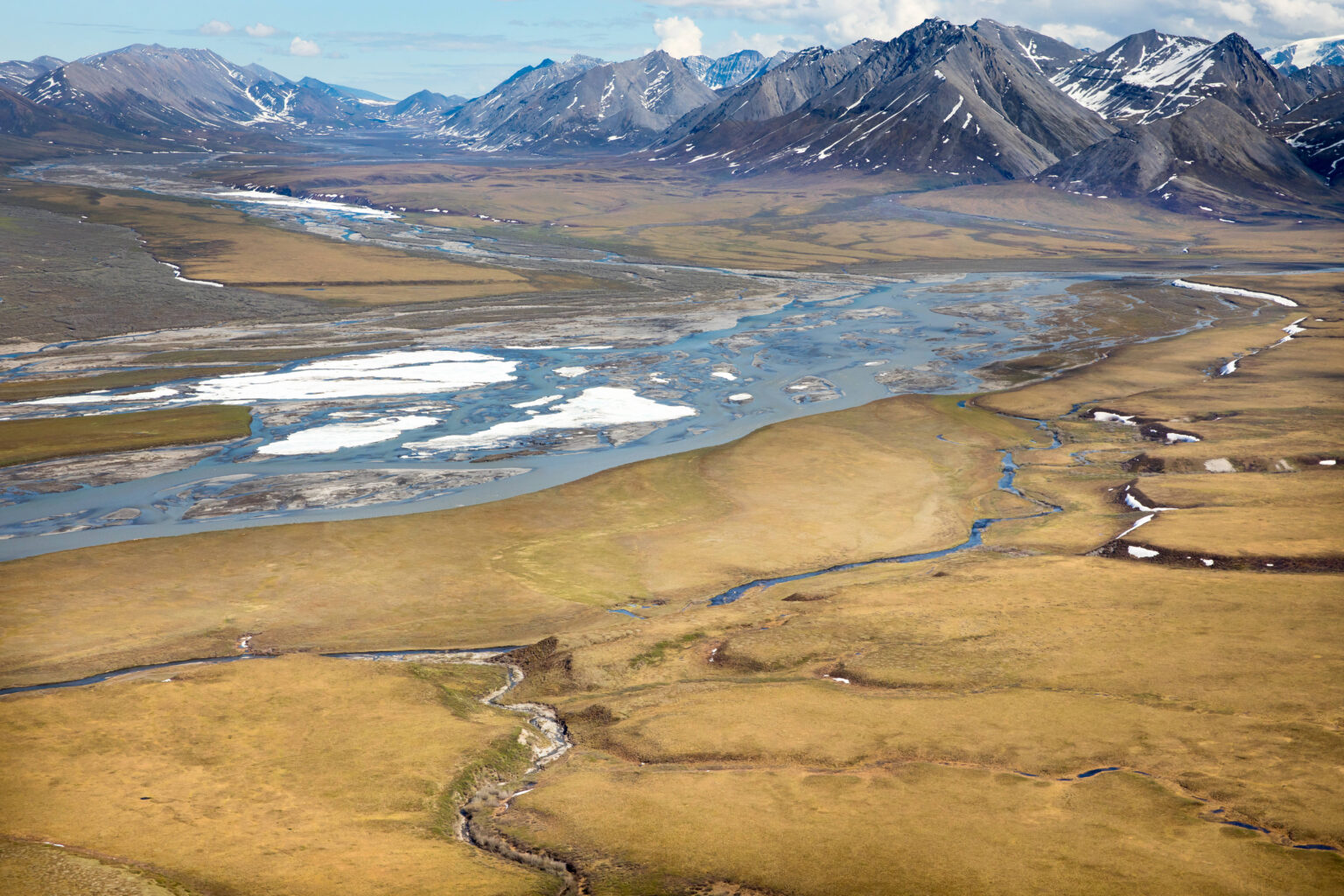
The Canning River, seen here in 2018, flows from the Brooks Range into the Beaufort Sea along the western edge of the Arctic National Wildlife Refuge. The river marks the boundary between the refuge, which is managed by the U.S. Bureau of Land Management, and state land on the North Slope. Results of an oil lease sale that offered 58 tracts in the refuge’s coastal plan drew bids on five tracts. The highest-dollar bid was for a tract right at the Canning River edge of the refuge’s border with state land.(Photo by Lisa Hupp/U.S. Fish and Wildlife Service)
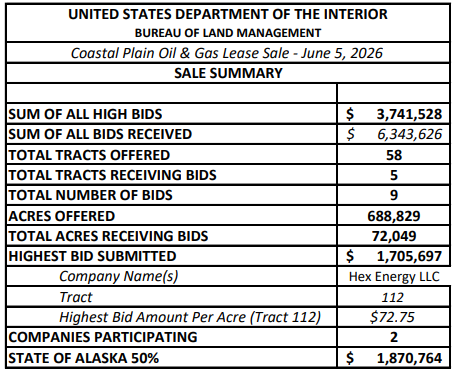
Yesterday’s mandated One Big Beautiful Bill sale in the Arctic National Wildlife Refuge turned out to be a one-on-one competition between an Alaskan independent and a State agency! Only 5 of the 58 tracts received bids, and the high bid was $1.7 million.
The competitors:
HEX Energy, an Alaskan independent: 4 bids, 2 high bids
Alaska Industrial Development and Export Authority (AIDEA), the state government’s economic development agency: 5 bids, 1 high bid
The implications for Arctic offshore sales are not good, but oil companies can be fickle, and opinions and investment strategies are subject to change, especially in the Arctic.