Feeds:
Posts
Comments

Posts Tagged ‘BSEE’

The U.S. Court of Appeals for the D.C. Circuit ruled that BOEM “unreasonably refused to consider possible deficiencies in environmental enforcement” in their Supplemental EIS for Sales 250 and 251. The court found that BOEM did not adequately consider a 2016 Government Accountability Office (GAO) report that was critical of BSEE’s oversight of offshore activities.

More positively, the court chose not to vacate the sales or the EIS:

Moreover, vacatur would be highly disruptive for the lessees. They have paid millions of dollars to obtain their leases and have acted for some four years in reliance on them—including by investing substantial additional sums and by executing contracts with third parties. Moreover, any redo of the lease sales “would be tainted by prior publication of [the] lessees’ proprietary valuation of the leases” following the original sales.

Comments:

  1. How many GAO reports on BSEE or MMS have not been critical of some processes or procedures? None that I can recall.
  2. It’s unreasonable to expect BOEM to consider every GAO or other external criticism of the regulatory program in their EIS’s.
  3. All of the GAO recommendations in the subject report were process related and were closed (implemented) several years ago.
  4. The court exercised good judgement in declining to vacate the sale. Per the decision, the case will be remanded to BOEM for further consideration of the GAO report.
 

Read Full Post »

Dept. of Justice announcement

In addition to the penalty and reimbursement elements of the plea agreement, there are two Amplify commitments that may be of particular interest to BOE readers:

  1. New leak detection system for the pipeline: More information on the leak detection improvements for this low pressure oil pipeline would be helpful.
  2. Notification to regulators of all leak detection alarms:
    • Which regulators? DOT? BSEE? State? All?
    • Real time reporting or periodic compilations? With real time reporting for every alarm, the distinction between the pipeline operator and regulator(s) would be blurred and new organizational and competence risks would be added. The probability of communications errors and delayed decisions would increase, and the operator would no longer be accountable for bad decisions.

Also, given that the investigating agencies have still not issued their report on the October 2021 spill and no action has yet been taken against the shipping companies that caused the pipeline rupture, the congratulatory Coast Guard, EPA, FBI, and DOT quotes in the announcement seem rather premature and self-serving.

Two final thoughts:

Read Full Post »

Read Full Post »

My involvement with Ohmsett dates back to the 1970s when EPA operated the facility and I was on the Ohmsett Interagency Technical Committee. The facility fell into disrepair in the late 1980s. Thanks largely to the vision and initiative of my Minerals Management Service (MMS) colleague Ed Tennyson and the enactment of the Oil Pollution Act of 1990, the MMS began restoring the facility in 1990 and resumed testing activities in 1992. Senator Frank Lautenberg (NJ) and a host of dignitaries participated in the grand reopening event.

The facility has lived up to the hype and the current BSEE leadership team seems committed to continuing the testing and innovation. For more information about testing at Ohmsett, including renewable energy concepts, check their website. For an excellent summary of Ohmsett activities from 1992-97, see this paper.

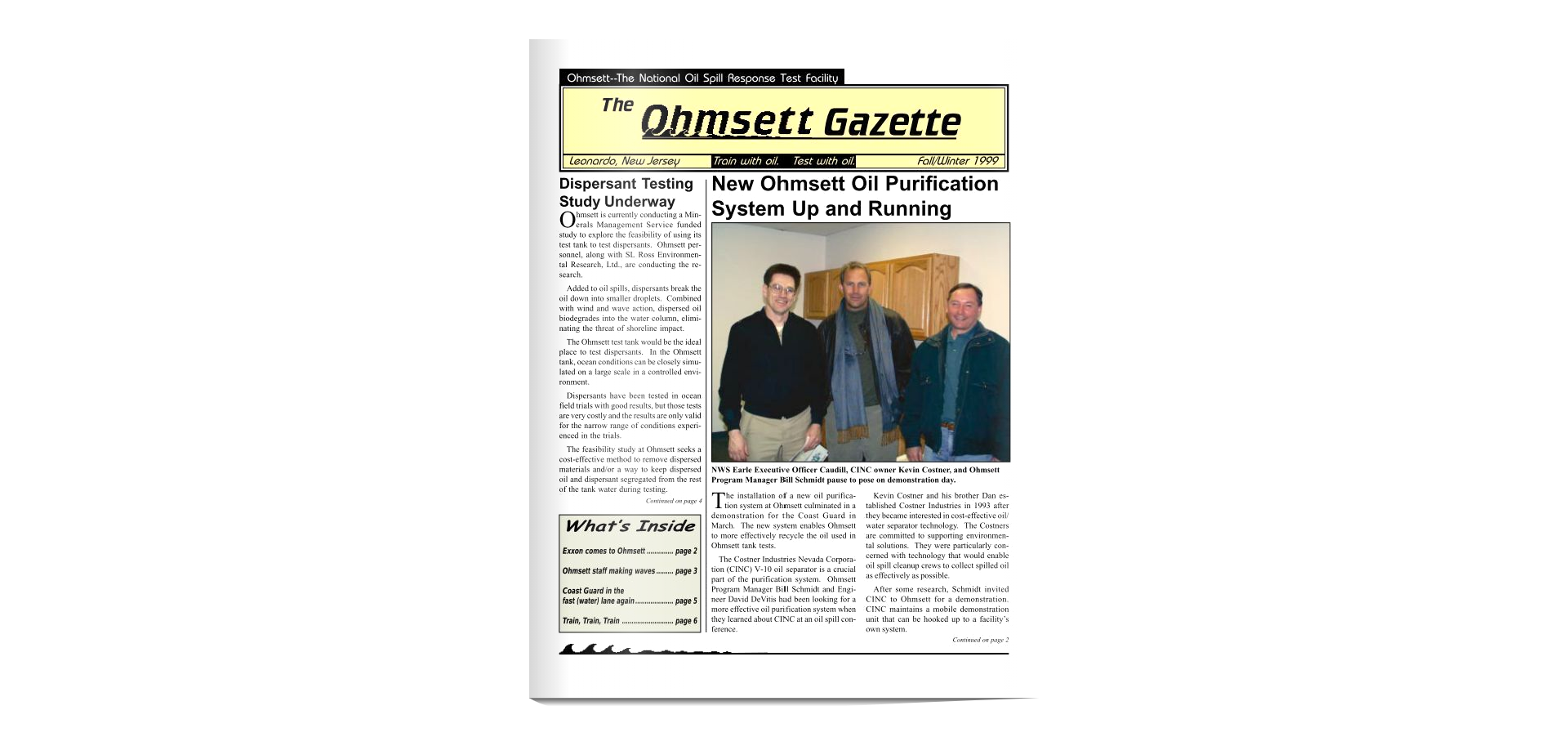
Among the many companies to test equipment at Ohmsett is one that was partially owned by actor Kevin Costner. See the article and photo below. If you build it (and maintain it), they will come!

Read Full Post »

Related posts: Falls are NOT trivial  and Important reading for offshore safety leaders

Read Full Post »

Kudos to BSEE’s Gulf of Mexico Region for their timely safety alerts and comprehensive updates on offshore incidents, trends, and compliance issues. Their most recent update is linked below.

For the past 50 years. my main goal for US offshore operations has been a zero fatality year. Sadly, that goal has never been achieved and will not be achieved this year (see slide 15).

Many casualties are associated with activities that are not perceived to be of high risk. The message on slide 22 of Jason’s presentation is thus very important:

Perceived low risk activities can still result in impactful injuries. Continually risk assess the work being undertaken, no matter if it permitted or nonpermitted work.

Know your personal limits and stop before you reach your limit. Pause and ask for help before you are at your limit.

Jason Mathews, BSEE, 6/7/2022

Read Full Post »

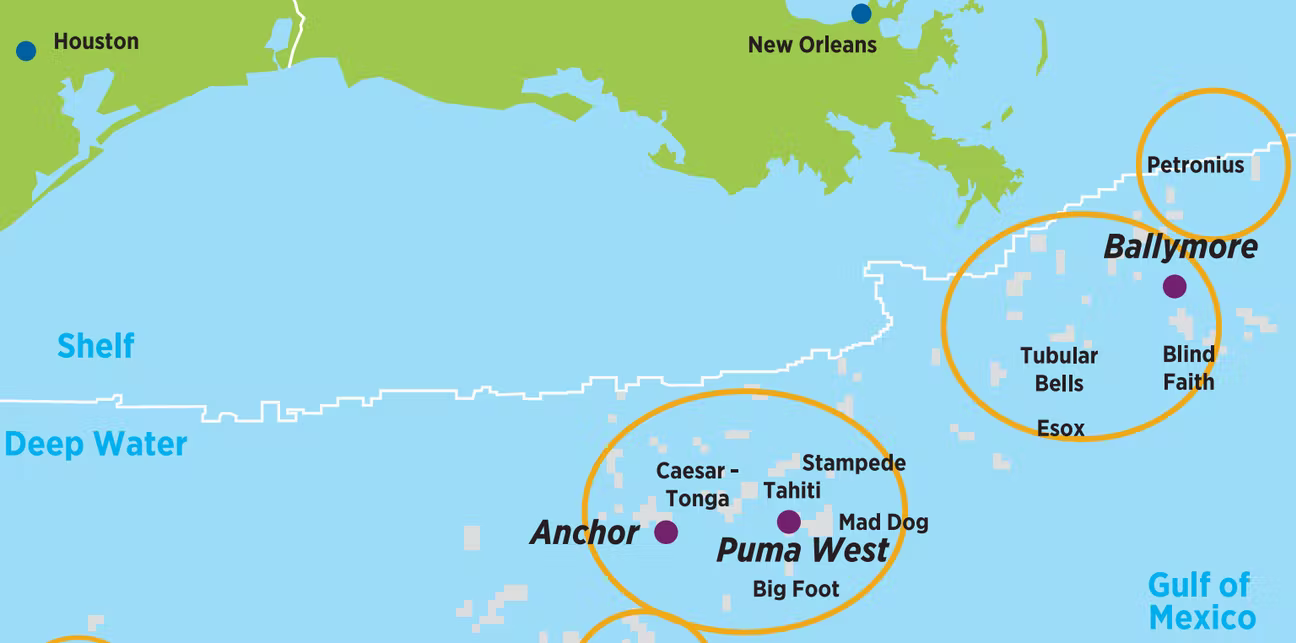
Ballymore will be produced with 3 seafloor wells (6540′ water depth) that are expected to transport 75,000 bopd via a three-mile subsea tieback to Chevron’s Blind Faith floating production unit. Per BOEM, the Ballymore field was discovered in December, 2017. First production is expected to be in 2025.

Pre-production inspection, Shell Vito
Vito

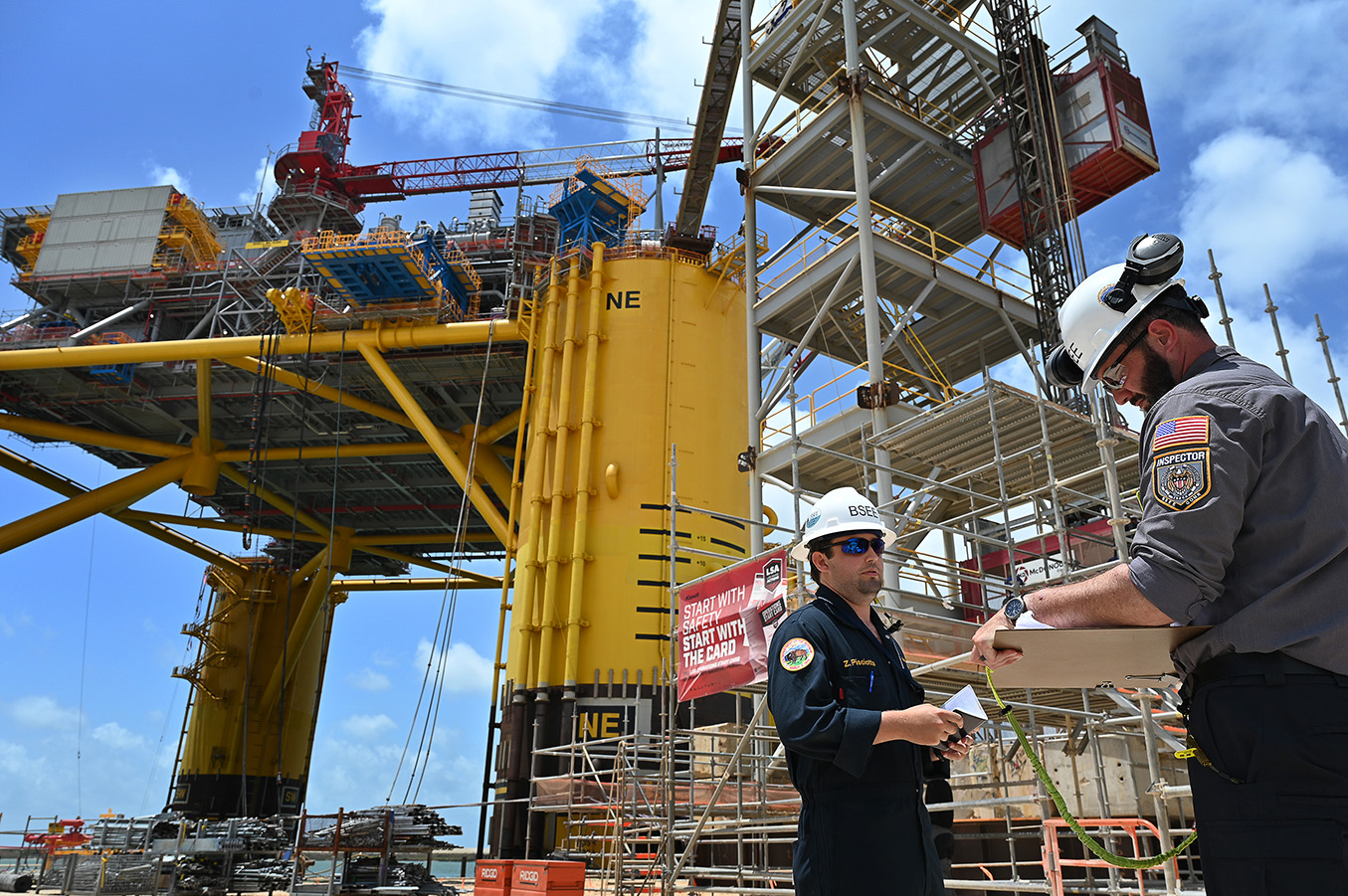
Shell’s Vito floating production unit was inspected last week by BSEE personnel. Vito is expected to begin production later this year or early next year and produce up to 100,000 bopd. Per BOEM data, the Vito field was discovered in 2010.

As these projects demonstrate, deepwater development takes time and is often dependent on related projects on other leases. This is why future production is dependent on regular, predictable lease sales.

Read Full Post »

BOE was troubled by this incident and the contractor’s statements that followed.

BSEE has posted a strong safety alert.

The BSEE investigation concluded that the operator and contractor representatives failed to promptly start the Temporary Abandonment (TA) procedures.

BSEE’s investigation report provides complete details on the incident.

Globetrotter II

Read Full Post »

….for continuing to recognize the Conservation Division of the Geological Survey (USGS) as the US offshore safety regulator, even though 40 years have passed since that was the case and there have been 3 successor bureaus. 😀

33 CFR § 140.4 Relationship to other law. (current text excerpted from Coast Guard Subchapter N regulations)

(a) Design and equipment requirements of this subchapter for OCS facilities, including mobile offshore drilling units in contact with the seabed of the OCS for exploration or exploitation of subsea resources, are in addition to the regulations and orders of the U.S. Geological Survey applicable to those facilities.

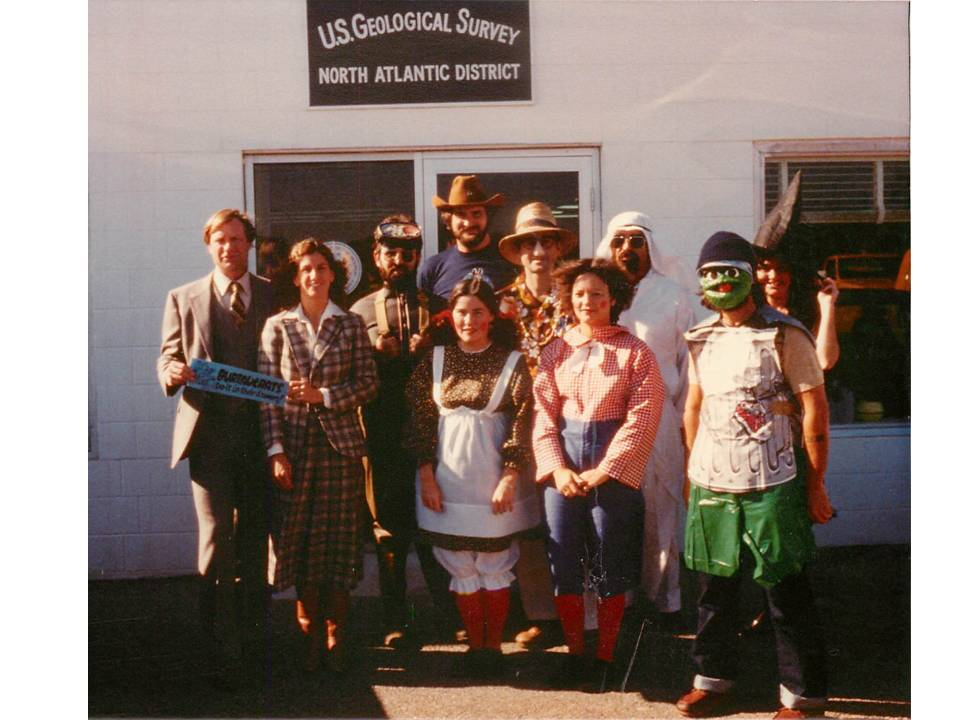
USGS North Atlantic District, Hyannis, MA, Halloween 1980

Most of us old-timers think the best regulatory framework for the offshore program was in the USGS days (pre-1982). Some of this may be nostalgia, but there are some good reasons for this thinking:

  • USGS was/is an internationally acclaimed scientific organization that was always headed by a renowned geologist. The regulatory program was thus somewhat insulated from political pressures. Vince McKelvey, Bill Menard, and Dallas Peck were the Directors when I worked for USGS. Their credentials are linked. Bill and Dallas visited our Hyannis office (not at Halloween 😀) and were very supportive.
  • The Conservation Division was responsible for onshore operations on Federal lands as well as offshore activity. This facilitated information sharing and offered diverse career opportunities. My first bosses in New Orleans had worked previously in the Farmington and Roswell, NM offices.
  • We had excellent synergy with the other USGS divisions. The Marine Science Center in Woods Hole was an incredible resource for our Hyannis office. The Woods Hole office, particularly Mike Bothner and Brad Butman, had a critical role in the Georges Bank Monitoring Program, the best ever (in my biased opinion) environmental study of exploratory drilling operations in a frontier area.
  • The USGS Conservation Division had a very small and supportive headquarter’s staff, which minimized the potential for conflict with field offices.
  • Prior to the formation of the Minerals Management Service (MMS) in 1982, the Bureau of Land Management was responsible for leasing, but all regulatory functions were under USGS. This included resource evaluation/conservation, plan review and approval, permitting, inspections and enforcement, and investigations. The division of MMS responsibilities, most notably the assignment of plan approval to the leasing bureau (BOEM) rather than the regulatory bureau (BSEE), complicates the work of both bureaus and is a prescription for inefficiency, confusion, overlap, and conflict.

Read Full Post »

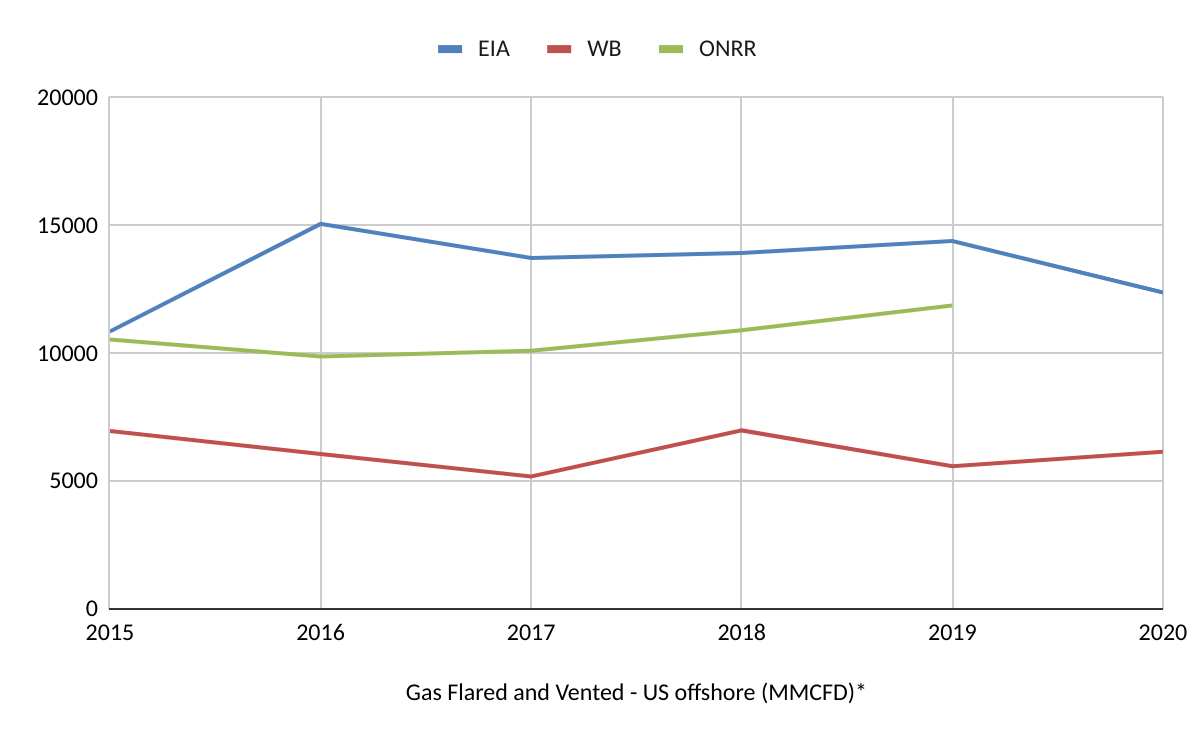
Given the importance of flaring and venting from both environmental and resource conservation standpoints, accurate and reliable data are necessary and should be readily available to the public. ONRR has advised me that they will begin posting flaring and venting data on their website within 2 months. This is a positive step. Currently, data from the 3 primary sources differ considerably.

Data Sources:

Comments:

  • The EIA (from BSEE) and ONRR flaring/venting numbers should be the same given that the ONRR data are reported in accordance with BSEE regulations, and BSEE is presumably providing ONRR data to EIA. This needs to be clarified.
  • The World Bank’s gas flaring estimates are based on observations from satellites. This explains their lower numbers given that vented gas would not be detected and some flares might be missed.
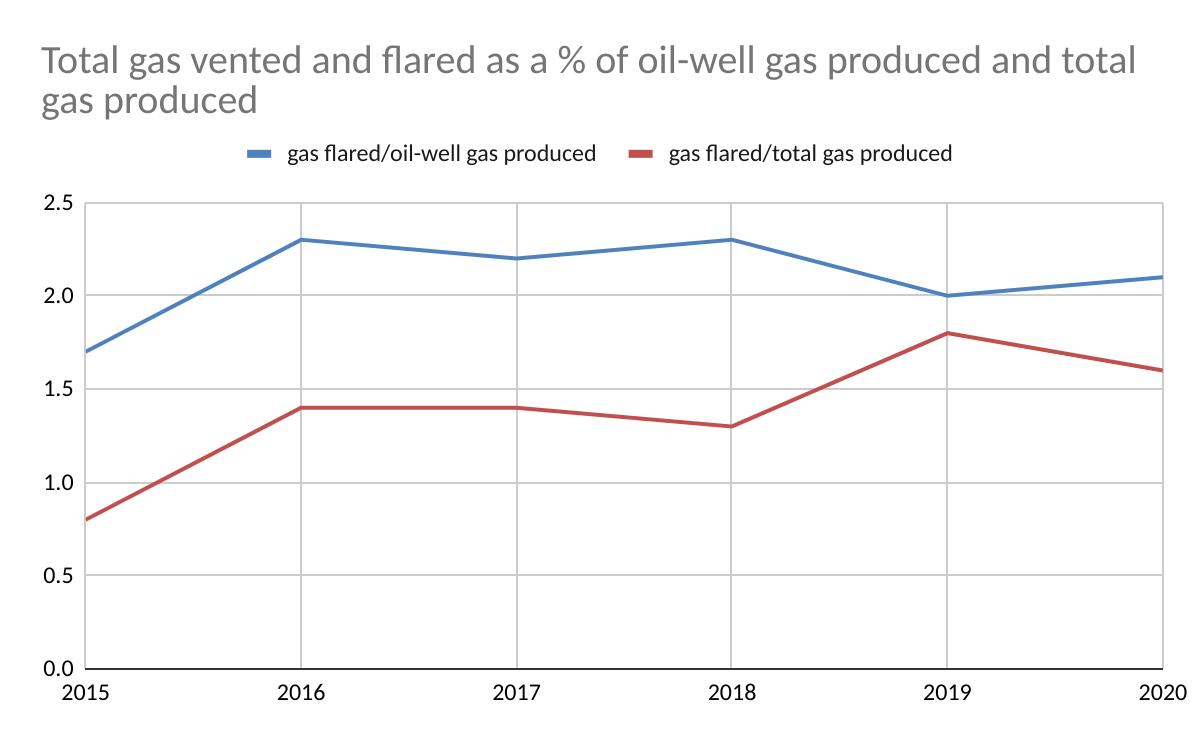
  • In a 1/2021 interview with World Oil, the exiting BSEE Director commented that the “industry has consistently achieved a ratio of less than 1.25% of flared, vented gas to produced gas.” However, based on EIA flaring and venting data (from BSEE per EIA) and EIA gas production data, the volume of gas flared/vented exceeded 1.25% of the gas produced from 2016-2020 and was as high as 1.8% in 2019. (See the chart below.) Even if the lower ONRR flaring/venting totals are used, those volumes exceeded 1.25% in 2019 (1.5%).
  • BSEE/ONRR should make more detailed flaring/venting data available so that the differences between facilities and sectors (e.g. deepwater vs. shelf) could be assessed. Efforts should also be made to post these data in a more timely manner. At this time, 2021 data are still not available.

Reports of interest:

  • Argonne report for BSEE (2017):
    • p. 17 – “The 2015 BSEE/BOEM study on reducing methane emissions observed that “while natural gas production has declined, …vented and flared gas volumes as a percentage of produced natural gas are increasing” and noted that additional investigation is needed to determine why.” This is consistent with my observations and is probably due in large part to the fact that most gas production is now from oil-wells (e.g. associated gas).
    • p. 24 – “Argonne estimates, in 2015, platform startups for deep-water floating structures accounted for roughly 15% of the total annual flaring volume on the OCS and an additional 20% of the annual total resulted from monthly spikes associated with compressor outage, pipeline maintenance, and well-unloading.”
  • Univ. of Michigan study (2020): “Large, older facilities situated in shallow waters tended to produce episodic, disproportionally high spikes of methane emissions. These facilities, which have more than seven platforms apiece, contribute to nearly 40% of emissions, yet consist of less than 1% of total platforms.” 

Read Full Post »

« Newer Posts - Older Posts »