Scientific discovery, technological innovation, and human ingenuity are not finite!
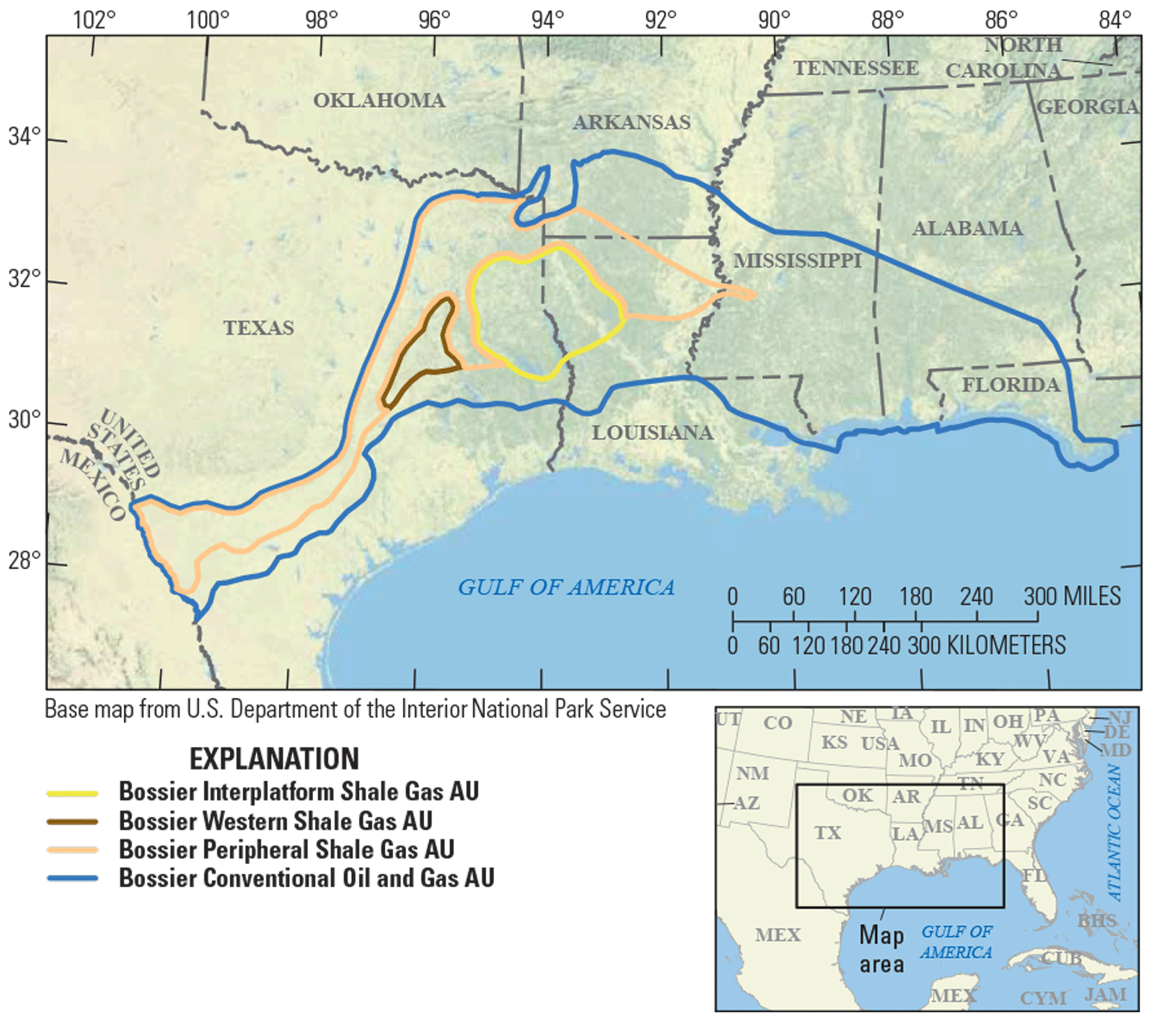
The U.S. Geological Survey released its assessment of undiscovered gas and oil in the Bossier Formation along the Gulf Coast. USGS assesses that there are technically recoverable resources of 343.5 trillion cubic feet of gas – enough to supply the United States for more than 10 years at the current rate of consumption.
The USGS quantitatively assessed three continuous and one conventional AUs (assessment units) for undiscovered oil, gas, and natural gas liquid resources in the Bossier Formation. The estimated mean total resources in the four AUs are 3 million barrels of oil (MMBO), with an F95–F5 range from 1 to 8 MMBO; 343,499 billion cubic feet of gas (BCFG), or 343.5 trillion cubic feet of gas, with an F95–F5 range from 103,943 to 611,703 BCFG; and 374 million barrels of natural gas liquids (MMBNGL), with an F95–F5 range from 109 to 721 MMBNGL (table 2).
So much for the depletion of our natural gas resources! Long-time gas advocates knew that geologic studies, technology, and ingenuity would provide the resource, and that has been demonstrated in spades!
Kudos to USGS, headed by my former colleague Ned Mamula, for their important resource assessment studies!
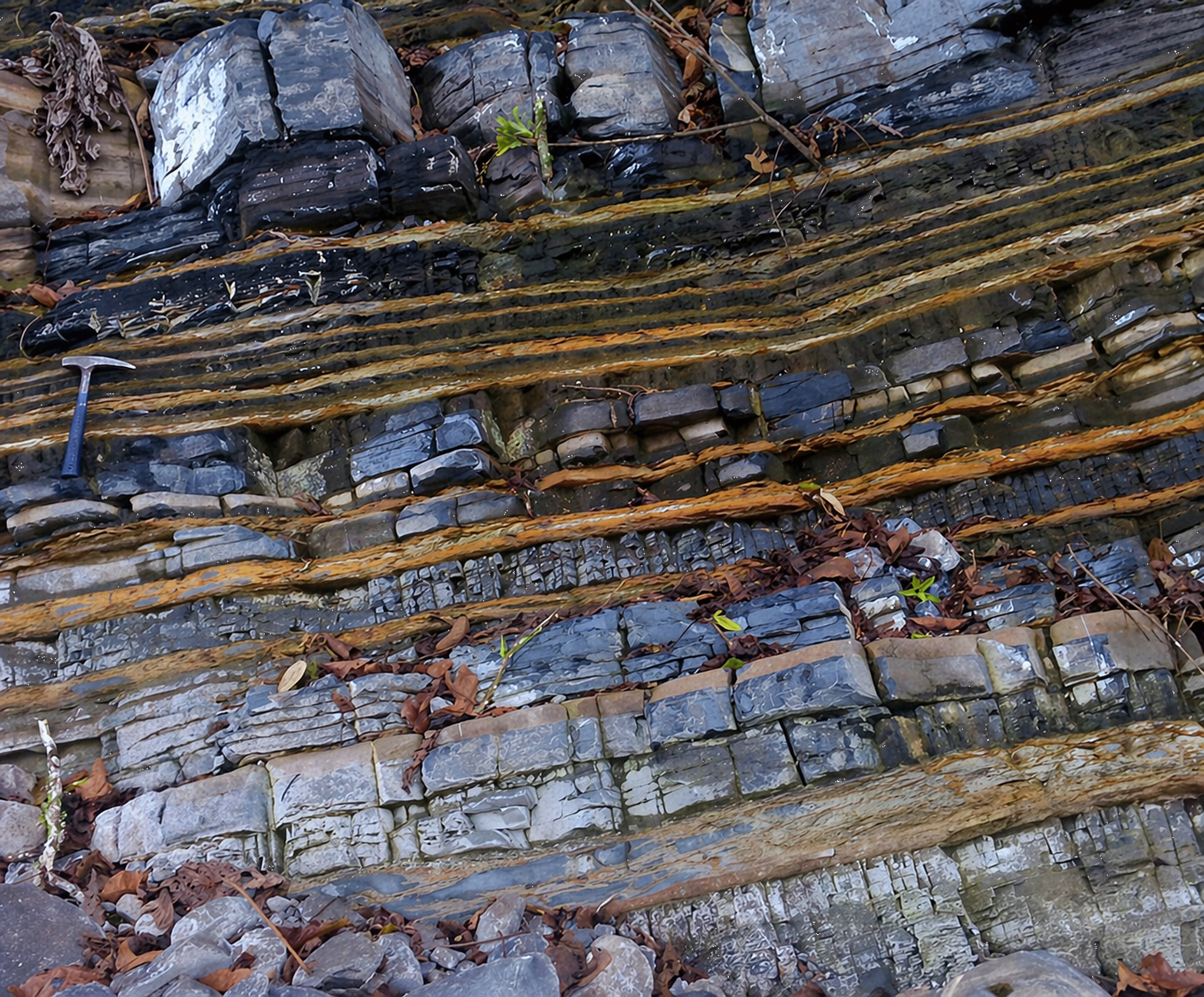
Photograph of an outcrop of the Bossier Formation-equivalent Pimienta Formation in the central Huayacocotla Basin, State of Hidalgo, Mexico, showing alternating limestone, bentonite, and organic-rich shale deposited in a semirestricted marine setting. The Bossier Formation is restricted to the subsurface of the United States; therefore, outcrops of equivalent strata in Mexico provide valuable observations not obtainable in the U.S. Gulf Coast region. Geology hammer shown for scale. Photograph by Mario Martínez-Yáñez, used with permission.
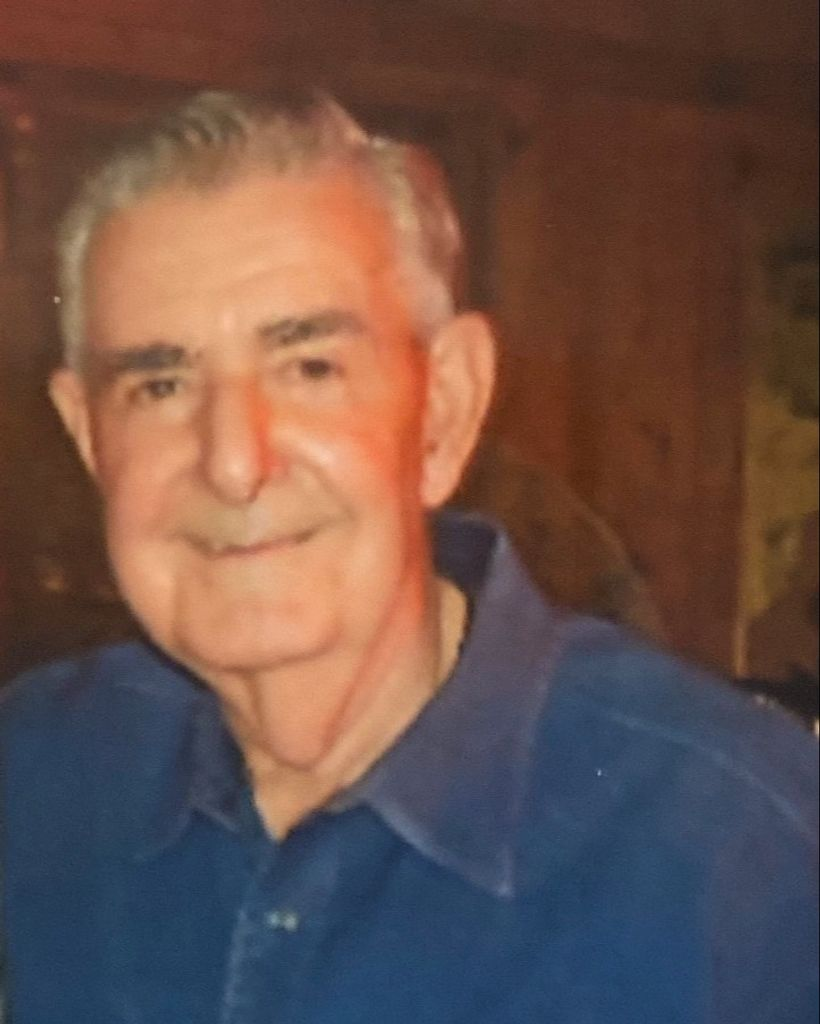
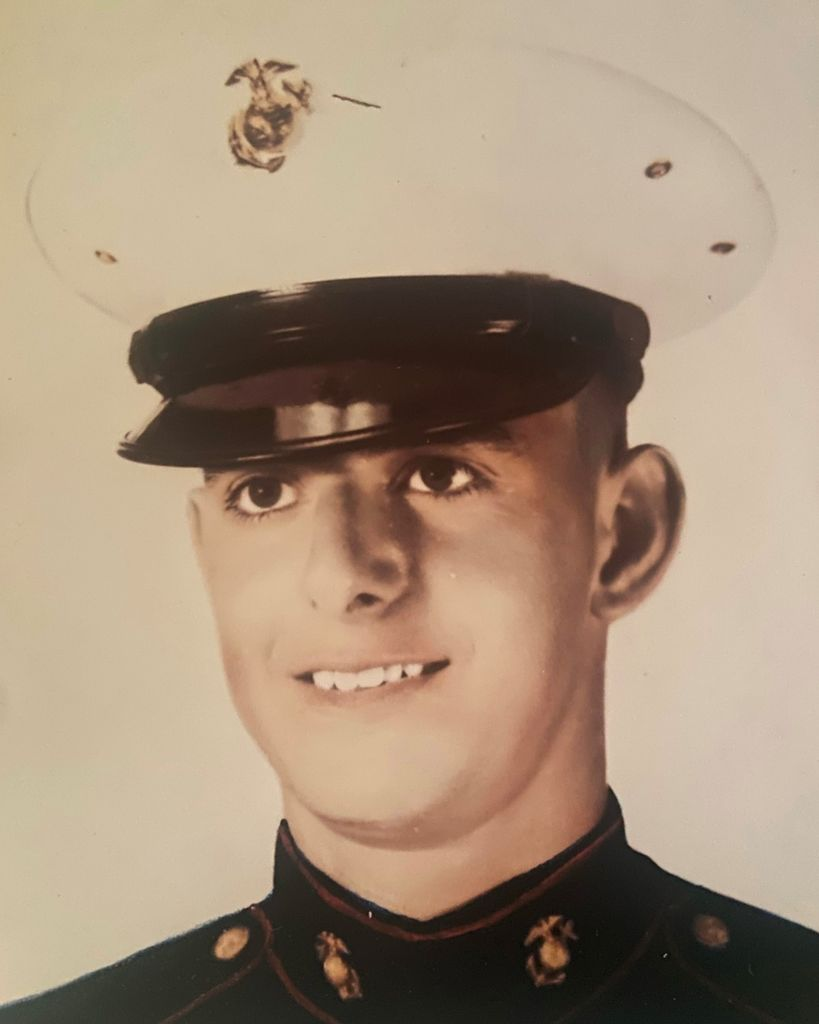
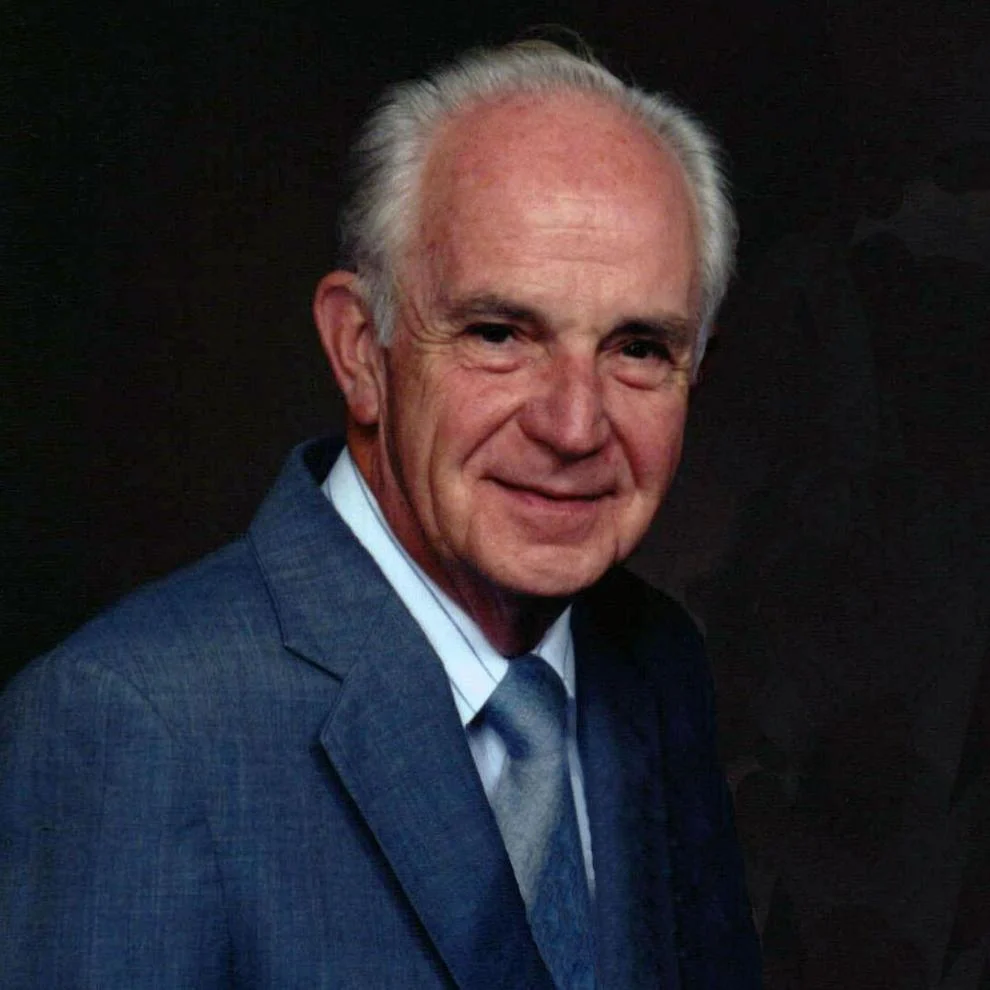
Glenn Shackell, US ArmyGlenn Shackell, recent photoPhotos courtesy of Glenn’s sister and MMS colleague Eddie Lee Lim
On February 27, 2026, we lost a long-time pillar of the OCS safety program, the foremost authority on California offshore oil and gas operations, and a wonderful friend and colleague.
Glenn served as a helicopter door gunner during the Vietnam War, an extremely hazardous assignment. According to historical accounts, the average life expectancy of a door gunner was two weeks. Think about that! (See the door gunner video embedded below.)
Glenn discussed his Vietnam experience with Minerals Management Service (MMS) colleague Andrew Konczvald:
“Glenn told me about encounters when the bullets were hitting the bottom of his Huey helicopter, and he was sitting on his personal armored jacket as the only protection against the bullets! He told me how he prayed every night and miraculously escaped wounds and returned home safely.”
Thankfully, Glenn survived and returned to earn a Petroleum Engineering degree from the Univ. of Southern California. He was a proud USC Trojan.
Glenn had an outstanding career in our Pacific Region office, starting in the early days when the OCS regulatory program was part of the US Geological Survey. He assessed and monitored drilling and production operations in the region, which once produced 120,000 bopd from 23 platforms, and had up to 9 mobile drilling units operating concurrently. Floating drilling operations were pioneered offshore California with the CUSS 1, and production was extended to 1200 feet of water at Platform Harmony.
Glenn had an encyclopedic knowledge of the California offshore sector, and was an expert on the history of the applicable regulations, orders, and standards. We had countless discussions about topics like OCS Order No. 2 (Drilling) and the evolution of API RP 14C (Production Safety Systems).
Glenn served on numerous MMS teams that evaluated the latest technical innovations of the offshore industry, established research priorities, and assessed safety and environmental performance. He was an authority on drilling safety and was called on to evaluate and accredit well control training programs.
Glenn respected everyone, and everyone admired and respected him. He was a man of faith, but didn’t impose his beliefs on others. Fittingly, his favorite Bible passage was John 11:25-26: Jesus tells Martha, “I am the resurrection and the life. The one who believes in me will live, even though they die; and whoever lives by believing in me will never die.”
RIP Glenn, you continue to inspire your friends, and your important contributions to society live on. We love you man!
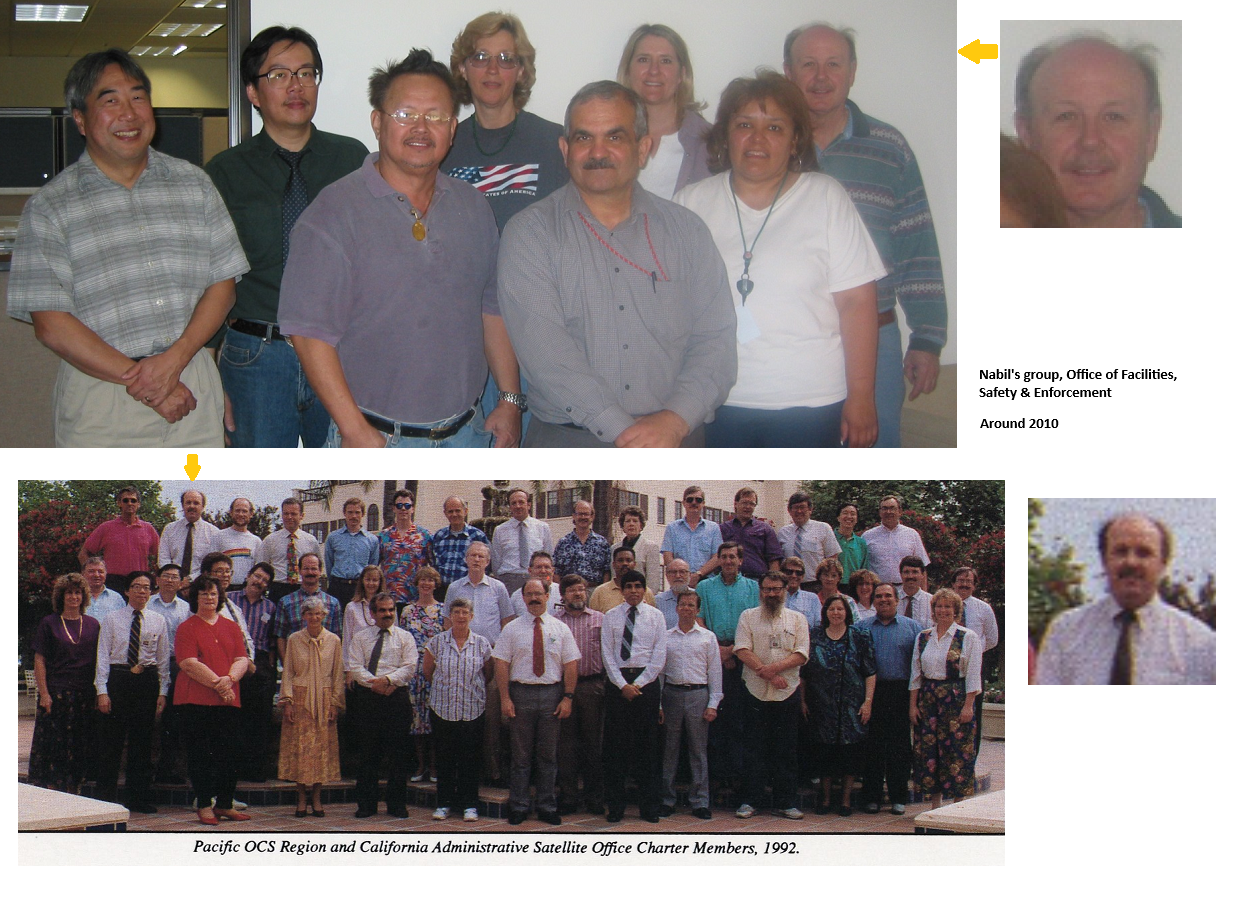
John Borne was an exceptional engineer and offshore safety leader in our OCS oil and gas program during the US Geological Survey (Conservation Div.) and Minerals Management Service (MMS) eras.
Some thoughts on John’s leadership followed by tributes from distinguished colleagues:
John’s Houma District office was a model for the rest of the OCS program. Houma was the program’s busiest district in terms of operational activity, and the most effective in meeting permitting, inspection, and investigation targets.
The few serious accidents that occurred in the District were carefully investigated and the findings were shared in a timely manner with the goal of preventing their recurrence. If John signed a report, you knew it was complete and accurate.
John was knowledgeable about the complex offshore oil and gas operations he regulated, and was an outstanding teacher and mentor.
John treated all companies the same from the super-majors to the small independents – no biases, no favors, and no ethics issues.
John expected companies to fully comply with the regulations. Any departures had to be clearly in the best interest of safety and the environment.
From Ken Arnold (ex-Shell engr, Paragon Engineering President, NAE): As part of the Shell Training program in 1964 I was assigned to trail John in East Bay for a week. One night I was talking to another trainee on a logging barge tied up to a posted barge rig in SP Blk 24. John was also on the barge. Without warning the barge started pulling away from the rig. The three of us jumped from the barge to the rig but I slipped and fell in the canal. I don’t think I was in the water long enough to get wet, when John and a rig hand fished me out. Unfortunately my glasses fell off and were in the mud. John got a scissors device and retrieved my glasses in a matter of minutes.
I greatly appreciated my week with John. What he took the time to teach me about field work was critical to my subsequent successful career in Shell and in Paragon. He was a gentleman and a first class teacher. I was lucky to have known him.
Jodie Connor (founder and retired President of J. Connor Consulting): John was an excellent representative of the MMS, always fair in his decision-making and approvals. I endearingly called him “By the Book Borne”. He enforced the regulations as they were written, which was fair to all operators. Always kind and willing to explain MMS policies.
Lars Herbst (retired MMS/BSEE Regional Director, Gulf of Mexico): What a legend at MMS! A testament to his leadership are the number of Regional leaders that came out of Houma District. Just to name a few: Mike Saucier, Bryan Domangue, Troy Trosclair, and even Jack Leezy! That work ethic that John instilled has continued even to the next generation of leadership! I was fortunate that John let me act as Drilling Engineer when Saucier went hunting each December. My career at MMS was never the same after that opportunity!
Jack Leezy: (President, Avenger Consulting, retired MMS): John served in the Marine Corp during the Korean war. Upon discharge from the Marine Corp John attend the University of Lafayette and earned a BS degree in Petroleum Engineering. John started his oilfield career when he went to work for Shell Oil in 1960 until 1970 as a Petroleum Engineer.
John joined U.S.G.S. In 1970 as a Petroleum Engineer in the Lafayette District. John accepted a promotion in 1972 in the Regional office and was selected as the first District Supervisor in the newly formed Houma District office in October1974. John remained as the District Supervisor until his retirement in 1995. John was instrumental in developing Bureau policies of which some are still in place as of today. John served on countless MMS and industry committees alike during his career. John was looked upon as professional and highly respected by MMS and industry alike. He performed is duties in such a way that even if you may not have liked his decision, you respected it. John’s demeanor never changed as he never lost his composure and worked evenly though all the trials and tribulations during his career at MMS. John even won MMS’s Engineer of the Year award. I owe a lot to John in helping me form my career at MMS as I tried to handle my supervisory duties in the same manner in which John did.
RIP John. You were a superstar! As an engineer, regulator, leader, teacher, and colleague, no one did it better!
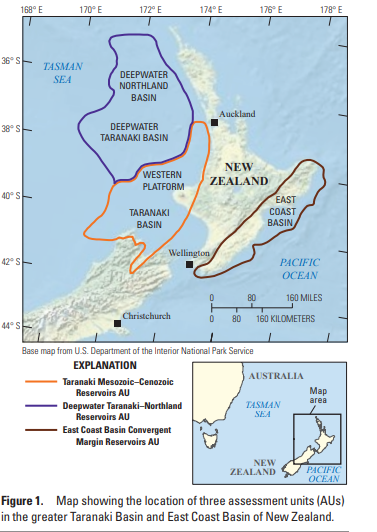
New Zealand may again issue new oil and gas permits following yesterday’s action by parliament.
The extent to which this will result in new exploration remains to be seen. Increased natural gas production is the primary objective.
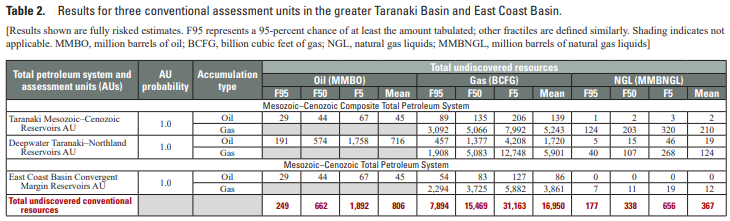
USGS (2020) undiscovered resource estimates are encouraging. The fully risked total for natural gas is 17 Tcf (mean), with a range of 7.9 to 31.1 Tcf. See the table pasted below.
Policy shift at a glance:
April 2018:New Zealand is halting all new offshore oil and gas exploration to become a global leader in the fight against climate change, the centre-left government said Thursday, but opponents accused it of “economic vandalism”.
June 2024: The country’s coalition government is preparing to invite energy companies to resume exploration in the three major offshore fields that supply most of its gas. It comes after National Grid operator Transpower was last month forced to warn families to limit their electricity usage to avoid a shutdown during a cold snap.
July 31, 2025: Parliament reverses the law banning new offshore oil and gas exploration permits.
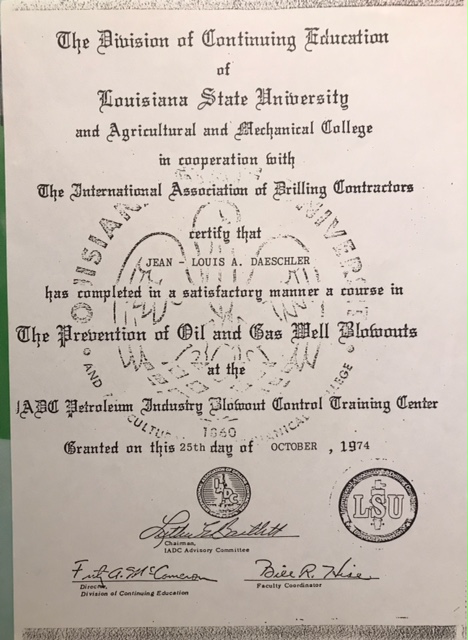
Pioneering offshore engineer J.L. Daeschler, a Frenchman who lives in Scotland and has worked on drilling rigs worldwide, shared his 1974 training certificate signed by Bill Hise, the first director of the Blowout Prevention and Well Control Training Center at LSU. JL recalls his training:
The LSU well control course was new and very well organized. Training options were limited at that time. LSU took a step forward and incorporated equipment donated by Cameron Iron Works, Armco Steel /National, VETCO, and others.
The course was split between indoor class room style and outdoor trainingon a live well to remind us of the real things, like hard hats, tally books, and safety shoes.
LSU had a 1200 ft vertical well and a small 2″ diameter gas injection line to create a bottom hole gas kick, using a nitrogen truck as the supply. (note: the live well was a first for any well control school.) You had a choice of several manual chokes. I selected the Cameron Willis choke to circulate the gas kick out with no increase in mud weight (drillers method).
The mud return level, kick detection, and general management of the operation were realistic as if on a rig. The gas would whistle and escape thru a vent line.
The training was simple and effective in that proper well control procedures were learned. In the process, there were many errors. Mud was seen flying out of the mud shaker/pits. School management would bring things under control and explain the errors that were made !!!
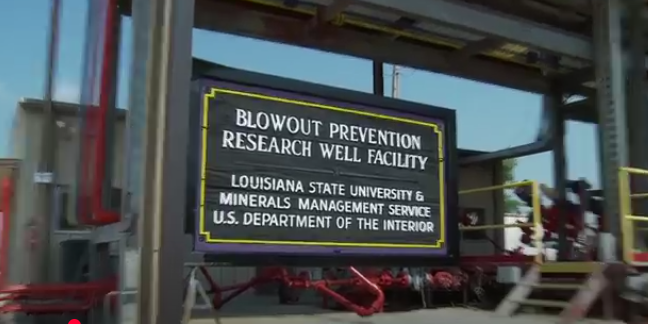
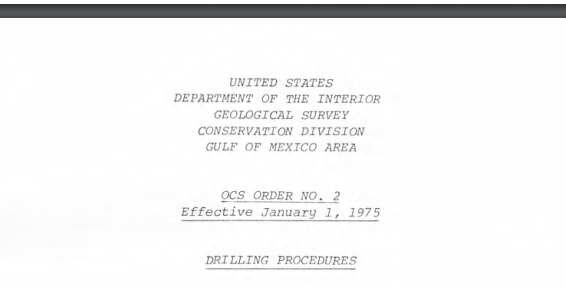
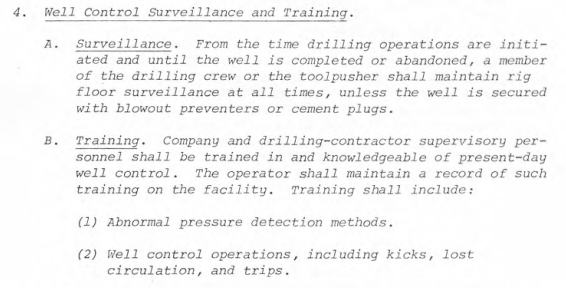
Given the importance of minimizing drilling risks, the Minerals Management Service (MMS) was the primary funder of the LSU facility. MMS predecessor, the Conservation Division of USGS, first established well control training requirements in 1975 (pasted below).
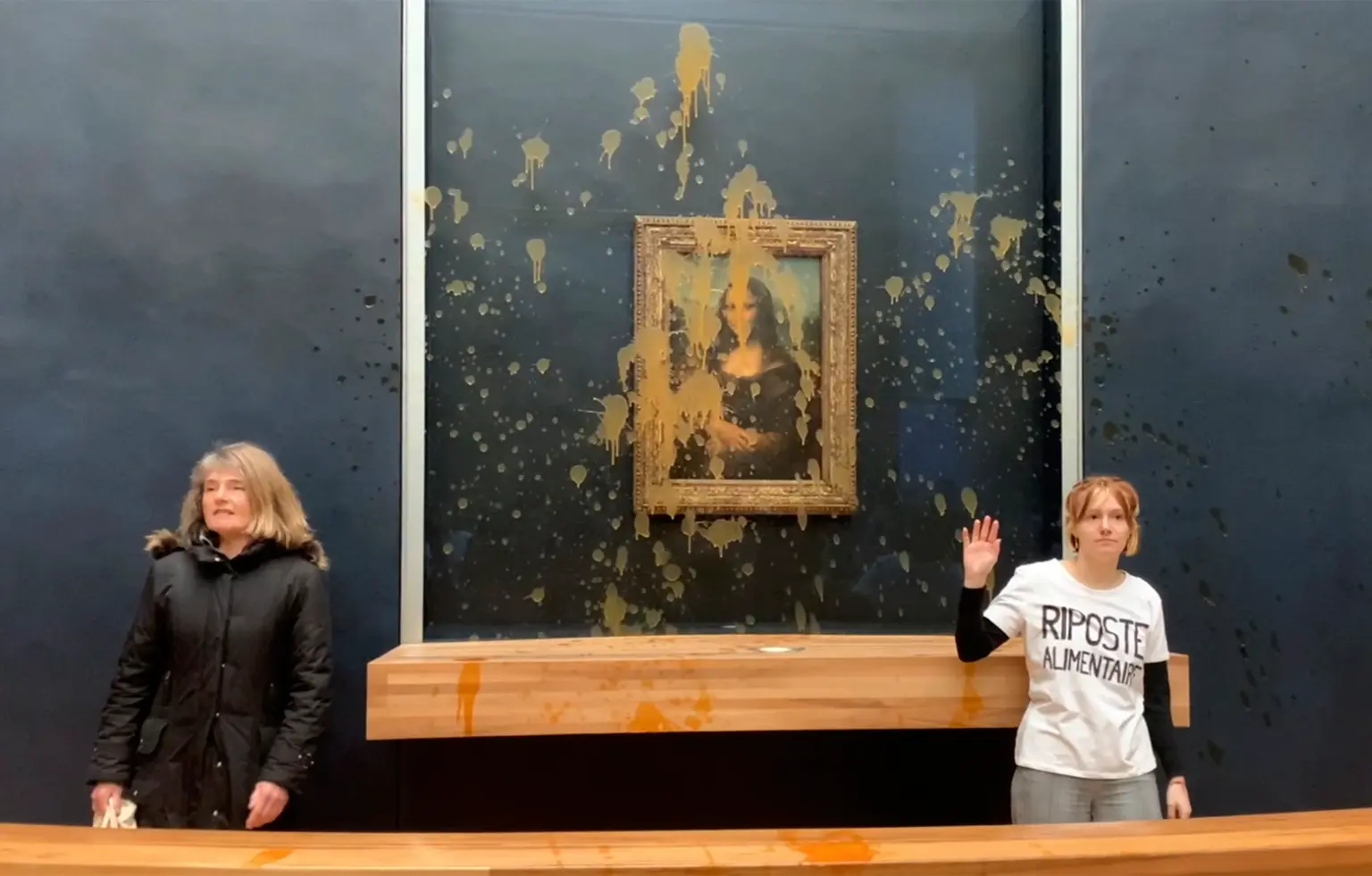
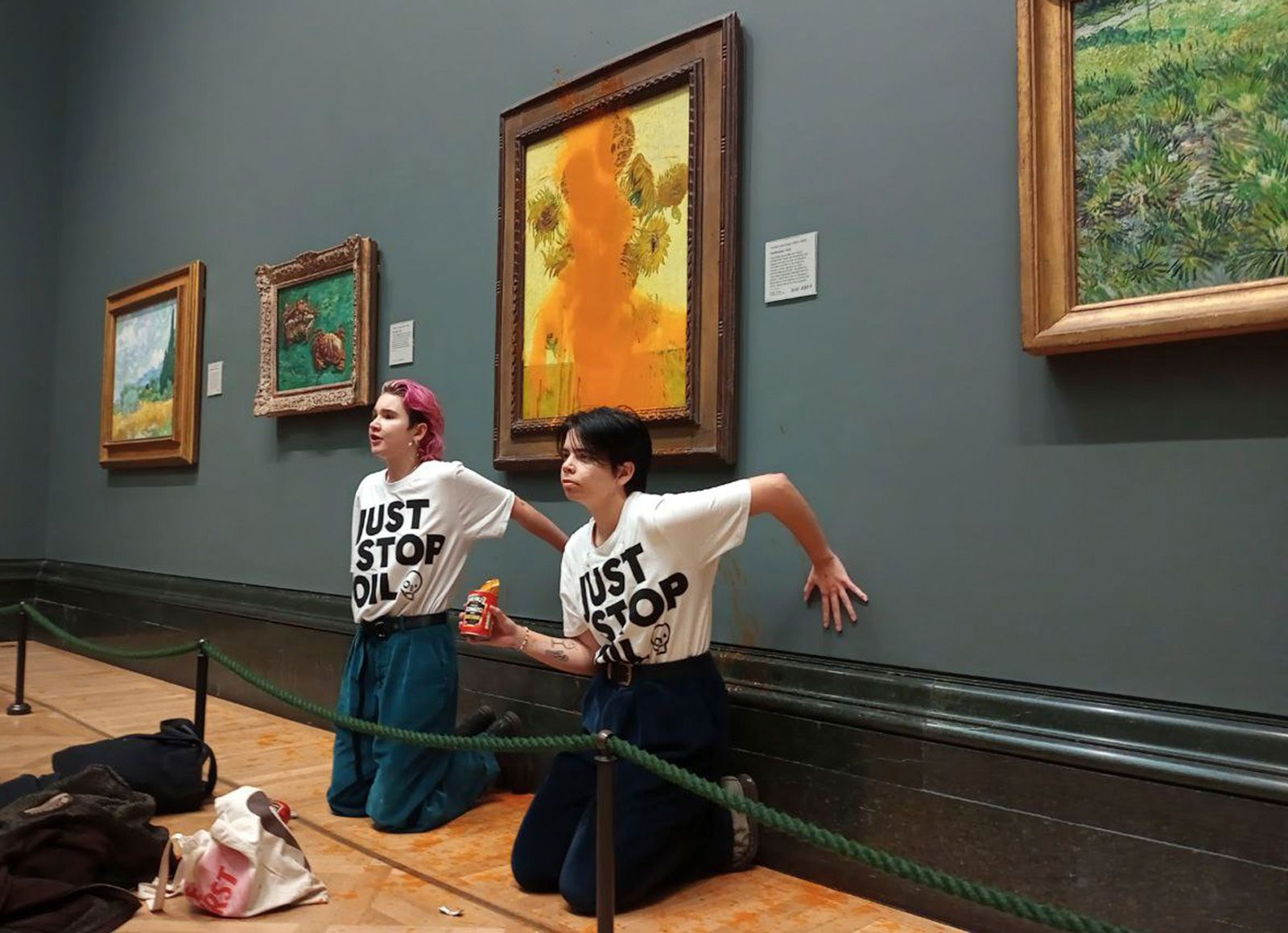
In light of the surge in art vandalism, admirers of “Rig at Sunset” have expressed concern about this priceless and symbolic masterpiece.😉
“Rig at Sunset”
Rest assured that “Rig at Sunset” is not being targeted. Climate activists believe the painting is disturbingly visionary and is thus socially important. Even those who are less appreciative of great artwork are reluctant to damage “Rig at Sunset,” fearing that their vandalism might actually improve its quality. So friends of this beloved masterpiece have nothing to fear! 😉
If you are unfamiliar with “Rig at Sunset,” here is a brief summary of the history:
“Rig at Sunset” was painted nearly 50 years ago by a US Geological Survey (USGS) employee who chose to remain anonymous. Initially, the masterpiece was presented to USGS (later MMS) engineers and scientists who had made important contributions to the offshore oil and gas program. Understandably, the intended recipients were so humbled by the magnificence of the painting that they could not accept it. As the painting grew in value and international prominence, framed copies were presented to retirees and the original painting was kept at a secure, undisclosed location.
In 1980, Don Kash, the great leader who was Chief of the Conservation Div. of USGS (the current equivalent of the Conservation Div. is BSEE plus the resource evaluation functions in BOEM plus some royalty management functions now in ONRR) asked me to move to Cape Cod to head a new office responsible for overseeing exploratory drilling operations on Georges Bank. We established a small office in an old maintenance building at Barnstable Municipal Airport in Hyannis. The space was decidedly unglamorous but functional and ideal for helicopter transit to the offshore rigs.
Karen was a Cape Cod artist and art teacher at Nauset Middle School in Orleans (for baseball lovers, that is where the Orleans Firebirds of the famous Cape Cod League play). Some of her teacher friends were connected to a running club I belonged to, and unknown to me at the time, Karen had designed my beloved Provincetown Dunes Run t-shirt.
We had another connection in that we had bought condominiums built by the same company. Hers was in Orleans and mine was in Hyannis. A couple that owned a condo in each project got to know both of us and thankfully introduced us. A year and many great experiences later we were married at the historic Captain Linnell House in Orleans.
Interestingly, Karen’s mother was an opponent of Georges Bank drilling until she realized that her only daughter would be leaving Cape Cod when the drilling ended. She then changed her position, proving once again that all politics is local 😀
I was very lucky to have spent 4 challenging and exciting years on Cape Cod. The Georges Bank drilling story was uniquely remarkable for me and led to a daughter born at my next duty station (Santa Maria, CA) and 5 grandchildren (good ratio 😀). While I was particularly fortunate, I think the Georges Bank drilling experience was generally positive for all that participated including the State and local officials, Woods Hole scientists, media, industry personnel, commercial fishermen, and even the Greenpeace protesters who were on the scene 155 miles southeast of Nantucket!
An important figure in the history of the US offshore program passed away last week. Gerry Rhodes was a petroleum engineer with an attorney’s gift for understanding laws and regulations. Among other leadership roles in the offshore regulatory program, Gerry was Chief of the Minerals Management Service’s Branch of Rules, Orders, and Standards in the 1990’s.
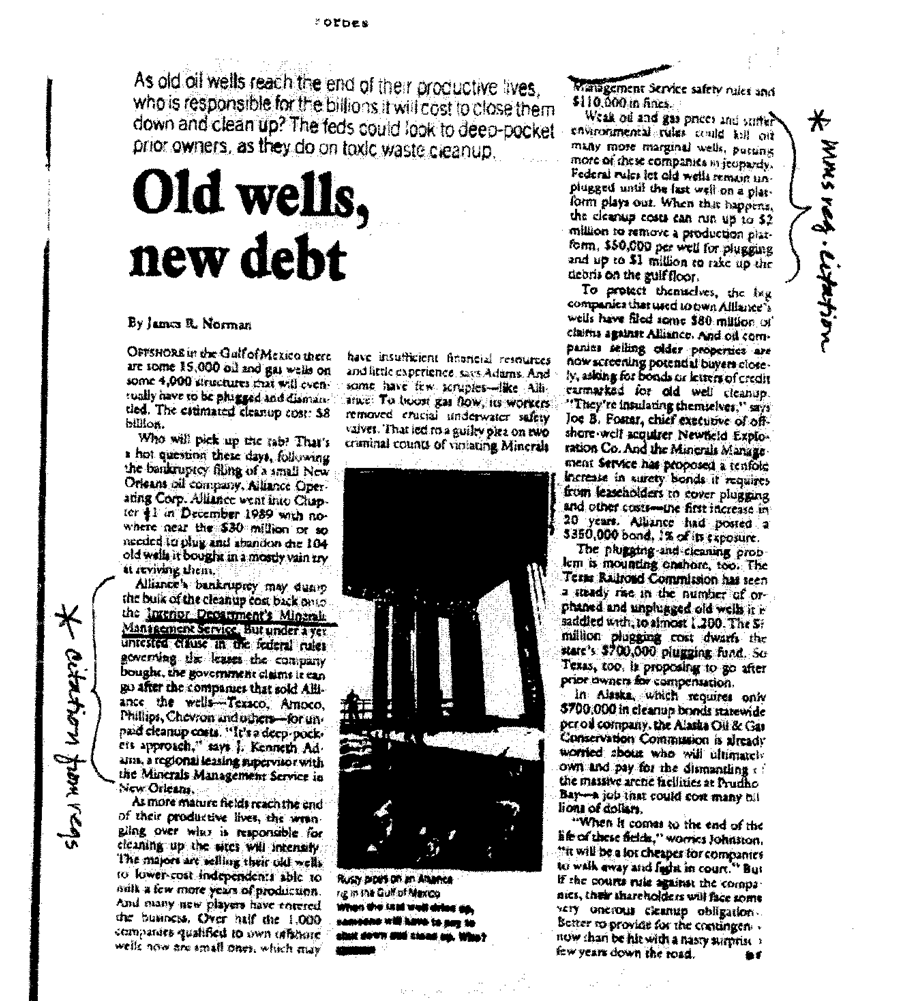
Gerry was among the first in the Federal government to fully understand the financial responsibility risks associated with the decommissioning of offshore facilities and the urgent need to update requirements for the plugging of wells and removal of platforms. The enormity of this challenge is described in the 1991 Forbes article pasted below. Despite sharp divisions within the offshore industry and the resulting political pressure, Gerry succeeded in finalizing regulations (including this 1995 rule) that are the basis for the current financial responsibility programs in BOEM and BSEE. Without Gerry’s resolve, subsequent financial assurance challenges and government outlays would have been far greater.
RIP Gerry. You were a true gentleman, a dedicated father and grandfather, and a diligent and highly accomplished colleague.
….for continuing to recognize the Conservation Division of the Geological Survey (USGS) as the US offshore safety regulator, even though 40 years have passed since that was the case and there have been 3 successor bureaus. 😀
(a) Design and equipment requirements of this subchapter for OCS facilities, including mobile offshore drilling units in contact with the seabed of the OCS for exploration or exploitation of subsea resources, are in addition to the regulations and orders of theU.S. Geological Survey applicable to those facilities.
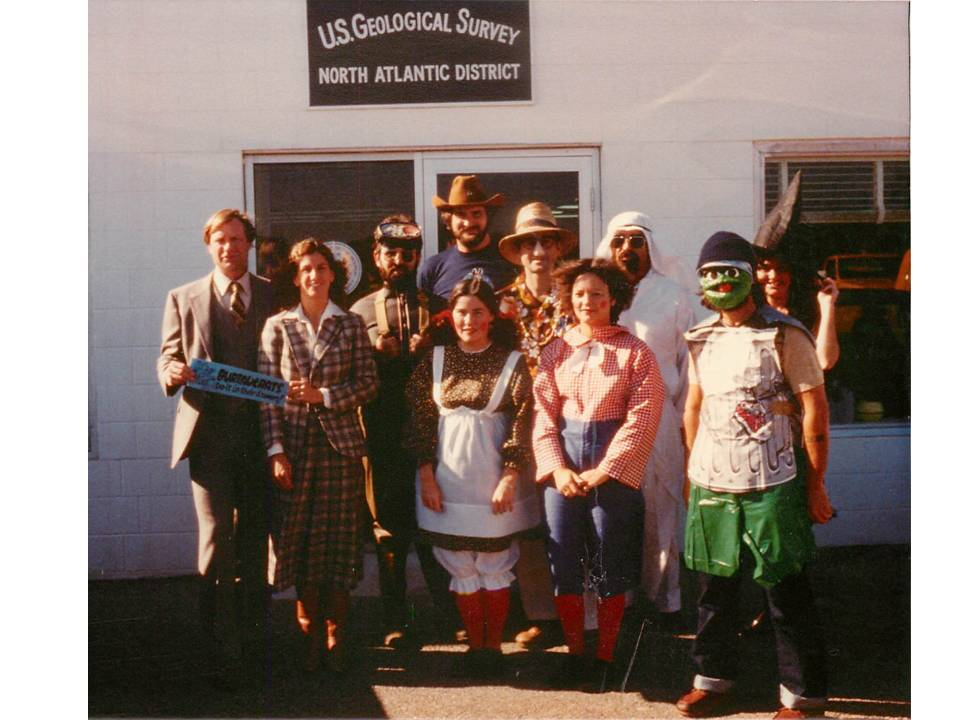
USGS North Atlantic District, Hyannis, MA, Halloween 1980
Most of us old-timers think the best regulatory framework for the offshore program was in the USGS days (pre-1982). Some of this may be nostalgia, but there are some good reasons for this thinking:
USGS was/is an internationally acclaimed scientific organization that was always headed by a renowned geologist. The regulatory program was thus somewhat insulated from political pressures. Vince McKelvey, Bill Menard, and Dallas Peck were the Directors when I worked for USGS. Their credentials are linked. Bill and Dallas visited our Hyannis office (not at Halloween 😀) and were very supportive.
The Conservation Division was responsible for onshore operations on Federal lands as well as offshore activity. This facilitated information sharing and offered diverse career opportunities. My first bosses in New Orleans had worked previously in the Farmington and Roswell, NM offices.
We had excellent synergy with the other USGS divisions. The Marine Science Center in Woods Hole was an incredible resource for our Hyannis office. The Woods Hole office, particularly Mike Bothner and Brad Butman, had a critical role in the Georges Bank Monitoring Program, the best ever (in my biased opinion) environmental study of exploratory drilling operations in a frontier area.
The USGS Conservation Division had a very small and supportive headquarter’s staff, which minimized the potential for conflict with field offices.
Prior to the formation of the Minerals Management Service (MMS) in 1982, the Bureau of Land Management was responsible for leasing, but all regulatory functions were under USGS. This included resource evaluation/conservation, plan review and approval, permitting, inspections and enforcement, and investigations. The division of MMS responsibilities, most notably the assignment of plan approval to the leasing bureau (BOEM) rather than the regulatory bureau (BSEE), complicates the work of both bureaus and is a prescription for inefficiency, confusion, overlap, and conflict.