Feeds:
Posts
Comments

Posts Tagged ‘resource assessment’

Scientific discovery, technological innovation, and human ingenuity are not finite!

The U.S. Geological Survey released its assessment of undiscovered gas and oil in the Bossier Formation along the Gulf Coast. USGS assesses that there are technically recoverable resources of 343.5 trillion cubic feet of gas – enough to supply the United States for more than 10 years at the current rate of consumption.
USGS Report

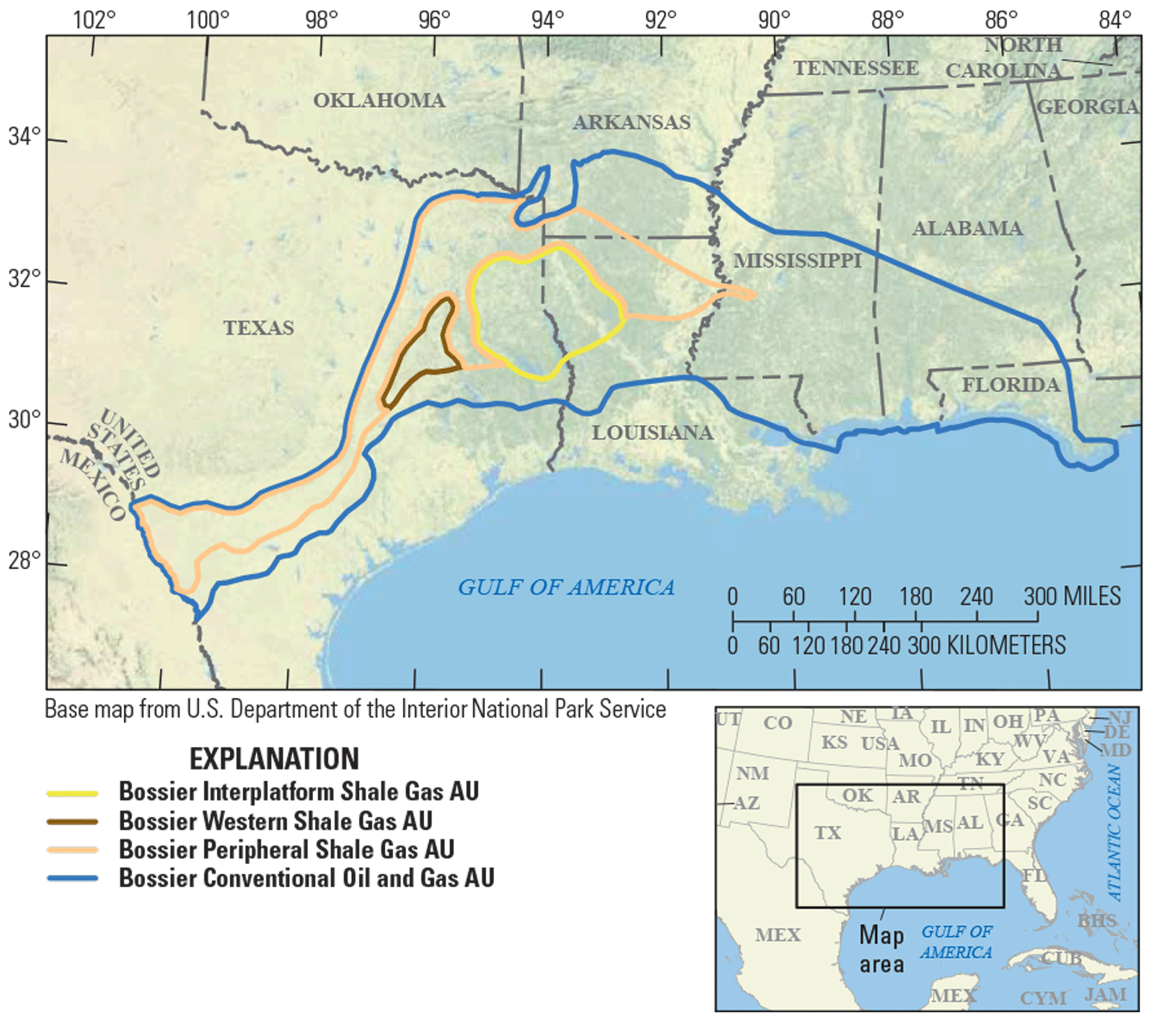
The USGS quantitatively assessed three continuous and one conventional AUs (assessment units) for undiscovered oil, gas, and natural gas liquid resources in the Bossier Formation. The estimated mean total resources in the four AUs are 3 million barrels of oil (MMBO), with an F95–F5 range from 1 to 8 MMBO; 343,499 billion cubic feet of gas (BCFG), or 343.5 trillion cubic feet of gas, with an F95–F5 range from 103,943 to 611,703 BCFG; and 374 million barrels of natural gas liquids (MMBNGL), with an F95–F5 range from 109 to 721 MMBNGL (table 2).

So much for the depletion of our natural gas resources! Long-time gas advocates knew that geologic studies, technology, and ingenuity would provide the resource, and that has been demonstrated in spades!

Kudos to USGS, headed by my former colleague Ned Mamula, for their important resource assessment studies!
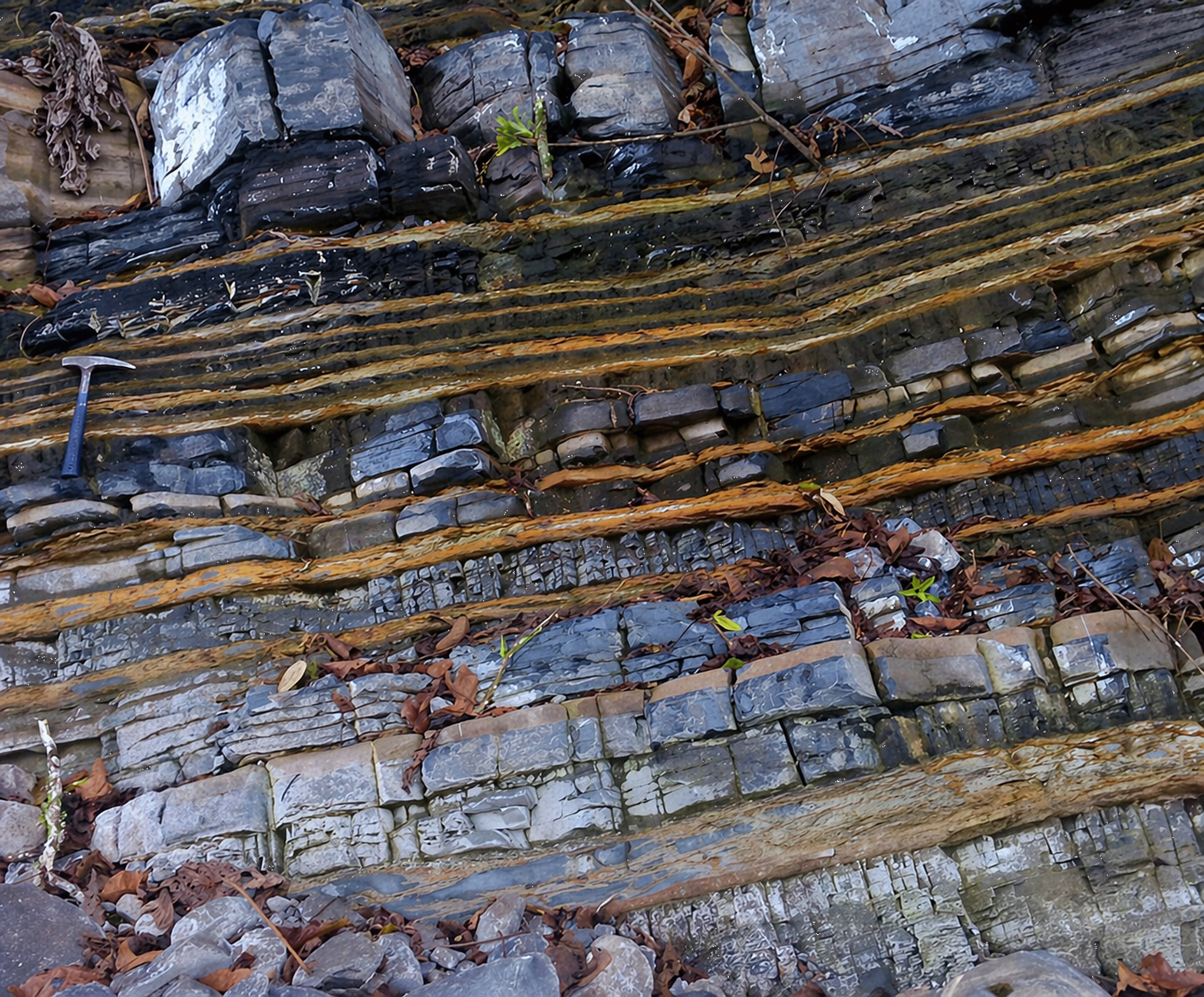
Photograph of an outcrop of the Bossier Formation-equivalent Pimienta Formation in the central Huayacocotla Basin, State of Hidalgo, Mexico, showing alternating limestone, bentonite, and organic-rich shale deposited in a semirestricted marine setting. The Bossier Formation is restricted to the subsurface of the United States; therefore, outcrops of equivalent strata in Mexico provide valuable observations not obtainable in the U.S. Gulf Coast region. Geology hammer shown for scale. Photograph by Mario Martínez-Yáñez, used with permission.

Read Full Post »

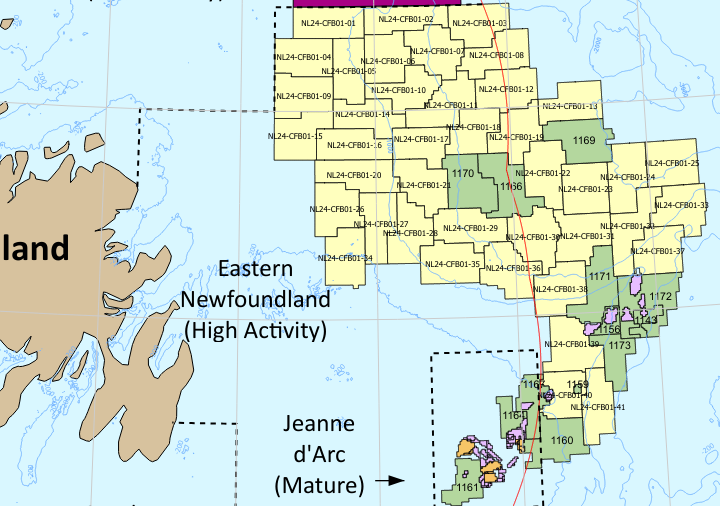
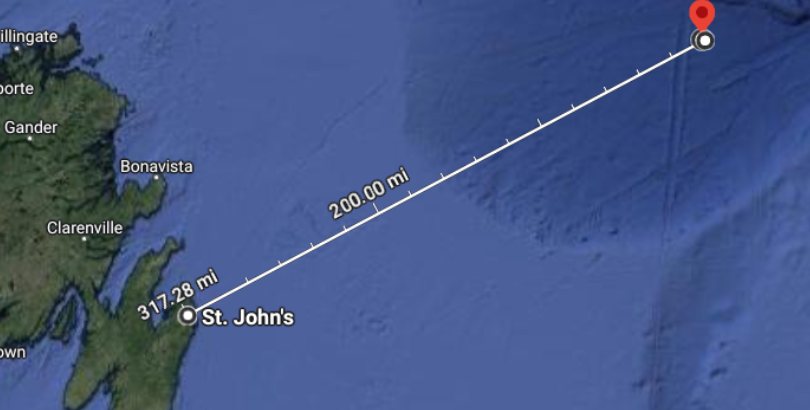
Per rig tracker data, the Stena DrillMAX has been on location at Exxon’s Orphan Basin wellsite since Sunday (19 May). The site is 317 miles (510 km) NE of St. John’s in Block 1169 (~3000 m water depth).

Per this very good resource assessment report for the Govt. of Newfoundland and Labrador, “the Orphan Basin area demonstrates a potentially prolific petroleum system with four main plays (reservoirs and associated seals) sourced by various source rocks (Upper Jurassic, Cretaceous, and Paleogene).

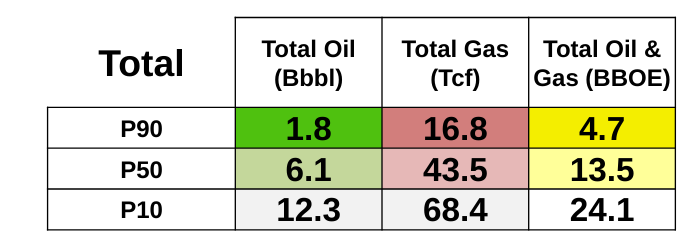
Unrisked resource estimates (theoretical pending confirmation by drilling) at the 90, 50, and 10% probability levels for the Orphan Basin blocks offered for licensing in Nov. 2022:

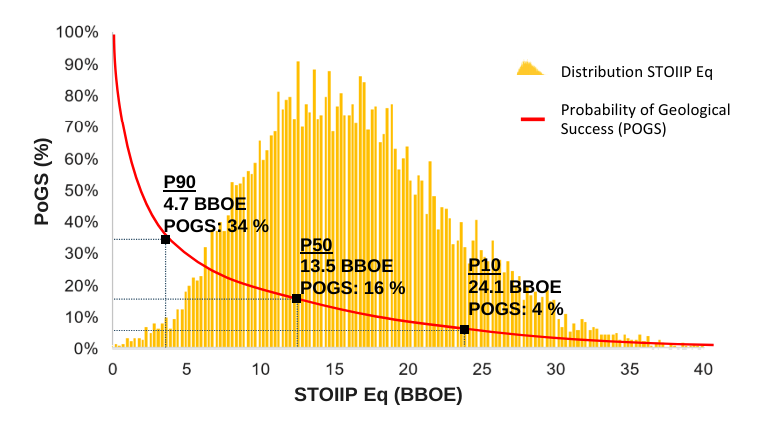
Taking into account the risks of the geologic model not accurately reflecting the reservoir, seal, charging, and trap components of the petroleum system, the probability of finding 13.5 billion drops to 16% (see plot below). This is still a high probability for a massive wildcat discovery.

This is why you move a state-of-the-art drillship thousands of miles to drill a single exploratory well at a remote location in the North Atlantic. The most likely outcome is negative or inconclusive findings, but the potential for such a major discovery justifies the investment.

The PGOS curve quantifies the probability of success in finding the identified volume of resources in the new Orphan Basin blocks (e.g. there is a 34% chance of finding 4.7 billion BOE and a 16% chance of finding 13.5 billion BOE).

Read Full Post »