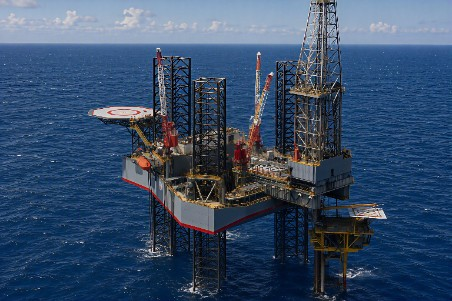
This article provides information on the history of OCS Lease P-0166 and updates the decommissioning status of California OCS Platforms Hogan and Houchin which are in federal waters offshore Santa Barbara County, California. Listed below are key events in the history of the OCS Lease P-0166. More details are provided in the attachment which was prepared by John Smith who before retiring from BOEM in 2017 was actively involved in the long-running supplemental bond dispute between MMS/BOEM and Signal Hill Services, Inc., which began shortly after MMS approved the assignment of OCS Lease (P-0166) held by Phillps Petroleum Corporation (now ConocoPhillips Corp.) and two other companies to Signal Hill Services Inc. (Signal) in 1991.
Year/Month
Lease Activity
1967
U.S. Bureau of Land Management grants OCS Lease P-0166 to Phillips Petroleum Corp., Continental Oil Company, and Cities Service Company.
1967 – 1968
Hogan and Houchin platforms are installed.
1967 – 2010
75 wells were drilled from the platforms, the majority in 1967-1968 and 1970s.
February 1991
MMS approves assignment of the lease to Signal.
September 2019
Production is terminated at platforms.
October 2020
Signal relinquishes the lease to BOEM.
November 2020
BSEE orders ConocoPhillips Corp. (COP) and other predecessor lessees to decommission the Hogan and Houchin platforms.
January 2021
COP and other predecessor lessees file an appeal with IBLA contesting BSEE/BOEM determination they held decommissioning obligations.
February 2021
IBLA grants approval of Partial Stay Agreement between BSEE/BOEM and appellants to maintain and monitor the platforms.
November 2024
Signal files for bankruptcy under Chapter 7 of the U.S. Bankruptcy Code.
2021 – 2026
Monitoring, maintenance and major refurbishment of the platforms are ongoing to support safety of offshore personnel involved in well plugging and abandonment operations.
Since OCS lease P-0166 was relinquished in 2020, removal of Hogan/Houchin platforms has been stalled by a prolonged dispute over decommissioning obligations between BSEE/BOEM and predecessor OCS lessees (ConocoPhillips Corp., OXY USA Inc., Devon Energy Resources Inc.). The IBLA case has now been ongoing for more than 5 years and has the potential to set a precedent based on the arguments of the appellants who assert:
They had no accrued decommissioning obligations at the time of the 1991 assignment of the lease because pursuant to their 1961 OCS lease agreement decommissioning obligations did not accrue until the lease was relinquished, which occurred in 2020 when Signal quitclaimed the lease to BOEM.
The OCS rules changes promulgated in 1997, which stated a lessee’s decommissioning obligation “accrues to the lessee when a well is drilled, the platform or other facility is installed, or the obstruction is created.” (30 CFR 250.110), cannot be applied retroactively.
The 1961 OCS lease did not include a term by which the lessee agrees to be bound by “future” OCS regulations, which later became a standard provision in OCS lease agreements.
The IBLA case is very concerning because there is currently no financial security available to cover the costs of decommissioning the Hogan and Houchin platforms which were very conservatively estimated by BSEE to total $85 million in 2020. If the IBLA or judicial courts eventually rule COP and former lease owners did not accrue decommissioning obligations, either in whole or in part, the federal government and American taxpayers will be responsible for covering the unfunded decommissioning obligations.
Notes: The Gulf keeps on rollin’ – this was the 137th Gulf lease sale. Congrats to Bryan Domangue on being named Gulf of America Regional Director for the Marine Minerals Administration!The WWII Museum in New Orleans was a nice venue for the sale.
The table below compares the pre-sale stats for BBG3 with those for BBG1 and 2. The number of BBG3 bids, while well below BBG1, which was the first sale in 2 years, bounced nicely from BBG2 levels.
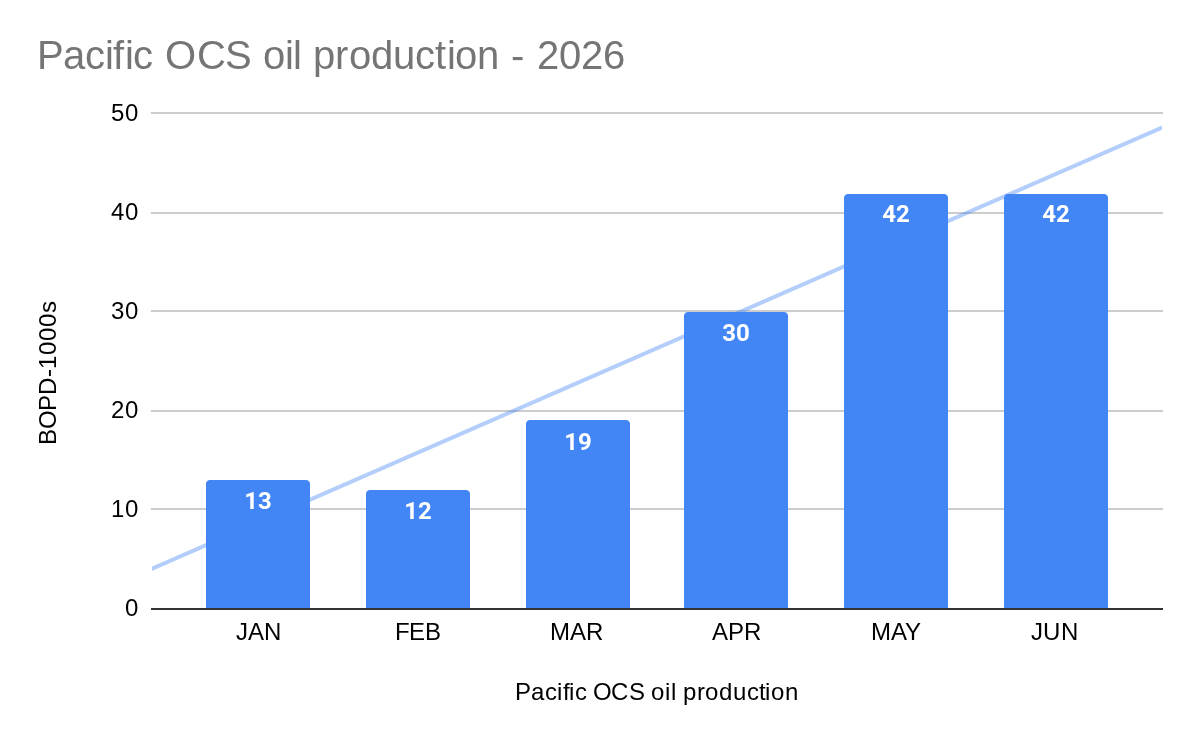
An average of approximately 39 wells were online throughout the month of June 2026, representing a 50% increase over approximately 26 wells online on average in April 2026.
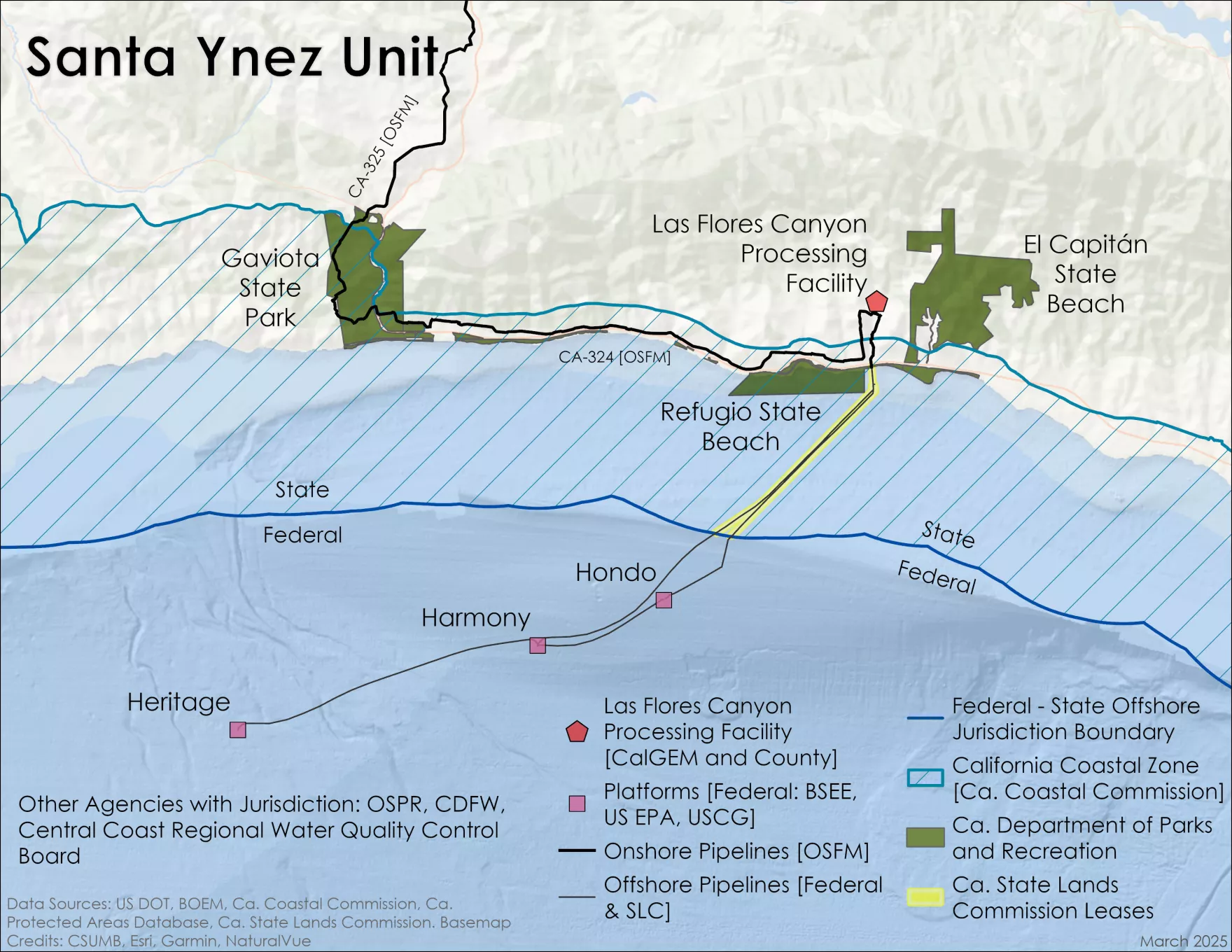
In July 2026, an average of approximately 47 wells at Platforms Harmony and Heritage were online, producing an average of approximately 721 gross barrels of oil per day per well. Sable expects to bring all 77 production wells on these two platforms online during the third quarter of 2026 and expects Platform Hondo to come online in September 2026.
Wireline campaign for Perforation Additions (“Perf Adds”) and producing well optimization at Platform Harmony commenced in August 2026.
Five completed Perf Adds forecasted to produce an incremental 600 estimated gross barrels of oil per day, each, are expected to come online at Platform Hondo along with the restart of the platform in September 2026.
An additional four Perf Adds at Platform Hondo forecasted to produce an incremental estimated 600 gross barrels of oil per day are planned for completion and to be brought online in early Q4 2026.
Sales
July 2026 preliminary oil sales estimate of approximately 38,000 gross barrels of oil per day. August 2026 oil sales average to date is approximately 42,000 gross barrels of oil per day through August 9th.
Due to the California regulatory environment, local refineries were not able to plan in advance for SYU first sales and ultimately were forced to displace various imported cargos in the second quarter. As a result, Sable incurred $18.5 million of non-recurring demurrage charges throughout the quarter, recognized in operational expenses.
The sudden supply influx of Pacific Outer Continental Shelf (“Pacific OCS”) crude has forced refiners to temporarily limit throughput of Pacific OCS crude and charge quality deducts for sulfur content and other items.
Starting in July 2026, Sable was temporarily constrained to a maximum of 40,000 average gross barrels of oil per day of oil sales throughput by downstream partners. We expect this short-term constraint to be alleviated starting in the back half of August.
California refineries are expected to adjust their crude oil supply slate starting in September 2026 to begin accepting more Pacific OCS barrels from the SYU and less imported barrels, alleviating the SYU throughput constraint altogether.
Sable is also in active negotiations to implement waterborne crude oil marketing solutions from existing marine terminals in the Los Angeles area in the near-term in order to improve marketing optionality.
Additionally, the pending acquisition of the Crimson Utilities (San Pablo Bay Pipeline) pipeline network by a third party could provide further relief and marketing optionality to California oil producers with access to the San Francisco refinery market once that pipeline potentially restarts operations.
Barbados 2026 Offshore Petroleum Direct Negotiations process is underway. Nineteen blocks (yellow in map) are being offered. Direct negotiations for pre-qualified companies will continue through January 15, 2027, and awards will be announced by February 15.
“After careful consideration, it was determined there is no path forward to permit these projects in the U.S. for the foreseeable future.”
Comment: The poor prospects for these leases had more to do with bad investment decisions than permitting challenges. The company is fortunate to be able to rollover their lease bonuses into LNG infrastructure and gas turbine purchases.
The relinquished leases:
OCS-A 0539: RWE paid the highest bonus ever, $1.1 billion, for this lease at theirrational exuberance Atlantic wind sale in Feb. 2022. The amount was $305 million higher than the next highest bonus for any offshore lease.
OCS-G 37334: RWE was the only bidder at the 2023 Gulf wind lease sale. A second Gulf wind sale received no bids.
The wind adverse U.S. Administration offered RWE a lifeline that allows them to reinvest in more prospective projects:
LNG infrastructure: a financial investment of $900 million to acquire an indirect 16% stake in the Louisiana LNG Project. RWE proceeds will be used to fund the construction of the terminal.
Natural gas turbine reservations: To support the expansion of its growing flexible power generation work in the U.S., RWE Americas has signed a $300 million turbine reservation agreement securing future generating capacity to meet growing U.S. electricity demand. The company is developing a pipeline of 15 natural gas peaking projects across target markets in the U.S.
Apparently, the attached letter from 50 U.S. environmental groups asking RWE not to keep their wind leases was not persuasive (and perhaps RWE didn’t appreciate the implied threat of litigation against a deal that was in the company’s best interest).
Contrary to what you might see or read on social media, the Strait of Hormuz has not “opened” by continental rifting between Iran and Oman. This waterway is the locus of converging plate tectonic interactions between the Arabian and Asian plates and offers a natural laboratory to study plate tectonic subduction and collision.
This narrow waterway, only 60- to 24-miles wide, is the passage for one-fifth of the world’s oil transportation, or about 20 million barrels per day. According to the International Energy Agency, 80 percent of this oil goes to Asian markets; however, any major disruption in oil flow impacts the global economy because of the international connectedness of the oil industry.
Upthrust of Jurassic-Cretaceous sediments of the vanished Tethys Ocean outcropped in Oman along the Hormuz Strait. Photo courtesy of Joe Versfelt.
In particular, removing the same-season-relief-well (SSRW) requirements in the current regulations is an essential regulatory action. The SSRW provision has the effect of precluding exploratory drilling while providing no added environmental protection and increasing operational risks. Given that there is at least a 50% chance that rig mobilization, relief well planning, drilling, repeated surveying, and plugging the flowing well would take more than the specified 45 days, a SSRW is not a legitimate well control option.
The preamble includes important questions for respondents. These questions are compiled beginning on p. 108 of the attachment. In particular, the comments on Subsea Isolation Devices (SSIDs) should be interesting. Given the required blowout preventer stack redundancy, it’s not clear to me that SSIDs would reduce blowout risk. They would however increase operational complexity.
For floating drilling operations in the Arctic and elsewhere, the focus needs to be on well design, integrity, and control. Fortunately, by carefully verifying casing and cement integrity, ensuring complete barrier redundancy, and having standby capping and containment capability, the probability of a sustained oil blowout can be reduced to 10–6 or lower.
Lastly for now, these regulations further demonstrate the importance of consolidating BOEM and BSEE in a single bureau.
The proposed revisions to the Arctic drilling regulations have just been posted and are attached for your convenience.
From a risk management standpoint, the current Arctic drilling rule, particularly the same season relief well (SSRW) provisions, is arguably the worst in the history of the OCS program. Regardless of the prospects for Arctic exploration, offshore drilling is not feasible under the current regulations. Hopefully, this proposal represents a significant improvement. More to follow after the text has been reviewed.