Feeds:
Posts
Comments

Posts Tagged ‘AB 1448’

Sable’s update includes production and sales information, but nothing about the pipeline anomalies. Summary:

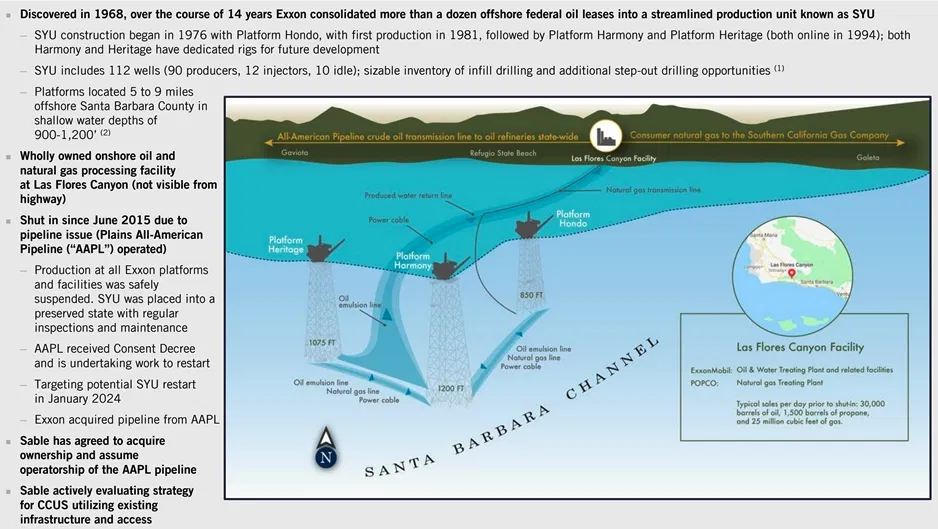
  • Platform Hondo modernization and operational commissioning are complete. (Hondo is the last of the 3 platforms to come online.)
  • Sable anticipates Federal (MMA) approval of the Platform Hondo instrumentation, control, and safety commissioning this month.
  • Each of Hondo’s 9 perforation additions (Perf Adds) are expected to add ~600 barrels of oil per day to the base well production at a cost of approximately $800,000 per operation.
  • Completing the Los Flores Canyon (LFC) operational and facility upgrades ahead of the restart of Platform Hondo is expected to allow the flow of all SYU wells, maintain continuous operations and reduce downtime in Q4 2026.
  • Sable’s preliminary estimate of oil sales during the months of July and August is approximately 32 thousand gross barrels of oil per day averaged over the two months, with September oil sales volumes expected to be approximately 34 thousand gross barrels of oil per day.
  • Sable is working with midstream and downstream partners to alleviate third party sales constraints experienced in the second half of August and September 2026. (This is presumably why July/Aug sales were lower than previously forecast.)
  • Nominations to Sable’s crude purchaser are expected to increase to an average of 38 thousand gross barrels of oil per day in October 2026. An October 2026 estimated exit rate of approximately 45 thousand bopd prior to the expected addition of Hondo volumes.
  • Sable expects increasing oil sales rates after this month.

Also Sable related:

Read Full Post »

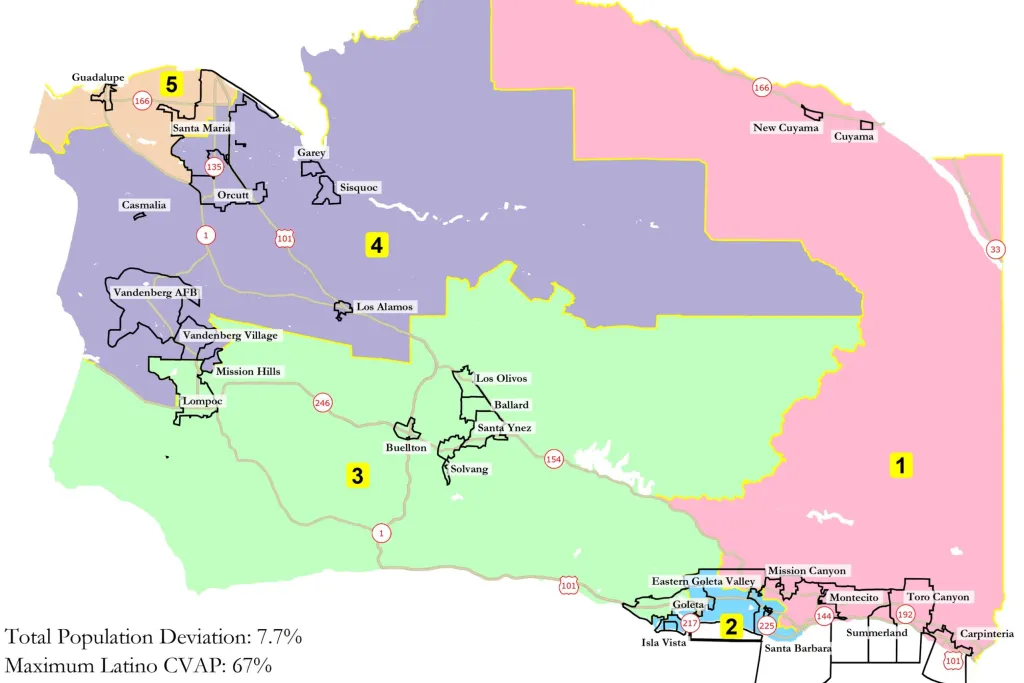
As expected, the Santa Barbara County Board of Supervisors voted 3-2 to ban new onshore oil and gas drilling. This is another example of the South County (Districts 1-3) majority voting to deny the rights of North County (Districts 4 and 5) property owners and workers. Keep in mind that oil has been produced in the County for more than 130 years.

Attached is a concise, powerful comment letter submitted to the Board by Californians for Property Rights. Excerpt (emphasis added):

“Property rights are key to our nation’s prosperity, and these rights have been shown to be foundational to building prosperity around the world. However, for Americans, these rights are not only integral to our economy but also, and even more importantly, to our Constitution.
Oil and gas mineral and royalty interests are private property. Minerals cannot be moved when government changes the rules. Their value depends upon the ability to access and responsibly produce them, and a government prohibition can effectively eliminate that value.
These impacts reach real families. Mineral and royalty income supports farmers, ranchers, retirees, small businesses, and other property owners. For some agricultural families, it helps keep working farms and ranches economically viable and in family ownership.”

Related constitutionality issues:

  • In July, the National Assoc. of Royalty Owners sent the Board a legal opinion challenging the constitutionality of such ordinances. NARO also sent a comment letter to the Board prior to their vote.
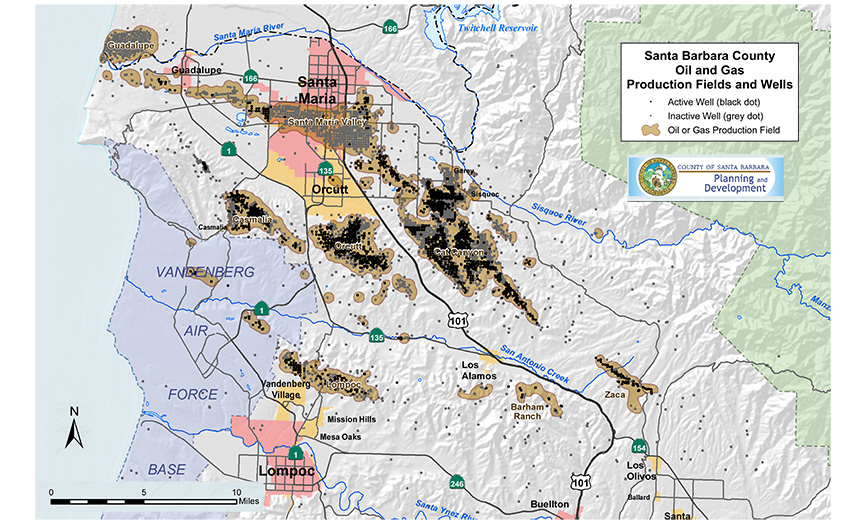
  • A suit filed by John and Melinda Morgan, who inherited the mineral rights to two parcels in the Cat Canyon Field (District 4). argues that a similar provision in CA Senate Bill 1137 amounts to an unconstitutional taking of their property.
  • California AB 1448 would limit the property rights of Federal lessees and deprive royalty owners – most notably the citizens of the United States – of revenue.

Read Full Post »

Attached is the final version of AB 1448, which is among the stack of bills awaiting Gov. Newsome’s signature. John Smith has highlighted provisions of concern.

If enacted and upheld in the courts, the bill would serve as a blockade on new Outer Continental Shelf (OCS) production. The bill would:

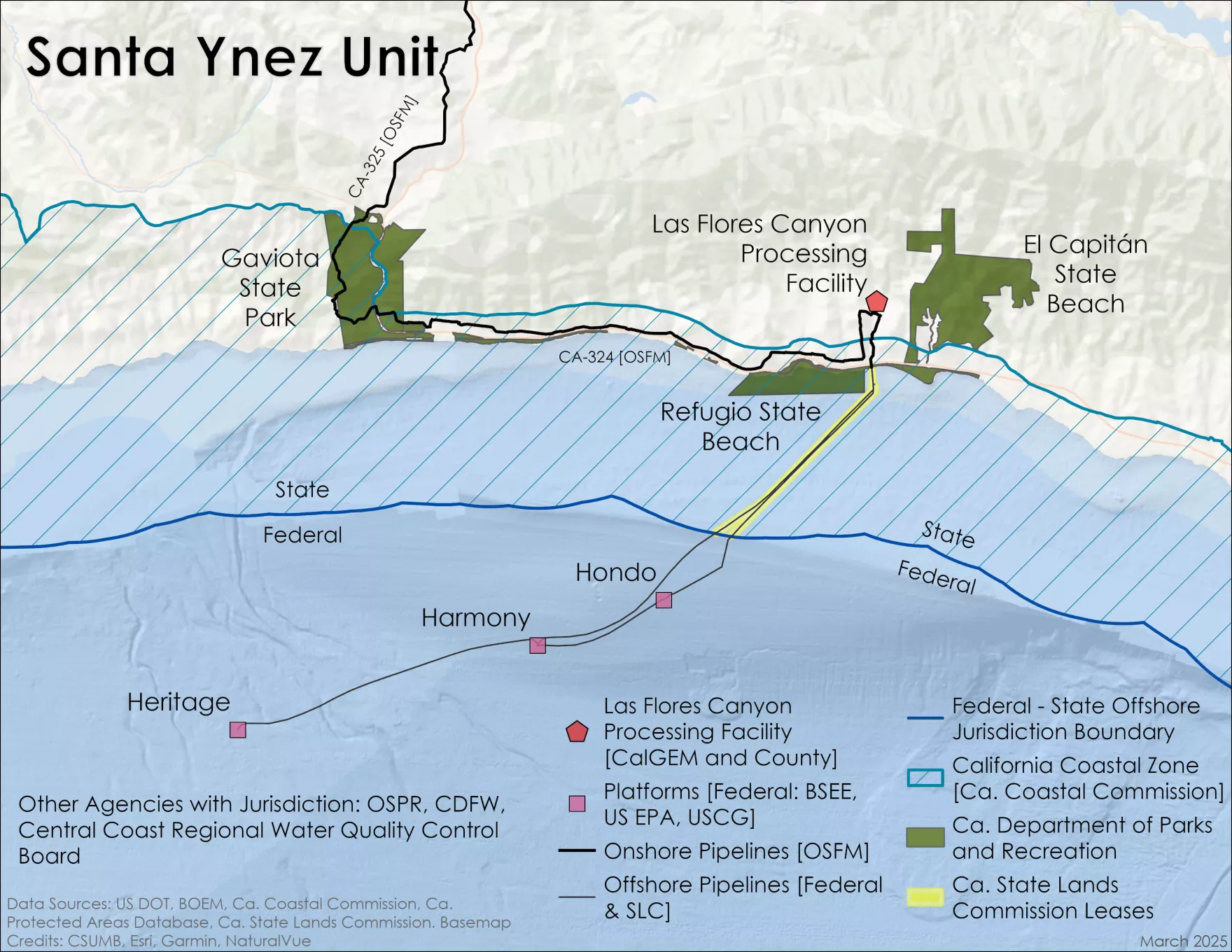
  • prohibit pipelines and other infrastructure located within state waters from being used to support Pacific Outer Continental Shelf (OCS) leases issued after January 1, 2026.
  • prohibit the State Lands Commission from entering into any lease authorizing new construction of oil- and gas-related infrastructure within state waters for the purpose of supporting Pacific OCS leases issued after January 1, 2026.
  • prohibit any existing leases and oil- and gas-related infrastructure located within state waters from being used to support Pacific OCS leases issued after January 1, 2026.
  • require a separate process for the approval of any lease extension that would increase the volume of oil and gas transported across state waters “including by commencing, increasing, intensifying, or restarting production” from the OCS. This would presumably include pipelines transporting Santa Ynez Unit production and production increases at other OCS facilities.

It’s hard to believe these provisions would survive legal challenges given their constraint on interstate commerce and Federal OCS activities.

On a related note, California royalty owners are actively challenging Santa Barbara County and Los Angeles proposals that would prohibit new oil and gas wells and ultimately phase out all existing production. AB 1448 would have a similar effect on OCS royalty owners – namely the citizens of the United States.

Read Full Post »

John Smith has highlighted the attached bill that could, if passed, further derail Sable’s plans to restart Santa Ynez Unit (SYU) production.

This provision appears to target Sable:

Section 3(b)(2): Repair, reactivation, and maintenance of an oil and gas facility facility, including an oil pipeline, that has been idled, inactive, or out of service for five years or more shall be considered a new or expanded development requiring a new coastal development permit consistent with this section.

The legislation would be effective on 1/1/2026 so perhaps Sable will already be producing. Sable may also explore the jurisdictional and interstate commerce issues touched on in this post.

This LA Times update adds to the confusion as to the implications for Sable.

Read Full Post »