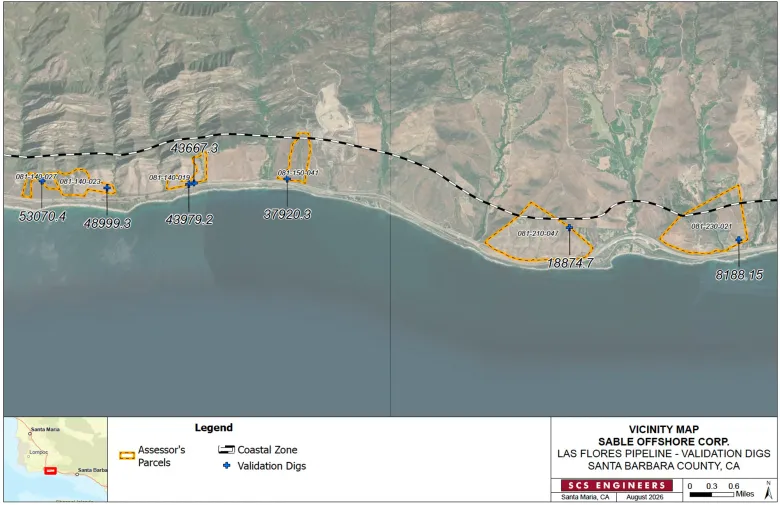
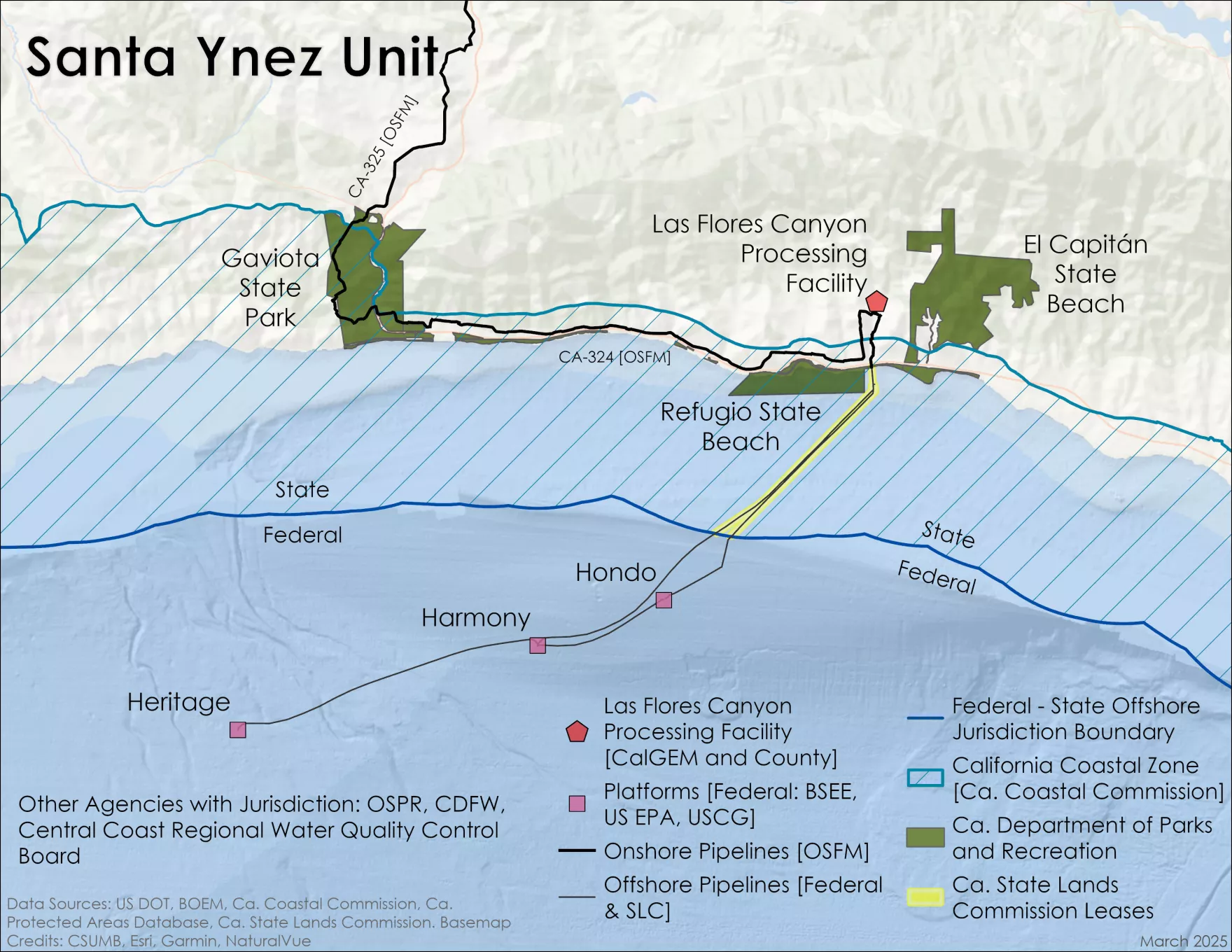
Sable Offshore has asked Santa Barbara County for approval to conduct exploratory digs to check anomalies at seven points along onshore Segment 324 of the Santa Ynez Unit pipeline system. This 10.86 mile segment runs from the Los Flores Canyon Processing Facility to the Gaviota Pump Station (map below).
According to the Emergency Special Permit issued by PHMSA, Sable is required to conduct in-line inspections (ILIs) with metal loss tools every 6 months for the first 2 years of operation.
Where metal loss is identified, immediate repair is required if the remaining strength of pipe shows a predicted failure pressure <1.39 times the maximum operating pressure (MOP).
Where direct field examinations indicate pipe wall loss of 40% or more, permanent repairs are required.
Comments:
- On the plus side, it appears that the ILIs identified anomalies as intended.
- The number of anomalies that have been identified is concerning. (Per PHMSA, the last ILI was on 12/10/2022, several years prior to the restart of production.)
- Note that external corrosion caused the failure leading to the 2015 Refugio spill. The followup excavations should be effective in confirming such corrosion.
- Are the mitigations specified in the Refugio investigation report sufficient?
- If the County releases a high-profile applicant’s letter to local media and NGOs, they should also post the letter on the County website so that other interested parties have access.
- “The county did not inform the Coastal Commission about the excavation request until Wednesday afternoon at the EDC’s request.” Is it appropriate for the Environmental Defense Center to be directing the County in this manner?


As a much younger engineer employed by the design firm, I did the initial computer modelling of this line back in the 1980s. The design flow in this segment was 240,000 BPD which is much more than it was flowing when the line ruptured in 2015. No cathodic protection, a failure of the pipe wrap, and pressure surge contributed to the failure, if I recall correctly. What I find intriguing is how much effort by the locals is devoted to preventing Sable from detecting and making repairs where needed. The pipeline was the preferred environmental alternative back when it was permitted as opposed the two other alternatives; ocean tankers and massive truck traffic away from the coast.
Gerald, Thank you for your insights. I agree that pipeline transportation is clearly the preferred environmental alternative. The County jumped at the deal when Exxon agreed to give up the OS&T. Unfortunately, the Plains PL was poorly managed and the spill occurred. Opposition to any offshore production has become firmly entrenched and any step in that direction will be challenged.