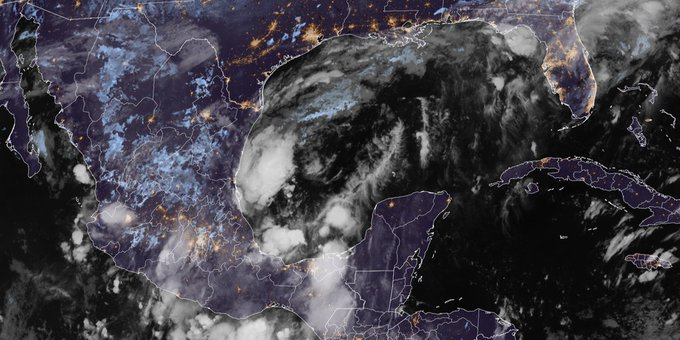
MMA estimates that approximately 9.24% of current Gulf of America oil production and 3.36% of natural gas production were shut-in as of 1130 CT today. No personnel had been evacuated.
Posted in Gulf of Mexico, hurricanes, Offshore Energy - General, tagged Gulf of America, Invest 92L, production shut-in, tropical storm on October 6, 2026| Leave a Comment »
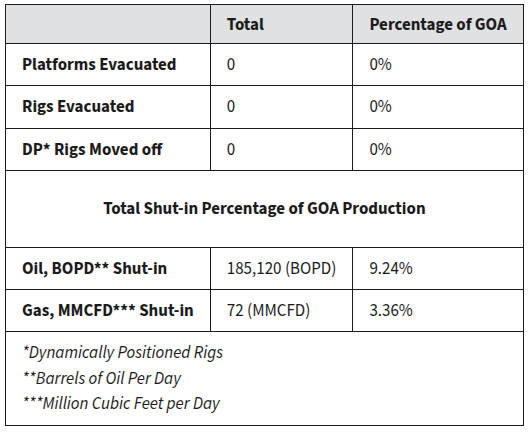
MMA estimates that approximately 9.24% of current Gulf of America oil production and 3.36% of natural gas production were shut-in as of 1130 CT today. No personnel had been evacuated.
Posted in California, Gulf of Mexico, Offshore Energy - General, tagged offshore oil, production, EIA, Pacific, Gulf of America on October 1, 2026| 3 Comments »
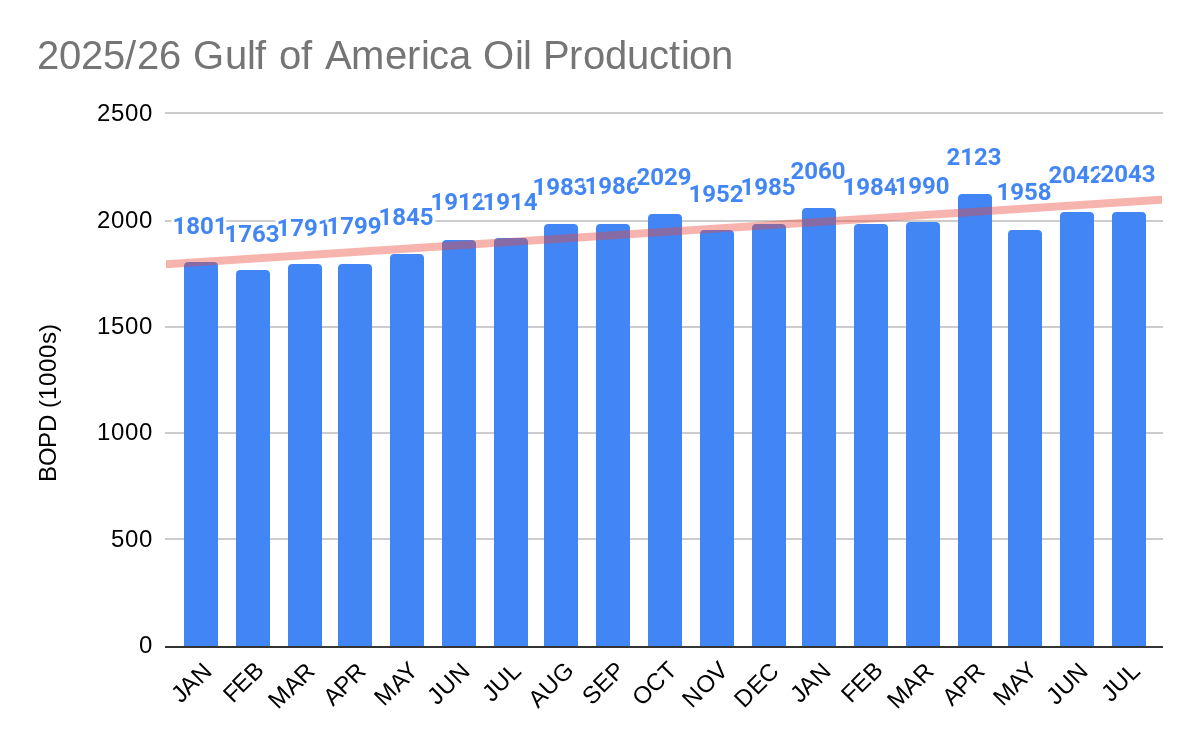
2025 was a record production year for the Gulf. Assuming the continued absence of tropical storms, 2026 will likely surpass 2025.
The EIA’s Gulf production revisions have been more significant in recent months. For example, May production was increased by 48,000 bopd over the past 2 months. Yesterday’s report increased June production by 44,000 bopd.
More importantly, the EIA and official ONRR production totals for 2025 are now aligned! Is the EIA reading this blog? 😉
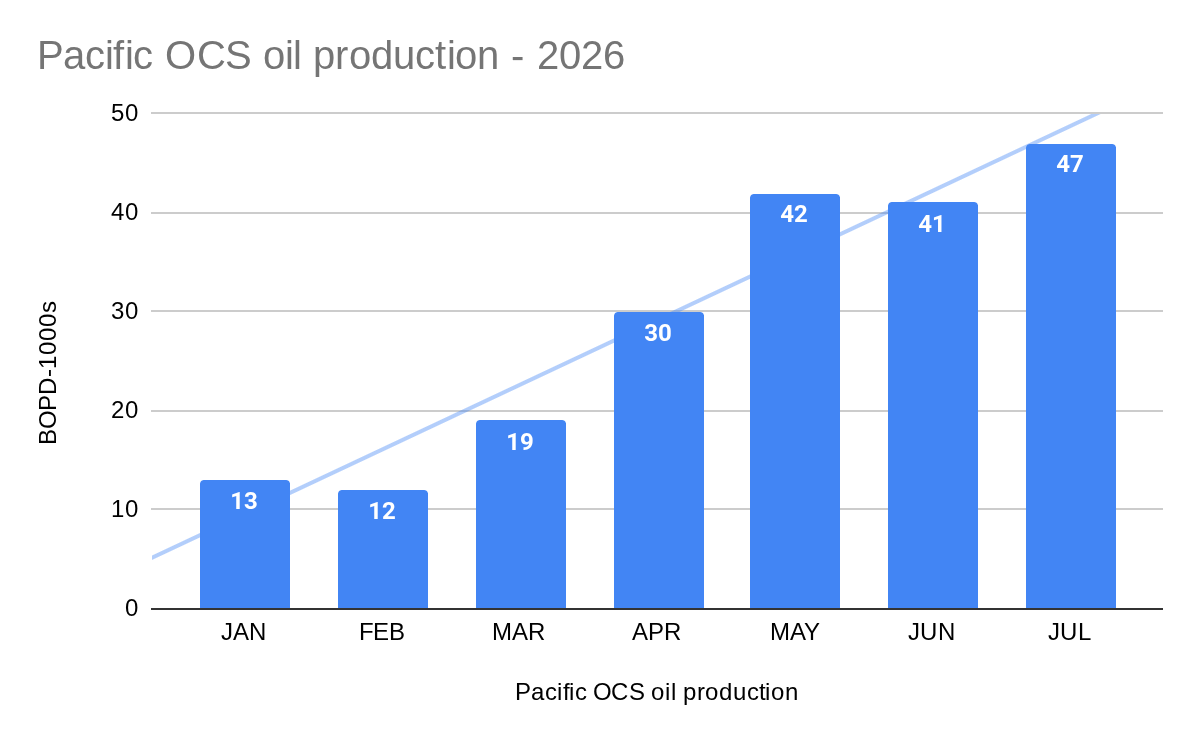
The July production bump in the Pacific was slightly less than expected. Given that Sable reported July production of 38,000 bopd and the production estimate for the other platforms is ~12,000 bopd, a total of 50,000+ bopd was expected.
Posted in Offshore Energy - General, California, Gulf of Mexico, energy policy, rigs-to-reefs, tagged decommissioning, EO 14430, John B Smith, Marine Minerals Administration, NOAA, repurposing platforms, rigs to reefs on September 25, 2026| 2 Comments »
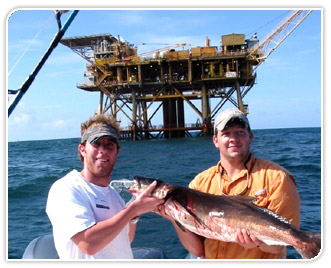
Section 6 of EO 14430, RESTORING AMERICAN SALTWATER ANGLING AND RECREATION, establishes a program to facilitate the reefing of decommissioned platforms (i.e. “Rigs-to-Reefs”).
Presumably, existing Gulf State reefing programs and private initiatives for repurposing offshore platforms will be integrated into the new Federal program. Where State reefing legislation is unworkable (California), liability issues will have to be resolved. John Smith has made a proposal in that regard.
Full text of Section 6:
Sec. 6. Fast-Tracking Artificial Reefs and Habitat Creation. (a) Within 60 days of the date of this order, the Secretary of the Interior, acting through the Marine Minerals Administration, shall establish a Federal Outer Continental Shelf Reef-in-Place Program (Program) to facilitate the conversion of decommissioned offshore oil and gas and other-use structures, with the exception of infrastructure associated with offshore wind energy facilities, into permanent artificial reefs through reef-in-place, topple-in-place, or other approved reefing methods, where consistent with applicable law.
(b) The Program shall be available to qualifying offshore structures and leaseholders that satisfy all applicable statutory, regulatory, environmental, navigational, and safety requirements. The Secretary of the Interior shall establish criteria and standards for the program that ensure protection of navigation and national security interests.
(c) In establishing the Program, the Secretary of the Interior shall coordinate with the Secretary of Commerce, the Secretary of War, the Commandant of the United States Coast Guard, and the heads of other appropriate agencies to streamline interagency review and permitting to the maximum extent permitted by law, reduce unnecessary administrative delays, and promote timely decisions for qualifying reef projects.
(d) Within 120 days of the date of this order, the Secretary, acting through the NOAA Administrator, in coordination with the Secretary of the Interior, shall review and, as appropriate and consistent with applicable law, revise policies and procedures governing SUPs and other applicable authorizations for the placement and management of artificial reefs within National Marine Sanctuaries and Marine National Monuments. Such revisions shall seek to establish transparent and efficient permitting pathways, identify areas suitable for artificial reef development and other national interest uses, and enhance fisheries, recreational fishing, diving, and other compatible public uses.
Posted in Offshore Energy - General, Regulation, Gulf of Mexico, energy policy, tagged appeal, Block 828, Buckskin field, Keathley Canyon, Lease Sale BBG2, LLOG, rejected bid on September 16, 2026| Leave a Comment »
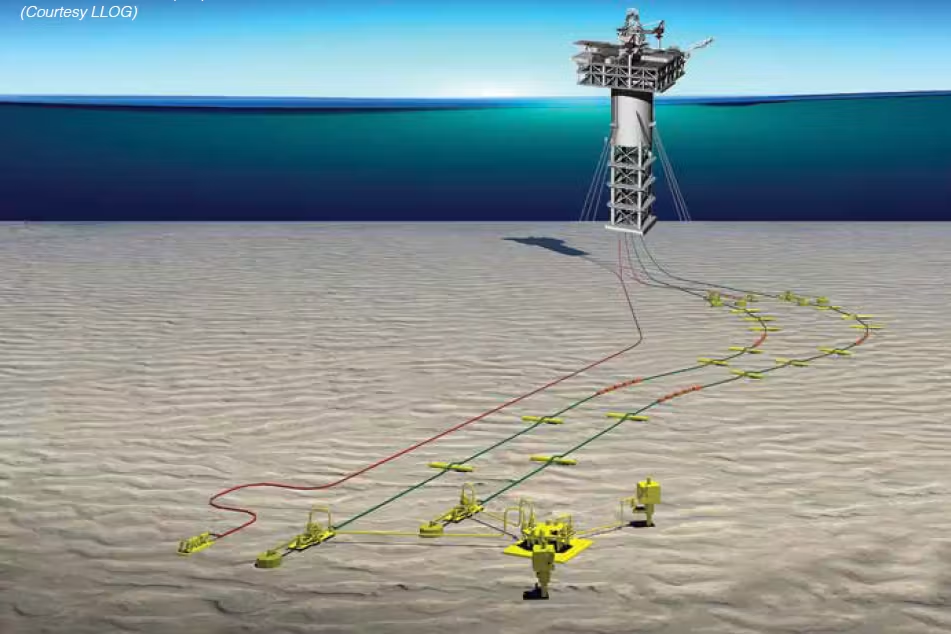
LLOG’s letter of appeal is not publicly available. Below is the summary blurb from the Serial Register Page:
By letter dated May 27, 2026, LLOG Exploration Offshore, L.L.C. appealed the Bureau of Ocean Energy Management’s (BOEM) decision for OCS-G 38173, covering all of Block 828, Keathley Canyon. LLOG Exploration Offshore, L.L.C. is requesting reconsideration of the rejection decision. The Adjudication Section received the written request and statement of reasons within the 15 days of the rejection decision, on May 28, 2026.
According to the applicable regulation, the BOEM/MMA Director is the deciding officer and the decision is not subject to appeal to the Interior Board of Land Appeals. The rejection seems rather straightforward under BOEM’s bid evaluation policies, but perhaps there is much more to the story.
Posted in climate, energy policy, Gulf of Mexico, Offshore Energy - General, Regulation, tagged 2024-2029 leasing program, 9/11, energy security, net zero, oil prices, Sale 257 litigation on September 11, 2026| Leave a Comment »
Two particularly troubling examples of decisions that threatened long-term US offshore production and national security, and endorsed higher oil prices:
Sale 257 court ruling: In 2022, a Federal judge ruled in favor of higher oil prices. In response to an OCS Sale 257 lawsuit, the judge agreed with the NGO plaintiffs that BOEM failed to consider the “positive” effect that higher prices (the logical result of lower production) would have on reducing demand. In particular, the plaintiffs asserted that BOEM failed to consider the effect that reduced production (and higher prices) would have on foreign consumption and the associated GHG emissions.
The judge not only decided in favor of the plaintiffs, but ruled that BOEM’s omission was so serious that the lease sale had to be vacated. The judge’s decision was subsequently overturned by legislative action.
OCS Leasing Policy: The official leasing policy, as articulated in the 2024-2029 OCS Leasing Program (published 9/2023), was to phase out oil and gas production:
The long-term nature of OCS oil and gas development, such that production on a lease may not begin for a decade or more after lease issuance and can continue for decades, makes consideration of net-zero pathways relevant to the Secretary’s determinations on how the National OCS Program best meets the Nation’s energy needs. (p. 6, 2024-2029 Leasing Program)
The Leasing Program prioritized “net-zero pathways” over cost and national security considerations. The clear objective was to prevent new production. Absent legislative action, we would have had a 5 year leasing plan with no lease sales!
Posted in Offshore Energy - General, drilling, Gulf of Mexico, energy policy, tagged Arena Energy, Cantium, Gulf of America, jackup rig, shelf, White Fleet Drilling on September 10, 2026| Leave a Comment »
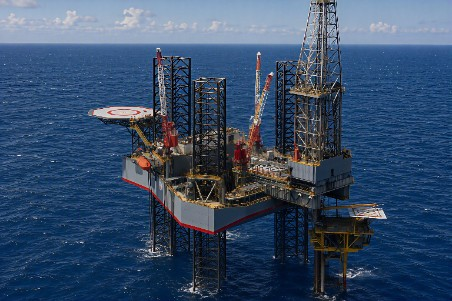
Arena Energy CEO Mike Minarovic: “We are ‘all in’ on the future of the shallow water Gulf of America. The Shelf still holds vast potential, and the WFD 450 gives Arena the reach to unlock proved reserves that no other rig in the Gulf could access.”
The WFD 450 drilling rig, the deepest water depth rated jack-up operating in the Gulf, is conducting a multi-well drilling program for Arena following a $65 million refurbishment program.
Built in 1999 and formerly operated by Valaris, the rig was cold-stacked in the Gulf for seven years prior to White Fleet’s acquisition. The upgraded rig was christened on January 9, 2026, and began drilling operations in late March.
The WFD 450 can drill in water depths up to 400 feet and to total depths of 30,000 feet — capabilities that give Arena access to resources previously beyond the reach of the Gulf’s rig fleet. That reach is expected to unlock significant new production from proved reserves that had remained undeveloped due to equipment constraints.
The Borehole File indicates that Arena has drilled 4 development wells in Eugene Island Area Blocks 315 (231′ water depth) and 325 (252′ water depth) since the rig’s March restart. Two of those wells were completed for production.
Arena has also completed 3 wells in shallower water (138′) in the Main Pass area in 2026.
Cantium, the other active shelf operator, has completed 5 wells this year in very shallow water (50-58′). No other company has conducted drilling operations on the shelf this year.
Arena produced 8,266,036 bbls of oil and 21,079,794 Mcf of gas in 2025, making the company the number one shelf producer of both commodities.
Cantium produced 5,444,651 bbls of oil and 6,716,670 Mcf of gas in 2025.
Posted in energy policy, Gulf of Mexico, Uncategorized, tagged Ken Arnold, Offshore nuclear plants, Paragon Engineering Services, Rigs-to-Reactors, Three Mile Island, Westinghouse on September 8, 2026| Leave a Comment »
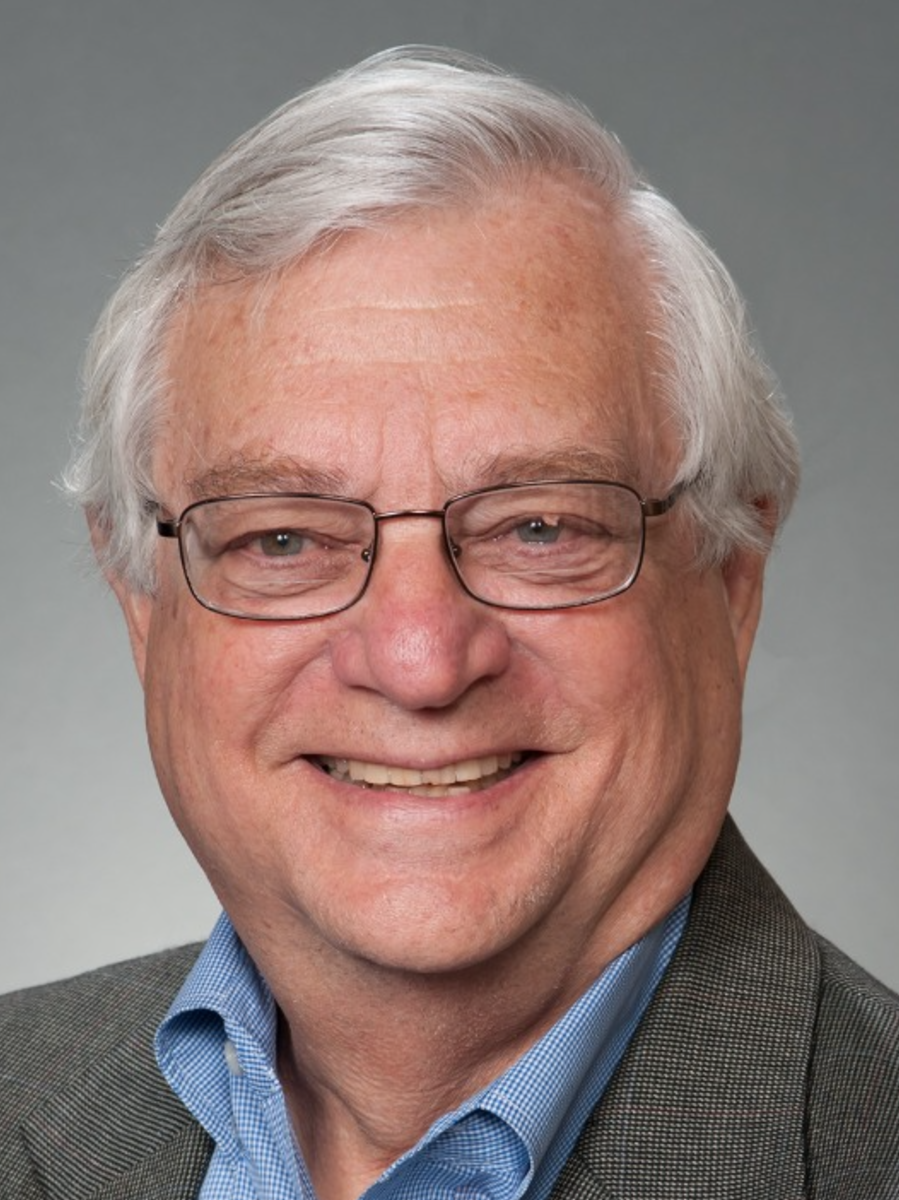
Ken Arnold, NAE, contributed greatly to the responsible development of offshore oil and gas resources. Among Ken’s achievements – lead engineer for a major offshore operator, entrepreneur who founded a successful engineering and management company, author of production textbooks, distinguished SPE lecturer and university instructor, NASEM Marine Board member, and safety leader who participated in the development of OCS regulations and standards.
Ken explains how his new engineering company was involved in the Gulf’s first “Rigs to Reactors” initiative:
My first job as Paragon Engineering Services was to advise Westinghouse on the ability of their yard in Jacksonville, FL to fabricate offshore jackups.
They had built a total facility with acres under roof, a huge drydock, and the biggest gantry crane in the US to fabricate large nuclear reactor vessels which stood on top of a barge hull which contained all the equipment necessary for a power plant. They had an order for, I think, 12 of these units. The plant was designed to complete one a year through an assembly line type of process. The facility was approved by Nuclear Regulatory Agency, and others. The piping model of the barge hull (this was in 1980 before we had 3-D models and large complex facilities were often constructed in scaled plastic) had a footprint as big as my house.
The goal was to make identical units which would be floated to a shore-based site where it would be sunk and protected from waves, etc.
Then came Three Mile Island and all orders were canceled.
Ken recalls further:
They eventually decided not to get into the rig fabrication business. The only thing I know of which was ever fabricated in the huge fab building was some cars for a ride at Disney World. I drove by the site many years later and the gantry crane was gone and it had been turned into a container port. I am not sure what happened to the huge drydock.
Posted in Offshore Energy - General, California, Gulf of Mexico, tagged California, data delay, EIA, Gulf of America, offshore production, record Gulf production, Sable Offshore, Santa Ynez Unit on September 3, 2026| Leave a Comment »
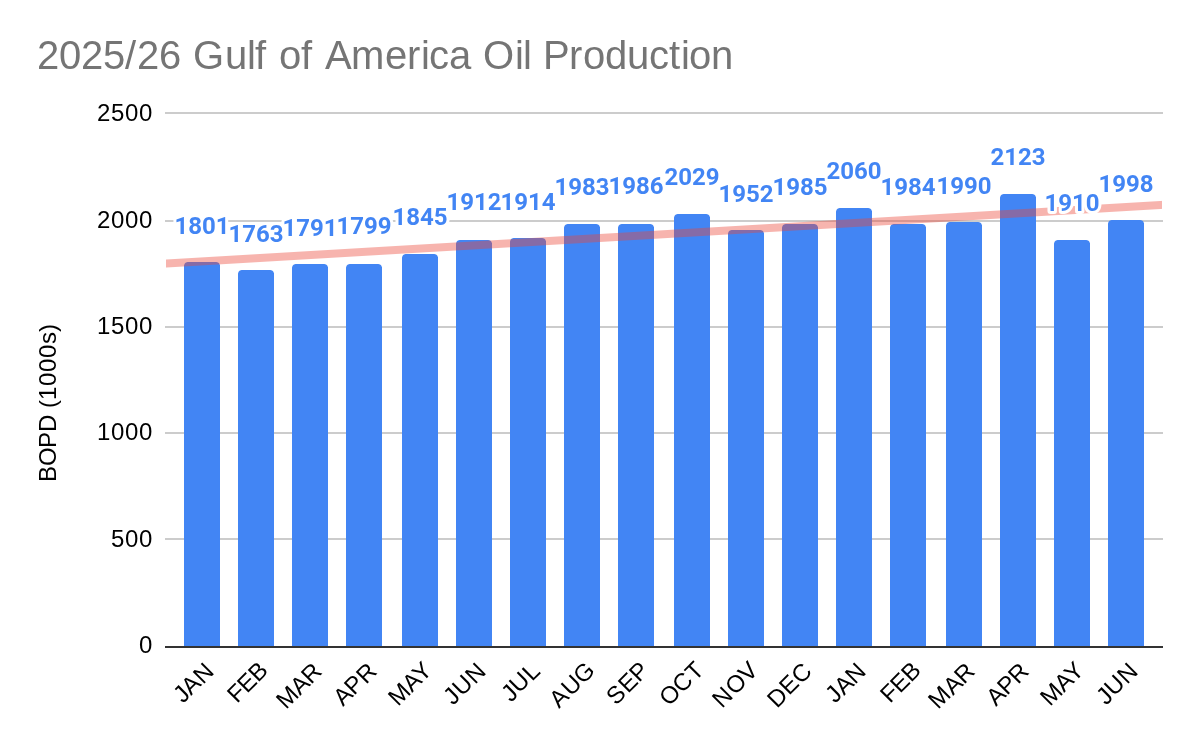
Raising the bar! The EIA’s August data release (delayed until 9/2) upped the Gulf’s all-time monthly production record (April 2026) by 14,000 bopd to 2,123,000 bopd. June production settled in just below the 2 million bopd mark.
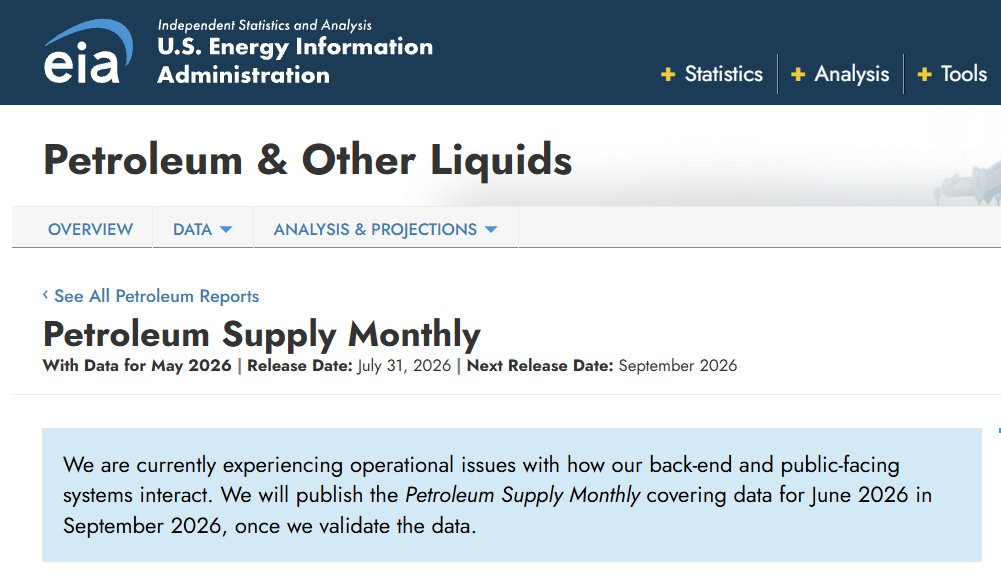
Meanwhile, Pacific production has tripled this year reflecting the Sable SYU effect. Note that Sable reported Santa Ynez Unit production of 38,000 bopd in July and 42,000 bopd for the first week in August. This should push total Pacific production for July and August to over 50,000 bopd.
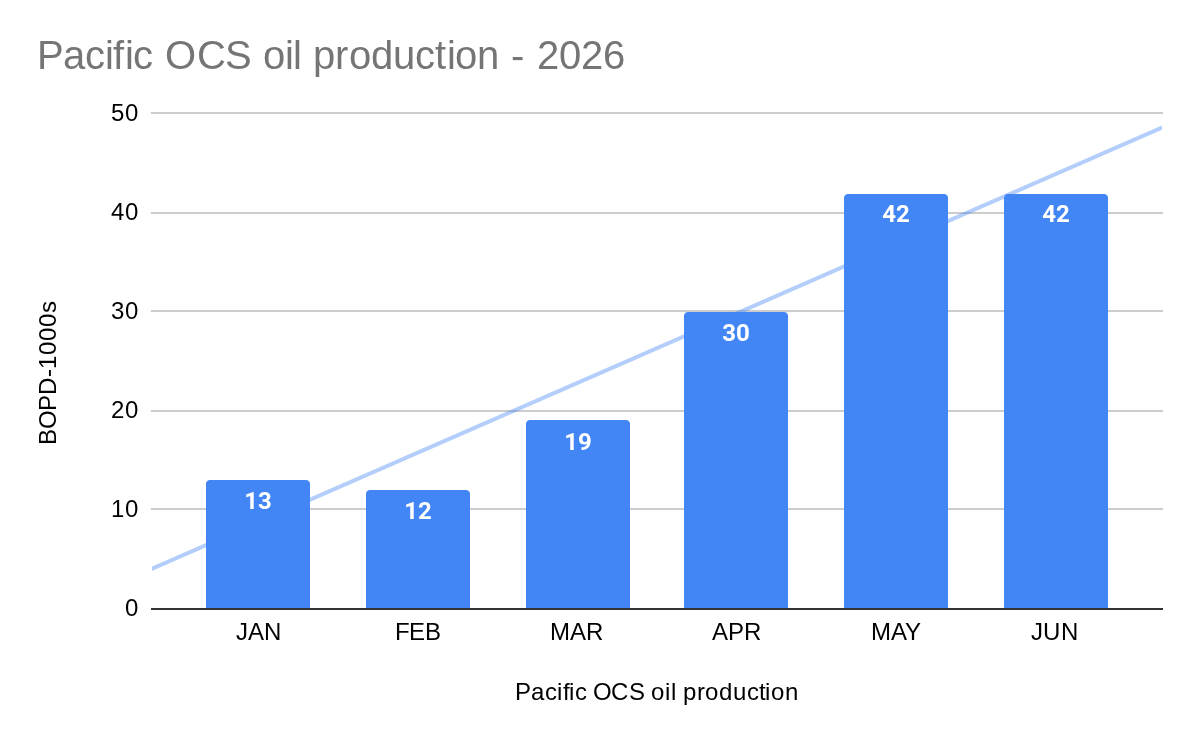
EIA explains (sort of) the delay in their June data release (only 2 days late, but enough to trigger a few conspiracy theories).
‘
Posted in energy policy, Gulf of Mexico, Offshore Energy - General, tagged BBG3, bp, Chevron, Deepwater, Equinor, LLOG, Murphy Oil, OCS lease sale, Oxy, Red Willow, Shell, Woodside on August 20, 2026| Leave a Comment »
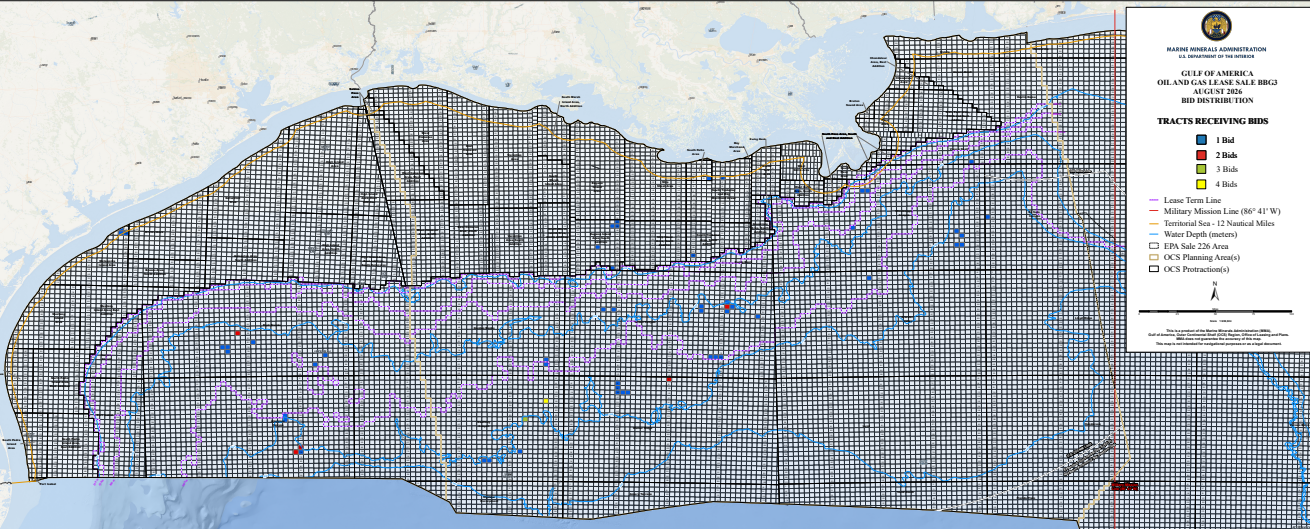
Gulfwide, Chevron was high bidder for 9 of the 10 blocks they sought vs. 6 of 9 for Oxy, 5 of 8 for Shell, 5 of 6 for BP, and 5 of 5 for Equinor.
US supermajors and historically important Gulf producers, Exxon Mobil and ConocoPhillips, were no-shows once again.
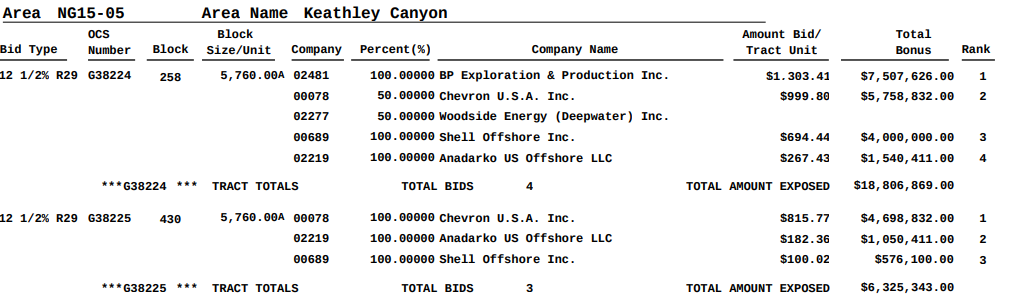
Bidding was spirited among the “big dogs” for KC Block 258, with BP taking the prize (assuming their $7.5 million bid is accepted). Chevron rebounded by taking KC 430, outbidding Oxy and Shell. (See below)
Among the large independents, LLOG batted 8 for 8, Murphy 6 for 8 (including the sale’s highest bid of $7.7 million), Talos 2 for 2, and Woodside 1 for 2. Our favorite tribal corporation, Red Willow Offshore (Southern Ute Tribe), partnered with LLOG, Navitas, Houston Energy, and CL&F Offshore on the high bid for Atwater Valley Block 63.
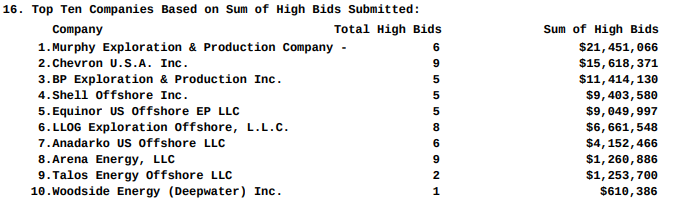
Murphy was the top $$$ bidder among all participating companies (see below). In 2025, Murphy was the Gulf’s 5th leading oil producer, trailing only Shell, BP, Chevron, and Oxy.
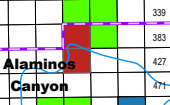
The sale’s highest bid ($7.7 million) was for Alaminos Canyon Block 380. The block was previously leased to LLOG, and exploratory drilling was conducted in 2019. LLOG’s lease expired on 12/20/2025, and complete well data were released on 4/24/2026. Murphy must have liked what they saw.
The absence of other bidders for AC 380 reminds us that interpretations and strategies differ. Murphy has had a pretty good track record in the Gulf. We’ll see what happens.
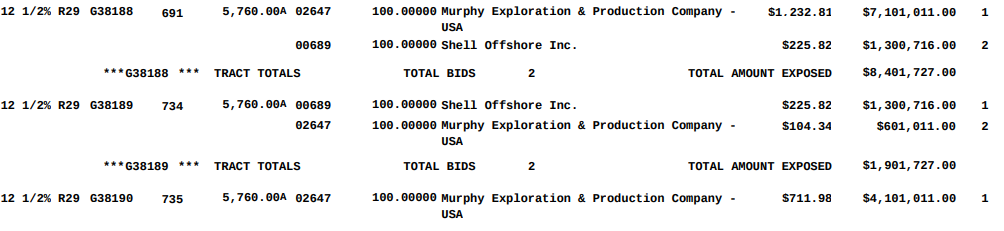
Murphy and Shell valued and competed for 2 other Alaminos Canyon blocks as the summary below indicates, and Murphy was the lone bidder ($4.1 million) for another.

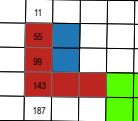
“L” for the “W”? All 5 of Equinor’s high bids (red) formed an “L” in the Walker Ridge area. Equinor was the lone bidder for each (see below). Existing blocks WR 56 and 100 (blue) are Equinor leases. Prior lessee Anadarko drilled on block 143 in 2014

We’ll see how this all worked out in about 10-20 years! 😀
Posted in decommissioning, energy policy, Gulf of Mexico, Offshore Energy - General, Regulation, tagged Arena Energy, BBG3, Gulf of America, lease sale, oil and gas, Renaissance Offshore, shelf on August 17, 2026| Leave a Comment »
Led by Arena’s 9 high bids, shelf operators made a strong showing at Sale BBG3. As illustrated below, the acquiring companies see good opportunities in or near old fields. The BBG3 leases are colored red.
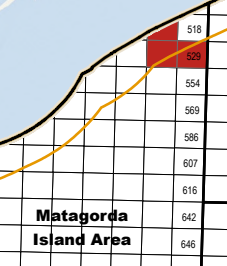
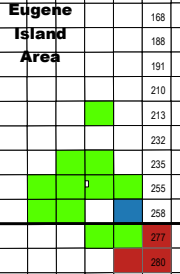
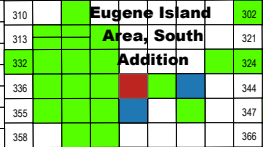
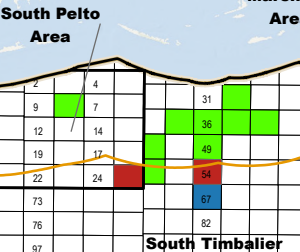
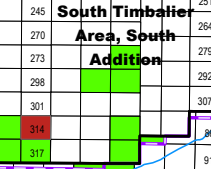
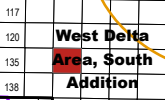
Listed in the table below are the shelf blocks receiving bids. According to Marine Minerals Administration (MMA) online data, wells have been drilled on all 12 blocks and production structures were installed on 7.
According to the online structures file, 5 platforms remain on 2 of the blocks. Production and quarters platforms installed by Exxon in 1982 and 1987 remain on ST 54 along with a caisson structure installed by Walter in 2007. Production platforms installed by GOM Shelf (1966) and Arena (2005) remain on WD 133.
Per the borehole file, 3 of the WD 133 wells have not been plugged. These wells were drilled by Arena and are on the F platform, which is one of the two WD 133 platforms that have not been decommissioned.
Also noteworthy, one well that bottoms on ST 314 has not been plugged. That well was drilled by Renaissance from ST 317, which was reacquired by Renaissance at Sale BBG2. The well ceased production in 2019, but the platform from which it was drilled remains in place on the reacquired lease.
Reuse options and decommissioning obligations for the remaining wells and platforms on leases reissued following BBG3 are no doubt topics for discussion between MMA and the operators.
| Block | high bidder | platforms removed | platforms remaining | wells drilled on lease | completed/ unplugged wells |
| EI 277 | Arena | 2 | 0 | 14 | 0 |
| EI 280 | Arena | 1 | 0 | 2 | 0 |
| EI 281 | Arena | 2 | 0 | 8 | 0 |
| EI 340 | Arena | 0 | 0 | 3 | 0 |
| EI 389 | W&T | 0 | 0 | 3 | 0 |
| ST 54 | Arena | 5 | 3 | 69 | 8 |
| ST 314 | Renaissance | 0 | 0 | 8 | 1 |
| PL 25 | Arena | 5 | 0 | 28 | 0 |
| WD 133 | Renaissance | 1 | 2 | 63 | 3 |
| MI 519 | Arena | 2 | 0 | 3 | 0 |
| MI 528 | Arena | 0 | 0 | 2 | 0 |
| MI 529 | Arena | 0 | 0 | 1 | 0 |

