Feeds:
Posts
Comments

Posts Tagged ‘onshore leasing’

The Federal onshore oil and gas program was always secondary to the offshore program, at least in the opinion of those of us who worked in the offshore program 😉. That was before the shale era revolutionized US energy production.

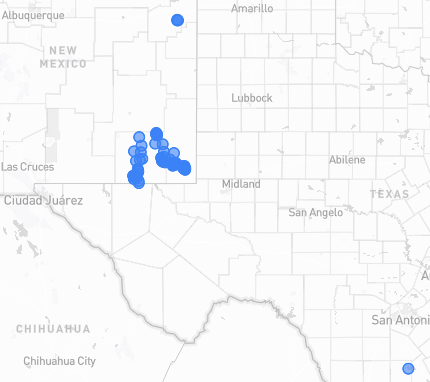
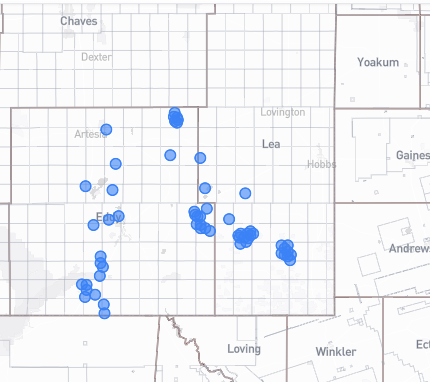
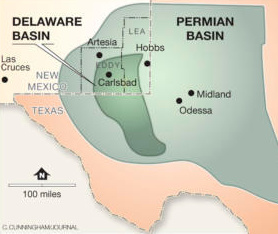
The onshore program is now free to flex 💪 following recent sale results, most notably last week’s impressive BLM New Mexico sale that featured the Delaware Basin. See the attachment for details.

The table below compares the last two Big Beautiful Gulf sales and the record 2008 Gulf of Mexico sale with the BLM NM sale. Most astonishing is the record $357,129 per acre bid for a single NM tract. Devon Energy, which exited the Gulf in 2010, was the mega-bidder acquiring 24 tracts for $2.6 billion! (Devon is still bogged down in the Hogan/Houchin decommissioning dispute in the Pacific, a case which should temper enthusiasm for relaxed lease assignment and financial assurance policies.)

The attractiveness of the Permian, Delaware, and similar onshore basins has been greatly enhanced by vastly improved drilling and well completion technology. The short lead times to first production are a big advantage relative to offshore development.

The total high bids for Gulf Sale 206, which dwarfed the BBG1 and 2 sales, are still a Federal oil and gas leasing record when converted to 2026 dollars, but the sale area was much larger than for the NM sale.

Saledatetracts bid onacres bid ontotal high bidshighest bid/acre
BLM NM5/20/20267433,529$4,007,609,288$357,129
BBG2 3/11/202625140,753$46,976,423$3,647.57
BBG1 12/10/20251811,023,526$300,425,222$3,227.79
2067/21/20086153,323,047$3,677,688,245
($5.7 million in
2026 dollars)
$18,333.47
($28,300 in 2026 dollars)
The royalty rate on Sale 206 leases is 18.75%, versus 12.5% for the other 3 sales.

Read Full Post »

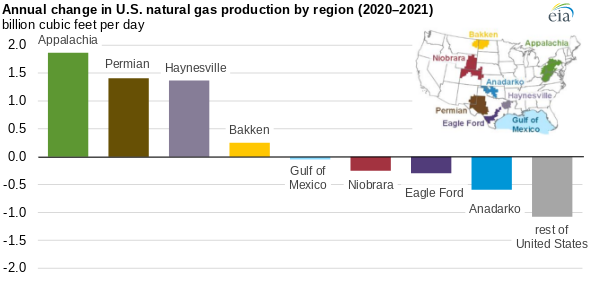
The administration has taken steps toward a resumption of leasing on Federal onshore lands, which account for only 7% of domestically produced oil and 8% of our natural gas. While this is a positive step, our economy is largely being driven by production on private lands, absent which we would have a serious supply crunch. This new EIA graphic illustrates where the growth in natural gas production has been, and most of that growth has been on private land.

The growth in US oil production has been largely dependent on the Permian Basin:

Industry leaders have raised concerns about the extent to which Permian production can continue to grow and the country’s over-reliance on shale production.

There are no private offshore lands, and the future of US offshore production is almost entirely in the hands of the Federal government. It has now been 525 days since the last offshore lease sale. The Administration chose not to appeal the DC Federal Court decision vacating Sale 257, leaving that to the State of Louisiana and API (parties that actually support offshore oil and gas leasing).

It’s disappointing that the reasoning behind the judge’s Sale 257 decision has received so little attention, especially given that it hinged on BOEM not analyzing the benefit of high oil prices. (i.e. <leasing = <production = >prices = <intl consumption = < CO2) The decision was issued as Russian troops were amassing on the Ukraine border only 28 days before the invasion. Oil prices (WTI) had already reached $87/bbl and would soon spike to $120/bbl, so the decision embracing higher oil prices was (at best) bad timing. Keep in mind that this was not a matter of BOEM failing to consider GHG issues; BOEM had conducted those assessments. The judge’s decision was specific to BOEM not analyzing the GHG benefits of reduced foreign consumption as a result of the higher prices associated with reduced leasing.

Meanwhile, The 5 year program, without which offshore leasing cannot proceed, expires in June. Fellow Democrats Manchin and Kelly sent a letter to the President on 31 March urging the Administration to develop and implement a new 5 year program without delay. There is no online evidence of a response. Presumably, the 5 year program issue will be addressed in the bipartisan energy legislation that Senator Manchin is drafting.

Read Full Post »