The subject Regulatory Agenda is attached. The proposed update to decommissioning requirements (abstract below) should attract attention! I would assume that, in addition to meeting Coast Guard requirements, a toppled structure would have to be accepted into a State reefing program. Otherwise the liability risks would be unacceptably high.
REVISIONS TO DECOMMISSIONING REQUIREMENTS ON THE OCS Legal Authority: Outer Continental Shelf Lands Act, 43 U.S.C. 1331 to 1356a Relevant Executive Orders: 14154 Abstract: This rule proposes to set ‘‘topple in place’’ as the default decommissioning standard, on the condition that such circumstances meet U.S. Coast Guard navigational requirements. This proposed rule would also address issues that may include to (1) idle iron by adding a definition of this term to clarify that it applies to idle wells and structures on active leases; (2) abandonment in place of subsea infrastructure by adding regulations addressing when BSEE may approve decommissioning-in-place instead of removal of certain subsea equipment; (3) BSEE approval for platform or facility toppling in place; and (4) other operational considerations. Timetable: Action Date FR Cite NPRM ……………… 07/00/27 NPRM Comment Period End. 10/00/27
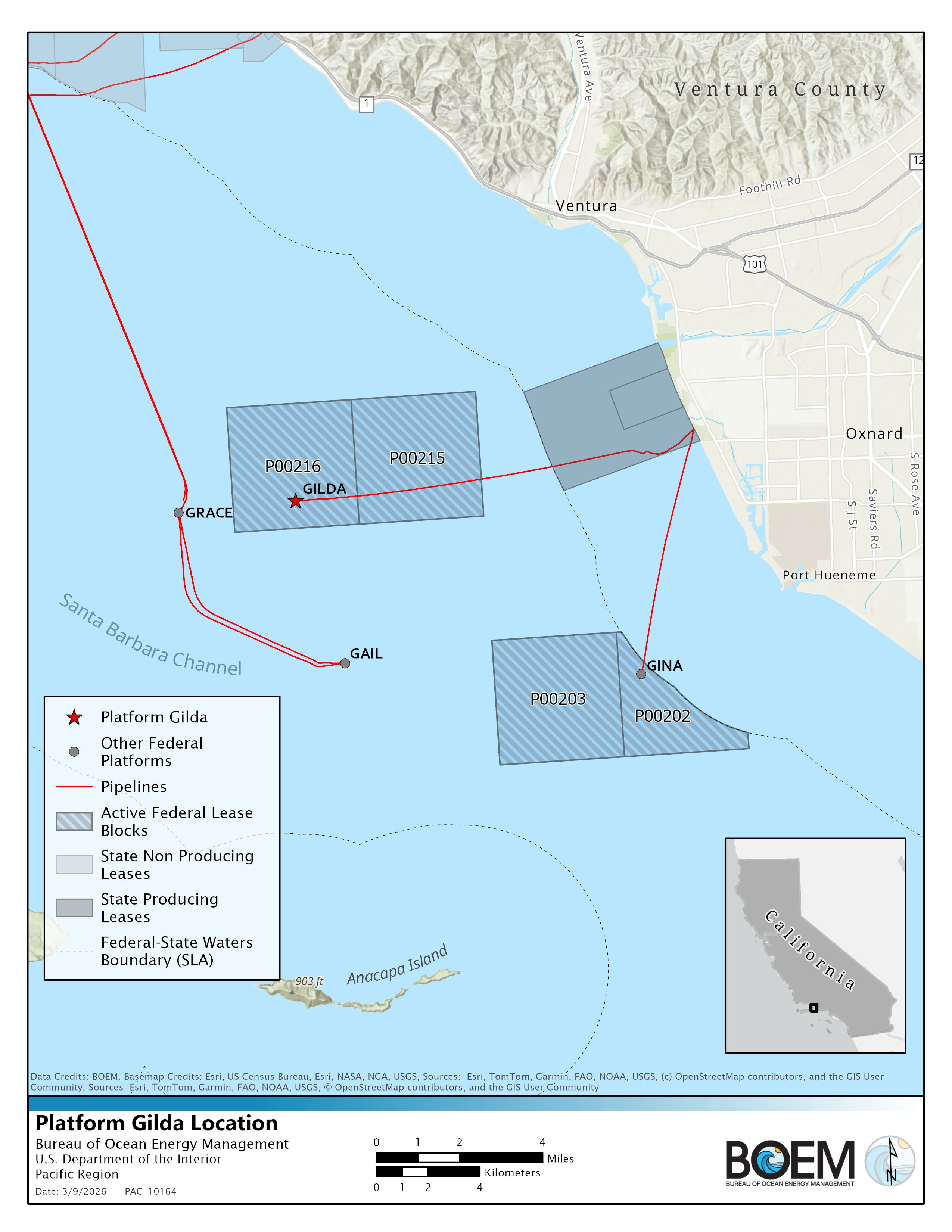
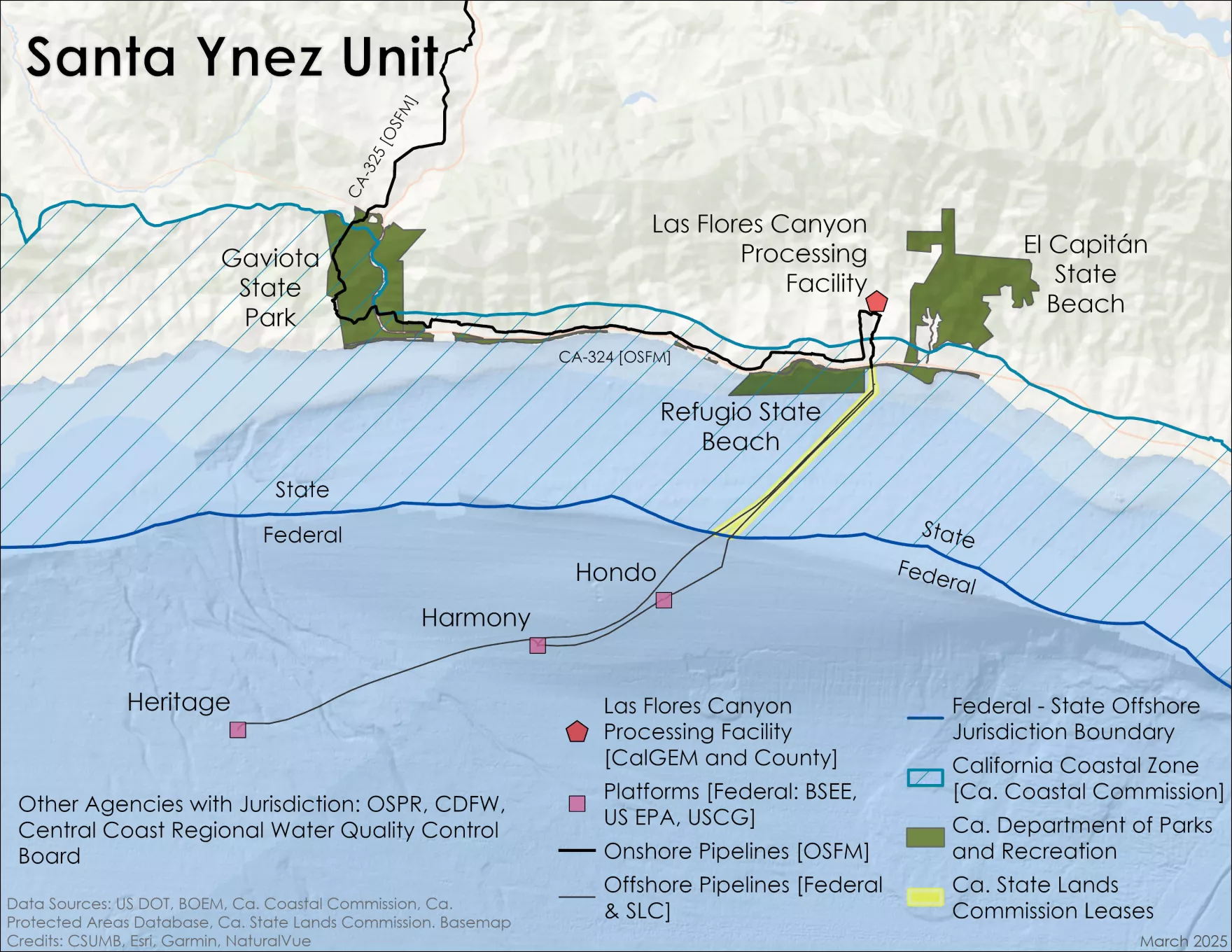
Despite favorable environmental reviews from both the Obama and Trump Administrations, the California Coastal Commission, empowered by the Courts, voted last week to prohibit the resumption of hydraulic well stimulation at DCOR’s Platform Gilda (map above).
Of course, as is always the case offshore California, the regulatory and legal battles will continue. The Secretary of Commerce may choose to overrule the CCC, in which case further litigation is certain.
This dispute comes at a time when the CCC, which operates with extraordinary autonomy, is undergoing a performance review by Commerce. Needless to say, the Commission and its supporters are not thrilled with the oversight.
In light of the spotlight on “offshore fracking,” I wanted to draw attention to a 2019 National Academies workshop that considered this very issue. I had the opportunity to participate in this workshop and was impressed by the input from industry and govt representatives.
Key points from the workshop:
If wells are not completed effectively, the value of drilling is negated, and it is impossible to deliver the oil or gas production needed to make the wells economically sustainable.
The frac pack (as is proposed for Platform Gilda) is one of the most commonly used completion techniques worldwide.
A gravel pack uses sieved sand as a filter to prevent formation sand from entering the wellbore, while the frac pack combines the gravel pack with hydraulic fracturing to create wide fractures filled with sieved sand that aid in connecting the reservoir to the wellbore.
Frac packs can create 50- to 250-foot fractures to stimulate production in a well.
Well stimulation offshore, which has been in practice for decades, has far less negative impact potential than well stimulation onshore.
Hydraulic fracturing minimizes the number of wells needed to develop a reservoir with the result being less environmental impact potential. This completion technique allows for the development of natural resources not previously considered commercially viable.
Offshore California, oil and gas formations typically have low permeability, and production is dependent on natural fractures. The objective is to enhance the flow of oil and gas from the tight matrix pores into the fractures.
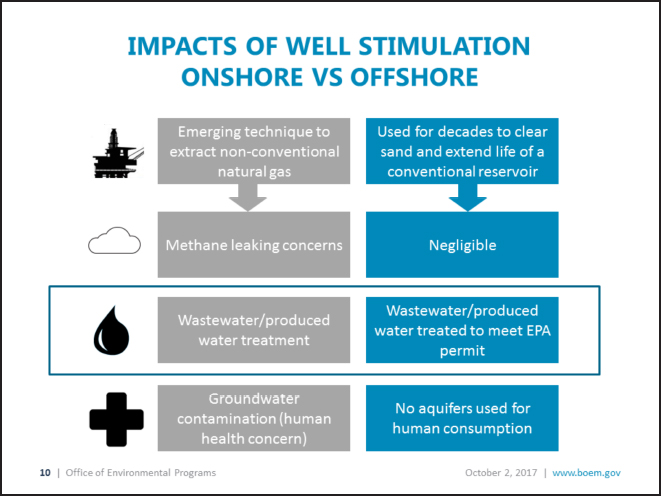
The workshop graphic below highlights the differences in well stimulation risks onshore vs. offshore. The graphic is a bit unfair in that the onshore risks are being effectively mitigated. The main point is that much of the onshore risk potential doesn’t exist for offshore well stimulation.
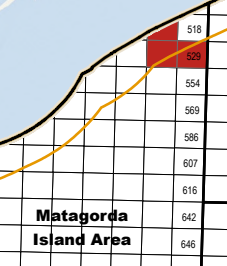
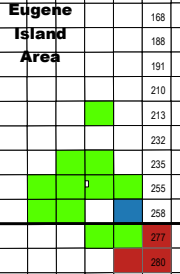
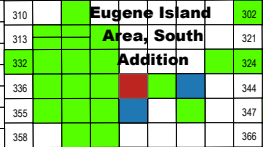
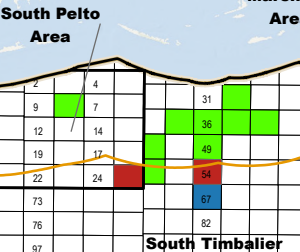
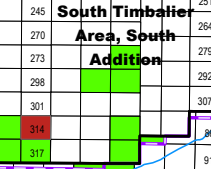
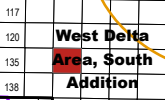
Led by Arena’s 9 high bids, shelf operators made a strong showing at Sale BBG3. As illustrated below, the acquiring companies see good opportunities in or near old fields. The BBG3 leases are colored red.
Arena bid on MI 519, 528, and 529. MI 519 produced 152 bcf of gas and 336,536 bbls of condensate between 1988 and 2012..Arena bid on EI 277, 280, and 281, blocks that produced 8.3 million bbls and 39.2 bcf between 1990 and 2016.Since 1973, 24 million bbls and 53 bcf have been produced in EI 339 where Arena drilled 62 wells. They no doubt had good reasons for bidding on adjacent block EI 340.3.2 million bbls and 18.7 bcf were produced in PL 25 between 1997 and 2016. 27 million bbls and 56.3 bcf were produced between 1955 and 2024 in ST 54. Arena bid on both blocks at Sale BBG3.Renaissance bid on ST 314, which had minor production between 2015 and 2019. Renaissance acquired block 317 at Sale BBG2.Renaissance bid on WD 133, where 12 million bbls of oil and 31 BCF were produced between 1966 and 2023. Five companies, including Arena, had drilled 63 wells on the block.
Listed in the table below are the shelf blocks receiving bids. According to Marine Minerals Administration (MMA) online data, wells have been drilled on all 12 blocks and production structures were installed on 7.
According to the online structures file, 5 platforms remain on 2 of the blocks. Production and quarters platforms installed by Exxon in 1982 and 1987 remain on ST 54 along with a caisson structure installed by Walter in 2007. Production platforms installed by GOM Shelf (1966) and Arena (2005) remain on WD 133.
Per the borehole file, 3 of the WD 133 wells have not been plugged. These wells were drilled by Arena and are on the F platform, which is one of the two WD 133 platforms that have not been decommissioned.
Also noteworthy, one well that bottoms on ST 314 has not been plugged. That well was drilled by Renaissance from ST 317, which was reacquired by Renaissance at Sale BBG2. The well ceased production in 2019, but the platform from which it was drilled remains in place on the reacquired lease.
Reuse options and decommissioning obligations for the remaining wells and platforms on leases reissued following BBG3 are no doubt topics for discussion between MMA and the operators.
This article provides information on the history of OCS Lease P-0166 and updates the decommissioning status of California OCS Platforms Hogan and Houchin which are in federal waters offshore Santa Barbara County, California. Listed below are key events in the history of the OCS Lease P-0166. More details are provided in the attachment which was prepared by John Smith who before retiring from BOEM in 2017 was actively involved in the long-running supplemental bond dispute between MMS/BOEM and Signal Hill Services, Inc., which began shortly after MMS approved the assignment of OCS Lease (P-0166) held by Phillps Petroleum Corporation (now ConocoPhillips Corp.) and two other companies to Signal Hill Services Inc. (Signal) in 1991.
Year/Month
Lease Activity
1967
U.S. Bureau of Land Management grants OCS Lease P-0166 to Phillips Petroleum Corp., Continental Oil Company, and Cities Service Company.
1967 – 1968
Hogan and Houchin platforms are installed.
1967 – 2010
75 wells were drilled from the platforms, the majority in 1967-1968 and 1970s.
February 1991
MMS approves assignment of the lease to Signal.
September 2019
Production is terminated at platforms.
October 2020
Signal relinquishes the lease to BOEM.
November 2020
BSEE orders ConocoPhillips Corp. (COP) and other predecessor lessees to decommission the Hogan and Houchin platforms.
January 2021
COP and other predecessor lessees file an appeal with IBLA contesting BSEE/BOEM determination they held decommissioning obligations.
February 2021
IBLA grants approval of Partial Stay Agreement between BSEE/BOEM and appellants to maintain and monitor the platforms.
November 2024
Signal files for bankruptcy under Chapter 7 of the U.S. Bankruptcy Code.
2021 – 2026
Monitoring, maintenance and major refurbishment of the platforms are ongoing to support safety of offshore personnel involved in well plugging and abandonment operations.
Since OCS lease P-0166 was relinquished in 2020, removal of Hogan/Houchin platforms has been stalled by a prolonged dispute over decommissioning obligations between BSEE/BOEM and predecessor OCS lessees (ConocoPhillips Corp., OXY USA Inc., Devon Energy Resources Inc.). The IBLA case has now been ongoing for more than 5 years and has the potential to set a precedent based on the arguments of the appellants who assert:
They had no accrued decommissioning obligations at the time of the 1991 assignment of the lease because pursuant to their 1961 OCS lease agreement decommissioning obligations did not accrue until the lease was relinquished, which occurred in 2020 when Signal quitclaimed the lease to BOEM.
The OCS rules changes promulgated in 1997, which stated a lessee’s decommissioning obligation “accrues to the lessee when a well is drilled, the platform or other facility is installed, or the obstruction is created.” (30 CFR 250.110), cannot be applied retroactively.
The 1961 OCS lease did not include a term by which the lessee agrees to be bound by “future” OCS regulations, which later became a standard provision in OCS lease agreements.
The IBLA case is very concerning because there is currently no financial security available to cover the costs of decommissioning the Hogan and Houchin platforms which were very conservatively estimated by BSEE to total $85 million in 2020. If the IBLA or judicial courts eventually rule COP and former lease owners did not accrue decommissioning obligations, either in whole or in part, the federal government and American taxpayers will be responsible for covering the unfunded decommissioning obligations.
Notes: The Gulf keeps on rollin’ – this was the 137th Gulf lease sale. Congrats to Bryan Domangue on being named Gulf of America Regional Director for the Marine Minerals Administration!The WWII Museum in New Orleans was a nice venue for the sale.
The table below compares the pre-sale stats for BBG3 with those for BBG1 and 2. The number of BBG3 bids, while well below BBG1, which was the first sale in 2 years, bounced nicely from BBG2 levels.
An average of approximately 39 wells were online throughout the month of June 2026, representing a 50% increase over approximately 26 wells online on average in April 2026.
In July 2026, an average of approximately 47 wells at Platforms Harmony and Heritage were online, producing an average of approximately 721 gross barrels of oil per day per well. Sable expects to bring all 77 production wells on these two platforms online during the third quarter of 2026 and expects Platform Hondo to come online in September 2026.
Wireline campaign for Perforation Additions (“Perf Adds”) and producing well optimization at Platform Harmony commenced in August 2026.
Five completed Perf Adds forecasted to produce an incremental 600 estimated gross barrels of oil per day, each, are expected to come online at Platform Hondo along with the restart of the platform in September 2026.
An additional four Perf Adds at Platform Hondo forecasted to produce an incremental estimated 600 gross barrels of oil per day are planned for completion and to be brought online in early Q4 2026.
Sales
July 2026 preliminary oil sales estimate of approximately 38,000 gross barrels of oil per day. August 2026 oil sales average to date is approximately 42,000 gross barrels of oil per day through August 9th.
Due to the California regulatory environment, local refineries were not able to plan in advance for SYU first sales and ultimately were forced to displace various imported cargos in the second quarter. As a result, Sable incurred $18.5 million of non-recurring demurrage charges throughout the quarter, recognized in operational expenses.
The sudden supply influx of Pacific Outer Continental Shelf (“Pacific OCS”) crude has forced refiners to temporarily limit throughput of Pacific OCS crude and charge quality deducts for sulfur content and other items.
Starting in July 2026, Sable was temporarily constrained to a maximum of 40,000 average gross barrels of oil per day of oil sales throughput by downstream partners. We expect this short-term constraint to be alleviated starting in the back half of August.
California refineries are expected to adjust their crude oil supply slate starting in September 2026 to begin accepting more Pacific OCS barrels from the SYU and less imported barrels, alleviating the SYU throughput constraint altogether.
Sable is also in active negotiations to implement waterborne crude oil marketing solutions from existing marine terminals in the Los Angeles area in the near-term in order to improve marketing optionality.
Additionally, the pending acquisition of the Crimson Utilities (San Pablo Bay Pipeline) pipeline network by a third party could provide further relief and marketing optionality to California oil producers with access to the San Francisco refinery market once that pipeline potentially restarts operations.
Barbados 2026 Offshore Petroleum Direct Negotiations process is underway. Nineteen blocks (yellow in map) are being offered. Direct negotiations for pre-qualified companies will continue through January 15, 2027, and awards will be announced by February 15.