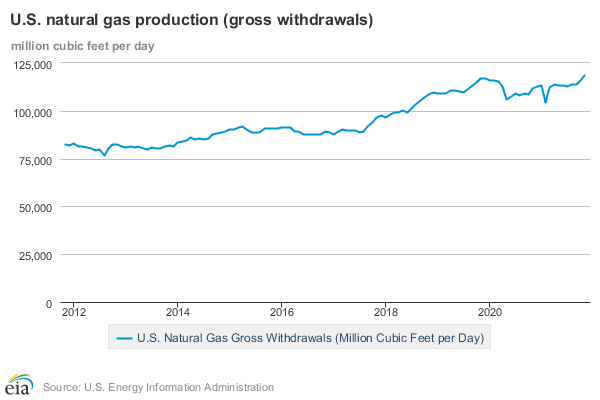
My home State (Commonwealth) of Pennsylvania is producing nearly 10 times as much natural gas as the US OCS (Federal offshore). Who would have dreamed this was possible 20 years ago? Among the states, PA is second to Texas in gas production.
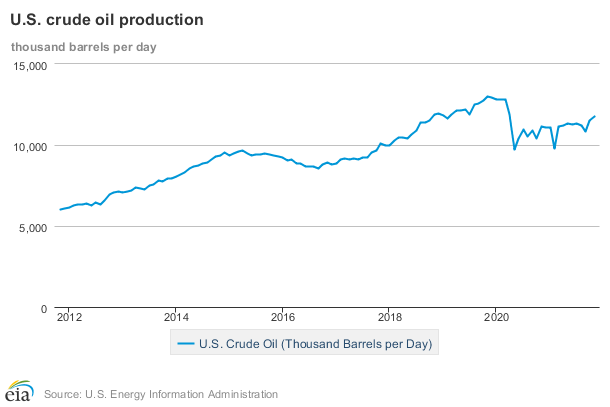
Oil production in Texas is now nearly 3 times as high as on the OCS. In 2010, US offshore production was substantially higher (567 million barrels vs. 427 million barrels).
Thanks largely to Texas, North Dakota, and New Mexico, US oil production is rebounding.
Thanks to TX, PA, LA, AK, WV, OK, NM, and OH, US gas production has also strengthened.
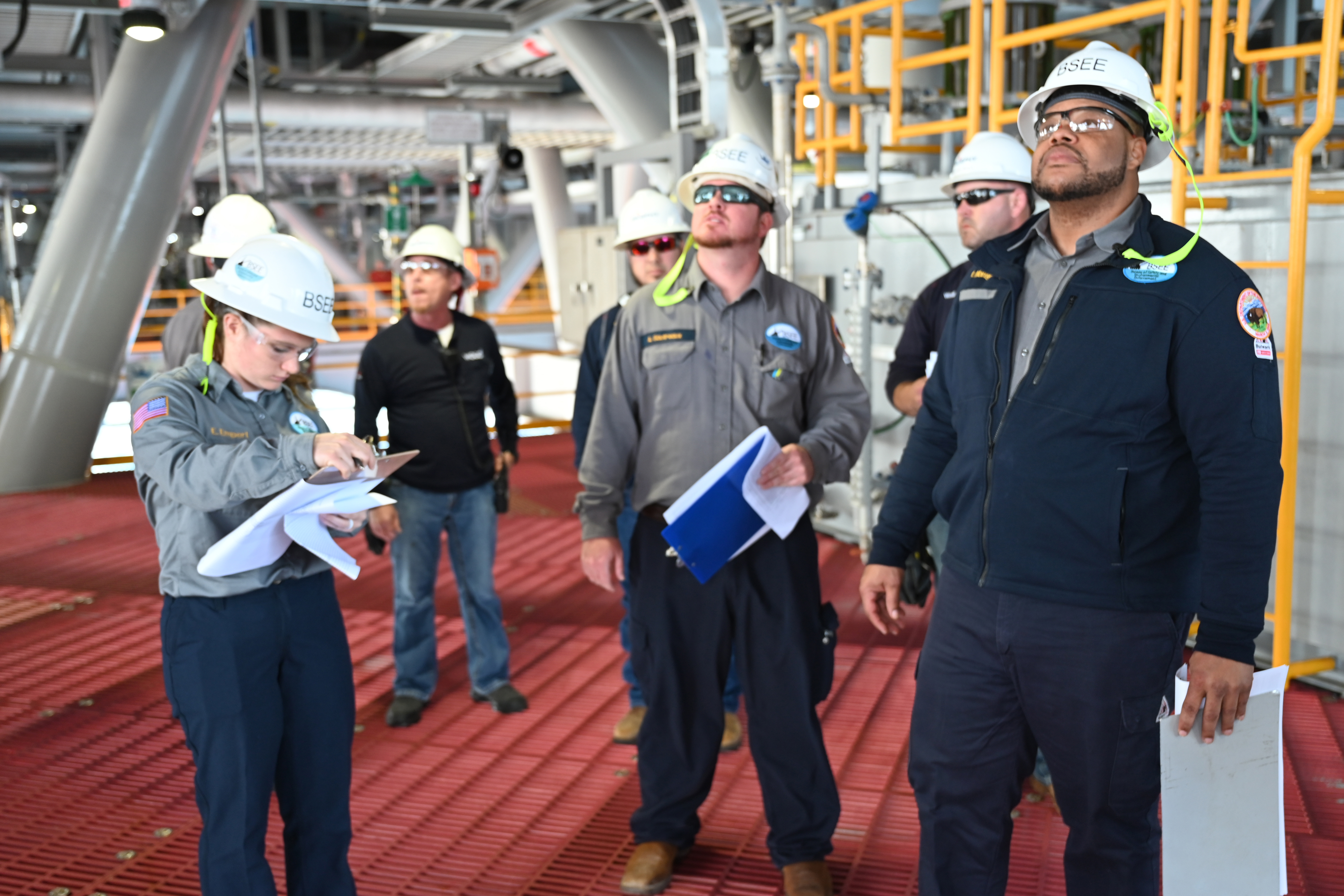
Pictured above are BSEE inspectors from the famed Houma District conducting one of their (always) thorough pre-production inspections at Murphy’s King’s Quay semisubmersible production platform in the Gulf of Mexico. [Trivia question: Who was the first Houma District Supervisor?]
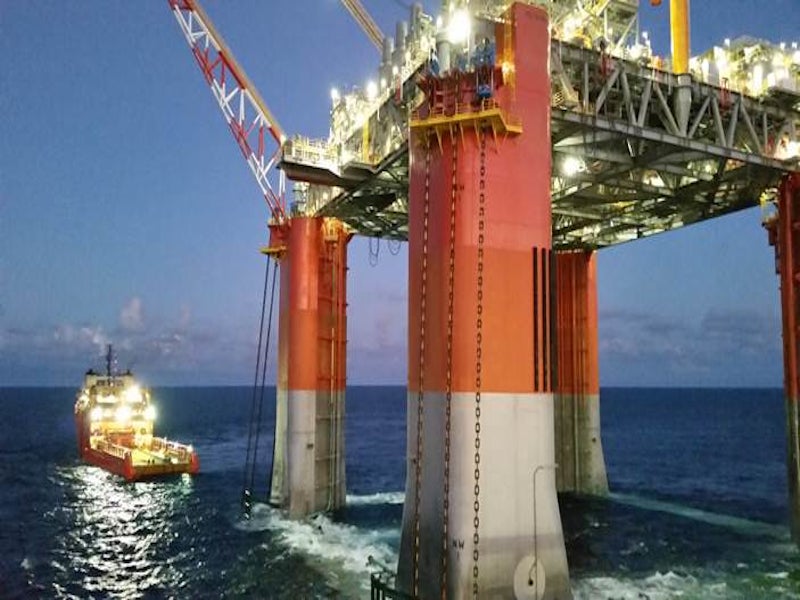
King’s Quay is one of six deepwater platforms expected to begin production in the Gulf over the next several years. Others include Shell’s Vito and Whale, BP’s Argos, Chevron’s Anchor, and Beacon’s Shenadoah. All are semisubmersible platforms, the current design of choice for the deepwater Gulf. Production semis have become smaller and more efficient, greatly improving the economics of deepwater projects.
These platforms feature efficient gas turbines and compression systems that should increase the GHG intensity advantage of deepwater Gulf production.
These are the first deepwater production structures to be installed in the Gulf since Shell’s Appomattox in 2018. Per our previous post on this topic, current GoM production rates are not sustainable without regular, predictable lease sales and increased exploration.
The number of GoM platforms is down 75% from its peak and continuing to decline.
Most new production is in the deepwater GoM and is accomplished with very few, remote and widely dispersed facilities. There are currently only 57 deepwater platforms across the entire Gulf.
The wind industry appreciates the synergy between offshore oil and gas and offshore wind operations. Indeed the oil industry has been very supportive of offshore wind, and some of the same operating companies and contractors are major players in both industries.
t has been 17 years since the enabling legislation was passed, yet we are still awaiting the first commercial wind project in the US Atlantic. You can’t blame the oil and gas industry for that delay. To the contrary, one can make the case that the presence of oil and gas operations would have accelerated Atlantic wind development.
The enabling legislation for offshore wind was drafted by the agency that managed the offshore oil and gas program and recognized the compatibility of oil and wind development. Wind development is clearly a high priority for BOEM, the current OCS land manager.
Will the Administration appeal the court decision to vacate the lease sale or does the decision assist them by reinstating their leasing pause? How will the conflict between the DC court decision and the injunction invalidating the leasing pause (Federal Court for the Western District of Louisiana) be resolved?
What does this mean for the 94 leases that were to have been acquired for carbon sequestration purposes? Will BOEM have a proper CCS sale after conducting an environmental assessment, determining bidding terms and evaluation criteria, and publishing a Notice of Sale? Or will there be a legislative end run that authorizes the issuance of the leases without these steps?
Our last GoM update predicted November oil production of 1.8 million BOPD. The EIA figure released yesterday came in slightly less than that at 1.795 million BOPD.
BOEM had correctly determined that, from a GHG standpoint, US offshore production was preferable to more carbon intensive foreign production.
The plaintiffs, who are seemingly intent on stopping all oil and gas production regardless of the economic consequences, argued that BOEM failed to consider the “positive” effect that higher prices (the logical result of lower production) would have on reducing demand.
In particular, the plaintiffs asserted that BOEM failed to consider the effect that reduced production (and higher prices) would have on foreign consumption and the associated GHG emissions.
The judge not only decided in favor of the plaintiffs, but ruled that BOEM’s omission was so serious that the lease sale had to be vacated.
The judge reached this decision even though (1) the five year leasing plan expires in June leaving the timing of any future sale very much in doubt and (2) all of the sale 257 bids are now public information compromising the integrity of the leasing process at the next sale (if and when that occurs).
So, if BOEM has to consider the environmental benefits of higher oil and gas prices, shouldn’t they also have to consider the negative economic and environmental effects from the resulting price inflation and energy poverty? Are higher prices, which are most detrimental to the poor and to developing nations, “energy justice?”
If your only objective is the destruction of the US offshore oil and gas program, this was a great decision. For everyone else, this is yet another reason to be concerned about our energy future.
The law suit makes reference to the aging offshore facilities and the Huntington Beach pipeline spill:
Oil companies have been drilling off California for more than 50 years. The first platforms were installed in 1968 and production continues today. Much of this infrastructure has outlived its expected lifespan and is well beyond the age scientists say significantly increase the risk of oil spills.
Indeed, just months ago a pipeline connected to a platform in federal waters off Huntington Beach ruptured and spilled tens of thousands of gallons of oil into the marine environment. The spill fouled sensitive marine, beach, and wetland habitat; forced closure of fisheries; and harmed and killed birds, fish, plants, invertebrates, and marine mammals.
The combination of high production of oil and gas from a total of 94 fields, significant demand and high commodity prices led to a historically high level on the State’s revenues from petroleum.
Production in 2021 came to 102 million standard cubic metres of oil (642 million barrels) and 113 billion standard cubic metres of gas. This corresponds to about four million barrels of oil equivalent per day, a minor increase from the previous year.
Norway wisely eased the petroleum tax burden during the pandemic with favorable results.
The temporary change in the petroleum tax has most likely led to an increase in project activity. The projects would most likely have been carried out even without the tax package, but some of them would have been postponed.
An aspect of Norwegian offshore policy that is confusing to this outside observer is the emphasis on transmitting electric power from shore to offshore platforms (see quote below). In most cases, offshore platforms produce sufficient gas to support their power demands. Should platforms be powered from shore, gas that is not used for platform operations would presumably be marketed for consumption elsewhere or reinjected. If the gas is marketed and consumed elsewhere, there is essentially no net (global) CO2 emissions reduction benefit. Gas that is reinjected is wasted unless there is an enhanced oil recovery benefit. So it would seem that importing electric power from shore would only make sense if the net reduction in offshore gas consumption increased ultimate oil production (which could be viewed as undesirable if you take carbon management to the extreme).
While production remains high, CO2 emissions are dropping. The most important reason for this is the use of power from shore. The objective is to cut emissions in half by 2030 compared with the level in 2005.
In a separate article, NPD notes that power from shore increases the cost of platform operations and will also lead to an increase in electricity prices in Norway. Given these considerations, the very small net global reduction in CO2 emissions seems costly.
Platform electrification no doubt helps Norway achieve domestic emission reduction commitments. However, from a global perspective, how important is it for a minor CO2 emitter like Norway to achieve further reductions? Also, isn’t it somewhat contradictory for a major oil and gas exporter to take such extreme measures to reduce the emissions associated with the production of these resources?
That’s right – a leasing plan with no leasing, a program that is about nothing.
Unfortunately for the proponents, this creative proposal would seem to have some significant legal obstacles, most notably its inconsistency with the statute and the legislative history. The idea was to have an organized approach to leasing, not to eliminate it. Per OCSLA:
The leasing program shall consist of a schedule of proposed lease sales indicating, as precisely as possible, the size, timing, and location of leasing activity which he determines will best meet national energy needs for the five-year period following its approval or reapproval.
How does zero leasing help meet national energy needs? Security? Price stability? Supply chain? Are these groups funded by OPEC+ members and nations that hate us the most? If not, they should be, because they are certainly doing their bidding.
As Daniel Yergin’s excellent Atlantic piece explained, the energy transition will take time and be enormously complex. He quoted French economist Jean Pisani-Ferry who warned that “going into overdrive on transitioning away from fossil fuels would lead to major economic shocks similar to the oil crises that rocked the global economy in the 1970s.”
Empty five year leasing programs are not an option for a diverse nation of 330+ million people that will continue to need oil and gas well into the future. We should and are adding new energy alternatives to the mix, and many of us were involved in developing the framework for these alternatives, but eliminating important sources of oil and gas at this time would be sheer folly.
While the Fieldwood Energy violations drove up the number of Incidents of Non-Compliance (INCs) in the Gulf of Mexico in 2021, most operating companies appear to have had good compliance records. Among companies that were subjected to at least 10 facility inspection and drilled at least one well, BHP Billiton, Eni US, and Murphy (listed alphabetically) had the most impressive compliance records. These three operators were cited for 7 or fewer INCs, none of which required a facility to be shut-in. Other operators that exceeded those activity thresholds and had excellent compliance records were (listed alphabetically) Anadarko, ANKOR Energy, Chevron, EnVen, Shell, and Walter Oil and Gas.
In the Pacific Region, Beta Operating Co., Chevron (now overseeing the former Signal Hill properties), and Exxon had excellent compliance records, although none of these facilities produced for the full year. In Alaska, Hillcorp had an excellent record at the Northstar Unit. (This is a gravel island facility in the State waters of the Beaufort Sea, but some of the wells produce from portions of the reservoir that are in the Federal sector).
Unfortunately, only summary inspection data are posted online. Without knowing the specific violations and circumstances, it’s not possible to fully assess the risk exposure. These oil and gas operations are conducted on public lands and are monitored by Federal employees. Inspection data and reports should be publicly accessible without having to submit Freedom of Information Act requests.
Recommendation 4.2.2: Because accident, incident, and inspection data all are needed to identify and understand safety risks and corrective actions, the committee recommends full transparency such that regulators make all these data readily available to the public in a timely way, taking into consideration applicable confidentiality requirements.



 Bud's Offshore Energy (BOE)