Feeds:
Posts
Comments

Posts Tagged ‘Gulf of Mexico’

The subject Nature Energy paper is helpful in that it contributes to the important dialogue on the financial aspects of offshore decommissioning. There have been numerous posts on that topic on this blog. The use of Federal funds to cover well abandonment expenses for OCS wells, although rather limited to date, is a major disappointment for those of us who have worked hard to prevent such an outcome.

The data in the paper appear to be reasonably accurate. However, there is one glaring error regarding Pacific operations, and the reference to the Macondo blowout in the environmental discussion is rather provocative and misleading.

Per the authors:

California wells are drilled in relatively shallow water—mostly less than 100 feet—while GoM wells can be in up to 10,000 feet of water.

California’s fault block shelf drops off very quickly, and deepwater drilling activity has been common for decades. Of the 23 platforms in Federal waters, only Platform Gina is in <100′ of water (95′). The other platforms are in water depths of 154 to 1178′. Six of the platforms are in >600′ of water and 2 are in >1000′. Platform Harmony (jacket pictured below) is one of the world’s largest and heaviest steel tower platforms. Relative to the numbers of facilities, the decommissioning challenges offshore California are more daunting and complex than those in the Gulf. This includes the financial liability aspects.
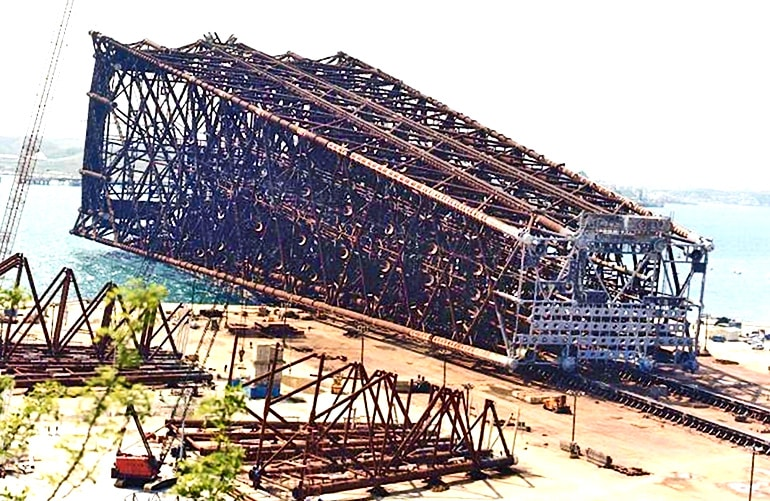
Jacket for Platform Harmony

With regard to the environmental risks, the Nature Energy paper’s reference to the Macondo blowout, while muted, is what some media outlets embraced. Per the authors:

Releases from improperly abandoned wells will probably be chronic and small compared with Macondo, but the underlying biochemical and ecological processes that influence the ecological impacts have many similarities.

The Macondo well blew out while it was being suspended in preparation for subsequent completion operations. Ill advised changes to the well suspension plan were among the primary contributing factors to the blowout (see diagram below). The Macondo well was entirely different from the depleted end-of-life wells that are the subject of the paper.

Some media outlets ran with the Macondo angle, weak as it was. This ABC news piece featured numerous Macondo pictures. Other outlets noted that Macondo was a temporarily abandoned well, which it was not. The Macondo well never got to that point.
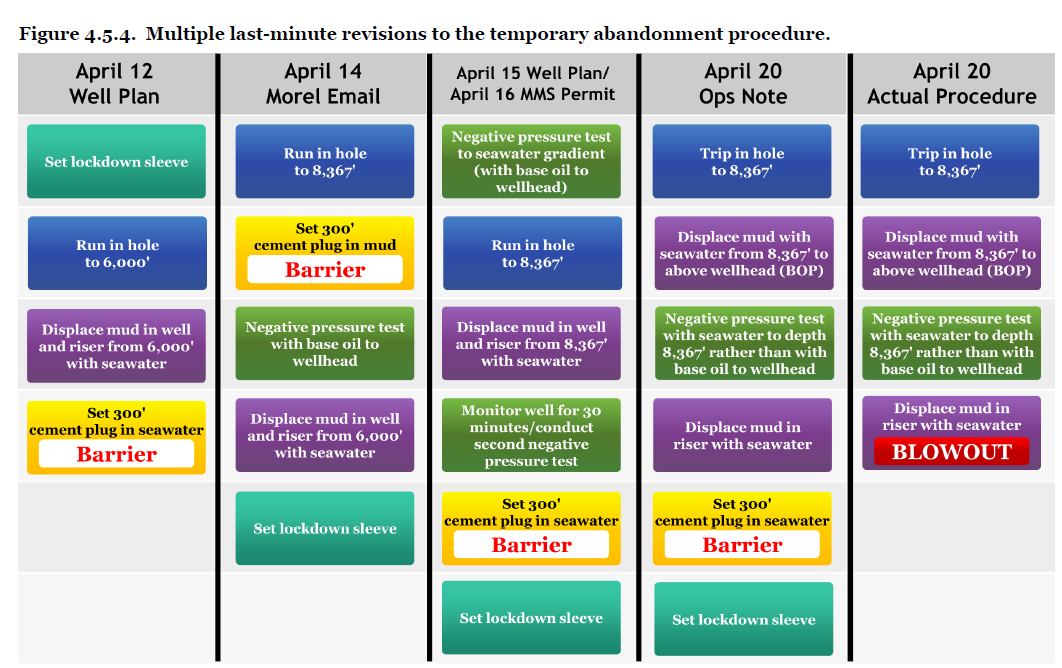
National Commission, Chief Counsel’s Report, p. 132
Read Full Post »

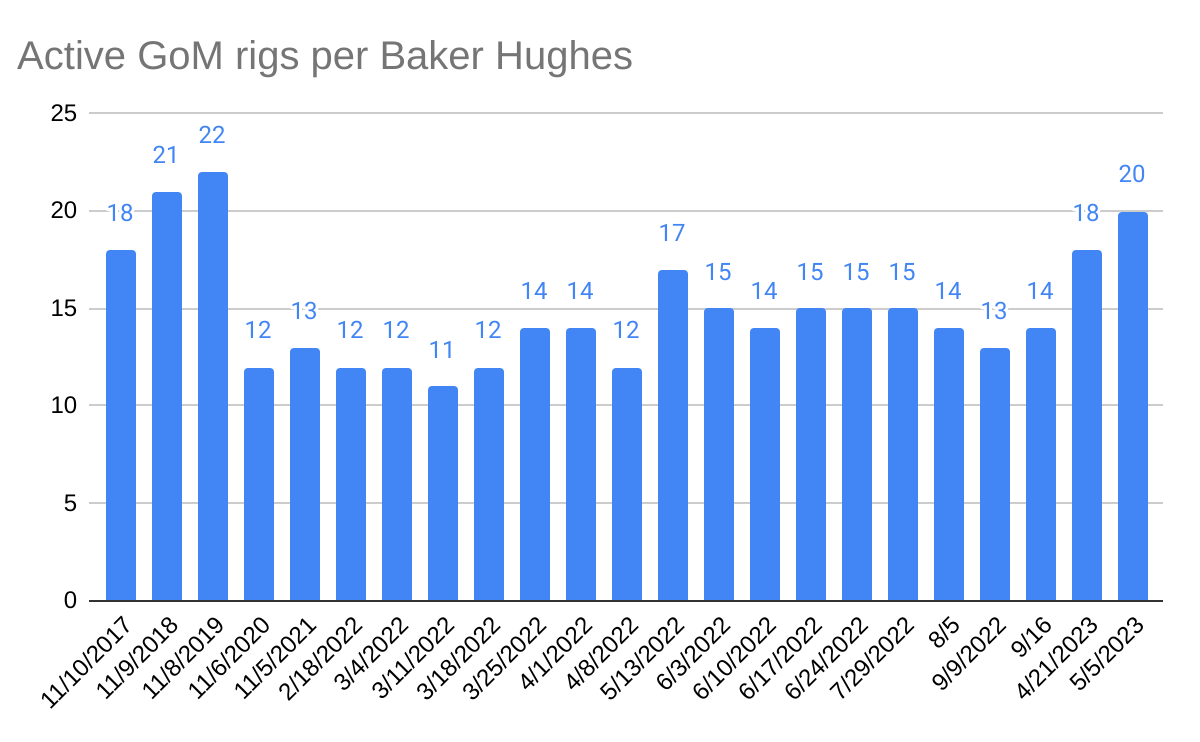
The Gulf rig count is up to 20, the highest since 2019, as the total US rig count falls by 7 to 748.

Read Full Post »

That would appear to be the case now that the US Court of Appeals for DC dismissed litigation challenging the sale.

Meanwhile, challenges to Cook Inlet Sale 258 (humble as it was with only one bid) and GoM Sale 259 continue. It’s a great country (if you like endless litigation)!

In addition to Lease Sale 257, the IRA also required Interior to offer three other lease sales in Alaska and the Gulf that it previously declined to hold. Lease Sale 258, in Alaska’s Cook Inlet, was held in December but received only one bid. Earthjustice is challenging that sale. Earthjustice is also challenging Lease Sale 259, in the Gulf of Mexico, which was held in March. Lease Sale 261, also in the Gulf, will be held by September of this year. 

EarthJustice

Read Full Post »

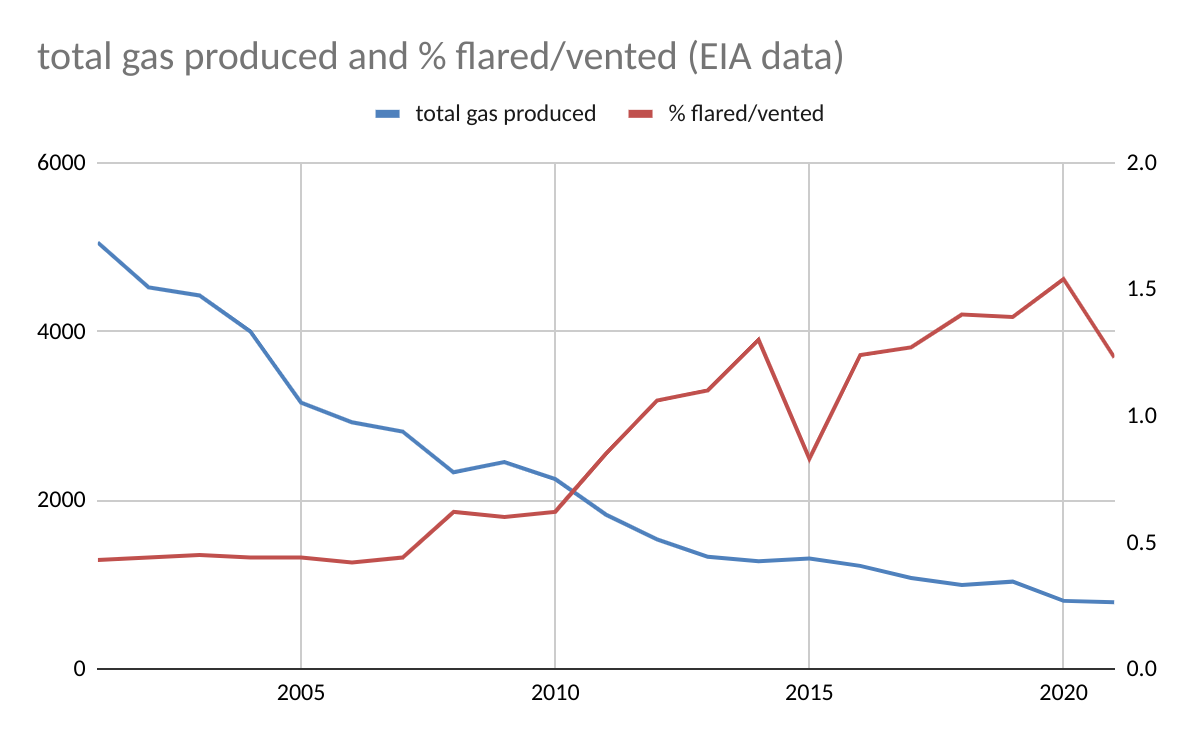
According to EIA data for 2001-2021, Gulf of Mexico flaring and venting volumes peaked in 2001 at 21.6 bcf, 2.25 times the volume flared or vented in 2022 (ONRR data for 2022). However, gas production in 2001 was 5.05 tcf, 6.4 times higher than in 2022. The % of the produced gas that was flared or vented in 2001 was thus 0.4%, less than 1/3 the 2022 rate of 1.22%.

Points to consider:

left axis: gas produced in millions of cubic feet; right axis: % flared or vented

Read Full Post »

From ONRR OGOR B data:

20212022
OWG flared59196987
OWG vented14051638
GWG flared311213
GWG vented548722
total flared and vented81839559
total gas prodution791,983784,238
% flared or vented1.031.22
OWG=oil well gas; GWG=gas well gas; all volumes are in MMCF

Observations:

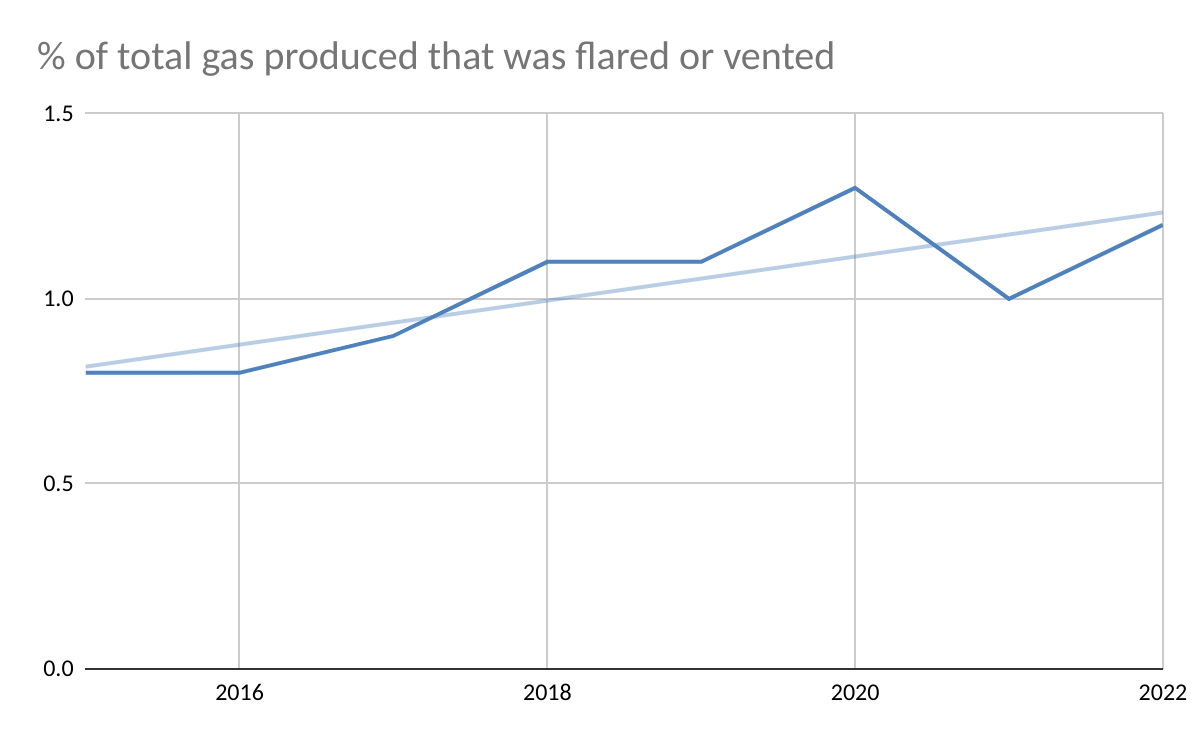
  • Of the 784 bcf produced, 9.6 bcf (1.2%) were either vented or flared (vs. 1.03% in 2021). With the exception of 2020 (1.3%), this is the highest % of gas flared/vented from 2015-2022.
  • The % of gas produced that is flared or vented is trending upward (first chart below).
  • Both the gas flaring and venting volumes were higher in 2022 (vs. 2021) despite lower gas production.
  • Assuming oil-well gas (OWG) production of 600 bcf (final 2022 volume not yet available), approximately 1.4% (8.6/600) of the OWG was flared or vented.
  • 2022 OWG flaring volume increased by 18% vs. 2022 despite nearly identical total oil production
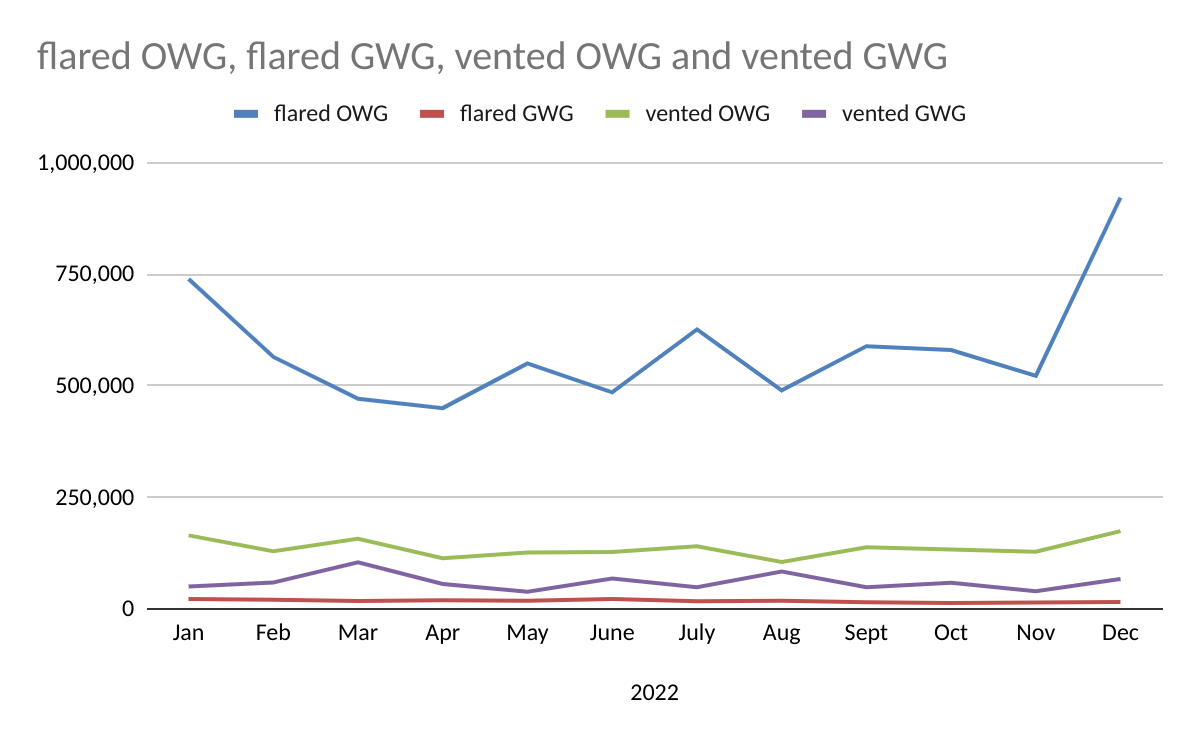
  • A very large increase in OWG flaring in December skewed the 2022 data (921 million cu ft vs 522 million in November, see 2nd chart below). OWG vented and gas-well gas (GWG) vented also spiked in December (third chart). Were these spikes associated with production startups, major compressor issues, administrative/accounting corrections, or other issues?
  • Although total venting increased by 407 million cu ft (21%) in 2023 vs. 2022, the overall venting trend is still favorable (last chart).
  • The previously noted inconsistencies in flaring data sets remain a concern.
  • Kudos to ONRR for posting the flaring/venting data.
  • More regulator/industry transparency on flaring episodes is needed, particularly in light of the PNAS paper and the June 2022 Inspector General Report.

related:

Read Full Post »

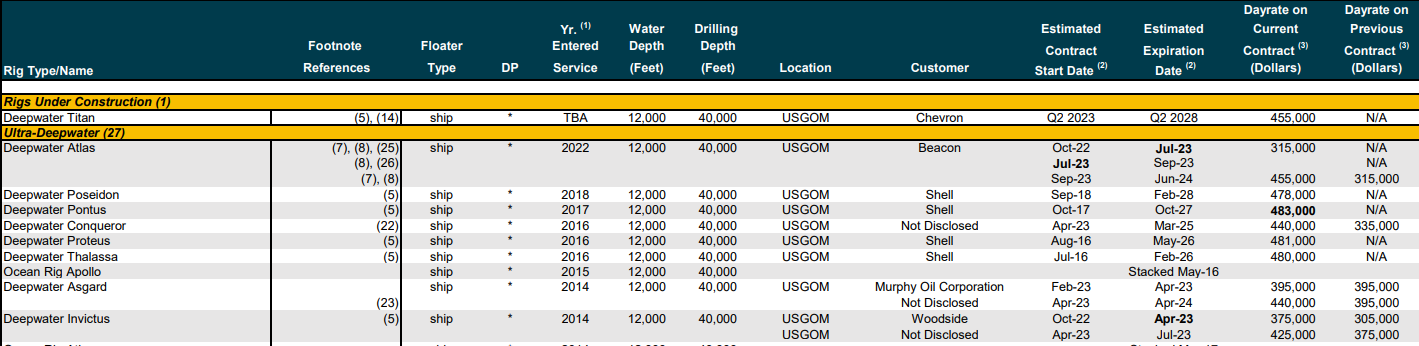
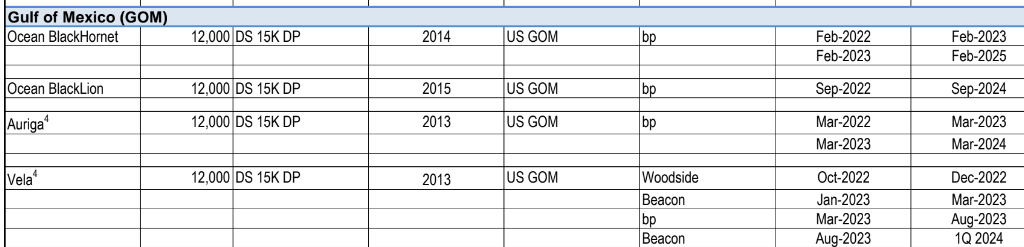
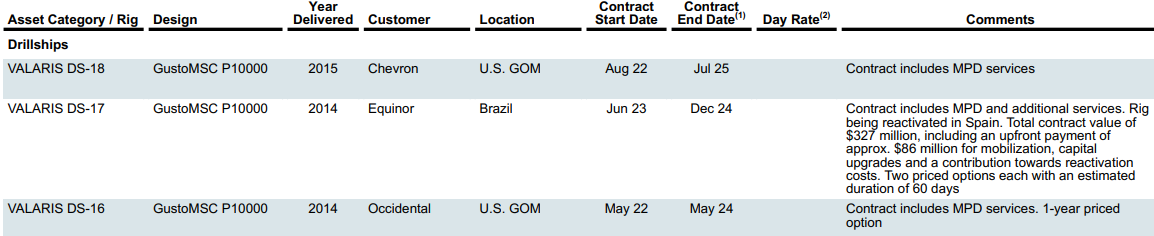
Based on drilling contractor rig activity reports, the table below lists 19 deepwater MODUs under or soon to begin contracts in the GoM. (Further details are pasted at the end of this post.) Per the Valeris report, platform rigs are operating on bp’s Thunder Horse and Mad Dog platforms. Per the BSEE borehole file, Arena and Cantium continue to drill development wells on the GoM shelf.

Rig NameOperator
Deepwater TitanChevron
Deepwater AtlasBeacon
Deepwater PoseidonShell
Deepwater PontusShell
Deepwater ProteusShell
Deepwater Conquerornot disclosed
Deepwater ThalassaShell
Deepwater AsgardMurphy
Deepwater InvictusWoodside
Globetrotter IShell
Globetrotter IIShell
Faye KozackQuarterNorth
LLOG
Kosmos
Stanley LafosseMurphy
Valaris DS-18Chevron
Valaris DS-16Oxy
Ocean BlackHornetbp
Ocean Black Lionbp
Aurigabp
Velabp
Beacon

Excerpts from rig activity reports:

Read Full Post »

Read Full Post »

This picture was posted by MaritmePhoto. The”Blue Marlin” heavy lift vessel is arriving in Texas (2005) with the massive semisubmersible production platform “Thunder Horse” on board.

Above (from BOE archives): Pre-commissioning inspection of Thunder Horse

Thunder Horse has a most interesting history. The project was initially named Crazy Horse, but the name was changed out of respect for concerns raised by the Lakota nation. The massive structure is 136 m in length and 113 m in width, and is located in 6300′ of water in the Mississippi Canyon area of the Gulf of Mexico.

Many of you no doubt remember the near disaster during Hurricane Dennis (2005) when the platform was being commissioned. In light of the extensive pre-production hype for the “world’s largest production platform,” this was a costly and embarrassing incident for BP and the OCS program.

Per the findings of the MMS investigation team led by my former colleague David Dykes:

Findings indicate that failures associated with the hydraulic control system and its isolation on evacuation led to the partial opening of multiple hydraulically actuated valves in the ballast and bilge systems of the vessel. This allowed ballast water migration to take place, causing the initial listing (to approximately 16 degrees) of the vessel shortly after the hydraulic system was isolated.

The findings also indicate that ballast water migrated into manned spaces in the lower hull, via faulty and improperly installed check valves in the integrated ballast/bilge piping system. As the degree of list increased beyond the 16 degree mark, downflooding of seawater occurred, initially through overboard discharge lines and/or vents, and possibly later through the deck box as it entered the water. Since the PDQ was already listing at a 16 degree angle prior to the passage of Hurricane Dennis, wave action associated with the passage of the hurricane may also have contributed to the downflooding of seawater.

Although not an initiating event, failed Multiple Cable Transits (MCTs) and two unintended openings in the bulkheads allowed water transfer between watertight compartments, which led to extensive flooding and water damage in the lower hull.

Fortunately, there were no injuries. Repairs were made and production was finally initiated in June 2008.

After recent subsea tieback expansions, Thunder Horse is reported to be producing 200,000+ boe/d. OPEC’s Monthly Market Report for April 2023 cites the Thunder Horse expansion as a key driver in the January 2023 GoM production increase (see excerpt below).

Read Full Post »

An interesting study published in the Proceedings of the National Academy of Sciences (PNAS) was brought to my attention by leading offshore energy historian Tyler Priest. The study used airborne observations and emissions reports to measure the carbon intensity (CI) of Gulf of Mexico oil and gas production. Their CI measure is grams of CO2 equivalent of greenhouse gas emissions per megajoule of energy produced.

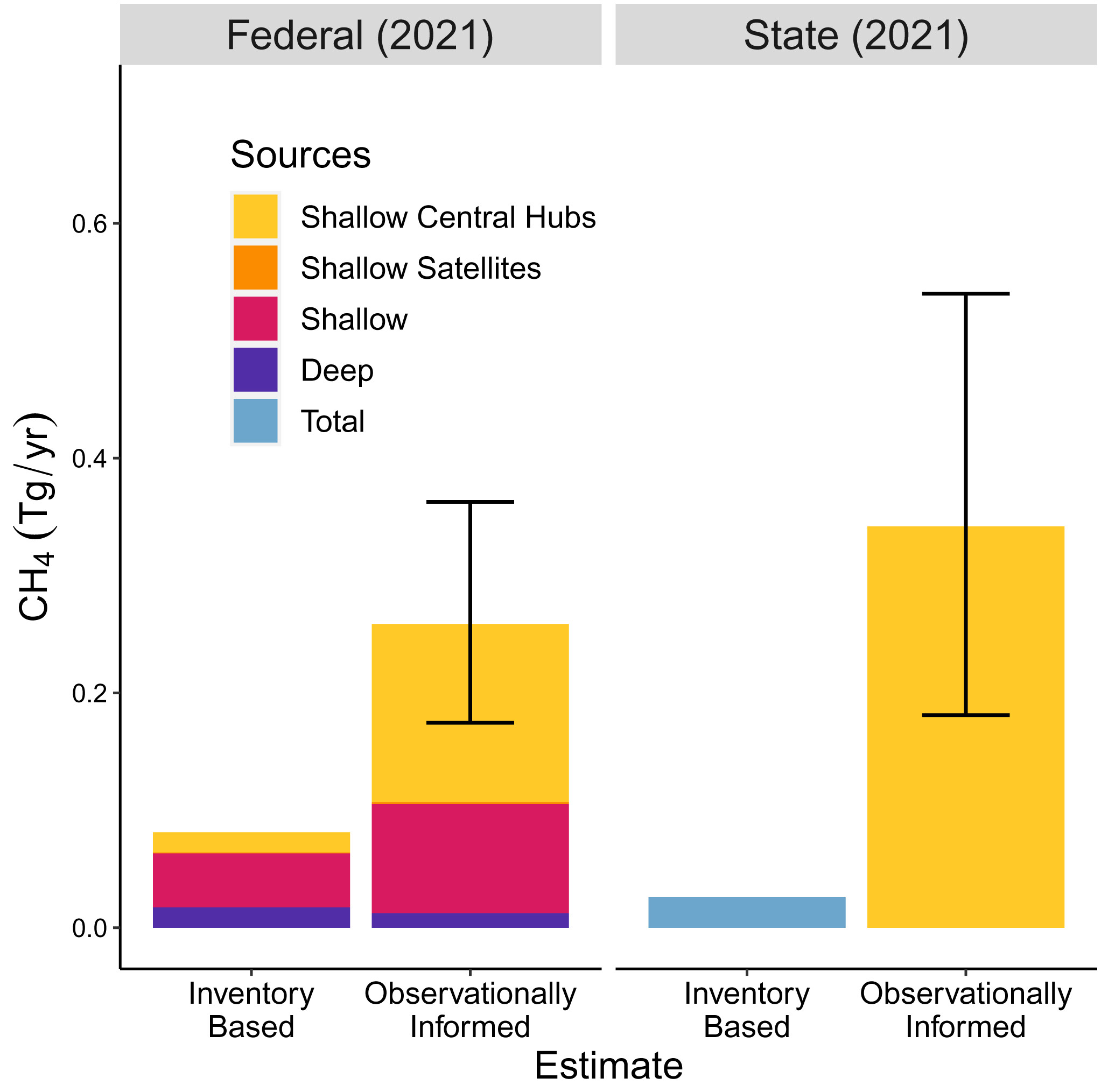
The authors conclude that inventory emissions of CO2 (as reported to BOEM) “are generally consistent with observations from our aircraft survey, suggesting that combustion is well represented in the federal inventory.

However, that is not the case for methane (CH4) emissions which are underestimated by the Federal inventories. As summarized in the chart below, deepwater facility methane emissions are consistent with the reported inventories, but shelf emissions in State and Federal waters differ significantly.

Comments:

  • As previously discussed, the lower CI for deepwater production is entirely consistent with expectations. When the most modern 5% (57) of GoM platforms are producing 93% of the oil and 76% of the gas, their CI should be impressive (which indeed it is).
  • As summarized using ONRR data, more gas-well gas was vented from 2015-2021 than was flared, which is not what you want from a GHG standpoint. Gas wells are predominantly at shallow water facilities, many of which are not equipped with flare booms.
  • Oil-well gas, most of which is produced at deepwater platforms, is flared rather than vented by a ratio of approximately 4 to 1.
  • About 15 years ago, the Federal government (MMS) considered requiring that older production platforms be retrofitted with flare booms, but safety, space limitations, and cost considerations precluded such a regulation. Instead, additional flaring/venting limits, and measurement and reporting requirements were imposed.
  • One bad actor may have been a major contributor to the shelf methane emissions observed during the study’s observational flights. That company entered into bankruptcy proceedings. Presumably those issues have been resolved and more rigorous monitoring and enforcement practices have been implemented. I’ll be looking at the 2022 ONRR flaring and venting data for evidence of such improvement. The remainder of the 2022 data should be available in May.
  • The subject study’s only observational measurements were in August 2020. Followup airborne measurements would be helpful.
  • The study only considered production emissions. Shelf facilities are primarily natural gas producers and would thus have a lower relative CI when consumed.
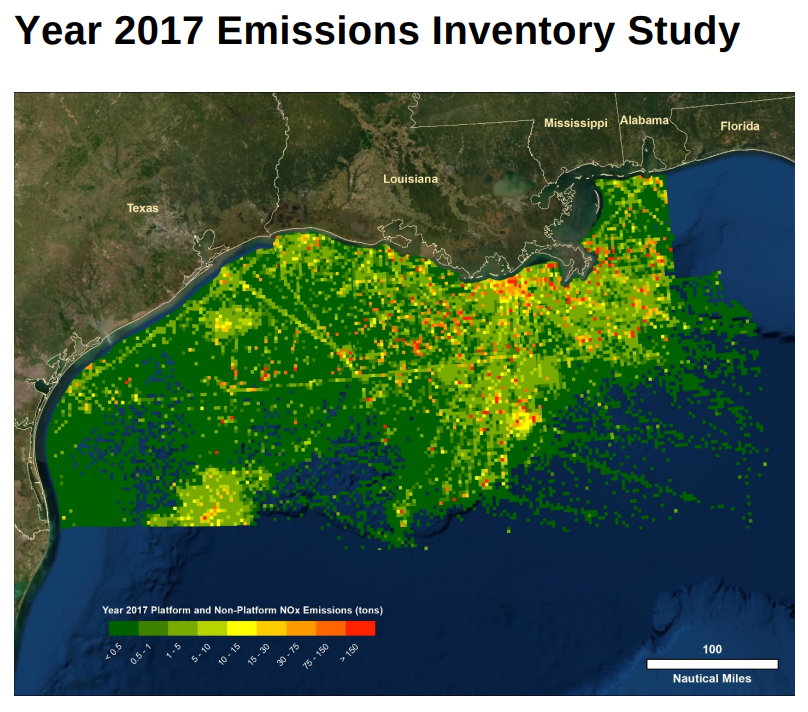
  • When will updated BOEM GOADS flaring and venting data be available? The latest data are for 2017 (cover below)? Are GOADS data being compared with ONRR and World Bank data?

Read Full Post »

In the past 2 years, at least 12 workers died suddenly at Gulf of Mexico facilities from “natural causes.” BSEE’s recent medical evacuation presentation provided information on 6 non-operational fatalities that occurred in 2022:

7/28: Employee (galley hand) was found in the bathroom non‐responsive with minimal electrical activity indicated on the EKG.

8/2 Advised of person down in the galley/T.V. area. Upon arrival in the area observed person on the floor being held by his supervisor. A white foam was coming out of his mouth and nose. Placed him on his side in order for the foam to drain. He was breathing and had a faint pulse. It was observed that he then appeared to stop breathing. Unable to find a radial or carotid pulse. CPR was started and AED was retrieved. AED instructions were followed. A shock was administered and CPR continued for approximately 50 minutes with no pulse or response.

8/18: Contract Personnel (CP) complained of not feeling well and went to his assigned room. It was noticed that CP did not come down for lunch and other personnel went to check on CP and CP was unresponsive.

9/7: CI was in galley of the M/V GO Triumph, waiting on weather, with co‐workers, when he made an exclamation and collapsed to the floor. Co‐workers and contract safety technician immediately ran to his aid. Breathing was sporadic for a minute then ceased and he was unresponsive.

9/23: At approximately 8:20 AM on September 23rd, platform personnel discovered an unresponsive employee (IP) face down on the deck. IP was rolled onto his back, evaluated, and CPR began. Other personnel were dispatched to retrieve AED and medical supplies, while one went to make notifications. Shortly after, personnel arrived with the AED, and it was applied to the IP. Personnel continued CPR while waiting for medical evacuation helicopter. At approximately 12:00 PM, IP was removed from facility by medical evacuation helicopter and subsequently, formally, pronounced dead.

10/21: Employee was assisting production personnel fueling the crane when he suddenly collapsed onto the platform deck and became unresponsive. Personnel on the platform quickly responded and immediately applied an AED to the Employee and began CPR. A medivac aircraft was dispatched for medical support assistance while platform personnel continued to resuscitate the
employee. Medivac personnel arrived on location and relieved personnel working on employee. Following an unsuccessful attempt to revive the employee, he was transported to Houma, La. and released to the Terrebonne Parish Coroner’s Office. Workers on the platform stated the employee was acting normal during breakfast time and during the morning safety meeting. The employee did not complain of any type of illness during the morning time prior to the event occurring.

Why are screened and presumably healthy offshore workers dying suddenly at what seems to be a historically high rate? Is this happening elsewhere in the offshore world? Is anyone investigating this disturbing trend? if not, why not?

As suggested in a previous post, further investigation should be a high priority for the Coast Guard and BSEE with appropriate medical assistance.

Read Full Post »

« Newer Posts - Older Posts »