DOT and others shouldn’t make statements they can’t back up (see the X post below).
As a supporter of responsible offshore oil and gas operations, I find statements like this to be irresponsible and embarrassing. Sable Offshore is not using newer or safer drilling technology than is used in many other areas.
The Sable Offshore Project is using new technology to drill oil that is more safe and environmentally friendly than anywhere in the WORLD@PHMSA_DOT is proud to be a part of this and making America ENERGY DOMINANT 💪 https://t.co/q3ztD1G0R4
— U.S. Department of Transportation (@USDOT) June 10, 2026
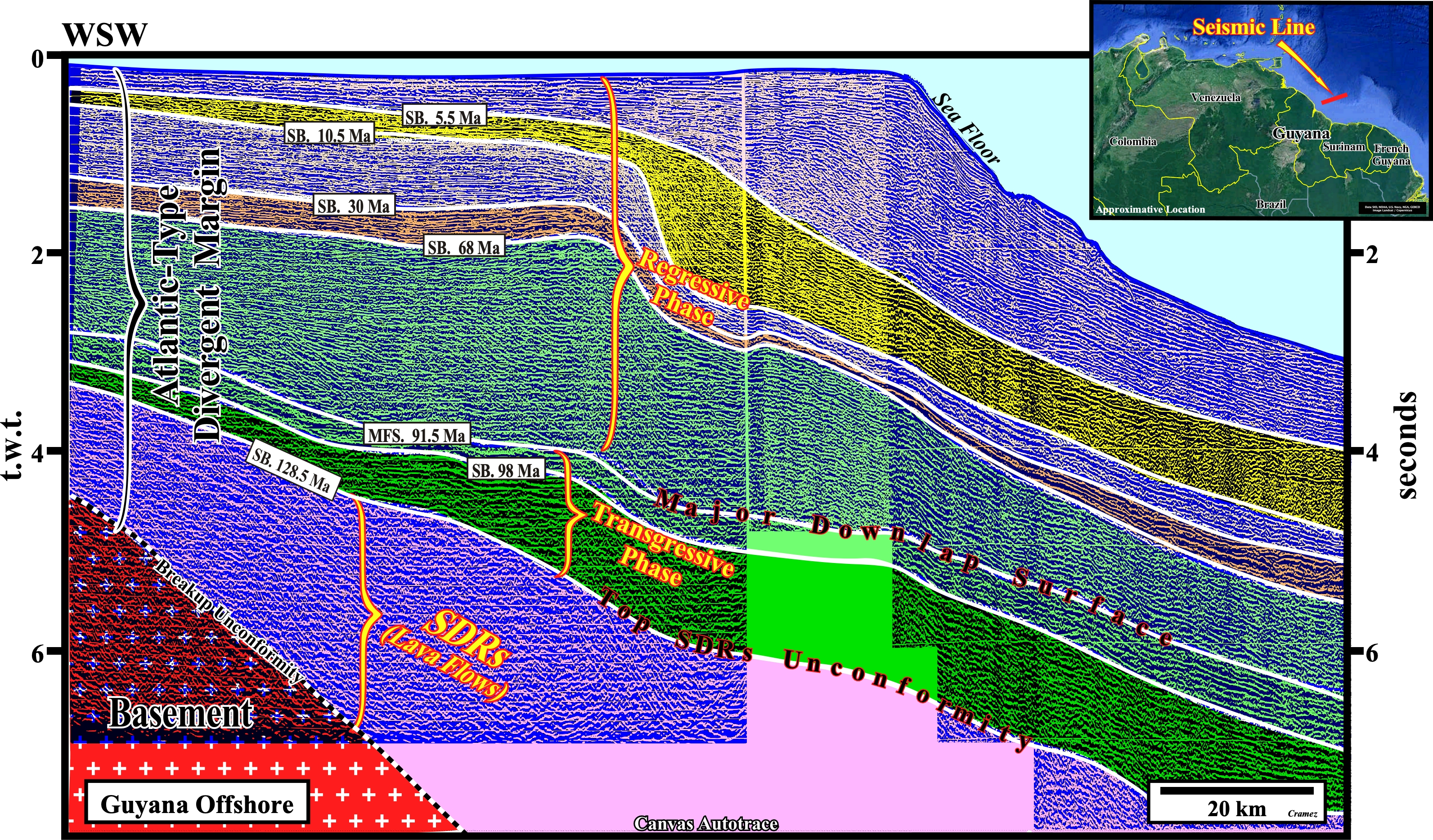
Oil Now Guyana reports that an Exxon artificial intelligence model built using Guyana’s offshore seismic data was able to identify already-discovered crude oil accumulations with a 90% success rate.
Neil Chapman, Exxon: “…in Guyana, we have built an agent, a model…which if we give it the seismic data that we’ve run and we say, go find the crude oil, it can find all the crude oil that we’ve already found with a 90% success rate.”
(Note: Humans are also great at identifying discoveries after the fact 😉. How many false positives were there?)
Chapman said the company has also used artificial intelligence to review well data from across the industry.
“We have analyzed the well data from 50,000 wells that have been drilled in the industry all over the world, 50,000,” Chapman said. “It would have taken us 15 years to do that analysis. We’ve done it in a matter of weeks.”
Despite the many advances in exploration technology over the years, one caveat remains unchanged: “We don’t know if they’re going to be successful or not until you drill a hole, you can never be sure,” Chapman said.
AI should enhance not just geophysical interpretations, but all aspects of offshore exploration and production including site surveys, well planning and construction, drilling, well control, structure designs, production and pipeline monitoring, and safety management. Hopefully, the net result will be increased production at lower cost with improved safety and environmental performance, and that the workforce will not be reduced, but will become more efficient.
North Sea pioneer JL Daeschler is among those lamenting the sad state of UK exploration and development, commenting that he is “green” with envy of Norway’s long term management of their oil and gas resources.
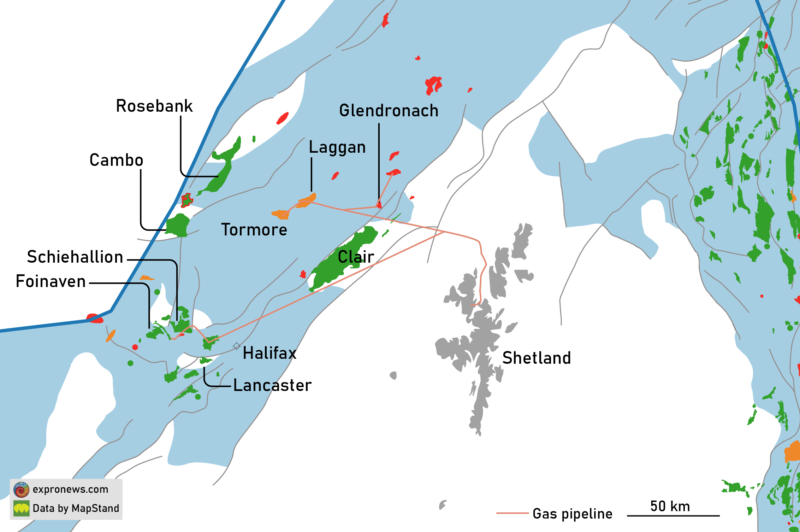
Researchers at the University of Aberdeen may be showing the way for exploitation of the West of Shetland area’s estimated 4.7 billion bbls of oil equivalent (boe). They are advocating a tailored management regime for this challenging area. Per the researchers:
“West of Shetland is not a depleted frontier – it is a technically demanding but strategically important energy province,” said Nick Schofield, Professor of Igneous & Petroleum Geology at the University of Aberdeen. “Our study highlights the remaining oil and gas potential in the area, which could extend the life of the UK’s oil and gas sector.”
John Underhill, Aberdeen University’s Director for Energy Transition said: “Failing to develop these domestic resources risks increasing the UK’s dependence on imports, with implications for emissions, costs, jobs, tax revenues and energy security.”
The researchers argue that a “one-size-fits-all” approach to UKCS taxation fails to reflect the unique risks and costs associated with West of Shetland exploration, appraisal and development. As a result, they say projects that are technically viable may remain economically marginal under current conditions.
Recognize higher exploration and development costs
Account for increased geological and operational risk
Encourage investment in challenging projects
Enable tie-backs to existing infrastructure that would provide energy security, tax revenues, retain jobs and be better for the global climate than importing liquified natural gas (LNG), which carries a higher carbon footprint.
Support the development of already identified prospects within licensed areas
Rosebank update:
The West of Shetland area includes the controversial Rosebank project (map above), which has yet to receive environmental consent from the UK govt. Following a court ruling, Equinor (operator) was given permission to proceed with the project, including preparatory engineering and construction work, but no production is allowed pending final govt approval.
The PetoJarl Rosebank Floating Production Storage and Offloading (PFSO) vessel recently left its dry dock in Norway and has arrived in the West of Shetland basin. The vessel will undergo commissioning to be ready for production by the end of the year.
Pointing to the potential financial implications for GE Vernova, Recharge News cites this serious fraud accusationby Vineyard Wind (VW):
“This exceptional misconduct includes [GE Vernova’s] intentional scheme to falsify critical quality assurance data… and to intentionally misrepresent the quality of those blades to [Vineyard Wind] in a brazen fraudulent, and willful breach of the TSA, ultimately resulting in the catastrophic blade failure…”
Recharge also discusses the findings of the Project Engineer appointed by VW to resolve claims between parties. Under the terms of the contract, the engineer’s determinations are binding unless overturned in arbitration.
The engineer determined that GE Vernova was liable for project delays, blade defects, vessel costs, and a $185m rescission of previously certified payments.
The damage claims issued by the project engineer total $853m.
On the basis of those determinations, VW withheld 100% of the outstanding invoices issued by GE Vernova. Even netted against sums allegedly owed to GE Vernova, VW says the turbine maker owes around $545m.
Per the contract, there are no limitations on liability in cases of “fraud, gross negligence, deliberate default or willful misconduct.”
My take: VW’s charges against GE Vernova will be resolved in the courts. However, VW is the lessee and operator, and is thus the party responsible to the Federal govt for project safety and environmental protection.
Operator responsibility is a fundamental tenet of the OCS regulatory program. As lessee/operator, VW bears ultimate responsibility for project safety and environmental protection.
VW is responsible for contractor selection, management, and oversight.
If a contractor violates a regulation, the violation notice is given to the operator. If a contractor causes pollution, the operator is responsible for the cleanup.
DNV, the Certified Verification Agent (CVA) hired by VW, was required to verify the design, fabrication, and installation procedures. Did they raise any issues to VW and the regulators?
Did the division of responsibilities between BOEM and BSEE weaken regulatory oversight? BOEM, ostensibly just the leasing bureau, should not have been authorized to grant departures that could affect structural integrity and operational safety.
It’s surprising that VW has not been cited for civil penalties resulting from the blade failure and the resulting environmental damage.
How can a judge prevent a contractor from stopping work for an operator that has filed serious fraud allegations against the contractor, has stopped making payments, and has, along with the Governor, declared the project to be complete?
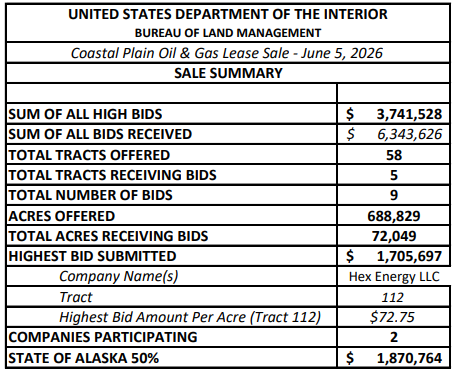
The Canning River, seen here in 2018, flows from the Brooks Range into the Beaufort Sea along the western edge of the Arctic National Wildlife Refuge. The river marks the boundary between the refuge, which is managed by the U.S. Bureau of Land Management, and state land on the North Slope. Results of an oil lease sale that offered 58 tracts in the refuge’s coastal plan drew bids on five tracts. The highest-dollar bid was for a tract right at the Canning River edge of the refuge’s border with state land.(Photo by Lisa Hupp/U.S. Fish and Wildlife Service)
Yesterday’s mandated One Big Beautiful Bill sale in the Arctic National Wildlife Refuge turned out to be a one-on-one competition between an Alaskan independent and a State agency! Only 5 of the 58 tracts received bids, and the high bid was $1.7 million.
The competitors:
HEX Energy, an Alaskan independent: 4 bids, 2 high bids
Alaska Industrial Development and Export Authority (AIDEA), the state government’s economic development agency: 5 bids, 1 high bid
The implications for Arctic offshore sales are not good, but oil companies can be fickle, and opinions and investment strategies are subject to change, especially in the Arctic.
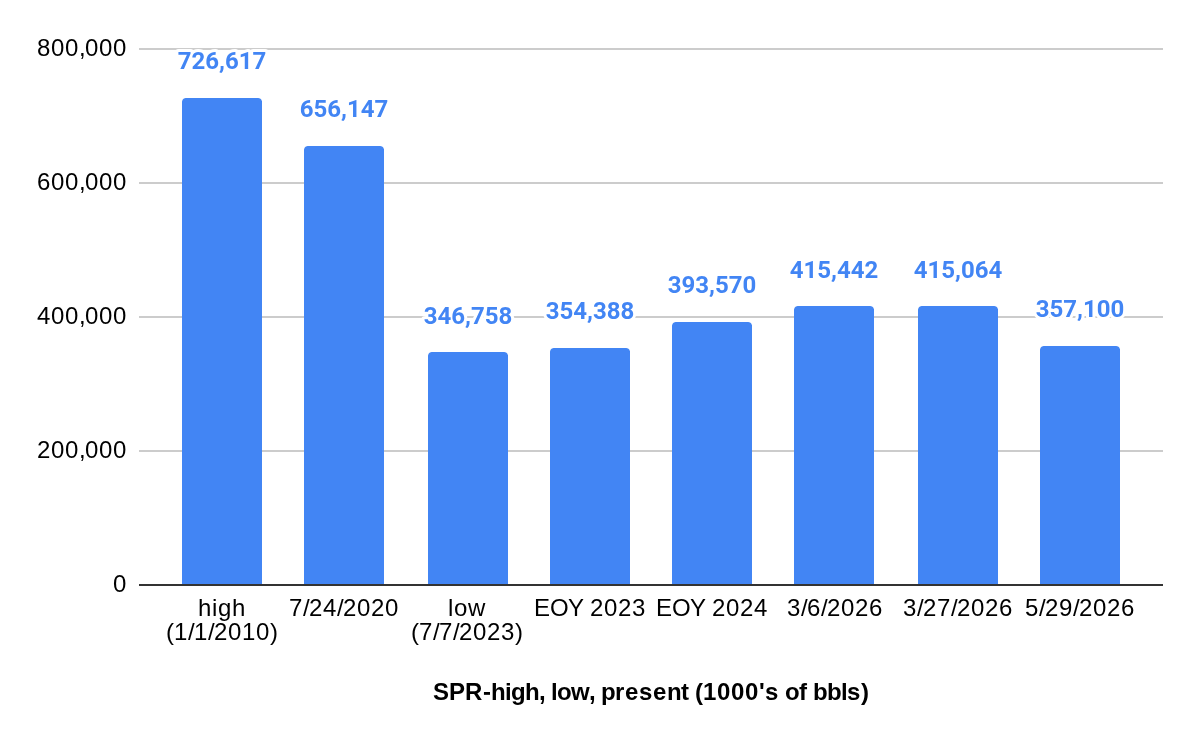
Nothing tilts public opinion more than high gasoline prices, or worse yet shortages! Hence the 1975 legislation establishing the SPR, the massive SPR drawdown in 2022, and this year’s withdrawals.
Looking back to the halcyon days of the US offshore program, it was the gas lines in the 1970s that drove the remarkable and rather unlikely growth in the program during the Carter Administration (1977-1981). A few highlights from those four years:
15 lease sales including 3 offshore Alaska, 3 in the Atlantic, and 1 offshore California
Drilling activity in all 4 regions: GoM, Pacific, Alaska, and Atlantic
North, Mid, and South Atlantic District offices for permitting and inspections
5300 well starts including 97 in water depths > 1000′
314 new platforms including Cognac, the world’s first platform in > 1000′ of water
Perhaps unthinkable today, the Governor of Massachusetts from 1979-1983, Ed King, was a strong supporter of offshore drilling. Absent that support, the exploratory drilling on Georges Bank would probably have never occurred. /s/ Nostalgic Old Man 😉
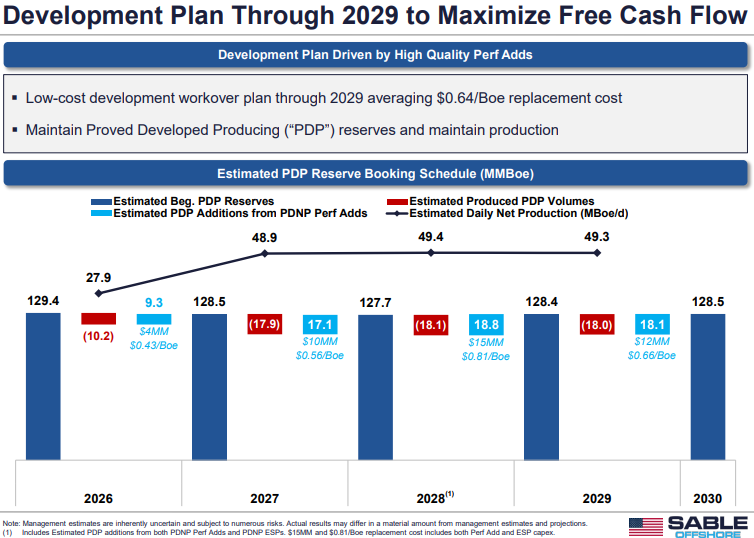
Those who have been following the Santa Ynez Unit saga should take a look at Sable’s informative PowerPoint update (attached). The presentation includes reserve data, well operation plans, production forecasts, financial and legal updates, and regional energy supply information.
Also, Sable CEO Jim Flores has announced that Energy Secretary Wright and Interior Secretary Burgum will be visiting the project this week. Transportation Secretary Duffy was also expected, but he will not be attending.
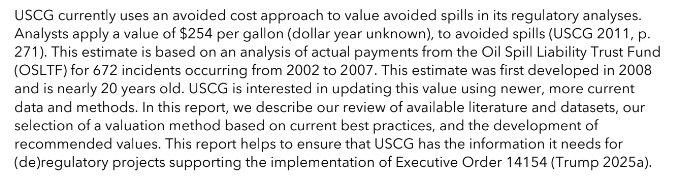
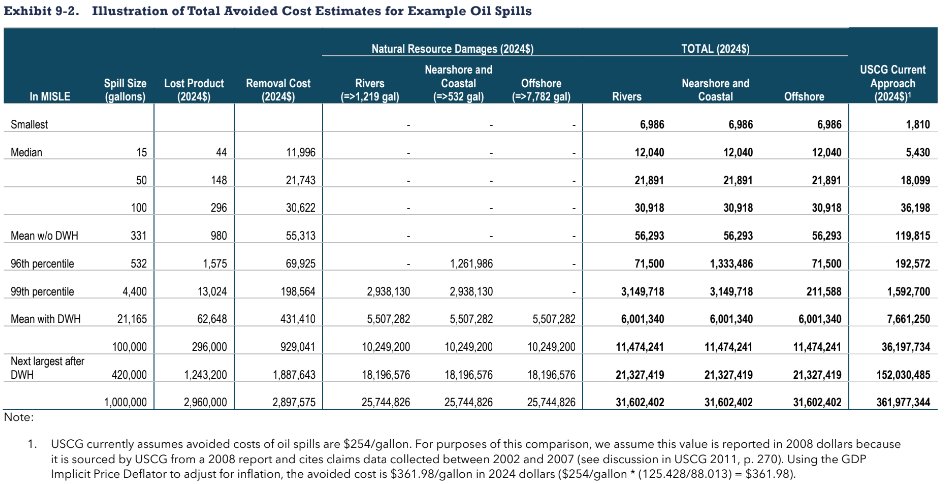
The report is intended to update the Coast Guard’s methodology for estimating the cost savings resulting from spill prevention regulations. The paragraph pasted below is a good summary of the objective.
The offshore industry could benefit from this report, because the estimated cost of spills >100 gallons is reduced, dramatically so when the DWH/Macondo blowout is excluded (see the second table below). That reduction would support regulatory reform initiatives,and could thus generate some controversy.
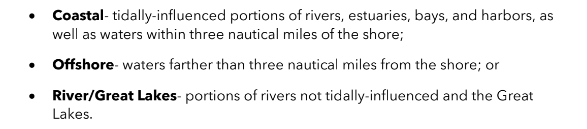
My main concern is that there is only a single distance-from-shore category for offshore spills (see text below). The natural resources damage from a spill 3 miles from shore will almost always be much greater than from an equivalent volume spill 100 miles from shore.
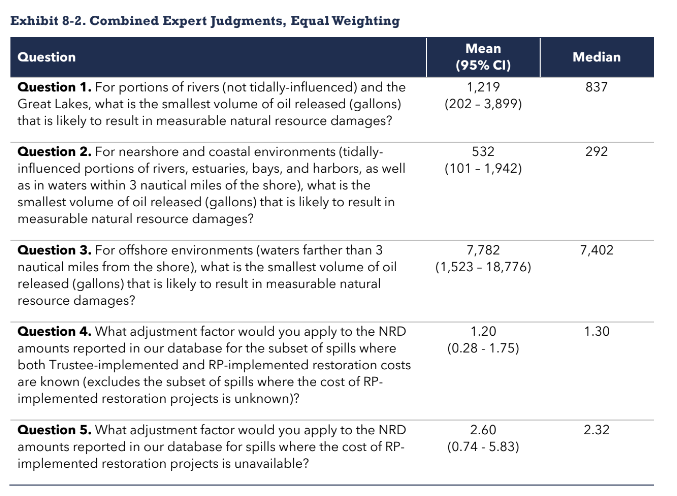
The single-offshore-category issue is illustrated in the 2 tables pasted below. The first table presents a summary of expert opinions on the smallest spill size that is likely to result in measurable natural resource damages. The mean response to Question 3 (offshore) is 7782 gallons. A spill of that size occurring 3 miles from shore is much more likely to result in resource damage than a spill originating 50 or 100 miles from shore.
In the second table, note the new methodology results in the same cost estimates for large nearshore/coastal spills as for offshore spills. Again, this is presumably because there is only a single offshore category.
The public comments on this report should be interesting.
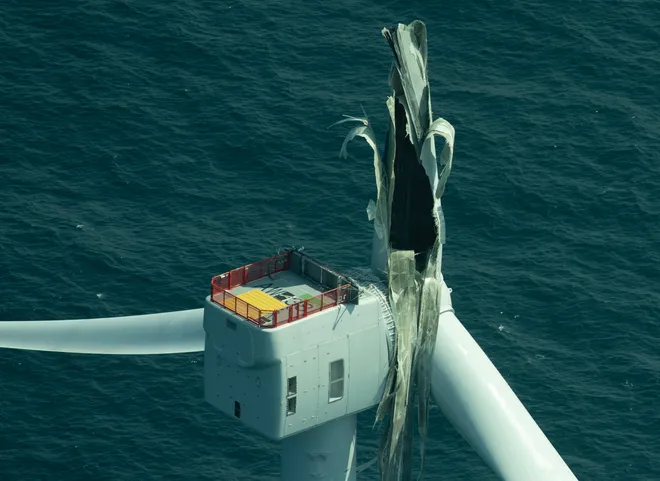
damaged Vineyard Wind turbine – Cape Cod Times photo
Massachusetts Judge Peter Krupp confirms that GE Rewables (GER) can’t quit now, but must continue working on the Vineyard Wind (VW) project! As we approach the 2 year anniversary of the blade failure, this ugly legal dispute among the responsible parties is another black eye for the troubled project.
Judge Krupp: In discussing irreparable harm in the April Memorandum, I found that the project “is at a critical phase,” that GER’s termination “would set the project back immeasurably and threaten VW’s financing,” that the requirements “to bring the project into commercial viability is highly dependent on GER’s capabilities, personnel and technology,” and that “[t]o pretend that VW could go out and hire one or more contractors to finish the installation and troubleshoot and modify GER’s proprietary design without GER’s specialized knowledge is fanciful.” Nothing has been brought to my attention that would alter any of these conclusions.
Project completion declarations by VW and Gov. Healey did not reflect the reality of the project (expected grandstanding, nothing to see there 😉):
Moreover, the fact that VW declared the COD (Commercial Operation Date) – or that Gov. Healey and VW’s parent commented on it – does not change the reality on the ground. It does not change the fact that the Project requires GER’s expertise and proprietary know-how to bring the turbines up to operational capacity.