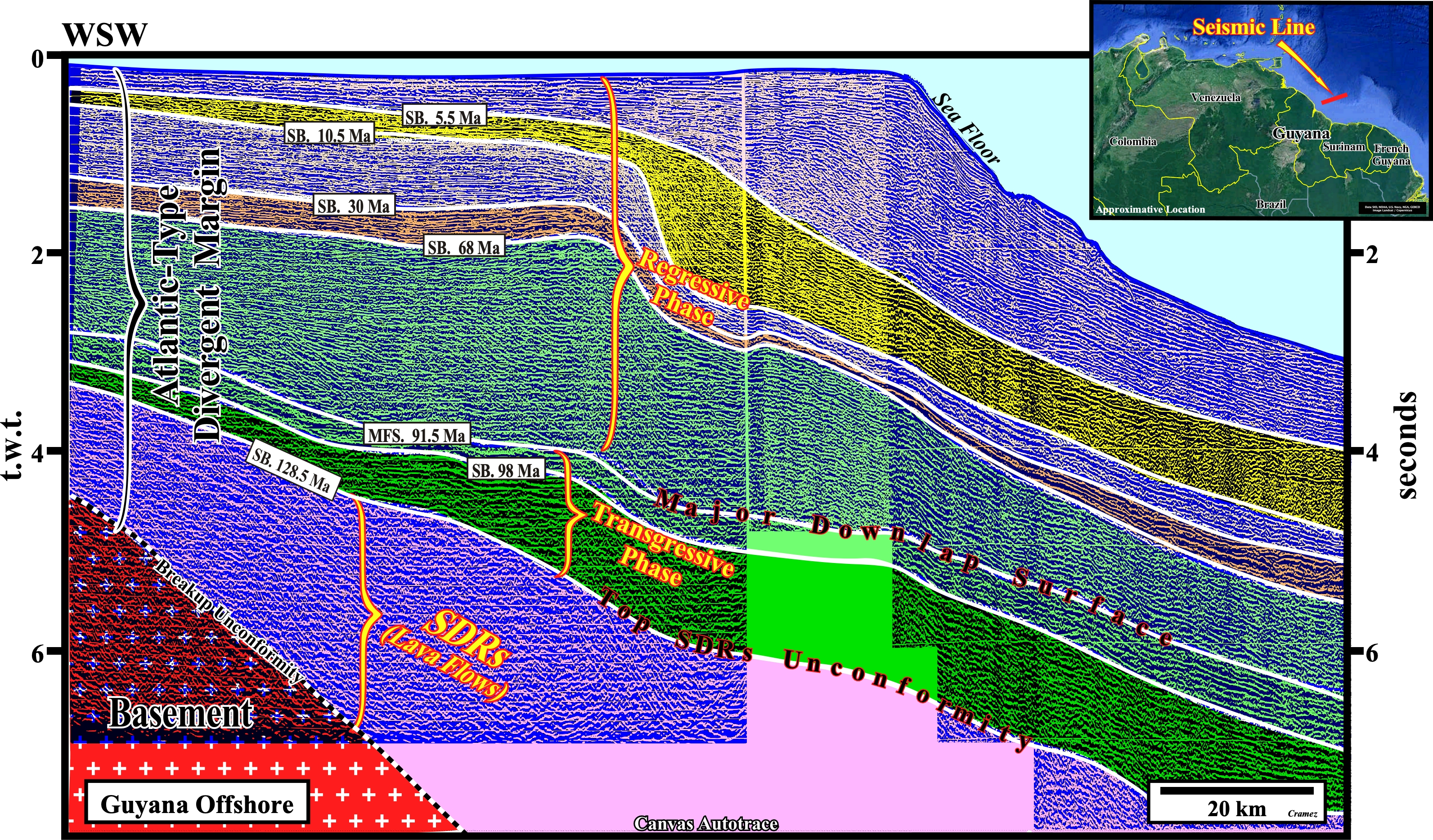
Oil Now Guyana reports that an Exxon artificial intelligence model built using Guyana’s offshore seismic data was able to identify already-discovered crude oil accumulations with a 90% success rate.
Neil Chapman, Exxon: “…in Guyana, we have built an agent, a model…which if we give it the seismic data that we’ve run and we say, go find the crude oil, it can find all the crude oil that we’ve already found with a 90% success rate.”
(Note: Humans are also great at identifying discoveries after the fact 😉. How many false positives were there?)
Chapman said the company has also used artificial intelligence to review well data from across the industry.
“We have analyzed the well data from 50,000 wells that have been drilled in the industry all over the world, 50,000,” Chapman said. “It would have taken us 15 years to do that analysis. We’ve done it in a matter of weeks.”
Despite the many advances in exploration technology over the years, one caveat remains unchanged: “We don’t know if they’re going to be successful or not until you drill a hole, you can never be sure,” Chapman said.
AI should enhance not just geophysical interpretations, but all aspects of offshore exploration and production including site surveys, well planning and construction, drilling, well control, structure designs, production and pipeline monitoring, and safety management. Hopefully, the net result will be increased production at lower cost with improved safety and environmental performance, and that the workforce will not be reduced, but will become more efficient.