- Gulf of Mexico Lease Sale 257 was vacated on 1/27/2022 because DC Federal Court Judge Contreras ruled that BOEM failed to consider the “positive” effect that higher prices (the logical result of lower production) would have on reducing foreign consumption and the associated GHG emissions. Think about that in the context of the timing and magnitude of this ruling. Why did the court fail to consider the other logical consequences of tight oil supplies and higher prices – increased coal consumption and energy poverty? To avoid the latter, India, the world’s second largest coal producer and consumer, is boosting coal production to record highs.
- The Administration, which had only proceeded with Sale 257 because a prior court ruling invalidated the President’s leasing pause, chose not to appeal the decision by Judge Contreras. Why appeal a decision that is consistent with your agenda?
- The legislatively mandated 5 year leasing program, without which no Federal offshore leases sales may be conducted, expires at the end of June. This is why last week’s cancellation of the 3 remaining sales in the current 5 year program was rather meaningless. Despite bipartisan congressional support for prompt completion of a new 5 year plan, this does not appear to be a high priority for the Department of the Interior. The only hope for a sale this year might be a successful appeal by Lousisiana and API of Judge Contreras’s Sale 257 ruling.
Archive for the ‘Gulf of Mexico’ Category
As energy prices soar, remember these 3 things…
Posted in climate, energy policy, Gulf of Mexico, Offshore Energy - General, tagged 5 year leasing plan, DC Federal Court, India coal, Lease Sale 257, oil prices on May 18, 2022| Leave a Comment »
BSEE/USCG issue Safety Alert on the Globetrotter II incident during Hurrricane Ida (8/29/2021)
Posted in accidents, drilling, Gulf of Mexico, hurricanes, tagged BSEE, Globetrotter II, Gulf of Mexico, Hurricane Ida, Noble, Shell on May 17, 2022| Leave a Comment »
BOE was troubled by this incident and the contractor’s statements that followed.
BSEE has posted a strong safety alert.
The BSEE investigation concluded that the operator and contractor representatives failed to promptly start the Temporary Abandonment (TA) procedures.
BSEE’s investigation report provides complete details on the incident.

Questions about Gulf of Mexico carbon sequestration
Posted in CCS, climate, energy policy, Gulf of Mexico, pipelines, Regulation, tagged BOEM, carbon sequestration, CCS, DOI, Exxon, Gulf of Mexico, infrastructure bill, Lease Sale 257, OCS Lands Act on May 12, 2022| Leave a Comment »
Background:
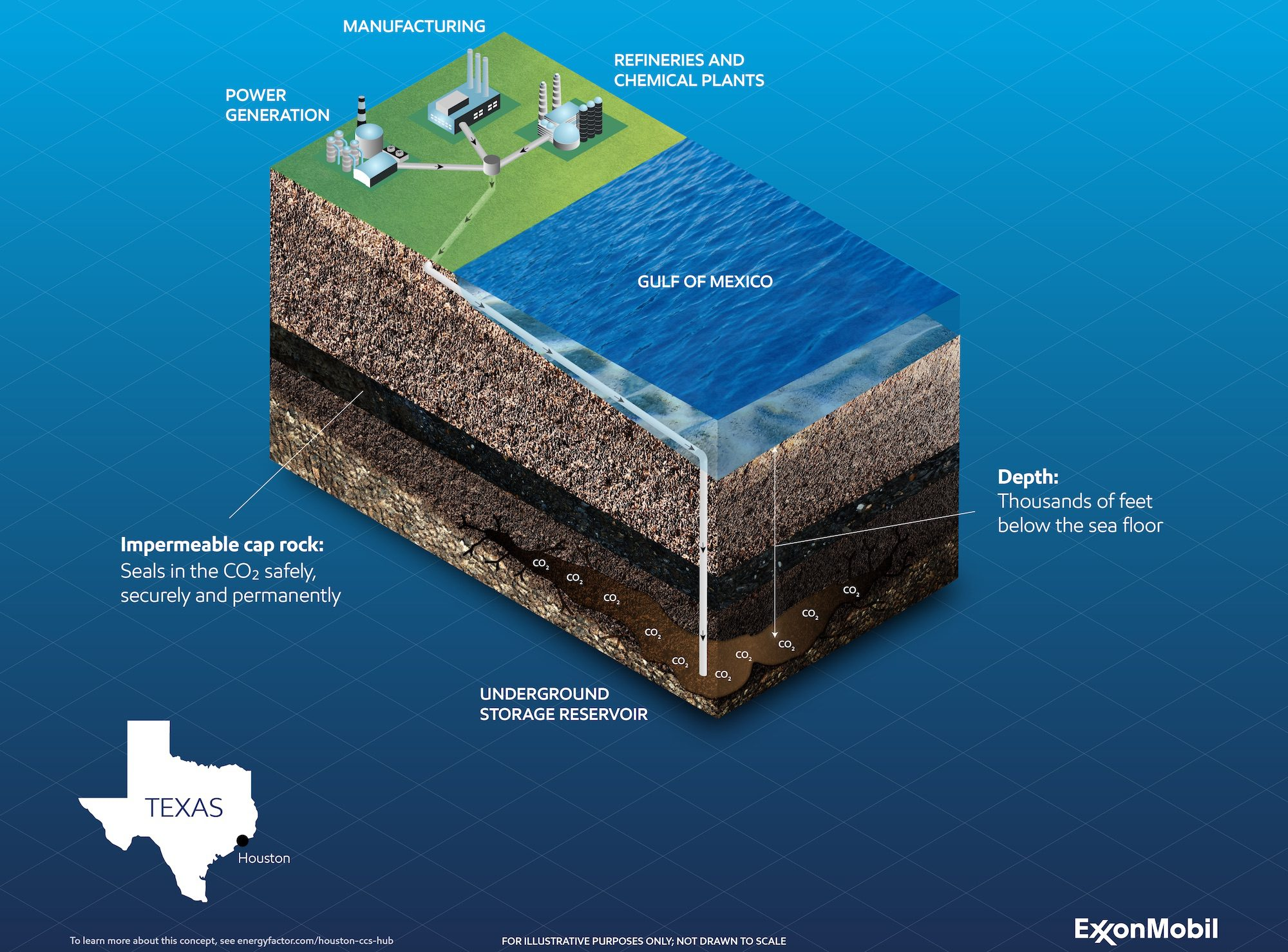
- A provision in the “Infrastructure Bill” that was enacted on 11/15/2021 amended the OCS Lands Act to provide for offshore carbon sequestration.
- Because carbon disposal is arguably dumping, the legislation included an exemption from the Marine Protection, Research, and Sanctuaries (Ocean Dumping) Act of 1972.
- The bill mandated that the Secretary of the Interior (DOI) promulgate implementing regulations within one year (l.e. by 11/15/2022).
- These provisions were added to the bill without debate and their inclusion was a surprise to most observers. Presumably, DOI had the opportunity to review the text, because that is standard practice.
- The legislation also authorized $2.5 billion for commercial sequestration projects.
- 2 days after the Infrastructure Bill was signed (11/17/2022), Exxon was the only bidder (Oil and Gas Lease Sale 257) on 94 nearshore tracts off the Texas coast. The sale notice did not mention carbon sequestration; nor had DOI assessed the potential environmental impacts of sequestration as required by NEPA.
- Sale 257 was vacated by the DC Federal Court for reasons unrelated to the sequestration bids.
Questions:
- What are the costs per ton of offshore carbon sequestration including emissions collection, offshore wells and platforms, the associated pipeline infrastructure, ongoing operational and maintenance costs, and decommissioning?
- What is the timeframe given that the starting point is likely years away?
- How long would CO2 sequestration continue.
- Who pays? Polluters? Federal subsidies? Tax credits?
- Who is liable for:
- safety and environmental incidents associated with these projects?
- CO2 that escapes from reservoirs, wells, and pipelines (now and centuries from now)?
- decommissioning?
- hurricane preparedness and damage?
- For Gulf of Mexico sequestration, how much energy would be consumed per ton of CO2 injected? Power source? Emissions?
- To what extent will these operations interfere with other offshore activities?
- Relatively speaking, how important is US sequestration given:
- the steady progress that is being made via natural gas and renewables?
- the massive emissions elsewhere?
- the continued growth in worldwide coal consumption?
- What are the benefits of offshore sequestration relative to investments in other carbon reduction alternatives?
- Will BOEM conduct a proper carbon sequestration lease sale with public notice (as required by BOEM regulations) such that all interested parties can bid?
- What will be the lease terms?
- Environmental assessment?
- How will bids be evaluated?
- What happens to the Exxon bids if the Judge’s Sale 257 decision is reversed?
- What is the status of the DOI regulations mandated in the legislation with an 11/15/2022 deadline?
- When will we see an Advanced Notice or Notice of Proposed Rulemaking?
- Given that DOI has no jurisdiction over the State waters and onshore aspects of these projects, what is the status of parallel regulatory initiatives?
- Finally and most importantly, how does drilling offshore sequestration wells instead of exploration and development wells increase oil and gas production?
Gulf of Mexico scoreboard
Posted in drilling, Gulf of Mexico, Offshore Energy - General, tagged AnadarkoOxy, Arena, bp, Cantium, Chevron, exploration, Exxon, Gulf of Mexico, Hess, INCs, LLOG, Murphy, natural gas production, oil production, Shell, violations, well starts on May 10, 2022| Leave a Comment »
- Operating companies that produced >1 million bbls of oil or >1 BCF of gas in 2021 are listed in descending order based on oil production.
- Both the total number of well starts and the number of exploratory wells are indicated
- An INC is an Incident of Noncompliance (i.e. a violation). W=warning, CSI=component shut-in, and FSI=facility shut-in are the enforcement actions.
- All of the below data are publicly available on the BSEE-BOEM websites.
| 2021 oil (MMbbls) | 2021 gas (BCF) | 2021/22 well starts total-expl | 2021/22 INCs W-CSI-FSI | |
| Shell | 149.8 | 190.8 | 28-12 | 11-14-4 |
| bp | 114.0 | 82.7 | 5-2 | 6-3-4 |
| Chevron | 83.7 | 42.2 | 8-8 | 1-1-3 |
| Anadarko (Oxy) | 67.7 | 57.8 | 8-6 | 8-5-1 |
| Hess | 27.5 | 61.7 | 2-2 | 7-4-0 |
| Murphy | 25.1 | 50.0 | 7-7 | 4-8-1 |
| LLOG | 20.4 | 29.0 | 3-0 | 1-1-1 |
| Talos | 17.7 | 23.0 | 5-0 | 25-26-14 |
| BHP | 14.5 | 5.9 | 3-2 | 2-3-0 |
| Exxon | 13.2 | 2.3 | – | 1-1-1 |
| Beacon | 10.5 | 15.7 | 1-0 | 0-0-0 |
| Fieldwood | 10.4 | 24.7 | – | 685-235-91 |
| EnVen | 9.6 | 12.6 | 6-0 | 2-6-3 |
| Kosmos | 9.4 | 8.4 | 1-1 | 1-0-0 |
| Arena | 8.6 | 27.9 | 32-0 | 68-45-19 |
| Walter | 8.1 | 36.2 | 2-2 | 3-1-2 |
| Cox | 6.2 | 30.3 | – | 237-169-3 |
| Eni | 4.7 | 13.6 | 2-0 | 8-0-2 |
| W&T | 5.0 | 27.2 | 1-0 | 65-40-7 |
| Cantium | 4.5 | 5.5 | 18-0 | 23-15-2 |
| QuarterNorth | 4.2 | 8.3 | – | no data |
| GoM Shelf | 2.3 | 4.8 | – | 52-5-2 |
| ANKOR | 1.4 | 2.5 | – | 0-0-1 |
| Byron | 1.0 | 4.4 | – | 5-8-2 |
| Renaissance | 0.7 | 1.6 | – | 20-9-3 |
| Sanare | 0.3 | 4.5 | – | 38-20-3 |
| Helis | 0.2 | 1.2 | – | 1-0-2 |
| Contango | 0.03 | 5.0 | – | 4-0-0 |
| Samchully | 0.02 | 1.2 | – | no data |
Comments:
- “Energy transition” companies Shell and bp still love the Gulf of Mexico, which is a good thing for them and us. Together they accounted for 42.4% of the 2021 oil production.
- The top 4 producers, Shell, bp, Chevron (includes Unocal), and Anadarko accounted for 2/3 of GoM oil production, nearly all of which was from deepwater leases.
- Those are impressive production numbers for Anadarko (Oxy). No wonder Warren Buffett likes Oxy stock.
- The relative number of deepwater exploratory wells is mildly encouraging given our concerns about sustaining production.
- Exploratory well determinations are rather subjective and may not be entirely consistent.
- Understandably, no exploratory wells were drilled by Arena or Cantium, the companies responsible for most well operations on shelf (shallow water) leases.
- Overall, the INC numbers are impressively low for the deepwater operators, with Chevron and LLOG standing out. BSEE does not post the specific violation information (more on this in an upcoming post), so it’s difficult to properly assess a company’s compliance record.
- Unfortunately, incident data could not be included on the scoreboard. BSEE’s incident tables are badly out of date, and no 2021/2022 summaries have been posted.
- Fieldwood’s disturbing INC numbers were discussed earlier this year. High INC rates for 3 other operators have also were noted last month.
- Exxon production is limited to the Hoover Diana spar, which was installed 22 years ago. The largest US oil company has only drilled one GoM exploratory well (2018) in the past 5 years. Currently, their main GoM interest seems to be the sequestration (disposal) of onshore emissions. (More on this topic in an upcoming post.)
4 House Democrats send letter to the President urging completion of the 5 Year leasing plan
Posted in energy policy, Gulf of Mexico, Offshore Energy - General, Uncategorized, tagged 5 year leasing plan, 532 days, DOI, House Democrats urge action, Senate Democrats support on May 6, 2022| Leave a Comment »
One important action your administration can take to ensure American energy independence is to publish a new Five-Year Outer Continental Shelf Oil and Gas Leasing Plan (“Five-year Plan”) as required under the Outer Continental Shelf Lands Act of 1953. Finalizing the Five-year Plan, with frequent area-wide leases, would help bring millions of additional barrels of U.S. oil to market. According to a recent analysis by Energy and Industrial Advisory Partners, a further delay of federal offshore leasing could result in 500,000 fewer barrels of domestic oil produced per day, 60,000 lost jobs, and a $900 million per year decrease in federal conservation funding.
.
The four Democrats are Texas Representatives Vicente Gonzalez, Sylvia Garcia, Henry Cuellar and Lizzie Fletcher.
Meanwhile, the Senate approved language supporting the issuance of a new 5 Year Program ASAP. Four Democrats -Joe Manchin (D-WV), Kyrsten Sinema (D-AZ), John Hickenlooper (D-CO), and Mark Kelly (D-AZ) – voted for the measure.
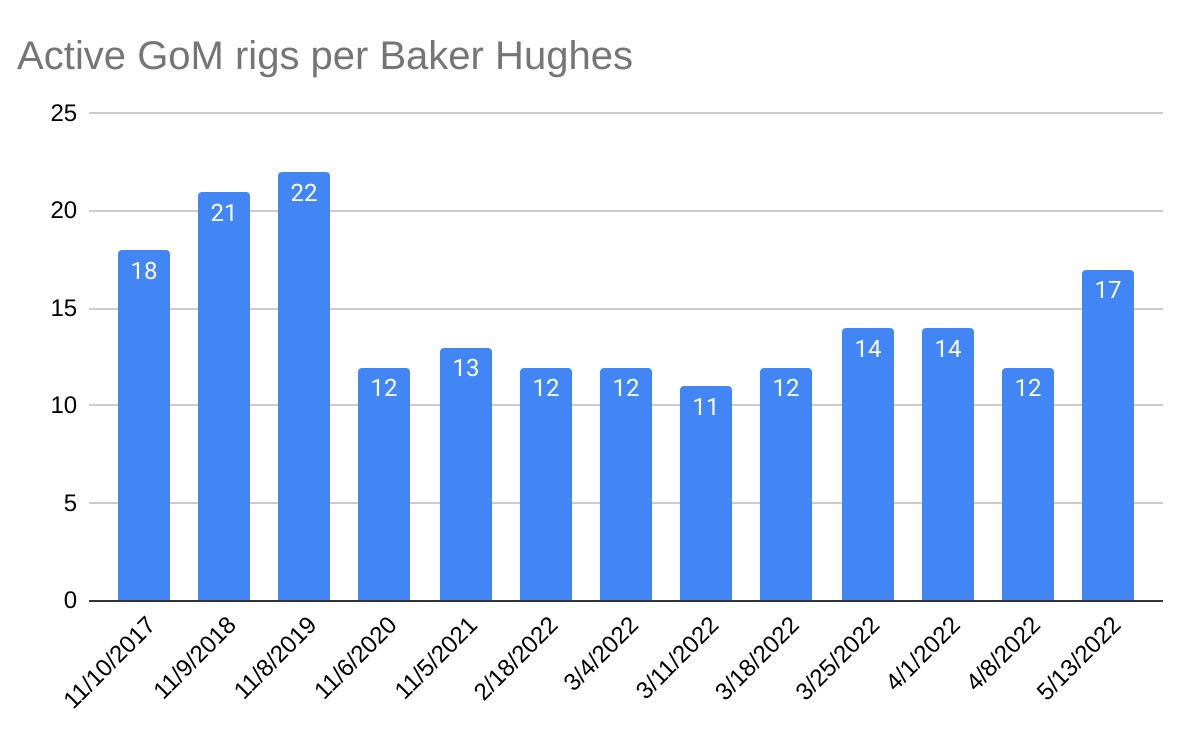
When will we hear from the Department of the Interior on the status of the 5 Year Program? It has now been 532 days since the last US offshore lease sale.
Gulf of Mexico flaring data sets don’t match
Posted in climate, Gulf of Mexico, natural gas, Offshore Energy - General, tagged Argonne, BSEE, EIA, flaring data, Gulf of Mexico, ONRR, UMich, venting, World Bank on May 5, 2022| Leave a Comment »
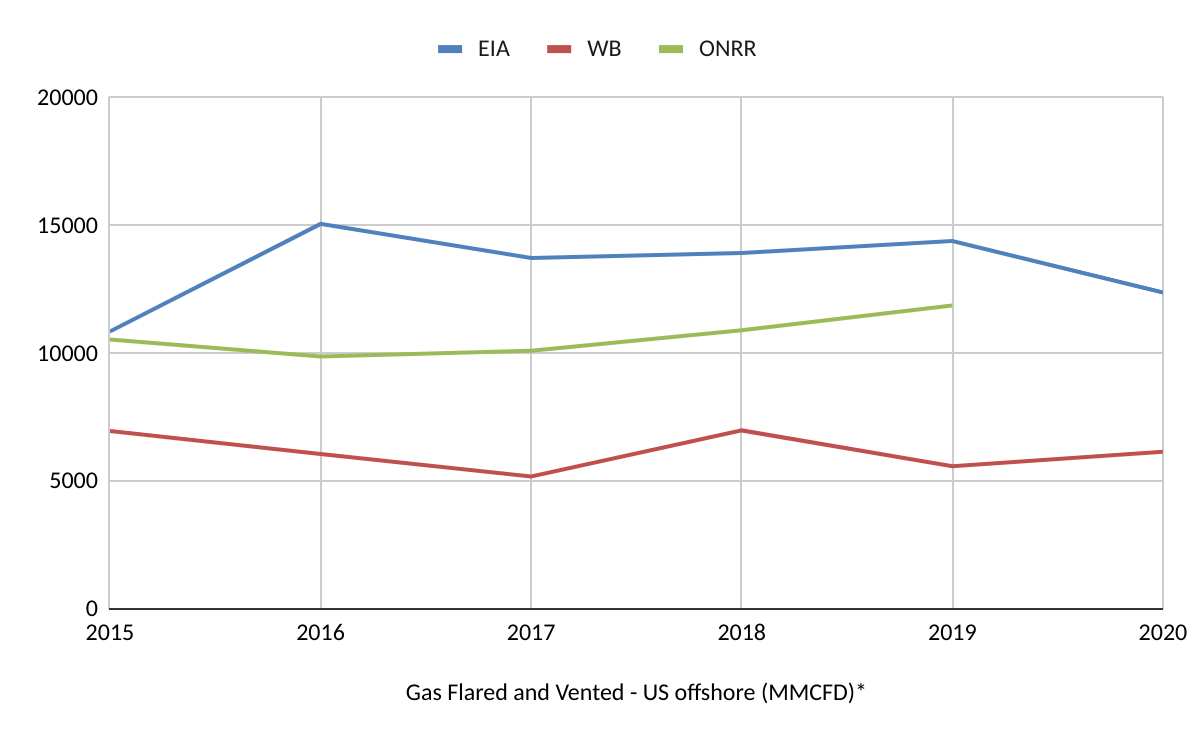
Given the importance of flaring and venting from both environmental and resource conservation standpoints, accurate and reliable data are necessary and should be readily available to the public. ONRR has advised me that they will begin posting flaring and venting data on their website within 2 months. This is a positive step. Currently, data from the 3 primary sources differ considerably.
Data Sources:
- US Energy Information Administration (EIA): Per EIA, their flaring and venting data are received directly from the Bureau of Safety and Environmental Enforcement (BSEE).
- Office of Natural Resources Revenue: ONRR is a sister bureau of BSEE within the Department of the Interior. Per BSEE regulations, all flared or vented gas must be reported to ONRR. As noted above, ONRR will begin regularly posting flaring and venting data within the next 2 months. This is a most welcome and positive step and may help address these inconsistency issues.
- World Bank Global Gas Flaring Reduction Partnership: “a multi-donor trust fund composed of governments, oil companies, and multilateral organizations committed to ending routine gas flaring at oil production sites across the world.”
Comments:
- The EIA (from BSEE) and ONRR flaring/venting numbers should be the same given that the ONRR data are reported in accordance with BSEE regulations, and BSEE is presumably providing ONRR data to EIA. This needs to be clarified.
- The World Bank’s gas flaring estimates are based on observations from satellites. This explains their lower numbers given that vented gas would not be detected and some flares might be missed.
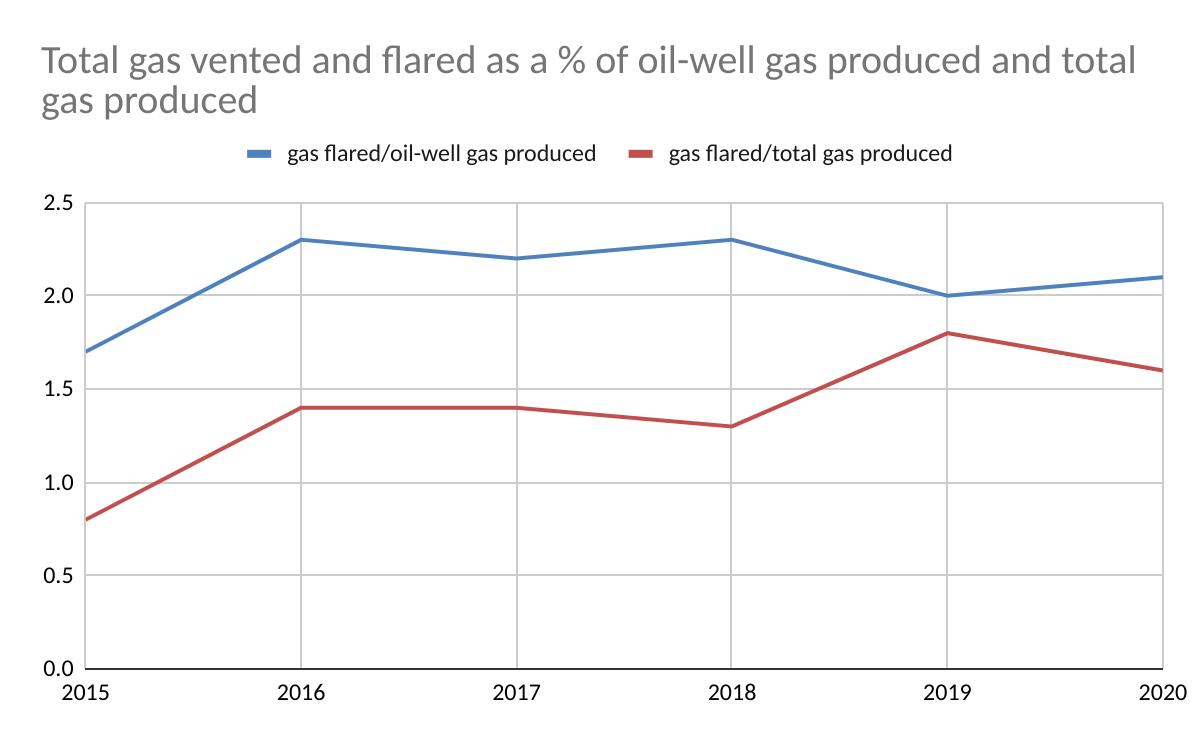
- In a 1/2021 interview with World Oil, the exiting BSEE Director commented that the “industry has consistently achieved a ratio of less than 1.25% of flared, vented gas to produced gas.” However, based on EIA flaring and venting data (from BSEE per EIA) and EIA gas production data, the volume of gas flared/vented exceeded 1.25% of the gas produced from 2016-2020 and was as high as 1.8% in 2019. (See the chart below.) Even if the lower ONRR flaring/venting totals are used, those volumes exceeded 1.25% in 2019 (1.5%).
- BSEE/ONRR should make more detailed flaring/venting data available so that the differences between facilities and sectors (e.g. deepwater vs. shelf) could be assessed. Efforts should also be made to post these data in a more timely manner. At this time, 2021 data are still not available.
Reports of interest:
- Argonne report for BSEE (2017):
- p. 17 – “The 2015 BSEE/BOEM study on reducing methane emissions observed that “while natural gas production has declined, …vented and flared gas volumes as a percentage of produced natural gas are increasing” and noted that additional investigation is needed to determine why.” This is consistent with my observations and is probably due in large part to the fact that most gas production is now from oil-wells (e.g. associated gas).
- p. 24 – “Argonne estimates, in 2015, platform startups for deep-water floating structures accounted for roughly 15% of the total annual flaring volume on the OCS and an additional 20% of the annual total resulted from monthly spikes associated with compressor outage, pipeline maintenance, and well-unloading.”
- Univ. of Michigan study (2020): “Large, older facilities situated in shallow waters tended to produce episodic, disproportionally high spikes of methane emissions. These facilities, which have more than seven platforms apiece, contribute to nearly 40% of emissions, yet consist of less than 1% of total platforms.”
US oil and gas leasing policy: what the law says vs. the current reality
Posted in energy policy, Gulf of Mexico, Offshore Energy - General, tagged active leases, Gulf of Mexico, history, OCS Lands Act, producing leases on May 4, 2022| Leave a Comment »
OCS Lands Act, 43 U.S. Code § 1332 – Congressional declaration of policy
(3) the outer Continental Shelf is a vital national resource reserve held by the Federal Government for the public, which should be made available for expeditious and orderly development, subject to environmental safeguards, in a manner which is consistent with the maintenance of competition and other national needs;
Current reality:
- International energy markets (and consumers) are under stress
- US is withdrawing 1 million BOPD from the Strategic Petroleum Reserve
- Very limited access to offshore land for oil and gas operations
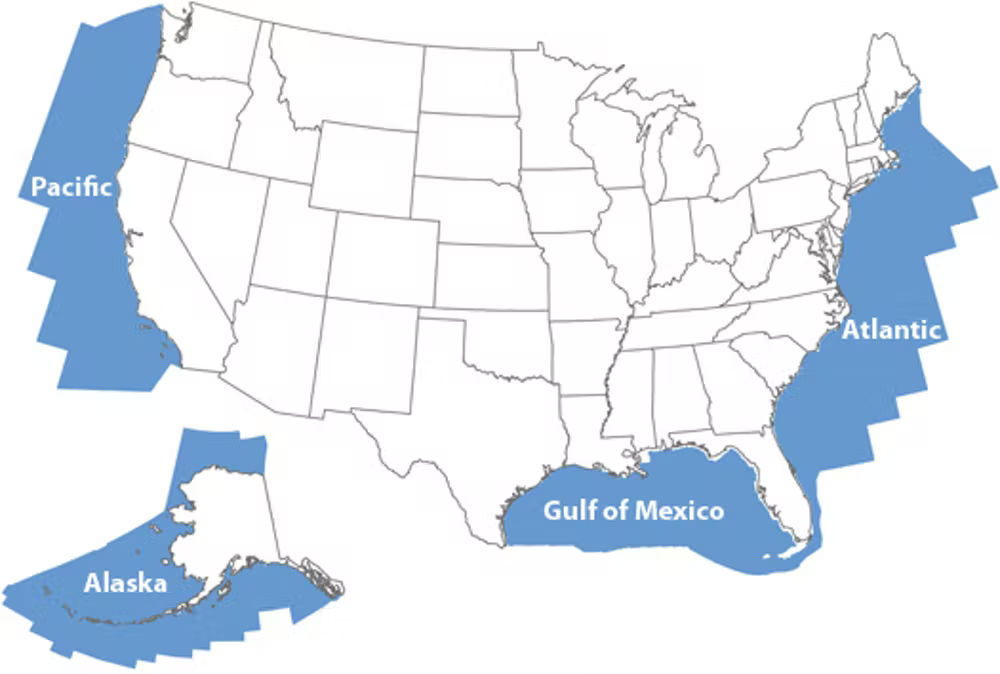
- 1.7 billion acres on the US OCS
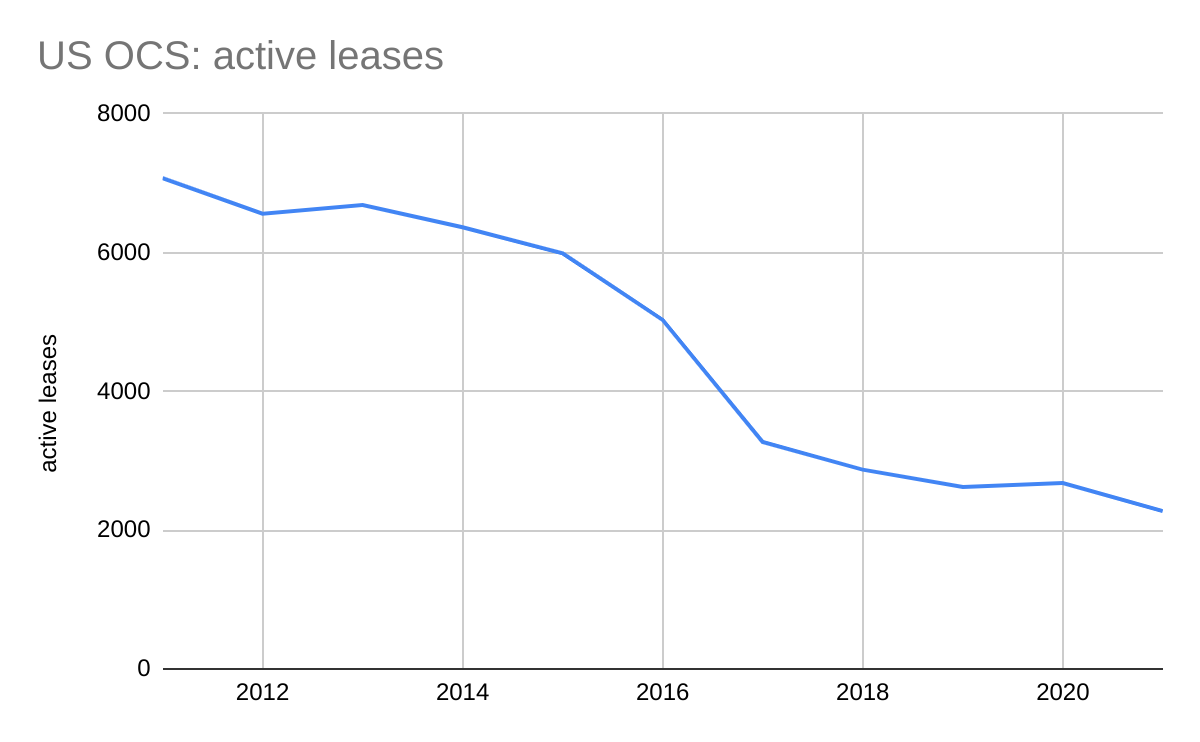
- Currently only 2057 active offshore leases nationwide covering 8.3 million acres (0.5% of total area), the fewest leases in > 40 years
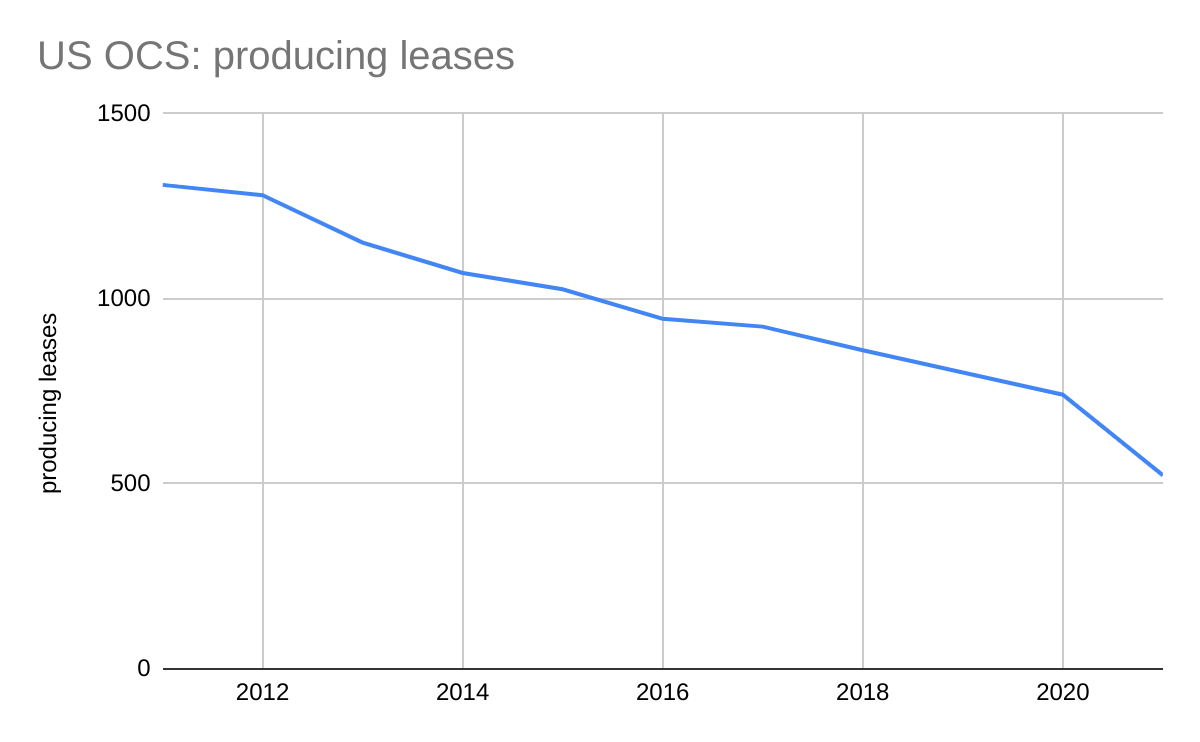
- Only 499 producing leases covering 2.65 million acres ( 0.155% of total area)
- 182 lease sales since 1954, but none since 2020
- 2021 was the first year since 1958 without a single lease sale;
- 2022 will likely be the second year without a sale
- Gulf of Mexico operations history
- 55,000 wells drilled
- 23 billion bbls of oil produced
- 192 trillion cu ft of gas produced
- Gulf of Mexico – current status
- Oil production remains relatively stable (1.7 million BOPD) owing to past deepwater discoveries
- Drilling is at historic low levels – only 31 well starts YTD (5/4/2022), only 8 of which were deepwater exploratory wells
- Current levels of production are not sustainable without new leases and increased exploration
https://budsoffshoreenergy.com/2022/02/28/us-offshore-leasing-time-for-action/
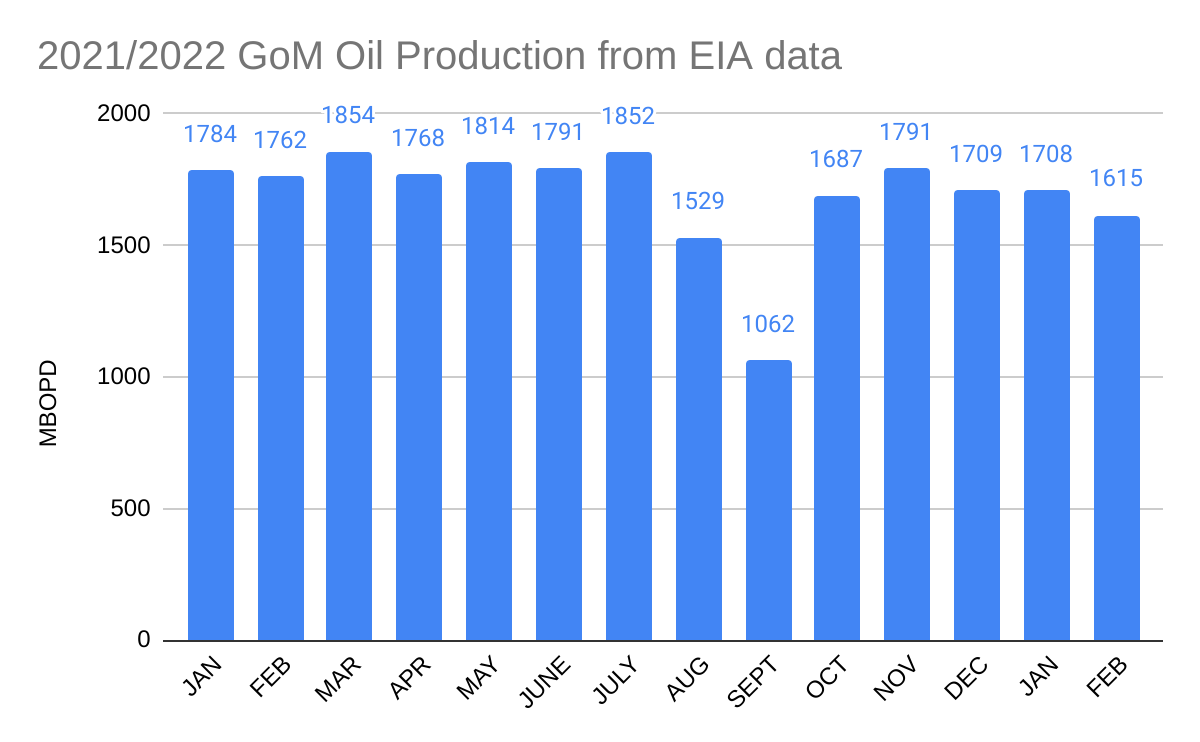
EIA posts a surprising dip in Feb. Gulf of Mexico oil production
Posted in Gulf of Mexico, Offshore Energy - General, tagged EIA, Gulf of Mexico production on April 29, 2022| Leave a Comment »
Reasonably balanced NYT article about why US production isn’t rising faster
Posted in energy policy, Gulf of Mexico, Offshore Energy - General, tagged Bloomberg, increasing oil production, NYT, offshore production, Vito on April 29, 2022| Leave a Comment »
Why U.S. Oil Companies Aren’t Riding to Europe’s Rescue
This article is primarily about Texas shale oil production. Offshore production, particularly in deepwater areas, is much more capital intensive, requires longer lead times, is exclusively on government leases, and is highly regulated by multiple agencies. These factors weigh against quick responses to market conditions. A Bloomberg article about Shell’s Vito project provides a good offshore perspective.
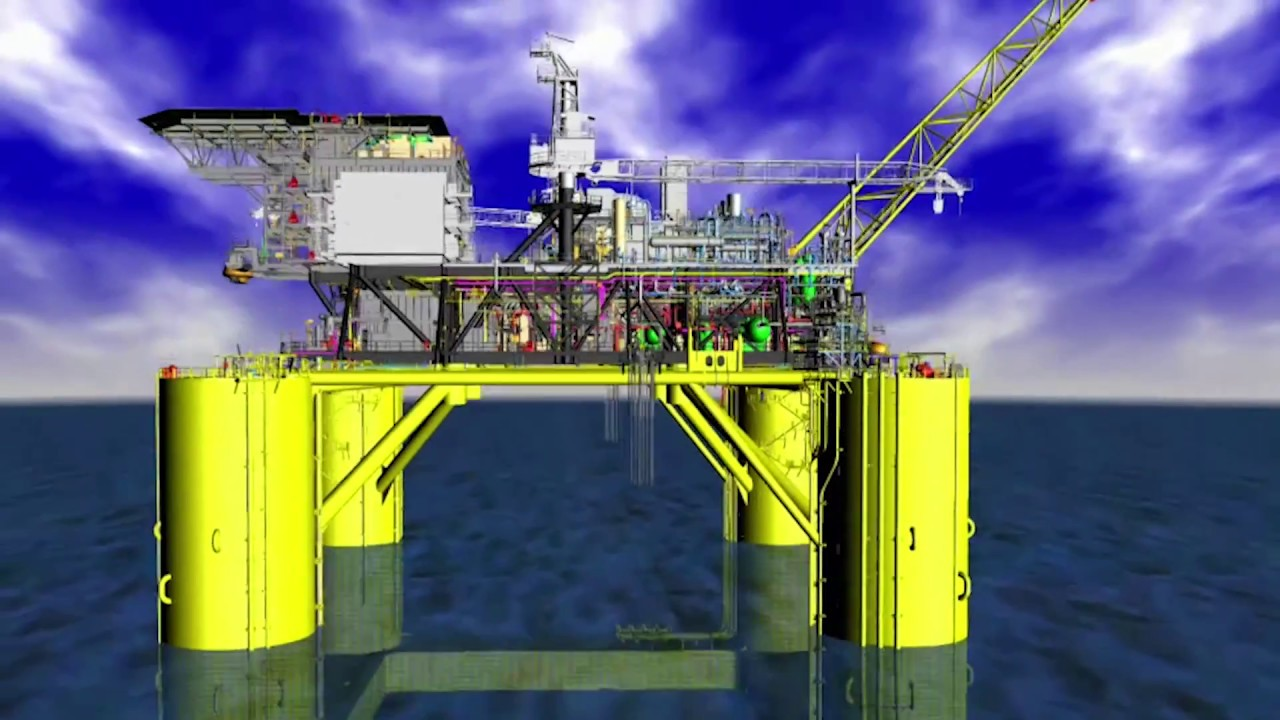
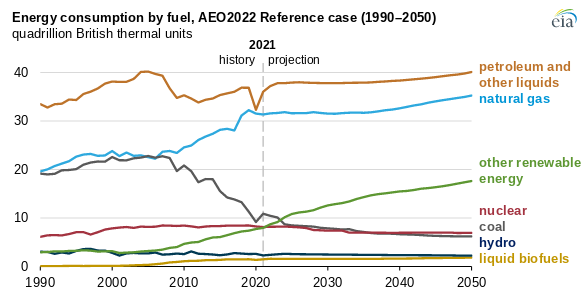
Another important factor in the offshore sector is that the major oil and gas producers seem to be going through an identity crisis, torn between what they are and what they (aided by some loud and powerful voices) think they should be. The future of these companies is dependent on how they navigate through all of this. The need for oil and gas is clearly not going away (see EIA projection below). Who will provide the supply and where will it be produced?