Feeds:
Posts
Comments

Archive for the ‘decommissioning’ Category

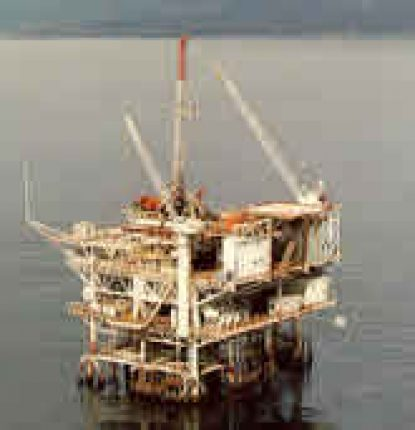
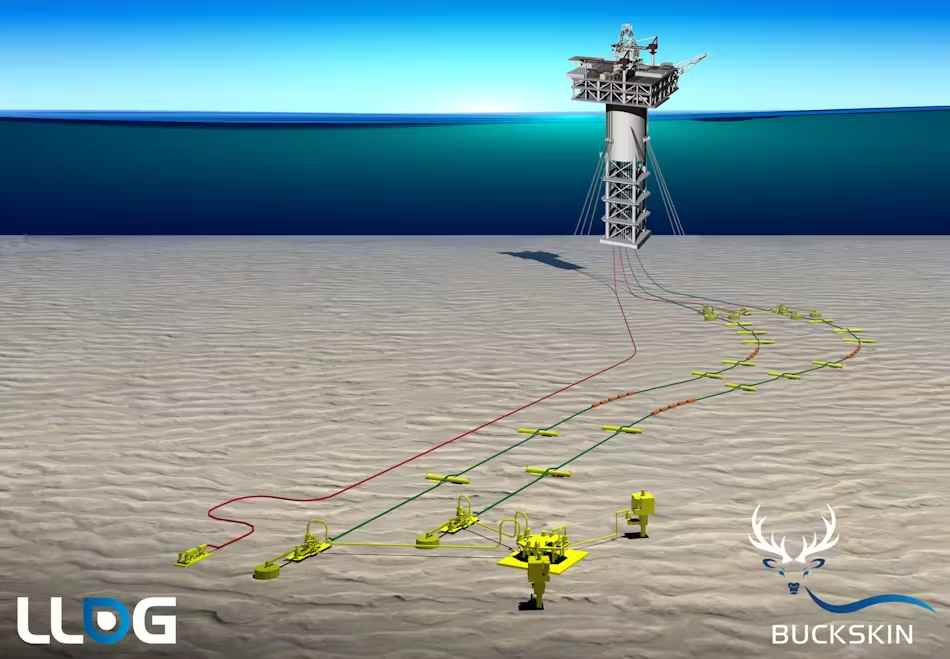
Houston, TX, March 29, 2024. Beacon Offshore Energy LLC (“Beacon”) announced today the completion of the divestment of its non-operated interests in certain fields in the deepwater Gulf of Mexico in accordance with a previously executed definitive agreement with GOM 1 Holdings Inc., an affiliate of O.G. Oil & Gas Limited. The divestment includes Beacon’s 18.7% interest in the Buckskin producing field, 17% interest in the Leon development, 16.15% interest in the Castile development, 0.5% interest in the Salamanca FPS/lateral infrastructure, and 32.83% interest in the Sicily discovery.

Beacon

According to BOEM records, GOM 1 HOLDINGS INC, a Delaware company, registered with BOEM effective 3/15/2024. The parent entity, O.G. Oil & Gas Limited, is a privately held E&P company incorporated in 2017 and based in Singapore.

O.G. Oil & Gas Ltd is part of the Ofer Global Group, “a private portfolio of international businesses active in maritime shipping, real estate and hotels, technology, banking, energy and large public investments.”

After a partial takeover by O.G Oil & Gas Limited in 2018, New Zealand Oil and Gas is now 70% owned by the Ofer Global Group. Among other interests, NZ Oil and Gas produces from fields offshore Taranaki, NZ.

Because they are jointly and severally liable for safe operations and decommissioning, minority investors should take a strong interest in safety management and financial assurance. Investors should remember that partners are adversely affected by the mistakes of the operating company. Anadarko and Mitsubishi took a hit following the Macondo blowout. To what extent had they been monitoring bp’s risk and safety management programs for drilling operations?

Read Full Post »

A post from last March discussed the high and seemingly unfair royalty and rental rates for new leases in the shallow waters of the Gulf of Mexico shelf. A 50% increase in the shelf royalty rate for lease sales 259 and 261 combined with rather punitive rental rates have likely contributed to the sharp decline in bidding for shelf lease blocks (see table below).

This decline in shelf bidding is unfortunate because the smaller companies that operate in the shallow waters of the Gulf are critical to sustaining the production infrastructure. These companies are also significant producers of environmentally favorable nonassociated (gas-well) natural gas.

lease saleshelf blocks with bids
(excluding CCS bids)
sum of high shelf bids
($million, excluding CCS bids)
25746$8.1
25929$4.1
26113$1.7
The royalty rate for shelf production jumped 50% from sale 257 to sales 259 and 261

BOEM has completed their evaluation of the Sale 261 shelf bids (see below). Each of these blocks received only a single bid, and every bid was accepted. Ironically, the invalid CCS bids for blocks that have no oil and gas value, were the first to be accepted. This was also the case for Sales 257 and 259.

(1) All of the Repsol bids were $32.50/ac. Total bids varied by block size, but were $187,200 for the 5760 acre blocks.
  • Seek a legislative fix to the Inflation Reduction Act😉 provision that established a 1/6 royalty rate floor for all OCS leases (formerly the royalty rate was 1/8 for leases on the shelf).
  • In the interim, administratively lower the royalty for shelf leases to 1/6 (from 18 3/4%).
  • Reconsider the rental rate scheme for shelf leases.
  • For future oil and gas lease sales, accept all high bids that exceed the specified minimum bid (currently $25/ac for the shelf). The Gulf of Mexico shelf has been extensively explored and developed for 70 years. While prospects remain, they are generally marginal as evidenced by the recent lease sale results. Fair market value is what any company is willing to bid (above the specified minimum).
  • Focus on assuring that lease purchasers are technically qualified to minimize safety risks, and that financial assurance for decommissioning (for new and existing leases owned by the high bidder) has been fully addressed.

Read Full Post »

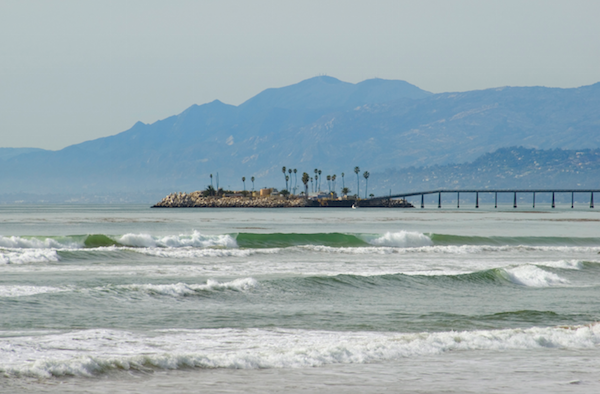
Rincon Island, “the 9th Channel Island

Per John Smith, Rincon Island (Phase 2) will be the first major production facility decommissioning project in California state waters since the Chevron 4-H platform removals in 1996.

Rincon Island and the onshore facility were constructed in 1959 and used for oil and gas production. In December 2017, Rincon Island Limited Partnership, the most recent lessee, transferred its lease interests to the State after becoming financially insolvent. Phase 1 of decommissioning included the plugging and abandonment of all oil and gas wells and removal of service equipment at Rincon Island.

The proposed Phase 2 project, analyzed within the Environmental Impact Report (executive summary attached), would prudently retain Rincon Island and the Rincon Island Causeway in their current configuration. Phase 3 will prepare Rincon Island and the Onshore Facility to be leased for yet-to-be determined new uses.

Read Full Post »

Bayou Bend CCS LLC commenced drilling an offshore (Texas State waters) and an onshore stratigraphic well for carbon sequestration in the first quarter 2024.

Talos

Is offshore carbon disposal ocean dumping? One of the provisions that was slipped into the “2021 Infrastructure Bill” exempted carbon sequestration from the Marine Protection, Research, and Sanctuaries Act of 1972 (Ocean Dumping Act). This exemption revises the OCS Lands Act and thus does not apply to State offshore lands. The Texas offshore wells must therefore be permitted by EPA as “Class VI wells,” as is the case for onshore disposal wells. However, Texas and Louisiana have asked the EPA for “primacy,” which would allow state agencies to approve and oversee these operations.

Meanwhile, the regulations for carbon disposal on the OCS, which the Infrastructure Bill mandated by November 2022, have yet to be published for comment. The latest Federal regulatory agenda indicates a publication date of 12/00/2023 for these regulations. Presumably the staff work has been completed and the rule is stalled in the review process.

Despite the absence of a regulatory framework, BOEM has accepted sequestration bids at the last three oil and gas lease sales. These bids were evaluated as if the leases were being acquired for oil and gas exploration and production, even though the bidders’ intentions were widely known. Why was BOEM a willing participant in this charade, not just at one sale, but at three sales in succession?

Given that the perceived carbon disposal bonanza is dependent on mandates and subsidies, one has to wonder about the massive revenue projections for this industry and raise concerns about the associated public and private financial risks. What is the long term business plan for this industry? Who will be monitoring the offshore wells (in perpetuity)? How will the public be protected from financial assurance and leakage risks? We will see how the myriad of carbon sequestration issues are addressed in the proposed regulations.

Read Full Post »

John Smith, a decommissioning specialist who retired from BOEM, has published numerous professional papers on the topic. He has kindly shared his comments (below) on the new GAO report.

The Appeal Process is Broken – The GAO should have emphasized this point.  Companies routinely appeal orders to decommission platforms to forestall having to spend money on plugging wells and removing platforms, pipelines and other facilities. The appeal process commonly takes 5 or more years to reolove (e.g., DCOR appeal of BSEE order to decommission Platform Habitat).

Well P&A – BSEE has been negligent in requiring operators to plug and abandon wells no longer useful for operations. I’m shocked BSEE has curtailed or stopped issuing Inc’s for the failure of operators to P&A wells.  That’s a major failure on the part of BSEE management. That may explain why operator performance criteria was proposed to be eliminated for financial assurance.

Failure to Issue Civil Penalties for Well P&A – From GAO Report “BSEE officials explained that their reluctance to pursue civil penalties stems in part from concerns about whether inducing financial harm against an operator is an effective approach to compel decommissioning. They expressed reservations about taking actions—such as issuing civil penalties—that might strain the financial resources of operators to the point of pushing them into bankruptcy.”   This attitude underscores a real problem – an abrogation of regulatory and enforcement responsibility by BSEE. 

POCS Well P&A –  More than 700 wells have been drilled from the 23 California OCS platforms. The GAO report notes that approximately 200 are in the process of being plugged and abandoned – about 50% of those are probably associated with Gail, Grace, Harvest, Hermosa, Hidalgo, where P&A work has largely been completed by Chevron and Freeport McMoRan.  The vast majority of the remaining 500 wells are no longer useful for operations and have been idle for several decades.  Note POCS was never part of the Idle Well and Idle Iron Program, which was exclusive to the GOM. GAO gave POCS BSEE a pass by not highlighting that problem in POCS. It would have been interesting to know how many of the remaining 500 POCS wells are considered no longer useful for operations, and how many of those have been temporarily plugged and abandoned pursuant to regulations.  The GAO report broke that down for the GOM.

Footnote 46 of GAO Report – “Two of the eight platforms due for decommissioning in the Pacific—platforms Hogan and Houchin—have posed serious safety, environmental, and financial risks, including poor safety compliance records, severe corrosion, and ongoing disputes about who will assume decommissioning liabilities for the platforms and their associated wells, according to BSEE officials and documentation. According to BSEE, these platforms are currently being attended, monitored, and maintained as part of an agreement between BSEE, BOEM, Interior’s Office of the Solicitor, and the three predecessor operators pending a decision from the Interior Board of Land Appeals on the predecessors’ appeal. BSEE estimates that approximately $5 million of the estimated costs to decommission 21 orphaned sidetrack wells associated with these platforms are uncovered by financial assurances.”    $5 million divide 21 = $238,000 per well  – extremely conservative cost estimate given age of wells, likely collapsed casing, and downwhole equipment that needs to be removed.  The cost could easily be 3-4 times higher and there is no bonding so the federal government and taxpayers are on the hook for those costs.

Platform Hogan and Houchin Wells – approximately 75 wells were drilled from the platforms.  It would be interesting to know the status of those wells.  How many have been properly temporarily plugged and abandoned with long-term barriers installed to prevent leaks before decommissioning pursuant to OCS regulations?  Are the 21 orphaned wells mentioned above the Signal wells?  What about the other 54 wells?  Have the predecessor lessees agreed they are responsible for plugging and abandoning those wells?  

Platform Habitat – GAO could have noted this is another example of the broken appeal process. It would be interesting to know whether the 21 wells (primarily if not all gas wells) on Habitat have been temporarily abandoned. There are likely to be significant fugitive emission levels at the platform.  Hopefully the APCD is on top of that.  Note – the platform is unmanned and as I previously mentioned a potential catastrophe was avoided several years ago when a fire broke out on the platform.

Read Full Post »

Offshore facility decommissioning is a frequent target of Federal auditors given the complex financial and regulatory challenges. Unfortunately, the reviews have done little to better protect the public interest. As have previous inquiries, the new GAO report (attached for your convenience) calls for improved regulations and enforcement practices. That, of course, has been the objective for decades, but the problems have only worsened.

While the GAO recommendations are unsurprising, the body of the report is informative. Most notably, GAO (p. 29) raises a significant inconsistency on a key provision in the proposed decommissioning financial assurance regulations published last year:

One of the five criteria BOEM would no longer use under the proposed rule is demonstrated reliability, as shown by record of compliance with laws, regulations, and lease terms, among other factors. BOEM’s June 2023 regulatory analysis concluded this criterion is not a good predictive indicator of default on decommissioning obligations. However, BOEM and BSEE officials we spoke with told us that poor compliance records—such as safety and maintenance issues or delayed decommissioning obligations—can be an indicator of potential decommissioning noncompliance or financial stress.

Why was there such a disconnect between the opinions of BOEM and BSEE officials (who are directly involved with decommissioning) and BOEM’s decision not to include a company’s compliance record among the factors to be considered in determining the need for supplemental financial assurance? As pointed out here and here, safety performance is arguably the most important predictor of financial failure and decommissioning noncompliance.

The GAO report correctly acknowledges the difficulties in disqualifying operating companies. However, the regulations at 30 CFR § 250.135 specifically provide for disqualification for poor performance. While the regulations could be tighter, enforcing disqualifications regulations is dependent on persistence and strong support from management and DOI attorneys. Given the political risks associated with disqualifying operators, that support is often lacking.

Disqualification difficulties make it imperative that BOEM carefully consider past performance before approving lease assignments or determining financial assurance amounts. Provisions in 30 CFR §585.408 and §585.107 could have been used to disapprove assignments to Signal Hill, Fieldwood, Cox, and other problem operators. The failure to do so has significantly delayed decommissioning and increased public exposure to financial risks.

In some cases, lease assignments to unqualified companies have not only been approved but they have been facilitated by BOEM/MMS. The case of Platforms Hogan and Houchin, in the Santa Barbara Channel, is a particularly good example. (Did GAO inquire about the Inspector General report on this matter or ask why that report has still not been released?)

Most operating companies are responsible about planning for and fulfilling their decommissioning obligations. The problem is the exceptions, and they are not difficult to identify if you look at compliance data and obtain input from BSEE inspection personnel.

Other important decommissioning questions that need to be considered:

Additional comments on the GAO report from decommissioning specialist John Smith will be posted tomorrow.

Read Full Post »

Still waiting for:

Read Full Post »

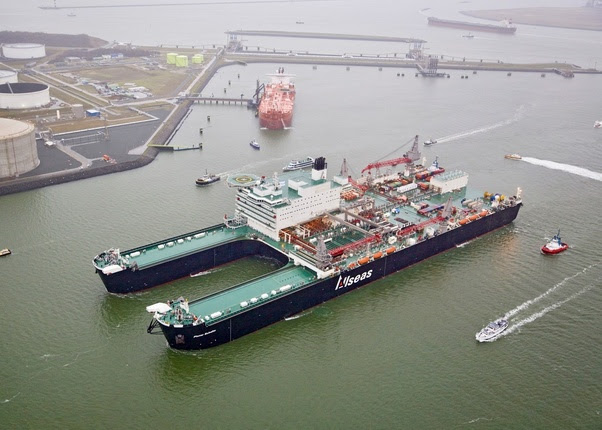
The financial, technical, and regulatory aspects of decommissioning have received much attention on this blog. Andrew Konczvald sends this photo with regrets that the behemoth “Pioneering Spirit” wasn’t available when he was concerned with such matters.

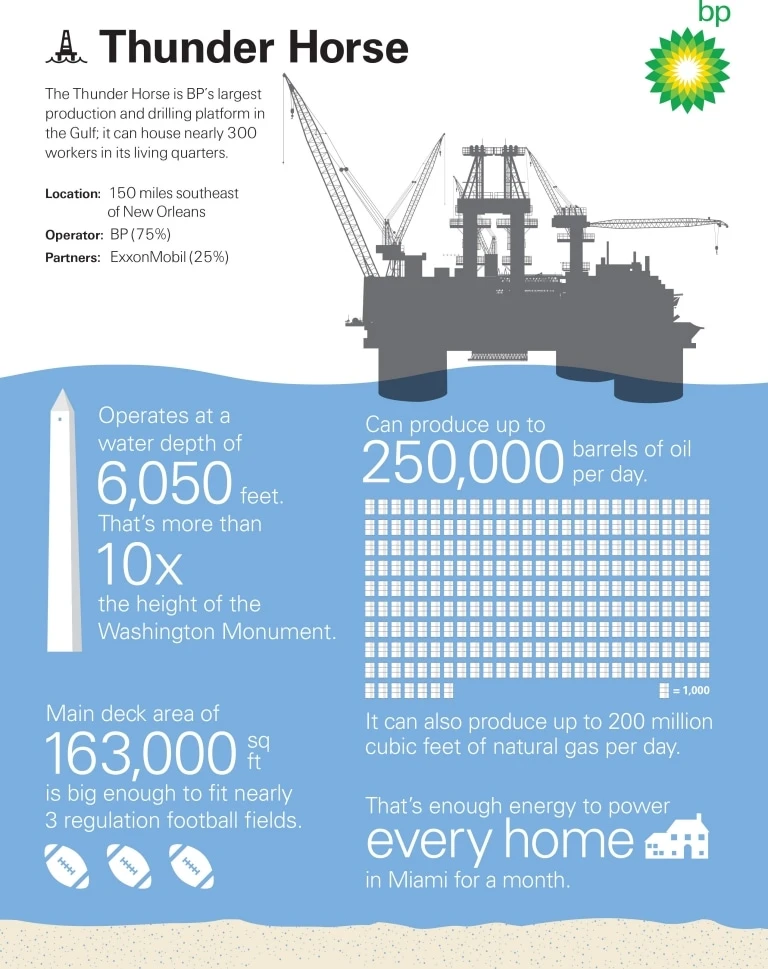
For comparison (size only given the different missions), the massive Thunder Horse floating production platform (see below) in the Gulf of Mexico is 136 m x 112 m, only 12 m narrower but just over 1/3 of the Pioneering Spirit’s length.

The worlds largest 403,342 gross tonnage ship ‘Pioneering Spirit’ (formerly Pieter Schelte) is a catamaran crane vessel owned by the Switzerland-based All Seas Group designed for the single-lift installation and removal of large oil and gas platforms and the installation of record-weight pipelines. The 382-metre-long (1,253 ft), 124-metre-wide (407 ft) vessel is the world’s largest vessel by gross tonnage, and since September 2021 also the largest floating sheer-leg in the world. It was built in South Korea by Daewoo Shipbuilding & Marine Engineering in 2013 at a cost of €2.6 billion. It commenced offshore operations in August 2016.
Thunder Horse

Read Full Post »

Safety first: As a descendant of troubled Fieldwood Energy, which had a very poor safety and compliance record, QuarterNorth Energy (QNE) had much to prove. That said, QNE has had a good compliance record in its brief 2 year history. During 76 facility inspections in 2022 and 2023, QNE was cited for only 15 Incidents of noncompliance, all but 2 of which were warnings. This is on par with the companies that had the best compliance records during that period.

BSEE’s incident statistics are hopelessly out-of-date, with the latest data being for 2021, so we have limited information on QNE safety incidents. However, BSEE’s District Investigation Reports, which document the more significant incidents, are relatively current and no QNE incidents were investigated in 2022 and 2023.

Platforms: Consistent with the general sense that QNE inherited the best of Fieldwood’s facilities, the company’s 15 platforms include Bullwinkle, the Thunder Hawk floating production unit in 6050′ of water, and prominent shelf platforms Tarantula and Hickory.

The acquisition reunites 2 iconic Shell platforms under the same ownership. QNE’s Bullwinkle, installed in 1988 in 1353′ of water, is the world’s tallest (non-compliant) steel tower platform. Talos’s Cognac, installed in 1978 in 1023′ of water, is the first platform in >1000′ of water.

Production and reserves: Per Talos, QNE adds 30,000 boe/d of production and 69 million boe of reserves.

Drilling: Per BSEE records, QNE was the operator for 2 deepwater exploration wells, both of which are classified as completed.

Active leases: The QNE acquisition will add 51 leases to the Talos’s 143 lease inventory.

Recent lease sale activity:

SaleQNETalos
2572/110/10
2596/45/4
2616/414/13
total/high bids for QuarterNorth (QNE) and Talos

Sales price and decommissioning: QNE was already on the market for “more than $2 billion,” shortly after the company was formed. Talos is paying $1.29 billion consisting of 24.8 million shares of Talos’s common stock and approximately $965 million in cash. A case study of the complex Fieldwood bankruptcy and the outcomes for the various parties would be most interesting. Also of interest would be a study of the decommissioning obligations of the former companies and the extent to which the sale proceeds are being applied.

Read Full Post »

Hywind Scotland, Equinor

It’s prudent, if not imperative, to tow floating wind turbines to sheltered coastal locations for major maintenance. For that reason, Hywind, the world’s first floating wind farm will be offline for up to 4 months this summer.

Hywind Scotland‘s operator, Norwegian power giant Equinor, says that operational data has indicated that its wind turbines need work. The pilot project has been in operation since 2017.

The five Siemens Gamesa turbines will be towed to Norway this summer. An Equinor spokesperson said, “This is the first such operation for a floating farm, and the safest method to do this is to tow the turbines to shore and execute the operations in sheltered conditions.”

electrek

Published data indicate that Hywind has been the UK’s best performing offshore wind farm. Performance data for Hywind, and a chart illustrating the capacity factors since commissioning, are posted below. The 2024 capacity factor will, of course, be substantially reduced as a result of the essential offsite maintenance.

rolling 12 month capacity factor
ending 5/2022
life capacity
factor
age
(years)
installed
capacity
(MWp)
total elec
generated
(GWh)
power/
unit area spanned
(W/m2)
Hywind Scotland49.5%52.6%4.6306421.0
capacity factor = total energy generated/(hours since commissioning x capacity)

The first US floating turbines are expected to be at these California offshore leases, and Hywind operator Equinor is one of the lessees:

Given the financial challenges facing the offshore wind industry, the still emerging technology, and the risks inherent in California offshore development, the amounts bid on these leases only 13 months ago are stunning.

Some Central Coast residents are not enamoured with “another attempt to industrialize the coast.” Although the turbines will be >20 miles offshore, they will have to be towed to shore for major maintenance. For the Central California leases, nearby harbor areas like Morro Bay (pictured below) would be overwhelmed by the large structures and the maintenance and repair operations. Towing the towers to LA/Long Beach, albeit rather distant from the leases, would seem to be the preferred option for such work.

Ironically, a report for BOEM, points to synergies between the offshore wind industry and oil and gas decommissioning industry. Such synergies will only be possible if longstanding oil and gas decommissioning obstacles are satisfactorily addressed and the offshore wind projects proceed as planned.

Which will come first – platform decommissioning or wind turbine commissioning? For those young enough to find out, what is the over-under for the years until (1) half of those platforms are decommissioned, and (2) half of the wind turbines commissioned? Any number <10 is unrealistic for either.

Morro Bay Harbor

Read Full Post »

« Newer Posts - Older Posts »